Home Blog Page 8

From Prankote to Pahalgam: A Chilling Chronicle of Faith-Driven Massacres in J&K!

0
(Kashmir Rechords Exclusive)

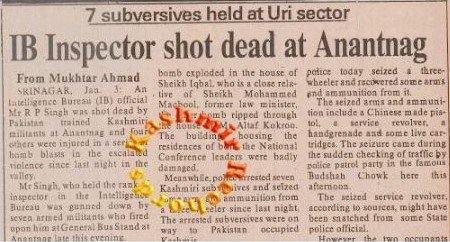
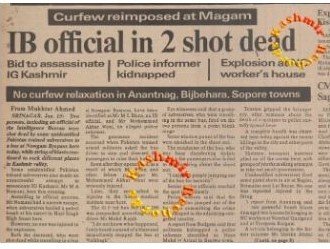
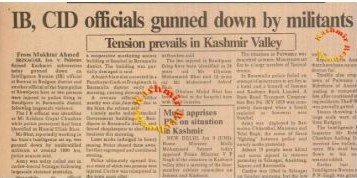
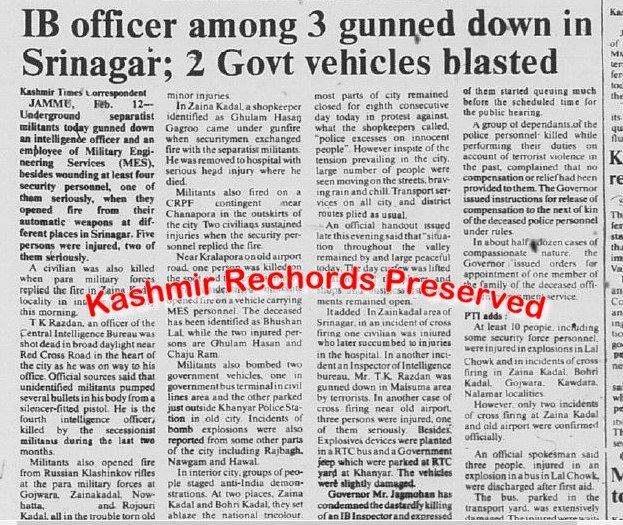
The picturesque valleys of Pahalgam echoed with screams in 2025 April—not from the delight of tourists but from the horror of gunfire. In a chilling ambush, unarmed Hindu tourists were targeted, shot and killed in cold blood. India mourned. Headlines flashed. But for those who have tracked Kashmir’s tortured history, the massacre brought not shock—but déjà vu. Because this was not the first time!
Over the last more than three decades, Jammu and Kashmir has witnessed a series of calculated, faith-driven massacres. Innocents—teachers, pilgrims, wedding guests, labourers—have been singled out, segregated and slaughtered. Not because of what they did. But because of what they believed.

A Pattern Written in Blood

The modus operandi has barely changed. Whether in 1990s or 2001, whether in the Valley or the hills of Jammu, the message has remained: “Convert, flee, or die.”

Go back to Wandhama, January 25, 1998—23 Kashmiri Pandits, including women and children, were lined up and shot. The gunmen had impersonated soldiers, earning trust before turning their weapons on the faithful. Despite desperate pleas for mercy, not one soul was spared.

Just three months later, on April 17, another carnage unfolded—this time in the quiet village of Prankote in Mahore area. Here, the cruelty was medieval. Hindus were told to convert to Islam or face death. When they refused, 29 villagers, including women and toddlers, were hacked to death with axes and sickles. Their homes were set on fire.

Two months on, June 19, the horror returned—Chapnari village, Doda. Twenty-five Hindu men were separated from Muslims and gunned down near a stream. No warning. No mercy.

These weren’t mere outbreaks of violence—they were communal pogroms designed to alter the demographic soul of the region.

The Gool incident of June 15, 1997 reinforced this pattern. Three Kashmiri Pandit teachers, including the Principal traveling on a local bus, were pulled aside. Muslims were spared. The Pandits were shot dead.

Massacres as Message Boards

These weren’t isolated acts; they were deliberate spectacles. To send a message. To sow fear. To incite communal backlash across India.

Consider August 1, 2000—Amarnath pilgrims were returning from darshan when terrorists struck near Pahalgam. Thirty people, including 18 pilgrims, porters and CRPF personnel, were killed in one of the bloodiest attacks on religious pilgrims. Over 60 were injured. The target? Faith. The intention? To disrupt one of Hinduism’s holiest pilgrimages.

Or take the Chattisinghpora Massacre, March 2000—when 35 Sikh men were executed on the eve of President Clinton’s visit. Though Sikhs were the victims this time, the purpose was identical: religious minorities were marked for elimination.

And then came Nadimarg, March 24, 2003—when Terrorists   came dressed as security forces. The families were cornered and executed.

In Rajouri, 2002, 35 wedding guests—Hindus—were gunned down in a marriage celebration. Once again, identity was the only crime.

In Doda, the pattern lasted years. On April 30, 1996, 17 Hindus were dragged from their homes in Kishtwar and murdered. On August 20, 2001, 15 more were killed in Shrawan village. These weren’t impulsive attacks. They were systematic efforts to empty Jammu’s hills of its Hindu presence.

Terror has since mutated. While large-scale massacres have reduced, targeted killings have become the new weapon.

In 2021, Deepak Chand, a Hindu teacher, and Supinder Kaur, a Sikh principal, were shot inside a Srinagar school—during working hours.

Hindu labourers from Bihar and Uttar Pradesh have been picked off in Pulwama, Kulgam and Shopian—often while asleep or during work. Even bank managers, hawkers and migrant employees have been assassinated after being identified by their names or IDs.

And Now, Pahalgam—Again !

The April 2025 Pahalgam massacre of Hindu tourists is only the latest entry in this long catalogue of communal killings. It mimics the past with brutal clarity—outsiders, visiting the Valley, targeted only because of their faith.

It’s not the first time Hindus– be those tourists or pilgrims or labourers have been killed. And it may perhaps not be the last if the pattern is not understood for what it is: a campaign of segregation, elimination and fear.

The tragedy is not just the deaths. It’s that Indians often forget. That each new killing is treated as an aberration, not part of a chilling continuum.

This write-up by Kashmir Rechords is not just an account—it’s a reminder—- That massacres have a memory— That terrorism in Jammu and Kashmir has often been religiously selective, and that Hindus— aborigines, pilgrims, baratis, teachers, or tourists—have repeatedly borne the brunt.

The list of atrocities mentioned here is definitely incomplete, but the message behind them has always been loud and clear. And it’s time we stopped pretending otherwise.

A Kashmiri Pandit Umpire Behind the Wickets!

(Kashmir Rechords Exclusive)

Born in Srinagar’s Habba Kadal and trained in law, Padam Shri Swaroop Kishan Reu quietly etched his name into cricketing history as India’s only Kashmiri Pandit Test umpire—at a time when opportunities were scarce and recognition even scarcer.

In a world where cricket often grabs headlines for its stadium spectacles and star players, few pause to remember the men in white who silently control the game from behind the stumps. Fewer still know that one of them hailed from the lanes of Habba Kadal in Srinagar. His name was Swaroop Kishan Reu—the first and only Kashmiri umpire to officiate in international Test and One-Day cricket for India.

In today’s billion-dollar cricketing world—where IPL, T20s and World Cups fuel frenzy, fireworks and financial muscle—it’s easy to forget the quieter era of the game, when it was still a gentleman’s sport. Swaroop Kishan belonged to that era. He was a man of calm authority, keen observation and impeccable decision-making, officiating at a time when the game was transitioning from decorum to cutthroat competition.

A Kashmiri with a Cricketing Soul

Born in 1930 in Habba Kadal, a heritage-rich locality in the heart of Srinagar, Swaroop Kishan came from a lineage steeped in Kashmiri tradition. Though he trained in law and later joined the Accountant General’s Office, his heart beat for cricket.

According to renowned chronicler Baikunth Nath Sharga, who documented the lives of illustrious Kashmiri Pandits in his book “Kashmiri Panditon ke Anmol Rattan,” Swaroop Kishan had an “irresistible passion” for the game. He played for Delhi University as a batsman and wicketkeeper, combining legal precision with athletic flair.

He married Sunita Reu in 1965, and while he may have followed the secure path of government service, cricket remained his lifelong companion.

Swaroop Kishan & Sunita ( Married in 1965). Pic Courtesy: KP Network(ikashmir.net)

From Law Books to Scorebooks

Swaroop’s big break came in December 1978, when he made his international umpiring debut in a Test match between India and the West Indies in Bangalore—a match that was eventually abandoned due to riots. But he would go on to officiate several Tests and ODIs in the years to come, including high-pressure matches featuring legends like Sunil Gavaskar, Kapil Dev, and the Amarnath brothers.

In 1979, during a Test in Chennai, a bizarre event etched itself into cricket folklore: a swarm of bees descended on the field, sending players and umpires—Swaroop Kishan included—flat on the ground to avoid being stung. It was an unforgettable moment, one that spoke to the unpredictability of the game and the presence of mind needed to officiate it.

Despite his portly frame, Swaroop Kishan was widely respected for his technical command, fairness and sharp judgment. His presence was reassuring during an era when India was just beginning to assert itself in world cricket—not just through its players, but also through its umpires, infrastructure and growing cricket culture.

Before the mike: Swaroop Kishan discussing India-Pak Series alongwith Dr Narotam Puri and Chetan Chauhan.

Not Just an Umpire, A Voice of the Game

Off the field, Swaroop Kishan found joy in the studios of All India Radio and Doordarshan. While today’s cricket commentators sit in plush digital studios with cutting-edge analytics, Swaroop Kishan  belonged to a generation that brought the game alive with passion and presence. He often shared the mic with stalwarts like Dr. Narottam Puri, Chetan Chauhan and Susheel Jain, helping millions of listeners fall in love with cricket.

A Kashmiri Among Giants

In 1986, President Giani Zail Singh conferred the Padma Shri on Swaroop Kishan in recognition of his outstanding contribution to cricket—a moment of national pride not just for him, but for an entire community that has historically punched above its weight despite its minuscule numbers.

Pic Courtesy: KP Network(ikashmir.net)

While Jammu & Kashmir has since produced talented players who’ve competed in Ranji Trophy, T20s and even the IPL, no other umpire from the region has made it to cricket’s highest stage like Swaroop Kishan did.

Today, cricket may be louder, faster and richer, but it is built on the shoulders of men like Swaroop Kishan Reu—who gave the game its credibility, dignity and direction. His life is a reminder that greatness doesn’t always come with applause—it often comes with quiet excellence.

Swroop Kishan stood stood behind the wickets, but he led from the front.

Rita Kaul: The First Light on Kashmir’s TV Screen

(Kashmir Rechords Report)

In the nascent years of Indian television, when the country was still adjusting to the idea of stories unfolding through a flickering screen, a quiet revolution was brewing in the serene valley of Kashmir. It was the winter of 1973 when Srinagar, shrouded in snow and tradition, witnessed a rare spark—a woman stepping into the spotlight, undeterred by societal hesitation. That woman was Rita Kaul, the first female television artist from Srinagar, and a true trailblazer in every sense of the word.

Television in India made its debut on September 15, 1959, with an experimental broadcast from Delhi, under the name ‘Television India’. It was a modest beginning, using the studios of All India Radio. By October 2, 1972, Bombay had its own television channel and just a few months later, on January 26, 1973, Srinagar joined the ranks with its very own channel—an exclusive venture that would later become a part of the national broadcaster Doordarshan in 1975.

Setting up a television station in Srinagar was a strategic and cultural milestone. But it came with its unique set of challenges. Conservative Kashmiri society had very few artists, especially women, willing to step in front of the camera. Stage and screen performances were often viewed with hesitation, if not outright disapproval. Yet, amidst these constraints emerged Rita Kaul, a young woman with both courage and conviction, who dared to dream beyond the expected.

Rita wasn’t just stepping onto a new stage—she was creating one. In February 1973, she starred in a landmark television scene from the play “Dareecha”, written by the esteemed poet and literary figure, Dr. Hamidi Kashmiri. The backdrop wasn’t just a dramatic setting—it was poetry, woven with the intellect of one of the subcontinent’s foremost literary minds. Dr. Hamidi Kashmiri, a modernist and post-modernist voice in Urdu and Kashmiri literature, saw potential in young talents and encouraged them to explore television as a medium of expression. Among those he mentored, Rita Kaul was a standout.

Interestingly, Rita had already made her mark as a graded artist with Radio Kashmir Srinagar, where her voice brought Kashmiri songs to life. Her transition to television was natural, yet bold—she brought the warmth of her voice and the sincerity of her performances to the visual medium, at a time when few dared to do so.

Those associated with media, fondly remember Rita as a gifted artist who played a pivotal role in shaping the early narrative of visual storytelling in Kashmir. Her name may not always appear in the footnotes of history, but for those who remember, she was a trendsetter—a guiding light for countless women who dreamed of pursuing the arts.

Rita Kaul’s story is not just about being the first. It’s about courage, culture and the quiet strength of a woman who dared to perform when the stage was uncertain and the audience unsure. Thanks to her, the screens in Kashmir flickered to life—with poetry, with passion, and with promise.

Pt. Hargopal Kaul—The Original Sher-e-Kashmir !

A forgotten revolutionary, poet and pioneer of education who challenged kings and colonialism alike

(Kashmir Rechords Exclusive)

Long before Sheikh Mohammad Abdullah was dubbed the “Sher-e-Kashmir,” the people of Kashmir had already roared their admiration for another lion—Pandit Hargopal Kaul, popularly known by his penname Khasta. A bold reformer, prolific poet, and relentless freedom fighter, Hargopal Kaul was the first to earn this revered title for fearlessly defying the autocratic rule of Maharaja Ranbir Singh.

Rebel in a Lion’s Cage

Khasta’s advocacy for civil rights, press freedom and public upliftment marked him as a dissident in the eyes of the Maharaja’s court. Arrested on charges of sedition, he was thrown into a lion’s cage—a brutal attempt to humiliate and silence him. But the attempt backfired. His caging sparked admiration among the Kashmiri masses who began calling him “Sher-e-Kashmir” for his lion-hearted courage.

This astonishing episode was documented in Kashmir Trail and Travail by Advocate Pyarelal Kaul, a descendant of Hargopal Kaul. The book details how both Hargopal and his younger brother, Saligram Kaul, were imprisoned and tortured at Bahu Fort, Jammu. After years of incarceration, Saligram escaped via a tunnel, while Hargopal was released six years later. Both received a hero’s welcome upon their return to Srinagar.

From Lahore to Kashmir’s Heart

Born in 1848 in Lahore, where his ancestors had migrated from Rainawari, Srinagar, Kashmir, Hargopal Kaul began his career as a school teacher and journalist. He launched the Urdu weekly Ravi Benazir from Lahore and later returned to his beloved Kashmir to settle in Nawa Kadal, Srinagar.

His passion for history led to the publication of Twarikh-i-Guldasta-i-Kashmir, a comprehensive Urdu chronicle of Kashmir, published in 1877. He sent this manuscript to Col. Holroyd of the Punjab Department of Education, reflecting his intellectual engagement with both Eastern and Western scholarship.

Voice Against Empire, Pen for the People

Khasta’s writings exposed British conspiracies and campaigned for the reinstatement of Maharaja Pratap Singh’s powers. While imprisoned, he composed Narsing Avtar, a political satire, and Gopal Nama, a masnavi revealing court intrigues. He also contributed to nationalist journals like The Reformer and Desh ki Pukar.

Despite spending much of his life outside Kashmir, his soul remained tethered to his homeland. He channeled this devotion into impactful writing and activism.

Champion of Women’s Education

After political conditions improved with Raja Suraj Kaul’s appointment in the regency council, Khasta returned to Kashmir to champion social reform. He founded a Hindu school for boys that would eventually evolve into Sri Pratap College, with support from educational reformer Annie Besant.

Even more boldly, he initiated a movement for girls’ education—considered taboo at the time—by establishing schools in Nawa Kadal, overseen by his daughter Padmavati. Scholar Dr. Ashraf Kashmiri later hailed him as the “Pioneer of Women’s Education in Kashmir.”

A Poet for the Ages

Hargopal Kaul was not only a political force but also a literary light. He composed progressive, nationalist poetry in Persian and Urdu that inspired change and unity. His verses carried the pain and passion of a patriot determined to awaken the soul of a nation.

Hargopal Kaul passed away in 1923, his name gradually fading from popular memory. While Sheikh Abdullah later came to be popularly known as “Sher-e-Kashmir,” many in Kashmir—especially followers of Moulvi Yusuf Shah—refused to accept this new claimant to the title.

To this day, the original Sher-e-Kashmir remains an unsung lion of our land—a poet, a patriot, a reformer whose roar still echoes in the forgotten pages of history.

A Bible in  Kashmiri Sharda Script!

By : Kanwal Krishan Lidhoo*

In the dusty corners of religious and linguistic history lies a remarkable story—one that links a Bengali riverside mission, a Kashmiri script “Sharda’’ on the verge of extinction, and a Bible that almost nobody read!

Few people today know that the first-ever translation of the Holy Bible into Kashmiri was printed not in Kashmir, but in the colonial town of Serampore, near Calcutta, in the year 1821. And even fewer know that this translation was rendered not in the now-dominant Perso-Arabic script, but in Sharda—an ancient script once used by Kashmiri Pandits to write Sanskritic texts.

This is the story of that Bible—and the men who tried to bridge two spiritual worlds with a single, sacred book.

Serampore: Where Faith Met Philology

The tale begins at the Serampore Mission, founded in 1800 by three English Baptists—William Carey, Joshua Marshman and William Ward. These missionaries believed that the word of God should be available to every Indian in their own language. Working out of a quiet Danish trading post on the banks of the Hooghly River, they launched what would become one of the most prolific translation projects in the world.

Among them, William Carey stood out—not just as a missionary, but as a linguist, educator and reformer. Carey was convinced that the key to evangelization in India lay in the power of the vernacular. Over time, he helped translate the Bible into more than two dozen Indian languages, including Bengali, Oriya, Marathi, Punjabi, Assamese, and Hindi.

One of the most ambitious and unusual undertakings was his attempt to translate the New Testament into Kashmiri—a language that few British scholars had even heard of at the time.

Why Kashmiri—and Why Sharda?

Carey’s Kashmiri translation was rooted in a fascinating, albeit impractical, choice. While the spoken language of the Valley had begun adopting Perso-Arabic script due to Muslim majority influence, Carey chose the older Sharda script. Derived from Brahmi and closely associated with Hindu scholarship in Kashmir, Sharda had by then fallen into near obscurity.

Carey’s reasoning was both spiritual and strategic. He hoped to reach the intellectual elite of Kashmir, particularly Kashmiri Pandits, who still revered the ancient script. The aim was not mass appeal, but a high-minded dialogue—to reach the minds and hearts of those who shaped religious discourse in the region.

The Translator from Mattan, Kashmir

To carry out the translation, Carey enlisted Thakur Khaar, a Kashmiri scholar likely from Mattan, a town renowned for its ancient temples and centers of learning. The collaboration between Carey and Khaar resulted in a deeply unique manuscript—not just a Christian text, but one steeped in the cultural and spiritual idioms of Kashmir.

Before the scripture begins, Khaar included a Sanskritic invocation, seeking the blessings of Lord Krishna and Lord Shiva. His foreword, rendered in lyrical Kashmiri, reflects a syncretic spirit rarely seen in religious texts of the time.

A translation of the original prologue reads:

“Sacred Divine Words
A Humble Offering
Just as in a garland of flowers no petal is greater or lesser than another, so too is the word of God.
By Thakur Khaar
(Dedicated to the devotion of Upendra)
Let Kumar Bhatta or the scholars of Bhattika scripture kindly accept this Book.
May the Lord’s Grace Always Remain.”

It was an extraordinary moment—where a Christian message entered Kashmir through the doorways of Hindu metaphor, delivered in a script known only to a dwindling few.

A Quiet Launch, a Quieter Reception

The Sharda-script Kashmiri Bible was printed in 1821, but its journey was short-lived. By that time, Sharda had faded from daily use, and most Kashmiri readers had moved to Persian or, increasingly, Urdu.

As a result, the book had almost no readership in the Valley. Very few copies made it to Kashmir at all. The Bible remained, essentially, a beautiful linguistic artifact—an academic marvel, but a practical failure.

Rev. Newton’s Encounter in Ludhiana

Evidence of the text’s obscurity surfaces again in 1838, in the writings of Rev. John Newton, a missionary stationed in Ludhiana. He recorded a rare moment when two groups of Kashmiri Brahmins, then living in Punjab, visited him and asked for religious books.

“I was gratified to find they could read and understand Dr. Carey’s Kashmiri Testament,” Newton wrote. “But such readers are rare. The majority of Kashmiris are Mohammedans who use the Persian script. Carey’s version, though brilliant, was lost in translation.”

It was a poignant acknowledgement. A translation crafted with care and reverence had missed its moment, reaching only a handful of readers—most of them outside Kashmir.

Though the Kashmiri Bible remained unread, it was part of a wider legacy that continues to inspire.

William Carey (1761–1834) was more than a missionary. He was a social reformer who campaigned against sati, advocated for women’s education, and translated the Ramayana into English. He also founded Serampore College, one of India’s oldest degree-granting institutions.

Carey’s Kashmiri translation may not have changed lives, but it showed his belief in the power of language to transcend boundaries—and his respect for India’s ancient literary traditions.

Today, the Sharda-script Kashmiri Bible remains a rare specimen in museum collections and missionary archives. But it tells us something profound.

It is a story of missed connections and unfulfilled intentions—but also of deep cross-cultural respect. A moment when a Western missionary, a Kashmiri Brahmin, and a forgotten script together tried to speak across religious divides.

A Page from Bible: In Sharda Script!

Even in failure, their effort stands as a quiet, poetic testimony: that faith, language, and dialogue—when rooted in mutual respect—can build bridges, even if history forgets to walk across them.

  • Kanwal Krishan Lidhoo is a noted Broadcaster, Author and acclaimed  Translator approved by Sahitya Akademi, New Delhi. He is a Founding Director of Kashmir Rechords Foundation.

Unveiling Spirits and Ghosts of Kashmir!

(Kashmir Rechords Exclusive)

Kashmir, a land steeped in mystery, has always been home to fascinating folklore and tales of the supernatural. Words related to ghosts and spirits find their way into daily conversation across the region, often without much thought to their origin or meaning. Yet, these ethereal entities have been part of the cultural fabric for centuries. Some, particularly the new generation, may be unfamiliar with their names today, but let’s take a deeper dive into the eerie world of Kashmiri spirits and ghosts, unraveling the stories behind these otherworldly beings.

The Jins: The Spellcasters and Tormentors

The Jins (also known as dgins, Jenie, elves, Devv, Drethaakh, Tasrup, and many other names) are believed to be supernatural beings that transcend gender. These spirits have a notorious reputation for casting curses and spells of misfortune. When a Jin sets its sights on a victim, the consequences are not just terrifying but often involve endless torment, both physical and psychological.

Yechh: The Ancient Inhabitants of Kashmir

Yechh is thought to be one of Kashmir’s original inhabitants, embodying the traits of a heathen spirit. Its origins are linked to the trans-Himalayan deity, Yaksha, and its presence is often associated with both ill and good omens. The Yechh’s mysterious nature has woven it into the region’s ancient tales, where it roams in search of the unsuspecting.

Divath: The Spirit of the Home

Divath is a spirit tied to homes and dwellings. The phrase “Wachya Divath” is still heard across Kashmir, used by people from all walks of life as a curse. It implies that someone has lost the protection of the divine spirits, causing them to experience chaos, financial ruin and domestic turmoil. It is believed that the divine guardians have forsaken that individual due to their misdeeds.

Brahm Brahm Chouk: The Spirit of Marshes and Graveyards

A member of the dreaded Tasrup category, Brahm Brahm Chouk targets the weak, the sick, and the young. This spirit is particularly active near Numbals (marshy lands), cremation grounds,and graveyards, preying on those in vulnerable states. Victims fall under its spell, which is said to slowly weaken their body and spirit.

Whoph Whoph: The Spirit of Abandoned Houses

A strange sound, “Whoph Whoph,” is often associated with the spirits of old, decaying houses. It is said that when people pass by such abandoned structures, they sometimes feel a strange pull, as if trapped by the spirits dwelling there. These spirits are linked to the howling of dogs and the hissing of cats, creating an atmosphere of eerie dread.

Mushraan: The Embrace of Decline and Destruction

Mushraan appears as a grotesque, disheveled spirit—often depicted as an old, obese figure. This malevolent entity strikes by embracing its victim in a suffocating hug, initiating a downward spiral of illness, poverty and decay. As the victim suffers, their health and wealth wither away, consumed by the spirit’s malevolent embrace.

Daen (Dyn): The Evil Spirit of the Subcontinent

A terrifying entity that belongs to the same dark category of spirits known throughout the Indian subcontinent. The Daen, or Dyn, is a harbinger of evil and misfortune, with its presence often being an omen of terrible things to come.

Raantas: The Reversed-Footed Spirit of Kashmir

Unique to Kashmir, the Raantas is a form of Daen whose lore stretches across Afghanistan, Iran and Turkey, where it is known as “Aal” or “Goul.” It is a terrifying figure with reversed feet and eyes that sit unnaturally close to its nose. Its twisted appearance and malevolent energy strike fear into the hearts of those who dare speak of it.

Rih: The Enchantress with Dark Intentions

Rih is a terrifying female spirit who specializes in enchantment. Using her ability to cast powerful spells, she captures men with the sinister intention of devouring them. Her presence is said to be marked by an overwhelming sense of dread and an inevitable sense of doom for those unfortunate enough to encounter her.

Parish : The Fiery Beauty of Destruction

Parish, also known as Pari, is a stunningly beautiful yet dangerous female spirit. Her body is said to be composed of four elements, with fire being the most dominant. This fiery nature allows her to consume her victims in a blaze of fiery destruction, leaving them restless and consumed by an uncontrollable unease. Thus goes the saying in Kashmir…..Are you suffering from Parish?….The one who is restless!

The Enduring Legacy of Spirits in Kashmiri Folklore

These spirits, ghosts and supernatural beings are not just relics of a forgotten past but remain alive in the language and folklore of Kashmir. In an era dominated by reason and science, these tales may sound superstitious or irrational to some. However, they continue to captivate the imagination of the Kashmiri people, serving as a reminder of the region’s deep-rooted cultural history.

The research for this compilation comes from an extensive study of Kashmir’s folklore, and we draw special attention to the rare book Keys to Kashmir (published by Lala Rukh Publications, Srinagar, 1953). This work also includes excerpts from Vigney Godfrey Thomas’s 1848 edition, Travels in Kashmir, Ladakh, Iskardu.

We invite our esteemed readers to contribute any further insights or stories they may have on these fascinating subjects. Your contributions/Comments are welcome as we continue to unravel the mysteries of Kashmir’s otherworldly past.

Lachhi Ram Saroor: The Forgotten Kashmiri Poet of Awadh

(Kashmir Rechords Exclusive)

In the annals of history, some luminaries fade into obscurity despite their remarkable contributions. One such figure is Pandit Lachhi Ram “Saroor,” a Kashmiri-origin poet who carved a niche for himself in the literary circles of mainland India in the mid-eighteenth century. Once celebrated, he is now largely forgotten, with only a few surviving accounts of his life—chief among them a write-up published in the September 1905 edition of Kashmir Darpan, a magazine from Allahabad. This rare piece, preserved by Kashmir Rechords, sheds light on Saroor’s journey, struggles and literary prowess.

Sept 1905 Edition of Kashmir Darpan on Lachi Ram Saroor

A Poet’s Journey from Kashmir to Awadh

Around 1755, Pandit Lachhi Ram Saroor left his homeland in search of intellectual nourishment and recognition. His destination was Awadh, a flourishing cultural hub where Persian poetry thrived under the patronage of the ruling elite. His migration coincided with the twilight of Nawab Shuja-ud-Daula’s reign and the early governance of Asaf-ud-Daula.

In Awadh, Saroor found a literary refuge in the Kandhari publications, a significant publishing house of the time. The Kandharis, believed to be early Kashmiri migrants, provided a platform for Kashmiri poets and scholars. Among them was Pandit Zinda Ram, another Kashmiri who served as a scribe before rising to the role of Chief Manager. Zinda Ram’s collaboration with Saroor underlined the influential role Kashmiris played in shaping Awadh’s literary scene.

A Unique Bond and Poetic Inspiration

A defining aspect of Saroor’s life was his deep and affectionate relationship with Habibullah Khan, a fellow Kashmiri and managerial figure at the Kandhari publications. Their bond went beyond professional camaraderie, evolving into a personal and romantic connection that deeply influenced Saroor’s poetry. Many of his verses extolled Habibullah Khan’s beauty and charm, encapsulating themes of admiration and longing.

Exile and Satirical Verses

Saroor’s stay in Awadh was not without challenges. When political intrigues turned the Nawab against Zinda Ram, both he and Saroor were forced into exile. In a show of solidarity, Saroor accompanied Zinda Ram to Indore, seeking patronage under Maharaja Holkar. Although they were initially welcomed, palace politics prevented their full integration into Holkar’s court. Disillusioned, Zinda Ram returned to Awadh, while Saroor, in his poetic defiance, satirized Maharaja Holkar’s one-eyed blindness in his verses.

Legacy in Persian Poetry

Despite his struggles, Lachhi Ram Saroor’s poetic legacy endures through his Diwan (collection of poems), a testament to his mastery of the Persian ghazal form. His handwritten manuscripts, treasured by generations, were authenticated by Kashmir Darpan in 1905. His poetry, influenced by the style of the celebrated Persian poet Shirazi, navigates themes of love, beauty, and longing. His collection comprises nearly a hundred ghazals, meticulously crafted with refined Radeef (refrains), along with a Masnavi and a Qaseeda dedicated to Habibullah Khan.

A Kashmiri in Exile

Through his travels and hardships, Saroor remained deeply connected to his Kashmiri heritage. Unlike many poets of his time who sought wealth, he never commercialized his Masnavis. He continued to wear the traditional Pheran and adorned his distinctive Kashmiri turban, even as it became soiled with time—a silent yet powerful testament to his unwavering roots.

A Legacy Overlooked

The story of Lachhi Ram Saroor, as preserved in Kashmir Darpan, is more than just a chronicle of a poet’s journey. It is a narrative of Kashmir’s cultural imprint on the Indian literary landscape. His devotion to poetry, his emotional depth and his steadfast adherence to his roots reflect the resilience of the Kashmiri diaspora and their lasting contributions to the artistic heritage of India.

Though his name may have faded from popular memory, Saroor’s verses and legacy endure, awaiting rediscovery by those who cherish the literary and cultural heritage of Kashmir.

Nadimarg Massacre: The Unanswered Questions

(Kashmir Rechords Team)

It was a night that would haunt Kashmir’s conscience forever. March 23, 2003—a date etched in blood, sorrow and unanswered questions. The quiet village of Nadimarg, nestled in the Pulwama district of south Kashmir, became the site of a massacre so brutal that it shook the very soul of the Valley. Twenty-four Kashmiri Pandits, including women and children, were murdered in cold blood, their bodies collapsing onto the same soil they had refused to abandon, even as thousands of their community had fled in the 1990s.

The killers came under the cover of darkness. Deception was their weapon before bullets took over. A chill ran through the air—not just from the cold but from the dread of what was about to unfold. One by one, the gunmen pulled the trigger, leaving behind lifeless bodies, widows and orphans.

The massacre was not just a slaughter of lives; it was a message, a final warning to those who still held on to their homeland.The cries of the victims may have faded, but their echoes still linger—unanswered and unavenged.

The Unanswered Questions

Was the Nadimarg massacre an act of ethnic cleansing, as then Deputy Prime Minister L.K. Advani observed? Or was it a deliberate attempt to derail efforts to bring back the displaced Pandits to their ancestral land? Why was the police protection in the village reduced from 28 personnel to just nine, despite clear security threats? Who made that decision—and why?

In the immediate aftermath, both the state and central governments promised justice, ordering a probe into the killings. But 22 years later, what came of that investigation? Where are the findings? Where are the culprits? And more importantly, why has no concrete step been taken to rehabilitate the minuscule Pandit community back into Kashmir?

Lest We Forget

Memory is fragile. Over time, pain dulls, tragedies become statistics, and the world moves on. But some wounds must never be allowed to fade into history’s forgotten pages.

As Kashmir Rechords revisits the actual newspaper clippings from March 2003, they remind us of the horror of that night. The ink may have aged, the paper may have yellowed, but the truth remains unchanged.

We must remember. We must ask. We must demand answers.

Because Nadimarg was not just a massacre—it was a betrayal.

Bhagat Singh’s Kashmiri Connect: The Samavar in His Home!

(Kashmir Rechords Report)

Every year, March 23 marks Shaheedi Diwas, the martyrdom day of Shaheed Bhagat Singh, Rajguru and Sukhdev—three revolutionaries who laid down their lives for India’s independence. Hanged by the British on this day in 1931, Bhagat Singh’s name continues to evoke the spirit of resistance, sacrifice and unwavering patriotism.

While his legacy is deeply rooted in Punjab’s revolutionary history, few know about his subtle yet intriguing connection to Kashmir—a connection that found a place even in the heart of his home!

The House That Became a Shrine

Bhagat Singh’s ancestral home in Khatkar Kalan, about 40 kilometers from Jalandhar, is no ordinary residence. This house, now a museum, has become a shrine for admirers of the great revolutionary. Every item displayed here tells a story—from iron buckets and brass utensils to a spinning wheel, a typewriter and traditional Punjabi cots (manjas).But among these relics, one object stands out—a Kashmiri Samavar, a traditional brass kettle used for brewing tea.

The Kashmiri Samavar: A Silent Witness to History

The Samavar, made of pure brass, sits proudly in the display cupboard alongside a black-and-white photograph of a young Bhagat Singh, dressed in a turban and coat, reminiscent of the attire worn by North Indians of that era. Oral accounts suggest that this Samavar was used in Bhagat Singh’s home for Kehwa, the famed Kashmiri tea.

For Kashmiris, both Pandits and Muslims, the presence of this Samavar in Bhagat Singh’s house stirs deep emotions. It is a nostalgic connection to their heritage, as such kettles were rarely found in rest of India. The Samavar’s presence also hints at the revolutionary’s appreciation for the diverse cultures of India, an aspect of his personality that is often overlooked.

Bhagat Singh’s Family and Kashmir: An Unexplored Link

There are no official records explaining how the Samavar came to be in Bhagat Singh’s home. However, historian Ashok Kumar Pandey notes that Bhagat Singh’s father and uncle, Ajit Singh, had visited Kashmir and Ajit Singh even tried to persuade the then Maharaja of Kashmir to resist British rule. This visit suggests a historical interaction between Punjab’s revolutionaries and Kashmir’s political landscape, though much of it remains undocumented.

Preserving a Revolutionary’s Legacy

In recent years, efforts have been made to preserve and document Bhagat Singh’s ancestral house. In 2016, during the house’s renovation, the Punjab government appealed to the public to donate any belongings related to the martyr and his family. In 2017, Punjab’s former Tourism Minister Navjot Singh Sidhu directed authorities to catalogue and describe every preserved item, ensuring that every relic in the house tells its rightful story.

Bhagat Singh was not just a freedom fighter—he was a thinker, a socialist and a visionary. While he strategized against British rule with unparalleled political acumen, he also possessed a deep appreciation for diverse cultures. His revolutionary spirit was universal, extending beyond Punjab and embracing the struggles of people across India, including Kashmir.

The presence of a Kashmiri Samavar in his home serves as a quiet yet powerful symbol of this cross-regional bond, making Shaheed Bhagat Singh not just a hero of Punjab, but a son of India whose influence transcended borders.

Jai Hind!

The Chittisinghpura Massacre That Shattered Festivities

0
(Kashmir Rechords Exclusive)

March 2000 was a season of jubilation in Kashmir. The air was filled with the spirit of Eid-ul-Azha, Holi—the festival of colors—and Nauroz, marking the Persian New Year. But what should have been a time of unity and festivity turned into an unspeakable tragedy. On the night of March 20, 2000, terrorists struck the peaceful village of Chittisinghpura in Anantnag district, leaving behind a trail of blood and sorrow. Thirty-five Sikh men were brutally gunned down in cold blood, shattering the sense of security of a community that had, until then, largely been spared from the horrors of militancy in Kashmir.

A Targeted Massacre on a Global Stage

The timing of the massacre sent shockwaves far beyond Kashmir’s borders. It coincided with the historic state visit of then-U.S. President Bill Clinton to India, leading many to speculate whether it was a calculated move by terrorists to gain international attention. While the identity of the perpetrators remains a matter of controversy, the Indian government pointed to the Pakistan-based Lashkar-e-Taiba (LeT) as the masterminds behind the attack. As with previous massacres, a vicious propaganda war ensued, with various factions attempting to shift blame onto government agencies.

Night of Terror: When Celebration Turned to Mourning

Dressed in Army fatigues, the terrorists  had arrived in two groups from opposite ends of the village, targeting the two Gurdwaras. Moving methodically, they went door to door, ordering Sikh men to step outside. In the dark of the night, they were lined up and mercilessly shot dead. It was a chilling scene—an execution-style mass murder that turned Holi’s vibrant hues into the crimson of spilled blood.

Khoon Ki Holi: A Journalist’s Eyewitness Report

Veteran journalist Ahmad Ali Fayyaz was among the firsts to report from Chittisinghpura on that fateful day. His harrowing account, carried by Daily Excelsior, described the sheer brutality of the attack and the despair that gripped the survivors. The Sikh community, known for its resilience, was left shaken to its core. Kashmir Rechords is reproducing the newspaper cutting of that incident, with the byline of Ahmad Ali Fayyaz.

As news of the massacre spread, waves of anger swept through Jammu and Kashmir. The Sikh community, along with others, took to the streets in protest. Their fury was not just directed at Pakistan and militant groups but also at the ruling National Conference (NC) government, which they accused of failing to curb the growing militancy. The outrage even boiled over into physical attacks on Cabinet Ministers, as emotions ran high and trust in leadership crumbled.

A Region Caught Off Guard

Chittisinghpura lay in the volatile Shangus belt of Anantnag, an area already infested with militant activity. Yet, on that fateful night, security officials, according to Fayyaz,  were conspicuously absent. Senior officers, including DIG Anantnag Raja Aijaz Ali and DC Anantnag Pawan Kotwal, were away celebrating Eid and Holi, respectively. Even as Shia Muslims observed Nauroz under a shadow of grief the next day, a chilling realization set in—Kashmir’s minorities were no longer safe.

A Turning Point in Kashmir’s Conflict

The Chittisinghpura massacre marked a grim turning point in Kashmir’s turbulent history. Sikhs, who had largely been untouched by previous militant violence, became direct targets. The attack not only deepened the religious divide but also instilled a lingering fear among the region’s minority communities. Newspaper reports quoted a local milkman who had provided inputs and facilitated foreign militants to accomplish their nefarious designs.

Remembering the Fallen

Decades later, the scars of Chittisinghpura remain unhealed. Each year, the Sikh community commemorates the lives lost, honoring their resilience in the face of terror. Their story is a painful reminder of Kashmir’s unresolved turmoil, a chapter that continues to haunt the collective memory of those who lived through it.

Even as time moves on, the echoes of that fateful night linger—a stark reminder of the cost of conflict and the fragility of peace.

Avanti Foundation Brings Kashmiri Folklore to Life in California

(Kashmir Rechords Report)

In a heartfelt endeavor to keep Kashmiri culture alive beyond its homeland, the Avanti Foundation, with the active support of organizations like Kashmir Overseas Association ( KOA), KHF, Online Kashmiri Classes, Aalath and Shaivite is set to stage the timeless Kashmiri folklore ‘Himal & Nagrai’ in an operatic form at Milpitas Library Auditorium, in California, USA on Saturday, March 15, 2025. This grand musical event, infused with poetry, narration and soulful renditions, seeks to rekindle cultural connections among the Kashmiri diaspora while supporting humanitarian causes.

Himal and Nagrai—A Tale of Love, Loss and Hope!

Founded with the dual mission of helping build The Avanti City while fostering Indic values and extending humanitarian aid, the Avanti Foundation has continuously strived to create meaningful cultural experiences. This initiative has received a support from Kashmir Rechords Foundation, spearheaded by its Director, Kanwal Krishan Lidhoo, a renowned Kashmiri writer and broadcaster. Kashmir Rechords has played a modest role in shaping the event’s narrative and media outreach, ensuring that the play strikes a chord with Kashmiris worldwide.

Who is Who in Himal and Nagrai

At the heart of this opera is the celebrated playwright and Padma Shri awardee Shri Moti Lal Kemmu, whose literary craftsmanship breathes life into the tale of Himal and Nagrai—a saga of eternal love, resilience and fate. This production is more than just a theatrical marvel; it is also a philanthropic venture, raising funds for Project Drishti, https://sewausa.org/ProjectDrishti which provides medical aid in the field of ophthalmology.

A Labour of Love and Dedication

The journey of bringing this opera to the stage has been nothing short of inspiring. The artists—though not professionally trained in stagecraft—have poured their hearts into rehearsals, mastering the nuances of performance through sheer passion and determination.

Artists in Traditional Kashmiri Attire Set to Bring ‘Heemal and Nagrai’ to Life on Stage

A key driving force behind this project has been Ms. Amrita Kar, whose meticulous direction and creative insights have helped shape the production. Each artist, committed to authenticity, has arranged their own costumes and props, reflecting the deep emotional investment in  trying  to preserve  their cultural roots. The synergy during practice sessions has been electric, a testament to the shared love for their heritage.

Ready to Perform–Himal and Nagrai.

With an expected jam packed Auditorium, the event promises to be a cultural milestone for Kashmiri Pandits in exile, offering a spiritual and artistic homecoming far from their land of origin.

For more details and inquiries, the Avanti Foundation can be contacted at 341-248-8677 or via email at sanjeevkak@theavantifoundation.org.

A  Rare 1893 Book on Kashmiri Pandits!

(Kashmir Rechords Team)

While numerous books have been written about Kashmir and its Pandit community, a rare and unique work from 1893 stands apart. Written in Urdu, this book offers a deep insight into the lives of Kashmiri Pandits who had settled outside Kashmir, capturing their cultural evolution and integration into the broader Hindu society across India.

Penned by Advocate Shiv Narayan (Gurtu Razdan), also known as Raina Kashmiri and published by Kesari Press, Jalandhar, this remarkable book has been meticulously preserved at Aligarh Muslim University. Kashmir Rechords (www.kshmir-rechords) recently had the privilege of accessing and examining its pages, uncovering a wealth of information previously unreported.

Pic Courtesy: Aligarh Muslim University

Shiv Narayan, as per the book, belonged to a family that had migrated from Kashmir to various parts of India before finally settling in Delhi, earning them the title of ‘Dilli Wale’.  However, he himself was born and raised in Punjab and pursued a legal career at the Chief Court in Jalandhar. Dedicated to his fellow Kashmiri Pandit, Dewan Ram Nath Sahab Madan, a District Judge in Punjab at the time, the book spans 150 pages and presents an unfiltered portrayal of the community, discussing both its strengths and shortcomings.

In the foreword, the author acknowledges the likelihood of both praise and criticism for his candid observations but remains resolute in his commitment to truth. He implores his community members to view his work with an open mind, asserting that such a publication was necessary to document their history and heritage.

Pic Courtesy: Aligarh Muslim University

Shiv Narayan laments the absence of literature highlighting the contributions and culture of Kashmiri Pandits who had settled in other parts of India. He categorizes them into two broad groups: ‘Kashmiri Pandits of Punjab’ and ‘Kashmiri Pandits of Hindustan.’ His intent in writing this book, despite potential backlash, was to bring their journey to the forefront.

Expressing his wish that an outsider had undertaken this task for a more objective perspective, he ultimately took it upon himself to showcase the traditions and heritage of Kashmiri Pandits to the larger Indian Hindu society. He also references two contemporary journals—Safeer-e-Kashmir and Kashmir Prakash—which occasionally touched upon the plight of Kashmiri Pandits but, in his view, inadequately so, further compelling him to document their story.

Reason Behind Exodus

The  1893 book focuses exclusively on Kashmiri Pandits who were compelled to flee their homeland and establish roots in different parts of India. Despite their displacement, they steadfastly preserved their traditions while simultaneously adapting to their new surroundings.

One of the book’s significant chapters explores the reasons behind their exodus from Kashmir. While religious persecution is identified as the primary cause, Shiv Narayan also cites recurring famines and the pursuit of economic opportunities as crucial factors both for Pandits and Muslims of Kashmir. He highlights the achievements of notable Kashmiri Pandits such as Pt Nand Ram, Deewan Ajodhya Prasad, Raja Dina Nath and Colonel Badri Nath, who excelled in their respective fields despite their displacement.

Pic Courtesy: Aligarh Muslim University

Subsequent chapters delve into the community’s traditions, customs, attire, cuisine and rituals surrounding life and death. The book also details the festivals celebrated by Kashmiri Pandits in mainland India before 1893, including those they assimilated from local traditions to foster harmony with their neighbours.

For scholars and researchers interested in exploring this invaluable historical document, Kashmir Rechords offers a full transcribed version of its contents. Inquiries can be directed to support@kashmir-rechords.com or kashmirrechords@gmail.com.

Swami Ram Ji: The Revivalist of Kashmir Shaivism and His Disciples

(By: K R Ishan)

Kashmir, often referred to as the cradle of Shaivism, has been home to many pious souls who mastered the spiritual and philosophical traditions of the region. Among these towering figures, Swami Ram Ji stands as a beacon of Kashmir Shaivism, reintroducing and revitalizing the Trika philosophy at a crucial juncture in history. His legacy was carried forward by his three eminent disciples—Swami Govind Kaul Jalali, Swami Mahtab Kak and Swami Vidyadhar—who helped preserve and spread his teachings.

Details about Swami Ram Ji published in early 1970s

Born in 1855 to Shukdev Ji of Qaziyar, Habba Kadal, Srinagar, Swami Ram Ji exhibited spiritual inclinations from an early age. This is recorded in a pamphlet published in Urdu in early 1970s and preserved by kashmir-rechords.com . Under the guidance of his father, he received his initial education before delving into the profound depths of Shaiva philosophy under the tutelage of Shri Lala Joo Kokru. His uncle, Ishwar Saheb, a highly revered yogi, further imparted invaluable insights into the practice of Kashmir Shaivism.

Another pivotal figure in his spiritual evolution was Sri Manas Ram Monga, popularly known as Maneh Kak, who introduced him to the Kaula system of Kashmir Shaivism. Ram Ji wholeheartedly devoted himself to intense yogic practice while upholding familial responsibilities. Following the unfortunate gutting of his ancestral home, he relocated to Fateh Kadal, where he continued his spiritual journey.

The Spiritual Luminary and His Teachings

At Fateh Kadal, Swami Ram Ji established himself as an erudite scholar and practitioner of Shaiva-Agama (Advaita Kashmir Shaivism), drawing numerous devotees, including householders. His three most distinguished disciples—Swami Govind Kaul Jalali, Swami Mahtab Kak and Swami Vidyadhar—became torchbearers of his teachings. His influence even reached the royal court, with the then ruler of Jammu and Kashmir being counted among his ardent followers. At a time when Shaivism had receded into the background due to political and social upheavals, Swami Ram Ji’s relentless efforts revived and reinvigorated the spiritual doctrine. His unparalleled contributions earned him the title of Paramsidha Swami Ramji Maharaj, symbolizing his supreme mastery over Shaivism. He attained Samadhi at Ram Shaiva Trik Ashram in Srinagar in 1915, leaving behind a rich spiritual legacy.

Swami Govind Kaul Jalali: The Mystic Poet

Among Swami Ram Ji’s disciples, Swami Govind Kaul Jalali (1888–1956) emerged as a profound spiritual poet and scholar. Born in Ali Kadal, Srinagar, to Sri Krishan Kaul Jalali, he was the youngest of three brothers. His elder brother, Aftab Kaul, a master of Tantra Vidya, encouraged him to become a disciple of Swami Ram Ji. Under his Guru’s guidance, he immersed himself in Shaiv Vidya. His devotional compositions reflect a unique synthesis of Sanskrit, Persian and Arabic influences. Rich in imagery, his bhajans resonate with the essence of Omkara, emphasizing deep meditation and constant spiritual practice. In his mystical poetry, he explores themes of longing and divine union, blending pain and joy in a seamless spiritual experience. His work continues to inspire seekers on the path of self-realization.

Details about Swami Govind Koul Jalali.

The Enduring Legacy of Swami Mahtab Kak and Swami Vidyadhar

Swami Mahtab Kak and Swami Vidyadhar, the other two prominent disciples of Swami Ram Ji, also attained mastery over Kashmir Shaivism. Their contributions to the Trika philosophy remain a subject of research and reverence among scholars worldwide. Their dedication ensured that the profound wisdom of Kashmir Shaivism continued to thrive despite the passage of time.

The Guru-disciples’ monumental efforts in reviving Kashmir Shaivism have left an indelible mark on the spiritual history of the region as they  carried forward ancient teachings,  besides safeguarded the philosophical traditions that define Kashmir’s spiritual identity. Even today, scholars and seekers worldwide explore the essence of Kashmir Shaivism and the Trika philosophy, testifying to the enduring influence of Swami Ram Ji and his devoted disciples.