Home Blog Page 8

The Chittisinghpura Massacre That Shattered Festivities

0
(Kashmir Rechords Exclusive)

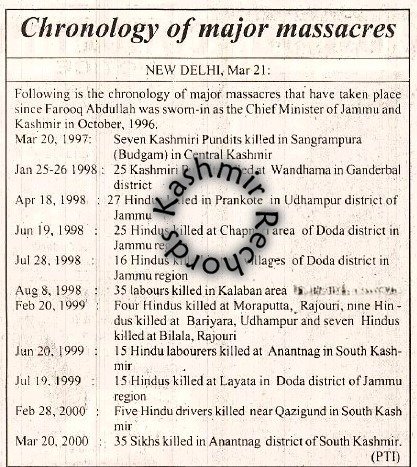
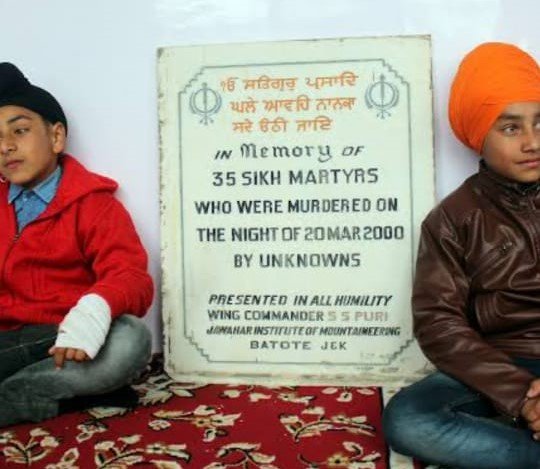
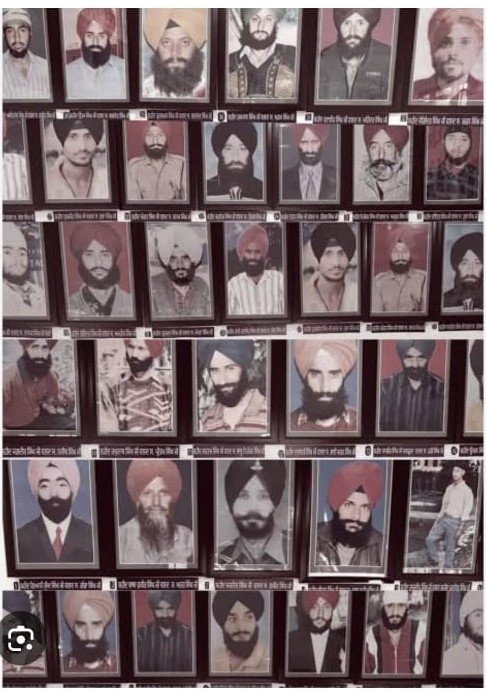
March 2000 was a season of jubilation in Kashmir. The air was filled with the spirit of Eid-ul-Azha, Holi—the festival of colors—and Nauroz, marking the Persian New Year. But what should have been a time of unity and festivity turned into an unspeakable tragedy. On the night of March 20, 2000, terrorists struck the peaceful village of Chittisinghpura in Anantnag district, leaving behind a trail of blood and sorrow. Thirty-five Sikh men were brutally gunned down in cold blood, shattering the sense of security of a community that had, until then, largely been spared from the horrors of militancy in Kashmir.
A Targeted Massacre on a Global Stage

The timing of the massacre sent shockwaves far beyond Kashmir’s borders. It coincided with the historic state visit of then-U.S. President Bill Clinton to India, leading many to speculate whether it was a calculated move by terrorists to gain international attention. While the identity of the perpetrators remains a matter of controversy, the Indian government pointed to the Pakistan-based Lashkar-e-Taiba (LeT) as the masterminds behind the attack. As with previous massacres, a vicious propaganda war ensued, with various factions attempting to shift blame onto government agencies.

Night of Terror: When Celebration Turned to Mourning

Dressed in Army fatigues, the terrorists  had arrived in two groups from opposite ends of the village, targeting the two Gurdwaras. Moving methodically, they went door to door, ordering Sikh men to step outside. In the dark of the night, they were lined up and mercilessly shot dead. It was a chilling scene—an execution-style mass murder that turned Holi’s vibrant hues into the crimson of spilled blood.

Khoon Ki Holi: A Journalist’s Eyewitness Report

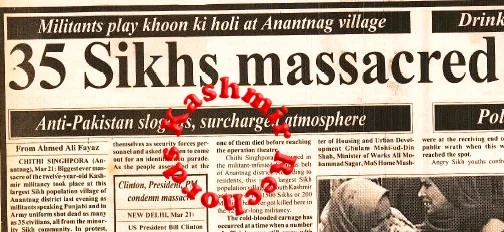
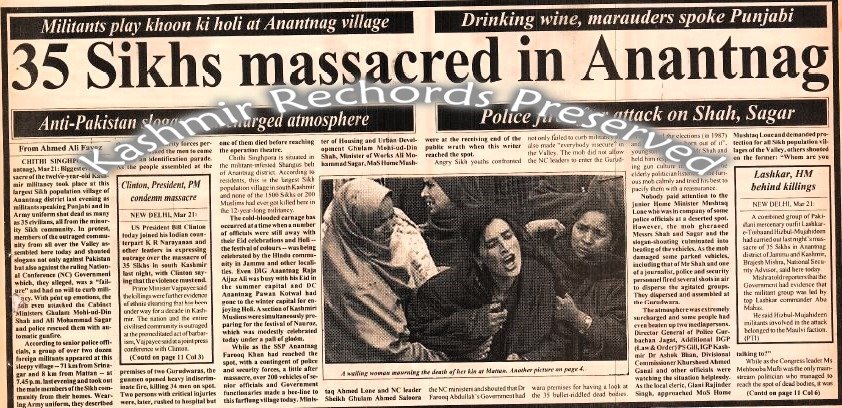
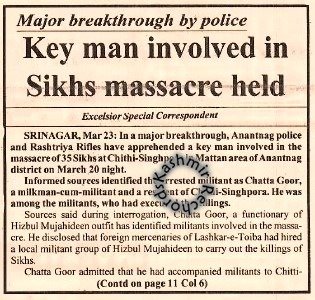
Veteran journalist Ahmad Ali Fayyaz was among the firsts to report from Chittisinghpura on that fateful day. His harrowing account, carried by Daily Excelsior, described the sheer brutality of the attack and the despair that gripped the survivors. The Sikh community, known for its resilience, was left shaken to its core. Kashmir Rechords is reproducing the newspaper cutting of that incident, with the byline of Ahmad Ali Fayyaz.

As news of the massacre spread, waves of anger swept through Jammu and Kashmir. The Sikh community, along with others, took to the streets in protest. Their fury was not just directed at Pakistan and militant groups but also at the ruling National Conference (NC) government, which they accused of failing to curb the growing militancy. The outrage even boiled over into physical attacks on Cabinet Ministers, as emotions ran high and trust in leadership crumbled.

A Region Caught Off Guard

Chittisinghpura lay in the volatile Shangus belt of Anantnag, an area already infested with militant activity. Yet, on that fateful night, security officials, according to Fayyaz,  were conspicuously absent. Senior officers, including DIG Anantnag Raja Aijaz Ali and DC Anantnag Pawan Kotwal, were away celebrating Eid and Holi, respectively. Even as Shia Muslims observed Nauroz under a shadow of grief the next day, a chilling realization set in—Kashmir’s minorities were no longer safe.
A Turning Point in Kashmir’s Conflict

The Chittisinghpura massacre marked a grim turning point in Kashmir’s turbulent history. Sikhs, who had largely been untouched by previous militant violence, became direct targets. The attack not only deepened the religious divide but also instilled a lingering fear among the region’s minority communities. Newspaper reports quoted a local milkman who had provided inputs and facilitated foreign militants to accomplish their nefarious designs.
Remembering the Fallen

Decades later, the scars of Chittisinghpura remain unhealed. Each year, the Sikh community commemorates the lives lost, honoring their resilience in the face of terror. Their story is a painful reminder of Kashmir’s unresolved turmoil, a chapter that continues to haunt the collective memory of those who lived through it.
Even as time moves on, the echoes of that fateful night linger—a stark reminder of the cost of conflict and the fragility of peace.
Avanti Foundation Brings Kashmiri Folklore to Life in California

(Kashmir Rechords Report)

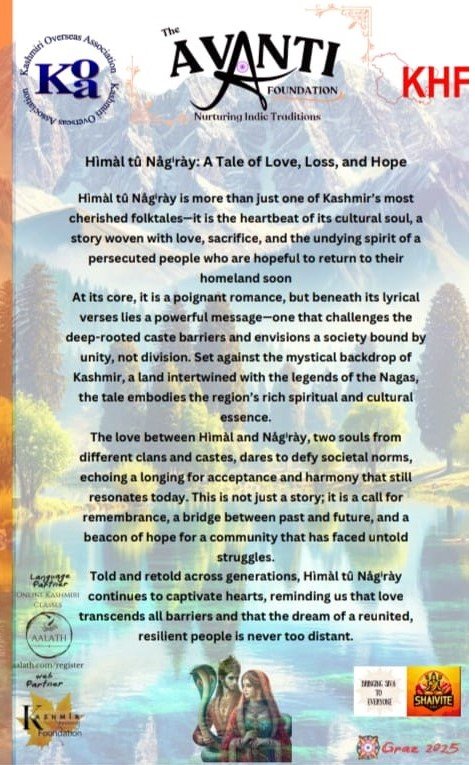
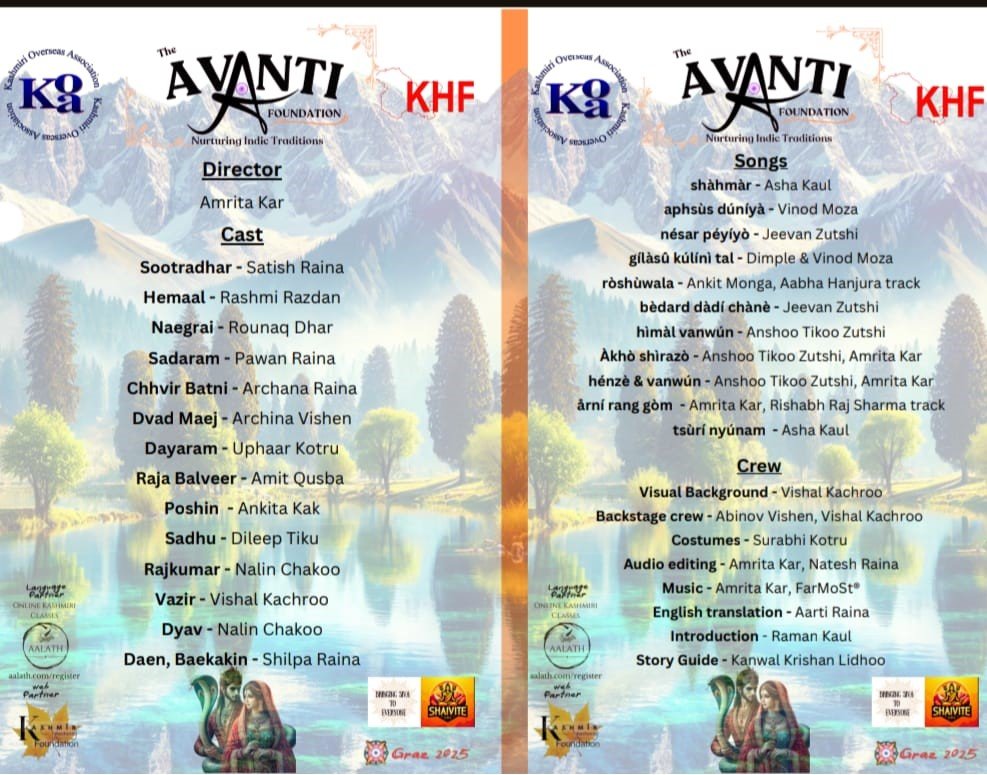
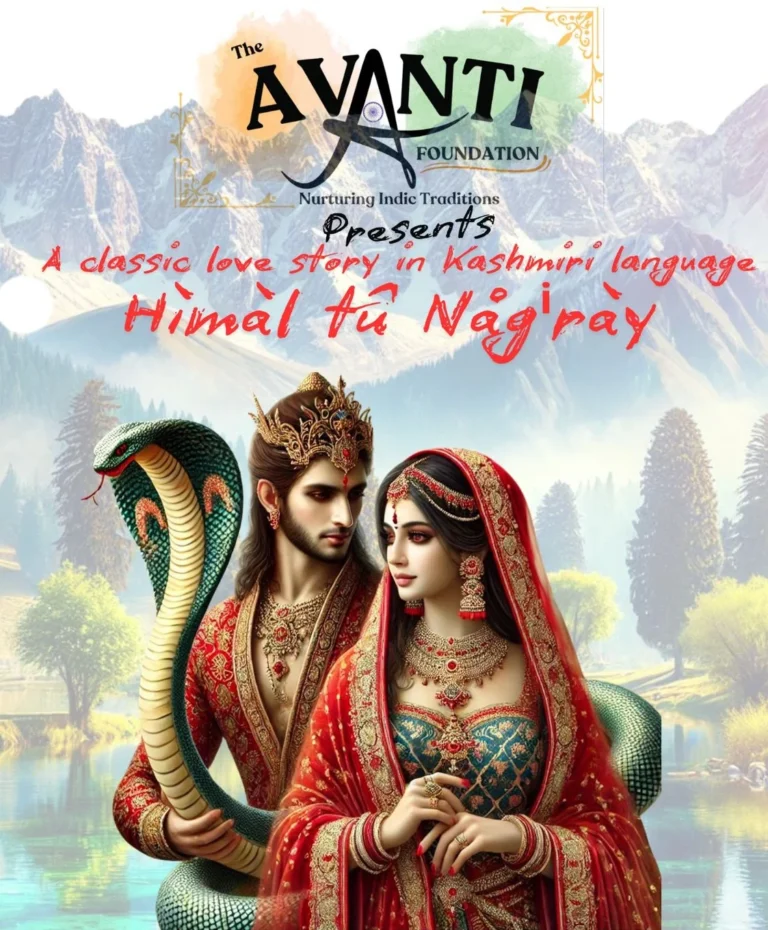
In a heartfelt endeavor to keep Kashmiri culture alive beyond its homeland, the Avanti Foundation, with the active support of organizations like Kashmir Overseas Association ( KOA), KHF, Online Kashmiri Classes, Aalath and Shaivite is set to stage the timeless Kashmiri folklore ‘Himal & Nagrai’ in an operatic form at Milpitas Library Auditorium, in California, USA on Saturday, March 15, 2025. This grand musical event, infused with poetry, narration and soulful renditions, seeks to rekindle cultural connections among the Kashmiri diaspora while supporting humanitarian causes.

Himal and Nagrai—A Tale of Love, Loss and Hope!

Founded with the dual mission of helping build The Avanti City while fostering Indic values and extending humanitarian aid, the Avanti Foundation has continuously strived to create meaningful cultural experiences. This initiative has received a support from Kashmir Rechords Foundation, spearheaded by its Director, Kanwal Krishan Lidhoo, a renowned Kashmiri writer and broadcaster. Kashmir Rechords has played a modest role in shaping the event’s narrative and media outreach, ensuring that the play strikes a chord with Kashmiris worldwide.

Who is Who in Himal and Nagrai

At the heart of this opera is the celebrated playwright and Padma Shri awardee Shri Moti Lal Kemmu, whose literary craftsmanship breathes life into the tale of Himal and Nagrai—a saga of eternal love, resilience and fate. This production is more than just a theatrical marvel; it is also a philanthropic venture, raising funds for Project Drishti, https://sewausa.org/ProjectDrishti which provides medical aid in the field of ophthalmology.

A Labour of Love and Dedication

The journey of bringing this opera to the stage has been nothing short of inspiring. The artists—though not professionally trained in stagecraft—have poured their hearts into rehearsals, mastering the nuances of performance through sheer passion and determination.

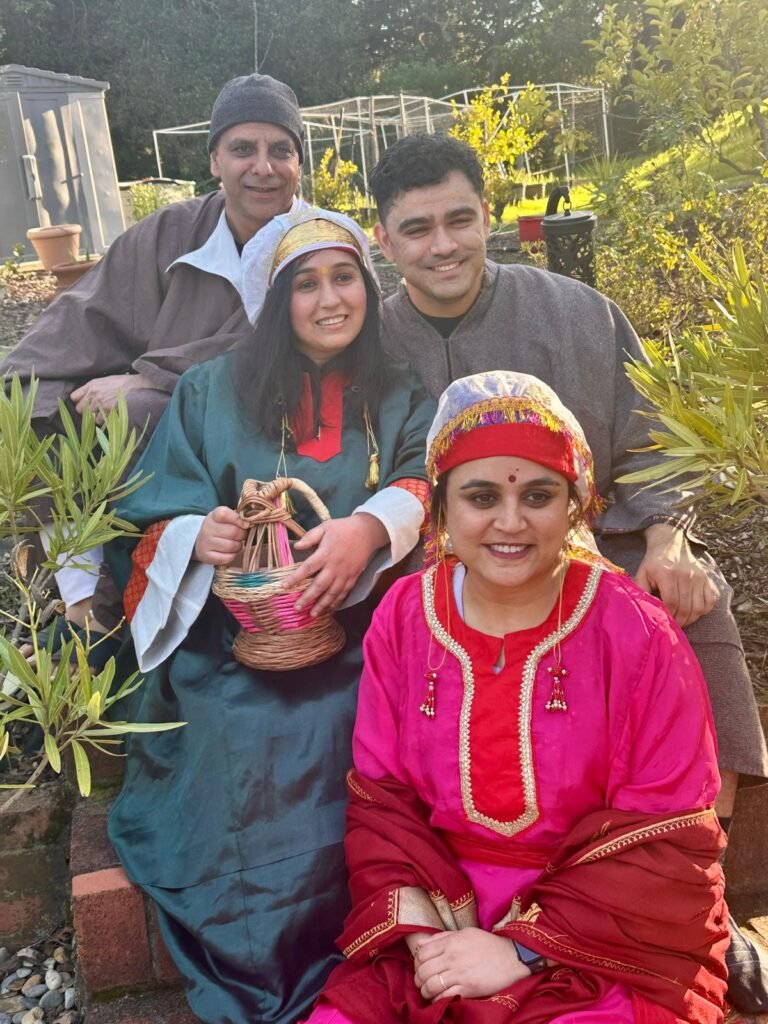
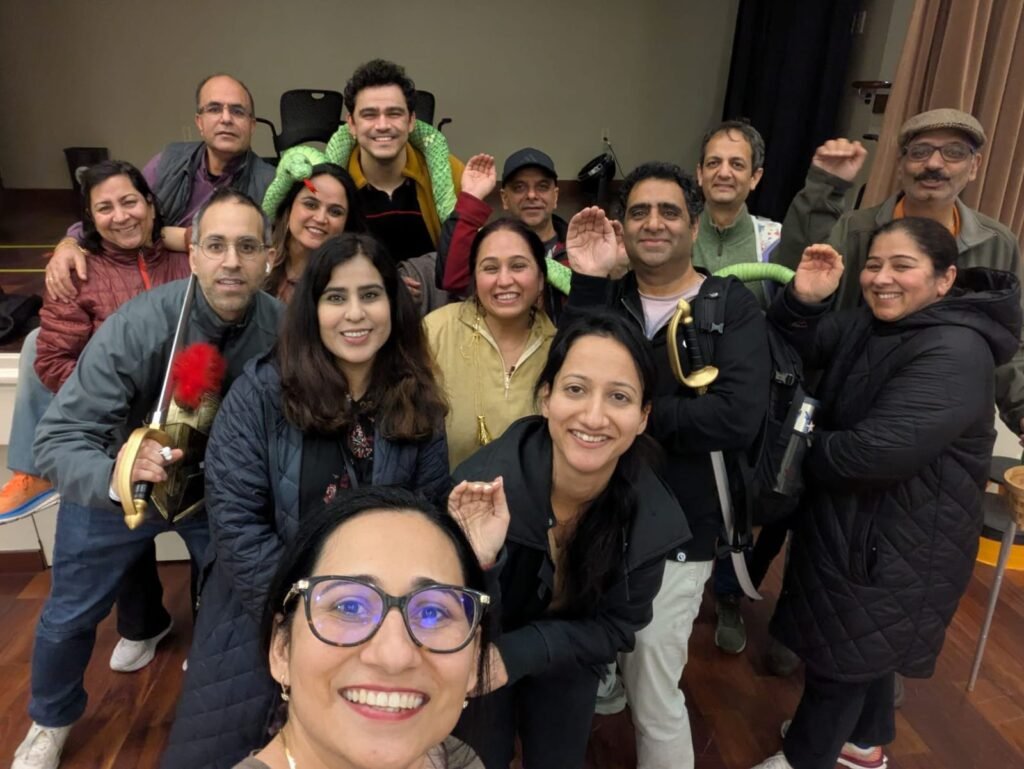
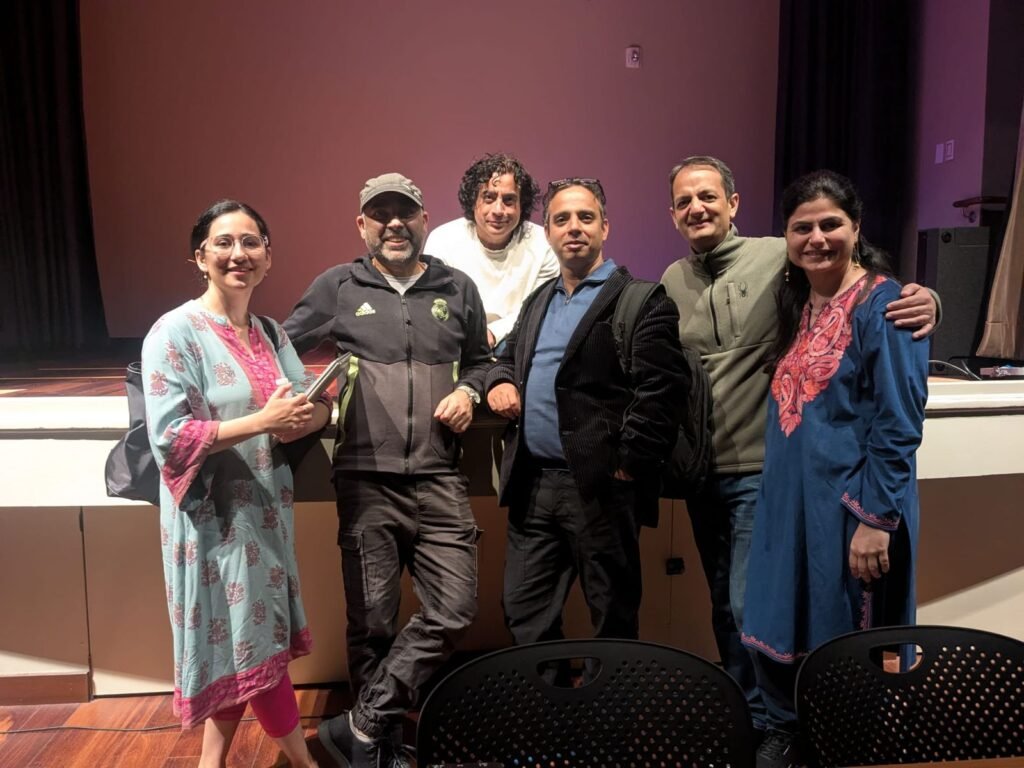
Artists in Traditional Kashmiri Attire Set to Bring ‘Heemal and Nagrai’ to Life on Stage

A key driving force behind this project has been Ms. Amrita Kar, whose meticulous direction and creative insights have helped shape the production. Each artist, committed to authenticity, has arranged their own costumes and props, reflecting the deep emotional investment in  trying  to preserve  their cultural roots. The synergy during practice sessions has been electric, a testament to the shared love for their heritage.

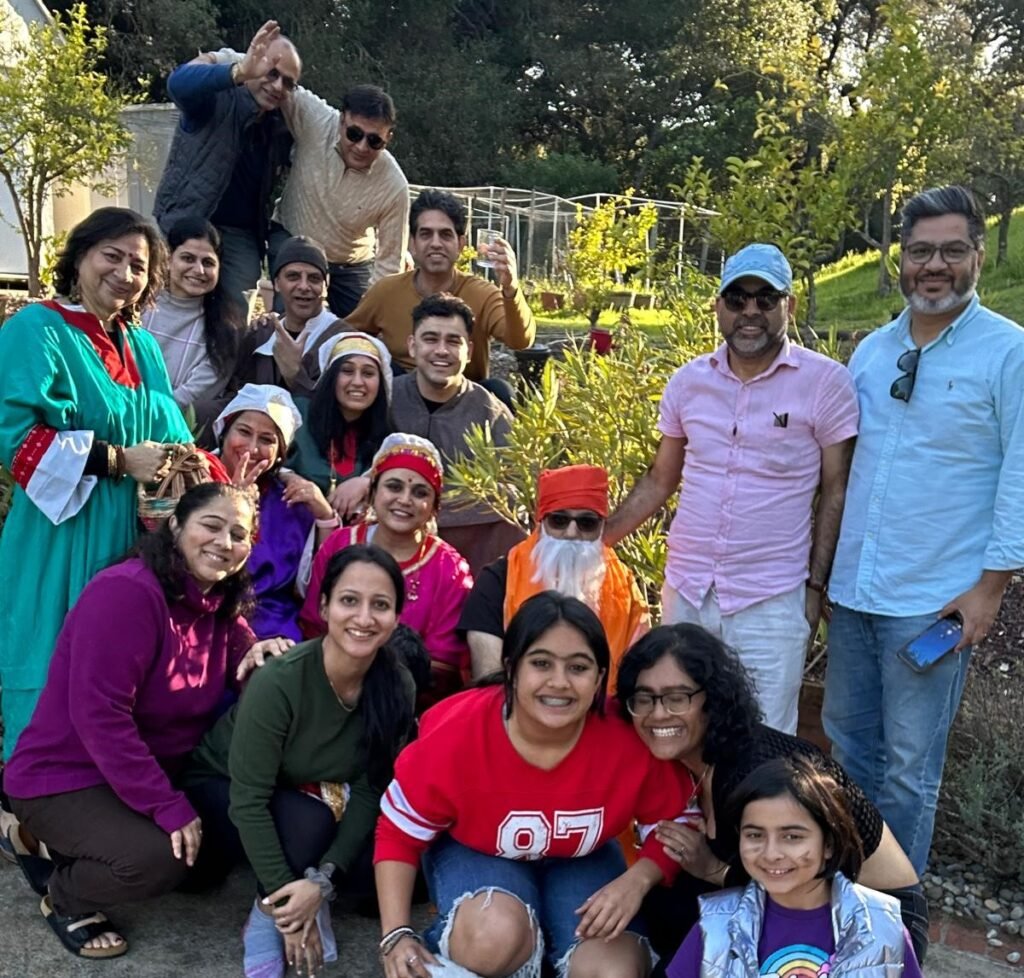
Ready to Perform–Himal and Nagrai.

With an expected jam packed Auditorium, the event promises to be a cultural milestone for Kashmiri Pandits in exile, offering a spiritual and artistic homecoming far from their land of origin.

For more details and inquiries, the Avanti Foundation can be contacted at 341-248-8677 or via email at sanjeevkak@theavantifoundation.org.

A  Rare 1893 Book on Kashmiri Pandits!

(Kashmir Rechords Team)

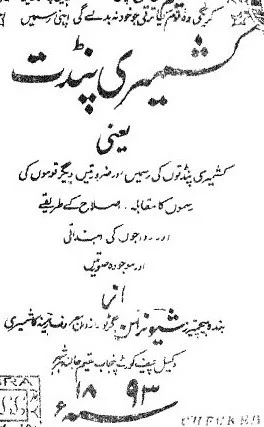
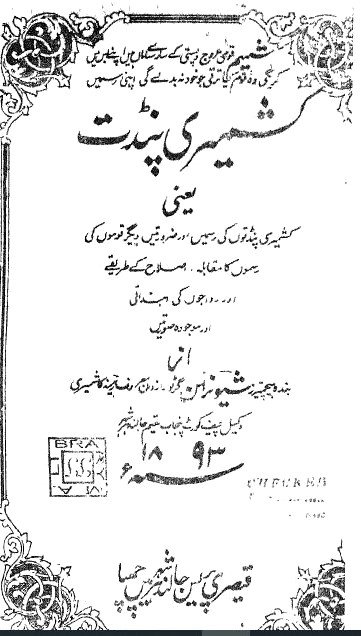
While numerous books have been written about Kashmir and its Pandit community, a rare and unique work from 1893 stands apart. Written in Urdu, this book offers a deep insight into the lives of Kashmiri Pandits who had settled outside Kashmir, capturing their cultural evolution and integration into the broader Hindu society across India.

Penned by Advocate Shiv Narayan (Gurtu Razdan), also known as Raina Kashmiri and published by Kesari Press, Jalandhar, this remarkable book has been meticulously preserved at Aligarh Muslim University. Kashmir Rechords (www.kshmir-rechords) recently had the privilege of accessing and examining its pages, uncovering a wealth of information previously unreported.

Pic Courtesy: Aligarh Muslim University

Shiv Narayan, as per the book, belonged to a family that had migrated from Kashmir to various parts of India before finally settling in Delhi, earning them the title of ‘Dilli Wale’.  However, he himself was born and raised in Punjab and pursued a legal career at the Chief Court in Jalandhar. Dedicated to his fellow Kashmiri Pandit, Dewan Ram Nath Sahab Madan, a District Judge in Punjab at the time, the book spans 150 pages and presents an unfiltered portrayal of the community, discussing both its strengths and shortcomings.

In the foreword, the author acknowledges the likelihood of both praise and criticism for his candid observations but remains resolute in his commitment to truth. He implores his community members to view his work with an open mind, asserting that such a publication was necessary to document their history and heritage.

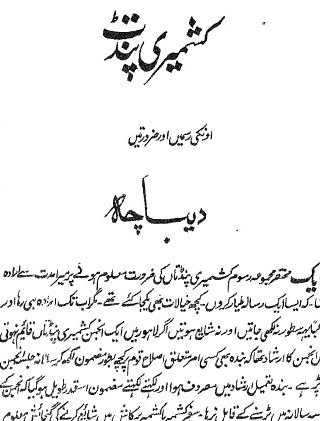
Pic Courtesy: Aligarh Muslim University

Shiv Narayan laments the absence of literature highlighting the contributions and culture of Kashmiri Pandits who had settled in other parts of India. He categorizes them into two broad groups: ‘Kashmiri Pandits of Punjab’ and ‘Kashmiri Pandits of Hindustan.’ His intent in writing this book, despite potential backlash, was to bring their journey to the forefront.

Expressing his wish that an outsider had undertaken this task for a more objective perspective, he ultimately took it upon himself to showcase the traditions and heritage of Kashmiri Pandits to the larger Indian Hindu society. He also references two contemporary journals—Safeer-e-Kashmir and Kashmir Prakash—which occasionally touched upon the plight of Kashmiri Pandits but, in his view, inadequately so, further compelling him to document their story.

Reason Behind Exodus

The  1893 book focuses exclusively on Kashmiri Pandits who were compelled to flee their homeland and establish roots in different parts of India. Despite their displacement, they steadfastly preserved their traditions while simultaneously adapting to their new surroundings.

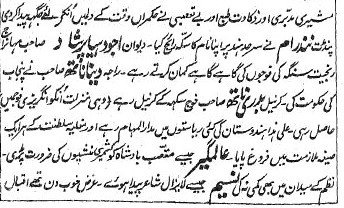
One of the book’s significant chapters explores the reasons behind their exodus from Kashmir. While religious persecution is identified as the primary cause, Shiv Narayan also cites recurring famines and the pursuit of economic opportunities as crucial factors both for Pandits and Muslims of Kashmir. He highlights the achievements of notable Kashmiri Pandits such as Pt Nand Ram, Deewan Ajodhya Prasad, Raja Dina Nath and Colonel Badri Nath, who excelled in their respective fields despite their displacement.

Pic Courtesy: Aligarh Muslim University

Subsequent chapters delve into the community’s traditions, customs, attire, cuisine and rituals surrounding life and death. The book also details the festivals celebrated by Kashmiri Pandits in mainland India before 1893, including those they assimilated from local traditions to foster harmony with their neighbours.

For scholars and researchers interested in exploring this invaluable historical document, Kashmir Rechords offers a full transcribed version of its contents. Inquiries can be directed to support@kashmir-rechords.com or kashmirrechords@gmail.com.

Swami Ram Ji: The Revivalist of Kashmir Shaivism and His Disciples

(By: K R Ishan)

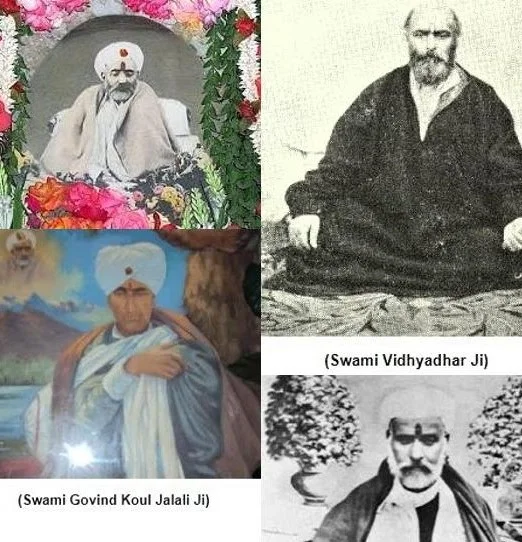
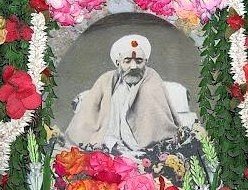
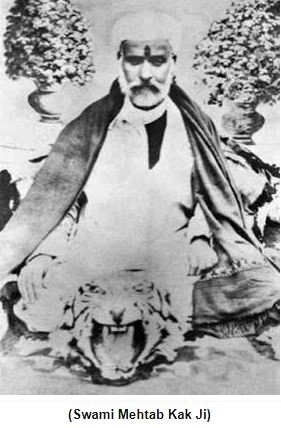
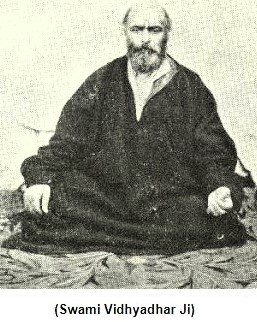
Kashmir, often referred to as the cradle of Shaivism, has been home to many pious souls who mastered the spiritual and philosophical traditions of the region. Among these towering figures, Swami Ram Ji stands as a beacon of Kashmir Shaivism, reintroducing and revitalizing the Trika philosophy at a crucial juncture in history. His legacy was carried forward by his three eminent disciples—Swami Govind Kaul Jalali, Swami Mahtab Kak and Swami Vidyadhar—who helped preserve and spread his teachings.

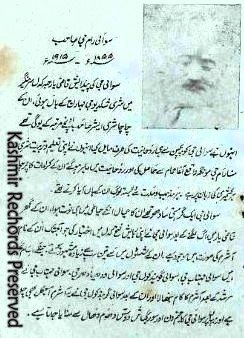
Details about Swami Ram Ji published in early 1970s

Born in 1855 to Shukdev Ji of Qaziyar, Habba Kadal, Srinagar, Swami Ram Ji exhibited spiritual inclinations from an early age. This is recorded in a pamphlet published in Urdu in early 1970s and preserved by kashmir-rechords.com . Under the guidance of his father, he received his initial education before delving into the profound depths of Shaiva philosophy under the tutelage of Shri Lala Joo Kokru. His uncle, Ishwar Saheb, a highly revered yogi, further imparted invaluable insights into the practice of Kashmir Shaivism.

Another pivotal figure in his spiritual evolution was Sri Manas Ram Monga, popularly known as Maneh Kak, who introduced him to the Kaula system of Kashmir Shaivism. Ram Ji wholeheartedly devoted himself to intense yogic practice while upholding familial responsibilities. Following the unfortunate gutting of his ancestral home, he relocated to Fateh Kadal, where he continued his spiritual journey.

The Spiritual Luminary and His Teachings

At Fateh Kadal, Swami Ram Ji established himself as an erudite scholar and practitioner of Shaiva-Agama (Advaita Kashmir Shaivism), drawing numerous devotees, including householders. His three most distinguished disciples—Swami Govind Kaul Jalali, Swami Mahtab Kak and Swami Vidyadhar—became torchbearers of his teachings. His influence even reached the royal court, with the then ruler of Jammu and Kashmir being counted among his ardent followers. At a time when Shaivism had receded into the background due to political and social upheavals, Swami Ram Ji’s relentless efforts revived and reinvigorated the spiritual doctrine. His unparalleled contributions earned him the title of Paramsidha Swami Ramji Maharaj, symbolizing his supreme mastery over Shaivism. He attained Samadhi at Ram Shaiva Trik Ashram in Srinagar in 1915, leaving behind a rich spiritual legacy.

Swami Govind Kaul Jalali: The Mystic Poet

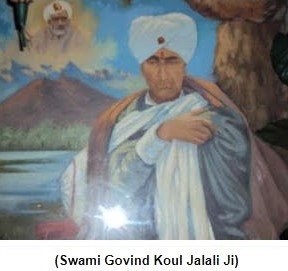
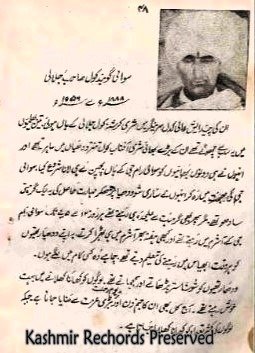
Among Swami Ram Ji’s disciples, Swami Govind Kaul Jalali (1888–1956) emerged as a profound spiritual poet and scholar. Born in Ali Kadal, Srinagar, to Sri Krishan Kaul Jalali, he was the youngest of three brothers. His elder brother, Aftab Kaul, a master of Tantra Vidya, encouraged him to become a disciple of Swami Ram Ji. Under his Guru’s guidance, he immersed himself in Shaiv Vidya. His devotional compositions reflect a unique synthesis of Sanskrit, Persian and Arabic influences. Rich in imagery, his bhajans resonate with the essence of Omkara, emphasizing deep meditation and constant spiritual practice. In his mystical poetry, he explores themes of longing and divine union, blending pain and joy in a seamless spiritual experience. His work continues to inspire seekers on the path of self-realization.

Details about Swami Govind Koul Jalali.

The Enduring Legacy of Swami Mahtab Kak and Swami Vidyadhar

Swami Mahtab Kak and Swami Vidyadhar, the other two prominent disciples of Swami Ram Ji, also attained mastery over Kashmir Shaivism. Their contributions to the Trika philosophy remain a subject of research and reverence among scholars worldwide. Their dedication ensured that the profound wisdom of Kashmir Shaivism continued to thrive despite the passage of time.

The Guru-disciples’ monumental efforts in reviving Kashmir Shaivism have left an indelible mark on the spiritual history of the region as they  carried forward ancient teachings,  besides safeguarded the philosophical traditions that define Kashmir’s spiritual identity. Even today, scholars and seekers worldwide explore the essence of Kashmir Shaivism and the Trika philosophy, testifying to the enduring influence of Swami Ram Ji and his devoted disciples.

Revisiting February 1986 Anantnag Riots!

(Kashmir Rechords Exclusive)

The plight of Kashmiri Pandits has once again resurfaced in Jammu and Kashmir’s political discourse. This time, the infamous Anantnag riots of 1986—often considered the precursor to the mass migration of 1990—are being widely discussed across social media platforms. Despite its significance, the 1986 riots have long been underplayed, leaving many to wonder why such a pivotal moment in history has been largely ignored.

A Sudden Spotlight: Political Motives or Genuine Reflection?

The renewed interest in the 1986 riots by certain political figures raises an obvious question: why now? What has prompted this sudden acknowledgment of past injustices? While answers remain elusive, one undeniable fact is often overlooked—at the time of these attacks, key administrative and law enforcement positions in Jammu and Kashmir were held by Hindus. Yet, despite their influence, they failed to protect Kashmiri Pandits and their sacred shrines.

One cannot help but question why such a catastrophe was allowed to unfold when figures such as D.D. Thakur (Deputy Chief Minister), R.K. Thakkar (Chief Secretary), M.M.K. Khajooria (Director General of Police), Dr. A.S. Anand (Chief Justice) and Dr. S.S. Balowria (Divisional Commissioner, Jammu) were in power. Even T.S. Thakur, who later became Chief Justice of India, was then President of the Jammu Bar Association. Yet, a vulnerable minority was left defenceless against organized violence, arson and the desecration of its places of worship.

The Seeds of Exodus: A Planned Onslaught

While the 1986 Kashmir riots have largely been underreported. Archival material from some newspapers of that time, who carried the incident and are available with Kashmir Rechords,  sheds light on a disturbing pattern. The violence in Kashmir began in Wanpoh village of Anantnag district before spreading rapidly to other nearby villages like Dayalgam and Luk Bhawan, eventually reaching Srinagar. Temples were torched, idols desecrated, businesses looted and homes vandalized. Even after Maha Shivratri on March 8, 1986, the terror did not subside, spreading further to Pulwama, Tral, Sopore and Baramulla.

Interestingly, the tensions did not originate in Kashmir but in Jammu on February 17, 1986, where anti-Hindu and anti-national slogans escalated into violence. Soon, this unrest spilled into Kashmir, targeting Pandit homes, businesses and shrines in what appeared to be a well-coordinated effort rather than spontaneous mob fury.

The Global Trigger: Al-Aqsa Mosque, Ayodhya’s Ram Janmabhoomi

The riots of 1986 were not isolated incidents but were exacerbated by global and national events. The purported desecration of the Al-Aqsa Mosque in Jerusalem on February 3, 1986 had acted as a catalyst, sparking few protests in Kashmir. Religious extremists seized the moment, further fuelling communal tensions in Jammu after two weeks. Simultaneously, the reopening of the Ram Janmabhoomi temple in Ayodhya became another flashpoint for aggression. In the meantime, matters escalated when Chief Minister G.M. Shah’s reported proposal to construct a mosque inside Jammu’s Civil Secretariat ignited further discord.

The ensuing turmoil led to widespread attacks on Hindu-owned businesses and temples across Kashmir, including the burning of the historic Akhara Building Complex in Srinagar. The violence reached such a peak that the Indian Army had to be deployed to restore order, and even the Wills Trophy cricket tournament in Jammu was postponed due to the unrest.

Administrative Lapses, Delayed Justice

The state government attempted to downplay the scale of destruction. DGP Khajooria blamed groups like Jamaat-e-Islami for violence in Kashmir and Shiv Sena for disturbances in Jammu—claims denied by both. Despite promises, many desecrated temples were never restored, leaving the Kashmiri Pandit community to rebuild them through their own resources.

Evidence suggests that elements within the lower bureaucracy were complicit in the violence. On February 27, 1986, the Deputy Commissioner and Superintendent of Police in Anantnag were suspended for negligence, and nine government officials, mostly teachers, were dismissed for aiding rioters. Ironically, instead of condemning the attacks, local residents in Anantnag observed a hartal against the suspension of these officials.

As law and order continued to deteriorate, Governor Jagmohan took charge on March 7, 1986, following the dismissal of G.M. Shah’s Ministry. Jagmohan’s decisive action was widely credited with restoring normalcy. However, history took an ironic turn in 1990 when the same man was vilified—accused of “engineering” the Kashmiri Pandit exodus by politicians who had earlier ignored their plight.

The Aftermath: A Community on the Brink

By the late 1980s, the Kashmiri Pandit community had begun bracing for the worst. Many families started purchasing property in Jammu, particularly in areas like Chinore, Bantalab, and Tope Sherkhania, sensing the impending storm. The Anantnag riots were not an isolated event but a precursor to the full-scale exodus of 1990—one of the darkest chapters in Kashmir’s history.

Keeping the Memory Alive

The 1986 Anantnag riots remain a painful yet often overlooked episode. Some may question the relevance of revisiting these events, but remembering history is crucial—not for vengeance, but for understanding. Only by acknowledging the past can we hope to ensure that such tragedies are never repeated. Some of the attached newspaper reports from that era reveal significant yet overlooked truths, backed by authentic evidence. Kashmir Rechords intends to share such newspaper cuttings on demand to those who are seriously perusing the darkest chapter of Anatnag riots.

A Kashmiri Pandit in Rangoon: A Forgotten Chapter from a Unique Directory!

(Kashmir Rechords Exclusive)

Ever heard of a Kashmiri Pandit family residing in Rangoon—now known as Yangon, the largest city and former capital of Burma (Myanmar)? If not, here’s a fascinating piece of history documented in a rare directory compiled  in Urdu by the Kashmiri Pandit Association of Delhi between 1925 and 1935, later published in 1936.

This directory is more than just a record—it is a treasure trove of historical insights. It chronicles the migration of Kashmiri Pandits as early as the 17th century, mapping their presence in 118 cities and towns across the Indian subcontinent. Kashmir Rechords has extensively covered some portion of this remarkable document, bringing forth lesser-known facts about the dispersed Kashmiri Pandit community.

Beyond the Myth: Kashmiri Pandits in Unseen Struggles

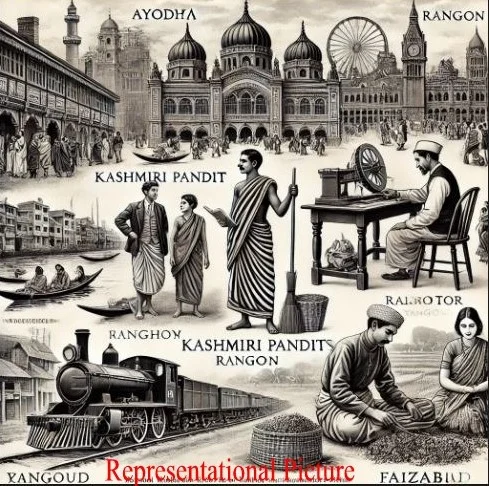
One of the most compelling revelations from the 1936 Directory is that not all Kashmiri Pandits who left their homeland secured high-ranking posts or prosperous careers. While some did rise to prominence, many found themselves scattered across unfamiliar lands, taking up modest jobs for survival. From working in agriculture to manual labour, their journey defies the conventional perception of Kashmiri Pandits as solely occupying elite positions in British India.

Details of Ganjoo Family of Rangoon

The Lone Kashmiri Pandit Family in Rangoon

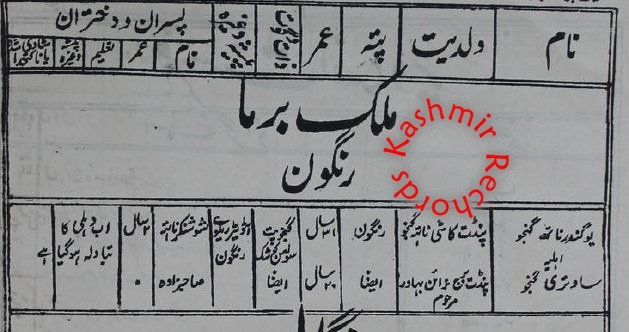
Among those documented was the family of Kashi Nath Ganjoo, the only Kashmiri Pandit family residing in Rangoon. His son, Yoginder Nath Ganjoo, 31, worked as an auditor for the Railways. He was married to Savitri, 20, daughter of late Brij Narayan Bahadur Ganjoo. The couple had two children—a two-year-old son, Shiv Shanker Nath, and a newborn whose ‘naamkaran’ (naming ceremony) was yet to be performed. In 1936, Yoginder was, however, transferred to Delhi, leaving behind his father, Kashi Nath Ganjoo, in Rangoon.

A Community Dispersed Far and Wide

The  unique Directory unveils the widespread presence of Kashmiri Pandits beyond well-known cities like Lahore, Karachi, Jodhpur, Rawalpindi, Sialkot, Calcutta, Lucknow and Hyderabad. Their footprints extended to then lesser-prominent towns such as Aara (Bihar), Hathras (UP), Ayodhya, Chapra, Jhang, Jehlum, Sargodha, Sheikhupura, Ajmer, Almora, Alwar, Udaipur, Bharatpur, Chittor, Ujjain, Indore, Rewa, Amravati and even Bilaspur-Raipur.

Details of Shyam Nath Kaul, a labourer at Ayodhya Ghat

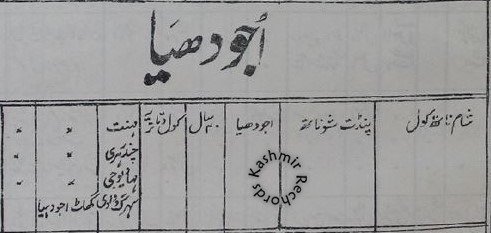
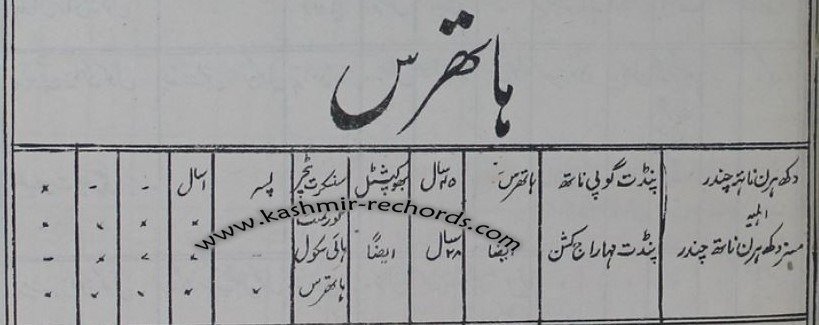
At Ayodhya, a young man named Sham Nath Kaul, 20, son of Pt. Shiv Nath, worked as a labourer at Chanderhari, Mahadevji Swargwadi Ghat. At Hathras, Dukhnarayan Nath Chandra, 45, son of Gopinath, served as a Sanskrit teacher at the Government High School. Meanwhile, in Faizabad, Tej Krishan Ganjoo toiled in the fields to make ends meet.

Details of Sanskrit Teacher at Hathras.

Preserving a Vanishing Legacy

The 1936 directory serves as an irreplaceable historical document, preserving stories of resilience, struggle and adaptation. It offers a rare glimpse into the lives of Kashmiri Pandits who ventured beyond their homeland, some in search of opportunities, others driven by necessity.

For those interested in exploring more about this unique directory, here are some previously covered stories by Kashmir Rechords:

  1. Kashmiri Pandits’ Unique Directory of 1936
    Read here
  2. A Kashmiri Pandit Who Shaped Lahore’s Administration
    Read here
  3. A Forgotten Kashmiri Pandit Temple in Pakistan’s Gujrat
    Read here

Based on this  extraordinary directory, Kashmir Rechords will  continue to unearth lost narratives of Kashmiri Pandits, reshaping our understanding of their diasporic existence.

Legacy of the Zutshi Clan: A Story of Excellence, Unsung Heroes

(Kashmir Rechords Special)

The Zutshi clan of Kashmir has left an indelible mark in diverse fields, earning recognition across generations. Whether it were the Zutshis who had migrated to mainland India before 1947 or those who established themselves in independent India, their contributions have been extraordinary. From Science, Art and literature to acting, Urdu literature, media, spying and even regulatory bodies like TRAI, the Zutshis have carved a niche for themselves. Notable figures such as Lambodarnath Zutshi, Somnath Zutshi, Tribhavan Nath Zaar Zutshi, Shyama Zutshi, B.K. Zutshi, and J.N. Zutshi exemplify this remarkable legacy.

The Unsung Hero: Dina Nath Zutshi

While many have received their due recognition, one name remains relatively unsung—Dina Nath Zutshi, a pioneering radio artist of All India Radio, Lahore. Dina Nath Zutshi was widely celebrated for his distinctive voice, impeccable drama skills and exceptional dialogue delivery. His contributions to radio drama remain unparalleled, yet his story is lesser known compared to other luminaries of his clan.

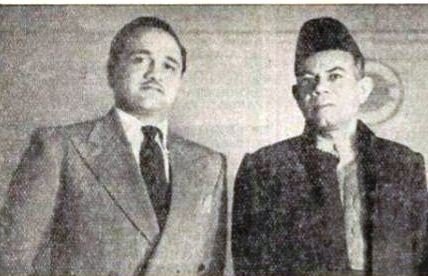
Dina Nath Zutshi (Right) with fellow Actor, Om Prakash

A Close Bond with Actor Om Prakash

One of his closest associates in the world of radio was Om Prakash (Chibber), a fellow radio drama artist at All India Radio, Lahore. Their bond was significant as they both hailed from the princely state of Jammu and Kashmir—Dina Nath Zutshi from Kashmir and Om Prakash from Jammu. Om Prakash (19 December 1919 – 21 February 1998) eventually became a renowned character actor in Hindi cinema, much like Dina Nath Zutshi. Both artists began their careers at All India Radio in undivided India before moving to Bombay (now Mumbai) following the Partition of 1947.

Dina Nath Zutshi’s Bollywood Journey

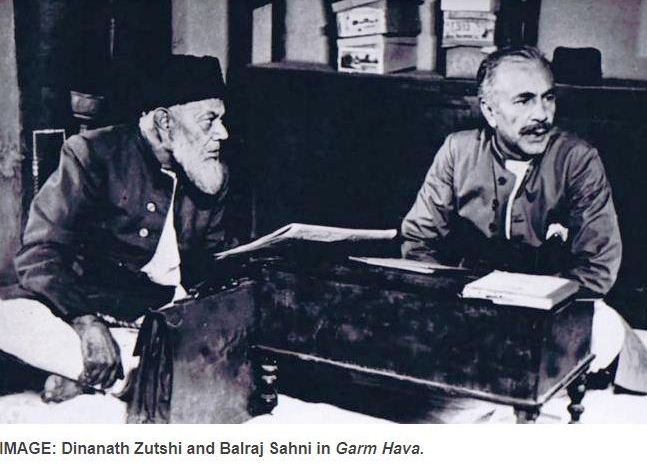
Dina Nath Zutshi made his mark in Bollywood, gaining recognition for his performance in many movies, including the critically acclaimed film Garm Hava (1973). In the film, he played the role of Halim Mirza, the elder brother of the protagonist, Salim Mirza, portrayed by Balraj Sahni. His nuanced performance in Garm Hava highlighted his ability to bring depth and realism to his characters, cementing his reputation as a formidable actor.

A Legacy That Continues

Born in Srinagar, Kashmir, into a distinguished Kashmiri Pandit family, Dina Nath Zutshi’s artistic legacy did not end with him. His talent and passion for performance were carried forward by his descendants, with actor Raj Zutshi, his grandson, continuing the family’s engagement with the cinematic world.

The story of the Zutshi clan and particularly that of Dina Nath Zutshi, is one of artistic brilliance, perseverance, and cultural influence. Though some names have shone brightly in public memory, others like Dina Nath Zutshi deserve greater recognition for their invaluable contributions. His journey from the radio studios of Lahore to the silver screen in Bombay stands as a testament to the resilience and talent of the Kashmiri Pandit community, whose legacy continues to inspire generations.

Exploring the Legacy of Prominent Zutshis of Kashmir

For those keen on discovering the remarkable contributions of the Zutshi lineage in Kashmir, Kashmir Rechords has chronicled the lives of several distinguished figures across diverse fields. Delve into their stories through the following insightful articles:

📌 Shyama Zutshi – Kashmir’s First Bollywood Heroine
Read more

📌 A Tale of Two Somnath Zutshis – A fascinating account of two notable names.
Read more

📌 Lambodhar Zutshi – A Pioneer of Science Among Kashmiri Pandits
Read more

📌 Poet Tribhuwan Nath Zutshi – An Unsung Literary Voice of Kashmir
Read more

📌 J. N. Zutshi – The First Director General of Radio Kashmir
Read more

📌 A Kashmiri Pandit Diplomat, Spy, and Historian Buried in Delhi
Read more

These articles offer a window into the extraordinary lives of these luminaries, shedding light on their influence and enduring legacies. Happy reading!

Forgotten Broadcaster: The Untold Story of Lassa Kaul

(By: Kanwal Krishan Lidhoo*)

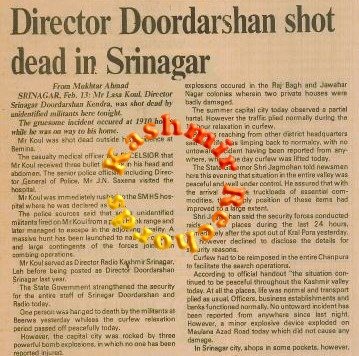
Every year, on February 13, the world celebrates World Radio Day, a tribute to the power of radio in shaping societies and fostering communication. But amid the global festivities, an unsettling silence persists around a man who gave his life for the very medium we commemorate—Lassa Kaul, a broadcaster, administrator and son of the soil. It was on February 13 in 1990 that  Lassa Kaul was gunned down in Srinagar, Kashmir, paying the ultimate price for his unwavering commitment to the truth. Yet, 35 years later, his sacrifice has been all but erased from the annals of Indian Broadcasting!

A Life Dedicated to Public Service

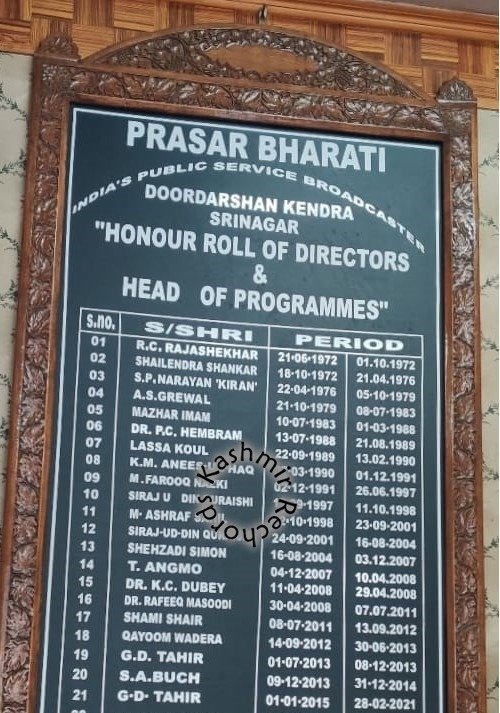
Lassa Kaul was no ordinary media professional. Having worked at Radio Kashmir Srinagar (now AIR Srinagar), he later assumed the role of Director at Doordarshan Kendra Srinagar at a time when the Valley was slipping into chaos. By 1989, insurgency had tightened its grip and the airwaves had become a battleground. Terrorists sought control over what was broadcast, and Kaul’s refusal to bend to their will made him a marked man

Lassa Kaul and T. N Dhar ( Middle), Station Engineer, in conversation with S. B Lal, Secretary, Ministry of Information and Broadcasting, Government of India at Radio Kashmir, Srinagar.

Taking charge of Doordarshan Srinagar on September 22, 1989, Kaul faced an environment where law and order had already collapsed. Yet, he remained steadfast in his duty, determined to uphold the integrity of the Nation’s airwaves. Little did he know that his tenure would last less than five months. On February 13, 1990, he was shot dead, reportedly betrayed by insiders who leaked his whereabouts to his killers!

Short Stint: 07-Lassa Koul: 22-09-1989 To 13-02-1990
A news report published in Sunday Mail, dated March 11, 1990

Erasing a Legacy

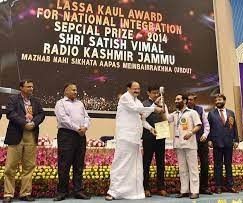
For a time, Kaul’s bravery was acknowledged. The Ministry of Information and Broadcasting instituted the Lassa Kaul Award for National Integration, given to the best national integration feature or documentary aired on All India Radio. Year after year, this award ensured that Kaul’s name lived on, stirring the collective consciousness of a Nation. But after 2019, without explanation, the award was discontinued. The annual Akashvani Awards ceremony—where the honor was last conferred—has since ceased to exist.

And so, a man who laid down his life for his profession, for his Nation, for the freedom of the press, has been systematically erased. His name is absent from the corridors of Prasar Bharati, Doordarshan and Akashvani. There is no portrait, no plaque, no mention of his contribution—not in Srinagar, not in Delhi, not anywhere in the institutions he once served with devotion!

A Nation’s Amnesia

This neglect is not an isolated incident. M.L. Manchanda, an All India Radio officer from Patiala, was abducted by terrorists on May 18, 1992. His beheaded body was found days later, his head discarded miles away. Yet, like  Lassa Kaul, his name too has faded into oblivion.

It is a bitter irony that Akashvani and Doordarshan, institutions that pride themselves on upholding national unity, have abandoned the very people who died defending their integrity. Even as Prime Minister Narendra Modi envisions a resurgent India, where national heroes are honored, the bureaucratic machinery has chosen to forget those who truly lived—and died—for the Nation.

A Call for Remembrance

It is time to right this wrong. Lassa Kaul’s name must be restored to the place it belongs—not just in history books, but in the living memory of Indian Broadcasting. The Lassa Kaul Award for National Integration must be reinstated, and his contributions must be publicly acknowledged.

Former I&B Minister and Vice President, Shri Venkaiah Naidu giving away Lassa Kaul Award for National Integration to Satish Vimal of Radio Kashmir Jammu. This Award has since been abandoned by All India Radio! On the extreme left is S.S.Vempati, former CEO Prasar Bharati.

For a Nation that swears by “Lest We Forget,” we have already forgotten too much. But it is not too late to remember. And more importantly, it is not too late to honor.

Lassa Kaul was, and will always remain, a National icon. The question is: Will we allow history to erase him, or will we choose to keep his legacy alive?

* Kanwal Krishan Lidhoo, a Renowned Broadcaster and Author, is an accredited translator of Kashmiri, Urdu and Hindi by Sahitya Akademi New Delhi and Indian Institute of Languages Mysore. He is Director of Kashmir Rechords and can be accessed at: support@kashmir-rechords.com or kashmirrechords@gmail.com

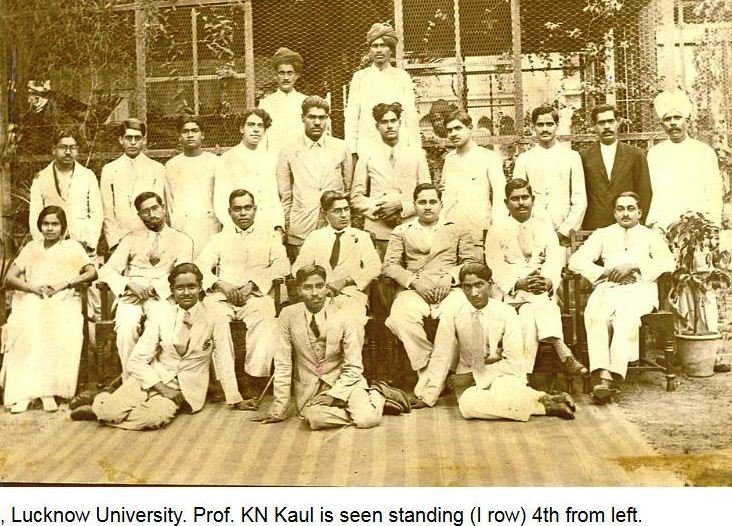
Kailas Nath Kaul: A Kashmiri Pioneer in Botany, Agri Science

(Kashmir Rechords Desk)

Kailas Nath Kaul, a distinguished Indian botanist, naturalist, agricultural scientist, horticulturist, herbalist, plant collector and herpetologist, was a world authority on Arecaceae. Born into a renowned Kashmiri family, Kaul made immense contributions to India’s scientific landscape, though his legacy remains little known within his own community.

He was the founder of India’s National Botanical Research Institute (NBRI) and served as its director from 1948 to 1965. Under his leadership, NBRI emerged as one of the world’s five leading botanical gardens, alongside those in Kew (UK), Bogor (Indonesia), Paris (France), and New York (USA).

Kashmiri Ancestry and Role in Kashmir

Kaul was deeply connected to Kashmir, both by lineage and through his scientific and administrative work. In 1969, he was appointed Director for Gardens, Parks, and Floriculture in Jammu and Kashmir, a role in which he dedicated himself to conserving the region’s floral biodiversity. He played a key role in the restoration of Kashmir’s Mughal-era gardens, ensuring their preservation for future generations.

His work in Kashmir also extended to scientific research on medicinal plants. In 1929, his study of Artemisia brevifolia, a medicinal plant native to Kashmir, led to a sixfold increase in the production of Santonin, an anthelmintic drug, making its large-scale manufacture economically viable in India.

Academic, Scientific Contributions

Kaul was the first Indian scientist at the Royal Botanic Gardens, Kew, and collaborated with the Natural History Museum, London, as well as leading British universities, including the University of Cambridge.

His botanical expeditions spanned the entire Indian subcontinent, from the Karakoram mountains in the north to Kanyakumari in the south and from the North East Frontier Agency to the Rann of Kutch. He also helped develop botanical gardens in Sri Lanka, Singapore, Indonesia, Thailand, Hong Kong, Japan, and the Philippines.

In recognition of his scientific achievements, he represented India at the International Botanical Congresses in Paris (1954), Montreal (1959), and Edinburgh (1964). He later became President of the Palaeobotanical Society of India (1968) and the first Vice Chancellor of Chandra Shekhar Azad University of Agriculture and Technology, Kanpur (1975).

Pioneering Discoveries, Innovations

  • Water Conservation in the Thar Desert (1947): Kaul discovered freshwater aquifers in Jodhpur by analyzing vegetation patterns and well depths. Using aerial surveys with Maharaja Umaid Singh’s aircraft, he formulated a desert reclamation scheme, later organizing Rajasthan’s Underground Water Board (1949–50).
  • Soil Reclamation (1953): He introduced the Banthra Formula, a pioneering technique for reclaiming alkaline land in Uttar Pradesh, significantly expanding cultivable land.
  • Science Education (1948): As the architect of the Vigyan Mandir (School of Science) Scheme, later adopted by the Government of India, he promoted science education and research across India.

Role in India’s Freedom Struggle

Kaul actively participated in India’s independence movement. In 1930, he joined Gandhi’s cause and worked alongside Khan Abdul Ghaffar Khan in rural development across Kohat, Bannu, and Peshawar.

During the Civil Disobedience Movement, he assisted Asaf Ali in mobilizing support in Delhi’s villages. In 1931, he was arrested for hoisting the flag of independence and sentenced to six months in jail, where he set up a school for lower-class prisoners.

Kaul also fought against untouchability, offering free education to Dalit children in Lucknow. His thesis on alkaline soils was confiscated by British authorities due to his nationalist activities.

Personal Life, Legacy

Kaul hailed from a prestigious Kashmiri family. His parents were Rajpati Kaul and Jawahar Mull Atal Kaul. His sister, Kamala Nehru, was the wife of Jawaharlal Nehru, India’s first Prime Minister. His wife, Sheila Kaul, was an educationist, social worker, and politician.

His circle of scientific and intellectual friends included:

  • Frank Hawking (Stephen Hawking’s father)
  • Sir Edward James Salisbury (British botanist)
  • Birbal Sahni (Indian palaeobotanist)
  • Arthur Cronquist (American botanist)
  • René Dumont (French agronomist)

Among his non-scientific acquaintances were Todor Zhivkov (President of Bulgaria), A.J. Ayer (British philosopher), and Margaret Mee (botanical artist).

Awards,Recognition

Kaul was honored with the Padma Bhushan in 1977 for his immense contributions to Botany, agriculture, and scientific research.

Through his pioneering work in Kashmir and beyond, Kailas Nath Kaul remains an unsung hero of Indian science, blending tradition with modern research and leaving a lasting impact on India’s scientific and environmental landscape.

35 Years Later: The Echoes of Exile

By:Prerna Bhat*

Sanat Nagar, Srinagar – The house stands alone, its windows boarded up and its walls wrapped in layers of forgotten time. What was once a home filled with laughter and stories now lies abandoned, claimed by nature. The rustling of leaves is the only sound that fills the air.

For young Kashmiri Pandits born far from Kashmir, these forsaken homes are more than just relics—they are symbols of a life their ancestors lived, a history they never got to experience. They can only imagine what it would have been like to walk the same streets, breathe the same air and feel a connection to a homeland that exists only in stories.

The mass exodus of Kashmiri Pandits, three and a half decades ago, was more than a political upheaval—it was an emotional and cultural wound that remains unhealed. For the generation born in exile, Kashmir is a land of fragmented memories and unrealized dreams. The mustard fields, the grand temples and the close-knit communities live only in their parents’ tales—stories that bring both comfort and pain.

The Struggle of a Generation

Young Kashmiri Pandits today bear the burden of a rich cultural heritage eroded by time and displacement. To them, Kashmir is not a place they know first-hand but an idea—an idealized version shaped by nostalgia and longing. Torn between inherited traditions and the realities of their new lives, they navigate an identity shaped by loss.

In many homes, Kashmiri is no longer spoken fluently, traditions are confined to family gatherings and cultural practices risk fading into oblivion. For the young, preserving their heritage is a quiet rebellion against assimilation—a way to keep alive what exile threatens to erase.

Dislocation of Identity

For many young Pandits, the greatest loss is the disconnection from a land they were meant to call home. Their parents speak of a Kashmir filled with festivals, breath-taking landscapes and vibrant streets. But the reality is stark: the Kashmir of their dreams no longer exists as it once did. Political turmoil and broken promises continue to cast a long shadow over any hope of return.

The younger generation wrestles with mixed emotions—love for a homeland they have never seen and frustration over the circumstances that forced them away. Their exile is not just geographical; it is emotional and cultural. The hope of rehabilitation, of reclaiming their place in Kashmir, remains elusive.

A Cultural Crossroads: What Lies Ahead?

While their elders still dream of returning, young Kashmiri Pandits are shaping a different future—one not solely tied to physical return, but to cultural reclamation. They are realizing that their fight is not just about land; it is about preserving an identity that risks being lost in the tides of time.

Kashmir, for them, is not just a homeland—it is the soul of their heritage. And until they find a way to bridge the gap between memory and reality, they will continue to carry the weight of exile—a burden that shapes their dreams and their vision for the future.

*The writer is a Student of  Mass Communication at  Jamia Milia Islamia, New Delhi.

Jammu’s Maikash Kashmiri !

(Kashmir Rechords Exclusive)

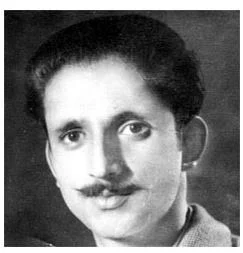
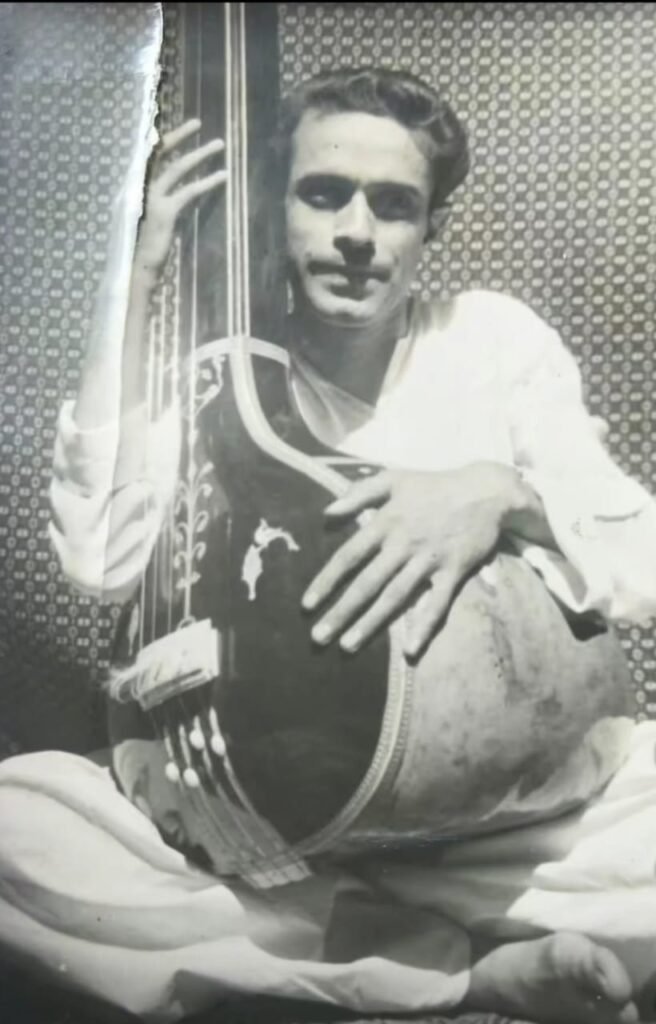
In the vibrant cultural tapestry of Jammu and Kashmir, the name Maikash Kashmiri stands out as a beacon of artistic brilliance and unyielding determination. Born Kailash Nath Kaul on July 17, 1926, into a learned Kashmiri Pandit family and brought-up at Jammu, his life story is one of courage, integrity  and a profound connection to the poetic spirit of his land.

A distinguished broadcaster, poet, and educationist, Maikash Kashmiri’s journey was one of both triumph and tribulation. His association with Radio Kashmir Jammu (RKJ) began at its inception in December 1947 when he was just 21 years’ old. A man of immense integrity, he could not turn a blind eye to injustice. His colleagues recall that in March 1948, when Union Information and Broadcasting Minister Sardar Vallabhbhai Patel visited the makeshift RKJ studio in a classroom of Ranbir Higher Secondary School, young Kailash Nath Kaul boldly raised the issue of non-payment of staff salaries. This act of fearless honesty cost him his job—he was dismissed for speaking the truth.

The irony, however, was that when the government later again  needed his expertise to counter enemy propaganda, they approached him once again. Yet, rather than reinstating him, he was only offered work as a contractual artist. For 34 years, Maikash Kashmiri dedicated himself to RKJ, never made permanent but always unwavering in his commitment to the craft.

Life After Retirement: A Mentor and Guide

After termination of  contract,  he never stepped into the premises of Radio Kashmir Jammu again—a silent protest against the humiliation he had endured. Instead, he found solace in teaching, offering English lessons to young students from his ancestral home in Mohalla Mast Garh, Jammu. His self-respect remained intact, and he earned the love and admiration of his students and their families. With dignity, he provided for his family, marrying off his five well-educated daughters gracefully, while his only son became an engineering graduate and joined the Indian Army as an officer.

The Poetry of Resilience and Hope

Maikash Kashmiri’s poetry reflected his unyielding spirit. One of his most memorable couplets encapsulates his resilience:

Charagh-e-rah agar bujh gaya to kya gham hai
Charagh-e-dil to farozaan hai roshni ke liye

(So what if the street lamp is extinguished?
The lamp of my heart burns bright to light the path.)

A true man of letters, he lived a simple, unassuming life in Jammu—the City of Temples—embracing the hardships that came his way with a Sufi-like detachment, best described in his verse:

Saare jahan se be niyaaz, mast hoon apni zaat mein.
Mujh se kisi ko kaam kya? Mujh ko kisi se kaam kya!

(Indifferent to the world, I revel in my own being.
Who needs me, and whom do I need?)

A Unique Tribute to the River Tawi

His poetry did not just capture personal experiences but also paid tribute to his homeland. Among his most unique works is a nazm dedicated to the river Tawi, included in the album Yadon Ke Charagh. Unlike conventional poems that eulogize rivers, Maikash’s composition reveres the countless round stones that line the riverbanks. To him, these stones were silent witnesses to the passage of time, holding within them the glory and history of the Dogras.

Recognition After Years of Neglect

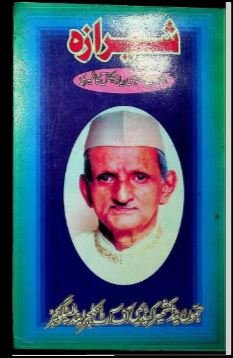
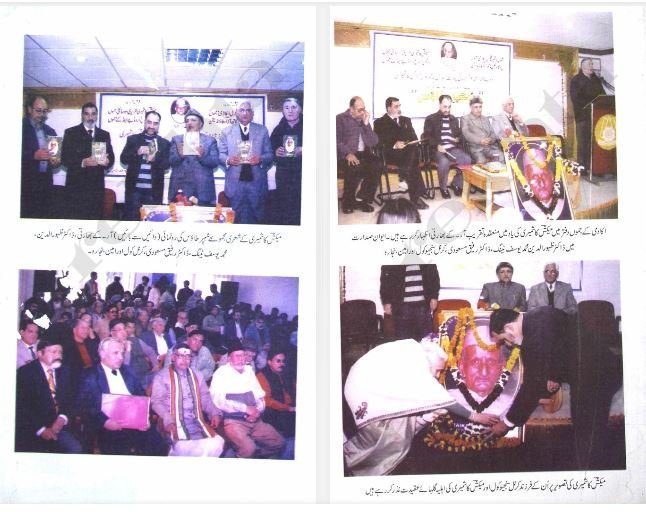
For decades, Maikash Kashmiri remained an unsung hero. The very voices that had once advocated for salary payments failed to support him when he needed them most. He was singularly victimized and terminated from service despite his exceptional talents and qualifications. His legacy, however, was finally acknowledged thanks to Dr. Rafeeq Masoodi, a noted broadcaster and former Secretary of the J&K Cultural Academy. Under his leadership, a special edition of Sheeraza was published in Maikash Kashmiri’s honor, compiling articles and reminiscences from his contemporaries and admirers.

In his foreword, Dr. Masoodi acknowledged the longstanding injustice against Maikash Kashmiri and expressed hope that this tribute would serve as a small token of recognition for his immense contributions. Former Cultural Secretary Mohammad Yousuf Taing, in his write-up, highlighted Maikash’s deep love for Kashmir and his Kashmiri Pandit heritage. Although he had been raised in Jammu and did not speak Kashmiri fluently, his identity as a Kashmiri Pandit was central to his being.

Passing and Enduring Influence

Maikash Kashmiri passed away on January 19, 2006, in Navi Mumbai, leaving behind a legacy of poetic brilliance, integrity, and quiet resilience. His son, Sanjeev Kaul, and renowned singer-composer Seema Anil Sehgal ensured that his literary work found a lasting voice through music. His words continue to inspire, reminding us that truth and talent, even when unrecognized in their time, never truly fade.

Maikash Kashmiri’s life was not just a tale of struggle—it was a testament to the unbreakable spirit of a man who remained true to himself, no matter the cost.

Kanwal Kishore Jalla: A Voice That Once Enchanted

(Kashmir Rechords Desk)

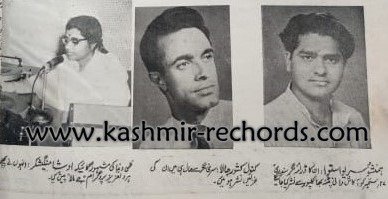
In the forgotten corridors of memory, where melodies once soared and hearts swayed to the rhythm of soulful Ghazals, the name Kanwal Kishore Jalla remains an echo—faint but unforgettable. A singer of unmatched grace and elegance, Jalla was once the pride of Kashmir’s musical fraternity. But like many of his fellow community members, his journey was marred by displacement, his voice drowned in the silence of exile. And now, that voice has been silenced forever.

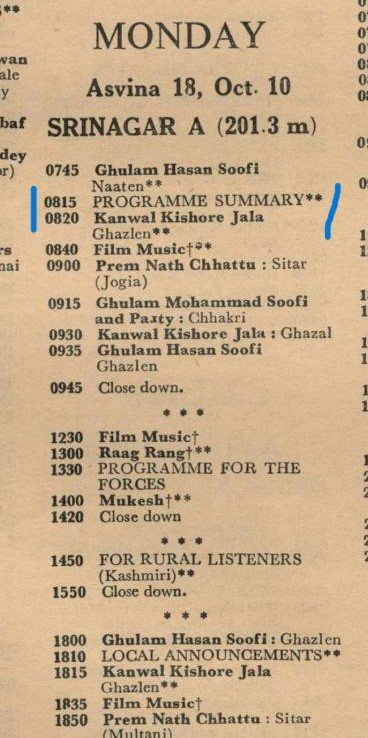
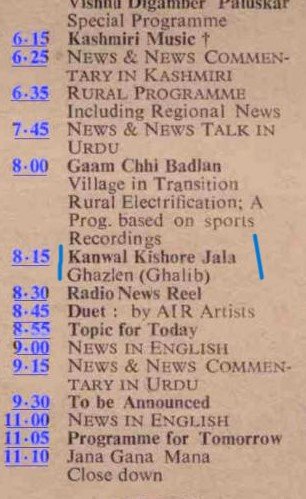
Kanwal Kishore Jalla, a name that once resonated across the airwaves of Radio Kashmir from 1959 to 1989, breathed his last in 2025 in exile, away from the land where his soul belonged. He was not just a singer; he was a custodian of Kashmir’s lyrical heritage, a guardian of melodies that have now faded into oblivion. Yet, his story, like many unsung heroes, remained largely untold—until it was too late.

It was only in 2024 that Kashmir Rechords managed to track him down, hidden away in the Janipur locality of Jammu. A once-revered Ghazal and devotional singer, Jalla had retreated into the shadows after being forced to leave Kashmir in 1990. His exile was more than just a physical displacement; it was a silencing of his art, an erasure of a legacy that should have been celebrated.

A Voice That Defined an Era

Dr. Rafeeq Masoodi, a noted broadcaster and former Secretary of J&K Cultural Academy, recalls Jalla’s mesmerizing presence at Radio Kashmir, Srinagar. His recollections take us back to a golden evening in 1986 when legends Bhajan Sopori, Vijay Malla and Ghulam Nabi Sheikh gathered in Studio-06 for a composition. Among them stood Kanwal Kishore Jalla—his appearance a striking resemblance to Dev Anand, dressed in a tight yellow trouser, crisp shirt and a knotted tie. But it wasn’t just his flamboyant presence that captivated; it was his voice—soft, velvety, reminiscent of the great Talat Mahmood.

Jalla’s songs weren’t just melodies; they were emotions woven into rhythm. His Ghazals touched the depths of sorrow and longing, while his patriotic renditions during the 1962, 1965, and 1971 wars stirred the spirit of nationalism. Yet, fate played a cruel game. After his migration, he was lost to the world, his legacy left unpreserved. Not a single one of his Ghazals, devotional, or patriotic songs found a home in the archives of Radio Kashmir. A treasure trove of melodies—forgotten, erased, lost.

K K Jalla (Middle), along with Usha Mangeshkar(L)

Last year, when Kashmir Rechords appealed to its readers to help locate the maestro, the story took a bittersweet turn. His daughter, residing in Dubai, reached out, revealing his whereabouts. It was a moment of both triumph and heartbreak. Jalla was touched to know that his contributions had not been entirely forgotten. But time is unforgiving. Just as the world began to remember him, he slipped away forever, leaving behind only the whispers of his songs, carried away by the wind.

Today, we mourn not just the passing of a singer but the fading of an era, the vanishing of a legacy that deserved more recognition, more love. Kanwal Kishore Jalla was Kashmir’s son—a voice of devotion, passion and patriotism. Yet, like so many others, he became a victim of time and circumstance. As we pay our tributes to this maestro, let us not let his memory fade as his songs did. Let us remember Kanwal Kishore Jalla—not just as a Ghazal singer of yesteryears but as a soul who sang for Kashmir, loved his homeland, and carried its melodies in his heart till his last breath.

Dateline Srinagar: The Night of January 19,1990

0
(Kashmir Rechords Exclusive)

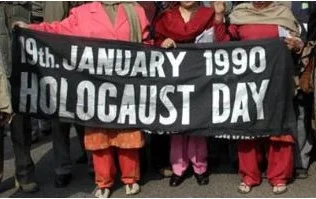
The night of January 19, 1990, was one of the darkest in the history of India. In Srinagar, the atmosphere was charged with fear and chaos as Kashmiri Pandits faced a mass exodus from their homes and hearths. Rumor-mongering took centre stage, with mosques across the region suddenly switching on their loudspeakers to warn people against using tapped water, claiming it had been “poisoned” by the “administration” and “Indian agents,” including Kashmiri Pandits.

Eyewitness accounts recall  a well-orchestrated plan behind these announcements, which plunged the city into chaos. Mass protests erupted, with people blaming “Indian agents” for “poisoning” the water supply. Despite power outages implemented by the authorities, mosque managers used battery backups to keep their loudspeakers operational, spreading fear and vilifying Kashmiri Pandits as collaborators. The message was clear: Pandits were warned to leave Kashmir forever, leaving behind their womenfolk.

Repeated announcements from Radio Kashmir Srinagar, attempting to calm the situation, were ignored. People trusted the mosque loudspeakers over official channels, and curfew enforcement in some areas failed to deter the masses from gathering on the streets. Driven by the fear instilled by the “poisoned water” rumors, residents emptied their water reserves. The sinister objective of these rumors was to incite curfew violations en masse and instill terror among Kashmiri Pandits, ultimately forcing their flight from the Valley.

A History of Rumor-Mongering in Kashmir

Kashmir’s history is deeply intertwined with rumors, often romanticized as a cultural trait. From Kalhana’s Rajtarangini to the works of modern historians, accounts of “Kashmiri rumors” abound. While some rumors were harmless, others served as tools for manipulation and control by vested interests. Historian Khalid Bashir, in his book Kashmir: Looking Back in Time, highlights how Kashmiris have historically elevated individuals they admired to divine status while demonizing those they disliked.

Bashir also delves into the strategic use of rumors as political tools. Former Jammu and Kashmir Governor Jagmohan, in his book My Frozen Turbulence in Kashmir, describes how rumors were weaponized to defy and undermine his administration. He recounts the January 19, 1990, water-poisoning rumor and another in April 1990, which claimed that food packets distributed by the Army contained substances to cause frigidity in women and impotency in men—an alleged conspiracy to reduce the Muslim population. These fabrications sought to deepen mistrust between the administration and the populace.

Historically, missionaries and colonial officers have also documented Kashmir’s penchant for rumors. Rev. J. Hinton Knowles, Sir Walter Roper Lawrence in The Valley of Kashmir, and Tyndale Biscoe in Kashmir in Sunshine and Shade all describe how rumors shaped public behavior, often leading to panic. One infamous 19th-century incident involved a rumor about a monstrous creature in the Jhelum River, forcing Biscoe to make his students swim in the river to dispel the myth.

Rumors as Weapons of Manipulation

Rumors have often been wielded as weapons to serve political and personal agendas in Kashmir. A notable example dates back to the reign of Maharaja Partap Singh, when his brother Amar Singh spread false rumors to tarnish the Maharaja’s image and destabilize his rule. During Sheikh Mohammad Abdullah’s era, rumors about Chinar leaves bearing his name were circulated to evoke public fascination.

In the context of the 1990 exodus, many Kashmiri Pandits had already begun leaving the Valley before Jagmohan’s appointment as Governor. Yet, the rumor-mongering machinery successfully pinned the blame for their migration on him, perpetuating a narrative that continues to find resonance among many Kashmiris to this day.

The Enduring Legacy of Rumors

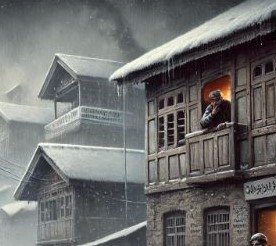
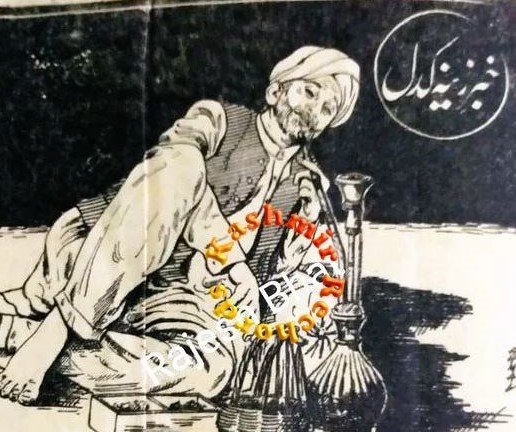
Rumors have left an indelible mark on Kashmir’s socio-political landscape, sowing fear and confusion. Phrases like “Khabar Zaina Kadal”—referring to the spread of falsehoods from Srinagar’s iconic Zaina Kadal Bridge—capture the enduring fascination with and consequences of rumors in Kashmiri culture. Even today, the legacy of rumor-mongering continues to influence perceptions, with many Kashmiris still questioning: Khaber kya chuk karun? (“What are they planning to do?”).