January 1979 – The political landscape of Jammu and Kashmir was rocked by the explosive and visionary proposals of Balraj Madhok, a veteran leader of the Jana Sangh and a former Member of Parliament. Known as a “son of the soil,” Madhok’s controversial views on the reorganization of the State drew widespread attention and criticism at that time. Yet, forty years later, the echoes of his bold statements seem eerily prescient.
In a series of press conferences and public meetings in the Jammu region in 1979, Madhok advocated for a dramatic restructuring of Jammu and Kashmir. Kashmir Rechordsis in possession of some newspaper cuttings of that period that make a mention of these proposals and the collective condemnation he had received at that time.
Even though at the heart of Madhok’s vision which he had shared in so many books also, he envisioned that Jammu and Kashmir State warranted a tailored administrative structure. In his scheme of things, Jammu and Kashmir regions had to function as separate States distinct from each other.
Madhok’s Blueprint for Reorganization
While Madhok had proposed separate statehoods for Jammu and Kashmir, his advocacies had included Teetwal, Karan, and Uri areas to be crafted as Union Territory besides Ladaakh as according to him, these regions had their own distinct identity which did not align with the broader Kashmiri representation.
Madhok’s proposal of 1979…
Madhok’s proposals were naturally met with a storm of criticism from various quarters. Political leaders across Jammu and Kashmir, as well as members of the then Janata party had ridiculed and dismissed his suggestions. The idea of reorganizing the State was seen as radical and unpalatable, even within its ranks. Critics had lambasted him for sowing division and for his perceived alignment with Indira Gandhi and Sheikh Mohammad Abdullah, despite his otherwise staunch opposition to their policies.
Fast forward to August 5, 2019, and the Government of India implemented a sweeping reorganization of Jammu and Kashmir. Article 370 was abrogated, and the State was bifurcated into two Union Territories: Jammu & Kashmir and Ladakh. This historic move bore striking resemblances to Madhok’s proposals from 1979, albeit with some modifications.
Echoes of the Past: The 2019 Reorganization
Ladakh was finally recognized as a Union Territory, as Madhok had long championed.The region of Jammu and Kashmir was restructured into a Union Territory, aligning partially with Madhok’s vision, though his call for separate statehood for Jammu was not realized.
The Legacy of a Visionary
While Balraj Madhok’s ideas were deemed too radical for their time, the eventual reorganization of Jammu and Kashmir in 2019 underscores a significant, albeit delayed, validation of his foresight. Even though these proposals seemed outrageous at that time, the subsequent events and the historic move to scrap Article 370 appear to bear striking resemblance to many features of the 1979 Madhok proposals albeit with certain modifications after having taken into account the contemporary realities of our times.
Today, as we witness the evolving dynamics of Jammu and Kashmir, Balraj Madhok’s contributions offer a compelling narrative of how bold ideas can eventually reshape the course of history, even if their merit is recognized only in hindsight.
Madhok’s political philosophy reflects radical ideas should not be subservient to political correctness of the times.
As the Wheel of Time completes years after year since the Kashmiri Pandits began celebrating the annual Mela Kheer Bhawani in exile, the sacred Kheer Bhawani Mela every year evokes a poignant mix of nostalgia and sorrow. This day serves as a stark reminder of June 1, 1990, when the Mela was first time observed in exile. The normally vibrant Tulmulla shrine, under the majestic canopy of ancient Chinar trees, stood eerily silent that year, devoid of the overnight and morning devotees who once filled the air with hymns and prayers.
The shrine, typically alive with the bustling energy of pilgrims and the melodious chanting of hymns, was that year ( 1990) cloaked in a heavy silence. The mighty Chinar trees, which once provided shade to thousands of devotees, then stood as silent sentinels over an almost deserted temple complex. The absence was palpable, as if the valley itself was holding its breath. For the first time, there were no Yatris, no processions, no vibrant bhajans, hymns, or traditional Kashmiri Leelas. The Kashmiri Pandits, who had been the lifeblood of these celebrations for centuries, were missing en-masse, forced to flee their ancestral land amidst escalating conflict.
A Valley in Transition
As I stood there, a journalist then working for the Daily Excelsior and assisting its Kashmir Desk, the melancholy of the scene was overwhelming. The temple complex echoed with emptiness, under the watchful eyes of security forces who, new to the valley, stood as silent witnesses to a tradition they barely understood. The sacred day of Mata Kheer Bhawani seemed to slip away in the shadows of military presence and militant threats.
A first-hand account of first Mela Kheer Bhawani Mela in exile—June 1, 1990. For archival newspaper cuttings, contact Kashmir Rechords. (kashmir-rechords@gmail.com)
This was not just any day. The valley was already under strict law and order on June 1, 1990, coinciding with Mata Kheer Bhawani Mela, as a significant event was unfolding. On this very day, 15-year-old Omar Farooq was installed as the new Mirwaiz of Kashmir, following the assassination of his father, Mirwaiz Maulvi Farooq, just few days earlier.
A Lone Devotee’s Devotion
In the midst of this silence, a solitary figure caught my eye. In a remote corner of the temple, under the protective gaze of Mata Kheer Bhawani, stood a lone Kashmiri Pandit! Despite the turmoil, this devout man had chosen not to leave Kashmir. His presence was a poignant symbol of resilience and undying faith. Associated with a Government media organization, he had stayed behind to ensure that the spiritual sanctity of the shrine remained unbroken.
With quiet determination, this devout Pandit gathered information about other fellow Kashmiri Pandit employees still working under perilous conditions in the valley. In a remarkable act of solidarity, a few local Muslims, who also revered Mata Kheer Bhawani, offered their help. Through their efforts, a spokesperson of the Kashmir Motor Drivers (KMD) Association was contacted, who, despite severe tension in Srinagar, arranged two buses to transport some of those scattered Pandit employees to the shrine.
The Quiet Return of Faith
As the Sun climbed higher, casting golden rays through the leaves of the Chinar trees, two buses arrived. Slowly, a small group of Pandits disembarked, their faces a mixture of anxiety and reverence. Despite the heavy guard and underlying tension, they had come to ensure that the Kheer Bhawani Mela did not pass without its customary puja and worship.
The puja was performed that day, not with the usual grandeur but with a profound sense of purpose. The devotees, though few, followed all traditions and customs, their prayers mingling with the rustling leaves and the soft murmur of the spring where the deity is seated. It was a solemn ceremony, deeply moving, a quiet assertion that faith could not be silenced by fear.
This was perhaps the first puja at the shrine since the beginning of 1990. For months, the temple had been under the watchful eyes of security personnel, except for that one devoted Pandit who had pledged not to leave the shrine complex until his death. His unwavering presence was a beacon of hope and continuity amidst the chaos.
Years of Sparse Devotion
In the years that followed, the presence of devotees at Kheer Bhawani remained sparse, limited mainly to employees of the Civil Secretariat, AG Office, and other Central government workers stationed in Kashmir. The shrine, once a bustling centre of spiritual activity, became a guarded sanctuary, out of reach for the majority of its community. Kashmiri Pandits, scattered and displaced, recreated their sacred spaces in Jammu, Delhi, and other parts of India, keeping the spirit of the shrine alive in their hearts and homes.
By 1997, the shrine began to see a resurgence. With the easing of tensions, Kashmiri Pandits started visiting the shrine again, either through government-sponsored transport or private arrangements made by their community. The shrine saw visits from politicians of all hues and even militant leaders, each seeking to extend their sympathies or make their presence known on the days of the Mela. Despite the political undercurrents, these gatherings also became a rare opportunity for old friends from both communities to reconnect, to remember and cherish their shared past.
A Testament to Resilience
The story of June 1, 1990, at the Kheer Bhawani shrine is a testament to the indomitable spirit of the Kashmiri Pandits and the profound respect for faith that transcends communal boundaries. It is a story of loss and resilience, of the sacred and the profane intertwining in the valley of Kashmir. As we look back, it is a poignant reminder that even in the darkest of times, the flame of devotion burns brightly, undeterred by the shadows that seek to engulf it.
* (The write-up is a first-hand account of Rajesh Bhat, Ph.D. in Mass Communication and Journalism with over 35 years of experience as a Journalist, writer, researcher, and academician in journalism, spanning both print and electronic media. He authored “Radio Kashmir in Times of Peace and War” and has worked with prestigious newspapers and publications including Kashmir Times, Daily Excelsior and The Tribune, Chandigarh. Currently, he serves as a Faculty Member at the National Academy of Broadcasting and Multimedia, New Delhi.)i
`Soi‘ (nettle), ‘Pamb Chalan‘, ‘Koth‘, or ‘Tethwan’ are among the wild grasses and herbs of Kashmir that hold a significant place in the local psyche. These plants evoke a range of emotions among Kashmiris, from fear and trauma to disdain. The sting of a ‘Soi Shalakh’ or the bitter taste of ‘Tethwan’ are common unpleasant experiences. Despite the locals’ aversion to these plants, they are not without value. These often-despised grasses possess profound medicinal properties, highlighting a complex relationship between nature’s gifts and human perception.
The Rich Medicinal Heritage of Kashmir
Kashmir boasts around 149 medicinal grasses and herbs, a fact documented in the book “Medicinal Plants of Kashmir Valley–The Distribution and Mapping,” published by the Government of Jammu and Kashmir. While some plants are easily available throughout the valley, many have gone extinct or are threatened. Understanding the ethno-botanically significant medicinal plants plants that have underpinned traditional healthcare for millennia can unlock potential not only for combating emerging lifestyle diseases but also for economic development.
Traditional Medicines in Folk Culture and Daily Life
Indigenous Kashmiri medicines like ‘Tethwan’, ‘Koth’, ‘Soi’, and ‘Pamb Chalan’ play significant roles in the region’s folklore and daily usage. These plants, despite their unpleasant characteristics, have been used for generations to treat various ailments. This rich tradition of utilizing local medicinal plants underscores the immense potential that lies in these natural remedies.
A Kuth Plant and Kuth root
A Path to Medical Tourism
With growing awareness of the benefits of homeopathic and other natural medicine systems, Jammu and Kashmir could become a hub for Ayurvedic and Unani medical tourism, akin to Kerala. According to recent studies, the global market for alternative medicine is expected to grow significantly, with a projected CAGR of 22% from 2023 to 2028. Policymakers and entrepreneurs exploring commercial ventures or dedicated to preserving and expanding traditional knowledge will undoubtedly appreciate the work of numerous scientists who have conducted comprehensive surveys.
Notable Surveys in Kupwara and Billawar
In 2021, a notable survey in the remote Kupwara region of Kashmir exemplified these efforts. Scientists like Mudassir Nazir Bhat, Bikram Singh, and Opinder Surmal conducted extensive research, collecting data on diseases, domestic animals, and remedies involving ethno-botanical plants. Another significant survey in the Billawar area of the Jammu region by Rakesh Kumar, Vikas Sharma, and Sudesh Kumar covered sites including Dewal, Bhaddie, Sukrala, and Koti.
Artemisia absinthium (Wormwood): Known locally as ‘Tethwan‘, it treats digestive disorders and parasitic infections.
Saussurea costus(Kuth): Known for anti-inflammatory properties, it treats respiratory issues and skin diseases.
The bitter Tethwan–So sweet for Skin!
Podophyllum hexandrum (Himalayan Mayapple): Used for its anti-cancer properties, it treats skin diseases and digestive disorders.
Berberis Aristata (Indian Barberry): Locally called ‘Kilmora’, it treats eye infections, jaundice, and skin diseases.
Rheum Emodi (Himalayan Rhubarb): Known for laxative properties, it treats stomach ailments and infections.
Picrorhiza kurroa (Kutki): Used for hepatoprotective properties, it treats liver disorders and respiratory issues.
Fritillaria Roylei (Pamb Chalan): Treats asthma, bronchitis, and other respiratory ailments.
Inula Racemosa (Pushkarmool): Has anti-inflammatory and cardio-protective properties; used for respiratory and cardiac health.
Trillium govanianum (Nagchhatri): Known for anti-inflammatory and analgesic properties; used for wounds and bone fractures.
“Soi” – Heracleum candicans
‘Soi’, or nettle, commonly known as the Himalayan Hogweed, is a medicinal plant plant with a stinking effect found in the Himalayan region, including Kashmir. Those born before 1990 may recall how parents and teachers used ‘Soi Shalakh’ as punishment, but few know about its e benefits, which include remedy for indigestion in children,Vegetable dish,treating minor skin diseases, treating diabetes, boosting metabolism and immunity,reducing kidney stones, treating enlarged prostate, treating ulcers and urinary infections.
Threats and Opportunities
The threat to traditional knowledge and the shrinking biodiversity of these plants is both real and imminent. Supporting and augmenting this sector is crucial. Technical precision in surveys should guide stakeholders in rediscovering plant resources for food and medicine.
Moving Forward
To capitalize on this potential, it is crucial to implement the following steps:
Policy Development: Formulate policies that support the cultivation, preservation, and sustainable use of medicinal plants plants.
Research and Development: Increase funding for research on ethno-botanical plants and their applications in modern medicine.
Community Engagement: Involve local communities in the conservation and cultivation of these plants, ensuring their traditional knowledge is preserved and valued.
Commercial Ventures: Encourage the establishment of businesses that utilize these plants, promoting economic growth and job creation.
Educational Programmes: Develop initiatives to train the next generation of scientists and practitioners in ethno-botany and traditional medicine.
Conclusion
The rediscovery and utilization of ethno-botanically significant plants hold immense promise for both health and economic development. By embracing this rich heritage and integrating it with modern scientific practices, we can pave the way for a healthier, more prosperous future for Jammu and Kashmir. By harnessing the medicinal potential of these native plants, we not only preserve a valuable aspect of our cultural heritage but also open up new avenues for sustainable development and healthcare innovation.
In the late hours of November 16, 1896, the serene night in Chinkral Mohalla, Srinagar, was pierced by anxious whispers and fervent prayers. The household of the late Pandit Mukund Ram Zutshi was abuzz with nervous anticipation as Vishmal Dar, lovingly known as Kisser Ded, endured the trials of labour. As dawn approached, a cry heralded the arrival of a boy, Lambodhar, named after Lord Ganesha. This child was destined to become a beacon of science and intellect for the Kashmiri Pandit community, and a figure whose influence would transcend borders.
An Astrological Foretelling
The family’s astrologer, Pandit Nila Kanth Razdan, predicted that Lambodhar would lead a life of distinction and brilliance. However, his future would not be tied to his birthplace. This prediction came to pass as Lambodhar spent most of his life in England, where he passed away on January 14, 1964. His journey from the alleys of Srinagar to the scientific halls of London was nothing short of extraordinary.
The Zutshi Family: A Legacy of Service and Resilience
Lambodhar hailed from a family deeply entrenched in service and duty. His father, Pandit Mukund Ram Zutshi, and uncle, Pandit Tota Ram Zutshi, were stalwarts in the police department. Mukund Ram was revered as an efficient investigator, while Tota Ram was noted for his skill in drafting mercy petitions that often spared the lives of condemned prisoners. Their dedication to justice earned them a formidable reputation in Srinagar.
However, the family faced a severe setback in 1840 when a great fire ravaged their home. Undeterred, they rebuilt their lives and continued their service to the community. The new home they constructed stood as a testament to their resilience and became the birthplace of Lambodhar, a new era’s beacon.
Early Signs of Genius
From a young age, Lambodhar exhibited an insatiable thirst for knowledge. His academic journey began at Babapora Middle School, where he topped his Primary School Examination. By 1911, he had completed his Matriculation at the State High School at Dilawar Khan Bagh, Fateh Kadal, emerging as the top student in Kashmir Province.
His family employed innovative methods to support his studies. A chord was tied to his clothes to jolt him awake whenever he nodded off while studying. Additionally, he was given a mixture of Brahmi powder and molten ghee to sharpen his memory. These early signs of his brilliance were just the beginning of a lifelong pursuit of knowledge.
Academic Excellence and Ventures Abroad
Lambodhar’s academic prowess led him to Prince of Wales College in Jammu (now Gandhi Memorial College of Science), where he graduated with honors in Physics in 1919, topping Punjab University. His mentors included eminent scientists like Dr. Vidya Sagar Puri and Dr. Shanti Swaroop Bhatnagar. While in Jammu, Lambodhar’s leadership was evident as he founded the Dogri Youngman’s Association, advocating for the rights of the State Subjects.
In 1921, Lambodhar’s brilliance earned him a scholarship to study Mining Engineering in England. He excelled at the Royal School of Mines, Imperial College of Science, London, where he earned prestigious qualifications: A.R.S.M in Mining and Geology, A.M.I.M.M, and F.G.S. Despite returning to Kashmir in 1923, he found limited opportunities and soon returned to England in 1925.
Lambodhar Zutshi in a pensive mood.
Love for Kashmir Amidst Western Success
Lambodhar’s connection to Kashmir was unbreakable. In 1927, he returned to Kashmir with aspirations to contribute to its development. Appointed as an engineer with a salary of Rs. 600 per month, he quickly became disillusioned with the lack of support for his mineral development proposals. He resigned in 1929 and went back to England, where his scientific and entrepreneurial ventures flourished.
Throughout his career, Lambodhar engaged in numerous ventures across continents. He worked on excavating the Sapphire mine in Neelam, navigating the treacherous terrain to transport mineral ore on mule backs. He was also involved in various mining and property enterprises, including the formation of Zutshi Park Properties Ltd. in 1936 and consulting roles in England.
A Family Rooted in Tradition and Progress
Lambodhar’s personal life was intertwined with his professional pursuits. At 15, he married Radha Mal Khazanchi, with whom he had a son, Nandlal Zutshi, born on Janamashtmi in 1929. Nandlal followed in his father’s footsteps, becoming a distinguished figure as Dr. Nandlal Zutshi, the President of the Kashmiri Pandit Association Mumbai, and All India Kashmiri Samaj. Lambodhar later remarried Eileen Lord in England, with whom he had two sons, Dr. Derek Hariram and Dr. Trevor Shankerlal.
After Eileen’s passing in 1944, Lambodhar again married—this time Molly Mancrief, a woman of letters and an occultist. Together, they had a daughter, Mavis Zutshi. Despite his personal losses and multiple marriages, Lambodhar maintained a deep connection to his Kashmiri roots, which influenced his family’s diverse paths across the globe.
Contributions to Kashmir and Beyond
Lambodhar’s contributions to Kashmir were significant, even from afar. He submitted numerous projects for the region’s industrial and mineral development. In 1938, he proposed a scheme for manufacturing Portland cement and received a hero’s welcome upon his return to Srinagar. Despite logistical challenges, his efforts were driven by a deep love for his homeland.
In England, Lambodhar was instrumental in supporting the Indian diaspora. He founded the Kashmir Association for Great Britain and Europe and played a key role in establishing the Hindu Centre in London. During the 1962 Sino-Indian War, he organized support for India and met with Prime Minister Jawaharlal Nehru to discuss the strategic importance of Aksai Chin.
In 1921, Lambodhar Zutshi, C/o Lyod’s Bank, Srinagar, Kashmir, India became the Member of prestigious Mineralogical Society of America, established in 1876.
The Multifaceted Life
Lambodhar Zutshi, while celebrated for his scientific achievements and contributions to the industrial landscape, possessed a rich tapestry of interests and talents that extended beyond his professional endeavors. Among his many pursuits was his proficiency in Urdu, which he wrote with a distinctive flair and an elegant, calligraphic hand. His writings in high Urdu were marked by typical expressions that conveyed both depth and artistry, reflecting his cultured background and intellectual versatility.
A Devotion to Tradition and Culture
Lambodhar’s commitment to cultural traditions was evident in his actions and engagements. As a gazetted officer, he participated in the grand Deshra celebrations, a significant event in the princely state of Jammu and Kashmir. During the Darbar ceremony, he presented a “Nazarana” of one pound to Maharaja Hari Singh, a gesture symbolizing respect and allegiance to the ruler. This act not only highlighted his adherence to tradition but also his status and recognition within the courtly circles of the time.
Anecdotes and Mysticism: The Amarnath Yatra Experience
In 1928, shortly after returning from England, Lambodhar joined his father, Mukund Ram, on a pilgrimage to the sacred Amarnath Cave, an experience steeped in spirituality and mysticism. Mukund Ram, then on official duty for managing the Yatra (known as ‘bandobast’ duty), accompanied his son and a Sanyasi, a revered ascetic known to their family.
During their camp at Chandanwari, an incident occurred that remains etched in the family’s lore. The Sanyasi shared with Lambodhar an intriguing tale of alchemy. He claimed that the ancient science of transforming base metals into gold was known in India for centuries. However, ethical principles forbade its exploitation for personal gain.
Intrigued by the Sanyasi’s claim, Lambodhar accompanied him into the jungle, where the Sanyasi gathered a few leaves from a plant. Back at the camp, the Sanyasi crumbled the leaves into his palm and asked for a copper coin. He covered the coin with the leaves and encased it in mud from the riverbank. The concoction was then baked in a ‘Dhoni,’. After several hours of heating, they cracked open the baked mass, revealing a transformed gold coin. This mystical event fascinated Lambodhar, adding a layer of wonder and curiosity to his already inquisitive nature.
A Legacy Beyond Science
Lambodhar’s life was a blend of rigorous scientific pursuit and a deep engagement with his cultural and mystical heritage. His ability to navigate between the empirical world of mining and the mystical narratives of his culture showcases a unique duality. This blend of modern science and ancient wisdom was a hallmark of his personality, influencing his approach to both life and work.
Through these stories and anecdotes, Lambodhar Zutshi’s legacy is painted not just as a pioneering scientist but as a man deeply rooted in his heritage, respectful of tradition, and ever curious about the mysteries of the world. His multifaceted life continues to inspire, reminding us of the rich and diverse paths that a life of inquiry and dedication can encompass.
Lambodhar Zutshi’s legacy is also a testament to his pioneering spirit and dedication to both science and society. His expertise in mining and geology, coupled with his entrepreneurial ventures, made him a notable figure in both Kashmir and England. He maintained close ties with influential leaders, advocating for Kashmir’s development and supporting its people through various initiatives. Despite living most of his life in the West, Lambodhar’s heart always lay in Kashmir. His story is a rich tapestry of intellectual pursuit, cultural dedication, and a relentless drive to uplift his community. Lambodhar Zutshi remains a revered icon among Kashmiri Pandits and a beacon of inspiration for future generations
*Bhushan Parimoo is a Jammu based environment, conservationist and ecology expert. He can be reached at: blparimoo@gmail.com
Operating flights to and from Leh’s Kushok Bakula Rimpochee Airport, one of the world’s highest airports, is a testament to a pilot’s skill and experience. Situated at an altitude of 3,256 meters (10,682 feet), Leh Airport is surrounded by the rugged Himalayas and is notorious for its challenging approach paths and unpredictable weather conditions. Pilots flying into Leh must expertly navigate through narrow mountain valleys, manage high-altitude take-offs and landings, and be prepared for sudden weather shifts, including strong winds and turbulence. Kashmiri pilots stand at the forefront of aviation excellence in the challenging Leh sector, marked by high-altitude airports and treacherous terrain. Historical accidents in 1979 underscore the formidable risks pilots face, yet these incidents have propelled advancements in safety measures and training. Notable pilots like Captain Aijaz Parvez, Captain Vinod Koul, Captain Sanjay Raina and Captain Shoaib Qayoom epitomize expertise in navigating Leh’s complexities, blending local knowledge with rigorous training. Specialized skills in high-altitude navigation and weather adaptability define their success, ensuring safe and efficient flights amidst nature’s challenges.
Historical Accidents Highlighting the Risks
The risks associated with flying in and out of Leh have been tragically underscored by several accidents, most notably in 1979. These incidents highlight the formidable difficulties pilots face when operating in this demanding environment.
January 25, 1979 – Antonov An-12BP Crash:
Aircraft: Indian Air Force Antonov An-12BP
Fatalities: All 102 on board, including 77 Indian Army personnel.
Incident: The aircraft was on a routine flight from Chandigarh to Leh. Severe weather and the treacherous mountainous terrain led to a fatal crash near Leh. The lack of distress signals and the challenging recovery operation highlighted the extreme hazards of flying in the region.
June 7, 1979 – HS 748 Crash:
Aircraft: Indian Air Force Hawker Siddeley HS 748
Fatalities: All 29 on board.
Incident: On approach to Leh, the aircraft encountered severe weather and crashed into the mountainous terrain. The high altitude and adverse weather conditions were significant factors in the crash.
November 24, 1979 – Antonov An-12 Crash:
Aircraft: Indian Air Force Antonov An-12
Fatalities: All 20 on board.
Incident: During a supply mission to Leh, the aircraft faced low visibility and strong winds, leading to a crash in the mountains. This accident, like others, underscored the perilous nature of military operations in high-altitude regions.
These incidents reflect the extreme operational challenges in the Leh sector and have driven improvements in safety protocols, training, and equipment for high-altitude aviation.
Kashmiri Pilots Leading the Way
Kashmiri pilots have emerged as key figures in mastering the intricacies of flying into Leh. Their deep-rooted familiarity with the region’s geography and weather conditions, combined with rigorous training, equips them uniquely to handle the challenges of Leh operations. Here are some distinguished Kashmiri Muslim and Kashmiri Pandit pilots known for their expertise in this sector:
Captain Aijaz Parvez:
Hailing from Kashmir, Captain Parvez has decades of experience navigating the high-altitude terrains of Leh. He has been instrumental in training other pilots for operations in this area and has flown numerous missions with both commercial airlines and the Indian Air Force.
His expertise in managing the complex conditions of Leh flights is well recognized, making him a key figure in enhancing safety protocols for these operations.
Captain Shoaib Qayoom:
A Kashmiri pilot with first-hand experience of the region’s terrain and climate, Captain Qayoom is known for his calm and proficient handling of aircraft under adverse conditions.
His ability to navigate the challenging approaches to Leh has earned him accolades from both passengers and colleagues.
Captain Tsering Angchok:
Originally, from Leh, Captain Angchok’s intimate knowledge of the local topography and weather gives him a natural advantage in flying in and out of the region.
As one of the few pilots from Leh, his insights and successful flights under various challenging conditions are invaluable.
Captain Bilal Mehraj
With roots in Kashmir, Captain Mehraj has a profound understanding of the region’s geographical and weather challenges.
He is known for his precision and technical skill, often praised for his smooth landings and adept handling of aircraft in difficult conditions.
Captain Tanveer Ahmed
A Srinagar native, Captain Ahmed’s familiarity with high-altitude conditions and rugged terrain has made him an expert pilot for flights to Leh.
His career includes several high-profile flights to Leh, demonstrating exceptional skill in managing the complexities of the airport’s operations.
Captain Sameer Kulkarni
A Kashmiri Pandit by heritage, Captain Kulkarni has extensive experience flying in the mountainous terrains of Leh.
His calm demeanour and expert handling of aircraft in adverse weather conditions have earned him praise and recognition.
Captain Vinod Kaul
From a prominent Kashmiri Pandit family, Captain Kaul’s cultural and geographical insights into the region have been significant assets throughout his career.
His meticulous approach to flight planning and execution has been key to managing critical flights under challenging conditions.
Captain Sanjay Raina
Raised in a Kashmiri Pandit family, Captain Raina’s personal connection to the region’s geography and weather patterns has contributed to his expertise in operating flights to Leh.
His exceptional skills in handling the difficult approach and landing procedures at Leh Airport are highly regarded.
Captain Ashok Dhar
With a strong connection to the region, Captain Dhar has spent years mastering the intricacies of flying in and out of Leh.
His regional insights and precise handling of aircraft provide an added layer of confidence and safety in his operations.
Captain Anil Koul
Combining local knowledge with exceptional flying skills, Captain Koul’s upbringing in the region gives him a unique perspective on flying in the Himalayas.
He safely navigates the challenging routes to Leh, displaying his expertise in high-altitude operations.
Unique Skills and Training
Pilots flying to Leh must undergo specialized training to prepare for the region’s unique challenges. These include high-Altitude Navigation, Precise Navigation through narrow valleys and steep descents, Weather Adaptability, Aircraft Performance Management and Decision-Making and Problem-Solving: Quick reflexes.
The expertise of Kashmiri pilots, particularly those with deep roots in the region, has been pivotal in navigating the complex and hazardous conditions of the Leh sector. Their contributions, marked by a blend of local knowledge and rigorous training, ensure the safety and efficiency of flights to one of the world’s most challenging airports. These pilots not only embody technical proficiency but also carry a profound appreciation for the region they serve, significantly enhancing the safety and reliability of aviation operations in Leh.
In the annals of the Kashmiri Pandit community, names like Tika Lal Taploo, Neelkanth Ganjoo and Prem Nath Bhat are often mentioned with reverence, each symbolizing the community’s enduring struggle and sacrifice. However, the story of Ruchir Kumar Koul from the picturesque town of Bhaderwah in the Jammu division remains largely unknown, despite his profound sacrifice thirty years ago on June 7, 1994. His legacy, cherished locally, deserves broader recognition for his ultimate act of courage in the face of terrorism.
Early Life and Nationalistic Roots
Born on July 4, 1958, in the scenic town of Bhaderwah, Jammu and Kashmir, Ruchir Kumar Koul was instilled with a strong sense of nationalism from a young age. His parents, displaced from Kashmir during the 1947 tribal raid, found refuge in Bhaderwah. There, they rebuilt their lives, with Ruchir’s mother, Smt. Sukhmali Koul, becoming the first lady teacher in the area and establishing a school for girls. This earned them the moniker, “The Koul Family of Bhaderwah.” Little did they know that while fleeing from Kashmir to save their lives, they would eventually lose a son in Bhaderwah, the very place they had chosen as their new home after the 1947 displacement.
Ruchir’s upbringing was steeped in the values of community service and resilience, inspired by his family’s history and their association with the Rashtriya Swayamsevak Sangh (RSS). In 1989, he married a local girl from Bhaderwah, starting a family that would soon face unimaginable loss.
Standing Against Terrorism
The early 1990s were a period of intense turmoil in Kashmir, with Pakistani-sponsored terrorists spreading fear and violence. As this wave of terror reached the Doda district, Ruchir Kumar Koul emerged as a staunch defender of his community. He led a 41-day mass agitation, effectively shutting down shops, schools, and offices to draw attention to the plight of the local Hindu minority, who were at risk of being driven from their homes just as the Kashmiri Pandits had been.
The Ultimate Sacrifice
Despite multiple assassination attempts, Koul’s determination never wavered. On June 7, 1994, terrorists ambushed him as he worked in his fields alongside his wife. In a brutal attack, they shot him 30 to 40 times, killing him instantly. Ruchir died a hero, confronting his attackers with unwavering courage.
A portion of a news report dated June 8, 1994, highlighting the death of Ruchir Kumar Koul and communal clashes in Bhaderwah town soon after his killing.
A Legacy of Resilience
Ruchir Koul’s life was characterized by his patriotic fervour and steadfast faith. His family’s legacy of resilience continued through his wife, Sudershan, who faced the aftermath of his assassination with remarkable strength.
Overcome by grief, she attempted suicide but survived after extensive treatment. Determined to honour her husband’s memory, she raised their two young children, embodying the same spirit of endurance that Ruchir had demonstrated.
Honouring a Hero
Today, Ruchir Kumar Koul’s sacrifice is commemorated annually on Martyr’s Day, June 7, in Bhaderwah town. However, his story remains a lesser-known chapter among the broader Kashmiri Pandit community. It is crucial to remember and honour such sacrifices, as they highlight the resilience and indomitable spirit of those who stood against terror and violence.
Ruchir Kumar Koul’s story, though not widely known, serves as a poignant reminder of the price paid by many to protect their homeland and community. His legacy, preserved by local remembrances and the efforts of organisations like the Panun Kashmir Movement in the beginning, besides a publication of an article on his life and works in a local daily in 2016, is all that is available in memory of this hero.
A write-up on Ruchir Kumar Koul that appeared in Sunday Magazine edition of Daiuly Excelsior, Jammu on June 12, 2016. The author Manjeet Razdan is a former President of Bhartiya Janta Party District Doda.
As we commemorate his sacrifice, let us ensure that the bravery of Ruchir Kumar Koul and others like him is never forgotten, but instead, honoured as a testament to their unwavering courage and love for their homeland.
In a remarkable revelation by Kashmir Rechords, a hidden chapter of Kashmiri Pandit excellence has come to light, showcasing their significant contributions to the banking sector in the early 20th century. Despite facing numerous displacements from their homeland, Kashmiri Pandits have consistently demonstrated their prowess across various fields, including art, culture, history, spirituality, bureaucracy, politics, and administration. This latest discovery underscores their foresight and innovation in banking, a domain where their achievements had remained largely undocumented until now.
A Visionary Banker: Pt. Iqbal Krishan Gurtu
In 1900, a Kashmiri Pandit named Iqbal Krishan Gurtu, B.A, established Kashmiri Bank Limited at Faizabad, then part of the United Provinces. Registered under the Company Act of India, the bank was a trailblazer in the financial industry, introducing concepts that were ahead of their time. Pt. Gurtu, who served as the bank’s secretary, invested a substantial capital of Rs. One lakh and maintained a reserve fund of Rs. 30,000.
Pioneering Banking Practices across Undivided India
Kashmiri Bank Limited Faizabad quickly expanded its operations, setting up sub-offices and commission branches across undivided India, including in prominent cities such as Allahabad, Bombay, Kanpur, Firozpur, Meerut, Lucknow, Delhi, and Lahore. One of the bank’s pioneering initiatives was its unique system of providing interest on term deposits, a concept very rarely introduced elsewhere in India, let alone in the Princely State of Jammu and Kashmir, where the concept of banking finds its mention only in the late 1930s.
The Kashmiri Bank Limited Faizabad offered an attractive interest rate of seven percent on term deposits for one to two years, and half of that rate for deposits kept for six months. Interest payments were meticulously calculated to be paid on the second of January and the First of July, against proper receipts. Kashmiri Bank Limited actively advertised these innovative financial services in leading newspapers of that time, demonstrating the Kashmiri Pandit’s far-reaching vision in banking.
Advertisements from the period, now part of the archival material available withKashmir Rechords, reveal that the bank also kept its interest rates on deposit money floating. Customers were provided with free cheque and passbooks, and the bank accepted currency notes of all denominations for deposit. Additionally, loans against immovable property were issued following attestation and recommendations by reputed and trusted individuals.
An advertisement issued by Pandit Iqbal Krishan Gurtu, Secretary, Kashmiri Bank Limited, Faizabad that appeared in leading newspapers of Lucknow and Allahabad in 1903.
A Mysterious End and a Call for More Information
Despite these significant advancements, detailed records of Kashmiri Bank Limited’s operations beyond 1910 are scarce. The Bank’s advertisements and posters, predominantly in Urdu, cease after this period, leaving the subsequent fate of the bank shrouded in mystery. It is surprising that no one has cared to write on this subject or to take research to its logical conclusion all these years.
Kashmir Rechords, which takes pride in this “breaking news” of the past, thus appeals to its esteemed readers to share any further information. The Kashmiri Bank Limited Faizabad is a testament to the ingenuity and entrepreneurial spirit of the Kashmiri Pandits, a legacy that deserves recognition and celebration.
Celebrating a Legacy
This revelation not only highlights the historical contributions of the Kashmiri Pandits in the banking sector but also serves as an inspiration for future generations to acknowledge and build upon their rich heritage.
* Rajesh Bhat, Ph.D. in Mass Communication and Journalism brings over 35 years of experience as a writer, researcher, and academician in journalism, spanning both print and electronic media. He authored “Radio Kashmir in Times of Peace and War” and has worked with prestigious newspapers and publications including Kashmir Times, Daily Excelsior Jammu, and The Tribune, Chandigarh. Currently, he serves as a Faculty Member at the National Academy of Broadcasting and Multimedia, New Delhi.
As North India swelters under a relentless heat wave every summer, memories flood back for the Kashmiri Pandit community. This scorching heat evokes the harrowing summer of 1990 when thousands of Pandits were forced to leave their idyllic homeland of Kashmir—famous for its cool climate, verdant landscapes and serene brooks—and face the blistering plains of India. It was a transition from paradise to an inferno, a shift they were woefully unprepared for.
Fleeing Violence for Unfamiliar Terrains
In January 1990, the rise of militancy in Kashmir reached a terrifying peak, compelling an exodus of Kashmiri Pandits. Fleeing the violence that claimed the lives of many in their community, they sought refuge in unfamiliar regions like Jammu and Delhi. These places, with their oppressive heat, were a stark contrast to the cool, gentle summers of their native land. For many Pandits, the concept of a heatwave or sunstroke was as alien as the scorching temperatures they were suddenly exposed to.
Over 120 Casualties Due to Sunstroke
A Sun-Stroke Victim and his wailing relative at Jammu, 1990
The summer of 1990 became a season of nightmares for the displaced Pandits. Reports from May, June, and July that year, analyzed by Kashmir Records, reveal a grim picture: over 120 Kashmiri Pandits succumbed to sunstrokes during their first severe summer away from home. Their bodies, unaccustomed to such extreme heat, were unable to cope, and the inadequate living conditions exacerbated their plight.
Living in Makeshift Camps
Newspaper obituaries and headlines from that year tell a story of immense suffering. In makeshift camps set up in Jammu and Delhi, families lived in tattered tents with no proper sanitation or potable water. Dehydration and cholera became rampant as people were forced to drink contaminated water and consume stale food. The lack of basic amenities like fans, coolers, or refrigerators made survival even more arduous. Many women, who had never left their cool, green villages, found themselves standing in long lines for meager rations under the punishing sun, only to be overcome by heatstroke.
The Elderly and Vulnerable
Elderly men and women, who had thrived in the gentle climate of Kashmir, were now battling not just the trauma of displacement but also the unforgiving summer heat. They had been uprooted from a land where the concept of heat-related illnesses was virtually nonexistent and thrust into an environment that proved fatal for many. The authorities’ failure to provide adequate shelter and resources further deepened the tragedy.
Eyewitness Account
Journalist Dr. Rajesh Bhat, who then worked as a special correspondent for Jammu’s leading newspaper, Daily Excelsior, was one of the newsmen who documented and reported the plight of Kashmiri Pandits. As he covered the unfolding tragedy, besides other things, he witnessed firsthand the devastating effects of the heatwave on the displaced Pandits. “The suffering was unimaginable,” Dr. Bhat recalls. “I saw families who had never experienced such extreme temperatures struggling to survive in tents that offered little protection from the sun. The heat was relentless, and the lack of basic necessities made the situation even more dire. Reporting on the deaths from sunstroke was heart-wrenching. It wasn’t just the militants they were fleeing from; it was as if they had escaped one form of death only to face another.”
Alongside Dr. Bhat was photojournalist Ashok Sodhi, who dedicated his life to capturing the stark realities of the time. Late Ashok Sodhi, a respected figure in journalism, traversed the camps with Dr. Bhat, documenting the harsh conditions and human suffering through his lens. His photographs brought the plight of the Kashmiri Pandits to the forefront, providing a visual testimony that words alone could not convey. “Ashok’s photos told stories that needed to be seen and believed,” Dr. Bhat reminisces. “He had an eye for capturing the raw emotion and desperation in those camps. His work was instrumental in raising awareness and empathy for the displaced community.”
June 12, 1990: Seven more KPs die of Heatstroke and three of Cholera
A Chilling Chapter in History
The summer of 1990 remains a chilling chapter in the history of the Kashmiri Pandit community. As temperatures soar today, the survivors and their descendants are reminded of that devastating time. It is a poignant reminder of their resilience and the harsh realities they faced, a story of human endurance against both man-made and natural adversities. The efforts of individuals like Dr. Rajesh Bhat and Ashok Sodhi ensured that the world did not turn a blind eye to their suffering, preserving the legacy of their struggle for future generations.
The modern generation of Kashmiris may not fully grasp the lifestyle of their ancestors a century ago, a time when trade, government employment, and a rich literary life dedicated to Urdu and Persian defined existence. This era was marked by bold experimentation, paving the way for modernity, rationality, and reformist attitudes, all while preserving cherished cultural values. At Kashmir Rechords, our focus is on reconnecting with our glorious past to add value in advancing our march in a continuously changing world experiencing dynamic shifts in politics, economy, technological prowess, and demographic and environmental impacts.
Among the towering figures of this literary heritage is Pandit Rattan Nath Dhar ‘Sarshar’ (1846/47 to 1903), a colossal force in Urdu literature who elevated the language to new heights. Born into a Kashmiri Pandit family in Lucknow, Sarshar was a contemporary and close friend of Urdu stalwarts like Chakbast. He was well versed in Persian, Arabic, and English, mastering these languages and shaping his literary pursuits. His pen name, ‘Sarshar’, meaning ‘ecstatic’ or ‘delighted’, reflects his deep affection for his birthplace. Growing up in an environment that celebrated diverse traditions and harmonious coexistence, Sarshar absorbed the essence of Kashmiri life, which later permeated his literary creations.
Sarshar As Editor
The Front Page of Avadh Akhbaar, dateline January 1, 1875, (Source Internet)
Sarshar’s contributions are perhaps best illustrated through his role at “Avadh Akhbar,” (also known as Oudh Ukhbar), a leading Urdu newspaper of Lucknow, founded in 1858, where he served as editor under the auspices of publisher Munshi Naval Kishore. His innovative approach, including the publication of serialized stories, significantly boosted the newspaper’s popularity. This pioneering shift towards more prose and fiction in Urdu journalism is a testament to Sarshar’s foresight and creativity.
Sarshar’s Fasana-e-Azad,
One of Sarshar’s most notable works is Fasana-e-Azad, the second Urdu novel, which emerged from the success of his serialized articles in “Avadh Akhbar.” This novel not only captivated readers but also established the novel as a respected genre in Urdu literature. His other significant work, Fasana-i-Jadeed (A Modern Tale), later renamed Jam-e-Sarshar, depicted the changing cultural values in Lucknow and explored the perils of drinking, a vice that tragically affected Sarshar himself.
Rattan Nath Dhar Sarshar’s Fasana Azad, published by Sheikh Gulam Ali and Sons, Lahore, Peshawar, Hyderabad and Karachi.
Eminent writer Ram Babu Saxena, in his voluminous book “History of Urdu Literature” (First Edition 1927), whose foreword was written by none other than Sir Tej Bahadur Sapru, poignantly mentions Sarshar while tracing the origin and development of the language. This highlights Sarshar’s crucial role in shaping Urdu prose and fiction.
A page from Ram Babu Saksena’s History of Urdu Literature ( 1927)
Thesis on Sarshar
Feroz Hussain, a scholar and professor at Maulana Azad National Urdu University in Hyderabad, in his thesis “Life and Works of Rattan Nath Sarshar” submitted to the University of London School of Asian and African Studies, writes that Sarshar conceived the idea of writing Fasana-i-Azad after the success of his articles contributed to “Avadh Akhbar” under the heading “Zarafat” (started in 1878). The unprecedented acceptance of the novel as a genre in Urdu can be largely attributed to Sarshar’s innovative contributions.
A page from Thesis on Sarshar submitted to University of London
Kashmir’s Influence
The influence of Kashmir on Sarshar’s work is unmistakable. The serene landscapes and rich cultural milieu of Kashmir provided a vivid and enchanting backdrop for many of his stories. Sarshar’s intimate knowledge of Kashmiri customs, traditions, and everyday life enabled him to depict the region with authenticity and heartfelt affection.
Through his evocative descriptions and nuanced character portrayals, Sarshar brought the essence of Kashmir to a broader audience. His stories not only celebrated the beauty and uniqueness of the land of his ancestors but also addressed the social issues and challenges faced by its people. Themes of social justice, cultural identity, and human relationships are woven seamlessly into his narratives, resonating with readers across generations.
From Lucknow to Hyderabad
Sarshar’s later years were marked by a move to Hyderabad State, where he was warmly received by Sir Kishan Pershad, the Prime Minister of Hyderabad. Unfortunately, his personal challenges curtailed his creative output, and he passed away in 1903 at the age of fifty-six.
Reflecting on Sarshar’s legacy, it is evident that he left an indelible mark on Urdu literature. His work not only enriched the language but also bridged the past with the emerging modern world. Had he lived longer, it is tantalizing to imagine how he might have influenced the nascent Hindi film industry.
Today, as we navigate dynamic shifts in politics, economy, and technology, the literary contributions of figures like Rattan Nath Dhar Sarshar serve as a reminder of the enduring power of storytelling and the importance of reconnecting with our cultural roots to guide our future progress.
Kashmir has been a fertile ground for numerous contributions to the world in various fields, including art, literature, medicine, engineering, history, and academia. This land has produced many great individuals who have left their mark not only on the subcontinent but also on the entire world. Among these notable figures is Koka Pandit Kashmiri, also known as Pt. Kokkoka, a prominent sexologist and Prime Minister of Kashmir of yesteryears.
Koka Pandit and His Magnum Opus
Koka Pandit is credited with writing the “Koka Shastra,” also known to some as “Ratirahasya” (Secrets of Love), a seminal work on sex education and psychological issues. This text, written in Sanskrit in the 11th or 12th century, addresses topics that modern science and education are only beginning to incorporate into curriculums.
Sylvan Levi, a renowned French Sanskrit Scholar (1863-1935), acknowledged Koka Pandit Kashmiri as the originator of Koka Shastra, though the exact date of its composition remains uncertain. Koka Shastra is not just a manual on sexual practices but a comprehensive guide that encompasses psychological and sociocultural aspects of sex and relationships. The text provides insights into medieval Indian society’s understanding of human sexuality, gender roles and interpersonal dynamics. This understanding has influenced subsequent works in the field and continues to be relevant in modern discussions about sex education.
Content and Structure of Koka Shastra
Koka Shastra, often considered Kashmir’s equivalent to the “Kama Sutra,” comprises fifteen chapters (pachivedes) and 800 verses. Unlike the Kama Sutra, which reflects ancient Hindu literature, Koka Shastra is tailored to medieval Indian society and its cultural milieu. The text covers various subjects, including:
1.Different physiques and types of genitals
2. Characteristics of Men and Women at different ages
3. Techniques of hugs and kisses
4. Various stages of love, from weight loss to fainting, and ultimately, death
Pt. Koka’s work also classifies both men and women into four psychophysical types based on appearance and physical features. He explores erogenous zones and days conducive to sexual arousal for both men and women.
Scholarly Acknowledgment and Influence
W. G. Archer, a British civil servant and art historian, noted that Kokkoka’s work focuses on maximizing sexual enjoyment and maintaining a woman’s happiness. Pt. Koka Ram drew from numerous sources, including Nandikeshvara, Gonikaputra, and Vatsyayana, to compile his treatise.
The various translations of Koka Shastra have included illustrations that help convey its teachings visually. These adaptations made the text more accessible and engaging, which is a strategy still used in modern educational materials. The use of artwork in Persian, Urdu and Hindi versions, for example, reflects an understanding of the importance of visual aids in enhancing comprehension and retention of information.
Translations and Global Reach
Over the past 300 years, Koka Shastra has been translated into several languages, including Arabic, Persian, Urdu, Hindi, and Turkish. Notable translations include:
1. “Lazzat Un Nisa“ in Persian, attributed to Ziya Nakhshabi, 18th Century
2. “The Koka Shastra” by Alex Comfort in English (1964)
3. “Koka Shastra (Rati Rahasya)” translated by S. C. Upadhyaya
4 “Asli Kok Shastra’’ (Hindi) by Acharaya Gautam, (1889)
5.``Maha Kok Shastra’’ (Urdu) by Pandit Pyare Lal Sharma (1905)
6.“Kok Shastra’’ (Urdu), J S Sant Singh and Sons.
These translations often incorporated illustrations and commentaries, enhancing the text’s accessibility and appeal. Persian scholar Ziya Nakhshabī added watercolours and gilt typical of 18th-century Mughal art in his version. The first Hindi translation is believed to have been undertaken in the early 17th century, from which later Hindi, Persian, and Urdu versions derived.
Continued Legacy and Research
In the late 19th and early 20th century, many Urdu versions of Koka Shastra were produced for the Urdu-speaking population of undivided India. These versions often included elaborate historical accounts of Koka Shastra and its significance. Many carried hand-made pictures also and gave a full credit to Pt Koka Ram while addressing him as former Prime Minister of Kashmir.
Invitation for Further Contributions
Many concepts from Koka Shastra have found their way into modern literature on sex and relationships. The detailed exploration of different types of physical and emotional interactions provides a foundation that contemporary writers and educators build upon. By recognizing the historical context and contributions of texts like Koka Shastra, modern sex education can draw on a rich tradition of knowledge and integrate it with contemporary scientific understanding.
Kashmir Rechordsintends to further explore to provide an overview of the life and work of Pt. Koka Ram Kashmiri, his motivation and the context in which he had to write Koka Shastra. Since on a home turf, no work has been undertaken on this former Prime Minister of Kashmir, this write-up is thus open to further opinions, additions, and alterations, inviting readers to contribute to the ongoing exploration of this significant historical text.
By continuing to study and appreciate the contributions of historical figures like Pt. Koka Pandit Kashmiri, we can enrich our understanding of human sexuality and improve educational practices for future generations.
Drop your Comments in the Comment Box at the end of this article or write to us at kashmirrechords@gmail.com or support@kashmir-rechords.com
Thirty-four years ago, this day, on May 21, 1990, three young men visited the home of Kashmir’s head priest and prominent political leader, Mirwaiz Mohammad Farooq, in Srinagar. They fatally shot Mirwaiz Farooq and fled the scene. The assassination was orchestrated by Pakistan’s Inter-Services Intelligence (ISI), which had labelled Mirwaiz as an “Indian Agent.”
The murder sent shockwaves through Kashmir. Despite the peak support for the separatist movement at the time, there was a potential for a public backlash against armed militants suspected to be the culprits. However, instead of turning against the separatists, public anger was directed at the government. During a funeral procession from Shere-Kashmir Institute of Medical Sciences to Mirwaiz’s home, the Central Reserve Police Force (CRPF) fired upon the crowd near Hawal in Old City, resulting in at least 60 deaths and numerous injuries. This tragic event prompted the Central Government to recall Governor Jagmohan, against whom there was already significant propaganda fuelled by Pakistan and its sympathizers since he took office in January 1990.
Governor Jagmohan’s Account
In his book, “My Frozen Turbulence in Kashmir,” Jagmohan defends his actions while dealing with Kashmir terrorism, stating that the calls for his ouster linking him to the incident were unjustified. He criticized his police chief J.S. Saxena and Additional DGP M.N. Sabharwal, arguing that a strong police presence could have prevented the killings of mourners. Jagmohan claimed that Sabharwal’s failure to accompany the procession or send adequate police protection was highly irresponsible, contributing to the tragedy.
Aftermath and Investigation
The week following the assassination was fraught with tension. Despite Jagmohan recommending handing over the case to the Central Bureau of Investigation (CBI), propaganda against him persisted, even in the national media. A notable instance was a Times of Indiareport on May 25, 1990, which suggested Jagmohan was asked to step down, a claim he strongly refuted.
While most Kashmiri leaders and terrorist organizations supported Jagmohan’s removal, he retained substantial backing from the Jammu division, which observed a complete bandh when news of his ouster spread and people also prayed for his welfare at Holy town of Katra.
The CBI investigation revealed that the assassination was planned by Hizbul Mujahideen commanders Abdullah Bangroo and Rehman Shigan, and executed by operatives Ayub Dar, Javed Bhat, and Zahoor Bhat. Bangroo and Shigan were later killed in encounters with security forces, and Dar was sentenced to life imprisonment. After 33 years’ of assassination, on May 16, 2023, police arrested the remaining two operatives, Javed Ahmad Bhat and Zahoor Ahmad Bhat.
Mirwaiz Farooq: The Leader and His Legacy
Mirwaiz Farooq in the Studios of Radio Kashmir, Srinagar
Mirwaiz Moulvi Mohammad Farooq Shah led the Awami Action Committee (AAC), a political party in Kashmir opposed to the dominant National Conference. Known for his stately presence and respected as a religious figure, Mirwaiz Farooq often gave talks on Radio Kashmir Srinagar. Journalist Aasha Khosa, in one of her write-ups, highlights his deep religious knowledge and the respect he commanded within the community. His family was known for its charitable acts, including helping those affected by a massive fire in downtown Srinagar.
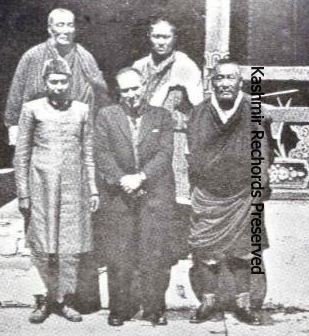
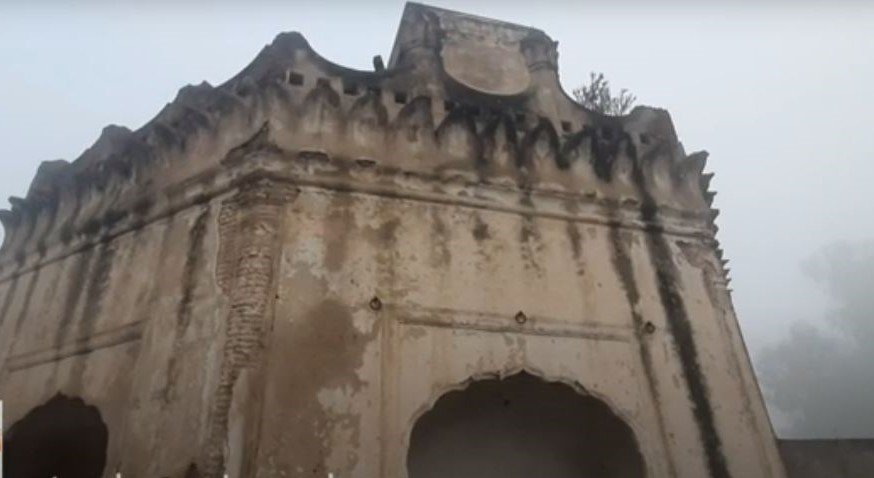
Mirwaiz Farooq’s legacy was inherited by his 17-year-old son, Omar Farooq, who was nominated as his successor soon after former’s assassination. Omar Farooq was formally installed as new Mirwaiz of Kashmir on June 1, 1990.
Concerned for his safety, his mother had sent him to Egypt for religious studies. Today, Mirwaiz Omar Farooq, known for his moderate views, continues to be a significant figure in Kashmir, despite constant surveillance by ISI and its agents in past.
Controversies and Accusations
Eight years after the assassination, during a political speech, Shia leader Moulvi Iftikhar Hussain Ansari accused former Union Home Minister Mufti Mohammad Sayeed of being responsible for Mirwaiz Farooq’s death. This claim has been a point of contention and speculation within the political landscape of Kashmir.
The assassination of Mirwaiz Mohammad Farooq remains a pivotal event in Kashmir’s tumultuous history, symbolizing the complex interplay of political, religious, and militant forces in the region.
It was an era of different “End-to-End Encryption’’ when cheat codes were devised to carry out sabotage and further anti-India narrative in Kashmir. The story dates back to the Kashmir Conspiracy, the mention of which has been ably and diligently made by B N Mullik, an Indian civil servant, spymaster and the second Director of the Intelligence Bureau of India.
In his Book on Kashmir, published by Allied Publishers in April 1971, B N Mullik, besides giving other accounts, mentions how Pakistani intelligence agencies through their sympathizers were using secret codes to pass on information.
In the absence of WhatsApp, e-mail, or any other digital medium, they were using letters, stuffed with secret messages, mostly in Urdu, to carry forward their nefarious designs.
Kashmiri Pandit was a “ Saudgar’’
Mullik, who smashed this network, found interesting disclosures that he has carried in the Book. As per the Book, Kashmiri Pandit in secret code language was addressed as “Saudagar’’, while “ India’’ was referred to as “ Baramulla’’, `Srinagar’ as “Rampur’’ and “Pakistan’ as “Sopore.’’.’
Pakistani Coded words and deciphered by India
India’s First Prime Minister Jawahar Lal Nehru was addressed as “Jaffar’’. For saboteurs, “ Kashmir’’ was “ Talab’’, while “ Azad Kashmir’’ (PoK) was referred to as “ Chaudhari Lucknow’’.
Mullik’s book mentions about 105 such names, which were in use but were deciphered by Indian Intelligence Agencies to smash the Pakistani Plan in the Kashmir Conspiracy Case.
Kashmir Rechords is reproducing some of such ‘’Cheat Codes’’ here.
In the tumultuous days of 1990, amidst the echoes of political unrest and communal tensions, Kashmir bore witness to a series of forgotten tragedies, overshadowed by the broader narrative of conflict. These unreported killings, etched in the annals of history, serve as poignant reminders of the human cost of strife and the silent suffering endured by ordinary Kashmiris.
March 23, 1990, dawned with yet another sombre warning in Srinagar. Anti-India and anti-Kashmiri Pandit demonstrations continued to fill the streets, punctuated by ominous threats against the minority community. Yet, amidst the turmoil, a flicker of hope emerged as local Imams extended assurances of safety to the Kashmiri Pandits, urging their return to the valley. However, these promises proved hollow as the day unfolded. B.L. Karihaloo, a sweet shop employee, became the instant victim. He was shot at in the Bagat Kanipora area.
The following days bore witness to a relentless wave of violence. Dr. Pushkar Nath, an officer of the J&K Agriculture Department, fell prey to terrorists’ bullets in Bijbehara on March 22, 1990. Ashok Kumar, a resident of Safa Kadal, met a similar fate on March 26, 1990.
Agriculture Department Employee, Dr Pushar Nath is shot dead on March 22, 1990
April 1990 brought no respite. On April 23, 1990, Sunil Kumar Kotru was killed in Rainawari locality while as a body of a J&K Police Constable, Dalip Singh was recovered from Shopian area.
Similarly, on April 26, 1990, six innocent lives were cruelly snuffed out in various parts of the valley. Among them were Ravinder Kumar, Bansi Lal Saproo, Mohd Ramzan, Ghulam Mohammad, Abdul Rehman, and Ghulam Rasool, each a casualty of senseless bloodshed.
April 30, 1990 marked the demise of Moti Lal Pandita in Kupwara, adding to the growing toll of targeted killings.
Surge in Atrocities
The month of May 1990 saw a surge in atrocities, claiming the lives of individuals from diverse backgrounds. On May 3, a revered Gujjar leader, honoured with the Padma Shri, fell victim to assailants’ bullets in Bara Kasi in Tangmarg area of Kashmir. Chuni Lal Shalla, a dedicated Police Inspector, met a similar fate in Langet area near Sopore.
May 6, 1990 unfolded with the tragic discovery of Prof. Kundan Lal Ganjoo and his wife’s bodies in Sopore, alongside the lifeless form of a young girl named Dolly in Karan Nagar. The brutality reached its zenith on May 11, with the ruthless assassination of former National Conference legislator Sheikh Manzoor, a grim testament to the unchecked reign of terror.
These names, etched in sorrow, represent but a fraction of the countless lives lost in the crucible of conflict, their stories buried beneath the weight of indifference and silence. As we reflect on these forgotten souls, let us offer prayers for peace and reconciliation, striving to honor their memory amidst the clamour of history. (To be concluded)