Home Blog Page 13

Zoji La Day: Honoring Courage and Sacrifice

(Kashmir Re’Chords Correspondent)

The victory at Zoji La remains a shining example of the Indian Army’s unbreakable will, as they broke through the strongest of barriers to protect the land and honor of their country.

The Battle of Zoji La, fought on the frigid Himalayan heights, stands as one of the most awe-inspiring chapters of valour and strategic ingenuity in Indian military history. Celebrated on November 1, Zoji La Day honours this iconic 1948 victory, where the Indian Army overcame incredible odds to reclaim a crucial pass in the Indo-Pakistani War of 1947-48.

In 1948, as Pakistan-backed raiders captured Zoji La Pass—a vital entry to Ladakh—the stakes for India became clear. The loss of Zoji La threatened Indian control over the region, opening pathways toward Kargil and Leh. Reclaiming this pass was crucial to ensuring Ladakh safety, and thus began one of the most daring and innovative operations of the war.

Operation Bison: A Bold Strategy at Extreme Altitudes

Maj Gen S K  Sinha in his Book “Operation Rescue’’  while talking about 1947-1949 military operations in Jammu and Kashmir, says that The initial attempt to recapture Zoji La, codenamed Operation Duck, faced setbacks due to extreme weather and tough enemy defences. Recognizing the need for a fresh approach, Lt. Gen. K.M. Cariappa, Western Army Commander, redesigned the mission as Operation Bison. In a world-first feat, he incorporated tanks into mountain warfare, setting a precedent for armoured assaults at extreme altitudes.

Transporting M5 Stuart tanks from the seventh Cavalry regiment over rough, snow-clad terrain posed logistical challenges, but engineers from the Madras Sappers adapted the route. Mule tracks were widened, bridges reinforced, and the tanks painstakingly assembled near the frontline, demonstrating exceptional engineering skill and perseverance.

Pictures of Zojila 1948, published in the Book ` Operation Rescue’

Victory Against All Odds

On November 1, 1948, under the cover of dense fog and freezing temperatures, Indian forces launched a surprise attack with tanks—a tactic that caught the Pakistani forces off guard. Supported by heavy artillery, Indian troops advanced over icy slopes, forcing the raiders back from Zoji La towards Dras. This hard-won victory reopened the route to Kargil, enabling Indian forces to eventually join troops advancing from Leh and secure the region.

The bravery displayed at Zoji La earned many troops high honors, including eight Maha Vir Chakras and eighteen Vir Chakras, recognizing their extraordinary courage and service. The battle not only marked a strategic triumph but also displayed the Indian Army’s spirit, resilience, and innovative tactics, redefined warfare in extreme conditions. Kashmir Re’Chords, from its archives, is bringing a news item of November 1, 1990 when Zoji La Day was celebrated under Col M.S Kalra. This news item highlights the role of 15 Punjab Battalion and Col Kalra was commanding the battalion in 1990.

Celebrated annually on November 1, Zoji La Day pays tribute to the indomitable spirit and “Never Say Die” attitude of Indian soldiers. The Zoji La War Memorial near Drass stands as a testament to their valour, preserving the memory of a victory against overwhelming odds and inspiring future generations.

Meet The Youngest Voice from 1947  Muzaffarabad Massacre!

(By: Dr. Rajesh Bhat)*

In October 1947, as three-year-old Jaswant Singh lay in his grandmother’s arms, he had little idea of the tragedy surrounding him. In a brutal act of violence that would devastate hundreds of Sikh families, including his own, his father, mother, and grandfather were killed in the Muzaffarabad massacre, which swept through the region in a wave of religious persecution and violence. Caught in the turmoil, Jaswant  Singh lost nearly everything—except for the steadfast love and protection of his grandmother, Bhani Devi.

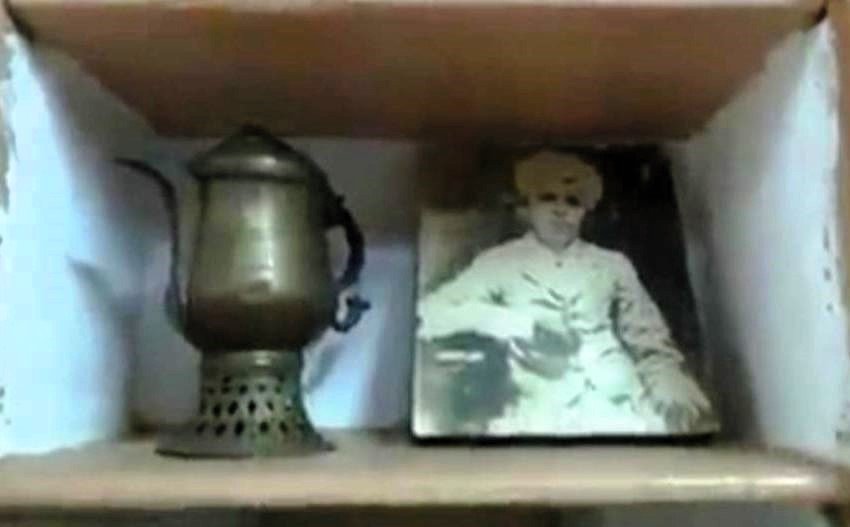
In a display of unwavering courage, Bhani Devi managed to flee with young Jaswant in tow, carrying him through harrowing paths to escape the raiders. This elderly woman, with her only surviving grandchild cradled close, would become his entire world. Though she carried him to safety, she left behind her husband, Subha Singh, and the homeland that had nurtured generations of their family. Clutching a black-and-white photograph of his grandmother Bhani Devi, Jaswant  Singh continues to carry her memory and the shared legacy wherever he goes.

Bani Devi, registered as a Migrant from Pakistan-held -Kashmir in 1960.

Finding Refuge, Rebuilding Lives

The survivor of 1947 Muzaffarabad Massacre–Bani Devi

The journey of Grandmother-Grandson  duo was marked by constant struggle, from the makeshift refugee camps of Dharamshala to Bhopal. While they found temporary shelter, Jaswant, Bhani Devi and hundreds of other Sikh families shared an intense yearning to honor the loved ones they’d lost. Finally, in 1956, they found a place of permanent refuge in Patiala, Punjab. Arriving with little more than memories and heartache, these families began to rebuild their lives, starting from scratch.

In Patiala, the State granted them barren lands. Despite their determination, the infertile soil was almost impossible to cultivate, and Bhani Devi, like many others, eventually had to surrender the land. But these resilient families found strength in each other. United in loss, they nurtured a powerful vision: a sacred space where they could remember and honor those left behind in Muzaffarabad, Kotli, and Mirpur.

The Gurudwara: A Sanctuary of Remembrance and Resilience

In 1956, with community support, these survivors created Gurudwara Shri Guru Singh Sabha, Muzaffarabad Baradari, in Patiala. Rising tall in the Tripari area, this Gurudwara is much more than bricks and mortar—it stands as a testament to the resilience of a community that, despite devastating loss, held fast to their faith and unity. It serves as a shrine to history, a sanctuary for grief, and a reminder to future generations of the courage it took to survive. (Kashmir Rechords has already carried a detailed story on Shri Gurudwara, Muzaffarabad, Patiala and can be accessed at: https://kashmir-rechords.com/gurudwara-at-patiala-a-beacon-for-the-survivors-of-muzaffarabad-massacre/)

Today, this sacred Gurudwara brings together the descendants of nearly 300 families who endured the Muzaffarabad massacre. Every year, they gather within its walls to share stories, pay respects, and honor the memories of those they lost. For Jaswant Singh and countless others, this Gurudwara is more than a place of worship. It is a sanctuary of resilience, a standing reminder of the spirit’s ability to endure in the face of adversity.

1947 Muzaffarabad Massacre Survivor, Jaswant Singh with the Author.

A Legacy Carried Forward

Jaswant Singh, now in his twilight years, sees the Gurudwara as a reminder not only of the past but of the enduring unity, faith, and remembrance that keep his community strong. As he looks at the photograph of his grandmother, he carries forward not only her memory but also the collective legacy of those who survived with him. Through Gurudwara Shri Guru Singh Sabha, the story of survival, strength, and remembrance lives on, reminding everyone that, no matter the hardship, the human spirit can—and will—endure.

  • *Dr. Rajesh Bhat is a Kashmir-born Journalist, Writer and Researcher; formerly associated with Daily Excelsior J&K and The Tribune, Chandīgarh. He is the Author of Radio Kashmir in Times of Peace & War.

The Ugly Kashmiri!

Author of Ugly Kashmiri–Arvind Gigoo
( By: Kanwal Krishan Lidhoo)

The Literature in Exile is a term that has a global dimension. Works of great literary merit have been produced by the authors who chose or were forced to live in places other than their own. The life in exile is like living in a cauldron. It boils everything and changes the contours of existence to a totally new shape, while retaining certain flavours and tastes of the original constituents more often as a baggage than something to be valued. Many races and communities produced marvellous literature when having to assert their lost identity and  socio cultural inheritance had first to de-construct their existence and subsequently apply the same to understand and face  their ghosts and predicaments. This deconstruction helps them come out of their insecurities and also their comfort zones.  This has happened with Jews, Asians and Africans and nearer home to Punjabis, Sindhis and …… the Kashmiri Pandits.

The Ugly Kashmiri

Besides the marvellous  literary output through books of merit in Kashmiri, Urdu and Hindi, one masterpiece in English by Arvind Gigoo, Professor in English who was forced to live away from Kashmir came up in the year 2006. The title of the book is “Ominous”…. “The Ugly Kashmiri”. But such is the power and appeal of the book that it has run out of the editions. Interestingly it should adore every Kashmiri’s bookshelf. Those who say that its context is Kashmir and only the inhabitants of that place will relate to it are holding to wrong assumptions. The satire in all 180 aphorisms has a universal appeal  that cuts across regions, places and time in history. Maradona’s ‘Hand of God’ quote seems to aptly apply to this book also. These 180 aphorisms have been conceived in a manner which  resemble the ‘Sutras’ of ancient Rishis. They are usually one-liners and in the middle. The words of wisdom seem to exist in a void and have a deep significance. Around these ‘Sutras’ one can always load one’s thoughts and conditionings but that is not going to change the truth of the satirical aphorisms. These pearls of wisdom were not created by design. They just happened.

( Some cameos from `The Ugly Kashmiri’)

A Deeply Cathartic Process

Kashmir Rechords was fortunate to elicit a response from the author Arvind Gigoo sometime back when he was alive. And the response was: “It actually has been a deep and cathartic process”. Like many Kashmiris he also possesses a sensitive soul, carries the concerns, joys and sorrows of a Kashmiri whether a Hindu or a Mussalman caught up in the cauldron post 1990 when tectonic shifts took place with regard to socio- political conditions in Kashmir.

The book starts in fact with an aphorism with deep spiritual meaning…… “I Still Am But I am not Still” . Though satirical  it has a tremendous healing effect. The subsequent satirical aphorisms continue to jolt us, make us rue and weep and finally enable us to build an appreciation for the same. They usually shame every one of us and that is why Arvind Gigoo’s masterpiece “The Ugly Kashmiri”  has jolted every Kashmiri  from within and has made him or her shun   their  individual comfort zones.

One of his cameo is directed towards  the dubious philosophy nurtured by  the terrorists, who indiscriminately killed several Kashmiri Pandits and Kashmiri Muslims.

The author states in the preface, “I have never had any political commitment and religious conviction. I go on changing my opinions. I dangle between an idea and its opposite. I am sure about my doubts, vacillations and uncertainties.” He has dedicated this book to an unknown “Ahmad the Blacksmith, Whom nobody Knows because he is beautiful !”

A Wave of Voluntary Retirements in J&K Bank amid Nepotism, Unmet Targets

(Kashmir Re’Chords Exclusive)

Voluntary Retirement Trend  is surging in Jammu and Kashmir Bank Limited!  Over 155 senior employees have  already applied for voluntary retirement or sought resignations between October 2023 and October 2024, highlighting severe issues within the bank’s workforce.
A growing sense of dissatisfaction is gripping its middle-rung employees, including Branch Managers, Senior Managers, and Chief Managers, mostly in the age group of 50 to 60.  Talking to some of these individuals, it was noticed that they  are increasingly seeking voluntary retirement to escape what they perceive as a hostile work environment plagued by nepotism, unrealistic targets, stressful conditions and an indifferent top management. The bank’s leadership, comfortably insulated in their Corporate or Zonal Office chambers, has been accused of fostering favouritism while disregarding the well-being of those working on the ground.

Working on the Ground…Under Stressful Conditions!
  In a region where unemployment remains a pressing issue, the exodus of seasoned employees from the J&K Bank seems paradoxical. However, the pressures they face are significant. Rather than addressing the legitimate concerns of their junior colleagues, the senior management has reportedly exacerbated the situation by setting impossible deadlines, promoting personal interests, and terrorizing staff with threats of “severe action’’ for failing to meet the targets. The environment has become so stifling that many  more are desperate to leave.

According to figures obtained by Kashmir Re’Chords, over 155 senior employees, predominantly Managers and Senior Managers, have  already applied for voluntary retirement or sought resignation between October 2023 and October 2024. While banking sectors across India equally  face similar challenges, the situation in J&K Bank, however,  appears particularly acute. Employees without influential connections or “godfathers” within the organization are repeatedly assigned to far-flung, inaccessible locations, making it nearly impossible to maintain work-life balance. Women employees, despite their capabilities, also face systemic discrimination, with none having ever been appointed as Chairperson of the bank since its establishment before 1947. Some women employees were even recently denied promotion, despite their capabilities. They are now either sidelined or forced to work under otherwise `incapable’ colleagues, now their seniors!

Inequity in Postings

The inequities in employee treatment are stark. Well-connected officers are allowed to remain in comfortable postings for years in coveted locations such as Kashmir, Jammu, or Delhi-NCR regions, while others are shunted to remote areas under severe conditions. Figures available with  Kashmir Rechords reveal that  there are numerous examples of officers, shielded by the patronage of top management, who have remained in their preferred branches for over five to seven years at a stretch, be that in Kashmir, Jammu or Delhi-NCR. Meanwhile, those committed to a fair work culture but lacking the right connections find themselves transferred to distant locations, separated from their families and forced to work in stressful environments.

 Protection to Backdoor Appointees

At the same time, a parallel issue looms large over the bank—backdoor appointments. Before 2019, over 3,000 individuals reportedly entered the bank through political favouritism, bypassing standard recruitment procedures. Many of these Assistant Banking Associates continue to work without any fear of consequences, protected by the very same top management accused of forcing others into early retirement. Despite the involvement of the Anti-Corruption Bureau and the exposure of this scandal, little has changed for those employees who entered through these questionable channels.

As voluntary retirement applications increase, one question remains—are the senior leaders, especially the CEO of J&K Bank, fully aware of the growing unrest within their ranks?  And if so, will they take action to remedy the situation, or will the list of disillusioned employees continue to grow unchecked?

Note: Kashmir Rechords urges all affected employees of J&K Bank, who have applied for or are considering voluntary retirement, to share their experiences with us at: support@kashmir-rechords.com or kashmirrechords@gmail.com. Your stories will help the top management of J&K Bank better understand the reasons behind the growing number of voluntary retirement seekers. Kashmir Rechords pledges complete confidentiality and assures that your identity will remain undisclosed

When Two Raos  Had Planned the Return of Kashmiri Pandits!

A 1996 Plan by Prime Minister P.V. Narasimha Rao and Governor Gen K.V. Krishna Rao to Bring Back Exiled  Kashmiri Pandits Failed Due to Resistance from Within the Community.

(Kashmir Re’Chords Exclusive)

In the early months of 1996, India was on the verge of a bold initiative that could have reshaped the fate of thousands of exiled Kashmiri Pandits. Prime Minister P.V. Narasimha Rao and the then Governor of Jammu and Kashmir, General K.V. Krishna Rao, were working on a meticulously devised plan aimed at facilitating the return of Kashmiri Pandit families, who had to flee  the Valley during the violent unrest of the 1990s. The plan was on the brink of being set in motion, with both leaders determined to see it through. However, a surprising and strong resistance from Kashmiri Pandit organizations themselves would eventually stall this historic move.

A Vision for Homecoming

Prime Minister Rao, known for his political astuteness and deep understanding of Kashmir’s complex socio-political landscape, was deeply committed to bringing the Kashmiri Pandits back to their homeland. Supported by General Krishna Rao, the then  Governor of Jammu and Kashmir, the plan aimed to restore normalcy in the region through the rehabilitation of those displaced by militancy. The blueprint was prepared over several months of discussions, between October 1995 and February 1996, with the intention of launching the initiative in April of that year.

At the heart of the plan was the establishment of a special Council dedicated to the rehabilitation of victims of militancy. This Council, chaired by the Governor with the Chief Secretary as its executive head, had been registered and equipped with an initial corpus of Rs 20 crore. It laid the groundwork for a phased return of Kashmiri Pandit families to selected, safer areas of the Valley.

Confidence Building and Social Dialogue

The return plan was not just logistical but also strategic in fostering a social dialogue between the migrants and the local communities in Kashmir. Visits to the migrant camps by prominent Valley personalities were envisaged to build trust and pave the way for reconciliation. A few zones in areas like Pulwama, Baramulla, Anantnag, Bandipora and Srinagar were identified as initial points of resettlement, where social interactions could help initiate a broader peace process.

Newspaper reports from March 1996 available with Kashmir Rechords  suggest that many Kashmiri Pandits had shown interest in the plan, raising hopes that a peaceful return was possible. According to the then Chief Secretary, Ashok Kumar, the groundwork was laid, and initial responses were encouraging.

Resistance from Within

However, despite the careful planning and the personal commitment of Prime Minister Rao and Governor Krishna Rao, the return plan faced an unexpected and vehement rejection from key Kashmiri Pandit organizations. On March 19, 1996, just as the plan was being formalized, major migrant groups unanimously opposed the initiative.

N.N. Kaul, president of the Kashmiri Samiti Delhi, led the charge against the plan, accusing the government of taking Kashmiri migrants for granted. Ramesh Razdan, general secretary of Panun Kashmir, dismissed the move as “vague and meaningless,” while A.N. Vaishnavi, president of the All-State Kashmiri Pandit Conference (ASKPC), issued a “clear cut directive” to all Pandit migrants, urging them to avoid contact with members of the Valley’s majority community.

A Missed Opportunity

As the resistance mounted and the 1996 general elections loomed, the window for implementing the plan rapidly closed. With the change of government in May 1996, P.V. Narasimha Rao’s tenure ended, and with it, the dream of facilitating the return of Kashmiri Pandits faded into the background. Though Rao had been passionate about the issue, the resistance from within the Pandit community itself had made it difficult to proceed.

Now, nearly three decades later, in 2024, the exiled Kashmiri Pandits remain scattered across the country, still awaiting a viable return plan. The opposition from various organizations persists, and the dream of reconciliation and return, envisioned by the two Raos, remains unfulfilled.

The efforts of Prime Minister P.V. Narasimha Rao and Governor Gen K.V. Krishna Rao stand as a poignant reminder of a missed opportunity—one that could have possibly rewritten the history of Kashmir.


Vandalism,Insurgency and 1983 Kashmir Cricket

(Kashmir Rechords Exclusive)

To understand the roots of the insurgency in Kashmir, one must look beyond the widely held belief that the rigging of the 1987 elections was the primary catalyst. A critical event four years earlier, on October 13, 1983, serves as a stark reminder of the region’s escalating tensions—marked by the first international One Day Cricket match held in Srinagar.

The years 1982 and 1983 remain pivotal in Kashmir’s history. At the helm was  Dr Farooq Abdullah, who, despite being a newly elected Chief Minister, misjudged  or perhaps  allowed the shifting sentiments of the Kashmiri people. This miscalculation would culminate in chaos during the cricket match, which was organized by the Indian Cricket Board to showcase India against the West Indies at the Sheri-Kashmir International Cricket Stadium. The venue was far from traditional; wooden planks formed makeshift stands, and the picturesque outfield was short enough to witness an overwhelming display of sixes from the West Indies batsmen.

When Farooq Abdullah courted Controversy

Kashmiris had a deep admiration for cricket, especially for icons like Sunil Gavaskar, whose actions on the field in praise of Imran Khan poster shown to him,  received an electrifying welcome. However, the jubilant atmosphere quickly soured. As the match progressed, the crowd’s behavior shifted ominously. Booing erupted, and a section of the spectators began to chant pro-Pakistan slogans. Even the weather seemed to mirror the tumultuous mood, as dark clouds loomed overhead, signaling the chaos to come.

Farooq Abdullah witnessed the disruption but failed to take decisive action, a choice that would later haunt him. Prime Minister Indira Gandhi, alarmed by the unrest, began to perceive the emergence of secessionist sentiments in Kashmir. Within months, Abdullah’s government was dismissed, paving the way for his brother-in-law, Ghulam Mohammad Shah, to assume power.

The match on October 13, 1983, ended in controversy when twelve individuals were accused of vandalizing the pitch during the lunch break. This act of defiance, perceived as an affront to Indian sovereignty, set a precedent for the political unrest that would follow. Astonishingly, in 2011—28 years later—all those charged were acquitted due to a lack of evidence, despite the match being broadcast live!

Pitch Digging–Lack of Evidence!

Many who participated in the pitch-digging incident later became involved in the insurgency against India. Among them was Showkat Bakshi, a key militant whose digging charges were dismissed alongside others. Ironically, while Bakshi faced jail time in 1990 for terrorism, he never appeared in court for the cricket pitch damage, a stark reflection of the complexities surrounding justice in the region.

As the 1986 match against Australia approached, the political climate had worsened. This second and last ODI in Kashmir occurred under President’s Rule and also ended in disappointment for the Indian team.

 Indian Cricket Controversies

Gavaskar, reflecting on the experience in his book Runs ‘n Ruins,” noted the bizarre atmosphere where the crowd was more aligned with their rivals than their own team.

The events of October 13, 1983, reverberated through the years, symbolizing the deepening divide in Kashmir. The stadium that day became a stage not just for cricket but for the expression of dissent against Indian rule. Crowds hurled bottles and stones, creating an environment fraught with hostility. K.R. Wadhwaney, a prominent sports journalist, criticized the Board of Control for Cricket in India for their poor foresight in choosing Srinagar as a venue, suggesting that they ignored the potential ramifications of such a decision.

In his book “ Indian Cricket Controversies’’, Wadhwaney  says that the   unpardonable behavior  of   a section of  the spectators  was a slap in the face of Indian patriotism. The author further goes to state that the day’s events that unfolded showed that the throng of spectators was tutored to shout anti India slogans even when there were occasions to applaud them. It was shocking ;it was not cricket, Wadhwaney, who had covered the event notes in his book.

Are Sunny Days Back?

Today, Kashmir is experiencing a renaissance in cricket. Young cricketers  from both Jammu and Kashmir regions  are making names for themselves in national and international circuits, including the IPL. The region, now populated with a more educated and discerning youth, is eager to move forward.

Recently, the Legends League Cricket match reignited local enthusiasm, with spectators lining up for hours to secure tickets—a far cry from the tumultuous events of 1983. As Kashmir awaits a new era of sporting triumphs, the past serves as a reminder of the complex interplay between sport, politics, and identity in the region. With renewed hope, the cricket stadium in Jammu looks forward to hosting matches once again, signaling a brighter future for the beloved  “Gentleman’s’’ game in Kashmir.

Ratan Tata’s Vision for Kashmir: A Legacy of Hope

(Kashmir Rechords Exclusive)

On October 5, 2012, Ratan Tata, who passed away on October 9, 2024, made a visit to Srinagar, Kashmir, accompanied by some of India’s most prominent business leaders. This visit aimed to explore ways to uplift the region’s economic conditions, bringing hope to a troubled area through trade and industry. Known for his humility and ethical business practices, Tata’s presence left an indelible mark on Kashmir.

“The Brightest of All”: Kashmiri Students Shine

One of the highlights of Ratan Tata’s visit was his interaction with the students of Kashmir University, where he observed that they were “the brightest of all.” This praise, coming from a respected figure like Tata, resonated deeply with the students and the local community. His encouraging words brought a sense of optimism and pride to the youth of the region, a sentiment that still lingers today.

During his visit, Ratan Tata committed to supporting the growth of trade and industry in Kashmir. His goal was clear: to create more job opportunities for the young people of the Valley. However, due to the political instability in the then State of J&K and owing to other reasons, many of his plans were left unfulfilled. Nevertheless, Tata’s vision for a prosperous Kashmir remains an aspiration that can still be realized.

 A Gathering of Business Minds

The 2012  visit to Kashmir  was made possible through the efforts of Congress leader Rahul Gandhi, who invited Tata and other top business leaders like Kumar Mangalam Birla, Deepak Parekh, and Rajeev Bajaj. Together, they participated in a panel discussion at Kashmir University, pledging to provide internships, campus placements, and a Centre for Innovation to boost employment opportunities for Kashmiri students.

A Vision for Expanding Tata’s Presence in Kashmir

In a breakfast meeting with the then Chief Minister, Omar Abdullah, Ratan Tata expressed a desire to expand the Tata Group’s activities in Kashmir. His focus was on developing sectors such as Information Technology, hospitality, agro-products, and horticulture. Additionally, Tata fondly recalled his childhood visits to the Valley with his grandfather, reminiscing about their stays on a houseboat in Nigeen Lake. Abdullah extended an invitation for him to relive those memories once again, reflecting the personal connection Tata had with Kashmir.

Rattan Tata along with other top business leaders at Kashmir University Campus

The Road Ahead: Fulfilling Tata’s Vision

Now, as Kashmir moves closer to stability, with the recent elections bringing Omar Abdullah and the National Conference back to leadership, the time seems ripe to revisit Ratan Tata’s dream. The Tata Group is uniquely positioned to fulfil his vision of a vibrant and prosperous Kashmir, creating new opportunities for the region’s youth.

Realizing this dream would be the greatest tribute to the man who saw potential in Kashmir’s students and hoped to build a brighter future for the Valley.

Punjabi Literary Gem Nawen Yug De Waaris Now Available in Kashmiri

( Kashmir Rechords Reporter)

Sahitya Akademi, Delhi  has recently  released Nawen Yug De Waaris, the celebrated Punjabi short story collection by Mohinder Singh Sarna, now masterfully translated into Kashmiri by renowned translator Kanwal Krishan Lidhoo, who is currently one of the Directors of Kashmir Rechords. This  Kashmiri translation represents a unique cultural bridge between Punjab and Kashmir, showcasing a shared legacy of storytelling that resonates with both regions.

Originally published in 1991, Nawen Yug De Waaris is regarded as a landmark in Punjabi literature, receiving the prestigious Sahitya Akademi Award. The collection explores a wide range of themes, including the tragedy of Partition, exploitation of the marginalized, psychological struggles and moral crises, all of which continue to resonate with today’s global issues.

Mohinder Singh Sarna: A Master Storyteller

Born in 1923 at  Rawalpindi , Punjab of British India,  Mohinder Singh Sarna’s stories capture the human condition, blending dark realities with undertones of hope. His works reflect the erosion of moral values in contemporary society, yet they also offer glimpses of human resilience. As a revered figure in Punjabi literature, Sarna’s prolific output includes short stories, novels, essays, and epics that have enriched the Punjabi literary tradition.

Mohinder Singh Sarna who passed away in 2001, was an Indian civil servant and novelist who wrote in the Punjabi language and  won the 1994 Sahitya Akademi Award for his short story collection Nawen Yug De Waris,now available in Kashmiri ( thanks to the efforts of Mr Lidhoo). He is the father of diplomat Navtej Sarna, also  an Indian author, columnist and former Indian Ambassador to the United States having  previously served as the High Commissioner of India to the United Kingdom, and the Ambassador to Israel.

Kanwal Krishan Lidhoo: The Accomplished Translator

The Sahitya Akademi entrusted the translation of Nawen Yug De Waaris to Kanwal Krishan Lidhoo, a renowned translator proficient in Urdu, English, and Hindi, but primarily focused on translating into his native Kashmiri. Lidhoo’s background includes over three decades of service as a Senior Producer at All India Radio and he is currently one of the  Directors at Kashmir Rechords. His skillful translation of Sarna’s stories reflects his deep linguistic knowledge and cultural sensitivity.

Exploring Universal Themes Through Kashmiri Translation

Lidhoo’s translation of Punjabi masterpiece includes 25 stories, many of which delve into the lasting scars of Partition, societal exploitation, and modern hypocrisies. Notable stories include Be-Mol Mokhta (“Priceless Pearl”), Akh Waadeh (“One Vow”), Vozul Taangeh (“The Red Tonga”), and Buzargan Henz Panahgah (“Old Age Home”), which echo the divisive effects of Partition. Other stories like Munshi Dhani Ram and Zolur (“Spider”) tackle societal issues, while works such as Patim Peg (“The Last Peg”) and Sartali Band Party (“The Brass Band”) critique modern life.

The Kashmiri Translation of Nawen Yug De Waaris captures the psychological depth and existential questions posed by Sarna’s stories, making them accessible to Kashmiri readers.

On October 6, 2024, Daily Excelsior, a prominent newspaper in Jammu and Kashmir, published a detailed write-up on the translation of Mohinder Singh Sarna’s Nawen Yug De Waaris into Kashmiri. The newspaper praised the translation for retaining the essence of Sarna’s themes while enriching Kashmiri literature.

Lidhoo’s translation of Nawen Yug De Waaris is not his first significant contribution to literature. He previously translated Samay Matrika, a 10th-century Sanskrit work by Ksemendra, into Kashmiri. This monumental project took nearly eight years and was the first translation of its kind into the Kashmiri language.

In addition,  Kanwal Lidhoo has translated several other works, including Sahitya Akademi’s Hum Kaal Sindhi Afsana Sombran and the Indian Institute of Languages’ publication Hindustaenie Falsafekie Khad-o-Khal, and a  Kashmiri translation of Outlines of Indian Philosophy by renowned Professor M. Hiriyanna.

Kashmiri Translation of 10th century Samay Matrika
Lidhoo’s monograph on noted Kashmiri poet, Makhan Lal Kanwal

A Legacy of Excellence

Lidhoo, accredited by both the Sahitya Akademi and the Indian Institute of Languages, has a distinguished career as a translator and a veteran broadcaster. His contributions to Kashmiri, Urdu, and Hindi literature through translations, monographs, and his work with All India Radio have solidified his reputation as a literary figure.

His translation of Nawen Yug De Waaris into Kashmiri represents a significant cultural and linguistic achievement, bringing Punjabi literature closer to Kashmiri readers while preserving the universal themes of human experience.

Dogra Regiment & Gorkha Rifles: Pillars of Valour in India’s Defence

(Kashmir Rechords Reporter)

Dateline: October 5, 1990

The Indian Army’s esteemed Fourth Dogra Regiment and the 3/9 Gorkha Rifles had marked their Golden Jubilee, celebrating 50 years of valour, sacrifice and service to the Nation, about 34 years ago in 1990. These battalions have earned a prominent place in the history of the Indian Army through their dedication and achievements in war and peace, under challenging conditions.

The 4th Dogra Regiment has consistently lived up to its motto, “Kartavyam Anvatma”, meaning “Duty before Self.” As stated by its  then Commanding Officer, Lieutenant Colonel M.K. Aeri, in October 1990, the battalion had the proud privilege of serving both at home and abroad, in war and peace, across various terrains including deserts, dense jungles, and the icy heights of Siachen. The soldiers of the battalion have repeatedly proven their mettle, with many making the ultimate sacrifice to uphold the honor of their regiment and country.

One of the regiment’s most distinguished moments came in the 1948 J&K operations when it earned the Battle Honour “Barwali” for its heroic role in the Battle of Barwali Ridge in the Rajouri sector of Jammu and Kashmir. The sacrifice of Lieutenant Colonel I.J.S. Butalia, who fell in this battle, marked a tragic yet inspiring chapter in the regiment’s history. He was posthumously awarded Maha Vir Chakra for his gallantry, and a memorial was erected in his honor near Naushera, J&K, serving as a lasting tribute to the martyrs who saved Jhangar-Naushera.

Sacrifice of Lieutenant Colonel I.J.S. Butalia

Born on February 12, 1911, Lieutenant Colonel I.J.S. Butalia was a distinguished officer of the Dogra Regiment, commissioned in 1937. During the 1948 operations in Jammu and Kashmir, he led the 4th Dogra with remarkable courage and tactical acumen, especially in battles like Kalal, Chawa, Jhangar, and Barwali Ridge. His leadership during the Battle of Kalal and later at Barwali Ridge solidified his legacy as a brave and exemplary soldier. He was the Second Commanding Officer of the 4th Dogra to be killed in action within three years, after Lieutenant Colonel R.P. Taylor in 1945. For his supreme sacrifice, Lt Col Butalia was posthumously awarded the Maha Vir Chakra, and a war memorial stands in his honor at Seri (Naushera), where he fell on February 22, 1948.

The 4th Dogra Regiment’s history is also marked by its valiant efforts during the 1962 Chinese aggression. Despite the heavy losses, the regiment upheld the traditions of the Indian Army, adding to the distinguished history of the Dogra Regiment, one of the most decorated and prestigious units in the Indian Army.

The 3/9 Gorkha Rifles

On the same day in 1990, the 3/9 Gorkha Rifles also celebrated its Golden Jubilee in the Northern Sector. This period was particularly turbulent, with Kashmir experiencing heightened insurgency, militants infiltrating the region, and the forced exodus of Kashmiri Pandits. In the midst of this chaos, the Gorkha Rifles, posted in Northern Sector, maintained their discipline and dedication to duty. The celebrations were graced by the presence of Lieutenant General B.K.N. Chibber, Colonel Commandant of the 9th Gorkha Regiment, who inspected the Guard of Honour, somewhere in Northern Sector on his arrival.

Preserving History: A Tribute to Courage

The Kashmir Rechords (www.kashmir-rechords), an organization dedicated to preserving the history and legacy of Jammu and Kashmir, takes pride in sharing the preserved newspaper cuttings of October 6, 1990, which commemorate the Golden Jubilee of these two illustrious battalions. The celebration of the Fourth Dogra Regiment and the 3/9 Gorkha Rifles is a testament to their enduring legacy, their commitment to duty, and their countless sacrifices for the security and integrity of India.

Gurudwara at Patiala: A Beacon for the Survivors of Muzaffarabad Massacre

0
(By: Dr. Rajesh Bhat)*

The Gurudwara, Shri Guru Singh Sabha, Muzaffarabad Baradari, Kashmirian at  Patiala, Punjab is more than a building. It is a monument to the grief, love, and resilience of a community that endured unspeakable horrors. Each year, the descendants of those 300 families gather here to commemorate the victims of the October 1947 Muzaffarabad massacre.

In the heart of Patiala, Punjab, stands a small Gurudwara—an emblem of resilience, remembrance, and hope. This sacred place is not merely a site of worship but a living testament to a story woven in pain, loss, and unyielding courage. It tells the tale of 300 Sikh families from Muzaffarabad and Kotli, whose ancestors once thrived in what is now Pakistan-occupied Jammu and Kashmir. These families lived harmoniously with their land and traditions until the tragic events of October 1947 forever altered their destinies.

The partition of India left deep scars across the subcontinent, and for these families, the impact was especially profound. When Pashtun tribesmen, backed by the Pakistani Army, stormed through the villages of Mirpur, Kotli, and Muzaffarabad, the lives of these Sikh families were irreparably shattered. Their peaceful homes were transformed into battlegrounds, and their loved ones became martyrs in a storm of violence. Thousands of Sikhs and Hindus were mercilessly killed, and women were forced to jump into rivers to escape enslavement and forced conversion.

The Escape from Muzaffarabad

Amidst this horror, around 300 Sikh families of Muzaffarabad and 20 surrounding villages  miraculously survived the massacre. Fleeing with nothing but the clothes on their backs and the grief of leaving behind their ancestral lands, they sought refuge in migrant camps, first in  Dharamshala and then at  Bhopal. Despite their immense loss, they were determined to keep the memory of their fallen loved ones alive.

Rebuilding Lives in Patiala

In 1956, after moving from migrant Camp set up at Bhopal,  these survivors finally found solace in Patiala, Punjab, where they began to rebuild their lives. Yet, they did not—and could not—forget their past. In memory of those who were killed, they united to construct a Gurudwara—a sacred place that would forever honor the souls lost in Muzaffarabad, Kotli, and Mirpur.

The Gurudwara Shri Guru Singh Sabha, Muzaffarabad Baradari, Kashmirian at  Tripari, Patiala, is more than a building. It is a monument to the grief, love, and resilience of a community that endured unspeakable horrors. Each year, the descendants of those 300 families gather here to commemorate the victims of the October 1947 Muzaffarabad massacre. The retelling of their ancestors’ stories serves not to reopen old wounds but to ensure the sacrifices of their people are never forgotten.

A Beacon of Strength and Memory

This Gurudwara stands as a reminder not just of the partition but of the enduring human spirit in the face of overwhelming loss. For the descendants of these families, their ancestors’ stories are not distant history but a living legacy, shaping their identity and sense of purpose.

As time passes, the physical evidence of the violence in Muzaffarabad and Kotli may fade, but the Gurudwara in Patiala ensures that the memory of those who were killed for their faith remains eternal. It serves as both a silent witness to their suffering and a powerful proclamation of their resilience. Through prayers, tears, and unwavering faith, the survivors of 1947 and their descendants keep the spirit of their homeland alive, forever yearning for the lands they were forced to leave but never truly lost in their hearts.

* Dr.Rajesh Bhat is a Kashmir-born Journalist, Writer and Researcher, formerly associated with Daily Excelsior, Jammu and The Tribune, Chandigarh. He is the Author of Radio Kashmir in Times of Peace & War.

New Book Release: A Study of Kashmir’s Agrarian System in Transition

(Kashmir Rechords Reporter)

An extensive and well-researched book titled The Agrarian System during the Dogra Reign in Kashmir (1846–1889) is set to hit the shelves soon. This work delves into a critical period of Kashmir’s history, exploring the agrarian system and its impact on society during the second half of the nineteenth century.

   In this book, eminent Scholar, Professor Rattan Lal Hangloo provides an in-depth analysis of a transitional period in Kashmir’s history. While neighboring regions were moving towards modernity through political and social upheaval, Kashmir’s economy and society retained many of their medieval characteristics until the end of the nineteenth century. The author examines how the ruling elite of the time maintained control, resisting societal progress to safeguard their position.

Insights into Kashmir’s Rural Economy

The book sheds light on the competing interests among the dominant landholders and the various segments of the peasantry. Professor Hangloo meticulously explores how agricultural production was organized, including the nature of cropping patterns, agricultural technology, revenue assignments, and the role of assignees and grantees in the rural economy. He also discusses the complex relationship between land revenue administration and its impact on the peasantry, as well as trade patterns during this period.

Key Findings on Land Ownership and Manipulation of Power

One of the central revelations of the book is the absence of a pure landlord class during this era. Instead, a diverse group of land assignees and grantees manipulated the administrative system for their own benefit, further complicating the agrarian structure. Professor Hangloo’s work serves as a critical and comprehensive study of this period, offering new insights that have not been explored in such detail before.

About the Author

Professor Rattan Lal Hangloo is an esteemed scholar and historian, currently serving as Honorary Vice-Chancellor of Nobel International University (Toronto, Canada) at its USA campus and a Distinguished Visiting Professor at SRM University, Amravati, Andhra Pradesh. He has previously held notable positions such as Vice-Chancellor of the University of Kalyani, University of Allahabad, and Professor and Head of the History Department at Hyderabad Central University.

Professor Hangloo has authored numerous influential publications, including Agrarian System of Kashmir (1846–1900), State in Medieval Kashmir (reprinted in 2022 by Routledge, Francis, and Taylor), and Kashmir Before the Accession and After (2022), which was a best-seller on Amazon. His other notable works include: The Inquiries in Medieval India: Religion, Society, Culture, and Polity (2022) and Indian Diaspora in the Caribbean (2012, reprint 2015). He has also contributed over 250 papers to national and international journals.

Awards and Recognition

Professor Hangloo’s outstanding contributions to education and research have earned him several prestigious awards. These include the Senior Fulbright Fellowship (USA), DAAD Fellowship (Germany), and Fellowship by Maison des Sciences de l’Homme (FMSH), Paris. He has also been honored with the Mother Teresa International Award for Eminent Academician (2016), Sir Syed National Award for Education, and the Dewang Mehta Award for Outstanding Contribution to Education, among others.

Professor Hangloo’s research areas encompass South Asian history, politics, and culture, with a focus on the agrarian economy, state and society in medieval and modern India, and the ecological and political issues affecting Kashmir. His work continues to shape scholarly understanding of the complex dynamics of Indian and Kashmiri history.

When Election was `Jehad’ in Kashmir!

(Kashmir Rechords Exclusive)

   In the wake of the Anantnag riots of 1986, the Muslim United Front (MUF)  had emerged as a coalition of various separatist factions, including the Jammu and Kashmir Jamat-e-Islami. Their campaign was steeped in religious rhetoric, framing the elections as a form of “Islamic Jehad” .

The 1987 State Assembly elections in Jammu and Kashmir marked a pivotal moment in the region’s political history, characterized by unique circumstances that would influence its political landscape for years to come. This election not only facilitated the rise of separatist organizations but also underscored the intricate relationship between religion and politics in the area. For the first time, the elections in Kashmir were intertwined with the concept of “Jehad” (religious struggle).

   In the wake of the Anantnag riots of 1986, the Muslim United Front (MUF)  had emerged as a coalition of various separatist factions, including the Jammu and Kashmir Jamat-e-Islami. Their campaign was steeped in religious rhetoric, framing the elections as a form of “Islamic Jehad” aimed at rallying the sentiments of the populace. This strategy proved effective in consolidating the MUF’s separatist ideology, particularly  post election, as allegations of electoral rigging began to surface against the ruling party, which feared losing its grip on power.

Flayed for `Jehad’ Cry

Amidst the fervor of the MUF’s campaign, one voice stood out as a beacon of sanity: Mirwaiz Moulvi Farooq. As the leader of the Awami Action Committee (AAC), he publicly ridiculed the MUF’s characterization of the March 23, 1987 elections as a “Jehad.”  At an election rally at his party  headquarter “Mirwaiz Manzil’’ on  March 16, 1987, Mirwaiz Farooq  had urged all political parties and independent candidates to adhere to democratic norms, emphasizing that elections were a means to elect a representative government, not a religious battle. His appeal resonated deeply, as it came from one of the highest religious authorities in Kashmir.

Political observers believe that  Mirwaiz Farooq’s principled stance  had played a crucial role in tempering the fervor surrounding the MUF’s campaign. His call for peace and democratic engagement likely deterred many Kashmiris from succumbing to the separatist rhetoric. Unfortunately, this principled stand came at a grave cost; it earned him the ire of separatist factions, ultimately leading to his assassination on May 21, 1990, during a period of escalating violence in the region.

Aftermath of 1987 polls

The aftermath of the 1987 elections was tumultuous. As the results were announced amidst widespread allegations of rigging, Srinagar erupted in unrest, witnessing arson and the first low-intensity explosions that hinted at the violent plans of separatist elements, which were at crescendo in 1990. The MUF, with figures like Syed Ali Shah Geelani emerging as successful candidates, signaled another chapter in the political narrative of Jammu and Kashmir.

`Jehad’ Cry….Syed Ali Shah Geelani at an Election Rally in 1987.

Fast forward to the present, as the 2024 Assembly elections  are in the last phase, the concept of “Jehad” in the electoral context has faded into obscurity. Political parties are now primarily focused on the demand for the restoration of statehood, which has become the central theme for the majority of parties, including independents. Some of these independents still maintain allegiance to Jamaat-e-Islami, a group that is now banned in Jammu and Kashmir.

Over three decades ago, Jamaat was part of the Muslim United Front (MUF) that labeled the 1987 Assembly elections as a form of Jehad. However, in the current electoral landscape of 2024, the Jamaat appeared  eager to participate in the democratic process, seemingly overlooking its past actions that misled the people of Kashmir—first under the guise of electoral Jehad, then through armed conflict, and ultimately through “Jehad’’ against innocent civilians. Over the past three decades, countless lives have been lost in this turmoil, and now, as the region has transitioned to a Union Territory, the Jamaat’s shift in approach raises questions about its previous commitments and the impact of its past rhetoric.

Maharaja Hari Singh’s `Minister-in-Waiting’ !

(Kashmir Rechords Exclusive)

In the intricate history of Kashmir, many individuals have left indelible marks, though their names may not always be celebrated. One such figure is P.K. Wattal, a Kashmiri Pandit and dedicated civil servant, who played a pivotal role during the early years of Maharaja Hari Singh’s reign as the “Minister-in-Waiting.” His story is one of unwavering commitment, meticulous governance, and a profound sense of duty that provided stability during a crucial period of transition.

A Unique Designation: The “Minister-in-Waiting”

When Maharaja Hari Singh was coronated between February 22 and 28, 1926, he ascended to the throne of a vast and complex princely state. The young ruler, facing immense responsibilities, relied heavily on seasoned administrators to guide him through the intricacies of governance. Among these trusted advisors was P.K. Wattal, who was bestowed with the unique and somewhat curious title of “Minister-in-Waiting.”

O/o Minister-in-Waiting: P K Wattal

To modern ears, the title may seem quaint, but it signified a role of immense responsibility. Wattal was far from a mere ceremonial figure; he was the backbone of the administration, entrusted with managing the critical affairs of the state during the formative years of Maharaja Hari Singh’s rule. His legendary work ethic meant he often took on the majority of file work and decision-making tasks, ensuring that the young Maharaja was not overwhelmed by the demands of his new position.

A Steady Hand in Uncertain Times

From 1926 to April 1930, Wattal’s tenure as Minister-in-Waiting was marked by his tireless dedication to ensuring the smooth operation of the state’s administration. His meticulous attention to detail provided a strong cushion for Maharaja Hari Singh, who was still acclimating to the responsibilities of leadership. Even when the Maharaja embarked on a European tour in May 1928, records assessed by Kashmir Rechords indicate that Wattal continued to manage the state’s affairs with unwavering diligence, leaving nothing to chance in the ruler’s absence.

Wattal’s commitment to his role did not go unnoticed. His “waiting” period culminated in May 1930, when he was promoted to the position of full-fledged Finance and Development Minister of Jammu and Kashmir. This elevation was a testament to his steadfast dedication to the state and his remarkable ability to manage its complex affairs with precision and skill.

Wattal’s elevation as Finance and Development Minister in 1930.

The Legacy of a Quiet Leader

Though P.K. Wattal’s contributions may not be widely recognized today, they were crucial in shaping the early years of Maharaja Hari Singh’s rule. His role as Minister-in-Waiting, though largely behind the scenes, was instrumental in laying the foundation for the administration’s future successes. Wattal embodied the qualities of a true public servant—dedication, humility, and an unwavering commitment to his duty.

As we reflect on the history of Kashmir’s princely era, it is essential to remember figures like Wattal, whose legacy reminds us that true leadership is not always about being in the spotlight; sometimes, it is about being the steady hand that guides from behind the scenes.

Readers are welcome to add to this story, if they have any inputs, since no one has so far written about Mr P K Wattal all these years !