
(Kashmir Rechords Exclusive)
One of the most persistent misconceptions of our time is that diabetes is purely a modern lifestyle disorder—a consequence of fast food, stress, and urbanization. While modern living has certainly accelerated its rise, history presents a far more compelling narrative: long before insulin, diabetologists, and glucose monitors existed, diabetes (ذیابیطس) was already recognized as one of the most feared conditions across the Indian subcontinent.
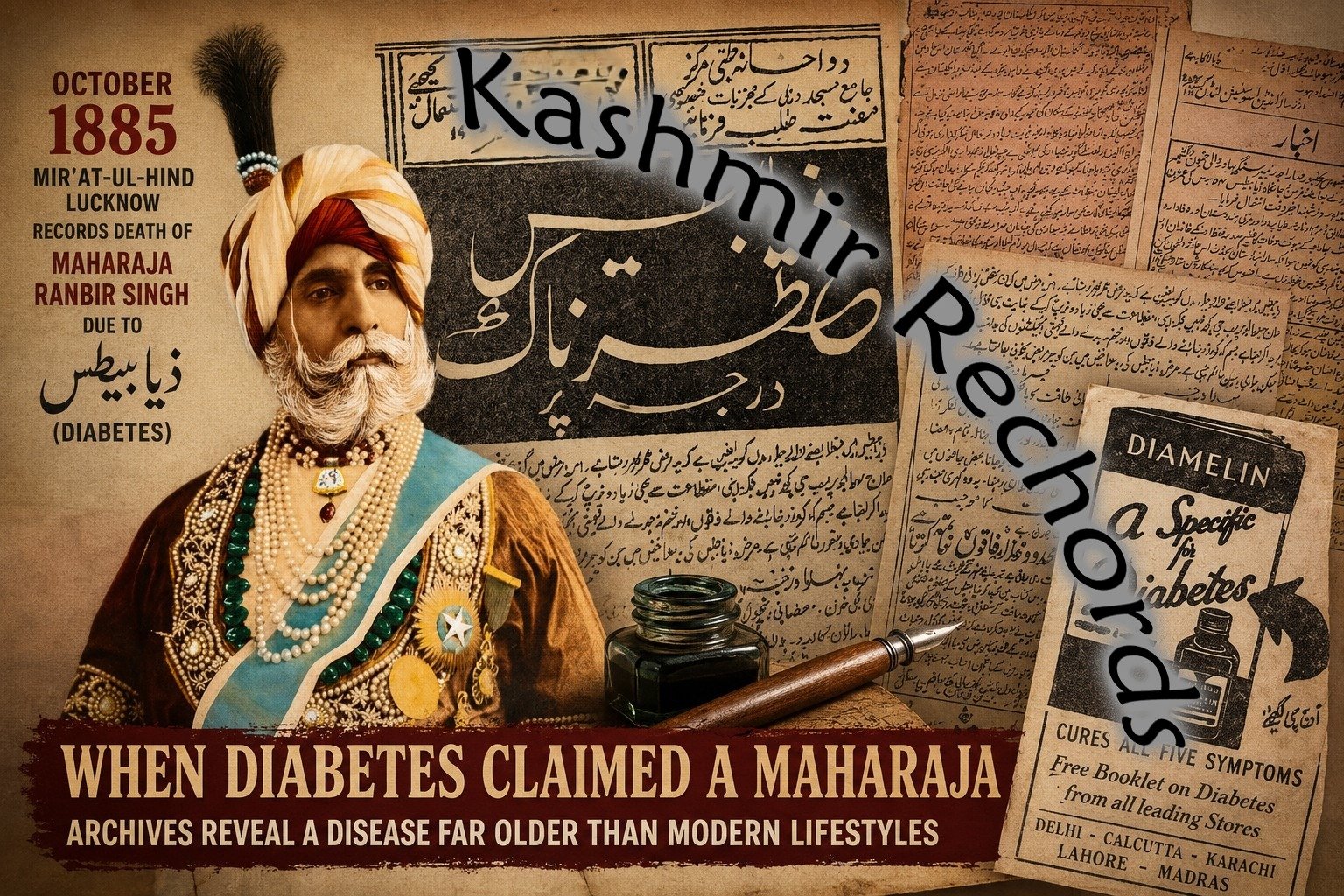
An extraordinary archival discovery preserved by Kashmir Rechords now takes this medical history back to nineteenth-century Jammu and Kashmir, revealing that even one of the region’s most powerful monarchs could not escape the disease.
1885 Urdu Journal records death of Maharaja Ranbir Singh
Among the rare archival holdings of Kashmir Rechords is the October 1885 issue of the celebrated Urdu socio-literary journal Mir’at-ul-Hind (Mirror of India), edited since 1875 by the eminent Kashmiri Pandit scholar Pandit Kishan Narayan of Lucknow, who also established the renowned Matba Bahar-e-Kashmir.
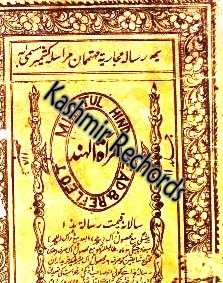
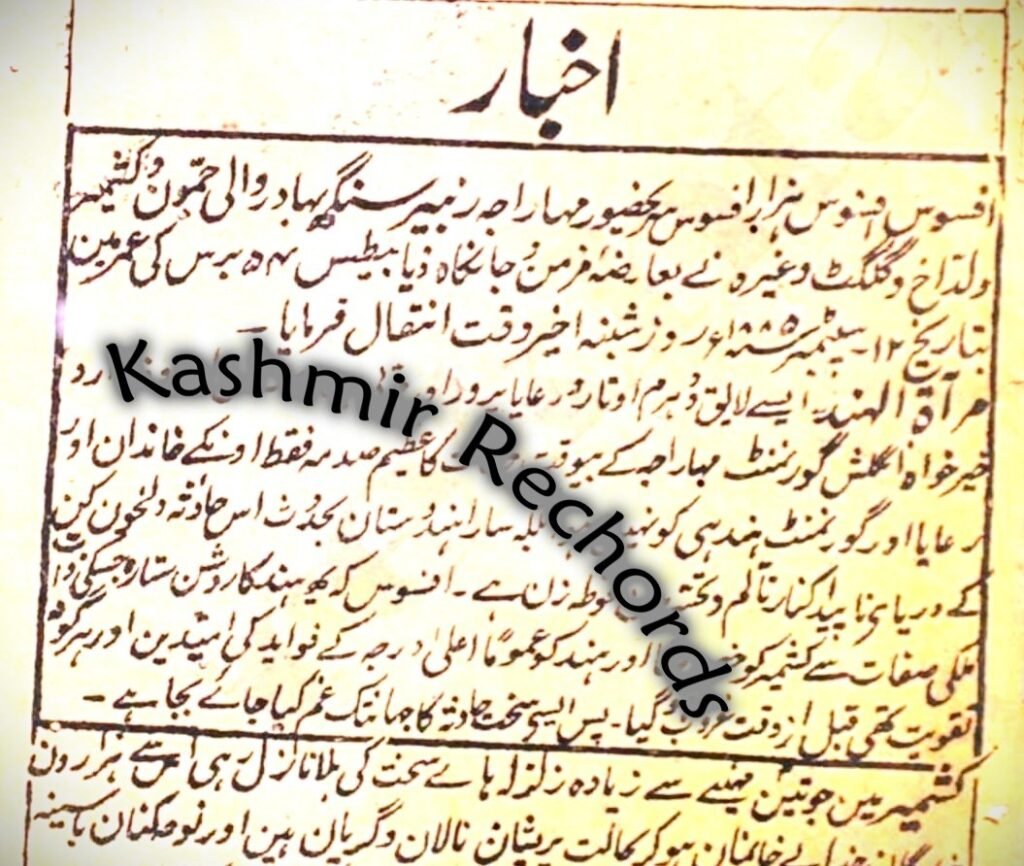
Published barely weeks after the demise of Maharaja Ranbir Singh (1830–1885), the second Dogra ruler of the Princely State of Jammu and Kashmir, the journal carries an emotional obituary mourning the passing of the Maharaja.
What makes this obituary historically remarkable is its explicit reference to the cause of death. The editor records that Maharaja Ranbir Singh died of ذیابیطس (Diabetes).
Unlike many later historical accounts that merely mention the Maharaja’s “prolonged illness” without identifying a medical condition, this contemporary Urdu publication specifically names diabetes.
As a primary source published immediately after the Maharaja’s death, Mir’at-ul-Hind represents an important piece of documentary evidence that demonstrates not only that diabetes was known in nineteenth-century India but that it was recognised by its Urdu name—ذیابیطس.
A Disease that claimed even a powerful Monarch
Maharaja Ranbir Singh was one of the most influential rulers of nineteenth-century India.Ascending the throne in 1856 after Maharaja Gulab Singh, he governed one of the largest princely states in the subcontinent, comprising Jammu, Kashmir, Ladakh, Gilgit and Baltistan.
His reign witnessed sweeping administrative and judicial reforms, the introduction of the Ranbir Penal Code, promotion of Sanskrit and Persian learning, preservation of priceless manuscripts and the strengthening of institutions that continued to shape Jammu and Kashmir for generations. Yet, despite commanding one of the most powerful kingdoms of his time and having access to the finest physicians available, the Maharaja could not escape a disease for which nineteenth-century medicine had no effective cure.
Forgotten medical history hidden in newspaper Advertisements
The Kashmir Rechords archives reveal another fascinating chapter in the medical history of the Indian subcontinent.
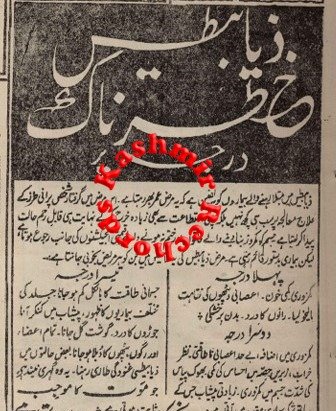
Rare newspaper and magazine advertisements published between 1930 and 1945 openly promoted medicines, tonics and specialised treatments for ذیابیطس (Diabetes).
These advertisements appeared decades before diabetes awareness campaigns became commonplace and clearly demonstrate that diabetes was already a recognised medical condition requiring specialised treatment.
Even more remarkably, several advertisements referred to Grade I, Grade II and Grade III diabetes, indicating that physicians and pharmaceutical companies had already begun categorising the disease according to its severity.
Among the most prominent medicines advertised was “Diamelin,” promoted as a remedy for the principal symptoms of diabetes.
The medicine was marketed through leading pharmacies in Delhi, Lahore, Karachi, Calcutta and Madras, illustrating the extensive commercial network for diabetic treatment across pre-Independence India.
The advertisements also offered a free booklet explaining diabetes, enabling patients to understand the disease and its symptoms—an early form of public health awareness decades before organised diabetes education programmes emerged.
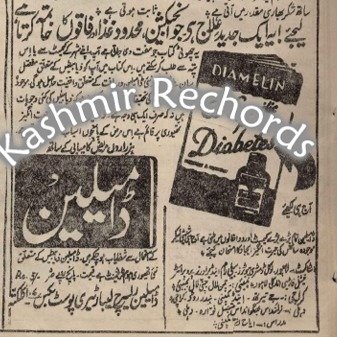
Today, these advertisements are far more than commercial notices.They are historical documents.They reveal that diabetes was sufficiently widespread to sustain a dedicated pharmaceutical market and that public awareness about the disease existed much earlier than commonly believed.
Archives correct popular myths
The October 1885 issue of Mir’at-ul-Hind and the numerous diabetes advertisements preserved by Kashmir Rechords tell a compelling story. Together, they demonstrate that ذیابیطس (Diabetes) was a recognised disease in nineteenth and early twentieth-century India.
They establish that medicines were being manufactured, advertised and distributed for diabetic patients decades before modern endocrinology evolved into a specialised branch of medicine.
More importantly, they challenge the widespread belief that diabetes is exclusively a disease of modern lifestyles. Modern living may have accelerated its prevalence, particularly Type 2 diabetes, but history makes one fact abundantly clear: Diabetes did not arrive with the modern age. It existed generations earlier. It was recognised by physicians .It was feared by families. It was treated by pharmacies.
And, as recorded in a contemporary Urdu journal preserved by Kashmir Rechords, it claimed even one of the most distinguished rulers of nineteenth-century Jammu and Kashmir.
Sometimes history is rewritten not through grand discoveries, but through fragile newspapers, forgotten Urdu journals and fading advertisements that quietly survive the passage of time. Archives do not merely preserve history. They restore it.
Editor’s Note
The reference to diabetes (ذیابیطس) as the cause of Maharaja Ranbir Singh’s death is based on the October 1885 issue of Mir’at-ul-Hind, a contemporary Urdu periodical edited by Pandit Kishan Narayan. While many later historical works refer only to the Maharaja’s “prolonged illness,” this contemporary publication specifically identifies diabetes as the cause of death. Readers are encouraged to view this rare archival source alongside other historical records as part of the continuing effort to reconstruct the medical history of nineteenth-century Jammu and Kashmir.