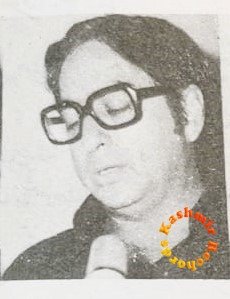
Meet Dr. P N Kachroo– a staunch devotee of Science who ‘breathed and lived’ Science. A Science Editor, a Botanist, an environmentalist and an able Administrator, Dr. Kachroo represented the zenith of excellence in the world of science.
A hard task-master, guide and a perfect human being, Dr Kachroo was a stunning combination of all the positive and good qualities of life all rolled in one. Distinguished personalities like Prof Abdul Qayyum Sidiquii, Prof. Abdul Majid Kak, Prof. S. G. Sarwar, Prof. Sonawullah Shiekh, Qazi Mohammad Shafi, Kurshid Ahmad Malik, Muhammad Yousuf Khan, Dr C. L. Trisal, Abdul Majid Shawl, Basharat Ahmad Geelani and Deepak Budkhi besides scores of other eminent personalities were all his taught.
From Lahore to Guwahati to America
Born on 16th of October, 1924 in Ali Kadal area of Srinagar in the family of Pt. Anand Ram Kachroo and Smt. Daya Devi Kachroo, Dr Kachroo had his early schooling from Srinagar and later he went to DAV College Lahore to complete his graduation .His wife Prem Lata further contributed to his love for Botany, prompting him to Formen Christian College, for pursuing M.Sc. Hons, where he chose Cytomorphology as his specialized field and completed the same in 1947. It was followed by his enrolment for Ph.D. from Amritsar, which he completed in 1955.
From Amritsar, Dr Kachroo moved to Guwahati in search of a job. His love for research made him to work even at Guwahati where he researched on Taxonomy, Floristic, Morphology and Phytogeography of the ferns of Assam.From Guwahati, he joined Damodar Valley Corporation (DVC) as a Botanist with headquarters at Burdwan, West Bengal. Here again, he took up the research work regarding the ecology of the mainland water bodies of DVC specific areas.
In 1956, Dr. Kachroo left for America to avail the Smith Mundit Fullbright Fellowship to study the phytogeography of Alaska at the University of Michigan. He returned to India in 1959 to edit Research Journals of the Indian Council of Agriculture Research (ICAR), New Delhi.
Kashmir Calling
However, the love for his homeland Kashmir proved irresistible and he returned to his native land in late sixties. He joined as Professor and Head, Department of Botany, J&K University, Srinagar in 1967. He continued to work at Kashmir University (after the bifurcation of Jammu University) till his retirement, where he trained and guided many stalwarts for another 23 years. He established the initial research studies on Ecology of Dal lake Kashmir and adopted a multidisciplinary approach so as to understand the biodiversity richness of Jammu and Kashmir.
Despite his retirement from active service in October, 1984, Prof. Kachroo continued to work in the Botany Department in his capacity as Director of Centre for Plant Taxonomy, which he had established and nurtured.
Besides being Head of Department of Botany and Pharmacy, Kashmir University, Prof Kachroo had also served as Dean, Faculty of Science, Associate Director (Kashmiri language), National Science Talent Search Scheme and Project officer, Survey of Medicinal Plants Unit. He also served as officiating Vice-chancellor of Kashmir University three times during brief stints in 1978- 79, 1981-82 and 1983-84.
The immensely rich compendium of over a dozen books, several hundred research publications, monographs and eleven major research projects are regarded as remarkable legacies left behind by Dr. P. Kachroo, who breathed his last on August 11, 2007 at New Delhi.
Can Kashmir produce another Scientist of his stature?
When faced with a dire situation, Kashmiri Pandits prove their mettle or used to prove their mettle. The quality conscious stalwarts of this community would not rest until they molded their thought processes to achieve perfection. The benchmark was at least to try to follow the set standards of the interests one is pursuing. There may not be much to cheer or share this sentiment presently but the subterranean undercurrents to cherish standards is in the collective conscious of the community and that awaits a proper environment for release and blossoming. Till then the community has to depend upon the past glories to receive inspiration.
The brothers Pandit Vijay Kitchlu and Ravi Kichlu were one such duo who excelled in the field of Indian Classical Music. Both achieved prominence in this field and were institution makers. The exponents of Agra Gharana under Ustad Latafat Hussain Khan they studied Dhrupad under the legendary Ustad Moiunudin and Ustad Aminudin Dagar Sahib. Sons of Kishan Lal and Kripa Kichlu, they trace their genealogy to one Shri Kripal Kuchroo (1785) who was a native of Kashmir. Round about 1790, the family is seen to be settled in Almorah (Uttarakhand), then United Provinces. The records pertaining to this have been maintained by one Pandit Amar Nath Wanchoo, son of India’s noted jurist Pandit Kailas Nath Wanchoo.
Pandit Ravi Kichlu……..The Master of Thumri
It is said that Pandit Ravi Kichlu’s music was a blend of Agra Gharana and Dagar Bani. His elder brother, Pandit Vijay Kichlu (16-09-1930 to 17-02-2023) and Ravi Kichlu (December 1932 to September 1993) were both in the league of famous musicians Pandit Ravishankar and others. Kolkata was their karambhoomi. Ravi Kichlu was well known not only as a classical vocalist but also as a leading exponent of semi classical and folk forms which includes Thumri, Dadra, Kajri and others. A collection of ghazals the music of which he composed himself as archival resource is available and is considered one of the best vocal presentation of the art preserved upon which many developed their music further.
Pandit Vijay Kitchlu………The Institution Builder
Apart from being a highly accomplished vocalist, Pandit Vijay Kichlu was an institution builder. The 2018 Padamshree awardee vocalist founded Sangeet Research Academy at Kolkata in 1977, a venture under ITC group of companies. He continued as its head up to the year 2002. Under Pandit Vijay Kichlu’s stewardship, the academy prided itself in introducing noted vocalists Pandit Ajoy Chakravarty, his equally accomplished daughter Kaushiki Chakravarty, vocal classical heartthrob Rashid Khan and others. They all acknowledge Pandit Vijay Kichlu’s role in shaping their careers.
Pandit Vijay Kichlu had an inherent sense of humour and necessary expertise to influence the corporate world in aligning to his opinion to preserve classical music art forms. Considered as a Banyan Tree in Indian Classical Music, this Kashmiri Pandit had also a Master’s Degree in History from Allahabad University. He breathed his last only this year on February 17.
The name Ghulam Nabi Khayal during the decades prior to 1990s was ingrained in the consciousness of Kashmiris as somebody who like his contemporary, Ali Mohd Lone, frequently wrote class radio dramas with socio economic themes. Based on these dramas and his poetry broadcast over Radio Kashmir, one could arrive at a conclusion that Khayal’s thought process revolved essentially around Marxism and despite the pressures one had to endure in Kashmir post 1990, he could not relinquish it totally.
Ghulam Nabi Khayal was a voracious reader, a prolific writer, political commentator, an existentialist poet and a profound speaker who most of the time did not hesitate to call spade a spade. He was sought as a consultant on matters pertaining to Kashmir by domestic as well as international press.
Though possessing a rational and analytical mind, he unfortunately could not assess and decipher the changing dynamics of Kashmir militancy. Ghulam Nabi Khayal could have walked in the league of Bob Woodward and Carl Bernstein, the journalists of Watergate fame. He indeed was a seasoned journalist from Kashmir who possessed a cosmopolitan outlook and was a well-wisher for peace.
Manufactured Intolerance
After the change in government at Centre in 2014, he along with many left leaning politicians, academics, poets, jurists and others protested against the “perceived intolerance’’ in the country by returning the Sahitya Akademi Award, he was bestowed in 1975 for his Kashmiri Book “Gasher Munar”. This act of returning the awards after so many years was dubbed by Late Arun Jaitley as “the manufactured intolerance by those who had become irrelevant after Modi government’’.
Khayal (80), who breathed his last on October 15, 2023, had authored more than 30 books and was associated with major newspapers in India including the Illustrated Weekly of India. Incidentally, Khayal was arrested also in 1958 in the “Kashmir Conspiracy Case’’, the mention of which has exhaustively been made by none other than former Director of Intelligence Bureau, B N Mullik in his book, “My Years with Nehru—Kashmir’’.
If the records are to be relied upon, there has been a massive decline of Kashmiri Pandits living in Kashmir valley during the past 100 years!
In 1921, the population of Kashmiri Pandits living in Kashmir, as per the 1921 Jammu and Kashmir State Census was 55,052. (Source: “Kashmiri Pandits”, a Book written by Pt Anand Kaul in 1924). Out of this total population of Pandits, 21,635 were living in Srinagar, while as 33,417 were putting up in Mufassils. Male Kashmiri Pandits were more (30,944) in comparison to females(24.108). But this was considered as the most healthy sex ratio. Interestingly, only seven Kashmiri Pandits were gazette officers. That punctures the propaganda that Kashmiri Pandits were the elite or ruling class.
1931 and 1941 Censuses
In 1931, the Kashmiri Pandit population, like other communities had also increased. The total increase in number was, however, only 8056. From 55052 in 1921 it had moved to 63108 in 1931.
According to the 1941 census, there were 78,800 Kashmiri Pandits living in Kashmir Valley. Source: (Evans, Alexander, “A departure from history: Kashmiri Pandits, 1990-2001”. Contemporary South Asia. 11 (1): 19–37).
Srinagar was part of Anantnag District
As per the 1941 Census, Kashmiri Pandits were distributed into two districts of Valley, the Baramulla district, where 12,919 Kashmiri Pandits out of 612,428 total used to live. The other district was Anantnag where they were 7.84 percent of the total population. Interestingly, during those days, Srinagar used to be a part of Anantnag district. Kashmir Valley had only two Districts—- Anantnag and Baramulla. Srinagar formed part of Anantnag and became a separate District only in 1951 A D.
1947:Kashmiri Pandits in Kashmir
Scholar Christopher Snedden in his book “ Understanding Kashmir and Kashmiris” states that the Pandits made up about 6 percent of the total Kashmir Valley’s population in 1947.
Chitralekha Zutshi in her book, Languages of Belonging: Islam, Regional Identity, and the Making of Kashmir (2004), states that by 1950, “population of Kashmiri Pandits declined to five per cent as many Pandits moved to other parts of India due to the uncompensated land redistribution policy, the unsettled nature of Kashmir’s accession to India and the threat of economic and social decline’’
1981 J&K Census
In the 1981 census, the Kashmir Division had 124,078 Kashmiri Pandits. (Source: Evans, Alexander (2002). “A departure from history: Kashmiri Pandits, 1990-2001”. Contemporary South Asia. 11 (1): 19–37). This scholar estimates that by 1990, there would have been 160,000 to 170,000 Pandits living in Kashmir Valley, but following the 1989 insurgency, a “great majority of Pandits felt threatened’’ and left the Kashmir Valley for other parts of India. A large number of Kashmiri Pandit refugees moved to the Jammu Division of the erstwhile Princely State and some to the National Capital Region of India.
In 2011, Kashmir had only 3,400 Kashmiri Pandits
The population of Kashmiri Pandits has declined from an estimated 140,000 in the late 1980s to fewer than 3,400 in 2011 this represents a 98% drop in population. (Source: Essa, Assad, 2 August 2011, Kashmiri Pandits: Why we never fled Kashmir”. aljazeera.com). While revealing the figures of Kashmiri Pandits living in Kashmir in 2011, Aljazeera quoted prominent Kashmiri Pandit leader, Sanjay Tickoo, who had not migrated in 1990.
Such a huge decline in the population of Kashmiri Pandits is often and rightly described as a case of ethnic cleansing. On the sharp decline of the Pandit population, Alexander Evans wonders what kind of society Kashmir becomes in the absence of this already small minority.
During the past over a decade, the Government of India has tried many ways to make the situation conducive for the return of Kashmiri Pandits. A scheme under the Prime Minister Employment Package was also introduced but the return of the community, now scattered, has not fully taken place.
2022 Rajya Sabha Statement
In July 2022, Union Minister of State for Home, Nityanand Rai, told the Rajya Sabha that there are just 6,514 Kashmiri Pandits living in the Kashmir valley. The highest number of Pandits (2,639) live in the Kulgam district.
In continuation of their ethnic cleansing that systematically began during the past century, 12 more Kashmiri Pandits were killed by terrorists in Kashmir in 2020, 2021, and 2022.
Instead of an increase in population during the past 100 years (from 55,052 in 1921), the Kashmiri Pandit community living in Kashmir has been reduced to just 6,514 in 2022! Isn’t it an act of ethnic cleansing?
Who were the famous Bokhari brothers? And what was their connection to Kashmir? These questions can interest only those who have a love for modern broadcasting which inter alia means a love of languages and content creation, an eye for detail and nuances of the human condition and an indomitable will to deal with pressures of all kinds.
Since broadcasting was not initially perceived to be built as a career, governments all over the world recognized its potential to influence public opinion. Resources were invested in it and elaborate hierarchical and bureaucratic structures were created which eventually stifled their creativity. Many an intellectual who rushed to become part of All India Radio, the then latest and premium agency of broadcasting, soon got disillusioned and quickly resigned. The Bokhari Brothers were an exception. They continued to be part of this government structure and curiously were able to turn the tide in favour of nationalist sentiment and supported the freedom movement in disguise when in the majority of the programmes of All India Radio nationalist leaders were invited to present their viewpoint albeit differently. All this was taking place under the watchful eyes of government agencies.
Bokhari Brothers and Baramulla
Bokhari Brothers were born into a family of Peers (Sufi mystics) in Peshawar. Their forefathers had, however, moved to Peshawar from Baramulla town of Jammu and Kashmir. Both had managed to occupy the top posts in All India Radio and were considered the blue-eyed boys of Lionel Fielden, India’s First Controller of Broadcasting. Despite occupying top posts in India, the Bokhari Brothers preferred to be part of the Pakistani establishment after the partition of the sub-continent
Patras Bokhari
The Elder One– Syed Ahmad Shah Bukhari commonly known as (Patras Bukhari (01-11-1898 to 05-12-1958 was a highly popular Pakistani humorist, writer broadcaster and later a diplomat who served as the Permanent Representative of Pakistan to the United Nations. At the time of his death, he was still serving as a Pakistani diplomat but had to be buried in Valhalla Cemetery, New York.
Bokhari Brothers’ connection to Kashmir was through their father’s family while their mother belonged to Hindkowan ethnicity. They tried to remain connected with Kashmir. (Patras Bokhari had also a Kashmiri wife— Zubaida Wanchoo)
The elder brother’s tryst with life finally lead him to United Kingdom where he received his Tripos degree from Cambridge University. In 1927, he returned to Lahore to teach English at Government College Lahore. During pre partition days he got groomed to be part of Muslim intelligentsia of South Asia which spearheaded the movement for Pakistan. During this period he also headed All India Radio and when Pakistan got created he became the country’s envoy to United Nations up to 1958. The legendary urdu poets Faiz Ahmad Faiz, Noon Meem Rashid and Kanhaya Lal Kapoor were among his students. Bokharis were peers ( Sufi mystics). Peer Syed Ahmad Shah Bukhari wrote with the pen name of Patras Bukhari, a name he lifted from his teacher Peter Watkins who taught him English. Peter could not pronounce the name Pir, instead called the elder brother as“Pierre “ a French word which in Greek is known as Patras. The translation of Peter into Greek “Patras” was thus adopted by him as his pen name.
Younger Bokhari
The younger brother Zulfikar Ali Bukhari (06 -07 1904 to 12-07-1975) was a prolific broadcaster first with All India Radio and later with Radio Pakistan. Like his elder brother, he was also a writer, poet and musician and was later made the first Director General of Radio Pakistan. He later addressed himself as “Controller of Broadcasting’’ of Radio Pakistan. He had a profound knowledge of English, Urdu, Persian, Arabic, Pashto and Punjabi.
In Undivided India, the British government had got wind of his expertise and appointed him initially a teacher and later promoted him as head of the Bureau of Translation to train British officers. His professional services were eventually sought to head as a full-fledged Director (Broadcaster) at Delhi station of All India Radio and later became Director of All India Radio Bombay. But at the time of partition, he chose to head Radio Pakistan.
Disillusionment of the Elder Bokhari
Patras Bukhari was an internationalist. The energies of the Bokhari Brothers got stifled in a country that they had pursued to be a harbinger of change in the Muslim world. Soon their disillusionment with whatever was happening in Pakistan became clear to them. Pakistan appeared as a nation to safeguard the power, pelf and privileges of the elite only who apprehended that all these would be snatched away from them in united India and such an establishment was not interested in ameliorating the condition of the common populace of Pakistan. This is a fact that the liberals of Pakistan are grudgingly accepting these days.
A literate Kashmiri while conversing in Kashmiri makes in between use of English words. There can be two reasons for it. Either he has no complete command over the language due to which he is not able to choose proper words in a jiffy (which is the position of several literate persons) or otherwise it is the dominance of English language rooted in their psyche. We had teacher, Ghulam Hassan Mantooo of Shopian Gagran in our childhood, who after completing morning prayers would give a discourse on different topics. It was in English, and he talked with such a fluency and a break that we would rejoice and long as to when would we reach this position and speak like him because this language had its own pride which still it is holding. Our village people conversed in pure Kashmiri, but they also used words like ‘teem’ ‘puncher’ ‘foot news’ (meaning Time, Puncture, and news from mouth to mouth respectively). They also had this notion that real education means to learn English. Even though our generation had the usage of Kashmiri in our homes, yet we would try to use English words. In those early day when we would be with an English Primer or any such book, an elderly person from our neighbourhood would frequently ask to translate ‘Turant Dhan Maha Kalyan’ (He who gives twice, gives in trice) and when we would show our inability, he would term us still inexperienced. Those days English had not dominated the daily life as it has now, so much so, If we would use any English word which we had learnt in our school, the listener would in a prank, retort, ‘I am speaking to you in Kashmiri and you are replying in English ‘ or ‘ Speak plainly why you are talking in English.’ So, we would refrain from speaking English while talking with such a person.
After reaching Jammu everything changed and from the viewpoint of language, we understood that we are not in tune with our surroundings and while talking, especially our women folk, would fumble even in respect of Hindi or Urdu as well. ‘Bijli Daalo” or ‘Sooch Daalo’ or ‘Paani Pakdo” (switch on the light, collect some water’) or similar distorted words came to our notice. The vegetable venders of their own goodwill would give some extra green chilly to please the customer and if they forgot same, they would remind and tell him, ‘Muje Mirchean Daalo’ (give me the Chilli). If you be attentive, you will hear many such words even today.
I had once been to Delhi in connection with purchasing some marriage articles. My cousin who was born and brought up there accompanied me to the market. We went to Chandni Chowk where some shopkeepers as per her notion, had the reputation of selling quality products on fixed rates. She bade me in advance to keep mum because they could at once surmise that we are not locals, and that we are Kashmiri and inflate prices, which amply proves we cannot speak a standard Hindi as well. Simillar conditions prevailed at other places whether you had to deal with shopkeeper, or it be the playground of children. The children had to deal with an alien language and were not at home with Hindi language as well. This was a reason they had to fortify themselves for such surrounding. Even Kashmiri language being in use in their homes, they are not able to speak in it and if at all they speak, it would be distorted. If we push Kashmiri language to them, I feel that will not work because they have no compulsion around, nor have a habit, and how will they converse in it. It is said that a child whatever picks up to the age of 5 years it remains imprinted on his intellect and becomes his mother tongue.
There is no doubt that the mother tongue is that sole medium which keeps us bound with our culture. If we take stock of things we will come to know that such children who have not in practice this language they are unaware of their culture as well. They are rather compelled to keep themselves attached with new environment. The net result is that if they find an opportunity or a chance, they will not hesitate to come out of that circle which we call Kashmiri society.
On the other side, the Kashmiri language has not such an advantageous position that it can hold the children in its grip because this matter is related to domestic economy. The parents of a child do not want their child to suffer for his two-time meals. The children should be able to stand on their own legs to make both ends meet. This is the reason that they want them to cross 10+2 and join some technical training to dignified livelihood.
Now those children who completed in early days their academic carrier, got stuck up what to do further. Going here and there involved money which was very little with everyone. But time took again a turn that they were given reservation in technical colleges of Maharashtra. Consequently, most of the children got admission in these institutions. And everyone got according to his destiny, which did not require any push and was not costly as well thus ensuring their future livelihood. Many among them made their way to foreign lands. Time also changes and does not remain same; the elders also had a longing to visit these lands. The employing companies have preference for technical know-how, mode of conversation and smartness and for this the parents feel that English is the sole language which has the capacity to impart these. The fact is, which thing or a technical matter is not covered by it. It is not dependent on anybody’s goodwill. Its compass is not narrow. It has adopted Letters of French, Greek and Latin within its fold. In the third edition of Oxford Dictionary about 240 words (today more are said to be) from Handi have been adopted by it. These and other qualities have made it a global language. The parents put every resource at their disposal at stake to enable their children to learn this language. After reaching Jammu our inability to converse freely and without fault is still lurking in our mind. We do not want our children to face this difficulty.
An example of fumbling that I came across I would like to share. At Canada, my son one day told me to get his child from school. As I reached the precincts of the school, I saw the principal coming from the other side. She saw me, stopped, and told me politely, “What can I do for you?’ Before this incident I would without any hindrance talk to the staff in their Malls or Medical Shops, Bagel sellers etc. and would understand the, nicely. In her presence I just lost my senses and told her,’ My grandmother is a student at your school.’ She looked at me from head to feet and looked perplexed. I had no impression what I was telling and instead thought why she did not understand me, or my accent is rough which she did not understand. She shriveled her forehead and said ‘what?’ I once again repeated the same thing. She thought deeply. Lastly, she called for a teacher and told him in English to hear what I was saying. When I saw she had to call for a helper, I came to senses, was ashamed within, and laughed in my heart of hearts. After recollecting myself I told, ‘My granddaughter Avantika is a student of your school and I want to take her home.’ That teacher took me to that room in which Avantika was, and I brought her to home. I related this incident to my son and daughter-in -law and they burst into laughter.
The age of science has arrived. Mobile, ATM, New Sophisticated Computers, High Tech. Mobiles have made a thorough impact on every aspect of life. These have brought whole world in our room. Internet has become an important part of life. There is no branch of knowledge which it does not cover. Those homes who are not having internet facility are living in some old age. New Technical words are day by day coming into vogue and pursue us. But we elderly people are not able to handle fully well these electronic gadgets. On the other side is flood of social media making new experiments. My experience says that the elderlypeople like me feel misfit to handle them satisfactorily and we have to seek help of our children frequently. Reason is that we had not such an exposure in our childhood and what a person does not learn in his early days, if same is thrusted on him in the advanced age it becomes his liability.
There has been an exponential increase in population and its pressures are evident on all aspects of life. We are trying our best to come out of this pressure and in this struggle the moral values have taken a backseat, so much so we forgot ourselves. Its effect is evident everywhere.
Much time has not elapsed that posts of orderlies were advertised in Delhi. About 400 applications were received and among the applicants were few Ph.D. holders. This means those who have acquired the basic academic education only, for them the employment scope has narrowed down. Nevertheless, the technical posts have still scope and such children still get employment and for this purpose, it is of paramount importance that children get related education. Therefore, if a child has to keep pace with the modern times and has to win the economic struggle, he should be fortified with the arrows of English language. This will give him the confidence and upper hand as well.
These are some of the reasons due to which the Kashmiri language is not getting due attention in our homes. But this is also a fact that if we throw away this language for above reasons or will forget it that will cut us from our roots. (Now how much love every person has for these roots is a different question). Kashmiri language is very sweat and has a good stock of words, but the fact is we have not complete knowledge of same. If we have an occasion to hear the poetry of Parmanand Ji or any other I feel, everyone will not be able to grasp all. Some may say what we have to do with reading Parmanad or some other Sofi poet. But that is not the point. We may be able to recite Shakespeare and Words Worth, which is not bad, but that shows how much away we are from our lovely lap in which we grew up . What sort of a folly it is that we have memorised Shakespeare but know nothing about our own Kashmiri literary persons. It is sort of a vanity that we place of our feet are standing on a crutch. When the age advances, a man gets involved in some other matters. For example ‘Wherefrom I have come’ ‘whatever I had to do ,have I done that’ which is termed as ‘Atma Bodh or to know oneself’ for which he begins to sift his own culture and civilization in which he grew up. But being deficient in language he is not able to get connected with it. Learning is good but It is indispensable that those roots be also not severed which have given us Kashmiri recognition. When we will learn Kashmiri Language then only will we remain bound and acquainted with our culture. It cannot be that by learning it we will be disrespected. Had it been so, it would simply mean that we are victims of inferiority complex. Some English men and Europeans came to Kashmir, there they learnt Kashmiri language and left for us a literary treasure, mention of which we still make with pride. A doctor of my acquaintance had gone to Persia. When he came back after 4-5 years, I saw a voluminous book in his hand. I asked him which book it is and he told Molana Romi’s Masnavi. I took it in my hand and just turned leaves. It was in Persian language. What could I read out of it , so I put it down. After coming from Persia, he opened a hospital at Allahabad. Within two years he learnt Marathi Language which according to him was necessary to keep rapport with local patients. However, he happens to be Doctor and IQ of doctor is higher than an average person. Now the times have changed and to do something credible makes us to go from one corner of the globe to another corner and knowing at least 2-3 languages has become a necessity. Therefore, if one would have learnt 2-3 languages, it would be a feather in his cap, and among them if one would be
Kashmiri language, also learnt for nothing i.e. Without spending money, how much nice it would be. For this purpose, the easiest way is that the parents will keep them actively associated with Kashmiri Language at home. Not only actively associated but ensure that they use it in their daily life. For this purpose, it is essential that parents use this language at home especially with the children. They will learn themselves. Besides the Kashmiri learnt in their early yeas will remain for ever in their memory which means it does not require any helping devices. Otherwise, to press this language in old or advanced age would be to carry water in a porous basket.
About the Author
Noted Kashmiri writer, Makhan Lal Pandita, also known in literary circles as `Kashmir’s Prem Chand’, has penned down several works in Kashmir language, besides has a collection of many short stories to his credit. Some of them are Karna Phur (2000), Girdhab (2003), Rambe Ara Bathis Pyeth (2006), Poat Tshaay (2008), Barsali (2010) and Yeli Ba Canada Gowus (2011). J&K Academy of Art, Culture and Languages has awarded Sh Makhan Lal Pandita for his novel Saaz Bonen Hund. Sh Pandita has also written several monologues and Research Papers.
Nissim Ezeikel had once said that the age of literature is dead. The statement must have been made in a vivid context, which is definitely pessimistic. But little did Ezeikel know that he will be proved wrong by a community who has the innate peculiarity to bounce back at any hit that gets punched on them. The contemporary definition of the term “Literature in Exile” may apply to those communities who suffer exodus en- mass on account of uprootment from their native place due to political, religious or other reasons. The opinion is still out and has not gathered due attention of both the students and experts of literature, history, sociology and other disciplines the way it should have been.
The ethnic cleansing of Kashmiri Pandits makes an important case study even from the pedestrian point of view and may provide very important insights to the contemporary societies. This sub-genre in the world of literature has created a category of its own that is beginning to be understood and recognized. It may be predominantly full of wails and at times may justifiably appear to be dismissed as mob mentality or nostalgic imploring but it certainly does strike a chord. For the major part, it is an expression of pathos felt by an uprooted community, which claims to be the aborigines of Kashmir.
Its Place in Literature
No instruments of literary analysis can accord a place to it. It is unique and it already has garnered at least a modicum of justification to be accepted as such…… It is just “Literature in Exile”. Future, however, does await its analysis. The way a miniscule population of Kashmiri Pandits which was already witness to the vicissitudes of history again got uprooted and was thus concerned with the dire need to preserve its cultural and spiritual ethos and it is here that psychologically it got stuck in the maze of nostalgia. The literature in exile is essentially nostalgic in expression. It is an entirely different matter that the contemporary realities have radically shifted at the place of their uprootment. The minds of those who got caught in an alien culture and language environments coupled with the inability to accept fast paced and radical march of socio-political development in a country as diverse as India or elsewhere in the World could not relate to the changing realities, with the result a part of Kashmir remained frozen in their sub conscious, the one which refuses to go and finds vents of release quite often.
Socio-Political Dimensions
Almost every month a book or two gets released or a musical or drama presentation is being staged in Jammu or Delhi or even in Mumbai and other cities by Kashmiri Pandits to press the need to deal with their existential questions and the language repertoire is also full. This expression has simultaneously found release in Kashmiri, Urdu, Hindi, and English languages. This goes highly in favour of a community whose place and awareness about itself at this point in history is being tested to the hilt. Even the academic as well as Cultural bodies and institutions have begun to accept this new genre, which will definitely have a significant contemporary and historical value. As already said it will provide very important insights for anthropologists, sociologists, historians and students of literature alike. Even though the critiques are of the opinion that major portions of this sub- genre are constituted by elements of Post Modernism, yet it has carved a niche for itself. The literary output is such that not a single name can be excluded. There is a voluminous list purporting to that. This is the portrayal of the human condition in a world where chances of its recurrence seem to grow.
The Potential to reflect the condition of Global Diaspora
As the new generation of Kashmiri Pandits are exploring the world without any primary belongingness to Kashmir, it has very little at the stake visa a Vis Kashmir. This group has already become a part of global culture and march but the need to get identified with their roots will always be there. This group’s own literary output and existential treatment of its condition may primarily be centred around ambiguity and possibly confusion also. It can be prone to influences of all kinds proportionately in a much more radical way in comparison to other communities. This new generation of Kashmiri Pandits may redefine its traditions, a process it seems to have already set in motion. Similarly, another dimension to literature in exile can also be explored with respect to those Kashmiris who continued to stay put in Kashmir, which includes predominantly Muslims, Sikhs and left-over Kashmiri Pandits. Their own treatment of the situation also calls for a detailed study.
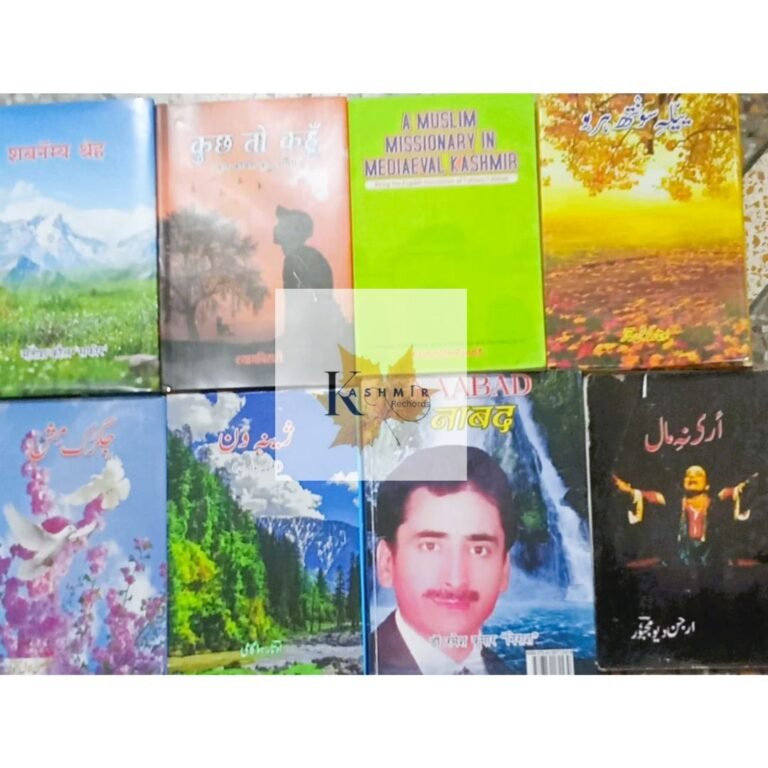
Books in Exile
During the past over three decades, many books written by Kashmiri Pandit writers in exile have hit the stands. When Maharaj Krishan Bharat left Kashmir, he never knew that living in exile would turn him to literature to portray the grief and pathos and also his yearning to go back to his roots. Bharat has, by now, authored so many books, including” Pheran Mein Chipayen Tiranga”, for which former Prime Minister Atal Behari Vajpayee has written the foreword.
Prior to the migration, there were very few writers amongst the community to add to the Kashmiri literature either through prose or poetry, but during the last over three decades, a number of promising writers have emerged, who mainly wrote the literature in exile.
The most noticeable feature has been that about a dozen female poets and writers have emerged during the period of exile. Prior to 1990, there were a few Pandit poetesses but now Sunita Raina Pandit, Bimla Raina, Girija Koul, Santosh Nadan, Bimla Aima, Dolly Tickoo Arrwal, Prabha Raina, Mohini Koul, Nancy Chetna are some to name, who have already books, both in Nastaliq and Devnagri scripts, to their credit.
Former Head of Department of Hindi, Kashmir University, Dr Bhushan Lal Koul had written the foreword for most of these books. As is reflected in these books, one can draw inference that most of the writers have touched the pain of migration in their poetry or prose.
Panun Kashmir leader and eminent poet, Dr Agnishekhar, has spoken his heart out in his book ``Mujh Se Cheen Li Gai Meri Nadi”. While Maharaj Krishan Santoshi has revealed pain and pathos in his book ``Yeh Samay Kavita Ka Nahin”, Arvind Gigoo has beautifully written “Ugly Kashmiri”.
Books written in Kashmiri by Arjan Dev Majboor, P N Shad, M L Kanwal, Engineer Vinod Kumar and Brij Hali also hit the stands during 33 years of migration. Some of the books written by migrant Kashmiri writers could not find readers across the Jawahar Tunnel; the reason being that they were written only in the Devnagri script.,
Veer Munshi does not need any formal introduction. He is one such artist who is able to transform his experiences as an exiled refugee into the language of painting.
Munshi was born and brought up in the Kashmir, but like other fellow community members was forced to move out of Valley in 1990 when it was no longer safe for him to stay there. This Kashmir-born renowned artist has addressed a range of subjects in his over three-decade-long career, but exile remains his most fundamental condition and preoccupation. He has used his art to reflect his anguish at the situation
I was Mukhbir—An Indian Agent!
In one such oil painting, Munshi has depicted every Kashmiri Pandit a “Mukhbir’’…….An Indian Agent and hence faced death and destruction!
Kashmir Rechords (www.kashmir-rechords.com) is sharing his pathos through this card, circulated by Panun Kashmir leader, Shailendra Aima two decades ago. The contents of the card in 10 lines are self-explanatory.
Pity thy all those who allowed this to happen to Kashmiri Pandits, now in 33rd year of exile!