Home Blog Page 15

Broadcast Heritage:Radio Kashmir Jammu

(By: F.Sheheryar)*

On this day, December 1, 1947, Radio Kashmir Jammu was commissioned, seven months before its twin establishment in Srinagar came into existence in July 1948. Strategically, Jammu was ideally positioned to disseminate programmes  designed for the people here as well as those in Pakistan-Occupied Kashmir (PoK), united by a shared heritage, language and cultural harmony, while enduring the pain of an inhuman and unnatural partition.

Radio Jammu rose to the challenge of fulfilling its mandate with professional precision and determination, delivering powerful broadcasts to audiences trapped in the obdurate quagmire of asphyxiation caused by  a nonsensical division of hearts.

A galaxy of exceptional broadcast professionals, including Thakur Poonchi, Bodh Raj Sharma, Kishen Dutt, Maikash Kashmiri, Mahmood Ahmed, C. Parwana, Rajender Gupta, Ram Nath Shastri and Yash Sharma, developed programmes  in diverse formats. Their efforts received commendations through India’s diplomatic channels, highlighting the nation’s sagacity while dismaying those responsible for the partition’s tragic consequences.

P

Radio Kashmir Jammu travelled long miles and  carved a niche for itself and  today a fierce breeze (coming from unknown directions) finds itself somewhat deplumed like other sister establishments across the landscape.May the public service broadcasting landscape of India reinvent itself to serve the last person standing.

Inaugural Broadcast

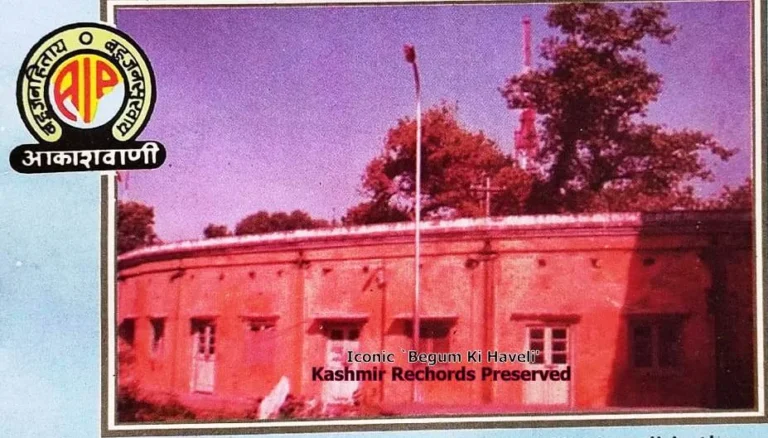
The station’s inaugural broadcast featured an address by Maharaja Hari Singh at 6:30 PM on December 1, 1947 , marking a historic moment witnessed by  then Union Home Minister Sardar Vallabhbhai Patel. Initially operating from classrooms at Ranbir High School Jammu and later shifted to iconic `Begum Ki Haveli’ at Panjtirthi, Jammu in 1952, the station provided critical updates and guidance to refugees while addressing malicious propaganda through traditional Dogri and Kashmiri songs.

Under the Director Generalship of J.N. Zutshi, who recruited the early staff, the station brought together eminent talents such as Thakur Poonchi, Bodh Raj Sharma, Rajinder Singh Bedi, Yash Sharma and Mahmood Ahmed. Pioneering programmers like Kishen Dutt, Maikash Kashmiri and C. Parwana created impactful content that resonated with audiences. It used to broadcast public speeches and talks of eminent personalities of the erstwhile State.By 1954, the station had merged with All India Radio, retaining the name “Radio Kashmir” to reflect its regional ethos until it was renamed “All India Radio Jammu” in 2019.

Nurturing Local Talent

Radio Kashmir Jammu nurtured local culture and languages, including Dogri, Gojri, Pahari and Punjabi. It supported literary giants like Padma Sachdev, Shiv Nirmohi and Ved Kumari Ghai, while its music programmes featured luminaries such as Pandit Uma Dutt Sharma, Girdhari Lal Pant and Anita Sharma. Dramas and series like Noor Din and Goga-Lachhu, written by visionaries like Mehmood Ahmed and Krishan Dutt, became household staples. Artists from neighboring States also used to visit the Station.

The station also introduced innovations like regional news bulletins in Dogri and Gojri, “Yuv-Vani” programmes for the youth and community radio sets across the region to ensure accessibility. It earned accolades, including national-level Akashvani awards, and continues to broadcast a diverse range of programmes using advanced technology. Its programmes are also broadcast over high-quality transmitters set-up at  Rajouri, Nowshehra and 10 KW FM Transmitter at Patnitop.

As we celebrate December 1 as the birthday of this iconic institution every year, let us honor its remarkable contribution to nation-building, cultural preservation and public service broadcasting. Radio Kashmir Jammu remains a beacon of resilience and unity, amplifying the voices of the people across generations.

*F. Sheheryar, a former Director General of All India Radio, has also served as the President of the Asia-Pacific Institute for Broadcast Development (AIBD) and as a Member of the Prasar Bharati Board. Notably, he has held the position of Station Director at both Radio Kashmir Jammu and Radio Kashmir Srinagar.
 

A Kashmiri Pioneer in Library Science

(By:K R Ishan)

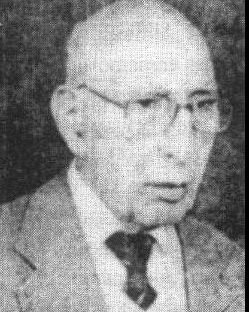
Padamshri Prof. Prithvi Nath Kaula, a towering figure in the field of Library and Information Science, was born on March 13, 1924, in Haba Kadal, Srinagar, Kashmir. His journey from the tranquil valleys of Kashmir to becoming a world-renowned scholar in library science is a remarkable story of perseverance, dedication, and the pursuit of knowledge. He is celebrated not only for his contributions to library science but also as one of the most prominent intellectuals to have emerged from the culturally rich and historically significant region of Kashmir.

Early Life and Education in Kashmir

Prof. Kaula’s roots in Kashmir were deep and integral to his development as an academic and professional. Born into a humble Kashmiri Pandit family, he grew up in a region known for its rich intellectual and cultural traditions. Kashmir, once a thriving center of learning, had a long history of scholars, poets, and philosophers, and Prof. Kaula was a product of this heritage.

As a child in Srinagar, he was exposed to the region’s rich literary traditions, which sparked his interest in knowledge and learning. Kashmir Valley was home to many great thinkers and institutions, including its many libraries that served as centers of intellectual exchange. Though it was a difficult time for the region during the era of his youth, with political upheaval and the partition of India in 1947, Prof. Kaula’s ambition to pursue knowledge transcended these challenges.

He received his early education in Srinagar, where his academic talents were evident. His thirst for knowledge led him to pursue higher education at Punjab University (then in Lahore), Banaras Hindu University (BHU), and Delhi University. It was during these formative years that his interest in library science was sparked, and he soon found his calling in the world of libraries and information management.

Transition from Kashmir to National Recognition

In 1945, with a deep desire to improve his professional skills, Prof. Kaula left Kashmir and moved to Madras (now Chennai) to study Library Science. The decision to leave his home and pursue a degree in a specialized field was not easy, but it was a necessary step toward his aspirations. After completing his studies, he returned to Srinagar and took up the position of librarian at DAV College in 1946, marking the beginning of his long and distinguished career in library science.

Padamshri P .N Kaula at a function.

However, as the political situation in India changed dramatically with the partition in 1947, Prof. Kaula’s link to Kashmir became temporarily severed. Amidst the turmoil and violence that followed partition, the traditional connection between Kashmir and the rest of India was disrupted and travel between regions became difficult. Despite the challenges, Prof. Kaula’s resolve never faltered. He managed to move to Pilani, where he took up a higher-paying position as the librarian at the Birla Institute of Technology and Science, before continuing his career at other prominent institutions.

Kashmir’s Influence on His Career

Although Prof. Kaula’s career took him far from his homeland, his Kashmiri roots remained a strong influence throughout his life. Kashmir, historically known for its great scholars, had shaped his intellectual foundation. The region’s legacy of learning, culture and spirituality had a lasting impact on his outlook and work, inspiring him to dedicate his life to the pursuit and dissemination of knowledge.

His commitment to the intellectual development of his native land was evident in his later work. In 1951, Prof. Kaula was offered the post of Inspector of Libraries by the government of Jammu and Kashmir, a position that had never existed before in the state. This role allowed him to influence library development across the region, ensuring that the rich traditions of learning in Kashmir were preserved and enhanced. He also contributed to the establishment of libraries and academic resources in Kashmir, understanding the vital role they play in shaping young minds and fostering an educated society.

The Kashmir Scholar on the Global Stage

Prof. Kaula’s work and reputation extended far beyond Kashmir. He went on to become the first person in the world to earn a Master’s degree in Library Science from Delhi University in 1949. He later held influential positions at Delhi University, Banaras Hindu University (BHU), and other academic institutions, leaving an indelible mark on the field of library science. His contributions to the development of library science were recognized internationally, and he became a UNESCO expert, traveling the world to share his knowledge.

Despite his success on the global stage, Prof. Kaula always remained connected to his Kashmiri heritage. His deep respect for his culture and roots was reflected in his academic endeavors, as he worked to integrate his regional identity into the broader professional landscape of library science. His work as an editor for the Kashmiri Pandit’s journal, Sharada, and his efforts to catalog works related to Kashmiri scholars and thinkers, further cemented his ties to the region.

A Legacy in Kashmir

Prof. Kaula’s legacy in Kashmir is not only academic but also cultural. As a visionary, he made significant strides in modernizing the region’s library system and his contributions continue to influence the educational and intellectual environment of Kashmir. His pioneering work in library science, particularly in cataloging and reclassifying thousands of books, set a global benchmark for excellence in the field.

P.N Kaula’s Book on Library and Information Sciences in India.

His work as an educator and mentor, shaping future generations of library scientists, is one of his most lasting contributions. In addition, his establishment of the Ranganathan Endowment in Library Science in 1952, named after his mentor Dr. S.R. Ranganathan, is a testament to his commitment to education and intellectual growth.

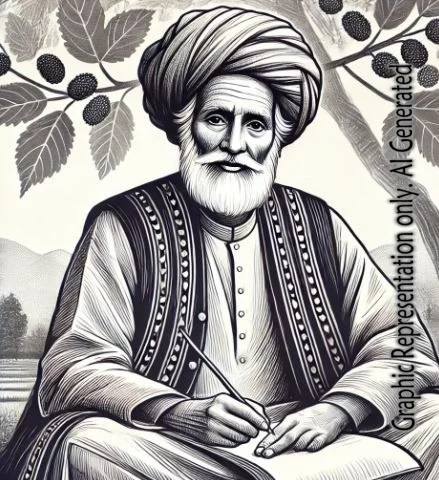
Kashgari: The `Mute Inglorious Milton’ of Kashmir

Today, Kashgari’s name and contributions are little more than whispers in Kashmir’s rich cultural history. While his contemporaries are celebrated as cultural icons, Kashgari’s story remains an enigmatic fragment. The irony lies in the fact that, even as his verse once educated and inspired, the poet himself has faded into obscurity, his life and work buried under the passage of time.

By: Dr. Rajesh Bhat

Amid the poetic luminaries of pre-independence, the name of Mirza Ghulam Mohammed Beg `Kashgari’ from Utrasoo, Anantnag, Kashmir lingers like a faint echo—a “mute inglorious Milton” of his time. Borrowing Thomas Gray’s phrase, Kashgari’s story embodies the poignant reality of a genius uncelebrated and largely forgotten thereafter. His verses, rich in creativity and practical wisdom, reflect a life devoted to art and service, yet his contributions have faded into obscurity.

A Poet of Quiet Brilliance

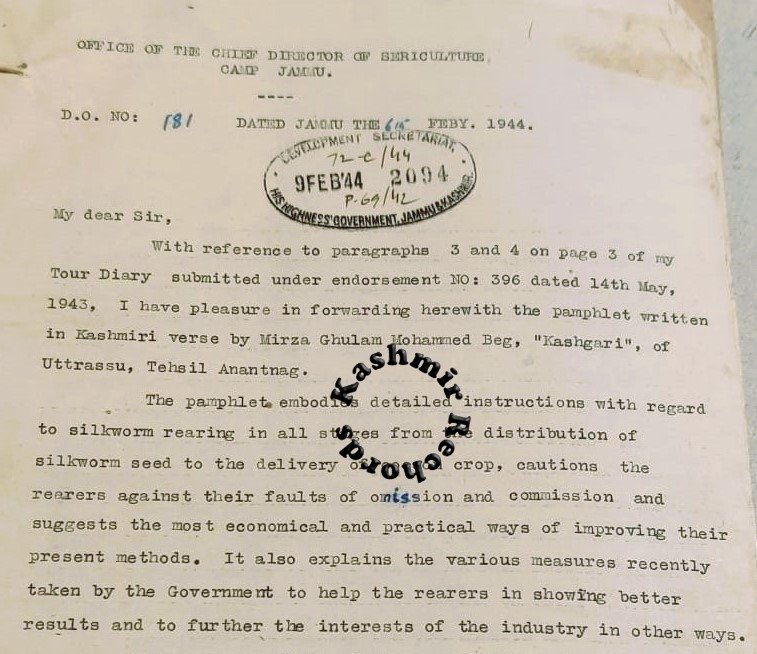
While his contemporaries like Mehjoor, Zinda Kaul, Abdul Ahad Zargar and Dina Nath Nadim achieved lasting fame, Kashgari’s extraordinary talent went unacknowledged by history. Yet, his poetic works carried a unique blend of literary finesse and functional purpose. His most notable creation, Rehnumai Kiram Kashi, written in 1943 for the Sericulture Department, stands as a testament to his exceptional abilities.

This poetic guide, crafted to educate farmers on silkworm rearing, exemplifies how Kashgari transformed mundane agricultural instructions into lyrical verses that were easy to remember and recite. It was poetry with a purpose—designed to weave art into everyday life, much like the silken threads he wrote about.

The Irony of Recognition

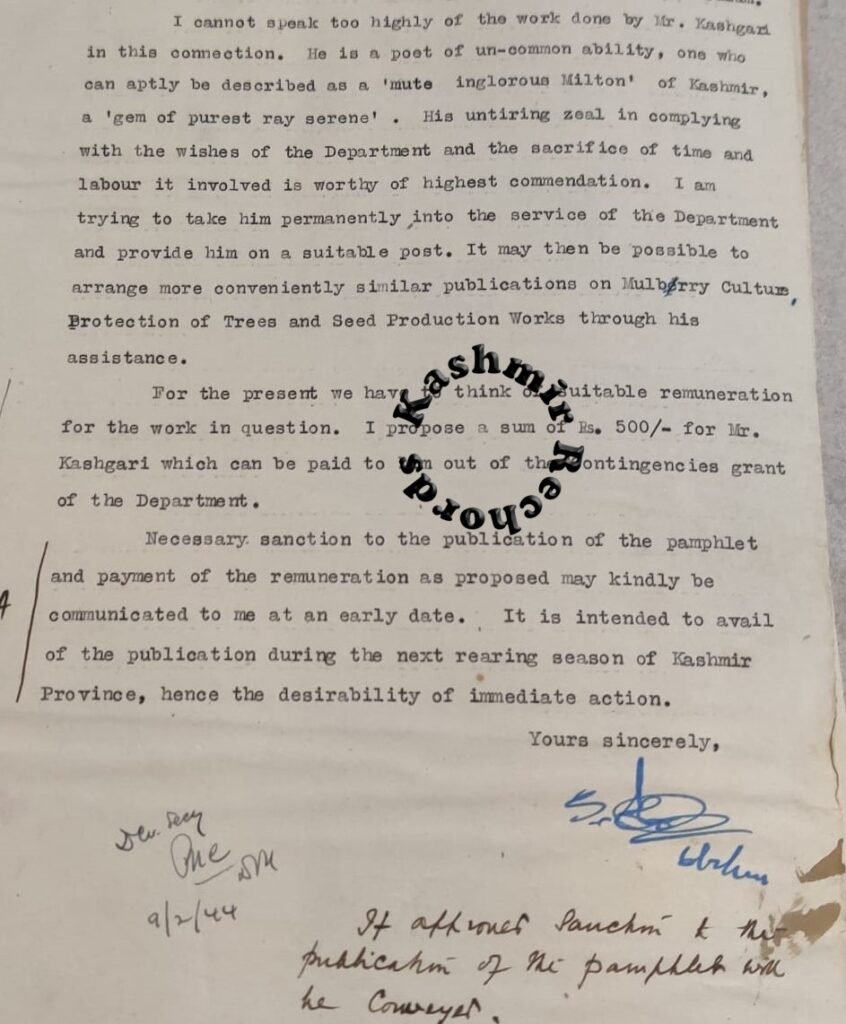
Kashgari’s skill did not go unnoticed during his time. The Chief Director of Sericulture, J&K Government, struck by the uniqueness of his talent and terming him “Mute Inglorious Milton” of Kashmir, awarded him ₹500—then a substantial sum—and advocated for his work’s inclusion in primary education. Yet, despite these accolades, Kashgari remained an ephemeral figure in Kashmir’s literary and cultural history. Unlike his contemporaries, whose fame continues to shine, Kashgari’s contributions were undervalued and ultimately overlooked.

This neglect is deeply ironic. Kashgari had not only mastered the art of verse but also demonstrated an innovative approach to using poetry for social and economic development—a rare achievement. Despite these merits, he was relegated to anonymity, his brilliance buried like a hidden gem, much as Gray lamented of the rural poets in his Elegy Written in a Country Churchyard.

The Forgotten Legacy

What makes Kashgari’s story particularly tragic is the lack of effort to preserve his work. Beyond Rehnumai Kiram Kashi, little is known about his life or his other writings, if they exist. The honorarium he received came with the condition of copyright transfer, a legal formality that perhaps symbolized the undervaluation of his legacy. Unlike the silken threads that endure as a symbol of Kashmir’s heritage, Kashgari’s literary threads have all but disappeared.

A Call to Remember

Mirza Ghulam Mohammed Beg Kashgari’s life invites reflection on the fleeting nature of fame and the uneven ways history remembers its heroes. Kashmir Rechords urges its readers to join in the effort to revive Kashgari’s legacy. If any of his works, memories or records survive, their recovery could serve as a tribute to this unsung genius—a poet who spoke in silken verses but whose voice remains unheard in the chronicles of Kashmir’s cultural history.

Let us ensure that Kashgari’s silken words do not vanish into the oblivion of time.

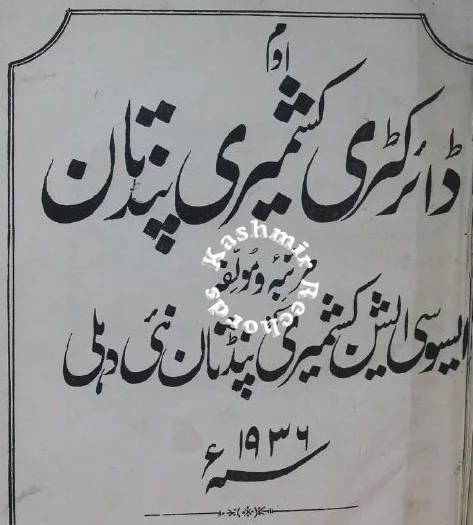
Kashmiri Pandits’ Unique Directory of 1936

The directory meticulously details the presence of Kashmiri Pandits across 118 cities and towns, stretching from British India to regions in Pakistan, Bangladesh and even Rangoon. The content is a treasure trove of information: addresses, occupations, marital statuses, gotras, ages, sibling details and even rare photographs of notable individuals, groups and temples.

(Kashmir Rechords Exclusive)

In a remarkable initiative spanning over a decade, the Kashmiri Pandit Association of New Delhi, in collaboration with KP Shimla Association, undertook a monumental project between 1925 and 1935. Their mission was to compile a comprehensive directory of Kashmiri Pandits scattered far beyond their ancestral homeland. This labour of love culminated in the publication of the Directory of Kashmiri Pandits in 1936 by Idrees Burqi Press, Delhi.

Far more than a registry, this directory stands as an invaluable historical document, offering profound insights into the lives, struggles, and unyielding spirit of a community that endured centuries of forced migration from the Kashmir Valley.

A Testament to Migration and Survival

The directory meticulously details the presence of Kashmiri Pandits across 118 cities and towns, stretching from British India to regions in Pakistan, Bangladesh and even Rangoon. It traces their migrations, beginning as early as the 17th century, driven by the dual forces of religious persecution and political instability.

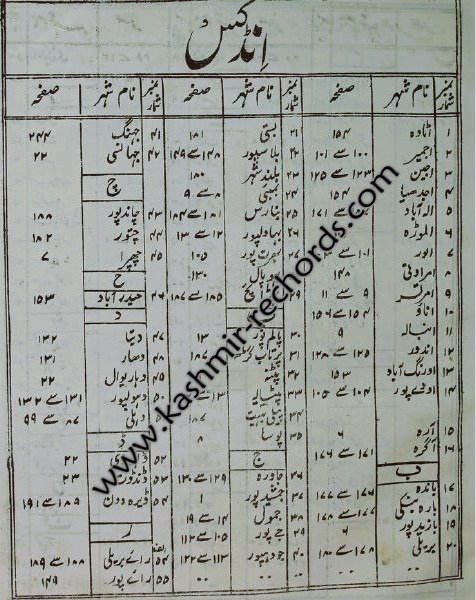
One of the Index Pages

This narrative of displacement reveals the resilience of a community that, despite overwhelming odds, preserved its cultural and religious identity. The directory not only documents individual families but also chronicles the collective story of a diaspora determined to maintain its heritage and values.

Stories of Pain and Perseverance

The directory poignantly recounts the hardships faced by Kashmiri Pandits who were forced to flee their beloved homeland under oppressive regimes. Religious fanaticism during certain periods left the community with two stark choices: abandon their faith or escape to unfamiliar territories.

One grim chapter highlights a time when only 11 Pandit households remained in the valley, steadfast in their faith. Historian Pandit Anand Koul narrowed this figure further to just two families, an anecdote solemnly preserved in this directory.

Amid such adversity, the Pandits in exile clung to their education, dignity, and cultural preservation. They formed tight-knit networks to remain connected despite being dispersed across the subcontinent. As the foreword of the directory aptly notes:

“The remaining families, unable to endure the relentless pressure and persecution, migrated to mainland India, where the community’s unwavering commitment to education and intellectual pursuit played a vital role in their survival.”

A Cultural Treasure

Written in Urdu, the directory reflects the linguistic and cultural nuances of its time. Instead of page numbers, it uses script alphabets—“Alif,” “Bey,” “Jeem,” and so on—to mark its pages.

The content is a treasure trove of information: addresses, occupations, marital statuses, gotras, ages, sibling details, and even rare photographs of notable individuals, groups and temples. A particularly notable page, “Bey,” documents successive waves of migration and highlights the values that empowered the community to endure.

Preserving the Legacy

Recognizing the unparalleled significance of this 300-page historical artifact, the Kashmir Rechords Foundation intends  to translate it into English. This endeavour aims to make the directory’s rich content accessible to a global audience. To support this ambitious effort, the Foundation invites individuals and organizations to contribute. Interested parties can reach out via: kashmirrechords@gmail.com or support@kashmir-rechords.com.

In the meantime, Kashmir Rechords  will periodically share excerpts through blogs, offering glimpses into the lives of Kashmiri Pandits in distant lands. Upcoming features include the story of the sole Kashmiri Pandit family in Burma and another in Hathras, Uttar Pradesh, in 1933.

A Story Worth Sharing

  • This directory is more than a historical record—it is a testament to the resilience, unity, and cultural richness of the Kashmiri Pandit community. It echoes their enduring values of education, peaceful coexistence and progress, even in the face of relentless challenges.
  • Through Kashmir Rechords, these stories of survival and triumph will continue to inspire future generations, ensuring that the legacy of the Kashmiri Pandit community remains alive and celebrated.
  • Stay connected with Kashmir Rechords for more authentic and deeply researched narratives of Kashmir’s heritage. For one of the previous write-ups based on this Directory, click here: https://kashmir-rechords.com/sun-temple-fire-temple-kashmiri-pandit-temple-in-pakistans-gujrat/#google_vignette

Prem Nath Kaul: The Unsung Hero of India’s Frontiers

(Kashmir Re’Chords Exclusive)

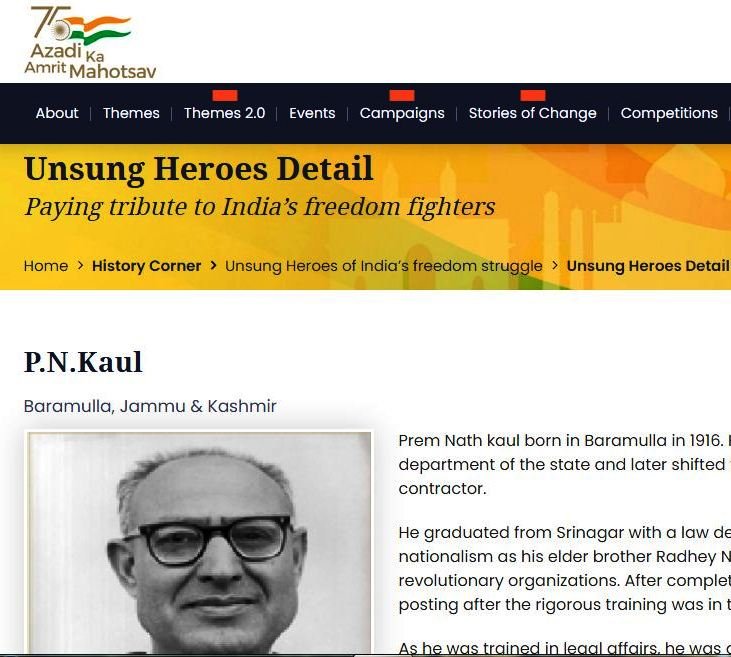
Born in 1916 in Baramulla, Kashmir, Prem Nath Kaul’s life has been a saga of remarkable service that spanned military, administrative and diplomatic domains. Hailing from the frontiers, he dedicated his life to safeguarding refugees and uplifting these regions, unmindful of the irony that his own Kashmiri Pandit community would later lead a refugee life in the plains of India and elsewhere!

Prem Nath Kaul was born to Gunwanti and Tota Kaul, a Head Clerk in the Public Works Department (PWD) who later became a successful contractor in Sitapur, the then United Provinces. Influenced by his elder brother Radhey Nath Kaul, a revolutionary, Prem Nath imbibed a strong sense of nationalism from an early age. His story, chronicled in his memoir Frontier Callings, (1976), a copy of which is in possession of Kashmir Rechords, provides a rare and inspiring glimpse into India’s formative years. Recognized as an Unsung Hero during the Azadi Ka Amrit Mahotsav, his contributions exemplify a legacy of steadfast dedication to India’s sovereignty and progress.

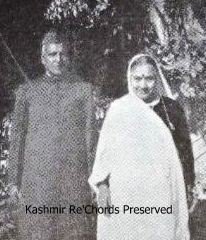
Gunwanti and Tota Kaul

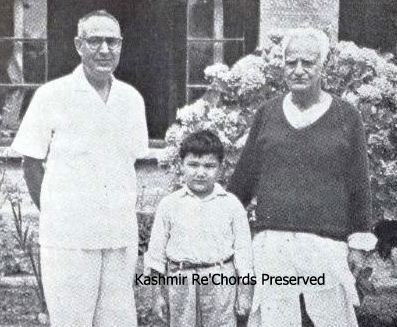
Three Generations–P.N Kaul with his father and Son.

The Beginnings of a Remarkable Career

Prem Nath Kaul’s career, as per his memoir, began with a law degree from Srinagar, followed by his commissioning into the British Indian Army in 1941. His first posting was with the 15th Battalion of the Rajput Regiment in Quetta. With his legal acumen, he was soon assigned as Judge Advocate at the Western Command headquarters in 1946.

During the Pakistan-led tribal invasion of Jammu and Kashmir in 1947, Kaul returned to his homeland as an acting lieutenant colonel. Tasked with raising militia battalions, he displayed exceptional leadership by recruiting and training locals to defend the region. When Pakistani forces advanced towards Ladakh, Kaul relocated to Leh, where he organized and led the Nubra Guards, a paramilitary force later integrated as the 7th Battalion of the J&K Militia.

Administrator in Remote Frontiers

In 1953, Kaul transitioned to the newly created Indian Frontier Administration Service (IFAS), aimed at governing the rugged terrain of the North-East Frontier Agency (NEFA). As a Political Officer in Bomdila and Siang divisions, he not only administered these remote regions but also exercised judicial powers in the absence of formal judicial structures. His tenure reflected a deep commitment to integrating these challenging territories into the Indian mainstream.

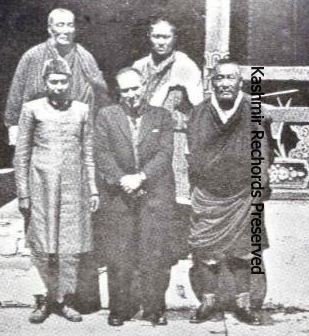
P.N Kaul with Bhutanese Officials, 1963

Diplomatic Missions in Tibet, Nepal, Bhutan

Kaul’s diplomatic journey began in 1959 when he was appointed India’s Consul-General in Lahasa, Tibet, during the tumultuous period of Chinese occupation. He witnessed firsthand the oppressive conditions and the mass exodus of Tibetans, including the Dalai Lama. Among his notable contributions was his assistance to a small community of Tibetan Muslims with Kashmiri ancestry. Through his efforts, many were granted Indian citizenship and resettled in Srinagar.
In 1961, as Deputy Secretary in the Ministry of External Affairs, Kaul oversaw Tibetan refugee rehabilitation. His expertise in development projects was further demonstrated during his tenure as Director of the Indian Cooperation Mission in Nepal (1972–1976), where he facilitated transformative initiatives like the Trishuli Hydel Project, cementing ties between India and Nepal.

A Leader in Strategic Intelligence

Kaul’s service extended to covert operations when he took charge of the Special Service Bureau (SSB) as its Director from 1968 to 1972. Under his leadership, the SSB played a pivotal role in the Bangladesh Liberation War, including training Mukti Bahini fighters and operating covert radio channels.

A Legacy Celebrated

Prem Nath Kaul’s life is a testament to unyielding dedication to the nation. From defending the frontiers to shaping India’s diplomatic and developmental efforts, his work often went unnoticed. It was during the Azadi Ka Amrit Mahotsav—celebrating 75 years of India’s independence—that the immense contributions of this Unsung Hero were rightfully acknowledged.

Family and Legacy

Kaul’s personal life was equally inspiring. His wife, Gaurishwari Kaul, stood by his side through his extraordinary journey. Among his siblings, Radhey Nath Kaul was a revolutionary, Triloki Nath Kaul served as India’s Foreign Secretary and Ambassador to the USA, and Hriday Nath Kaul rose to the rank of lieutenant general in the Indian Army, serving as Deputy Chief of Army Staff.

Prem Nath Kaul’s multifaceted service deserves a prominent place in India’s history. His work across frontiers, both literal and metaphorical, remains an inspiring narrative of patriotism, resilience, and unwavering commitment to the motherland.

Kashmir: A Land That Foreigners Never Left

Kashmir’s allure has ensnared countless foreigners—some captivated by its beauty, others trapped by circumstances. From the elusive Wilson of 1936 to the foreign spouses of recent years, their stories share a common thread: Kashmir is not just a place to visit; for many, it becomes a place they cannot leave!

(Kashmir Re’Chords Exclusive)

Kashmir, often hailed as the Paradise on Earth, has long captivated the imagination of outsiders. For centuries, its natural splendor, historical depth, and socio-political intrigue have drawn travellers from far and wide. Many of these foreigners did more than just visit—they lingered, settled, or stayed far beyond their intended time, leaving behind stories steeped in mystery and controversy.

From the Afghans and Central Asians to the Persians and British, Kashmir’s history is interwoven with tales of foreign influences. While much is documented about invaders and settlers who shaped the valley, less is known about the enigmatic stories of individuals—like the cryptic case of L.F. Wilson in 1936 or the survival saga of a British-Italian duo in 1990. The whispers of “Mission Kashmir,” where visitors overstayed and left without a trace, add an air of intrigue to the valley’s narrative.

The Mystery of L.F. Wilson, 1936

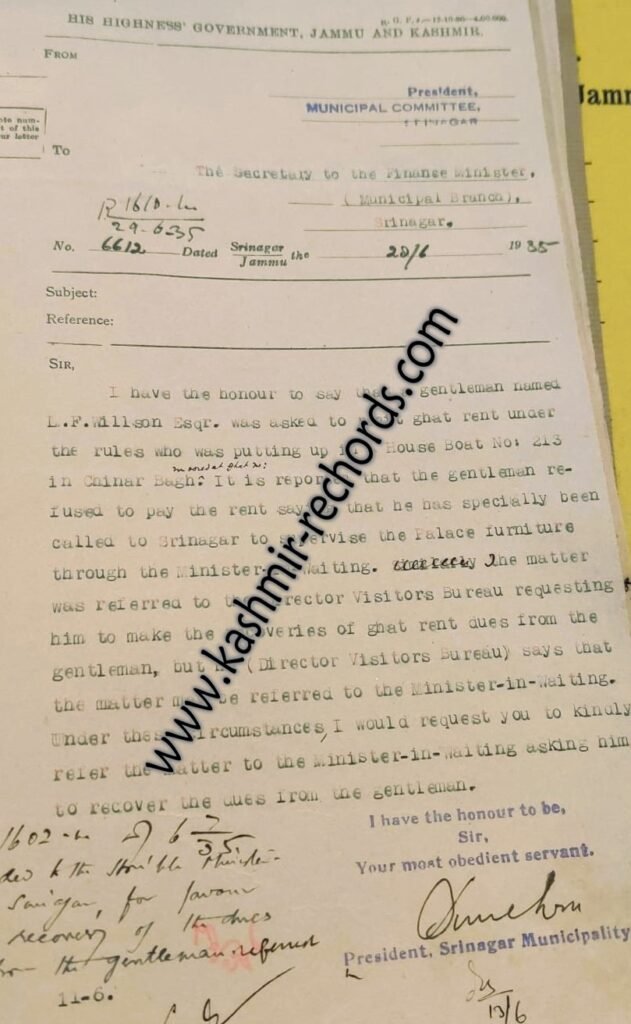
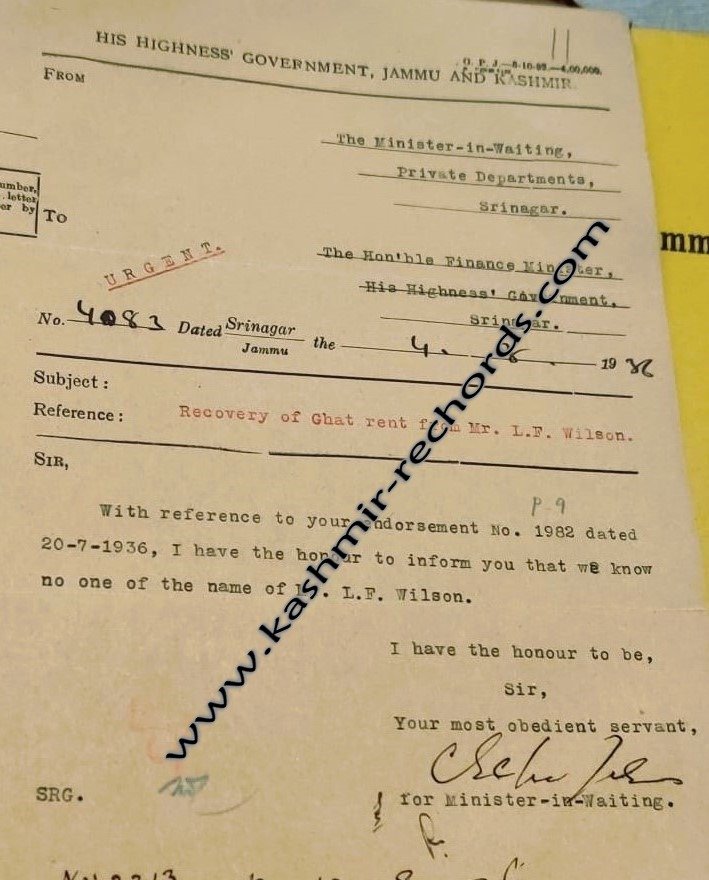
In 1936, a peculiar figure named L.F. Wilson made headlines in Srinagar. Residing on Houseboat No. 213 at Chinar Bagh, he stirred controversy by refusing to pay his Ghat rent, claiming official duties related to Palace furniture. When questioned, his alleged connections to the administration crumbled. The Visitors Bureau sought clarity, but Jammu and Kashmir’s Minister-in-Waiting denied any association with Wilson. His identity and purpose remain a riddle to this day, a curious episode in Kashmir’s history.

A Tale of Survival: British and Italian Duo, 1990

The violent turmoil of 1990 brought its own set of foreign overstayers. Amid militancy and the exodus of Kashmiri Pandits, a British man, Derek Lingings, and his foster mother, Anna Bella Zaccaria, an Italian, found themselves stranded in Srinagar. Initially enchanted by Kashmir’s beauty, their extended stay turned into a struggle for survival. Financial hardships forced them to work as labourers on construction sites, even seeking aid from local relief committees. Their embassies offered no assistance, leaving them to fend for themselves in a region gripped by conflict.

Foreign Spouses and Post-2012 Challenges

In 2012, a new chapter unfolded with the return of over 350 women—mainly from Pakistan and Pakistan-Occupied Kashmir (PoK)—who entered under an amnesty scheme with their former militant husbands. These women, integrated into local Kashmiri families, face an uncertain future as the government tightens immigration laws. With their uncertain future, they have been protesting for so many years in many towns and villages of Kashmir.

Wives of former Kashmiri militants at a 2019 protest march in Srinagar. Pic Courtesy: Amin War

Take Bushra, a boutique owner in Sopore, who has built her life in Kashmir over a decade. Despite her contributions, she lives under the looming threat of deportation. Similarly, Nusrat from Tanghdar, divorced and stuck in limbo, describes her life as a prison, caught between a past she cannot return to and an uncertain future.

Government Crackdown in 2024

In  July 2024, the Jammu and Kashmir administration formed a seven-member panel to identify overstaying foreigners, including spouses, with the intent to deport them. This move has sparked widespread concern. The panel is tasked with collecting biometric data, monitoring legal cases, and updating records, aiming to regulate the presence of foreign nationals in the region. While authorities argue this is necessary to enforce immigration laws, affected families see it as an upheaval of lives already fraught with challenges.

Kashmir’s allure has ensnared countless foreigners—some captivated by its beauty, others trapped by circumstances. Their stories share a common thread: Kashmir is not just a place to visit; for many, it has now become a place they don’t wish or like to leave!

July 1931 `Warning Of Kashmir’

(Kashmir Records Exclusive)

The history of Kashmir, especially before India’s Partition in 1947, is a tapestry woven with intrigue, politics, and propaganda. Often distorted to serve personal or political agendas, the events surrounding July 1931 remain among the most misunderstood chapters of the region’s past. This pivotal moment, which reshaped Kashmir’s political trajectory, deserves careful reexamination.

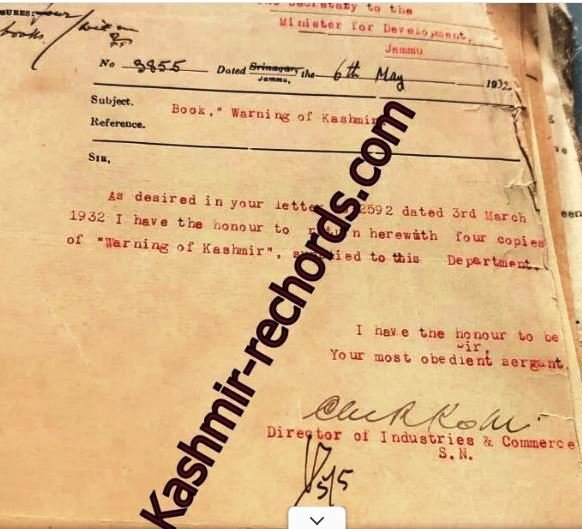
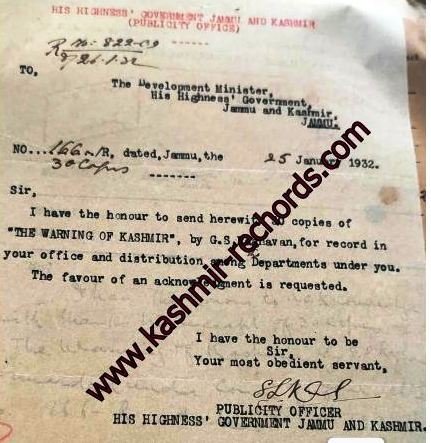
G.S. Raghavan’s Warning of Kashmir stands out as a rare beacon of truth, offering an unvarnished account of the turmoil that engulfed Kashmir during this period. Through meticulous research, Raghavan dismantles myths and illuminates the political, communal, and human dimensions of the unrest, challenging oversimplified narratives that dominate public discourse.

Raghavan, paints a broader picture, revealing how external and internal forces deiberately stoked unrest. Maharaja Hari Singh’s portrayal as an authoritarian despot, Raghavan argues, was part of a larger propaganda campaign to destabilize his rule.

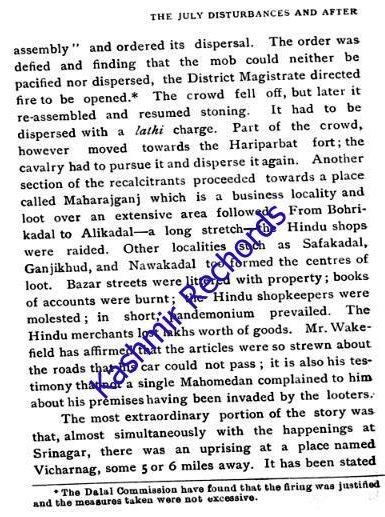
July 1931: The Eruption of Violence

The tipping point came in July 1931, when religious passions were inflamed, and communities were pitted against each other. While much of the focus in mainstream histories has been on the political motivations of this unrest, Raghavan’s work uncovers the harsh realities of the violence.

The Kashmiri Pandit community bore the brunt of the turmoil, facing significant loss of life and property. The communal undertones of this tragedy, often overlooked in sanitized retellings, highlight the deeper fractures within the society of the time.

One of the most critical contributions of Warning of Kashmir is its ability to challenge the simplistic narrative of Muslim unrest against a Hindu ruler. According to Raghavan, the violence was not solely rooted in religion but was a calculated result of political provocations by various factions seeking to exploit Kashmir’s instability for their own agendas.

Upon its publication, Warning of Kashmir was endorsed by the Government of Jammu and Kashmir as an essential corrective to the distorted historical record. By presenting a balanced account, the book aimed to educate the public and dispel long-standing misconceptions about the events of 1931.

The history of Kashmir is far more intricate than the selective narratives often presented. G.S. Raghavan’s work serves as an invaluable resource for anyone seeking to understand the true complexities of the region’s past. Revisiting events like those of July 1931 with a critical lens can pave the way for healing and a deeper understanding of the forces that continue to shape Kashmir’s identity.

By shedding light on forgotten truths, Warning of Kashmir reminds us that the road to reconciliation begins with an honest reckoning of history.

A Forgotten Kashmiri Pandit Temple in Pakistan’s Gujrat !

A recent find by Kashmir Rechords—a rare Urdu directory of Kashmiri Pandits from 1924-1934—has uncovered a forgotten chapter of history, revealing the existence of a “Fire Temple” dedicated to Swami Dhooni Sahib near Gujrat, Pakistan. Built by the Kashmiri Pandit community in Qilladar (Killadar) around 1884, this temple and adjacent school embody their devotion, cultural resilience, and educational values.

(By:Dr.Rajesh Bhat)*

The recent discovery of a rare Urdu directory of Kashmiri Pandits from British India, dated between 1924 and 1934, has revealed a hidden chapter of history, bringing to light an extraordinary story of cultural resilience and devotion. This directory not only showcases the lives of Kashmiri Pandits across British India but also unveils the existence of a unique Temple, built in memory of the revered mystic Swami Dhooni Sahib. This structure stands as a symbol of the community’s enduring spirit and reverence, located near Gujrat city  in what is now Pakistan.

Historical Significance of the Dhooni Temple

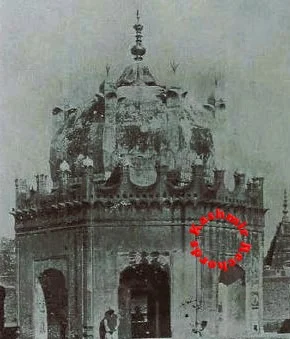
The Dhooni Sahib Temple, or what they now call, “Fire Temple,”  is believed to have been constructed around 1884 in the town of Qilladar (also known as Killadar) in Gujrat, Punjab, Pakistan. Adjacent to this sacred structure, the Kashmiri Pandit community also built a school and an inn for travellers—a testament to their commitment to education and hospitality. The temple’s location and purpose hold unique cultural importance, as it was built on a site with natural flames emerging from the earth, which possibly drew mystics like Swami Dhooni Sahib for worship.

In addition to its religious significance, the site highlights the cohesive nature of the Kashmiri Pandit community in preserving their heritage. Despite being scattered across British India, these families maintained strong ties to their roots, even constructing a temple and school far from their homeland to honor their values and spiritual mentors.

Qilladar: A Hub of Heritage and Influence

Qilladar, a town in Gujrat District near the Upper Jhelum Canal, became a cultural and spiritual centre for the Kashmiri Pandits in British India. Its strategic location—close to major cities like Amritsar, Lahore, Sialkot and Jammu—made it a meeting point for communities and travellers alike. The town was historically significant as some of the decedents of Dewan Dena Nath, a prominent  Kashmiri Pandit figure in the Sikh Empire’s durbar, continued his legacy of community building by constructing the Fire Temple in Dhooni Sahib’s honor.

Under the governance of Sir Charles Umpherston Aitchinson, then Lt. Governor of Punjab, the Kashmiri Pandit community received support to build the temple. Dewan Dena Nath’s family lineage and the Madan clan, notable Kashmiri Pandits in the region, were instrumental in maintaining the temple and the school complex, which fostered learning and faith for future generations.

Legends and Myths of the `Fire’ Temple

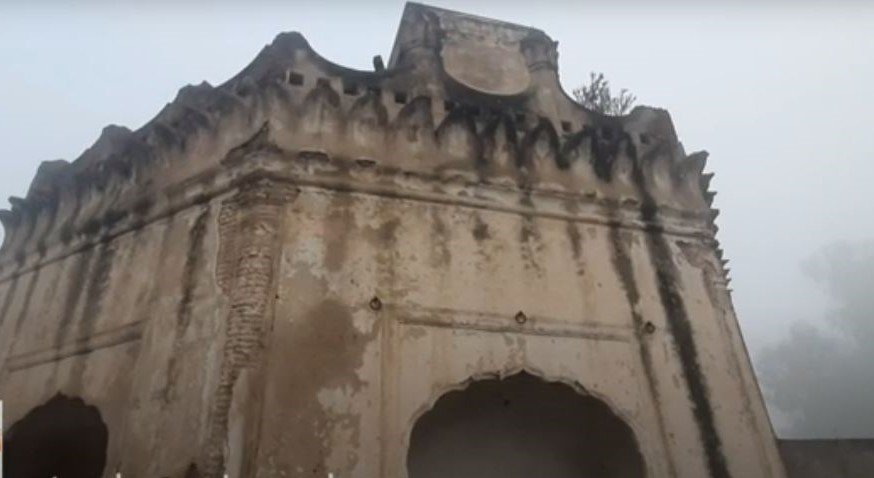
The Dhooni Temple, according to local traditions, is said to be rooted in mystical significance. Stories speak of a perpetual flame emerging naturally from the earth, which may have inspired Dhooni Sahib and other mystics to consider it a sacred site. Sadly, this remarkable heritage site now suffers from encroachment and deterioration, with remnants barely hinting at its former grandeur.

Today, videos and photos of the temple(s) circulated by local Pakistani content creators have sparked interest, though limited historical knowledge has left gaps in understanding the temple’s origin. Misinterpretations have even led to speculation that it might be a Sun Temple, as the word “Dhooni” relates to fire in Hindi.  This post of Kashmir Rechords thus  aims to dispel these myths by bringing clarity to the temple’s history and role in the Kashmiri Pandit tradition.

Legacy in Peril: The Struggle to Preserve a Heritage Site

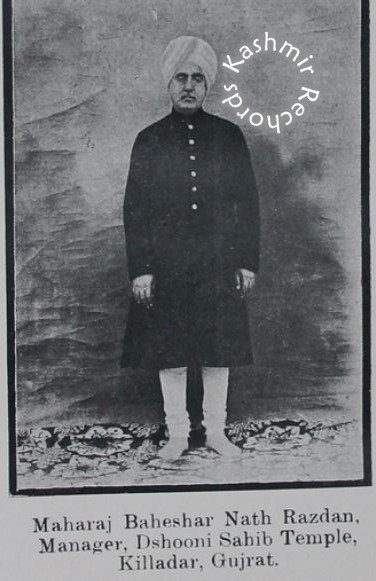
The once-vibrant structures of the Dhooni Sahib Temple and the school complex now stand in a state of disrepair. Maharaj Baheshar Nath Razdan, a Kashmiri Pandit who managed the temple, school, and inn, dedicated years of service to preserving the sanctity of the site. However, the passing of time and the division wrought by the 1947 partition has left this cultural gem largely abandoned.

Although local YouTubers and enthusiasts have made efforts to document the site, the absence of comprehensive historical data has hindered a true appreciation of its value. Kashmir Rechords thus  hopes to reconstruct the story of the Fire Temple, school, and the surrounding community to share it with future generations, ensuring that this chapter of Kashmiri Pandit heritage remains in collective memory.

The Present Condition of Dhooni `Fire’ Temple at Qilladar, Gujrat.Pic Courtesy: Ratas Hussain, YouTuber

Rediscovering the Past for Future Generations

With the Urdu directory of Kashmiri Pandits from 1924–1934 now in hand, Kashmir Rechords is embarking on a journey to uncover and share further insights about Kashmiri Pandit life and legacy across British India. This historical document, filled with photographs, family details, and anecdotes, is a window into a rich heritage that extends beyond the geographical boundaries of Kashmir.

Through ongoing research and publications, Kashmir Rechords aspires to illuminate more such hidden stories. The Dhooni Saheb Temple in Qilladar, Gujrat,  serves not only as a reminder of Kashmiri Pandit faith and resilience but also as an inspiration for preserving cultural memory, honoring the past while paving the way for future generations to rediscover and cherish their heritage.

* Rajesh Bhat is a Kashmir-born Journalist, Writer and Researcher; formerly associated with Daily Excelsior J&K and The Tribune, Chandīgarh. He is the Author of Radio Kashmir in Times of Peace & War. He can be reached at: raajbhat@gmail.com