
(Kashmir Rechords Exclusive)
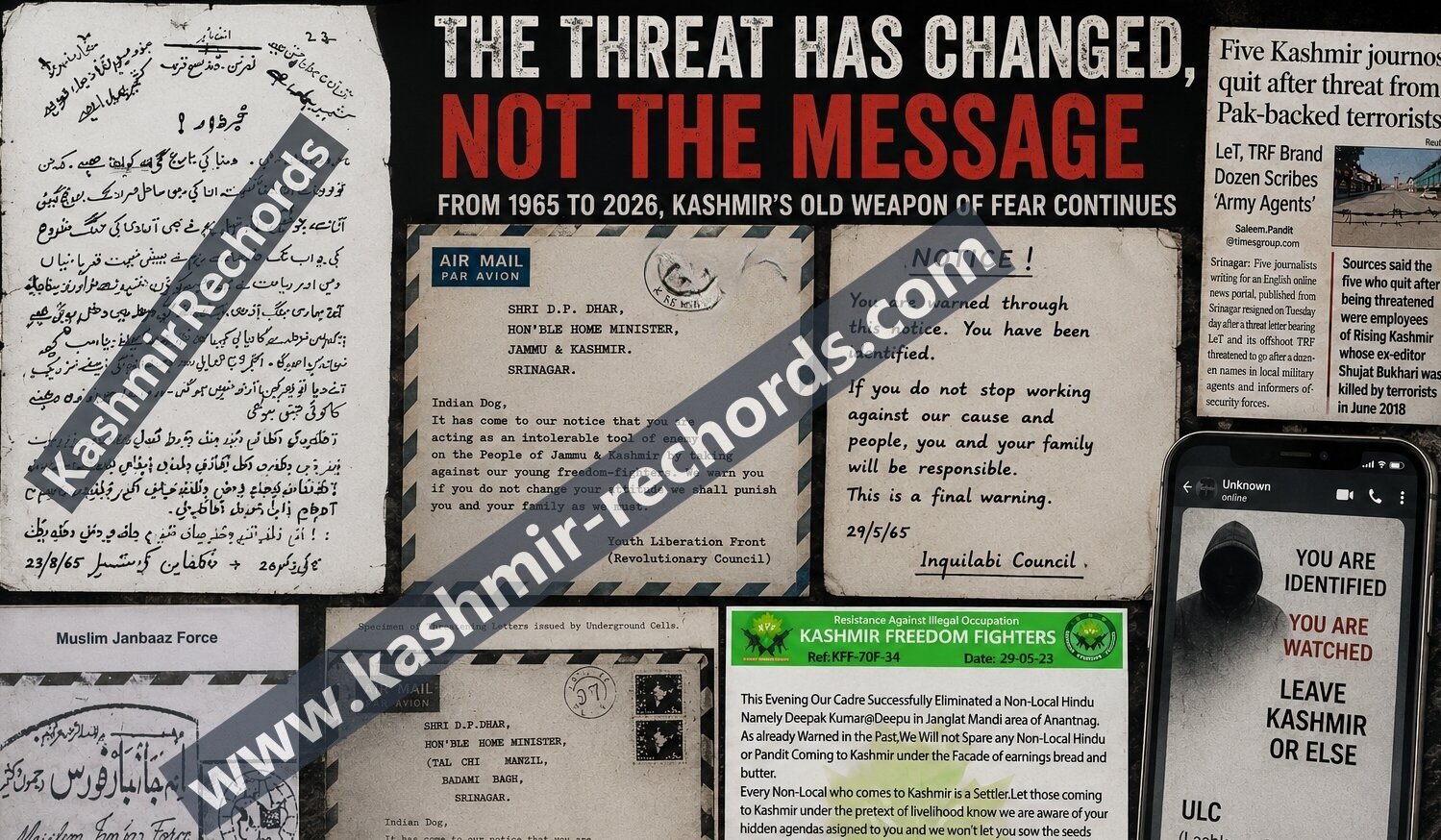
The latest threats against Kashmiri Pandit employees in Kashmir are not a new phenomenon. For the young Pandit employees recruited under the Prime Minister’s Package, who have lived under threats for years, the latest warning carries a frightening historical echo. Some of their generation have already been killed in the post-Article 370 era—notably government employee Rahul Bhat, shot dead inside his office in Chadoora in May 2022.
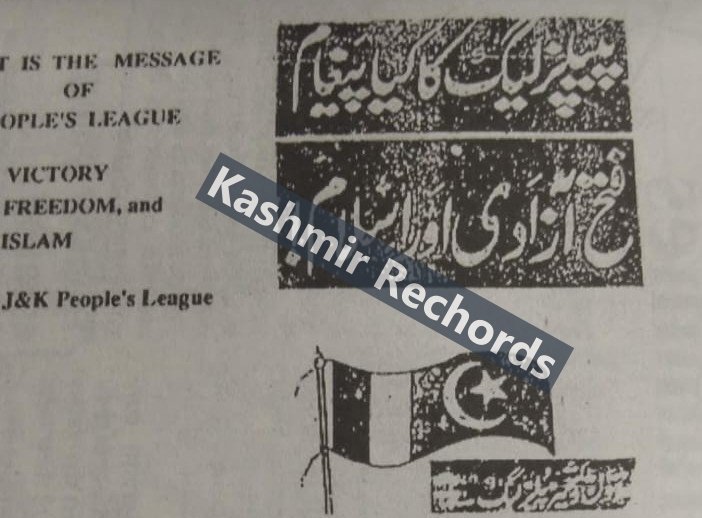
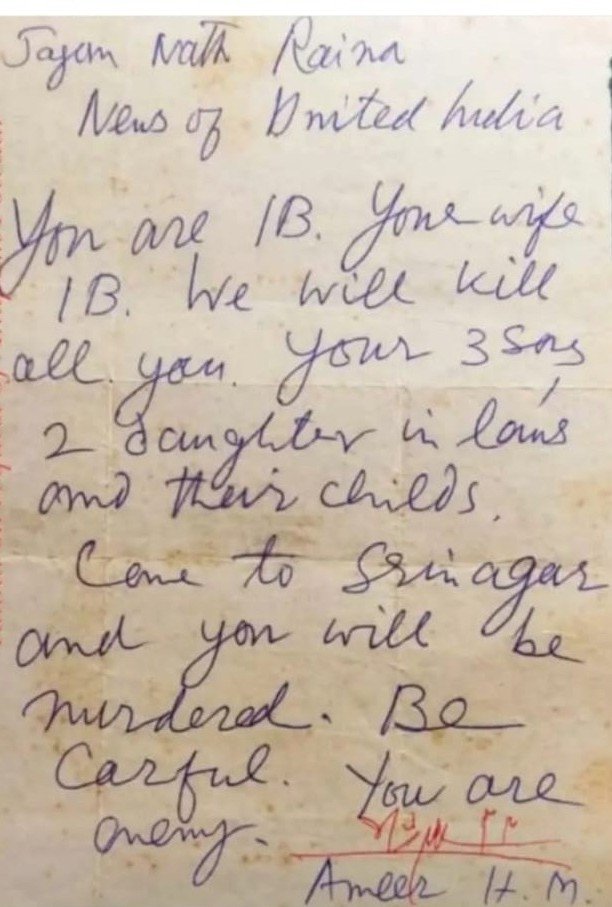
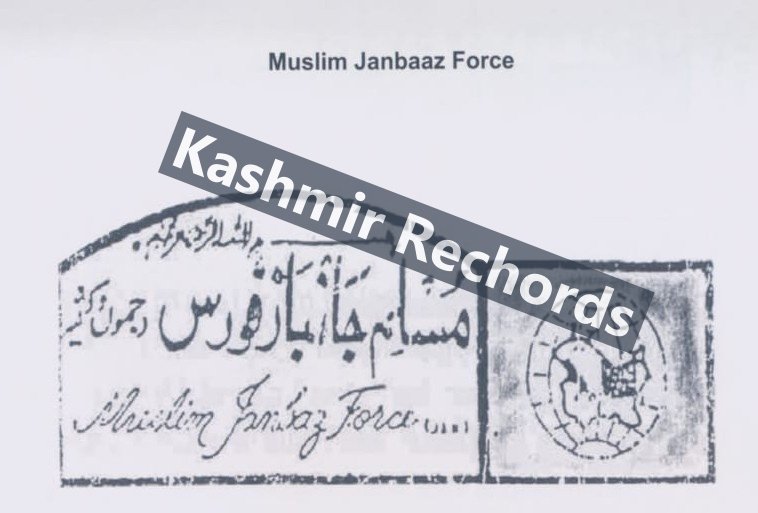
Their parents and relatives know this fear all too well. They had witnessed the same sequence in 1989-90—threats, warning letters, posters, targeted killings and intimidation—before thousands of Kashmiri Pandit families were forced to abandon their homes and migrate from the Valley.
But the history of this threat culture goes back even further.
The warning was there before 1990
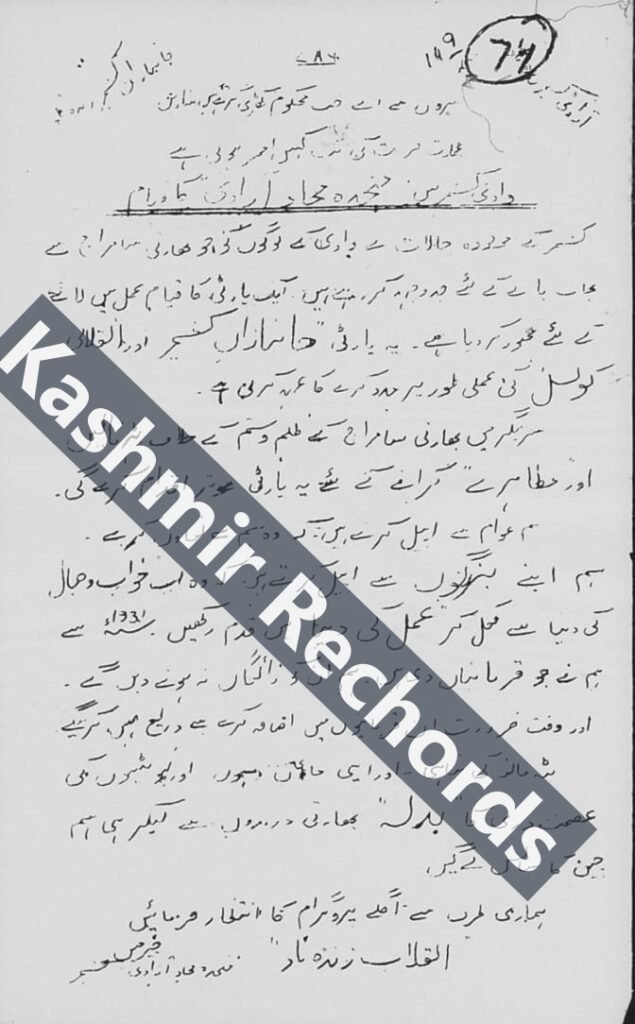
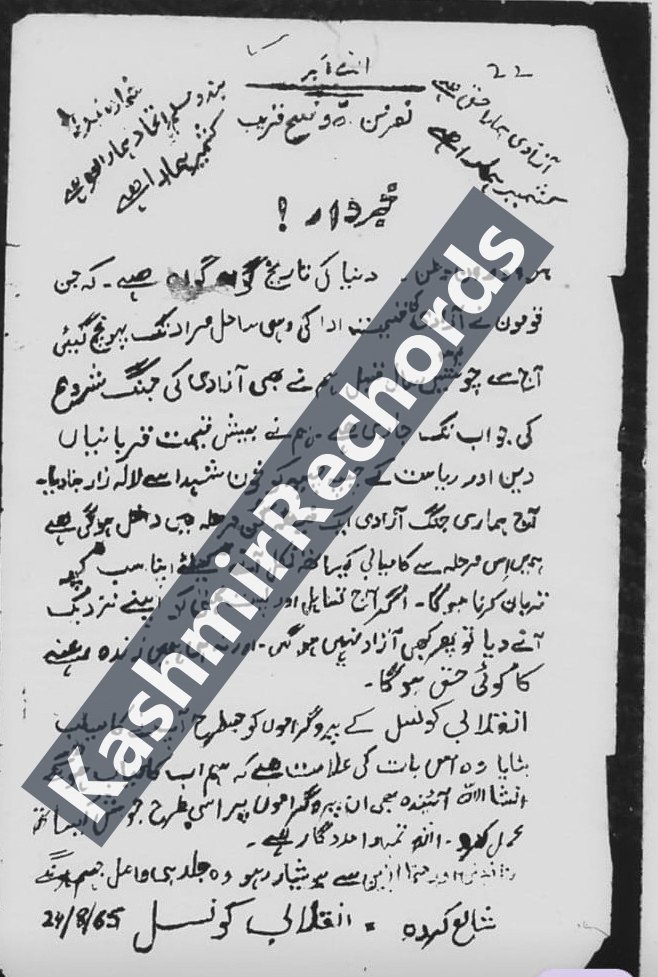
Archival and historical accounts in possession of Kashmir Rechords indicate that the use of threatening posters, underground propaganda and warning communications was already visible during the turbulent years following 1965. The Al-Fateh phase subsequently gave such underground activity a more organised character. Former police officer A.M. Watali’s account records the use of Jehad posters and the arrest of an Al-Fateh activist in October 1965 for putting them up. Other historical material on Al-Fateh records the circulation of “Red Kashmir” posters directed at government officials, politicians and influential individuals in the mid-1960s.
Even D. P. Dhar, then one of the most prominent political figures of Jammu and Kashmir and the State’s Home Minister, was not spared threatening and abusive communications. The episode is significant because it demonstrates that intimidation through written warnings was not born with the insurgency of 1989.
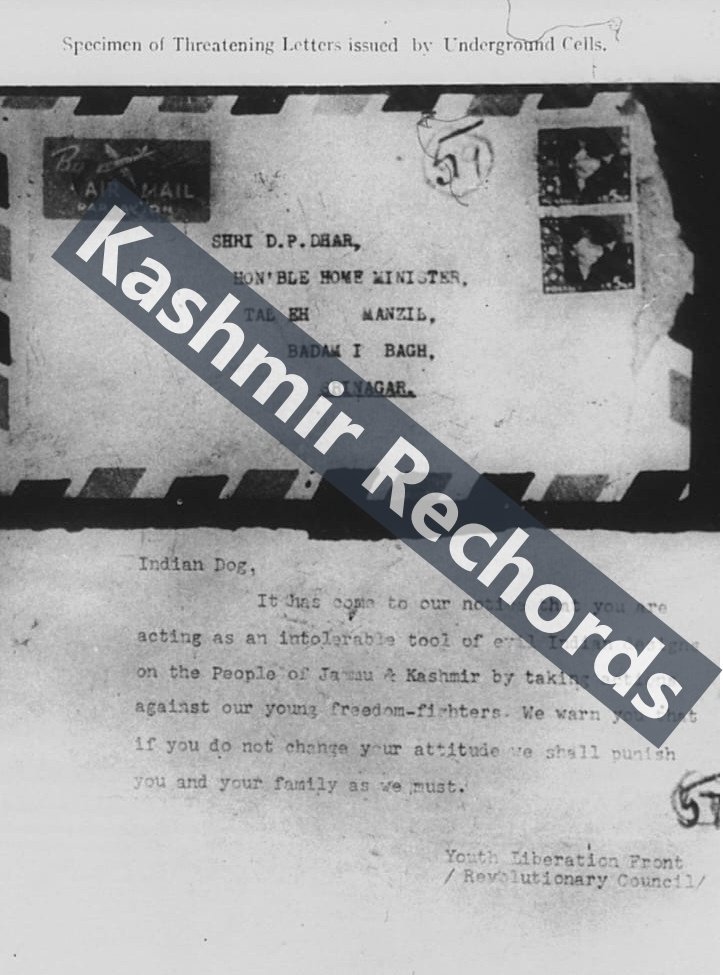
The modus operandi was simple: write it, type it, cyclostyle it or print it—and put it where people would see it. Posters were pasted on walls and electricity poles; letters were delivered to homes and offices; names were circulated and warnings issued.
The purpose was psychological.Make the person feel watched. Make the family afraid. Make the community believe that the threat could become a bullet.
1989-90: When the warning became violence
By 1989-90, the old method of 1965 acquired a far more lethal dimension. Threatening letters and posters operated alongside assassinations, militant slogans and targeted killings. The objective was no longer simply to frighten an individual. It was to create an atmosphere in which an entire community and nationalist individuals began questioning whether they could safely remain in Kashmir.
The mass migration of Kashmiri Pandits cannot, therefore, be understood only through the number of people killed. The cumulative effect of threats, killings and intimidation created a climate of fear that ultimately pushed the community out of its ancestral homeland.
Article 370 changed. The threat did not disappear
The abrogation of Article 370 in 2019 fundamentally changed Jammu and Kashmir’s Constitutional and administrative structure. But the threat culture did not vanish.
In the post-Article 370 period, Kashmiri Pandit employees again became targets. Threat posters and warnings have continued to surface. In 2023, non-locals and Kashmiri Pandits were again threatened.

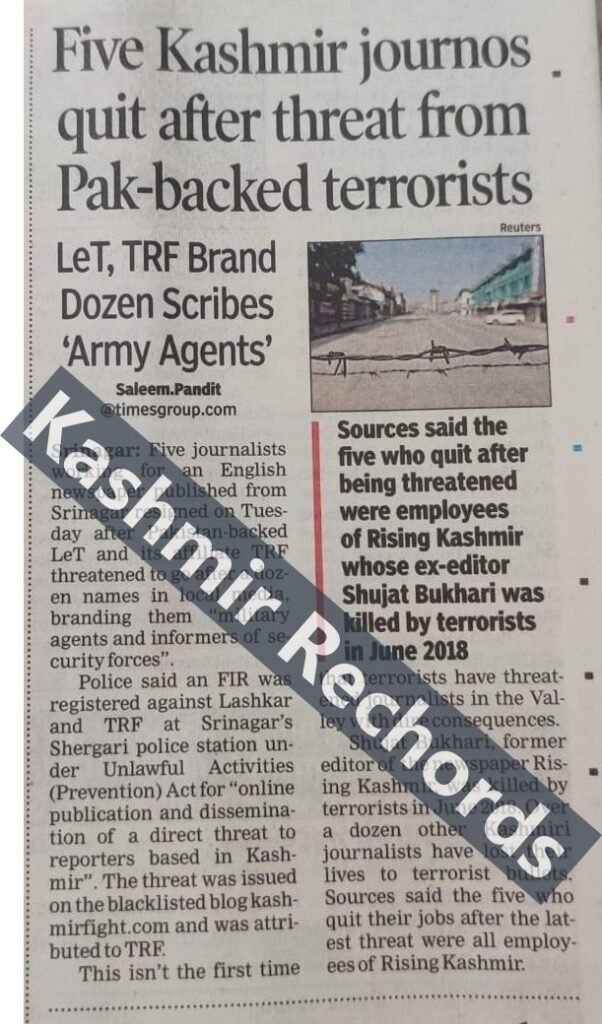
Again in February 2026, purported terror posters triggered fresh concern among Kashmiri Pandits, with community representatives demanding stronger preventive security measures. Even local journalists too faced these threats, before and after Article 370 abrogation. In November 2022, five Kashmiri journalists had to quit their job as dozens of Kashmiri journalists were branded as “Army Agents’’ by “The Resistance Front’’ (TRF) and LeT.
And now, in August 2026, a purported letter attributed to the United Liberation Council (ULC), linked in reports to Lashkar-e-Taiba, has named six Kashmiri Pandit government employees and claimed to possess details including their phone numbers and information about their families. Authorities have responded with heightened security and precautionary measures, including asking affected employees to work from safer locations or remain away from their workplaces temporarily.
Only the medium has changed
This is perhaps the most disturbing continuity.
In 1965, the threat could be handwritten. In the Al-Fateh era, it could be cyclostyled or printed.In 1989-90, it appeared on walls and electricity poles and arrived as letters and warnings. Today, it comes through digital posters, social media, online communications and mobile phones.
The poster has changed, the technology has changed, but the weapon remains the same—fear.”
The technology has changed. The message has not.
It remains a message of identification, intimidation and displacement: you have been noticed, you are being watched, and you are not safe.
For the young Pandit employees working in Kashmir today, therefore, the latest threat is not merely a new incident. It is an echo of what their parents and grandparents experienced even before 1990.
The paper has disappeared. The poster has gone digital. But the weapon remains the same: fear.
And the history of Kashmir shows that when threats are allowed to become normal, the distance between a warning and a killing can become frighteningly short.
Editor’s Note
Those interested in knowing more about some of the Al-Fateh episodes, including the history of its sleeper cells, the locations where threatening posters were prepared, typed or reproduced, and the individuals and networks involved in their production and circulation, may contact Kashmir Rechords for archival and research assistance.
Write to us at: support@kashmir-rechords.com | kashmirrechords@gmail.com