
(Kashmir Rechords Research Desk)
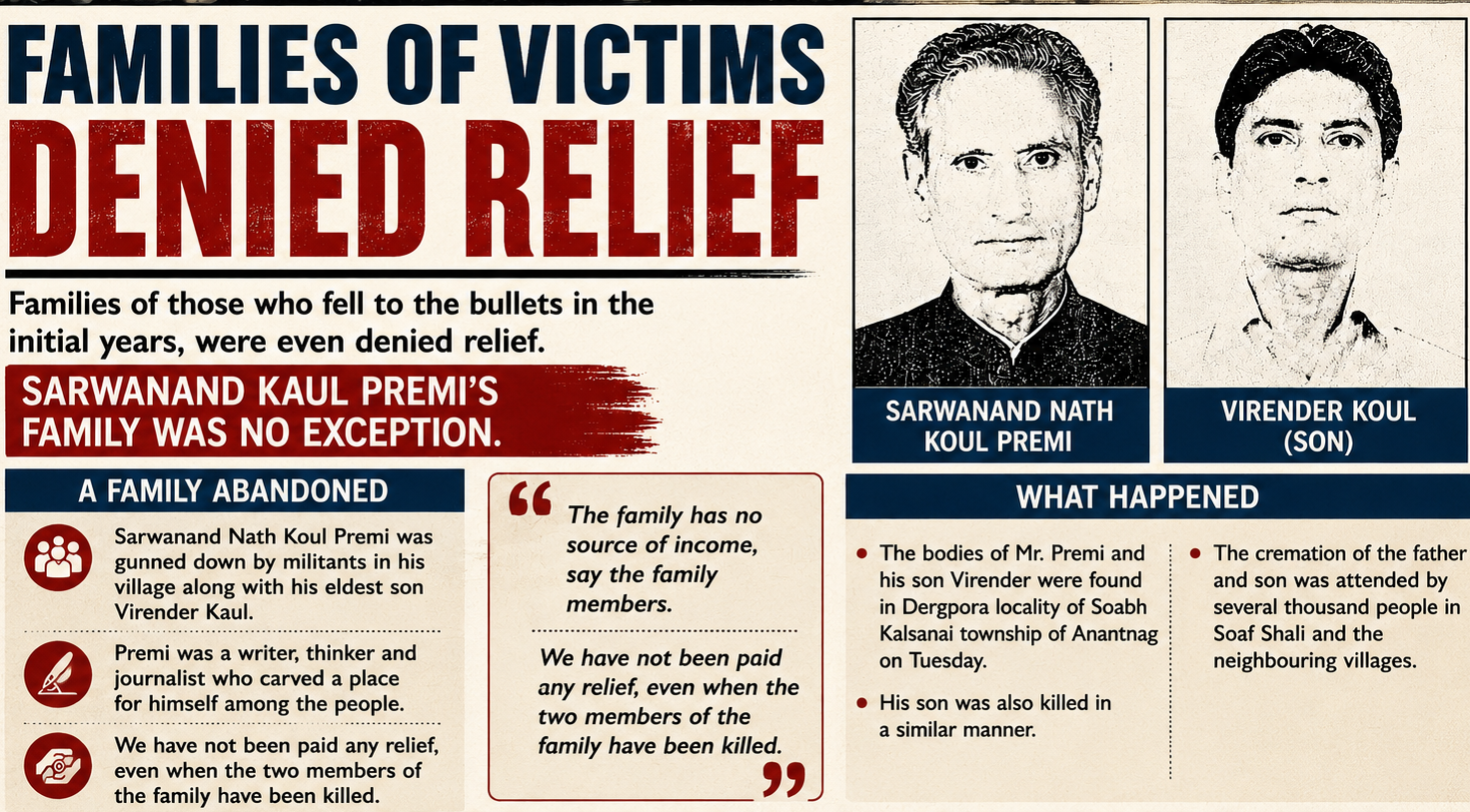
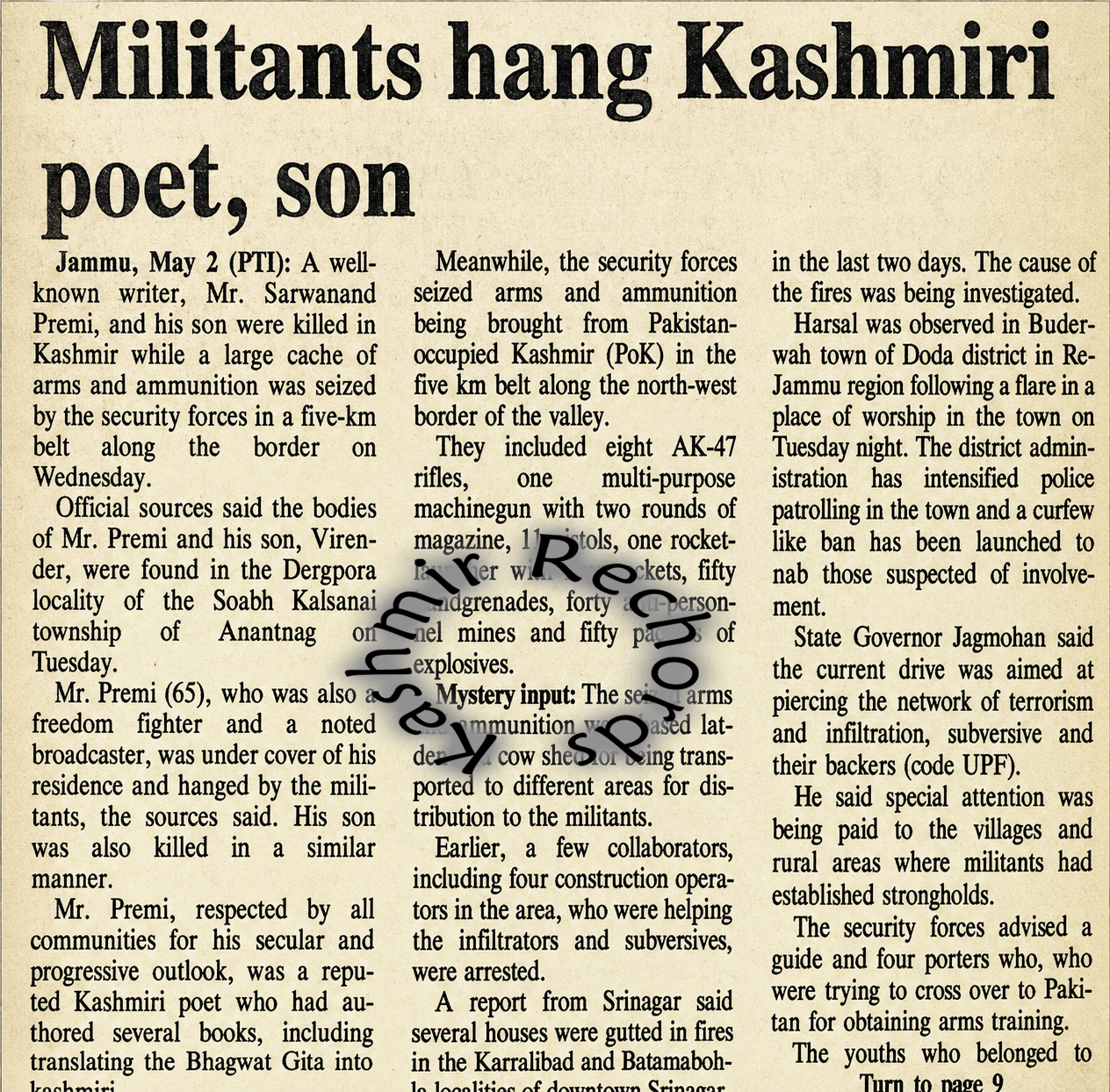
The story of Sarwanand Kaul Premi is often told as one of the most tragic chapters in Kashmir’s modern history. A celebrated poet, Gandhian thinker, journalist, social reformer and one of the finest literary voices of Kashmir, Premi was abducted and brutally murdered by militants in April 1990 along with his young son Virender Kaul. His martyrdom has been remembered in books, seminars, literary tributes, documentaries and commemorative events. His name survives in the collective memory of Kashmir as a symbol of scholarship, humanity, and the syncretic spirit that once defined the Valley.
Yet, hidden behind the public remembrance of the man is a far less known story—the story of the family he had left behind.
It is a story not merely of bereavement, but of abandonment.
A Family Shattered Overnight
When militants took away Sarwanand Kaul Premi and his son Virender from their home in south Kashmir in April 1990, they did not merely kill two individuals. They shattered an entire family.
The elderly poet was gone. His young son, with his whole life ahead of him, was gone. Behind them remained grieving parents, widows, sisters, brothers, and children trying to comprehend an unimaginable loss.
For the family, the horror did not end with the recovery of the mutilated bodies. Like thousands of other Kashmiri Pandits, they soon found themselves uprooted from their ancestral homeland.
Within weeks, the surviving members of the family migrated to Jammu carrying little more than memories and grief.
From Reverence to Refugeehood
The irony was cruel. The man whose writings had enriched Kashmiri literature, whose translations had brought spiritual texts closer to ordinary people, and whose life had been devoted to social harmony, was now gone. His family, instead of finding solace and support, found themselves struggling for survival.
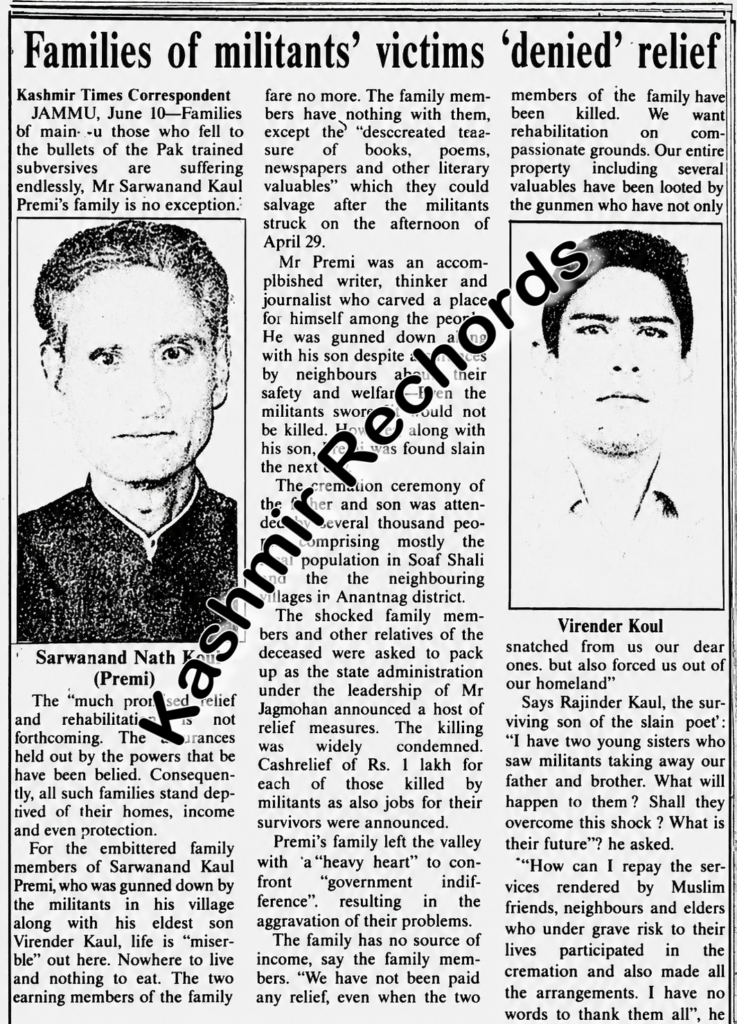
A revealing report published by Kashmir Times in June 1990, and preserved by Kashmir Rechords, noted that despite public announcements regarding relief and rehabilitation for victims of militancy, the assurances had not translated into meaningful assistance for Premi’s family. The surviving members of Premi had reached Jammu with what they described as a “heavy heart,” only to encounter official indifference.
Nowhere to Live, Nothing to Eat
The words attributed to the family in the report remain haunting even today. Having lost two members, the family spoke of having no source of income, no permanent shelter and no certainty about the future.
Their ancestral home had been left behind. Their books, manuscripts, newspapers, personal papers and literary valuables—an intellectual treasure accumulated over decades—remained in Kashmir.
More painful was the fear that these possessions had either been destroyed, looted, or lost forever. For a literary family, this was not merely a material loss. It was the destruction of a lifetime’s intellectual inheritance.
The family lamented that despite the death of two members at the hands of militants, they had received no meaningful relief.
The Surviving Son’s Agony
Particularly moving were the words of Rajinder Kaul, Premi’s surviving son. Still reeling from the murder of his father and brother, he worried not about himself but about the future of his sisters. The emotional burden placed upon him was immense. Overnight, he had become the sole support of a traumatized family.
His grief was compounded by uncertainty.How was he to provide for the family? How was he to rebuild lives shattered by violence?
How was he to help his sisters overcome the trauma of losing a father and a brother in such horrific circumstances? These were questions for which there were no easy answers.
Contrast Between Public Mourning, Private Suffering
One striking detail in contemporary accounts is that the cremation of Sarwanand Kaul Premi and Virender was attended by thousands of people, many of them local Muslims from surrounding areas. The attendance reflected the respect Premi commanded across communities.
People came to mourn.People came to pay tribute.People came to acknowledge the loss.Yet once the funeral flames died down and the family crossed the Jawahar Tunnel into exile, the public spotlight faded.The family’s daily struggle for survival became largely invisible.
This contrast between collective mourning and institutional neglect remains one of the most poignant aspects of the story.
Recognition for the Martyr, Silence About the Family
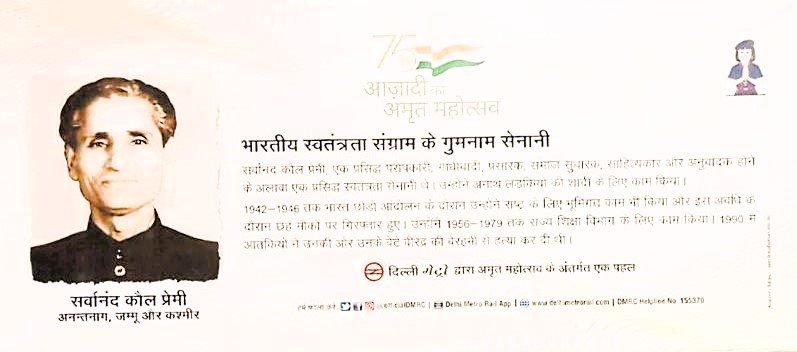
Over the decades, Sarwanand Kaul Premi has rightly been remembered for his literary and moral stature.
Articles have been written about him.Seminars have recalled his contribution.His life and death have been cited as symbols of Kashmir’s lost pluralism.His name finds mention whenever discussions arise about intellectuals and cultural figures killed during the turbulent years of militancy.All of this recognition is deserved.
But far fewer people know what happened to the family after June 1990. Far fewer know of the hardships they faced as displaced persons in Jammu. Far fewer know that while Kashmir mourned a poet, his surviving family was struggling to secure the basics of life.
The tragedy of Premi is therefore not only the tragedy of a great son of the soil who was murdered for no crime other than his identity and convictions. It is also the tragedy of a family that, after losing its patriarch and a young son, found itself fighting another battle—against displacement, uncertainty, and neglect.