
(Kashmir Rechords Exclusive)
Long before social media campaigns, tourism conclaves and heritage tours, Kashmir was already being marketed as a destination of longing, beauty and belonging.
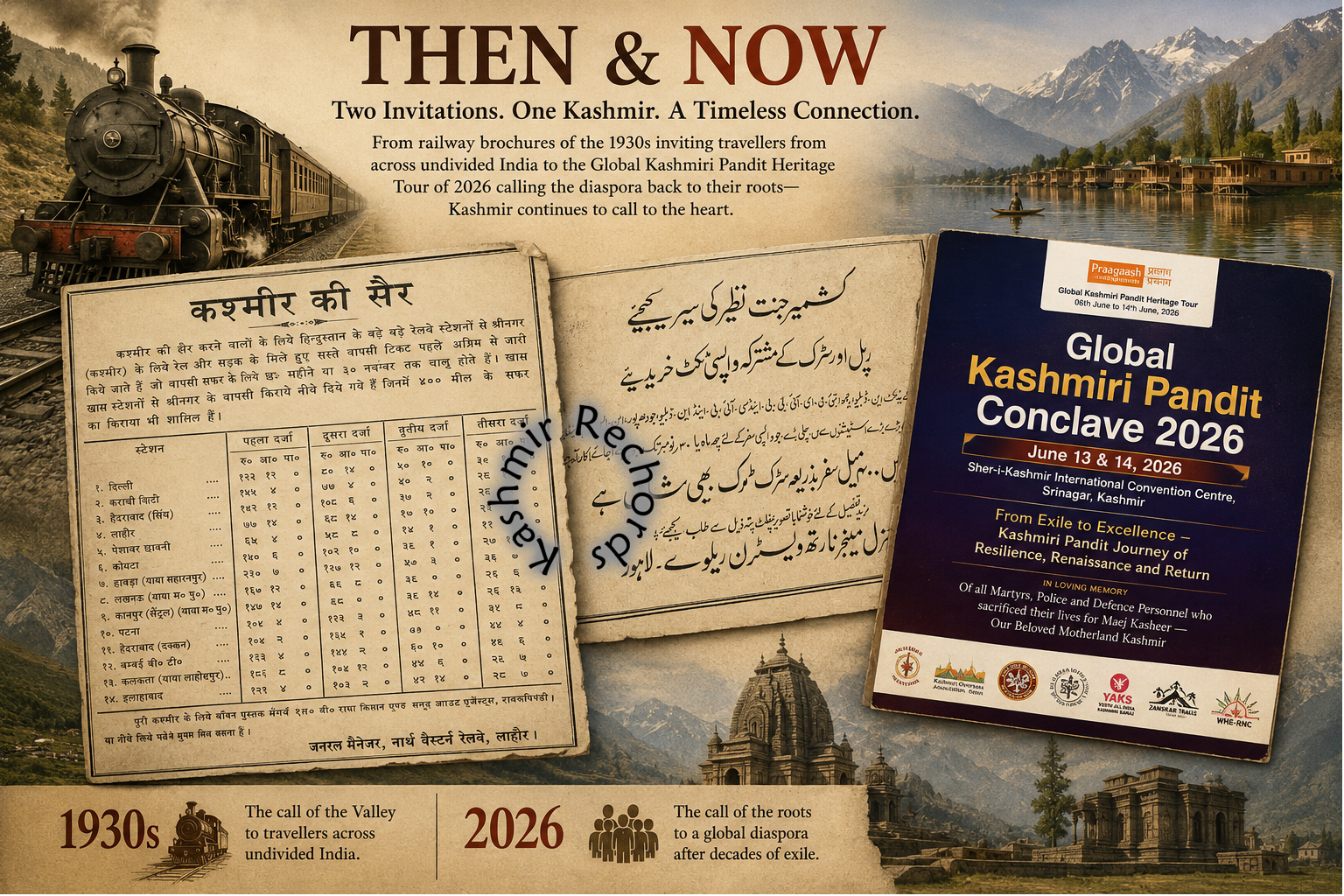
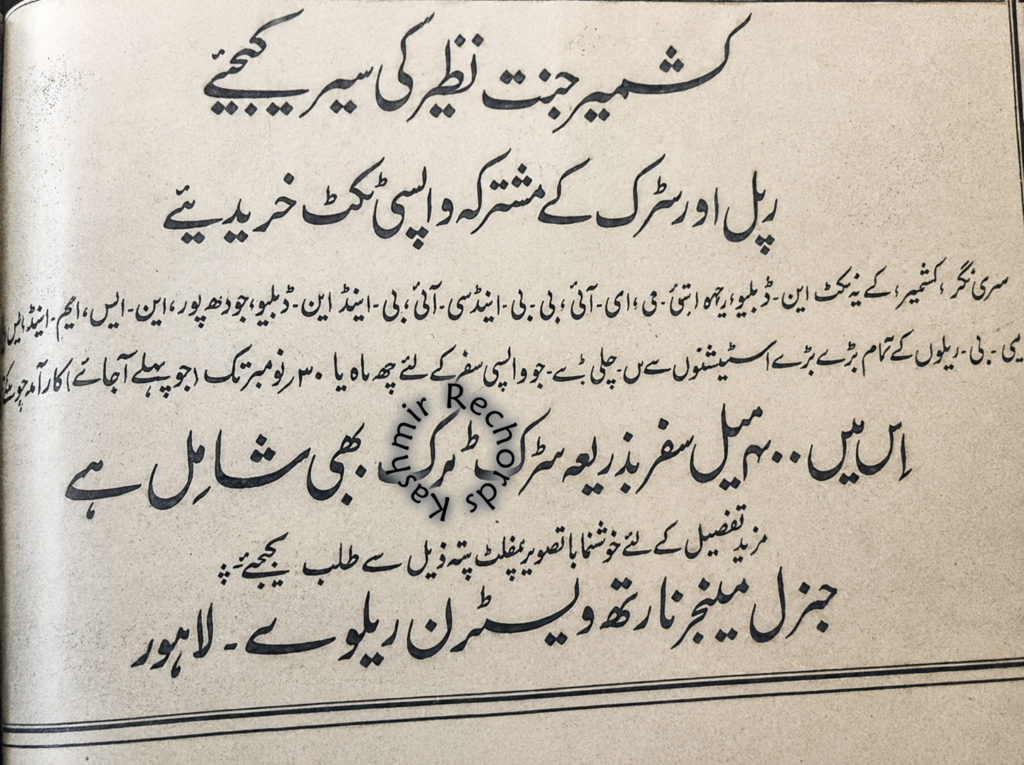
Archival material available with Kashmir Rechords from the mid-1930s reveals how the then North Western Railway launched a special campaign to attract travellers from across undivided India to the Valley. A Hindi pamphlet titled “Kashmir Ki Sair” and an accompanying Urdu advertisement urged people living in cities as far apart as Delhi, Karachi, Lahore, Peshawar, Lucknow, Kanpur, Hyderabad (Sindh), Patna, Calcutta to purchase railway tickets and embark on a summer pilgrimage to Kashmir.
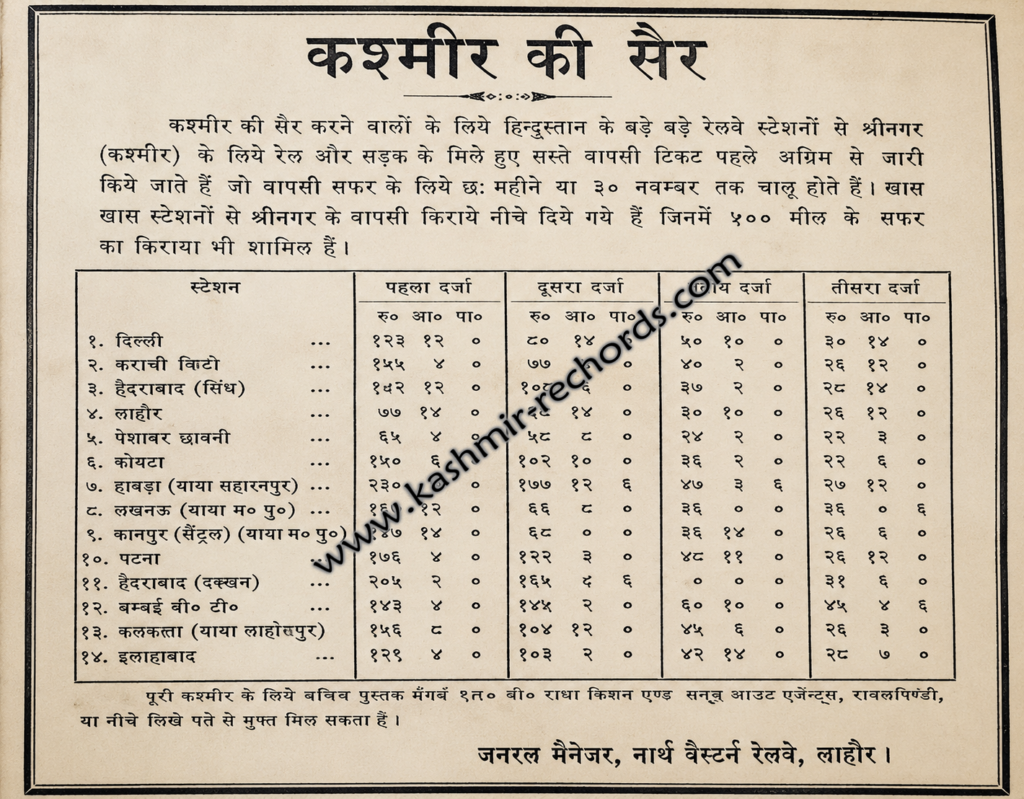
The railway brochure listed concessional fares from major cities and presented Kashmir not merely as a tourist destination but as a dream journey. The message was simple: leave the heat of the plains and discover the cool valleys, lakes and mountains of Kashmir.
One of the advertisements carried a striking appeal:
“Come, spend a month in Kashmir. It is the finest hill station.”
For thousands living across British India, many of whom had never seen the Valley, Kashmir represented a place of romance, spirituality and natural splendour. The Railways were not merely selling tickets; they were selling an emotional connection.
Ninety Years Later, Another Journey Begins
Nearly nine decades later, another appeal is being made.
This time, however, the audience is very different.
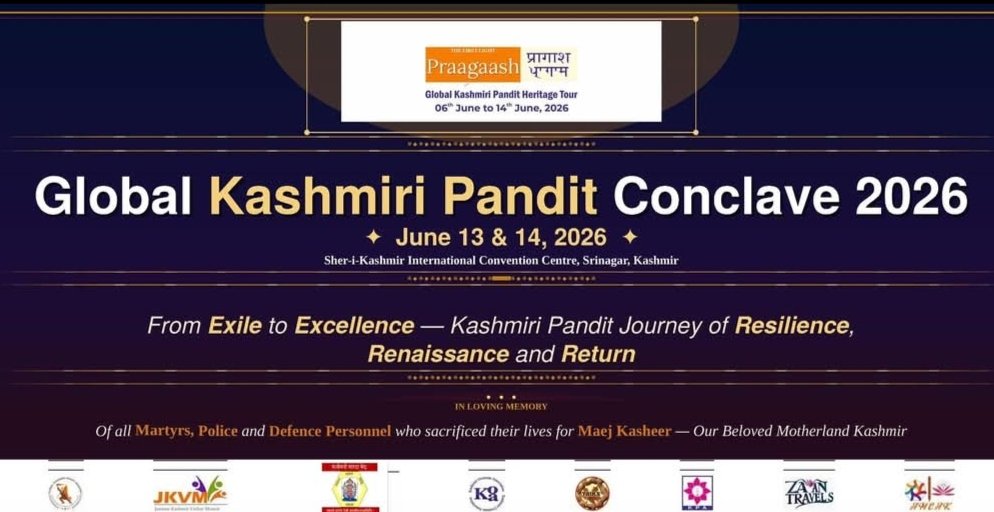
The Global Kashmiri Pandit Heritage Tour and Conclave 2026 seeks to bring members of the Kashmiri Pandit diaspora back to their ancestral homeland after almost 36 years of displacement following the mass migration of 1990.
The initiative, organised by the Global Kashmiri Pandit Diaspora and allied organisations, has invited Kashmiri Pandits from across India and the world to visit temples, heritage sites and ancestral locations in Kashmir. The stated objective is to reconnect younger generations with their roots, history, culture and civilizational heritage.
The symbolism is difficult to miss.
In 1935, Railway authorities encouraged Indians to visit Kashmir because they had never experienced it.
In 2026, diaspora organisations are encouraging Kashmiri Pandits to visit Kashmir because an entire generation has grown up away from it.
The destination remains the same. The emotions, however, are profoundly different.
From Tourism to Homecoming
The Railway advertisements of the 1930s appealed to curiosity.
The heritage tour of 2026 appeals to Memory, Renaissance and Return.
For many participants, this is not merely another tourist excursion. It is a return to villages they have never seen, temples they have only heard about from grandparents and landscapes that survive more vividly in family stories than in personal memory.
The campaign reflects a desire to bridge the widening gap between a displaced community and its homeland.
Just as Railway posters once connected distant Indian cities with Kashmir through tracks and timetables, the heritage tour seeks to reconnect a scattered diaspora with Kashmir through culture, faith and shared history.
The Debate Within the Community
Yet the initiative has also sparked debate among Kashmiri Pandits themselves.
Social media discussions reveal a mixed response.
Many have welcomed the effort as a positive step toward cultural revival and reconnection with ancestral roots. They argue that a community cannot preserve its identity if younger generations lose touch with the land that shaped its history.
Others, however, remain deeply sceptical.
Several Kashmiri Pandit organisations, activists and community leaders have publicly questioned the timing and purpose of such visits. Their argument is rooted in the unresolved realities of displacement and security.
For them, heritage tours cannot substitute for what they regard as the larger issue of dignified rehabilitation and a secure environment for permanent return.
Some critics have reiterated a familiar sentiment: “Tourism and terrorism cannot go together.”
They contend that until anti-social and extremist elements responsible for decades of fear are decisively neutralised, symbolic visits and conclaves may amount to little more than emotional exercises. According to this view, occasional tours cannot be mistaken for genuine return.
Supporters of the initiative counter that reconnecting with one’s roots and pursuing justice are not mutually exclusive goals. They see heritage visits as a way of preserving identity while larger political and security questions continue to be debated.
A Tale of Two Eras
The archival advertisements from 1935 and the heritage tour of 2026 together tell a remarkable story.
Both seek to bring people to Kashmir. Both rely on the power of memory, aspiration and belonging. Yet they emerge from entirely different historical realities.
The first invited outsiders to discover paradise. The second invites exiles to rediscover home.
Between those two journeys lies almost a century of history—partition, wars, insurgency, migration and displacement.
As Kashmiri Pandits once again travel towards the Valley, the old Railway advertisements acquire an unexpected new meaning. What was once a leisure trip promoted by Railway officials has, for many, become a deeply personal voyage into memory, identity and loss.
And therein lies the enduring power of Kashmir: a land that has always attracted visitors, but whose greatest challenge today may be helping its own displaced children find their way back.
Readers’ Forum
What do you think? Should more such visits to Kashmir be encouraged to help reconnect displaced Kashmiri Pandits with their roots, or are they an exercise in futility until conditions for a meaningful return are created? We invite readers to share their views at kashmirrechords@gmail.com or support@kashmiri-rechords.com. You may also post your comments in the Comnments Section at the end of this article.