
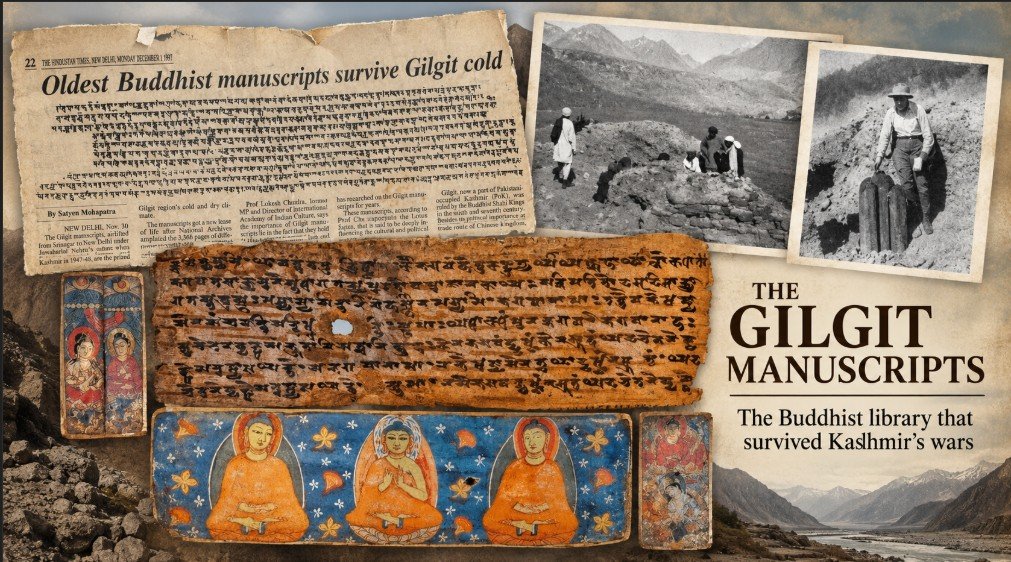
Kashmir Rechords Exclusive
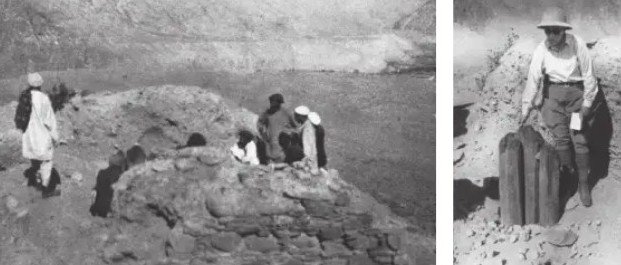
In the summer of 1931, two cattle-grazers near Naupur village, a few kilometres from Gilgit, stumbled upon something that had remained hidden for more than a millennium.
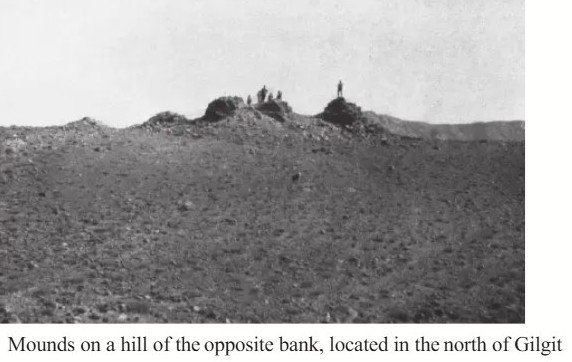
A piece of wood was protruding from the earth. They began digging. Beneath the mound lay an ancient structure, and inside it, a collection of manuscripts written largely on the fragile bark of the birch tree.
What appeared to be an accidental find was, in fact, one of the most important archaeological discoveries of the 20th century.
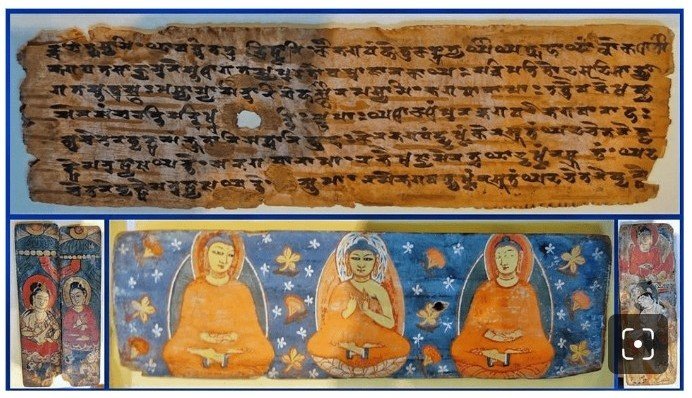
The manuscripts would eventually become known as the Gilgit Manuscripts—a corpus of Buddhist texts dating principally from the 5th to 7th centuries CE, and regarded by UNESCO as the oldest surviving manuscripts available in India.
But the story of these manuscripts is not merely a story about Buddhism or ancient literature. It is also a story about Kashmir’s intellectual past, the cultural world of the upper Indus, the upheavals of 1947, and the extraordinary journey of a priceless heritage from Gilgit to Srinagar and eventually to Delhi.
A library hidden beneath the Karakoram
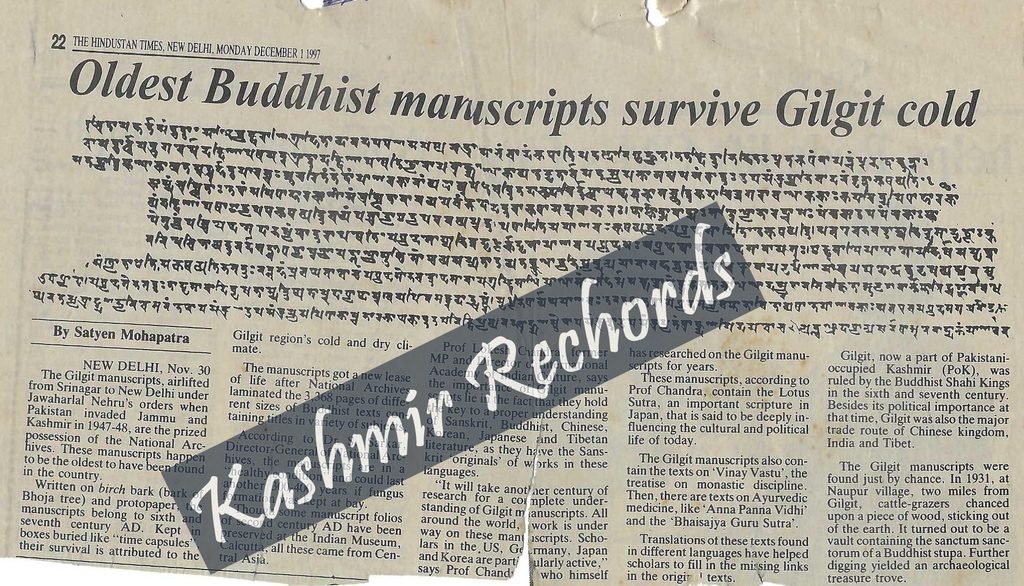
The 1997 Hindustan Times clipping preserved in the Kashmir Rechords archive provides a remarkable snapshot of how the manuscripts were understood nearly three decades ago.
Its headline read: “Oldest Buddhist manuscripts survive Gilgit cold.”
The Gilgit Manuscripts were airlifted from Srinagar to New Delhi on Jawaharlal Nehru’s orders when Pakistan invaded Jammu & Kashmir in 1947
The report noted that the manuscripts had been airlifted from Srinagar to New Delhi during the 1947–48 conflict after Pakistan’s invasion of Jammu and Kashmir.
It described them as a prized possession of the National Archives of India.
The newspaper estimated the surviving corpus then preserved in Delhi at 3,368 pages of different sizes, containing Buddhist texts on a remarkable range of subjects.
The cold and dry climate of Gilgit, the report observed, had helped preserve the fragile birch-bark leaves for centuries.
Modern scholarship has filled in many more details of this extraordinary story.
The original discovery occurred in 1931 at Naupur, near Gilgit. Archaeological evidence and later research suggest that the structure was associated with a Buddhist establishment, although its precise nature remains debated.
Some scholars have interpreted it as monastic quarters, a Buddhist library or scriptorium, rather than simply a stupa.
What is certain is the extraordinary nature of what was found.
According to UNESCO, the manuscripts were written predominantly on birch bark, using forms of Brahmi script and Buddhist Sanskrit. They contained religious texts, monastic regulations, philosophical material, narratives, medicine and other subjects.
In other words, what had survived was not merely a religious book.It was the remains of an ancient intellectual archive.
Aurel Stein and his announcement
The discovery might have remained a local curiosity had the famous archaeologist and explorer Aurel Stein not reached Gilgit soon afterwards.
Stein examined the manuscripts and recognised their importance. He subsequently announced the discovery in The Statesman on 24 July 1931.
His description recorded that local boys watching flocks had cleared the timber protruding from a mound and exposed a chamber containing Buddhist objects and manuscripts.
Some leaves that remained with villagers eventually made their way into European collections. The British Library today holds, among other fragments, portions of manuscripts containing the Sangharakṣitāvadāna, monastic regulations of the Mūlasarvāstivāda school and portions of the Lotus Sutra.
Thus, almost from the moment of their discovery, the manuscripts began a journey that would scatter parts of this ancient library across several countries and institutions.
The second discovery
The story did not end with the accidental excavation of 1931. In 1938, archaeologist Pandit Madhusudan Kaul Shastri undertook a more systematic excavation at the Naupur site. Further manuscripts were recovered. UNESCO records the Gilgit corpus as having been discovered in three stages: the major discovery in 1931, a second lot in 1938, and a further group associated with the Italian scholar Giuseppe Tucci in 1956.
The history of the manuscripts’ dispersal is complicated. Fragments eventually found their way to Delhi, Srinagar, London, Paris and Karachi, while smaller portions entered other collections. Some leaves had already disappeared into private hands immediately after the first discovery. That dispersal is one of the less celebrated chapters of the Gilgit story.
From Gilgit to Srinagar—and then Delhi
The manuscripts originally came under the control of the Government of Jammu and Kashmir and were transferred to Srinagar.
Then came 1947.The political map of the region was violently transformed. Gilgit became part of the territory occupied by Pakistan.
The Hindustan Times report of 1997 states that the manuscripts were airlifted from Srinagar to New Delhi under Jawaharlal Nehru’s orders when Pakistan invaded Jammu and Kashmir.
Modern scholarship confirms the broader historical fact that, amid the 1947–48 conflict, the remaining manuscripts were transferred to the National Archives of India in Delhi for protection.
That decision proved enormously consequential. Had the manuscripts remained in a war zone, their survival might have been far less certain.
Instead, a substantial portion of the ancient Gilgit library survived in Delhi.
Today, the National Archives of India holds the major portion of the corpus. UNESCO’s Memory of the World documentation records the National Archives of India and the Sri Pratap Singh Museum as the principal custodial institutions.
What exactly do the manuscripts contain?
This is where the Gilgit discovery becomes much larger than a story about Buddhist archaeology.
The manuscripts preserve texts associated with different strands of Buddhist thought. There are also texts relating to medicine, narratives and other aspects of life and knowledge.
UNESCO describes the corpus as throwing light not only on Buddhist thought but also on the development of Sanskrit and the intellectual traditions of a large part of Asia.
That is why the 1997 Hindustan Times report quoted scholar Lokesh Chandra describing the manuscripts as a key to understanding the relationship between Sanskrit and the Buddhist literature of China, Korea, Japan and Tibet.
The Gilgit manuscripts thus help scholars reconstruct lost stages in the transmission of Buddhist literature across Asia.
The manuscripts also challenge the modern tendency to imagine the upper Indus merely as a remote mountain frontier. In late antiquity, Gilgit occupied a strategic position between the Indian subcontinent, Central Asia and Tibet.
The region was connected to networks of trade, pilgrimage, scholarship and political power.
The rulers generally associated with the period of the manuscripts are the Palola or Palola Śāhis, a dynasty that flourished in Gilgit from roughly the late sixth to early eighth centuries and patronised Buddhist literary and artistic culture.
The manuscript that survived because of Kashmir’s climate
There is something almost poetic about the physical survival of the manuscripts.
Written on birch bark, they should have been extraordinarily vulnerable. Instead, many survived for well over a thousand years.
The dry and cold environment of Gilgit helped preserve them. Some were apparently stored inside wooden boxes within the ancient structure, effectively creating a natural time capsule.
The National Archives’ preservation work later became another chapter in their survival. The 1997 Hindus Times report says thousands of pages had undergone lamination and other conservation measures.
From a forgotten mound to UNESCO’s Memory of the World
For decades, scholars worked to decipher, edit, compare and publish the manuscripts.
Their importance was eventually recognised at the highest international level.
In 2017, UNESCO inscribed the Gilgit Manuscript collection on its Memory of the World Register.
UNESCO describes them as the oldest surviving manuscripts available in India and dates the principal corpus palaeographically to the 5th–6th centuries CE.
The Government of India’s Ministry of Culture similarly describes them as the oldest surviving Buddhist texts in the country, written on birch bark in Gupta and post-Gupta Brahmi scripts.
A discovery made by cattle-grazers in a remote corner of the Karakoram thus became part of the documented memory of humanity.
The history hidden inside the manuscripts
The Gilgit Manuscripts deserve to be remembered not simply because they are old.
They matter because they tell us what Kashmir and the regions around it once were.
They reveal a world in which Buddhist scholars wrote in Sanskrit, monks maintained libraries, medicine and philosophy were studied alongside religious texts, and ideas travelled through the mountains towards Tibet and Central Asia.
They remind us that the history of Kashmir cannot be reduced to the politics of the modern era.
And their journey after 1931 tells another story: how ancient heritage can become vulnerable when political borders change and wars redraw maps.