
(BY: Dr. Rajesh Bhat*)
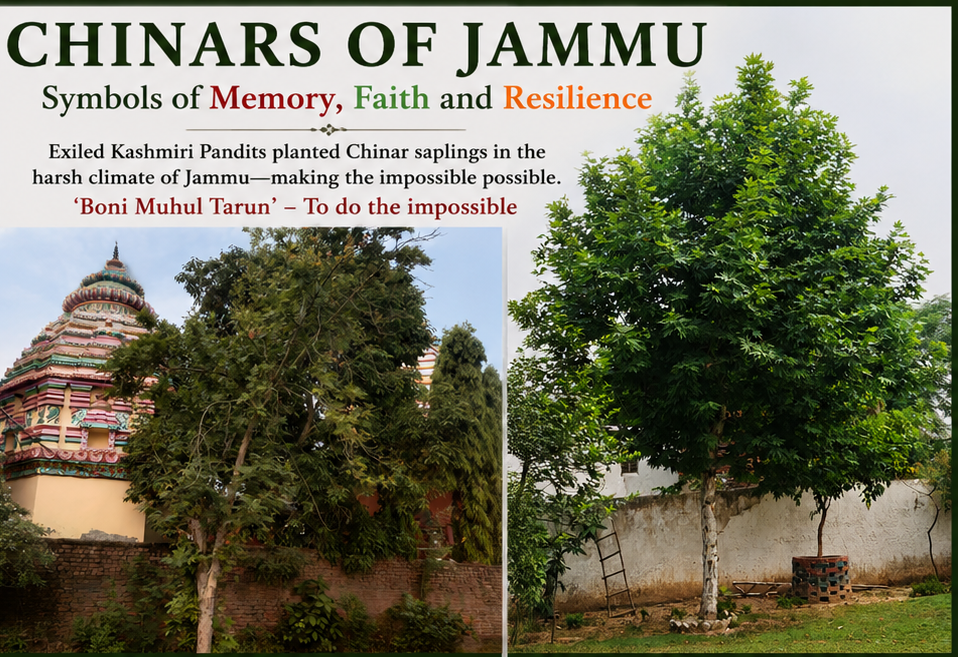
There is an old Kashmiri expression: “Boni Muhul Tarun” — literally, “to pierce a Chinar tree with a pestle.” In common usage, it refers to attempting the impossible, to undertaking a task so difficult that it defies logic itself.
History, however, has strange ways of turning metaphors into reality.
For the exiled Kashmiri Pandit community living in Jammu after the migration of the 1990s, the impossible became deeply personal. Torn away from their homeland, temples, rivers and memories, many among them carried with them not just pain and nostalgia, but also saplings of the mighty Chinar — the tree that for centuries has symbolised Kashmir’s soul.
And then they did what nature itself seemed unwilling to permit.
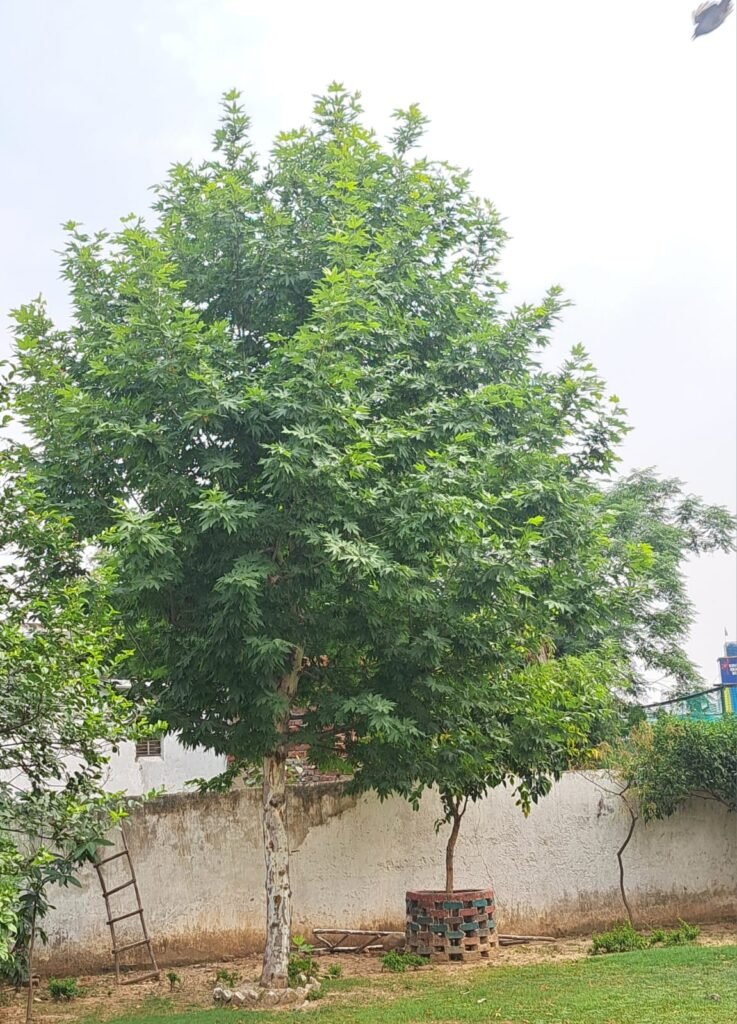
They planted Chinars in Jammu.
Not in the cool breeze of Srinagar, nor in the moist landscapes of the Valley where the Chinar rises effortlessly in regal splendour, but in the unforgiving heat of Jammu — amid rocks, boulders, dusty winds and temperatures hostile to the very survival of the tree.
Yet the Chinars survived.
Trees of Memory in Exile
In areas like Bantalab and Anand Nagar Jammu, where displaced Kashmiri Pandits recreated replicas of their ancient shrines and deities, they also planted Chinar saplings brought from Kashmir.
The act was far more than horticulture.It was memory taking root.It was exile refusing to surrender.
In the compounds of temples and community centres, the Chinar became an emotional bridge between the lost homeland and the harsh realities of displacement. Every surviving leaf carried echoes of Kashmir.
Ironically, these fragile Chinars of Jammu began growing at a time when even the mighty Chinars of Kashmir were increasingly facing threats from urbanisation, land encroachment and neglect.
The House Called “3 Chinars”
Among those who nurtured this emotional inheritance is Ravinder Kaul, internationally acclaimed theatre and art critic with deep Kashmiri roots.
Years ago, Kaul brought four Chinar saplings from Kashmir and planted them in his Greater Jammu residence. Only three survived. But survival itself was victory.About the fourth one—perhaps that the Jammu heat was simply too much for it.
The surviving trees now stand tall inside his compound, and Kaul named his residence “3 Chinar” after them.

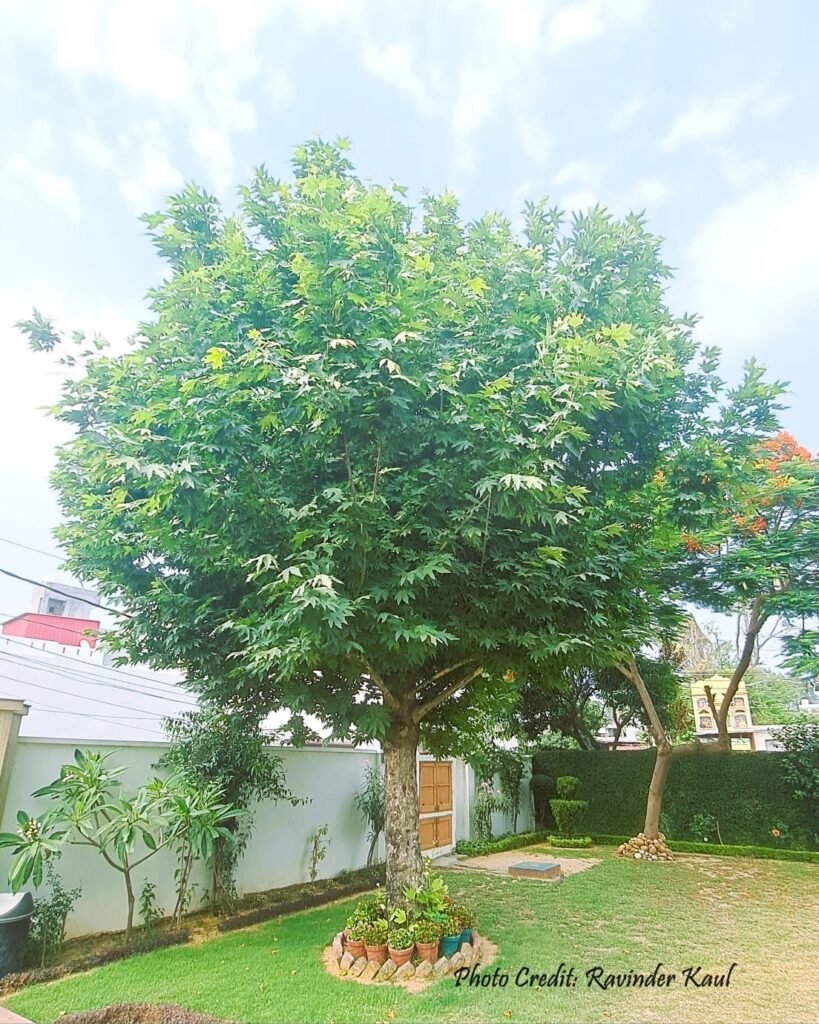
Recalling his lifelong association with the tree, Kaul told Kashmir Rechords:
“The first Chinar trees that I saw in Jammu were on the banks of the Ranbir Canal in the late 1970s when I was studying at Jammu University’s old campus. I am not sure whether they survive today. Later, in 2010, when I bought land in Greater Jammu, I brought four saplings from Srinagar and planted them on the four corners of my lawn. Only three survived. I named my home ‘3 Chinars’.”
His story mirrors the larger story of displaced Kashmiri Pandits themselves — survival against hostile odds, though diminished from what once was.
Solitary Sentinels of a Lost Homeland
In the Shiv Temple complex of Bantalab, Jammu, bordering the famous replica shrine of Mata Sharda, stands a solitary Chinar tree planted after migration by displaced Kashmiri Pandits.
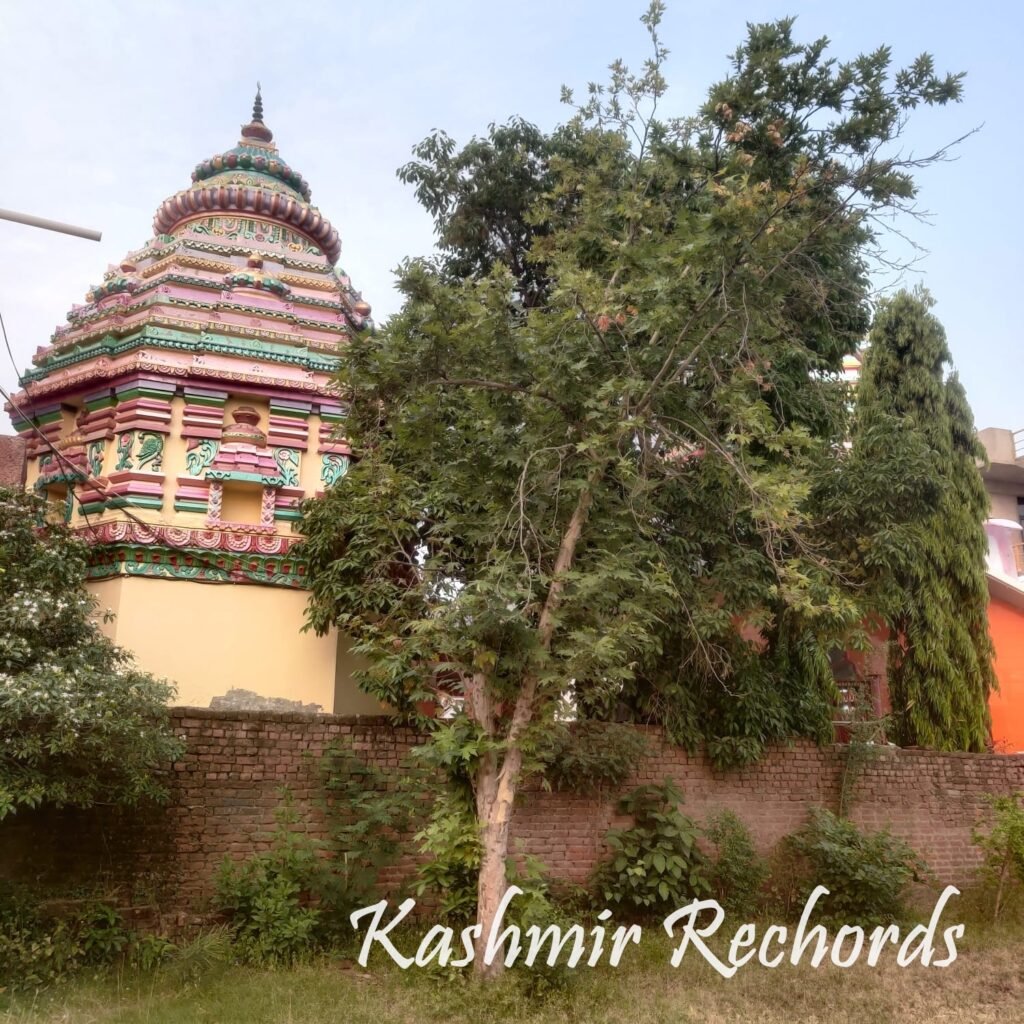
Another lonely Chinar survives in the compound of Sanjeevani Sharda Kendra in Anand Nagar Bohri, Jammu, carefully nurtured by members of the community.
These are not ordinary trees. They are living memorials.
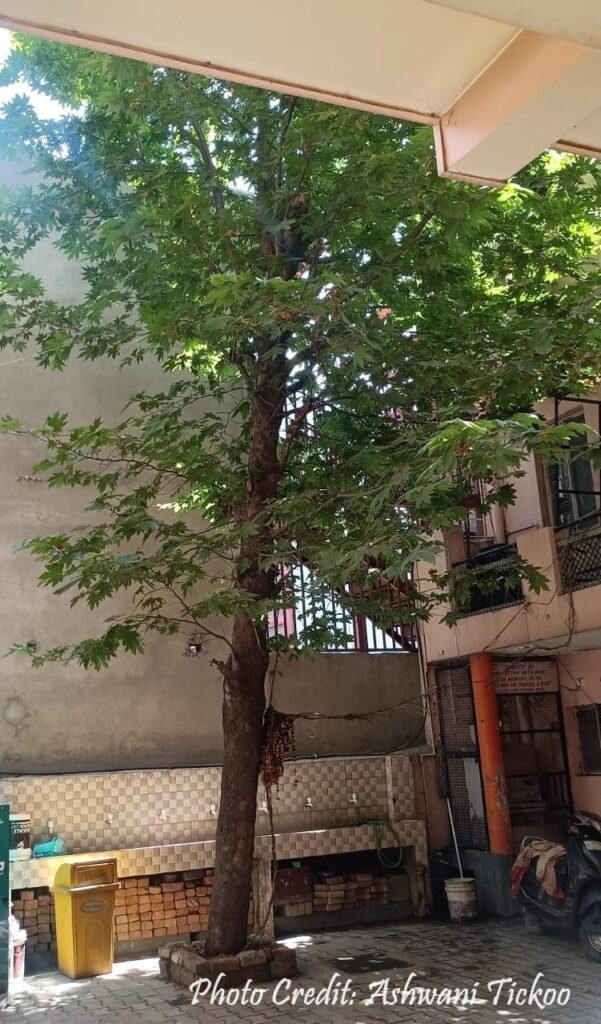
They carry within their bark the grief of exile and the stubborn refusal to forget Kashmir’s cultural and spiritual landscape.
Former Jammu and Kashmir Bank employee Ashwani Tickoo, now settled in Durga Nagar Jammu after migration from Wadwan in Budgam, Kashmir, recalls seeing Chinars at several places across Jammu region:
“If I remember correctly, I have seen Chinar trees alongside the Canal on Bhagwati Nagar road. I have also seen Chinars in Udhampur and on the roadside while travelling from Rajouri to Shahdara Sharief shrine’’
Even near Vijaypur, a local hotelier fascinated by the majesty of the Chinar planted four saplings near famous spot Thandi Khui. Three survived.
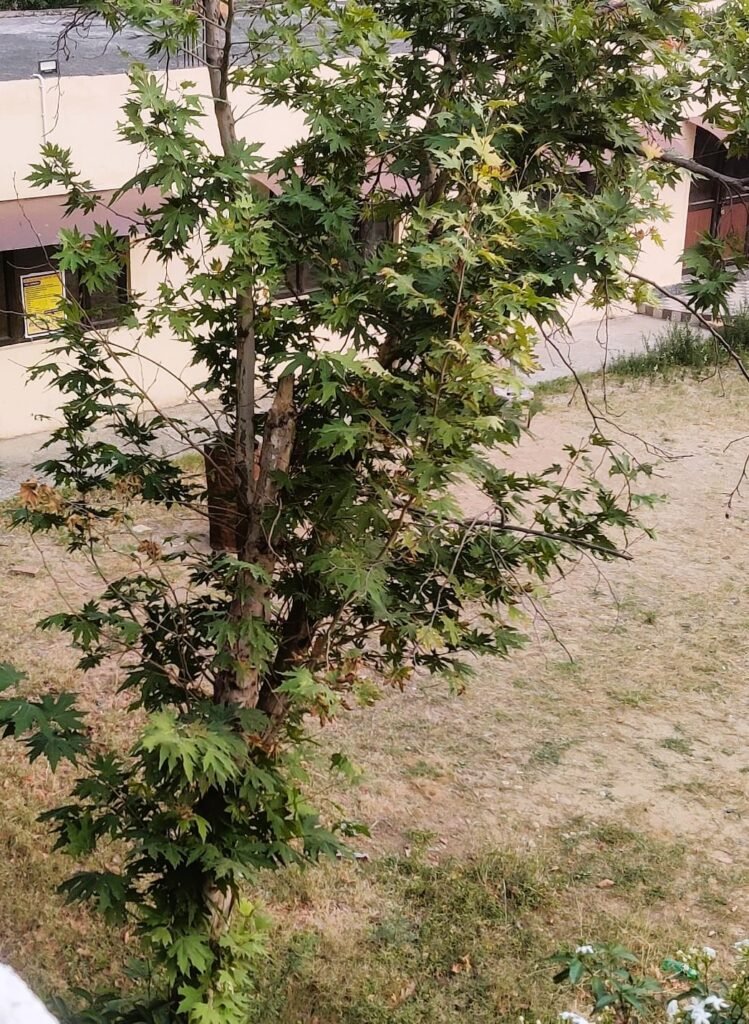
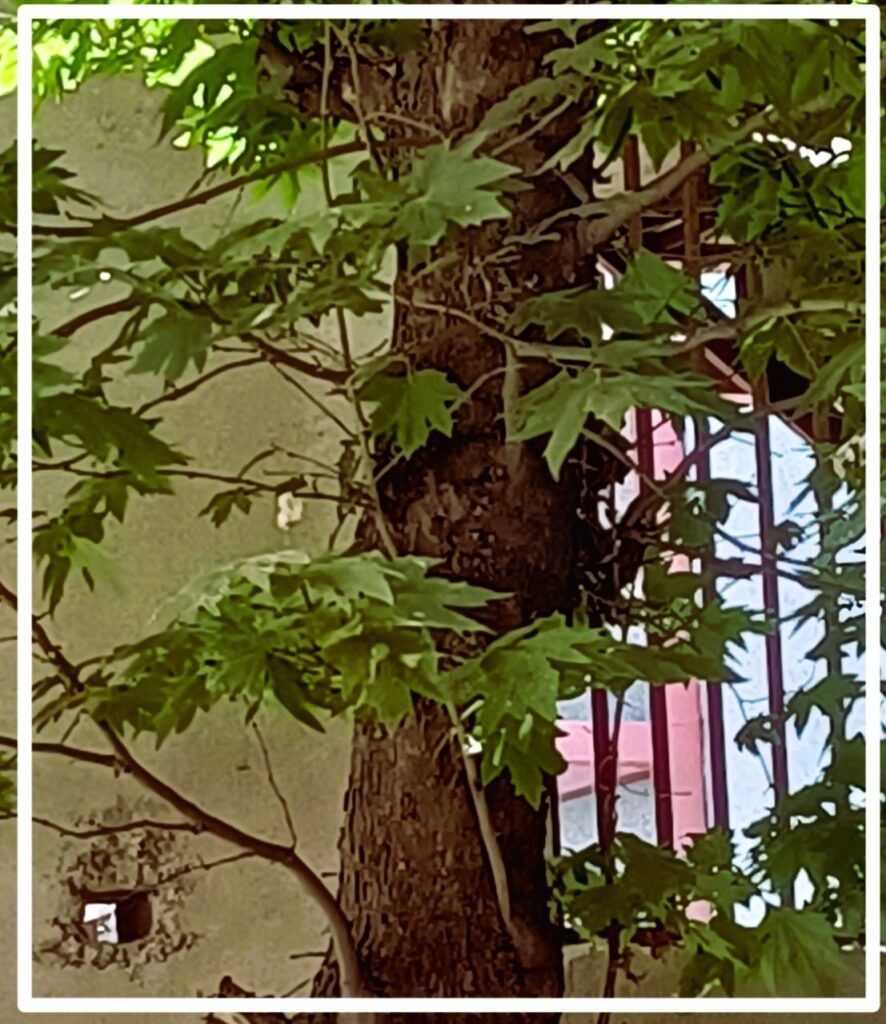
At University of Jammu too, students recall spotting a few Chinar trees inside the campus.
Like the Exiles Themselves
But the Chinars of Jammu tell another story too.
Unlike the towering Chinars of Kashmir, whose trunks appear immortal and whose canopies dominate landscapes, the Jammu Chinars remain comparatively fragile. Their roots struggle in alien soil. Their trunks are weaker. Their growth is uncertain.
And perhaps that is why they resemble the exiled community that planted them.
Like displaced Kashmiri Pandits, these Chinars survive — but not in the fullness and grandeur they once knew in their natural habitat.
They endure. They resist. They remain suspended between memory and survival. And perhaps that is the deepest meaning of “Boni Muhul Tarun.”
For in Jammu, the impossible was not merely attempted. It was made to live.
Readers’ Participation Invited
Kashmir Rechords invites readers from Jammu and elsewhere to share information, memories, locations and photographs of surviving Chinar trees in Jammu city, particularly those planted after the migration of Kashmiri Pandits.
The effort aims to document this little-known living heritage and turn it into a collective people’s archive of memory, exile and resilience. Contributors whose information and photographs are used in future updates of the story will be given due credit and acknowledgement.
*Dr Rajesh Bhat is a writer, broadcaster and media professional known for his deeply researched human-interest narratives on Kashmir’s history, culture, heritage and displaced communities. Through archival exploration, oral histories and ground-level documentation, he has consistently highlighted lesser-known facets of Kashmiri civilisational memory, particularly relating to Kashmiri Pandits, cultural institutions, forgotten personalities and endangered heritage. His writings often blend historical depth with emotional storytelling, bringing alive stories of exile, resilience and identity from Jammu and Kashmir.