Home Blog Page 2

When Snakes, Stones Fell with Snow: Kashmir’s 1912–1914 Mystery

(Kashmir Rechords Exclusive)

Ever heard of snakes or stones snowing from the sky?
No fairy tale, no folklore spun by firesides—this is a story buried deep in official archives, stamped, signed and preserved as part of Kashmir’s recent past.

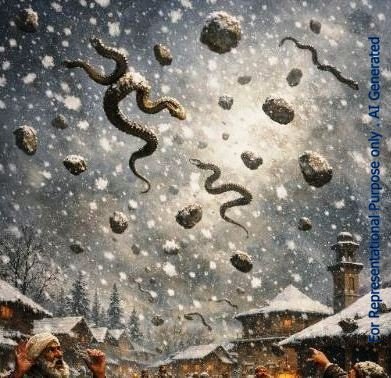
More than a century ago, during the reign of Maharaja Pratap Singh, Kashmir witnessed two extraordinary and deeply unsettling phenomena: stones and snakes reportedly descending from the heavens along with snowflakes. These incidents, recorded meticulously by the Princely State’s administration, shook both the Valley and its devout ruler to the core.

The Government of Jammu and Kashmir, through its Department of Archives, Archaeology and Museums, still holds rare and precious files documenting these events. Titled simply yet ominously—“Fall of Stones” and “Fall of Snakes from Heaven”—the records continue to fascinate researchers and the public alike.
Stones from the Sky, 1912

The first incident dates back to December 1912, when residents of Shopian in South Kashmir reported a chilling sight: stones falling from the sky amid snowfall. Alarmed villagers conveyed the incident to the royal court.

Maharaja Pratap Singh, known for his deep religiosity, was reportedly shaken. Viewing the event as an ominous sign of impending calamity, he immediately summoned the state’s official head priest, Pandit Jagdish Ji, to assess the situation and recommend remedial measures.
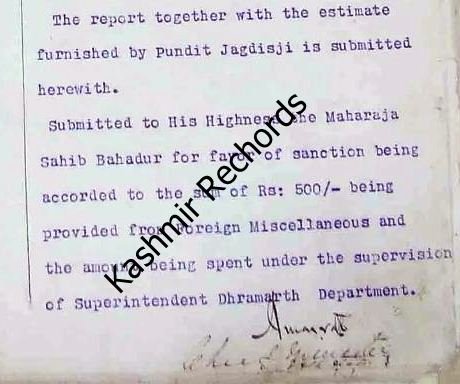
The priest advised a yagya to appease the gods—Surya (Sun), Indra, and Chandra (Moon)—along with acts of royal charity. The Maharaja was urged to donate gold, rice and even a white horse to ward off the ill omen.

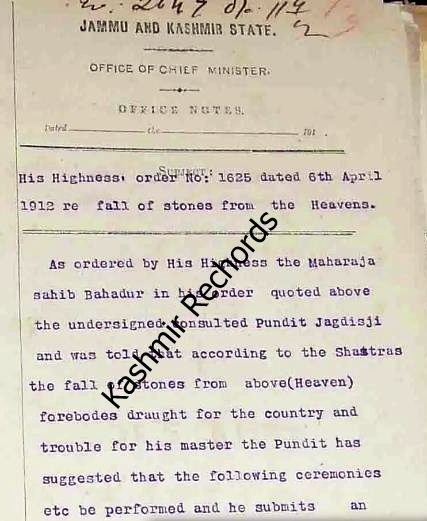
Acting swiftly, the ruler issued Order No. 1625, dated April 6, 1912, sanctioning Rs 500 from the state exchequer for conducting the rituals through the Dharamarth Trust, the department responsible for religious affairs.
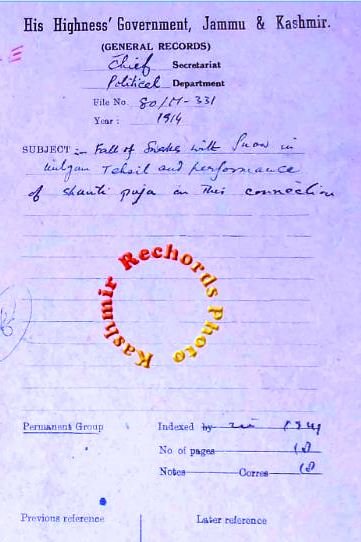
When Snakes Followed, 1914

Barely two years later, Kashmir was confronted with another unsettling episode.

In March 1914, residents of Kulgam tehsil reported that snakes had fallen along with snow—an occurrence even more terrifying than the earlier event. Once again, the Maharaja was alerted. Once again, Pandit Jagdish Ji was consulted.

This time, the priest foresaw a war-like situation looming in the near future. The recommendation was urgent: conduct a Shanti Paath to avert disaster. The ritual, detailed item by item in official notings of the Political Department of the General Chief Secretariat, cost the state Rs 338 and one anna.

History, uncannily, followed close on its heels.

World War I broke out later in 1914. Coincidence—or prophecy fulfilled? The archives leave the question open.

A Stone That Still Speaks
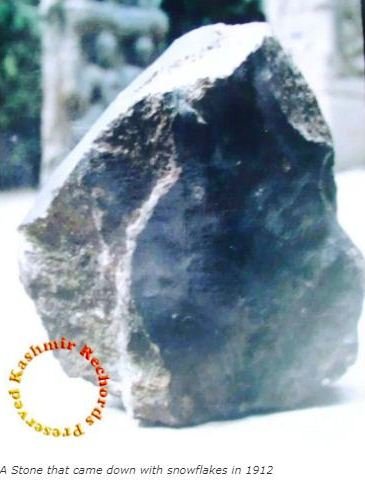
Adding a tangible layer to this eerie history, the Department of Archives is also in possession of one heavy stone believed to have fallen during the 1912 Shopian incident. Today, it rests quietly in the Shri Pratap Museum, Srinagar—a silent witness to a time when heaven itself seemed to send warnings.

Call them omens, coincidences, or curiosities of history—but these documented episodes remind us that Kashmir’s past holds stories stranger than fiction, preserved not in myth, but in official files and museum vaults.
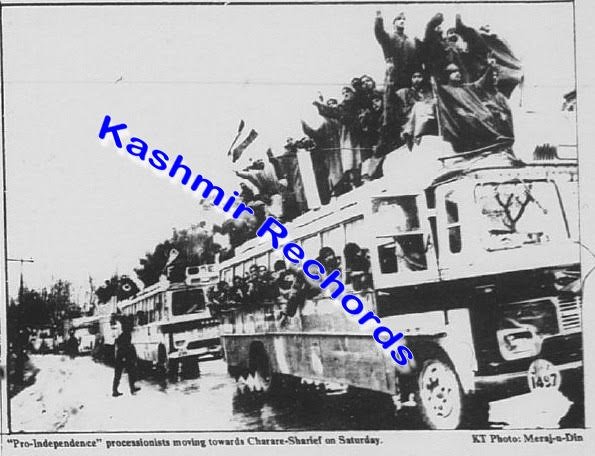
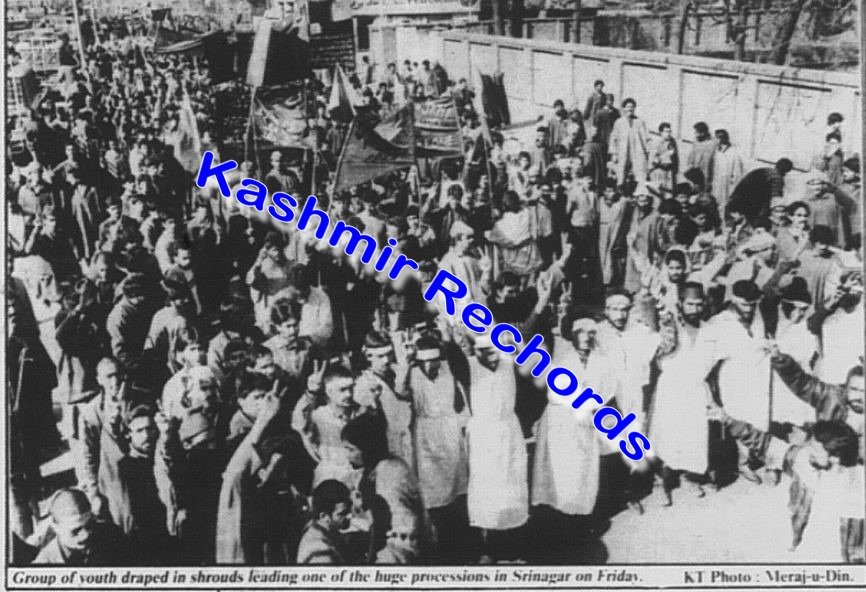
January 19, 1990: The Night Kashmir Forgot, the Day Kashmiri Pandits Remember

(Kashmir Rechords Exclusive)
This is not cinema.This is not propaganda.This is not imagination.This is history—frozen in photographs, printed in newsprint and buried in selective memory.

On the  Friday night of January 19, 1990, Kashmir crossed a line from which there was no easy return. What followed was not a spontaneous migration, not an administrative relocation and certainly not a myth scripted later. It was a forced civilisational rupture, witnessed, recorded and legitimised by the streets themselves.

As darkness fell over the Valley, thousands of local Kashmiri Muslims—men and women alike—poured into the streets. This was no silent protest. Slogans echoed through neighbourhoods, mosque loudspeakers blared incendiary calls and the night throbbed with a fevered euphoria. The anger was directed not merely against the Indian State—but squarely at minorities, especially Kashmiri Pandits and others who believed in the idea of India in Kashmir.
The message did not need translation.“Leave, convert or die.”

It travelled faster than fear, reaching homes where families huddled, listening, counting breaths and deciding—often within hours—that survival meant escape.

Photographs That Refuse to Lie

What makes this story from Kashmir Rechords different—what makes it irrefutable—are the photographs. They come without disclaimers. No “any resemblance is coincidental.”   The photographs are not recreated, not stylised and also not  AI generated.
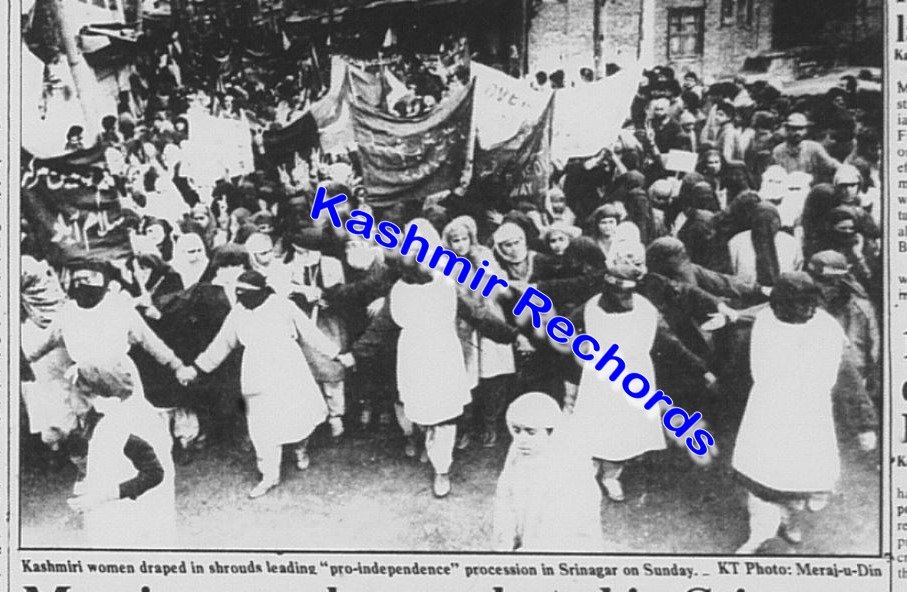
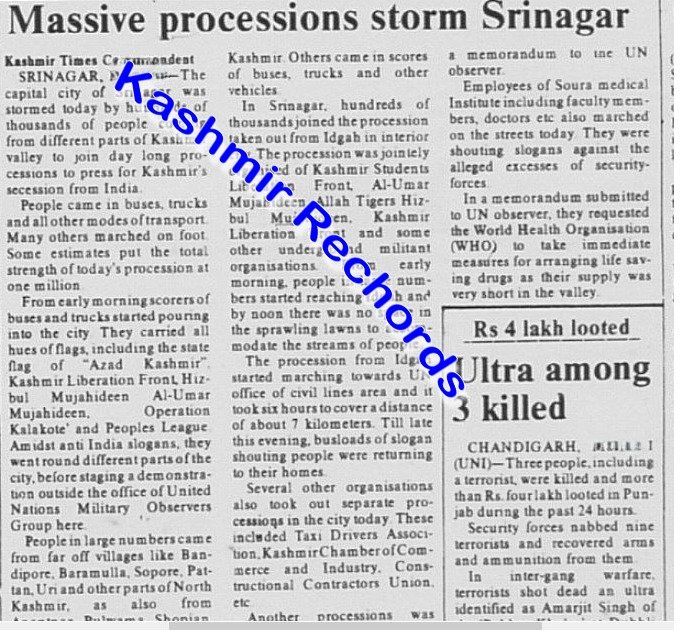
These are the   real images, clicked during the second and third weeks of January 1990, carried by the then  most widely read and trusted for building narratives by a Jammu-based English newspaper of that era—a paper  that had a full bureau at Srinagar and was adored by common Kashmiri, respected by the intelligentsia writing for it and consumed daily by the very society now struggling with collective amnesia.

The images show:

  • Crowds swelling with militant fervour
  • Streets overtaken by slogans of secession and jihad
  • Men and Women drapped  in shrouds, romanticising militancy, emboldening terror.
  • Shrouds paraded, guns glorified, violence normalised.

These photographs, preserved and now presented by Kashmir Rechords, do not editorialise. They do not accuse. They simply show.

And what they show is devastating.

The Myth of ‘Nothing Happened’

For decades, a convenient narrative has been repeated:

  • Kashmiri Pandits left voluntarily or on official instructions.
  • There was no mass intimidation.
  • Everything was exaggerated later.
  • Films and books manufactured the pain and  created hysteria.
  • Stories of 1990 are exaggerated. Write-ups manufactured victimhood.

These photographs dismantle that lie—frame by frame.

They are a mirror held up to a society that once cheered, once marched, once shouted—and later chose to forget. A mirror in which some may still recognise faces from the crowd. And perhaps, uncomfortably, see the origins of a tragedy their children were never told about.

A Celebration That Became a Curse

What was chased in those days was an illusion—something impossible. In that intoxication, Kashmir sacrificed its plural soul. The immediate casualty was the Kashmiri Pandit community, driven out overnight from homes their ancestors had lived in for centuries. The long-term casualty was Kashmir itself.

The violence that began with slogans did not end with migration. It shattered communal harmony, militarised society, destroyed generations, normalised death and fear and left a Valley searching for peace it once possessed.

Many Kashmiris today quietly admit a shame they cannot undo—ashamed of elders who mistook rage for revolution and guns for glory.

History, Documented—Not Debated

This is not a story told for the first time.
But this is the first time it is told with these pictures—uncensored, unpublished  and undeniable.

A photographer clicked them. A reporter captioned them. Both were beloved by the people of Kashmir at the time.

The Cost of Euphoria

Beyond documenting intimidation, the photographs and the bewsreport indict something deeper.

They capture a society intoxicated by momentary euphoria, unaware that it was laying the foundation for decades of bloodshed, militarisation and loss. The first victims were Kashmiri Pandits—but the eventual casualty was Kashmir’s own future.

Today, many in the Valley quietly admit an inherited shame:

Ashamed of elders who chose violence. Ashamed of crowds that mistook militancy for heroism. Ashamed of the silence that followed

A Mirror for the Past—and the Present

These images are not meant to inflame. They are meant to confront. They stand as a mirror to those who deny the exodus—To those who call it manufactured and to those who dismiss lived trauma as fiction.

Some may even recognise familiar faces in the crowd. Others may realise why their parents never told them the full story. The mirror does not lie. Neither do these images.

What happened on January 19, 1990, was not an accident of history. It was a moment of collective collapse—one that forced an entire community into exile and altered Kashmir forever.

This is not about blame alone.
It is about truth.

And truth, once seen, cannot be unseen.

==========

We request our readers to share this story with friends, families and acquaintances. Not for sensation, not for argument—but because truth deserves circulation.

For far too long, the real story of January 19, 1990 has been blurred, diluted, and dismissed. When facts are questioned, documentation becomes duty. And when history is denied, memory must speak.

The right to know the truth is fundamental. It belongs not only to those who suffered, but also to those who inherited a distorted version of events. This story, supported by real photographs and recorded history, exists so that silence does not triumph over fact.

Born on the Run: Children of January 1990

(Kashmir Rechords Exclusive)

Amit Bhat (name changed) was born on January 20, 1990—a date that arrived with a cry, but also with a crossing.

The day before, his parents, Sarla and Ashok (names changed), had fled their remote village in Kupwara. The night of January 19 had swallowed the Valley in fear. By dawn, there was no choice left—only movement. A family caravan formed in haste: Ashok’s ageing parents, a younger brother, a sister and Sarla, heavy with child. What they carried was little; what they left behind was everything.

The journey from Kupwara to Jammu stretched through dread. Sopore. Anantnag. Roads that felt longer than maps admit. A day-long passage through volatility, checkpoints, silence punctured by slogans, and the constant fear of being stopped—or worse. Sarla’s labour pains began on the move. There was no turning back.

They reached Jammu exhausted, stunned, unmoored. Chinore—a rented room in a locality they had never seen, in a region they had never known—became refuge by default. There was no hospital admission waiting, no familiar doctor, no neighbour to call. A local woman from a nearby village was found. She became the midwife. In an alien room, among strangers, Sarla delivered a child. They named him Amit.

He entered the world between exile and uncertainty—born not into a home, but into flight.

A Journey That Arrived Too Soon

Sunita (name changed) and Roshan Lal (name changed) from Budgam had married in 1988. By early 1990, they were expecting their first child—due in March, 1990. Plans had been made, names discussed, a room imagined back home.

Militancy tore through those plans.

Seven months pregnant, Sunita climbed into a truck with her family, carrying whatever could be grabbed in minutes. The Srinagar–Jammu highway became a test of endurance—harsh, serpentine, mountainous. Hours turned into pain. Pain turned into complications. The journey triggered a premature birth. A child arrived too early, shaped by the violence of displacement even before drawing breath.

Invisible Mothers, Uncounted Births

The stories of Sarla and Sunita are not exceptions. They are fragments of a larger, unwritten chapter.

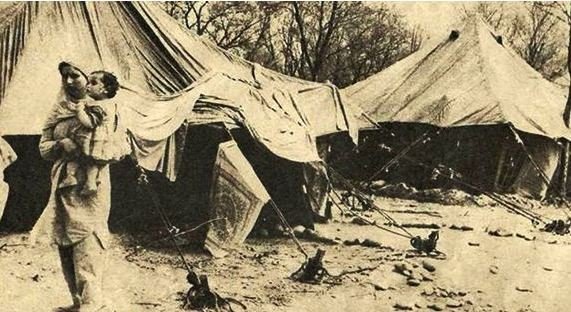
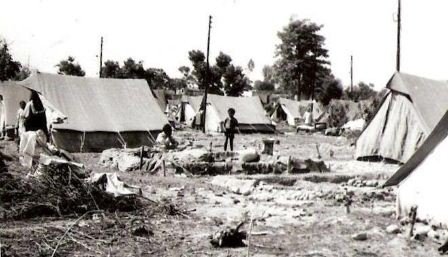
Scores of Kashmiri Pandit women—first-time mothers and otherwise—were pregnant when they fled. Some delivered in tents. Some in overcrowded camps. Some in one-room rented accommodations shared by joint families. Some on hospital ward floors already overwhelmed. Children were born in Jammu’s Mishriwalla, Jhiri Muthi Camps, Kathua nd Udhampur’s Batal-Balian and other makeshift shelters—places never meant to cradle new life.

There is no register of these births.
No column in any report records labour pains on highways, or deliveries without doctors, or mothers who crossed districts and destinies while carrying life inside them. No archive counts how many conceived in Kashmir and delivered in exile. No ledger remembers their trauma.

And yet, even conservative demographic estimates suggest that dozens—perhaps over a hundred—such births took place between January and August 1990 alone, in camps and cramped rooms across Jammu region.

What History Forgot to Write Down

These children are now in their thirties. They carry birth certificates stamped with places their parents had never imagined calling home. Their first address was exile. Their first inheritance was loss.

History remembers January 1990 for what it destroyed.
It rarely pauses to ask what was born in its aftermath.

Amit’s first cry did not echo in Kupwara. It rose in a rented room in Chinore—thin, fragile, defiant. It said what his parents could not afford to say aloud then:We are still here.

A Call to Remember

Kashmir Rechords appeals to all parents who faced the trauma of becoming mothers and fathers while in transition, and to all Kashmiri Pandit boys and girls born between January 1990 and August 1990, to share their stories.

Your testimonies will help compile a long-ignored record of pain, resilience and survival—so the world can finally hear what exile did to birth itself.

Real names will not be disclosed if contributors wish anonymity. Contact us at:

📩 kashmirrechords@gmail.com
📩 support@kashmir-rechords.com

Some histories survive only when those who lived them speak.

When Kashmir Was Seen Through a Stranger’s Soul

(Kashmir Rechords Exclusive)

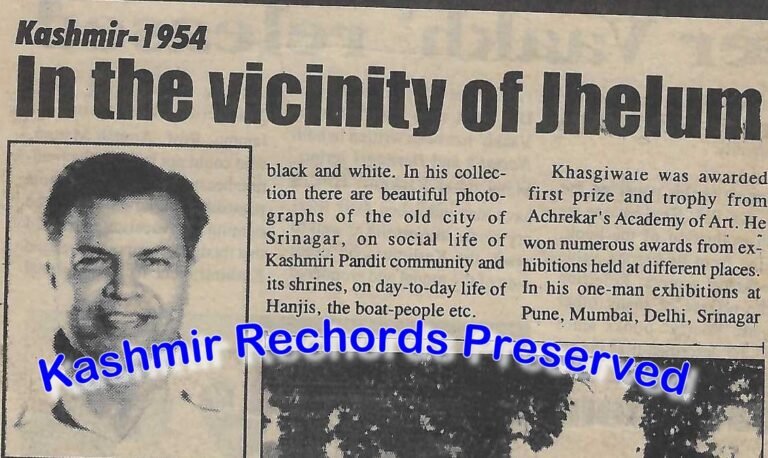
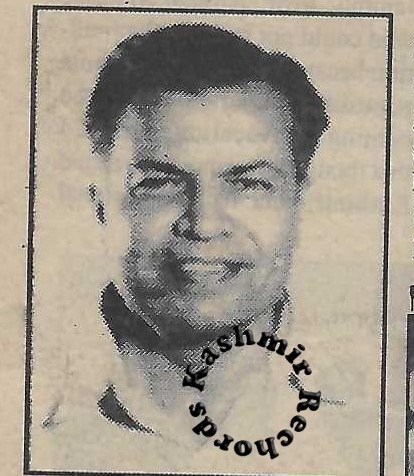
Nature has endowed Kashmir with a beauty so profound that it has drawn travellers, artists and chroniclers from distant lands. Many came, admired and left. A few stayed long enough to understand its people. Rarer still were those who quietly documented its life with empathy, sensitivity and artistic honesty. Laxman alias Sudhakar Ganesh Khasgiwale, a painter-cum-photographer from Poona, belonged to that rarest category.

In the summer of 1954, when Kashmir still breathed an unhurried rhythm of life, Khasgiwale arrived in the Valley—not as a tourist, but as a student of nature and humanity.

Trained in painting under Late Shri M.R. Achrekar, one of India’s most celebrated artists, Khasgiwale had already earned recognition and a scholarship from the Art Society of India. Instead of choosing comfort or convention, he chose Kashmir. The scholarship enabled him to live in the Valley for nearly six months, a period that would define his artistic legacy.

At that time, colour photography had not yet reached India. Undeterred, Khasgiwale carried with him an ageing Zeiss Ikon–Ikonta (1936 model) camera and relied on black-and-white film. What he lacked in colour, he compensated with depth, composition and feeling.

Capturing Kashmir Beyond Landscapes

Khasgiwale photographed Kashmir not merely as a scenic paradise but as a living civilisation. His lens moved seamlessly from mountains and rivers to lanes, homes, and faces.

His collection included:

  • Intimate views of old Srinagar, its architecture and winding streets
  • Rare visual documentation of the Kashmiri Pandit community—their social life, religious practices, and sacred shrines
  • Everyday scenes of Hanjis, the boat-people of the Jhelum, engaged in work and family life
  • Markets, riverbanks, houseboats, and moments of quiet dignity

These images today stand as invaluable visual records of a Kashmir that has since changed irrevocably—especially the social and cultural world of Kashmiri Pandits, much of which has been lost or displaced.

An Outsider Who Became an Insider

During his stay, Khasgiwale did not merely observe Kashmir; he lived it. He studied the Valley’s arts and crafts, absorbed its aesthetic traditions and forged bonds with its people. Gradually, he became one with the landscape—its flora, fauna and human presence.

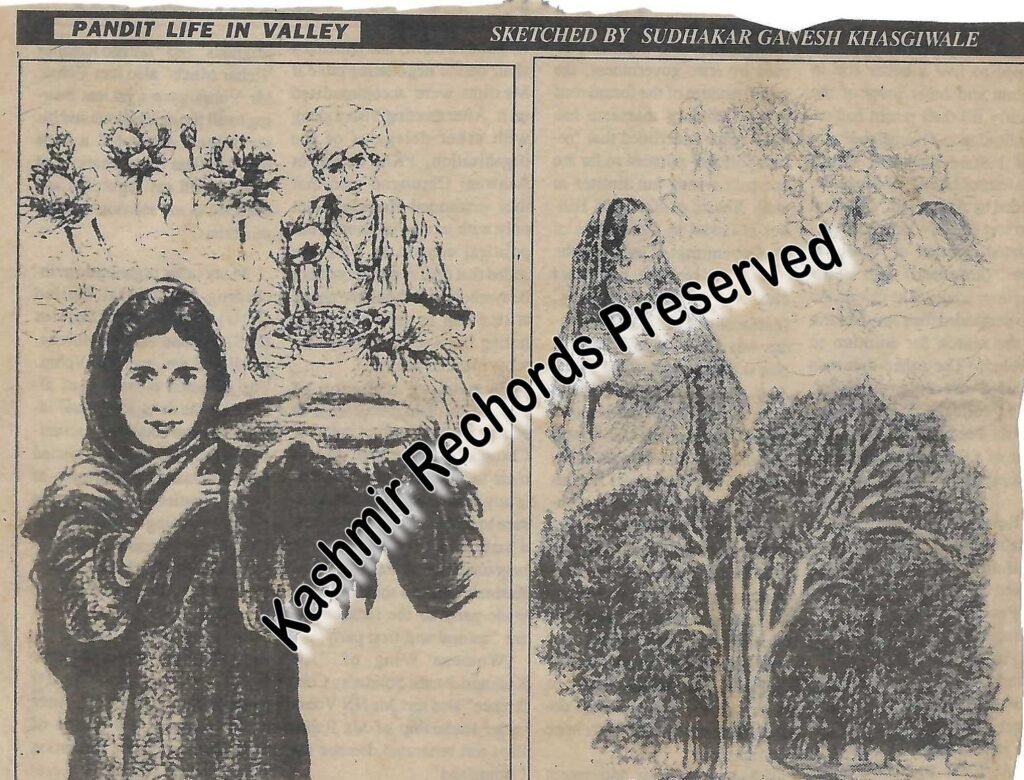
His humanistic temperament compelled him to sketch individuals he encountered: boatmen, elders, artisans, children. These pen-and-pencil portraits were not caricatures but character studies—drawn with respect and affection. Many of these sketches later appeared in his Marathi book “Chinarchi Pane”, reflecting his deep emotional connection with Kashmir and its people.

Khasgiwale’s artistic merit was widely acknowledged outside Kashmir. He won first prize and a trophy from Achrekar’s Academy of Art and received numerous awards in exhibitions across India. His one-man exhibitions in Pune, Mumbai, Delhi, Srinagar and Ahmednagar were met with critical acclaim and public admiration.

He later trained in photography and commercial art during his apprenticeship at RK Films, founded by Raj Kapoor, before establishing his own venture, “Khasgiwale Chitrayan”, in Pune. His work in printing, book decoration, advertising, writing and radio further cemented his stature as a multifaceted artist.

Yet, the Kashmir he lovingly documented remained largely unaware of the scale of his contribution.

A Return Through Memory: Kashmir Remembered

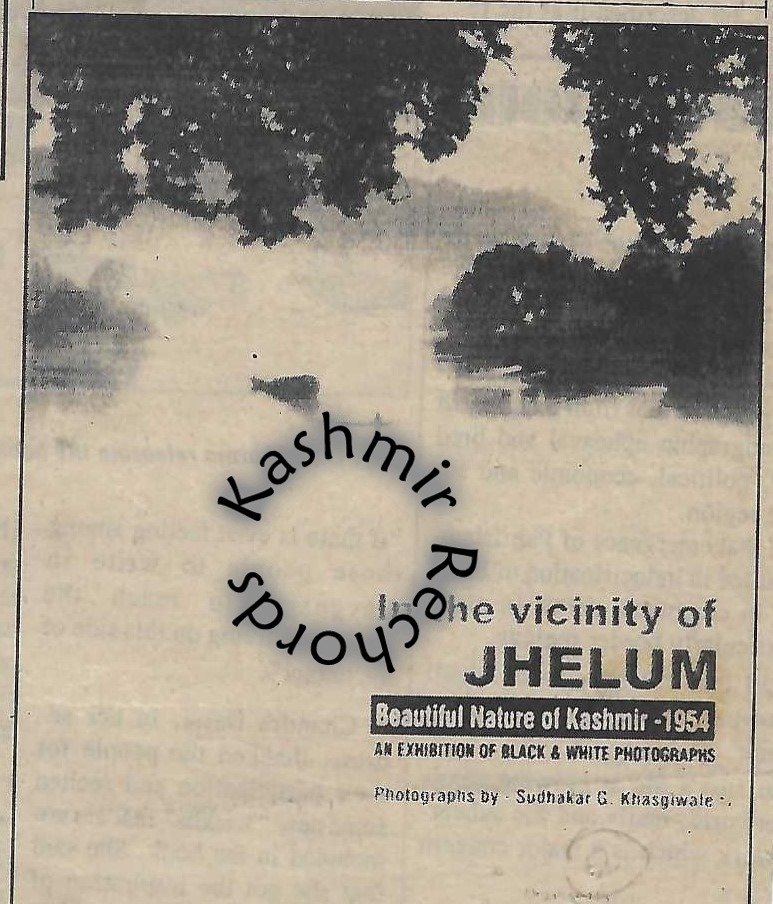
Nearly half a century later, in May 2002, Khasgiwale returned to Kashmir—not physically, but through his work. He organised a photography exhibition titled “In the Vicinity of Jhelum”, accompanied by the release of Chinarchi Pane.

For the exiled Kashmiri Pandit community in Pune, the exhibition was deeply moving. It was not merely an art event—it was a visual homecoming. The exhibition was inaugurated by Lt. Gen. Moti Dar (Retd.), while the book was released by noted playwright Shri Pran Kishore, giving the occasion a distinctly Kashmiri resonance.

An Unsung Chronicler of a Vanished World

Laxman alias Sudhakar Ganesh Khasgiwale’s photographs from 1954 today serve as more than artistic expressions. They are:

  • A historical archive of pre-modern Kashmir
  • A sensitive visual testimony of Kashmiri Pandit life and culture
  • A reminder of communal harmony and shared existence along the Jhelum

Despite his yeoman’s contribution, his name remains absent from mainstream narratives of Kashmir’s visual history. Perhaps it is time  to reclaim this quiet chronicler who once captured the Valley and its people not as subjects, but as family.

From the Valley to the Nation’s Rails

(Kashmir Rechords News Desk)

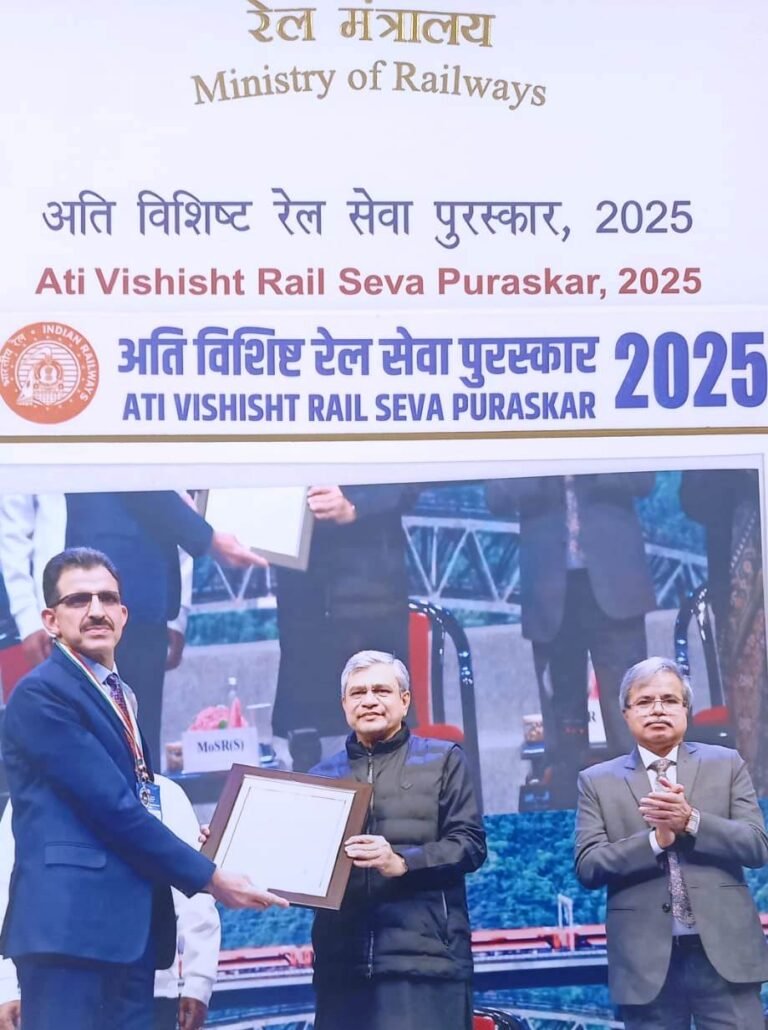
For the readers of Kashmir Rechords, who believe that history is not only made in courts and capitals but also in quiet offices and workshops across the country, the conferment of the Ati Vishisht Rail Seva Puraskar – 2025 on Mr Ramesh Kumar Koul is a moment to pause, reflect—and record.

A senior Indian Railway Services officer and a son of the soil, Mr Ramesh Kumar Koul has been honoured for his dedicated, meritorious and selfless service to the Nation’s largest public institution. In doing so, he has also achieved a rare distinction of becoming the first Kashmiri Pandit of his generation to receive this prestigious national honour in Indian Railways.

A National Honour, A Community Milestone

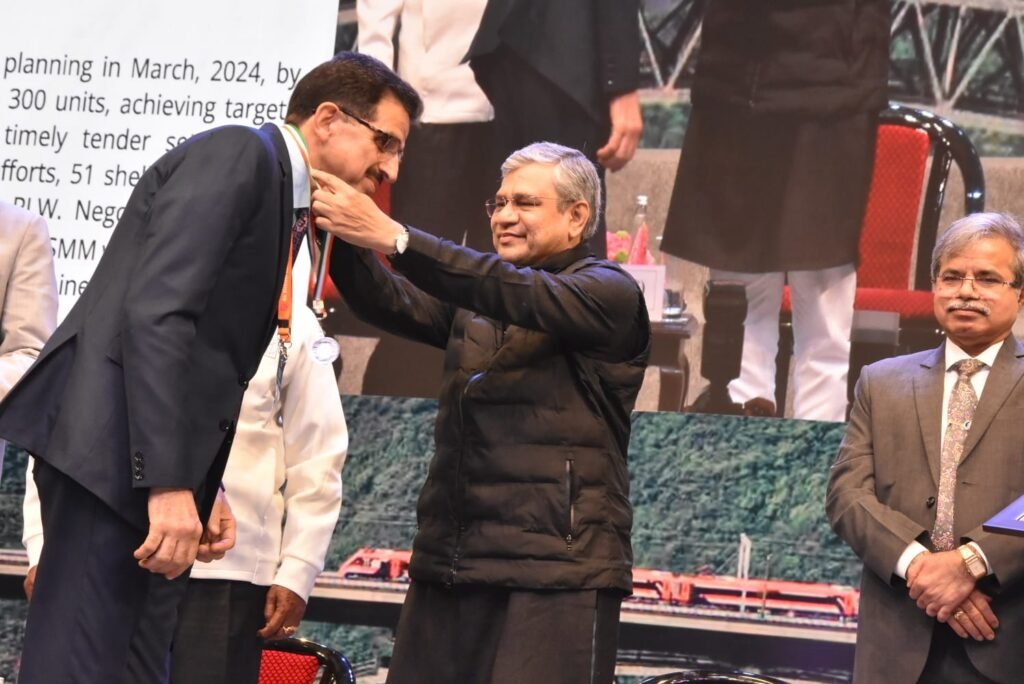
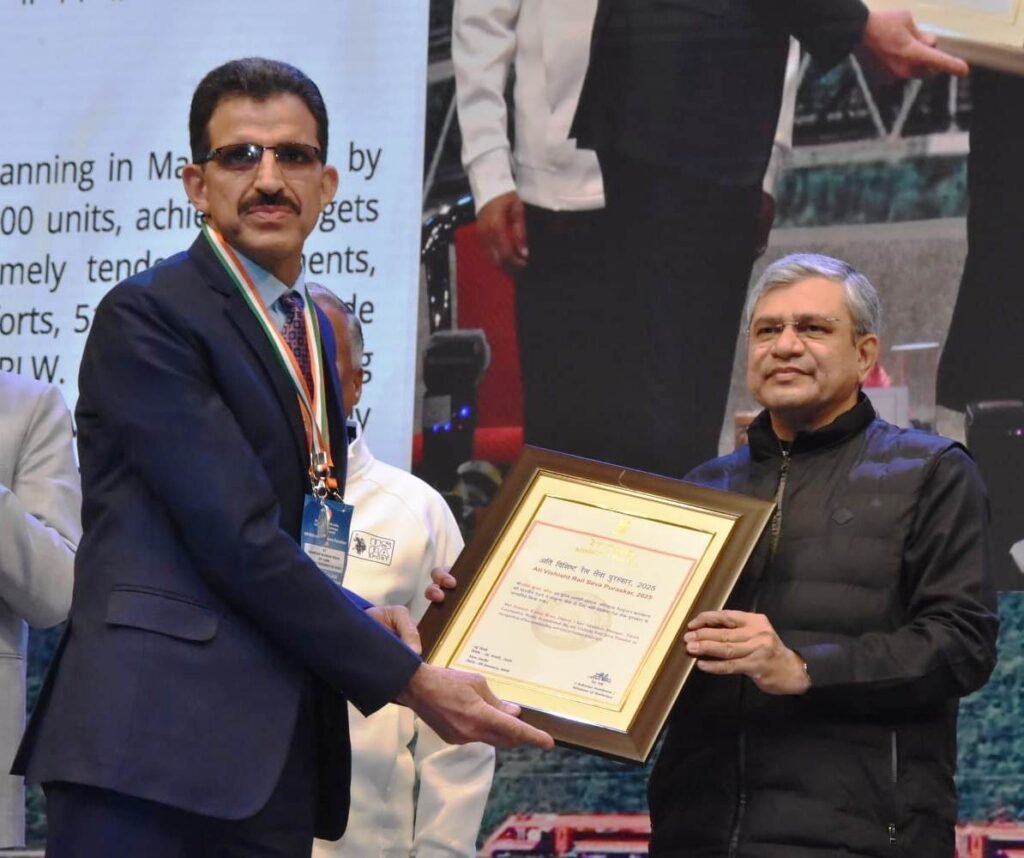
The award was presented at a glittering ceremony in the National capital by Union Minister for Railways Ashwini Vaishnaw, at the Yashobhoomi Convention Centre, on January 9, 2026.

Among hundreds of distinguished railway professionals from across India, the name Ramesh Kumar Koul resonated far beyond the hall—finding echoes in Kashmiri Pandit homes spread across the country and the diaspora. For a community that has endured displacement yet continues to serve the nation with dignity, this recognition carries deep symbolic meaning.

Union Minister for Railways, Mr Ashwini Vaishnaw felicitating Mr Ramesh Kumar Koul

Quiet Excellence at Patiala Locomotive Works

Currently serving as Deputy Chief Materials Manager at Patiala Locomotive Works (PLW), Mr Koul has built his career away from the limelight. His citation recognises professional excellence in Materials Management, a critical but often unseen backbone of railway operations.

Through meticulous planning, transparent systems and innovative practices, his work has significantly strengthened organisational efficiency and helped PLW meet demanding production targets. In an era where efficiency defines success, such contributions quietly power the engines that keep India moving.

A prestigious award in recognition of professional excellence!

The Ati Vishisht Rail Seva Puraskar, among the highest individual honours in Indian Railways, is reserved for officers whose sustained performance reflects integrity, innovation and leadership over years of service—not momentary achievement.

Also present at the ceremony was Mr Rajesh Mohan, Principal Chief Administrative Officer (PCAO), who congratulated Mr Koul and lauded his unwavering dedication and professionalism. His words reflected what colleagues have long known—that Mr Koul’s work ethic exemplifies the best traditions of public service.

Why This Story Matters to Kashmir Rechords

For Kashmir Rechords, this is not merely a report of an award ceremony. It is part of a larger narrative—of Kashmiri Pandits and other Kashmiris who, despite upheavals and exile, continue to contribute silently and steadfastly to nation-building.

Ramesh Kumar Koul’s journey stands as a reminder that excellence does not always seek attention, and that service, when performed with sincerity, ultimately finds recognition. His achievement adds a significant chapter to the contemporary history of Kashmiri Pandits in public service—one that future generations can look back on with pride.

Another J&K based  Officer Honoured

The evening also brought recognition for Mr Uchit Singhal, Senior Divisional Commercial Manager, currently posted in Jammu, who was also conferred the Ati Vishisht Rail Seva Puraskar (AVRSP) – 2025 .

Mr Uchit Singhal, Senior Divisional Commercial Manager, currently posted in Jammu

Mr Singhal’s work in the Jammu Division has led to unprecedented improvements in commercial and passenger services, including contributions to the successful operation of the Udhampur-Srinagar-Baramulla Rail Link (USBRL)—a project of historic importance for connectivity, development and national integration. Upgraded passenger facilities and enhanced revenue generation have revitalised railway services in the region.

The Unsung Kedar Sharma—Munshi Allah Rakha of Vadi Ki Awaz

(Kashmir Rechords Exclusive)

There was a time when a single voice travelling across the airwaves could unsettle hostile propaganda, reassure divided families and speak directly to the conscience of a fractured land. Long before social media, before digital warfare and televised debates, Radio Kashmir stood as the frontline of narrative resistance. Among its most formidable yet forgotten sentinels was Kedar Sharma, also fondly remembered by listeners as Kari Shah—a name that today barely survives outside fading memories and fragile archives.

Kedar Sharma’s name surfaces occasionally in historical lists of Radio Kashmir’s broadcasters and drama artistes, but the sparse references hardly do justice to the scale of his contribution. For over four decades, Kedar Sharma was not merely an artist; he was an institution—one of the voices that defined Radio Kashmir’s moral and political spine during some of its most turbulent years.

Born in 1923, Kedar Sharma joined Radio Kashmir in its formative era, when broadcasting was as much about culture as it was about conviction. He rose to national recognition through his unforgettable portrayal of “Munshi Allah Rakha” in the iconic programme Vadi Ki Awaaz, broadcast daily from Radio Kashmir, Srinagar. The programme was no ordinary broadcast. it was a strategic counter-propaganda initiative, aimed directly at listeners in Pakistan and Pakistan-Occupied Kashmir, dismantling hostile narratives while articulating the socio-political aspirations of the people across the divide.

Every broadcast opened with Sharma’s thunderous, unmistakable voice:

“Pakistan aur Pakistani maqbooza Kashmir mein Vadi Ki Awaaz programme sunne walon ko salaam—wale qaum!”

For thousands of listeners, that greeting was not just radio theatre—it was reassurance, resistance and recognition. His sharp exchanges with characters like “Nikki Appa”, delivered with wit, satire and moral clarity, cut through propaganda with a potency few could match. Sharma did not shout slogans; he reasoned, mocked falsehood and exposed contradictions—a masterclass in psychological and narrative warfare.

Yet, history has been unkind to its own architects.

Following the eruption of militancy in 1990, the very ecosystem that had once nurtured such excellence began to fracture. Vadi Ki Awaaz continued in name, but the standards of counter-propaganda programming set by stalwarts like Kedar Sharma were never matched again. What survived was only the shell—the title, the signature tune—while the soul quietly faded away.

Kedar Sharma passed away on August 2, 1990, at PGI Chandigarh, at the age of 67. His body was flown to Jammu the next day. Artists, staff members of Radio Kashmir, and citizens from all walks of life attended his funeral. A condolence meeting at Radio Kashmir, Jammu paid rich tributes to a man whose voice had once crossed borders with fearless clarity. He was a recipient of several Akashvani awards, yet today, his name is largely absent from the digital record.

To add to the confusion of memory, he is often mistakenly conflated with Kidar Nath Sharma, the celebrated Hindi film director and lyricist. The two shared a name—but not a legacy. Kedar Sharma of Radio Kashmir was a broadcaster, a dramatist and above all, a soldier of the airwaves, whose battlefield was the microphone and whose weapon was truth wrapped in performance.

Today, very little authentic information about Kedar Sharma of Radio Kashmir exists online. No readily available photographs. No detailed biographies. No official digital archive to narrate his story. And this is precisely why his rediscovery matters.

It is thanks to the archival efforts of Kashmir Rechords that such authentic material—scattered, endangered and nearly forgotten—has been preserved and contextualised for the present and next generation, many of whom have no inkling of the giants who once shaped Kashmir’s broadcasting history. Kashmir Rechords’ work ensures that voices like Kedar Sharma’s are not reduced to footnotes, but reclaimed as part of Kashmir’s intellectual and cultural inheritance.

Radio Kashmir—now rechristened as All India Radio Srinagar and All India Radio Jammu, was once a vital bridge between the people and the state. Kedar Sharma, Kari Shah, Munshi Allah Rakha—call him by any of his names—was one of the voices that made that bridge speak.

In an age obsessed with visibility, Kedar Sharma remains an unsung hero—not because his contribution was small, but because memory failed to keep pace with merit. It is time the airwaves remember the voice that once made them tremble.

For Further Reading about similar character of Vadi Ki Awaz-— Manohar Prothi, the Aziz Bhai, click Here:

DONATE FOR A CAUSE

0

A Passionate Appeal to Philanthropists and Friends of Heritage

At a time when memory is fragile and history is increasingly reduced to fleeting headlines, Kashmir Rechords Foundation (Regd) stands as a quiet yet determined custodian of Jammu Kashmir’s lived past.

Over the last two years, this non-profit, non-government organisation, duly registered with Government of India has worked with limited resources but unwavering commitment to archive, document and preserve Kashmir’s socio-cultural, intellectual and historical legacy—stories that risk being lost if they are not recorded now. From chronicling overlooked historical episodes and personalities to amplifying voices long relegated to the margins,Kashmir Rechords has steadily emerged as a credible, people-driven archival initiative rooted in integrity, scholarship, and public service.

What has been achieved so far is meaningful—but it is only a beginning.

Much remains to be done. Vast archival material is yet to be accessed, oral histories await documentation and fragile documents, photographs and personal testimonies—often lying unprotected in homes and private collections—need urgent preservation before time erases them forever. This work is meticulous, time-sensitive, and resource-intensive.

We, therefore, make a heartfelt appeal to philanthropists, well-wishers, scholars and all those who believe that heritage, culture, and human dignity matter. As a gesture of transparency and gratitude, Kashmir Rechords Foundation will publish the names of all donors who wish to be acknowledged, recognising them as partners in this collective mission to preserve memory and empower lives.

Your contribution—no matter how little, modest or generous—will directly support:

  • Archiving, digitisation and preservation of rare historical material
  • Research and documentation of underrepresented narratives
  • Cultural activities aimed at sustaining Kashmir’s plural traditions
  • Support for needy and deserving students and individuals, enabling education, research, and cultural engagement

Kashmir Rechords Foundation further solemnly pledges that the major portion of all donations will be utilised for cultural activities and for extending meaningful support to deserving and underprivileged students and individuals, ensuring that heritage preservation goes hand in hand with social responsibility.

Every donation thus becomes not merely a financial contribution, but a moral investment in culture, education and continuity.

History does not survive by chance—it survives because individuals choose to protect it.

Stand with Kashmir Rechords Foundation.
Help safeguard Kashmir’s heritage.
Help nurture those who will carry it forward.

Because what we fail to preserve today may be lost forever.
This is a moment to choose remembrance over amnesia.

Stand with Kashmir Rechords Foundation.
Help preserve a heritage that belongs not just to  Jammu Kashmir, but to all of us.

Because what we fail to record today, we may never recover tomorrow.

Here’s how you can help:

Donate to Kashmir Rechords Foundation:

Bank Details
KASHMIR RECHORDS FOUNDATION (Regd)
Acct No: 0274010100003893
Jammu and Kashmir Bank.
IFSC: JAKA0CHAWRI


Address:
1. H No 1, Lane-2, Bharat Nagar, Bantalab, Jammu, Jammu and Kashmir (India)-181123
2. C 1/1401, Kendriya Vihar, Greater Noida ( Delhi-NCR)-201315

You can also use our QR Code.
With Regards,

Kashmir Rechords Foundation( Regd)

www.kashmir-rechoprds.com

Email: kashmirrechords@gmail.com / support@kashmir-rechords.com

Phone: +918383909284

Jammu’s Quest for Statehood

(Kashmir Rechords News Desk)

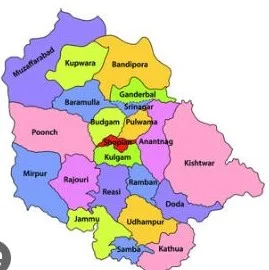
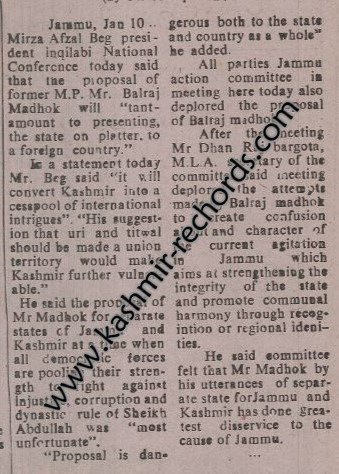
The demand for a separate Jammu state has been raised intermittently over the years. It notably resurfaced during the 2019 reorganization of the former Jammu and Kashmir state, when Ladakh was granted Union Territory status, fulfilling a long-standing demand of its people. However, the call for a separate Jammu state, much like the Kashmiri Pandits’ demand for a homeland with Union Territory status, went unmet. Concerns about Jammu’s alleged political marginalization particularly since 1979, have been central to this debate. The demand for a separate Jammu state was first voiced by Jan Sangh ideologue Balraj Madhok, who advocated for Union Territory status for border areas such as Teetwal and Uri, alongside the division of Ladakh.

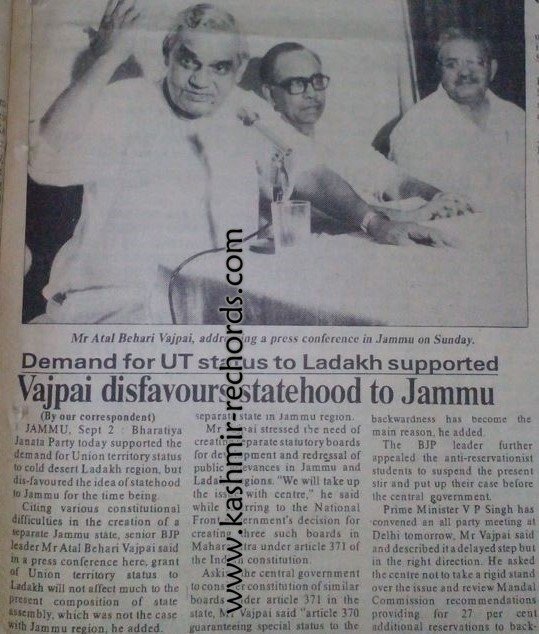
Over time, the issue has periodically emerged as a significant election theme. Various political parties have included the demand for a separate Jammu state in their manifestos, feeling that the region has been consistently sidelined by what they term “Kashmiri leadership.” Yet, even with this being a popular electoral issue, it has not gained widespread traction or acceptance, even within the top leadership of the BJP. For example, in  September 1990, former Prime Minister Atal Bihari Vajpayee, during his visit to Jammu, opposed the idea of a separate Jammu state, though he supported Union Territory status for Ladakh. His stance, as a respected statesman and intellectual, was viewed as a decisive one, likely backed by careful political consideration.

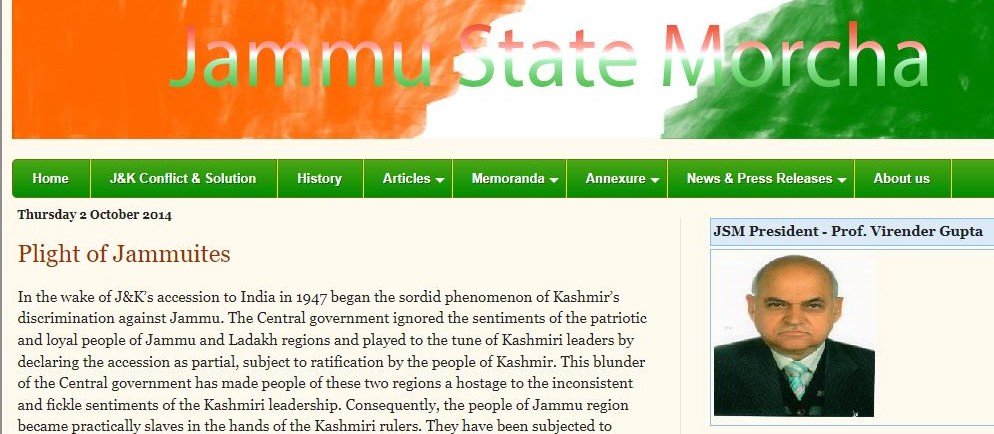
The demand for Jammu statehood has also seen attempts at political mobilization. Prof. Virender Gupta of Jammu University founded the Jammu State Morcha, later renamed the Jammu Mukti Morcha, with the explicit aim of creating a separate Jammu state. Despite his efforts and those of his supporters, the movement struggled to gain electoral success, with Gupta’s party failing to secure a single assembly seat, in contrast to the BJP, which has focused on addressing the issue of discrimination without advocating for full statehood.

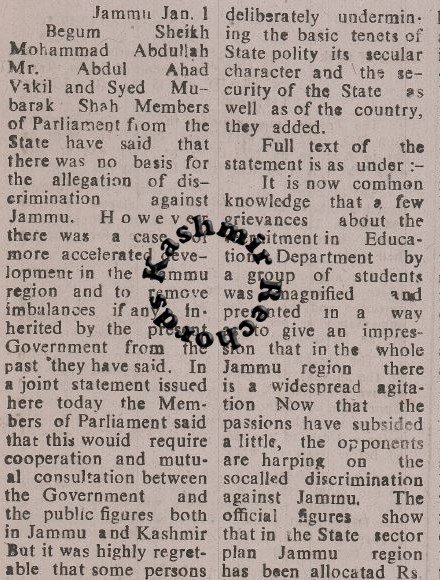
Historically, Jammu’s political grievances came to the forefront during the 1966 Jammu Students’ agitation, which also raised the issue of discrimination. However, the demand for a separate Jammu state was suppressed, and the movement eventually lost momentum. Kashmir’s politicians on the other hand have always been telling that there was no discrimination with Jammu as it was merely a poll plank to woo voters and befool people of the region.

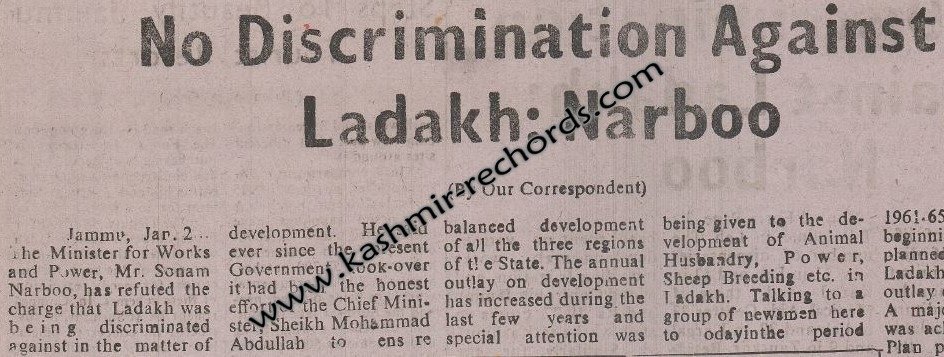
In contrast, Ladakh, which was granted Union Territory status in 2019, appears to have resolved some of its historical grievances. However, many Ladakhi leaders in past have stated that their region did not experience the same level of political discrimination as Jammu. Nevertheless, some sections of Ladakh’s population are now reportedly dissatisfied with their Union Territory status, with concerns that extend beyond their prior claims of discrimination.

As the September-October elections of 2024 underscore the deepening political divide, with the BJP consolidating its grip in Jammu, the demand for a separate Jammu state again resurfaced. However, the fact that a statesman of Atal Bihari Vajpayee’s stature publicly opposed the demand in 1990 remains a significant factor. His opposition likely stemmed from strong political and strategic convictions, which continue to influence the BJP’s position on the matter.

The debate surrounding Jammu’s political future continues to be shaped by both historical grievances and present-day electoral dynamics. While calls for statehood persist, they face substantial political and ideological challenges.

Kashmir’s Vintage Cycle Allowance Order of 1943!

0
(Kashmir Rechords Exclusive)

In the autumn of 1942, amidst the sweeping changes of colonial India, a curious proposal made its way through the corridors of power in Jammu and Kashmir. Sir N. Gopalaswami Ayyangar, the Prime Minister of the Princely State, was at the helm of the administration, when an intriguing request was placed before him. It concerned the Jamadar, Flower Nursery—an employee responsible for tending to the gardens and parks of Srinagar, who had to travel considerable distances every day.

The proposal? To grant him a Cycle Allowance of just four rupees per month, a modest sum that would assist this hard-working individual with the cost of his daily commute. The Director of Agriculture had initially mooted this idea, and after a review from the Office of the Accountant General in Srinagar, it was found to be free of audit objections. However, it still needed the Prime Minister’s approval and the concurrence of the Finance Department before it could become official.

A Legacy from Kashmir’s Past

In a rather surprising turn of events, the Accountant General, having reviewed the matter, recommended a slight enhancement. Instead of the originally suggested four rupees, the allowance was raised to five rupees per month, an increase that would later be ratified by the Chief Secretary of Jammu and Kashmir, Mr. Haveli Ram, on August 24, 1943. This new allowance was officially sanctioned to the Jamadar with the date of First Bhadon, 1999 Vikram Samvat (August 17, 1942, Gregorian) marked as its effective start.

It was a decision that would surely bring delight to the concerned employee, for in those days, such a sum would have been considered a small fortune for many in the workforce. The Jamadar, whose duties included visiting the sprawling gardens attached to the State Houses, would now be receiving a monthly allowance that reflected the growing importance of bicycles as a mode of transportation for government workers.

Interestingly, the concept of Cycle Allowance was not unique to Jammu and Kashmir. During the 1930s and 1940s, the British colonial administration introduced similar allowances across India to support employees whose roles required long commutes on bicycles. Factory workers, postmen, and other such workers were the primary beneficiaries, as the British government recognized the efficiency bicycles provided in completing work-related travel. This initiative aimed to enhance productivity while simultaneously providing employees with a much-needed subsidy for their transportation.

Even after India’s independence in 1947, the Cycle Allowance persisted, serving as a symbolic link between the colonial past and the newly independent nation. As bicycles remained the most affordable mode of transport for low-wage earners, the allowance became a fixture in government payrolls.

A Relic of Bygone Era

However,  the Cycle Allowance eventually became a relic of a bygone era. The 7th Central Pay Commission, in its efforts to rationalize allowances, abolished the Cycle Allowance. Yet, a few exceptions remained. The Department of Posts and Railways retained the allowance for Postmen and Trackmen, doubling the allowance from ₹90 to ₹180 per month to reflect inflation and changing times.

By the turn of the 21st century, the landscape of public transportation in India had undergone a remarkable transformation. Bus routes, metro systems, and trains became reliable urban connectors, and private vehicles, including two-wheelers and cars, became increasingly accessible to the middle class. With these changes, the Cycle Allowance began to feel more like a remnant of a different time. In today’s era of electric vehicles, ride-sharing, and high-speed metros, the Cycle Allowance is undoubtedly a curious survivor. It serves as a testament to how a simple measure—like a small allowance for cycling—could have an enduring impact on the lives of workers. For some, the Cycle Allowance will always be a symbol of resilience and a quirky piece of history that managed to endure.

Prem Nath Bhat: A Torchbearer of Unity and Service

(Kashmir Rechords Desk)

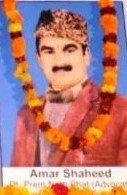
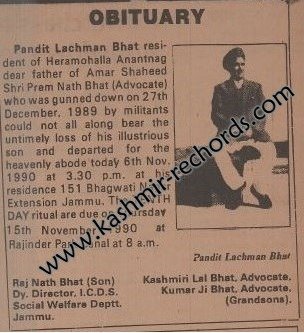
Late Shri Prem Nath Bhat, the first journalist martyred during the Kashmir turmoil, has become an enduring symbol of resistance against religious fundamentalism and the ethnic cleansing of vulnerable minorities, particularly the Kashmiri Pandit community. In both life and death, he exemplified a remarkable commitment to unity and service to humanity, transcending religious, political and ideological boundaries. A true awakened soul, Shri Prem Nath Bhat combined exceptional leadership qualities with an unwavering dedication to his homeland, choosing to remain in Kashmir despite the threats of terrorism that ultimately claimed his life.

His father, Pt. Lachman Bhat, deeply grieved by the tragic loss of his illustrious son, passed away on November 6, 1990, in Jammu, less than a year after Shri Prem Nath Bhat’s assassination.

The Black Day

December 27, 1989, marks a dark chapter in India’s history, as this great son of Kashmir was gunned down, symbolizing a direct assault on India’s ethos and the centuries-old value system of Kashmir. Known for its harmonious and inclusive culture, the Kashmir of Shri Prem Nath Bhat’s time was tragically torn apart by violence and hatred.

He was the third prominent Kashmiri Pandit to fall victim to terrorism during that turbulent period, following the assassinations of Tika Lal Taploo in September 1989 and Neelkanth Ganjoo in November 1989. Shri Prem Nath Bhat was targeted for his fearless advocacy on behalf of the Kashmiri Pandit community. His efforts extended across India as he championed the cause of his people, built institutions, safeguarded temples and properties and worked tirelessly to alleviate the fear psychosis gripping the community following the 1986 Anantnag riots.

Despite the peak of anti-national activities in 1989-1990, and even against the advice of well-meaning Muslim friends urging him to leave the valley, Shri Prem Nath Bhat chose to remain steadfast in Kashmir, epitomizing unparalleled courage.

A Multifaceted Personality

In addition to being an accomplished advocate, Shri Prem Nath Bhat was a distinguished journalist with a profound understanding of the socio-political issues and shifting dynamics of Kashmir. He served as a correspondent for Daily Excelsior from Anantnag and contributed incisive articles for the newspaper’s Op-Ed pages and weekly magazine. Deeply influenced by the teachings of Shri Ramakrishna Paramhansa and Swami Vivekananda, his life was guided by their ideals of selfless service and social reform.

Early Life and Legacy

Born in 1932 into a middle-class family, Pandit Prem Nath Bhat, affectionately known as “Bhat Sahab,” completed his education at Amar Singh College and S.P. College in Srinagar. A gifted debater and dedicated social worker, he was actively involved in community welfare from a young age. To honor his memory and the sacrifices of other martyrs, the Kashmiri Pandit community observes December 27 as Chetna Divas annually. The Prem Nath Bhat Memorial Trust continues to lead efforts for the passage of the Temples and Shrine Bill while also acknowledging the contributions of journalists through an annual award in Shri Prem Nath Bhat’s name.

To read another story about P N Bhat, Click Here:

Dr J. N. Bhan: The Mind That Built Jammu University

(Kashmir Rechords Exclusive)

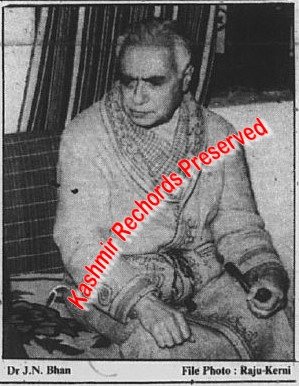
In an age when institutions were shaped not by committees but by conviction, Dr J N Bhan stood tall as a rare, multi-dimensional intellectual. Today’s generation of teachers and students may scarcely know his name, yet for those who witnessed his era, he was the very definition of an ideal academic: a revered teacher, a profound economist, a visionary administrator and a principled public intellectual.

He was the first Vice-Chancellor of the University of Jammu, appointed in 1969, and one of the principal architects of higher education in the region. His life’s journey—from pre-Partition Kashmir classrooms to London’s academic corridors, and finally to institution-building in Jammu—reads like a quiet epic of dedication.

Roots in Kashmir, Values for Life

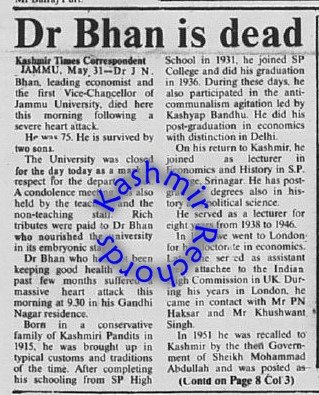
Born in 1915 into a conservative Kashmiri Pandit family, Dr Bhan was raised in the traditions, discipline and cultural ethos of the time. His early education at SP High School Srinagar laid a strong foundation, after which he joined SP College Srinagar, graduating in 1936.

Even as a student, he was far from cloistered in books alone. He actively participated in the anti-communalism movement led by Kashyap Bandhu, reflecting an early moral clarity that would define his life. This engagement also brought him close to thinkers such as Prem Nath Bazaz, placing him firmly within the progressive intellectual currents of pre-Partition Kashmir.

The Making of a Scholar

Dr Bhan pursued his post-graduation in Economics in Delhi, earning distinction and later expanded his academic breadth with postgraduate degrees in History and Political Science—a rare interdisciplinary depth for his time.

Returning to Kashmir, he joined SP College Srinagar as a Lecturer in Economics and History, serving from 1938 to 1946. His classroom reputation grew quickly: lucid, rigorous and inspiring; he was already being spoken of as a teacher who shaped minds, not merely syllabi.

London Years: Academia and Diplomacy

In 1946, Dr Bhan travelled to London to pursue his doctorate in Economics. These years proved formative in more ways than one. Alongside academic work, he served as Assistant Press Attaché to the Indian High Commission in the UK, gaining first-hand exposure to diplomacy and international affairs.

During this period, he came into close contact with P. N. Haksar and Khushwant Singh, relationships that broadened his intellectual horizons and deepened his understanding of India’s place in the world.

Return to J&K: Scholar-Administrator Emerges

In 1951, Dr Bhan was recalled by the government led by Sheikh Mohammad Abdullah and appointed Professor and Head, Department of Economics at GGM Science College Jammu.

A brief but telling episode followed in 1953, when he was asked to succeed J. N. Zutshi as Director General of Information and Broadcasting. Disillusioned by internal squabbles, Dr Bhan chose principle over position, returning to academia by joining the Education Department as Secretary—a decision that revealed his deep aversion to politicised dysfunction.

A University Builder, Not Just a Vice-Chancellor

In September 1957, Dr Bhan joined the University of Jammu & Kashmir as Professor and Head, Department of Economics. His administrative acumen soon became evident, as  in 1963, he was appointed Pro-Vice-Chancellor and in 1969, became the first Vice-Chancellor of the newly established University of Jammu.

He famously described the creation of the University as the “fulfilment of a genuine demand of the people of Jammu.” To him, it was not merely an institution—but a promise to future generations.

Dr Bhan’s love for the University of Jammu was profound and personal. He nurtured it in its infancy—laying academic standards, shaping departments, and fostering a culture of integrity and scholarship.

Beyond administration, he remained a hands-on academic. University archives and PhD bibliographies record him as a research supervisor, underscoring his commitment to mentoring young scholars and strengthening research-led teaching in Jammu & Kashmir.

A brilliant orator, a measured thinker and a man of unwavering values, Dr Bhan commanded respect without demanding it. Students admired his clarity, colleagues trusted his judgment and the academic community recognised his quiet authority.

After retirement, he continued public service as a member of the State Planning Board, bringing economic insight to policy formulation.

The Day Jammu Stood Still

On May 31, 1990, Dr J. N. Bhan passed away at his Gandhi Nagar residence in Jammu, following a massive heart attack. He was 75 and had been in fragile health for several months.

Such was the esteem in which he was held that the University of Jammu closed for the day—a rare institutional tribute—honouring the man who had built it brick by brick, principle by principle.

Dr Bhan’s legacy did not fade with time. In September 2012, the University of Jammu instituted the Prof. J. N. Bhan Memorial Lecture Series in Economics—a formal recognition of his foundational role in shaping economic thought and higher education in the region.

Dr J. N. Bhan’s life stands as a reminder that universities are not merely built by funds or files, but by vision, scholarship, and character. He remains remembered as a nation-builder in the classroom, a statesman in administration, a mentor to generations and a man who served without noise, ambition or compromise.

In nurturing the University of Jammu in its earliest days, Dr Bhan ensured that his own life would become inseparable from the institution’s history—a legacy that continues to inspire, quietly yet enduringly.

Digital Silence: How J&K’s Migrant Property Portal Fails Kashmiri Pandits

(Kashmir Rechords Desk)

In Jammu and Kashmir, official websites seem to be no longer instruments of governance. They are props. Launched with ceremony, left to rot without accountability, they exist to create an illusion of care while delivering administrative indifference. For displaced Kashmiri Pandits—people already stripped of homes, dignity and decades of security—this digital apathy is not a minor inconvenience. It is cruelty by design.

When governments speak of Digital Governance and citizen services, citizens expect access, transparency and resolution. What they receive instead, in Jammu and Kashmir, is something far more disturbing: digital deceit masquerading as reform.

A Portal Meant to Heal, Turned into a Weapon of Neglect

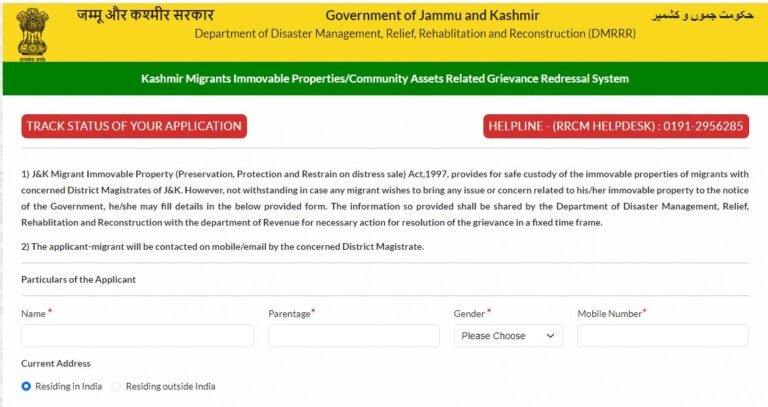
The Kashmir Migrants Immovable Properties/Community Assets Related Grievance Redressal System, launched under the Department of Disaster Management, Relief, Rehabilitation and Reconstruction (DMRRR), was projected as a lifeline for displaced Kashmiri Pandits—a long-awaited mechanism to reclaim properties lost to violence, encroachment and abandonment.

Today, that portal stands exposed as a hollow shell.

Months after its launch, the system remains functionally dead. Complaints cannot be filed. Grievances cannot be submitted. And accountability remains nowhere in sight. What was advertised as empowerment has devolved into one of the most callous administrative failures in the Union Territory.

This failure is neither unknown nor undocumented.

On October 23, 2025, Kashmir Rechords published a detailed report (https://kashmir-rechords.com/digital-betrayal-how-jk-governments-grievance-portal-cheats-kashmiri-pandits/) exposing the portal’s dysfunction, tagging the Lieutenant Governor’s administration and even the Raj Bhavan. The response from the authorities has been chillingly predictable: absolute silence.

In a democracy, silence in the face of documented suffering is not neutrality. It is complicity.

The Cruelty of an Unsent OTP

The real story begins where governance collapses—at the moment a displaced migrant tries to file a grievance.

The portal demands OTP verification on email before submission. Migrants comply, entering exhaustive personal details and property records—often tied to memories of homes they were forced to flee over three decades ago.

But the OTP never arrives.

The process stops mid-way. The complaint remains unsubmitted. Hours of emotional and administrative labour vanish into a digital void.

This is not a technical oversight. This is systemic indifference encoded into software.

As anguished netizens observed: “This is not a glitch. It is deliberate negligence—a mockery of an already battered community.”

Developed and hosted by the Jammu and Kashmir e-Governance Agency (JaKeGA), this portal functions less as a grievance redressal system and more as a bureaucratic dead end. It absorbs hope, records nothing, and resolves even less.

For a government that repeatedly claims commitment to the rehabilitation of Kashmiri Pandits, this portal exposes a disturbing truth: the rhetoric is alive, but the responsibility is dead.

A Helpline That Cannot Be Called

If the broken OTP is insult enough, the so-called helpline seals the deception.

The prominently displayed number—0191-2956285—is invalid. Non-functional. Repeated calls return a robotic verdict: This number is invalid. Truecaller vaguely identifies it as a “Kashmir Helpline Jammu Property,” a label that mocks the very idea of assistance.

A dead helpline is not an error. It is a confession.

The portal assures applicants that “the concerned District Magistrate will contact the applicant.” In reality, not a single migrant reports receiving a call, an email, or even an acknowledgment.

Responses to Kashmir Rechords’ October 23 exposé tell a uniform story: no response, no communication, no redress—despite public tagging of the highest constitutional offices in the UT.

A grievance portal that prevents grievances from being filed is not governance—it is state-sponsored silence. It offers visibility without voice, access without outcome, and promises without presence.

This is not merely a broken website.
It is a broken promise.
And for a community still waiting to return home, it is yet another reminder that exile has now been digitised.

When Mufti Sayeed Ordered a Ban on  Kashmiri Pandit Exodus in April 1990!

(Kashmir Rechords Exclusive)

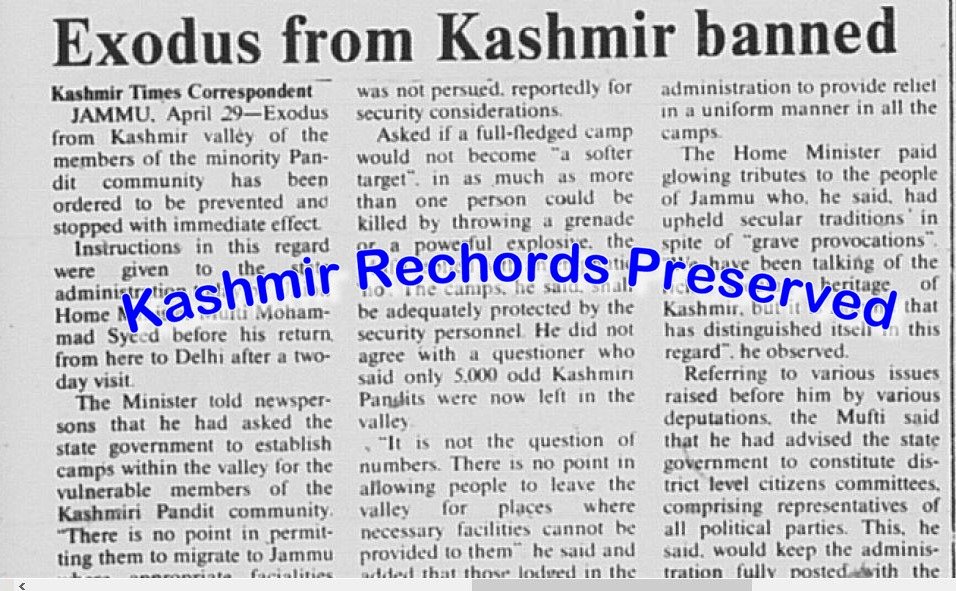
It may sound startling now, but history records a moment when the Union Government formally ordered that the migration of Kashmiri Pandits from the Valley be stopped. Even more strikingly, those who had already fled were expected to return to Kashmir—not to resettle elsewhere, but to live inside protected camps within the Valley itself.

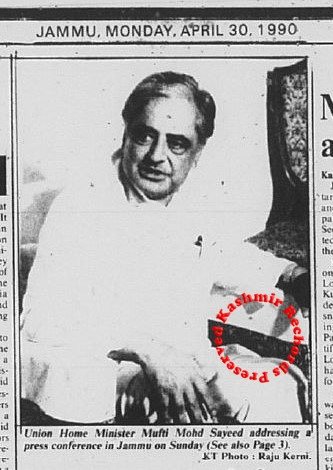
This extraordinary directive came on April 29, 1990, announced by none other than Mufti Mohammad Sayeed, then India’s Union Home Minister, barely a few months after the community’s mass displacement had shaken the Nation.

During his two-day visit to Jammu, Mufti Mohammad Sayeed  had instructed the then Jammu and Kashmir administration to prevent any further migration of Kashmiri Pandits with immediate effect. The directive was unambiguous: the exodus from Kashmir had to stop.

Addressing a press conference before returning to Delhi, Mufti  had made it clear that the Centre did not favour relocating Pandits to Jammu or elsewhere outside the Valley. Instead, he directed the government to establish secure, well-protected camps within Kashmir for vulnerable members of the community.

“There is no point in permitting them to migrate to Jammu,” the Home Minister said during the press conference, pointing to the lack of adequate facilities there—particularly in the harsh summer months.

Newspaper Report dated April 29, 1990, quoting Home Minister Mufti Mohd Sayeed on migration of Kashmiri Pandits

Kashmir Rechords, by reproducing the newspaper clipping of April 30, 1990, seeks to preserve this largely forgotten record—not to reopen old wounds, but to document a critical truth: that the Kashmiri Pandit exodus was never officially intended to be permanent, and that at a crucial moment, the Indian State attempted—however imperfectly—to halt it.

Pandits as ‘Soft Targets’—Yet Asked to Stay

Mufti  had acknowledged what many already feared: Kashmiri Pandits had become “soft targets” for militant groups, amid a sharp rise in targeted killings. Yet, rather than allowing people to flee, his solution was containment and protection within the Valley.

The idea was like this:
Pandits would be settled in protected zones, guarded by security forces, rather than dispersed outside their homeland.

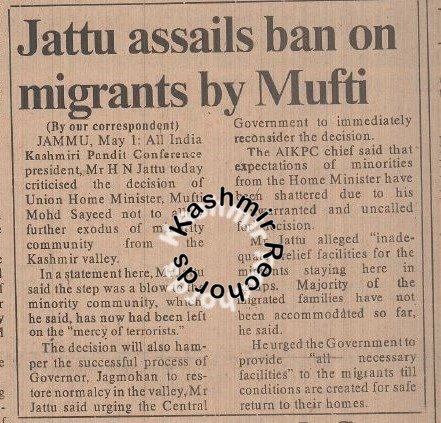
Newspapers of the time prominently quoted the Home Minister lamenting that Pandits lodged in camps in Jammu were living without even basic essentials—“without cots and necessities”—arguing that migration to places unprepared to support them only worsened their suffering. Yet a section of Pandit leadership of that time opposed and assailed Mufti for his order to ban exodus of Pandits from Kashmir.

Jagmohan’s Earlier Appeal—and the Community’s Rejection

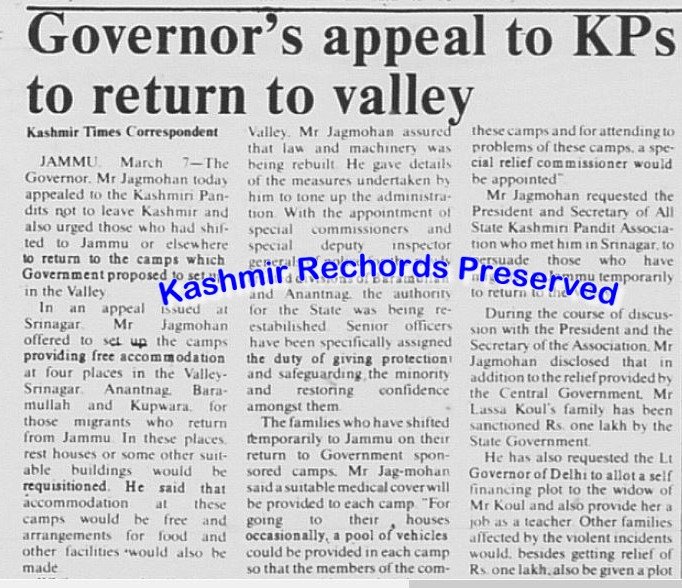
Mufti’s proposal was not entirely new. Just weeks earlier, on March 7, 1990, then Governor Jagmohan had  too publicly floated a similar idea. He had appealed to Kashmiri Pandits not to leave the Valley and urged those who had already fled to return, assuring them full protection in camps to be set up at district headquarters.

That proposal, too, met with strong resistance from the displaced community, which viewed the idea of protected camps inside a hostile environment with deep suspicion and fear. Security concerns, coupled with the trauma of recent killings, led many Pandit leaders to outright reject the plan. Jagmohan’s appeal, however, had  came at a time when the community was deeply traumatised. Targeted killings, intimidation and nightly slogans had shattered trust. For many Pandits, the idea of returning to live in camps inside the Valley—however protected on paper—appeared unsafe and psychologically untenable.

Why the Plan Never Took Off?

What emerges from these two interventions—Jagmohan’s appeal in March and Mufti Sayeed’s directive in April—is a rare moment of policy convergence. For a brief period in 1990, Raj Bhavan and the Union Home Ministry were aligned in their assessment that the displacement of Kashmiri Pandits was not meant to become permanent. Both believed the situation could be stabilised, camps secured, and the community retained—or brought back—within the Valley.

That moment, however, proved fleeting.

The proposals never moved beyond intent. Security conditions continued to deteriorate, fear deepened and opposition from within the displaced community hardened. In May 1990, Governor Jagmohan was replaced, bringing an abrupt end to his initiative. By November 10, 1990, Mufti Mohammad Sayeed ceased to be Home Minister. With the departure of both principal actors, the policy lost institutional backing and quietly faded from public discourse.

What was once imagined as a short-term dislocation, possibly resolved by the summer of 1990, has now stretched into over 36 years of displacement. The subject of sending migrants back by 1990, remains one of the most under-reported and least discussed episodes of the Kashmiri Pandit tragedy—raising uncomfortable questions about policy, preparedness and the chasm between intention and outcome.

History often remembers outcomes. It rarely remembers intentions that failed.

This is one such intention—recorded in ink, buried in archives and largely erased from public memory.