Home Blog Page 14

Shankha Lipi: The Script of Devotion

0

Shankha Lipi inscriptions from Akhnoor and Bhaderwah in Jammu and Kashmir reinforce the notion that these towns were active pilgrimage centers between the 4th and 7th centuries CE.

(Kashmir Rechords Desk)

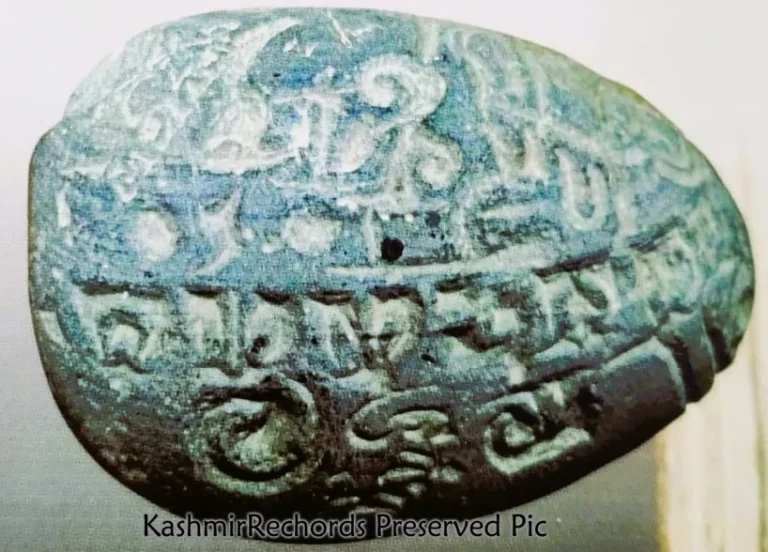
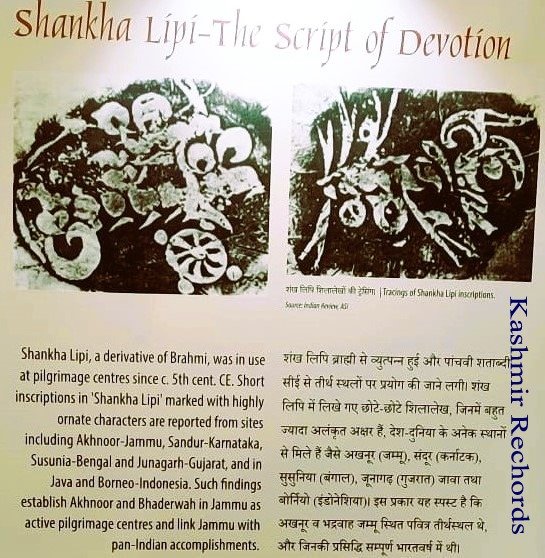
Shankha Lipi, also known as “Conch Script” or “Shell Script,” refers to ornate spiral characters believed to be derivatives of the Brahmi script. These characters resemble conch shells (Shankhas) and have been discovered in inscriptions across north-central India, dating back to the 4th to 8th centuries CE. Notably, Shankha Lipi inscriptions have been found in the Akhnoor and Bhaderwah regions of Jammu and Kashmir, indicating that these areas were significant pilgrimage centers in ancient times.
Characteristics and Distribution

The ornate, ciphered spiral characters of Shankha Lipi are thought to belong to a new script family derived from Brahmi. In addition to Akhnoor and Bhaderwah, inscriptions have been uncovered in Bihar, Maharashtra, Karnataka, Gujarat, and even in Java and Borneo, Indonesia. Prominent sites include the Mundeshwari Temple in Bihar, the Udayagiri Caves in central India, Mansar in Maharashtra, and Junagarh in Gujarat. These inscriptions were typically engraved on temple pillars, freestanding columns, and rock surfaces, often at sites with prominent cave shrines.
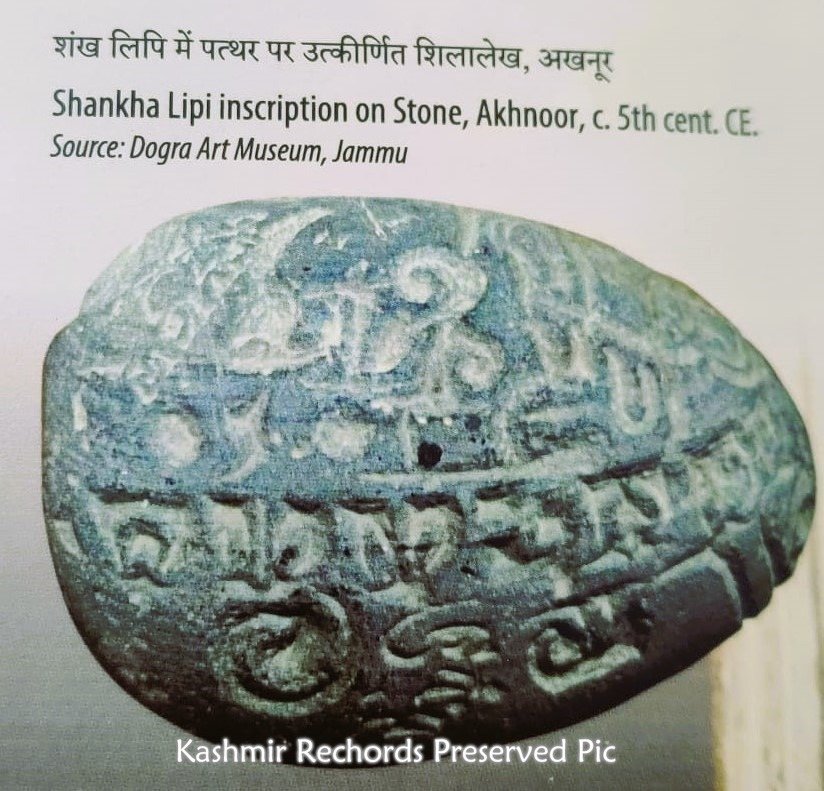
Shankha Lipi was not used for lengthy texts but primarily for denoting names, auspicious symbols, or a combination of both. The characters were usually of similar or slightly larger size than Brahmi letters. However, some inscriptions, such as those at the Udayagiri Caves, feature gigantic letters several meters high. The use of Shankha Lipi on small stones found in Akhnoor—now housed in the Dogra Art Museum, Jammu—and stone boulders near Bhaderwah further underscores its historical significance in the region.

Historical Significance in Jammu and Kashmir

Archaeological evidence from Manda, Akhnoor, unearthed in the 1960s, suggests that Jammu was exposed to early writing systems in the subcontinent. Shankha Lipi inscriptions from Akhnoor and Bhaderwah reinforce the notion that these towns were active pilgrimage centers between the 4th and 7th centuries CE. Dr. Lalit Gupta, a noted scholar and art critic, posits that these inscriptions were used by pilgrims to record their visits, further affirming the historical importance of Ambaran (Akhnoor) and Bhaderwah as sacred sites.

Research on Shankha Lipi

The first comprehensive study of Shankha Lipi was conducted by Richard Salomon, who classified it as a derivative of Brahmi that had evolved into a distinct script family. Salomon found sufficient characters in Shankha Lipi to represent the syllables of Sanskrit and tentatively assigned sounds to some characters. Later, Prof. B. N. Mukherjee proposed a system of decipherment, suggesting that Shankha Lipi was an ornamental adaptation of Brahmi. Most inscriptions date to the Gupta period and typically feature individual names, akin to ornamental signatures.
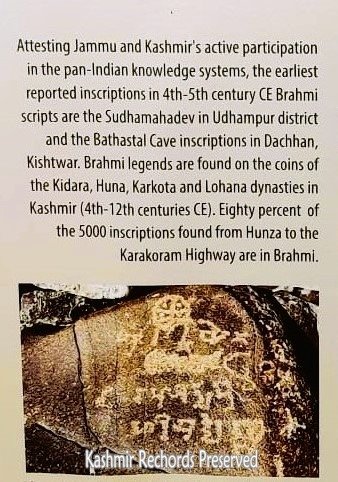
Jammu’s Brahmi Inscriptions

Jammu has also yielded significant Brahmi inscriptions. The Bathastal inscription, discovered in 1921 by R. C. Kak, dates to the 3rd to 5th centuries CE and is considered one of the oldest Brahmi inscriptions in the region. Scholars have compared it to coins of Indo-Bactrian kings and inscriptions from neighboring areas.

Another noteworthy inscription is the Bhaderwah Cave Inscription, located inside the Gupt Ganga shrine on the banks of the Neru River. Identified as the longest Brahmi inscription in the region, it is one of the oldest from the Himalayan valleys of the Chenab region. Additionally, a Brahmi inscription has been found on an iron trident at the Sudhmahadev Shiva temple.

Cultural Ties and Initiatives

The Indian Council of Historical Research (ICHR), under the Ministry of Education, is actively promoting a project titled “Jammu, Kashmir, and Ladakh Through the Ages.” This initiative highlights the age-old cultural ties of Jammu and Kashmir with the rest of India, emphasizing findings like Brahmi and Shankha Lipi inscriptions. Such efforts underscore the region’s rich historical and cultural heritage, fostering a deeper understanding of its contributions to India’s ancient past.
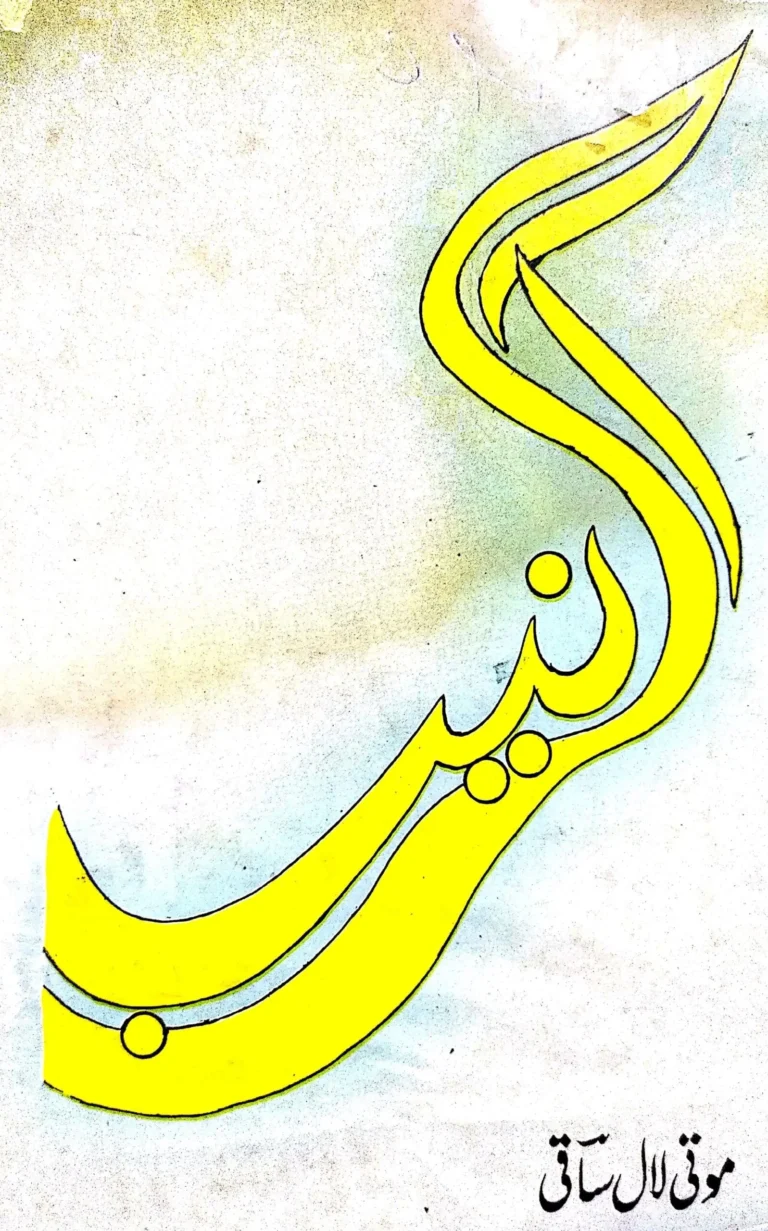
Aagar Naeb: A Window to Kashmir’s Civilizational Heritage

(By: Kanwal Krishan Lidhoo)*

Aagar Naeb (The Source), published in 1998, is a profound scholarly work by Moti Lal Saqi, one of Kashmir’s most revered intellectuals. Driven by his deep love for Kashmir, Saqi foresaw a dual crisis that the region’s future generations might face—a loss of historical connection amidst chaos and existential upheaval. His book serves as both a reflection on these challenges and a guiding light for the preservation of Kashmir’s cultural identity.

A Generation at Crossroads

Saqi anticipated a dual assault on Kashmir’s collective consciousness. On one hand, there was the risk of a disoriented generation, forced to rebuild their lives in distant lands, losing touch with their historical roots. On the other, a generation trapped in the vortex of terror and disorder prioritized survival over understanding their heritage. This erosion of historical consciousness, he warned, could compromise the essence of Kashmir’s identity.

Despite this, Saqi maintained hope. He believed that, eventually, the turmoil would subside, allowing the pristine waters of Kashmir to once again reflect the grandeur of its civilizational heritage.

In the foreword Saqi writes:

“Many historians have attempted to explore the depths of Kashmir’s historical and cultural waters. However, many lacked the ability to connect with its soil or truly grasp its value system. This has resulted in superficial discussions, fragmented opinions, and an absence of a unifying central idea.”

He further adds:

“The Book Aagar Naeb is an effort to understand and interpret Kashmir’s history unconventionally. I have sought to present to my esteemed readers what others have recorded about Kashmir, while also contributing my own findings that, once recovered, could realign our understanding.”

The Scholarly Depth of Aagar Naeb

In Aagar Naeb, Saqi meticulously addresses the complex challenges of historiography. Drawing upon an extensive array of sources—ranging from ancient Chinese, Buddhist, and Vedic texts to the Mahabharata, Puranas, Alberuni’s works, Kalhana’s Rajatarangini, Taranatha’s accounts, and Aurel Stein’s studies—Saqi delves into the intricate tapestry of Kashmir’s past.
Through his analysis, he unearths the nuanced details that define the cultural and civilizational essence of Kashmir. His narrative does not merely recount historical events but seeks to illuminate the threads connecting the past to the present, transforming ancient texts into a rich mosaic of insights.

A Vision Beyond History

Saqi’s approach to historiography is both scholarly and visionary. He sought to bridge the opacity of ancient sources with the contemporary need to understand Kashmir’s grandeur. By rediscovering and reinterpreting these narratives, he aimed to inspire a renewed connection to the region’s shared history.

Through Aagar Naeb, Saqi emphasized the enduring value of cultural preservation. His vision transcends the immediate challenges of his era, offering a blueprint for future generations to reclaim their identity and honor their heritage.

A Call to Preserve Kashmir’s Soul

Aagar Naeb is more than a historical account; it is a call to action. Moti Lal Saqi reminds us that the pristine waters of Kashmir still hold the reflection of its civilizational soul. His work stands as a testament to the resilience of the Kashmiri people and the enduring power of cultural preservation.

Saqi’s faith in the resilience of Kashmir’s heritage continues to inspire, providing a guiding light for those seeking meaning amidst the tumult. Aagar Naeb remains a timeless beacon for the preservation and celebration of Kashmir’s identity.

*Kanwal Krishan Lidhoo, an accredited translator of Kashmiri, Urdu and Hindi by Sahitya Akademi New Delhi and Indian Institute of Languages Mysore,  was  associated with the institution of All India Radio (AIR) where he worked as a Senior Producer at Radio Kashmir Srinagar and Jammu. He is one of the Directors of Kashmir Rechords.

A Kashmiri Pandit Who Shaped Lahore’s Administration

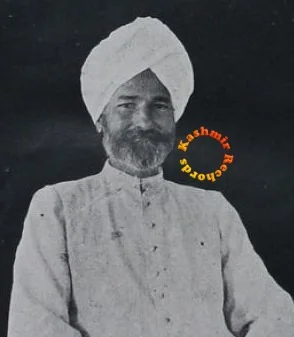
Pandit Amar Nath Muttoo’s life is not just a chapter in history; it is a testament to the enduring spirit of the Kashmiri Pandit community. From his role as a Deputy Collector in Lahore to his pivotal contributions to community documentation, his story reminds us of the power of dedication and the importance of preserving our collective past.
(Kashmir Rechords Exclusive)

Meet Pandit Amar Nath Muttoo, a distinguished Kashmiri Pandit, who  served as an officer of the Punjab Civil Service (PCS) during the British Raj. Rising to the esteemed position of Deputy Collector in Lahore, he retired in 1932 after a noteworthy career in public administration. His responsibilities encompassed overseeing revenue collection, maintaining law and order, and supporting administrative functions in Lahore, one of Punjab’s most prominent cities.

Lahore, during his tenure, was not merely a bustling urban centre but a significant cultural and political hub. It was a period marked by the fervour of the Indian independence movement and the socio-political transformations that would ultimately shape the subcontinent’s destiny. Pandit Amar Nath Muttoo’s role as Deputy Collector placed him at the confluence of governance and history, making his contributions uniquely significant.

Pandit Amar Nath resided in Kothi Number 6, Model Town, Lahore. His home was more than a residence; it was a landmark that bore witness to the vibrant cultural and political currents of the time. From this address, he carried out his duties, navigating the complexities of British colonial governance while addressing the needs of the local population. His presence in Model Town symbolized the rising influence and adaptability of Kashmiri Pandits in diverse professional spheres.

A Visionary for the Kashmiri Pandit Community

One of Pandit Amar Nath Muttoo’s most enduring contributions was his assistance to the Kashmiri Pandit Association of New Delhi. He provided invaluable statistical data on Kashmiri Pandits living across British India, including areas now part of Pakistan. His meticulous records and insights enabled the Association to compile and publish the Directory of Kashmiri Pandits in 1936. This directory remains a treasure trove of historical information, documenting the spread of the community across 118 cities and towns.

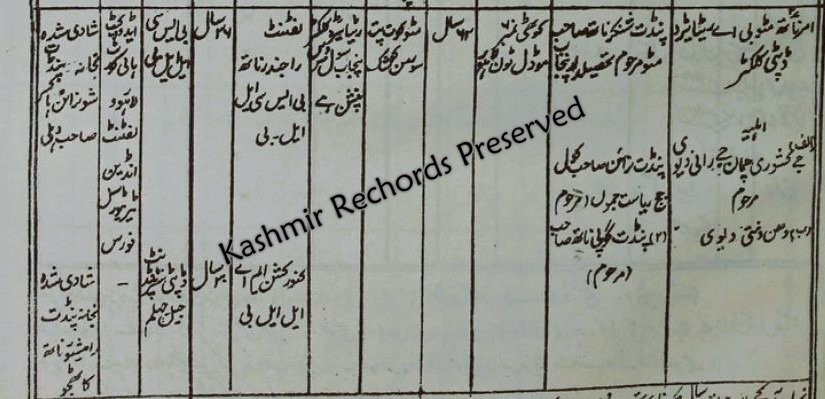
A Page from Kashmiri Pandit Directory-1936, carrying details about Pt Amar Nath Muttoo

Family and Personal Life

The Directory of Kashmiri Pandits also sheds light on Pandit Amar Nath Muttoo’s family background. Born to Pandit Shanker Nath, a Tehsildar in Punjab, Amar Nath married twice. His first wife, Jai Kishori, the daughter of Pandit Narayan Kaul, a judge in Jammu, passed away early. His second wife, Dhanvanti Devi, became his partner through much of his life.

Pandit Amar Nath had two sons who carried forward his legacy of excellence:

Pandit Rajinder Nath Muttoo: An advocate at the Lahore High Court, he also served as a lieutenant in the Indian Territorial Force (ITF), a part-time military organization established in 1920. The ITF’s legacy later evolved into the Territorial Army post-independence.

Pandit Kanwar Kishen Muttoo: He worked as the Deputy Superintendent of Jail in Jhelum Town, contributing to law enforcement and administration.

Both sons upheld the family’s tradition of resilience and professional distinction. Rajinder Nath married the daughter of Shiv Narayan Haksar of Delhi, while Kanwar Kishen wed the daughter of Pandit Rameshwar Nath Kathju. These alliances underscored the Kashmiri Pandit community’s dedication to maintaining cultural cohesion despite the challenges of dispersal and distance.

Kashmir Rechords continue to honor the legacy of individuals such as Pandit Amar Nath Muttoo by unearthing and sharing their stories. These narratives inspire future generations to reconnect with their heritage and appreciate the resilience and contributions of their ancestors.

Pandit Amar Nath Muttoo’s life is not just a chapter in history; it is a testament to the enduring spirit of the Kashmiri Pandit community. From his role as a Deputy Collector in Lahore to his pivotal contributions to community documentation, his story reminds us of the power of dedication and the importance of preserving our collective past.
For those interested to know about Kashmiri Pandits Unique Directory of 1936, may click here:

The Journey of Jia Lal Dhar Saraf: From Material Success to Profound Spiritual Contribution

(Kashmir Rechords Exclusive)

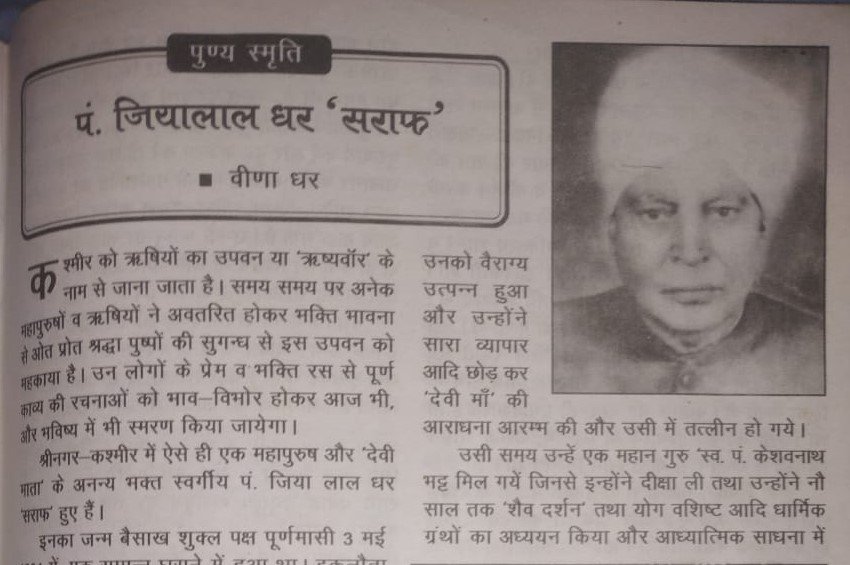
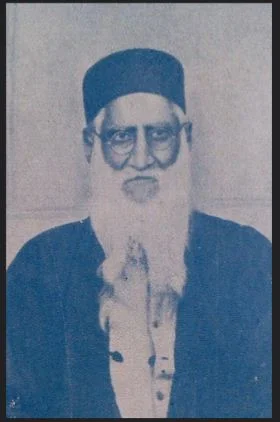
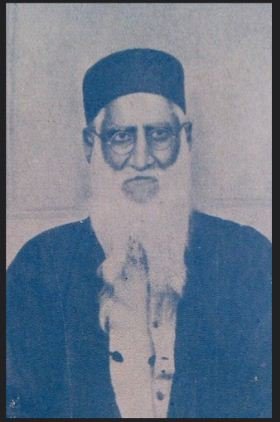
The bustling streets of Srinagar in the early 20th century were a testament to the thriving trade that connected Kashmir to the rest of the Indian subcontinent. Among the prominent figures shaping this economic tapestry was Pandit Jia Lal Dhar (Saraf), a man whose life journey would evolve from material success to profound spiritual contribution. Born into a prosperous family on May 3, 1901, Pandit Dhar seemed destined for a life of comfort and affluence. However, his story took an extraordinary turn—one that continues to inspire generations.
Orphaned at a young age after losing his father, Pandit Dhar demonstrated resilience and an unyielding spirit. Determined to honor his family’s legacy, he expanded his business ventures beyond the serene valleys of Kashmir to the bustling trade centers of Mumbai and Lahore. These were no small feat, especially in the pre-partition era when such undertakings required exceptional acumen and courage. By the time he reached his prime, Pandit Jia Lal Dhar had not only established a successful enterprise but also earned the respect of his peers, becoming the president of the Punjabi-dominated trade guild in Maharaj Ganj, Srinagar.

Yet, for Pandit Jia Lal Dhar, wealth was not an end but a means to uplift others. His philanthropic endeavors extended to individuals and organizations alike, reflecting a deep commitment to the welfare of his community.

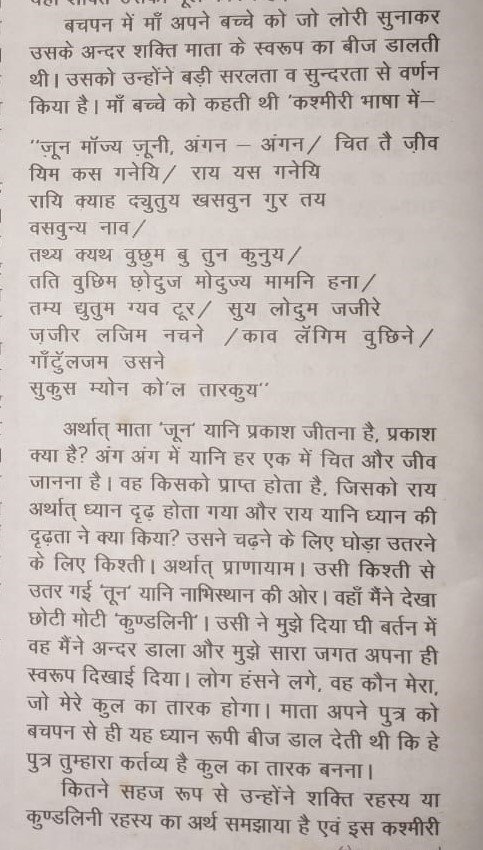
A page from Kashur Samachar, Dec 2007

There is a mention of life and works of this great saintly figure in December 2007 issue of Kashur Samachar, wherein Smt Veena Dhar has given a detailed account of the life and works of Pt Jia Lal Dhar Saraf.

The Fateful Accident

Life, however, had a different path in store for him. During a routine business trip to Pampore to procure saffron, Pandit  Jial Lal Dhar’s vehicle swerved to avoid a stranded cow, resulting in a severe accident. Though he survived miraculously, the experience left an indelible mark on his psyche. The near-death encounter brought forth a profound realization about the fragility of life and the futility of material pursuits in the face of mortality.

This epiphany became a turning point, steering him away from worldly ambitions towards the pursuit of spiritual enlightenment. Guided by his mentor, Pandit Keshav Nath Bhat, Pandit Dhar delved deeply into Kashmir’s Shaiva philosophy, dedicating himself to the worship of Para Shakti, the Universal Mother.

A Spiritual Renaissance

Pandit Jia Lal’s  spiritual transformation was not confined to personal enlightenment. His devotion to the Divine Mother endowed him with remarkable abilities, including the power to heal. Pilgrims from across the valley sought his blessings at Pokhribal, where his presence was a source of solace and hope. Yet, his greatest contribution lay in his efforts to bridge the esoteric wisdom of Shaiva philosophy with the cultural and linguistic fabric of Kashmir.

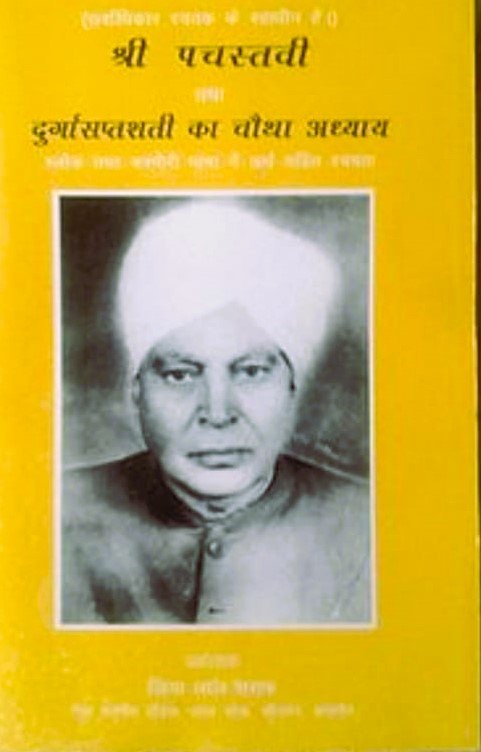
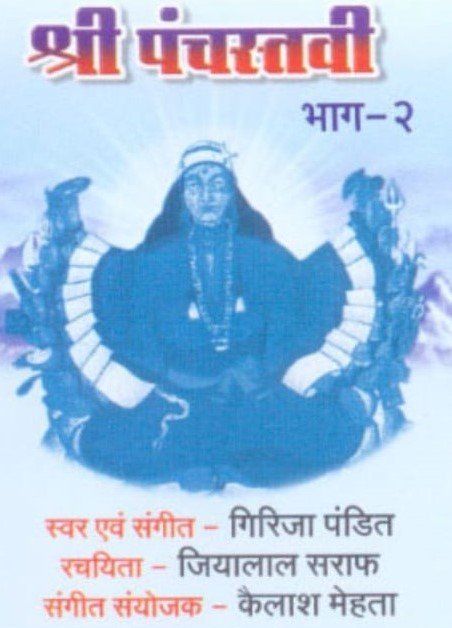
Inspired by the Bhakti poets, Pandit Jia Lal Dhar took upon himself the monumental task of translating sacred Sanskrit texts into Kashmiri. His most iconic work is the Kashmiri translation of Panchastavi, a Sanskrit compilation of devotional hymns divided into five “stavs”: Laghustav, Charchastav, Ghatstav, Ambhastav and Sakaljananistav. Pandit Dhar translated these into Kashmiri in a lyrical form, singing them in praise of Mata Sharika, the Divine Mother. The Panchastavi had long been revered for its spiritual depth and Pandit Dhar’s translation brought it into the homes and hearts of Kashmiri-speaking devotees.

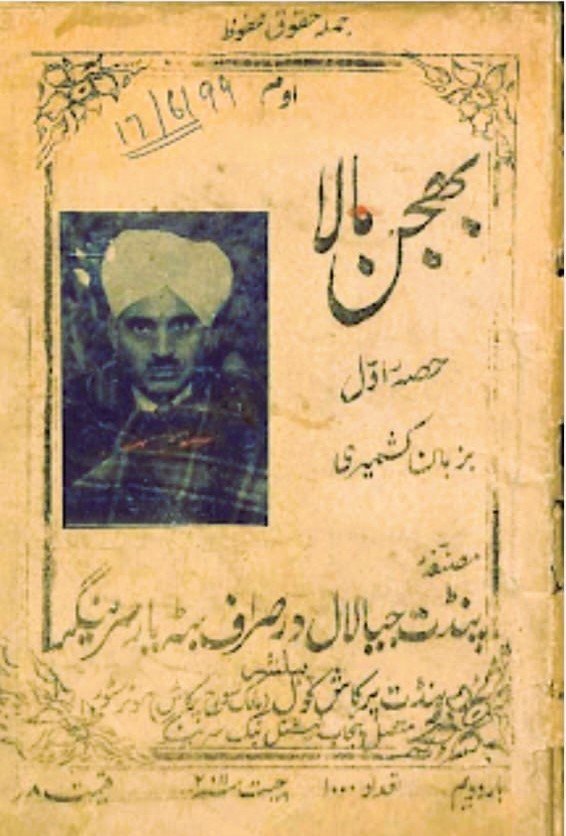
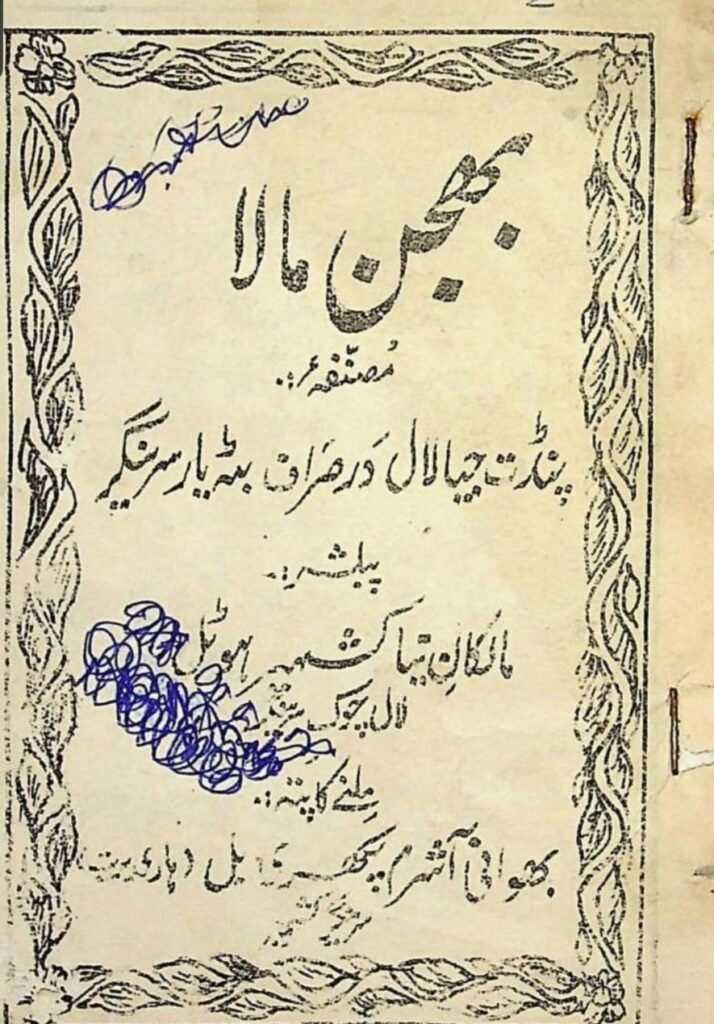
Bhajan Malas in Kashmiri

 A Devotional Contribution to Kashmiri Literature

Besides Panchastavi, Pandit Jia Lal  Dhar translated Durga Saptashati and Gauri Stuti into Kashmiri and composed numerous Bhajans that became household entities in Kashmir. He also credited with interpreting the mystical significance of a traditional lullaby sung by Kashmiri mothers to their children. The lyrics, believed to awaken Kundalini Shakti, carried a spiritual essence that Pandit Dhar brought to light:

Zoon Maej Zoon… Angan Angan Chit Tai Zeev Yim Kas Ganeye… Raayas Ganeye Raay kya dyut… Khasvun Gur Tai Vasvenie Naav…”

These interpretations exemplified his mission to make spirituality accessible and relevant to everyday life.

A Lasting Legacy

Pandit Jia Lal Dhar passed away on April 17, 1975, leaving behind a legacy that continues to resonate in Kashmir’s spiritual and cultural landscape. His life serves as a testament to the transformative power of spiritual awakening and the enduring impact of selfless service. Through his translations, teachings and healing presence, he illuminated the path for countless individuals, reminding them of their spiritual heritage and the boundless possibilities of human endeavour.

In paying tribute to this illustrious son of Kashmir, Kashmir Rechords celebrates not just a man but a movement—a bridge between the sacred and the secular, the past and the present. Pandit Dhar’s story remains a beacon of hope and inspiration, urging us to embrace our rich traditions while striving for a higher purpose.

Sahir Dehlvi: A Kashmiri Pandit Scholar of Sanskrit, Arabic

(Kashmir Rechords Exclusive)

Urdu literature has long celebrated the spellbinding brilliance of its “Sahirs”—poets whose words cast a timeless enchantment. Among them, Sahir Ludhianvi is a household name, revered for his lyrical genius and progressive ideals. However, few know of Pandit Amar Nath Madan `Sahir Dehlvi’, a poet whose life predates Ludhianvi’s and whose contributions to Urdu, Persian and Sanskrit literature laid a profound yet overlooked foundation.

Born in 1863 in Bareilly in a Kashmiri Pandit family, Pandit Amar Nath Madan adopted the pen name “Sahir” long before Sahir Ludhianvi (born in 1921) graced the literary world. Sahir Dehlvi was not only a poet but a scholar of remarkable depth, fluent in Arabic, Persian and Sanskrit. His life spanned nearly a century, ending in 1962 at the age of 99. This extraordinary longevity allowed him to witness a tumultuous era in Indian history, from the decline of the Mughal Empire to the socio-political transformations of the 20th century.

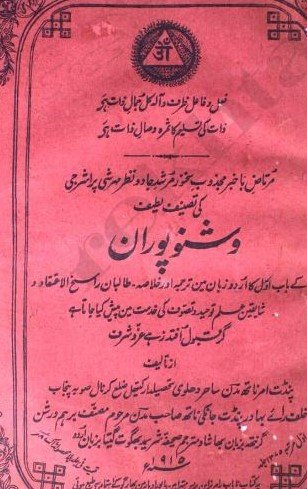
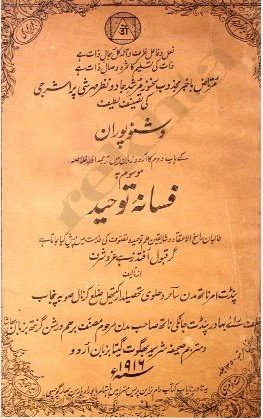
Pandit Amar Nath Madan’s life journey was steeped in both service and creativity. While serving as Tehsildar in Kaithal, District Karnal, Punjab Province, he undertook the monumental task of translating two volumes of the Vishnu Puran into Urdu in 1914 and 1915. This accomplishment was not only remarkable for its literary merit but also for its timing, as it preceded the birth of the celebrated Sahir Ludhianvi by several years. It was an extraordinary feat that bridged cultural and linguistic divides. This achievement underscores his scholarly dedication and his commitment to making Hindu scriptures accessible to Urdu readers.

Two volumes of Vishnu Purans.Pic Courtesy: Rekhta
Sahir Dehlvi’s early years were marked by intellectual rigor. Deeply influenced by Hindu spirituality and Islamic mysticism, his poetry reflected a synthesis of these traditions. His Urdu Diwan, Kufr-e-Ishq, and Persian collection, Chiragh-e-Maarfat, are masterpieces of philosophical and mystical thought. They delve into themes of divine love, human suffering, and the search for transcendence, blending Vedantic wisdom with Sufi ethos.

A Witness to Decline and Revival

Residing for much of his life at Lal Haveli in Mohalla Choodigiran, Delhi, Sahir Dehlvi lived through the decline of the Mughal Empire and the consequent deterioration of Delhi’s socio-cultural fabric. These changes deeply influenced his work, infusing his poetry with a sense of loss, reflection, and resilience.

Delhi’s cultural decline, however, did not deter Sahir Dehlvi’s creative spirit. Instead, it steered him towards a mystical outlook, where poetry became both a sanctuary and a vehicle for preserving a vanishing heritage.

Custodian of a Literary Legacy

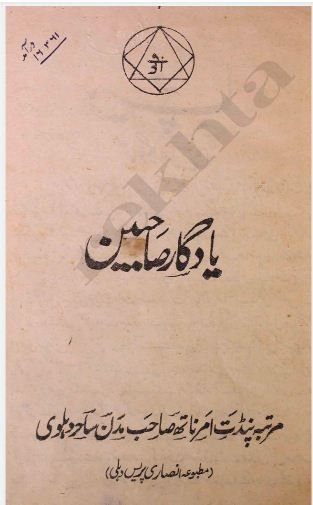
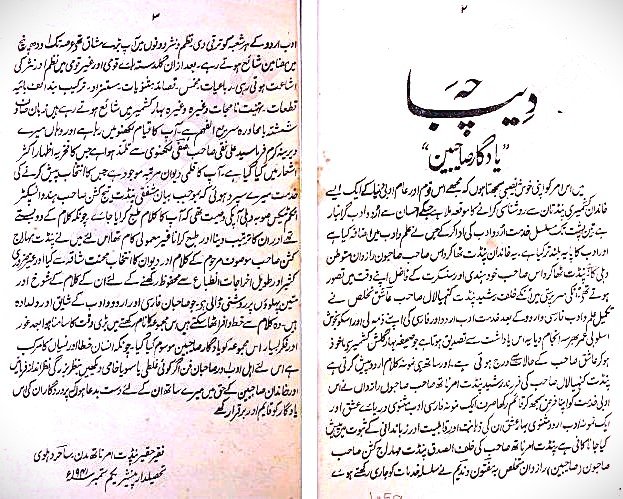
Sahir Dehlvi’s role as a preserver of literary traditions is evident in his editorial work on Yaadgar-e-Sahiban. This monumental effort was dedicated to the legacy of Pandit Maharaj Kishan Razdan, known as “Maftoon,” another luminary of Urdu poetry. Maftoon’s works, spanning genres like Masnavi, Rubaiyat, and Qataat, were entrusted to Sahir Dehlvi, who painstakingly refined and published them in 1941.

This act of devotion was emblematic of Sahir Dehlvi’s broader mission: to ensure that the richness of Urdu literature endured, even in the face of historical upheaval.

Yadgar-e-Sahibaan.Pic Courtesy: Rekhta

A Legacy in Shadows

Despite his contributions, Sahir Dehlvi’s name remains overshadowed by later poets like Sahir Ludhianvi. Yet, his life and works offer a poignant reminder of the rich heritage of Kashmiri Pandits in Urdu literature. His poetic voice, steeped in mysticism and philosophy, stands as a bridge between traditions, embodying a timeless harmony of thought and expression.

In celebrating Pandit Amar Nath Madan Sahir Dehlvi, we honor not just a poet but a visionary whose words continue to resonate, reminding us that the true “Sahir” is one whose legacy transcends the limits of time and recognition.

Pitambar Nath Dhar ‘Fani’: A Poet’s Eternal Love for Kashmir

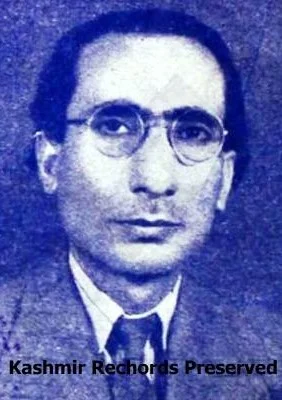
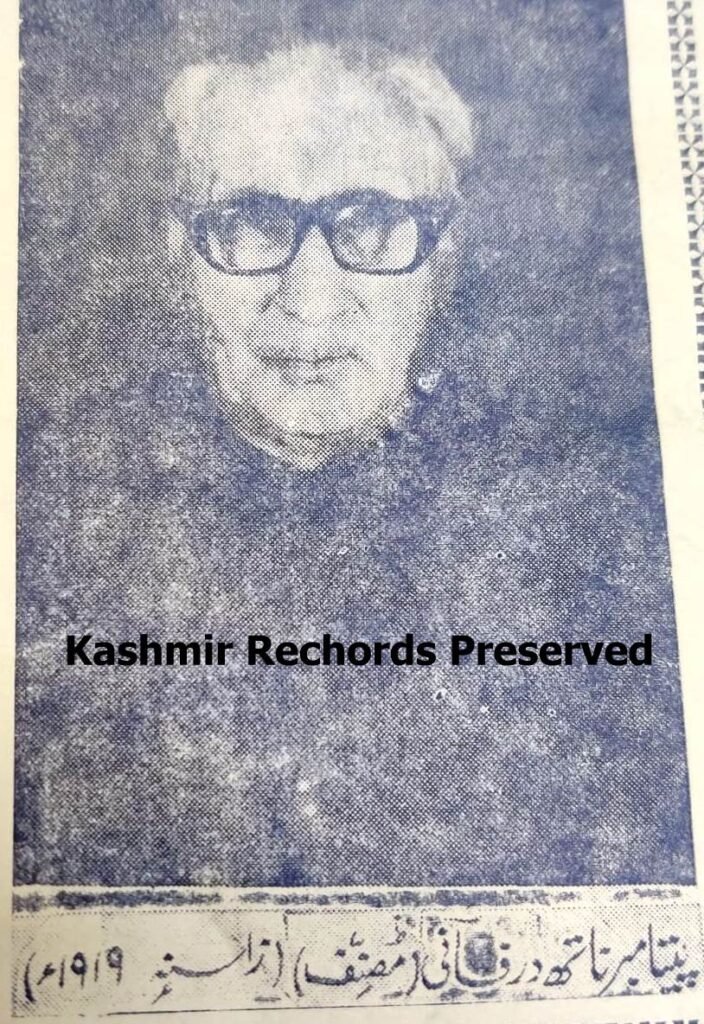
Pitambar Nath Dhar ‘Fani’ was not just a poet—he was a storyteller, a teacher  and a beacon of cultural harmony whose life and works embodied a profound love for Kashmir. Though his final years were marked by separation from the land he cherished, his words continue to echo the beauty, resilience and spirit of his ancestral home.

Born in the picturesque Kashmir Valley in 1919, Fani’s early life was deeply intertwined with the region’s culture and traditions. He grew up surrounded by the mystique of mountains and rivers that later became vivid themes in his poetry. His natural flair for languages—Kashmiri, Persian, Urdu and Arabic—allowed him to weave a rich tapestry of verse that celebrated the essence of Kashmir.

The Teacher Who Inspired Generations

Fani’s career as an educator at Islamia High School in Srinagar was legendary. Students recall him as a towering figure with a lean frame, curly hair and glasses—a man whose presence was as commanding as his intellect. He wasn’t just a teacher; he was a guide who infused life into morning assemblies with captivating speeches on morality, discipline, and spirituality. He often led students in reciting prayers from a school “Book of Prayers,” a collection that included his own devotional poems alongside works by greats like Iqbal and Mehjoor.

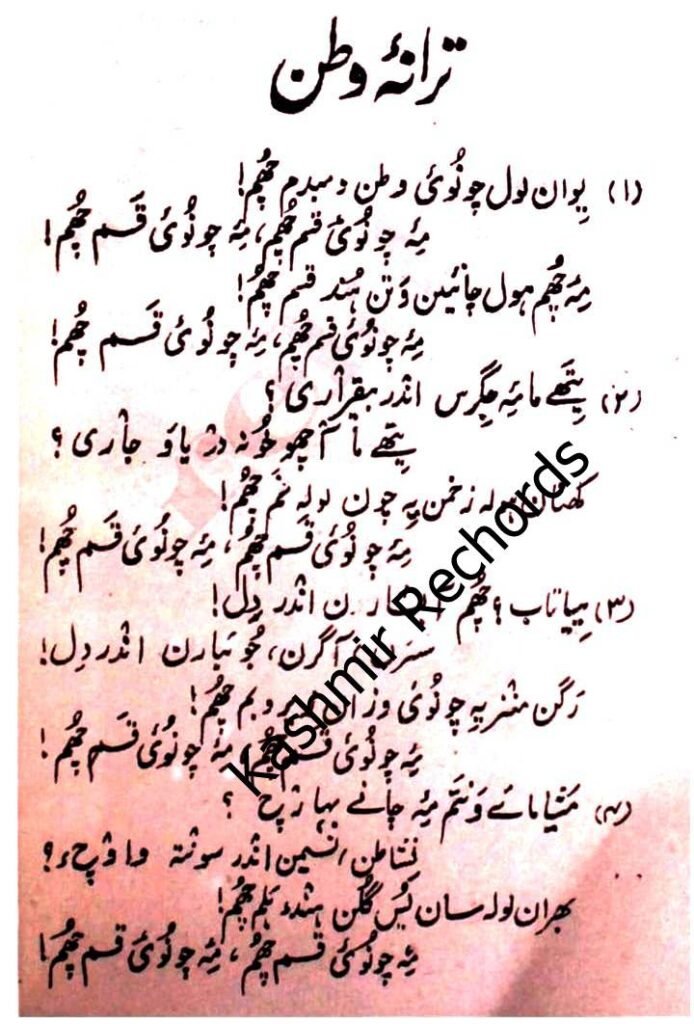
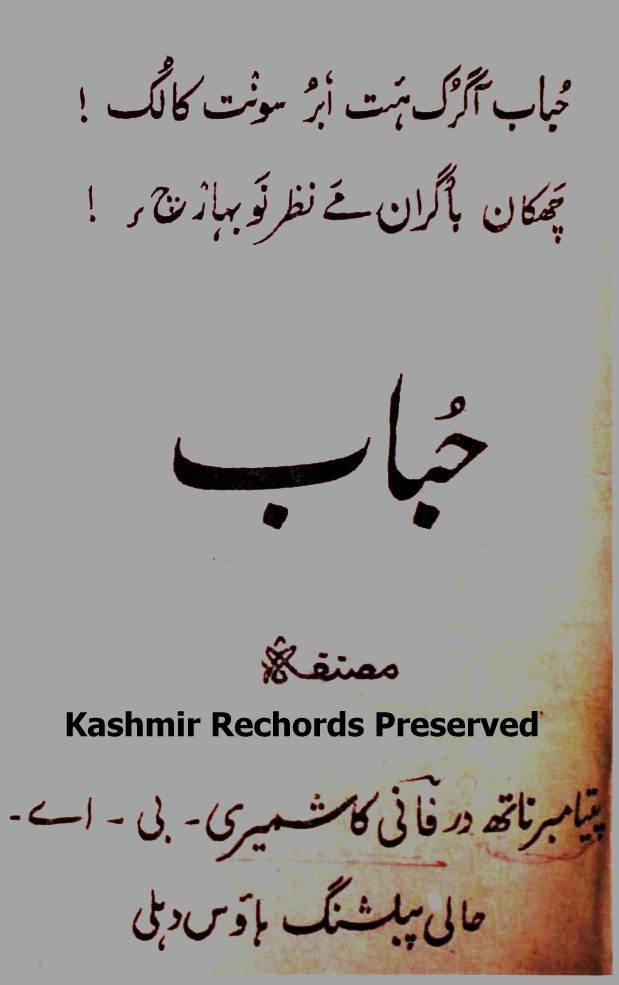
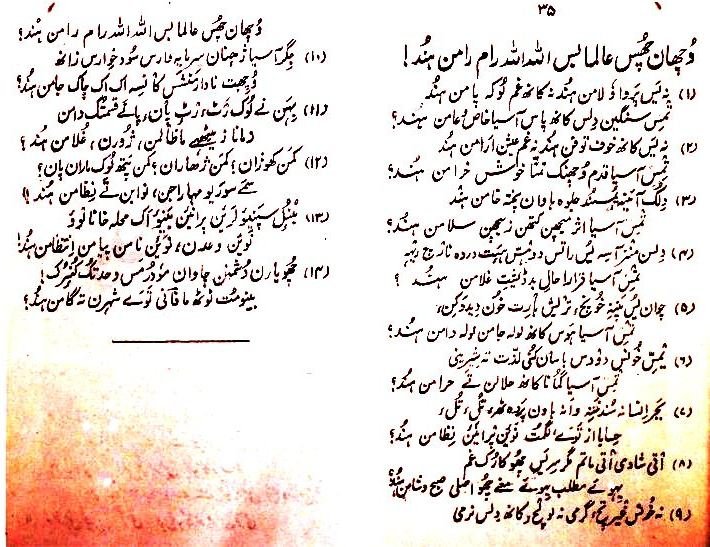
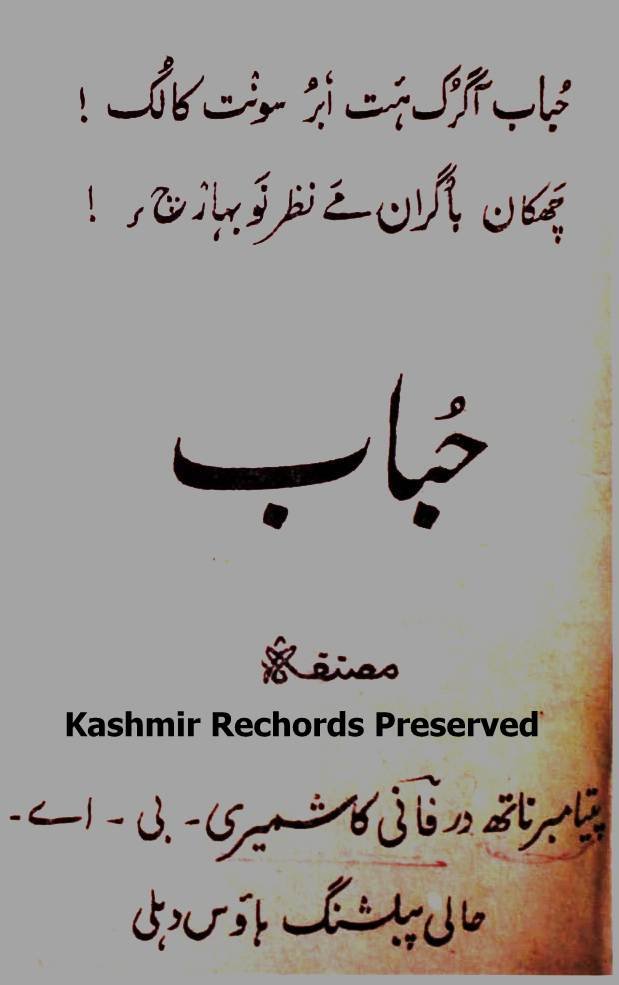
Pages from Fani’s bi-lingual Book Hubab

A Voice That Transcended Boundaries

These prayers reflected his unique poetic gift: the ability to transcend boundaries. Fani wrote devotional hymns for Hindu gods, elegies for Imam Hussain and praises for the Prophet Muhammad, seamlessly blending cultures and traditions in his verse. His bilingual work Hubab, featuring Kashmiri poems with Urdu translations, stands as a testament to his love for his homeland. In other books  like Poshe Daeil and Posh Baag, he celebrated the beauty of Kashmir, its people  and their indomitable spirit.

(Pitambar Nath Dhar Fani, post 1990)

The Pain of Exile: Forced from the Homeland

Yet, Fani’s story took a heartbreaking turn during the mass exodus of Kashmiri Pandits in 1989–1990. Forced to leave his home in Lal Nagar, Srinagar, he first moved to Trikutanagar, Jammu and eventually to Gurgaon, far from the valley he adored. This displacement was more than a physical journey—it was a spiritual exile for a man who had lived and breathed the essence of Kashmir.

Creativity in Adversity: The Making of Bhakti Kousam

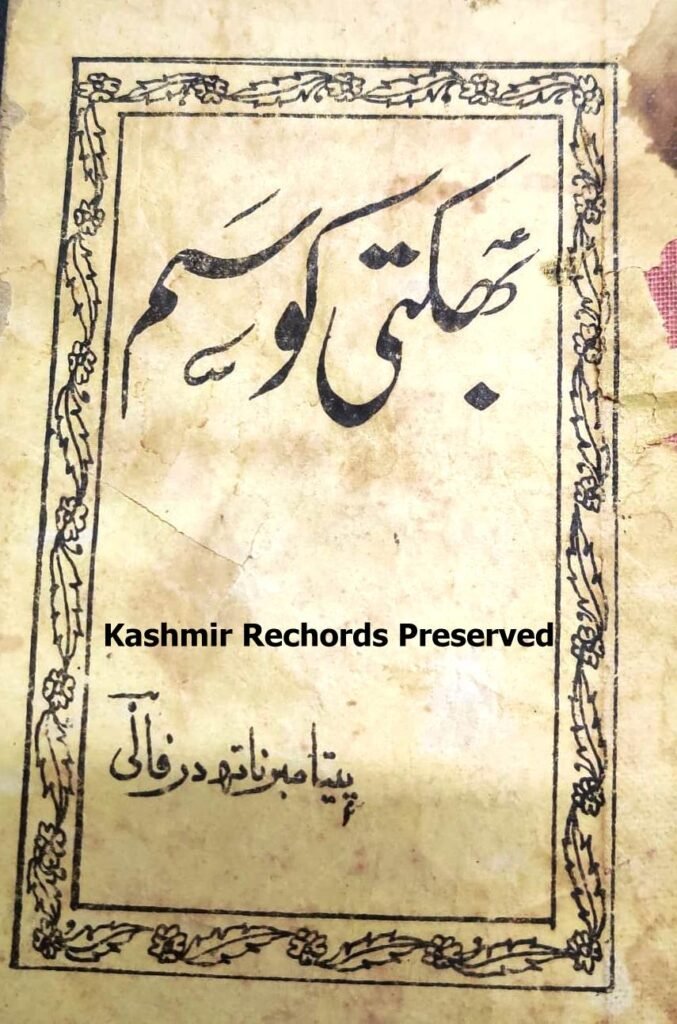
A Collection of Bhajans and Leelas.

Despite the odds, Fani continued to create. In 1990, he managed to publish Bhakti Kousam, a collection of Kashmiri devotional bhajans and Leelas. The journey to bring this work to life was fraught with challenges: finding a calligrapher in Jammu and securing a printer willing to take on the project tested his resolve. Yet, with the help of the J&K Cultural Academy and the Qaumi Printing Press, he overcame these hurdles, leaving behind what would be one of his final contributions to literature.

The Final Chapter: A Poet Separated from His Soil

As Fani spent his last days in Gurgaon, Haryana, he remained deeply connected to Kashmir through his poetry. He passed away on January 9, 2018, at the age of 99, without the solace of returning to his homeland. Even in death, he was denied the wish to be cremated in the soil of Kashmir—a poignant reminder of the pain of displacement.

Fani’s Love for Kashmiri

Pitambar Nath Dhar ‘Fani’ was a poet of unparalleled depth and a teacher whose legacy endures in the hearts of his students and admirers. His life, marked by love for his homeland and the anguish of separation, is a testament to the unbreakable bond between a poet and his land. Through his works, Fani immortalized Kashmir, ensuring that its beauty, culture, and resilience will continue to inspire generations to come.

The Story Behind Runa Laila’s Kashmiri Song!

(Kashmir Rechords Report)

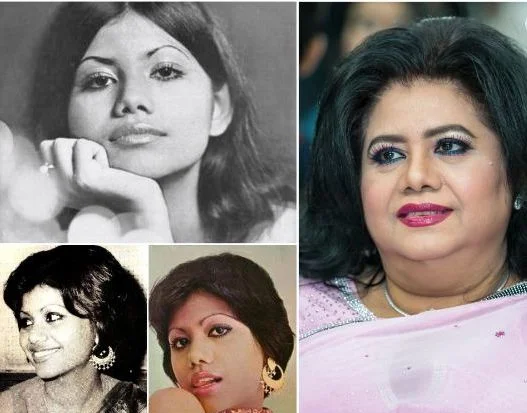
Runa Laila, a celebrated singer of the subcontinent, is renowned for her extraordinary talent and versatility across genres and languages. While her contributions to Bengali, Urdu and Hindi music are widely acknowledged, her unique connection to Kashmir through a single, iconic Kashmiri song remains a fascinating chapter in her illustrious career.

Attired in Kashmiri Pheran, Rouna Laila is singing Mehmood Gami’s song.

In April 1976, as part of a cultural exchange programme, Runa Laila visited India and performed at All India Radio Mumbai and Radio Kashmir, Srinagar. Her visit to Srinagar included a public gathering organized by then Chief Minister Sheikh Mohammad Abdullah, where she donned a traditional Kashmiri pheran and sang Mahmood Gami’s timeless composition, Katyu Chuukh Nundh Bane—Walo Ma Shok Myane.”

This was her first and only Kashmiri song, brought to life under the guidance of the renowned Kashmiri composer Shri Tej Krishen Jalali.  Jalali, who was entrusted with the song’s composition by the Secretary of the J&K Cultural Academy, M.Y. Taing, had meticulously taught Runa  Laila the pronunciation and nuances of the Kashmiri lyrics during her stay at the J&K Circuit House. The song, performed live at the Tagore Hall in Srinagar before an enthralled audience, received resounding acclaim and was later recorded by Radio Kashmir for broader dissemination.

Lyrics of Mahmood Gami’s Song:

Katyu Chuukh Nundh Bane
Walo Mashouk Myane
Mei Korui Na Chanai Chanai
Walo Mashouk Myane
Sharabik Pyaleh Bharyoo
Gulaban Maale Kkaryo
Pagah Ya Kael Maryo
Walo Mashouk Myane
Bah Surat Chukh Cze Pari
Cze Shoobi Jaamai Zarri
Kamov Taweezei Kkareii
Walo Mashouk Myane

Her confident and authentic rendition of this Kashmiri classic left the audience in awe, as if she were a native of the Valley. This rare performance highlights not only her linguistic adaptability but also her ability to connect with the cultural essence of the song.

Runa Laila’s Legacy in Music

Runa Laila’s illustrious career spans decades, with a repertoire that includes iconic songs such as “Dama Dam Mast Qalandar” and Hindi hits like “Unki Nazron Se Mohabbat” and “Suno Suno Ye Duniya Walo.” Singing in 17 languages, including Bengali, Urdu, Hindi and Kashmiri, she has seamlessly bridged cultural and linguistic divides with her melodious voice.

Her foray into Kashmiri music remains a testament to her versatility and dedication, further enriching the musical tapestry of the subcontinent.

The Kashmiri Pandit ‘Sirs’

(By: B.Revti)

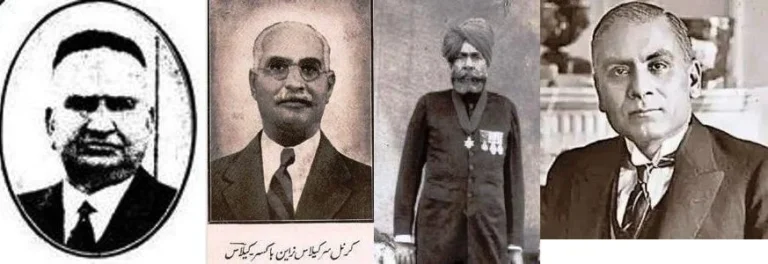
The Kashmiri Pandit community, though a small minority, has produced individuals of exceptional calibre who were recognized with the esteemed ‘Sir’ title for their significant contributions to society. This honor was conferred in recognition of their extraordinary achievements across various domains, including politics, administration, military service, arts and sciences. Here, we spotlight four eminent Kashmiri Pandits who received this distinguished title.

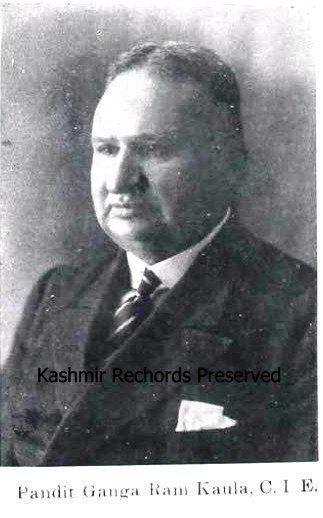
Sir Ganga Ram Kaula: A Pioneer in Public Service

Born on May 9, 1877, in Lahore, Punjab (now Pakistan), Sir Ganga Ram Kaula rose to prominence as India’s first Accountant General. Educated at Central Model School and Government College, Lahore, he began his career in 1896 as an Assistant Examiner in the Indian Audit and Accounts Department. Through relentless dedication, he ascended to key positions, including Accountant General (1921) and Director of Railway Audit (1929-1930). His expertise in finance and administration earned him widespread acclaim. He retired in 1932, leaving behind a legacy of excellence in public service.

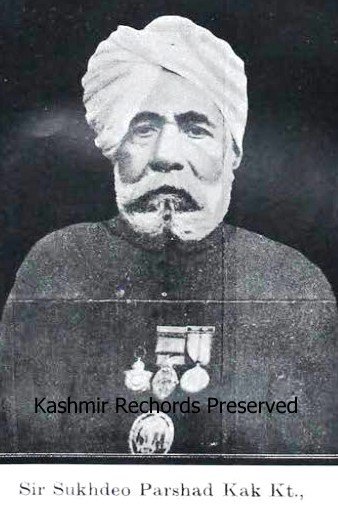
Sir Sukhdeo Prasad Kak: Architect of Jodhpur’s Development

Born in 1862 in Jodhpur, Rajasthan, Sir Sukhdeo Prasad Kak came from a family with roots in the Kulgam region of Kashmir. A graduate of Calcutta University, he began his illustrious career as an administrator in the princely State of Jodhpur. His tenure was marked by transformative reforms in land revenue, law and governance. Recognized for his contributions, he was conferred the titles of Rai Bahadur (1895), Kesari-e-Hind and Companion of the Indian Empire (CIE). His role in the 1933 Round Table Conference in London as a representative of Rajputana States further solidified his legacy. Sir Sukhdeo Prasad Kak’s descendants continued his tradition of excellence in various fields.

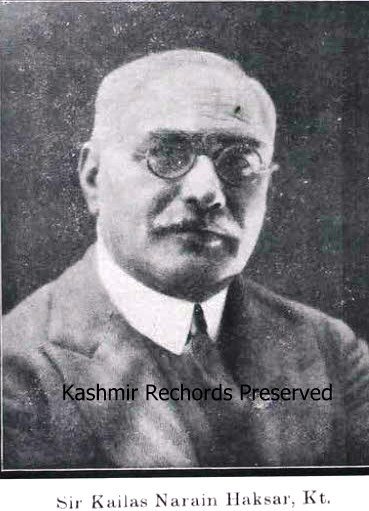
Sir Kailash Narayan Haksar: Statesman and Diplomat

Sir Kailash Narayan Haksar (1878–1953) served as the Prime Minister of Jammu and Kashmir (1942-1944) and held Ministerial roles in Gwalior. Born in Kolkata to Har Narain Haksar, Sir Kailash was appointed a Companion of the Order of the Indian Empire (CIE)  in 1911 and knighted in 1933. His tenure in statecraft was characterized by visionary leadership and diplomatic acumen. A member of an influential Kashmiri Pandit family, his legacy extended to his descendants, who continued to contribute to India’s progress.

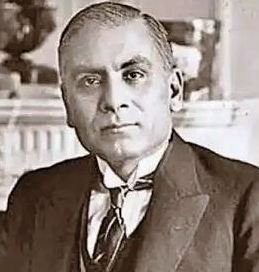
Sir Tej Bahadur Sapru: Pioneer of Dialogue in India’s Freedom Struggle

Sir Tej Bahadur Sapru (8 December 1875 – 20 January 1949) was a prominent Indian freedom fighter, lawyer, and politician. Born in Aligarh into a Kashmiri Pandit family, Sapru became a distinguished legal mind, serving at the Allahabad High Court and later as Dean at Banaras Hindu University.

As a constitutionalist, Sapru played a pivotal role in India’s independence movement, advocating for political rights through dialogue with British authorities. He contributed significantly to drafting the Indian Constitution, organized the 1927 All Party Conference, and helped prepare the Nehru Committee Report on constitutional reforms.

Sapru’s political career included roles in the Legislative Councils of the United Provinces and the Imperial Legislative Council. Knighted in 1923, he participated in the Round Table Conferences, mediating between Indian leaders and British authorities. His efforts helped forge the Gandhi-Irwin Pact and the Poona Pact, addressing critical national and communal issues.

In 1944, he led the Sapru Committee, proposing constitutional principles to unify India and protect minorities, opposing the idea of partition. Despite his efforts, partition occurred, but his contributions remained influential in shaping India’s governance. Sapru passed away in Allahabad in 1949, leaving a legacy of legal excellence and commitment to India’s unity and independence

A Legacy of Excellence

The achievements of these four distinguished individuals highlight the profound contributions of the Kashmiri Pandit community to Indian history. Their steadfast dedication to integrity, service, and intellectual excellence continues to inspire, showcasing the community’s exceptional role in shaping the nation.

This account remains open-ended, and  Kashmir Rechords  encourages its readers to share information about any other Kashmiri Pandits who may have  also been honored with the prestigious ‘Sir’ title beyond the four mentioned here. Your insights would be greatly valued in further enriching this narrative.