(Kashmir Rechords Exclusive Report)
Whenever the subject of women who fell victim to militancy in Kashmir is discussed, two names invariably dominate the public discourse—Girija Tickoo and Sarla Bhat. Their horrifying murders have become enduring symbols of the brutality that accompanied the early years of insurgency. Renewed public attention following cinematic portrayals and recent legal developments, including the filing of a chargesheet against Yasin Malik in the Sarla Bhat murder case, has once again brought these tragedies into national focus.
Their stories unquestionably deserve to be remembered, documented and retold.Yet, the history of Kashmir’s conflict is far larger than two names.
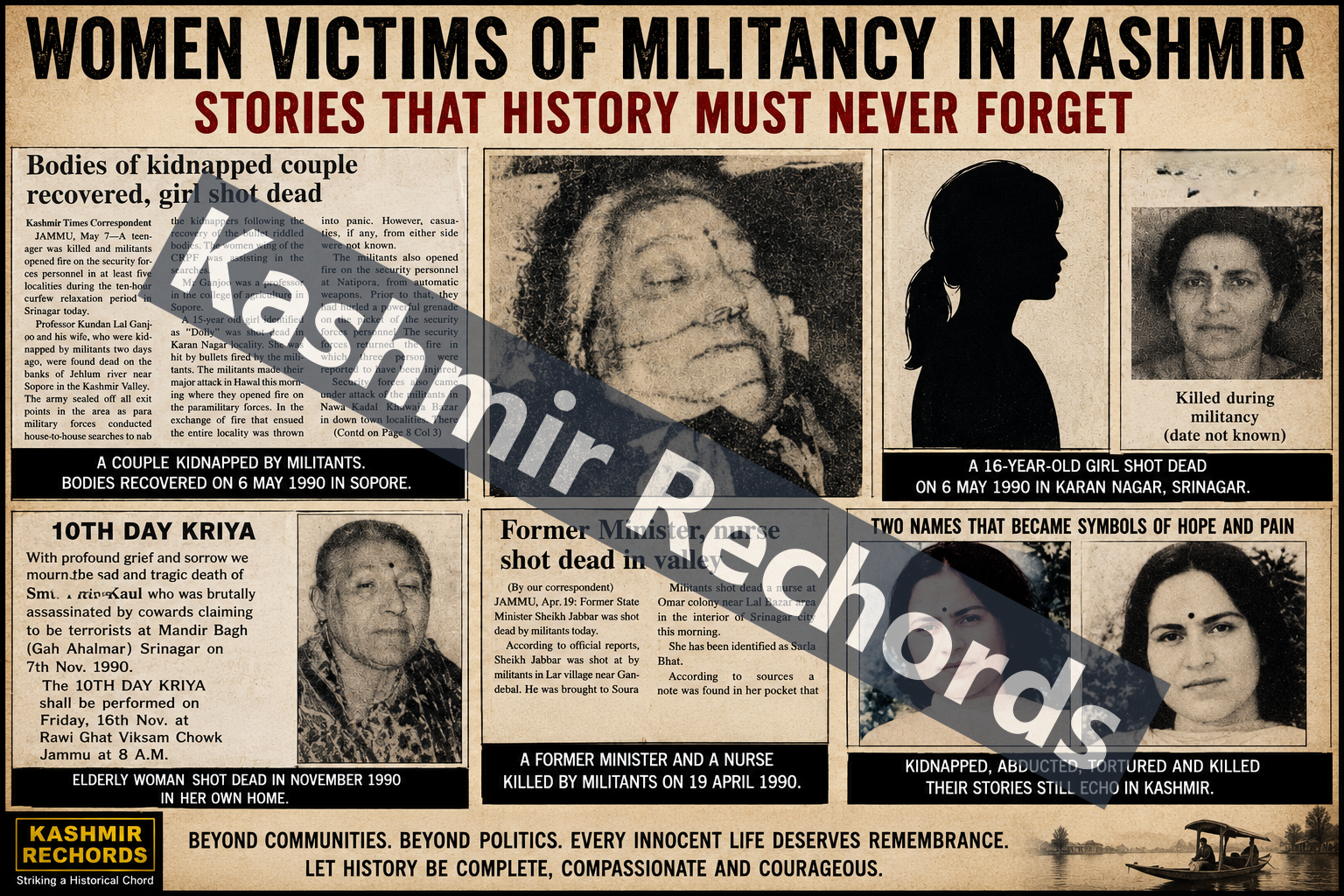
Behind these widely known narratives lies a long and painful list of women—both Kashmiri Pandits and Kashmiri Muslims—whose lives were brutally cut short by militant violence but whose stories have gradually faded from public memory. Many never became national headlines. Many survived only in fading newspaper reports preserved in archives. Others continue to exist solely in the memories of grieving families.
An honest chronicle of Kashmir’s troubled past must strive to restore every innocent victim to history, irrespective of religion, region or political persuasion. Justice begins with remembrance. Whether it is Prana Ganjoo, Pitti Kaul, Afroza, Rukhsana, or numerous others whose names rarely find mention in public discourse, every innocent life deserves equal dignity in history.
When staying back became a Death Sentence
For the Kashmiri Pandit community, the winter of 1989–90 marked the beginning of one of the darkest chapters in its modern history.
Targeted killings, threats, intimidation and fear forced hundreds of thousands of Kashmiri Pandits to leave the Valley between late 1989 and the early months of 1990, abandoning homes, businesses, temples, educational institutions and ancestral properties built over generations.
Not every family, however, chose to leave. Some believed the violence would eventually subside. Others simply could not imagine abandoning the land where their ancestors had lived for centuries. Many elderly residents lacked the means or the will to migrate. Some trusted their friends and neighbours.
For several of them, that decision proved fatal.
Tragic end of Ganjoo Couple
Among those who chose to remain were Professor K.L. Ganjoo, serving in Government Agricultural College, Wadoora Sopore and his wife Prana (Prerna) Ganjoo of Sopore.
Despite the deteriorating security situation and the mass migration taking place around them, the couple stayed back in their homeland.Their faith was repaid with unimaginable brutality.
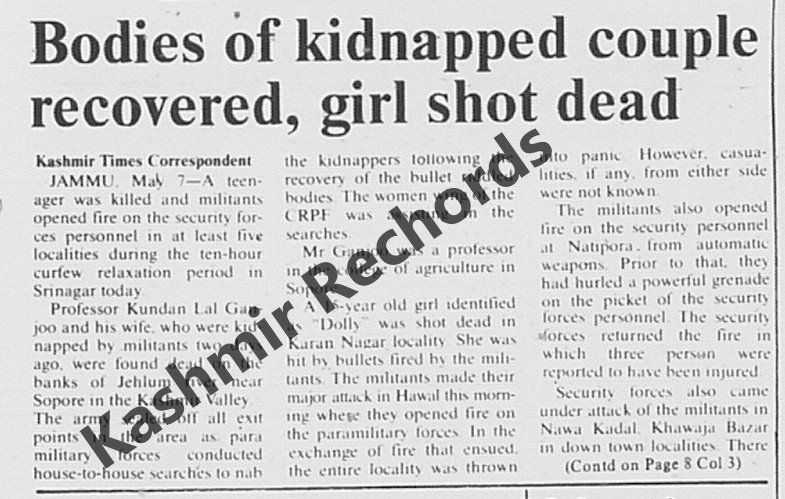
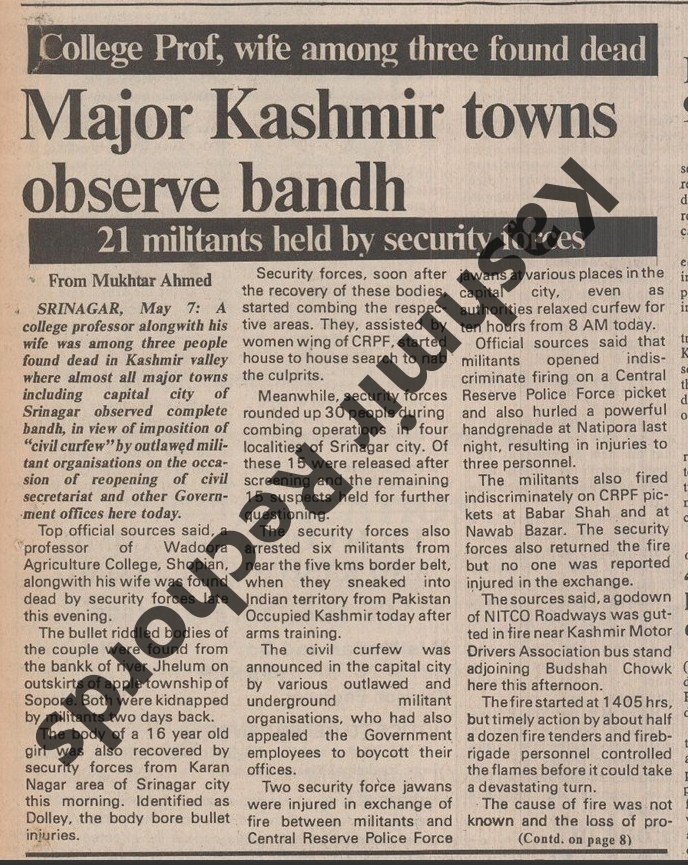
On 6 May 1990, according to contemporary newspaper reports preserved in the archives of Kashmir Rechords, the bodies of Professor Ganjoo and his wife, kidnapped two days ago, were recovered from the banks of the River Jhelum near a temple that today itself stands neglected and desecrated. As was often the case during those turbulent months, combing operations and house-to-house searches followed, but yielded no meaningful results.Justice never arrived.
Dolly: A teenager whose story was forgotten
The same day witnessed another tragedy. The body of Dolly, a 16-year-old girl, bearing bullet injuries, was recovered from Karan Nagar in Srinagar.
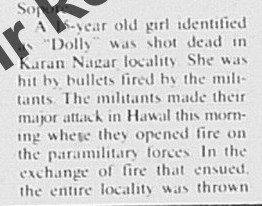
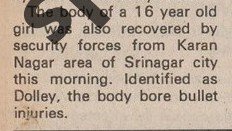
Like so many other killings from that period, her death disappeared into obscurity. No known investigation reached its logical conclusion, and the case never entered the national consciousness.Her name remains largely absent from discussions on Kashmir’s violent past.
Pitti Kaul: Even age offered no protection
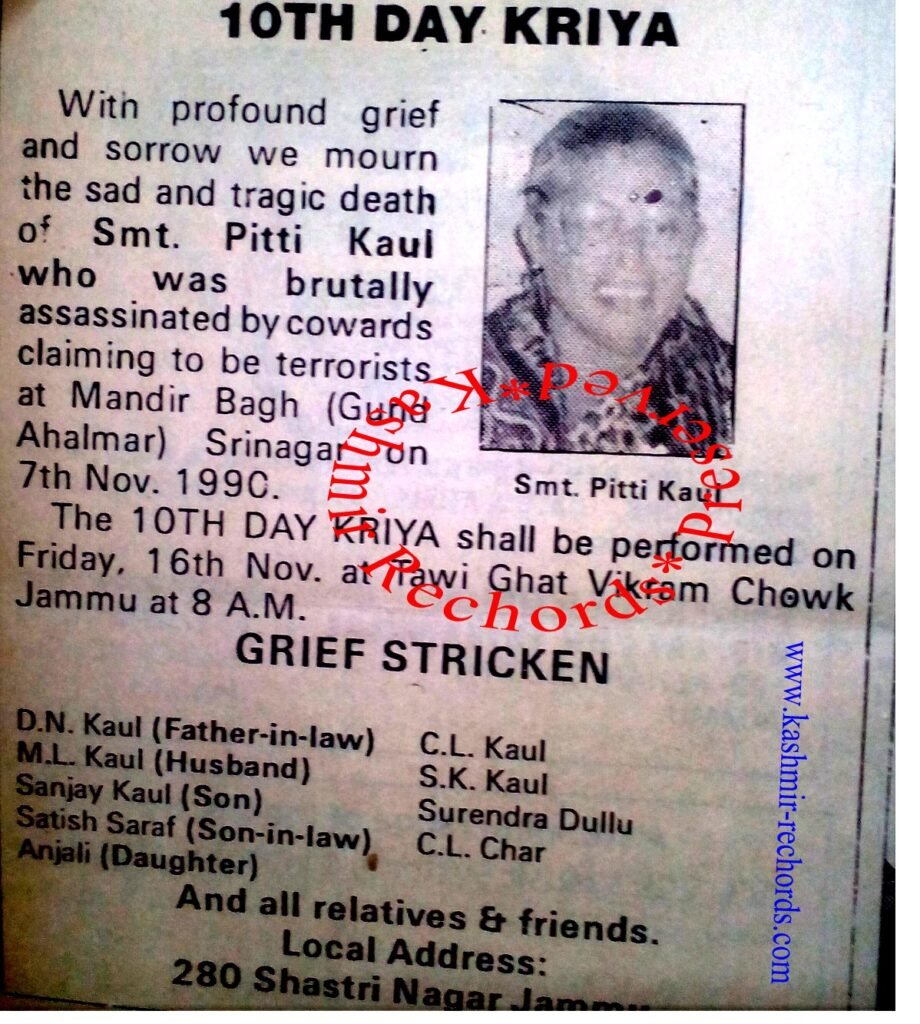
The murder of Pitti Kaul, an elderly Kashmiri Pandit woman, stands as another reminder of the indiscriminate nature of militant violence. She too had chosen to remain in Kashmir after much of her community had migrated.
On November 7, 1990, militants entered her home at Mandir Bagh Srinagar and shot her dead. Her age offered no protection. Her attachment to her ancestral home ultimately cost her life.
Today, outside a handful of archival references and family memories, her story remains virtually forgotten.
Other forgotten women lost to violence
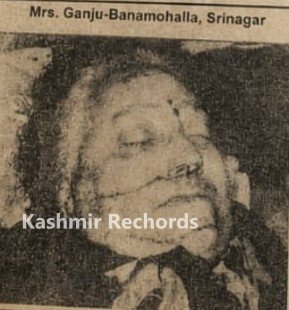
The archival record also documents the killing of another Mrs. Ganjoo from Bana Mohalla, Srinagar, whose body was recovered with multiple bullet injuries during 1990.
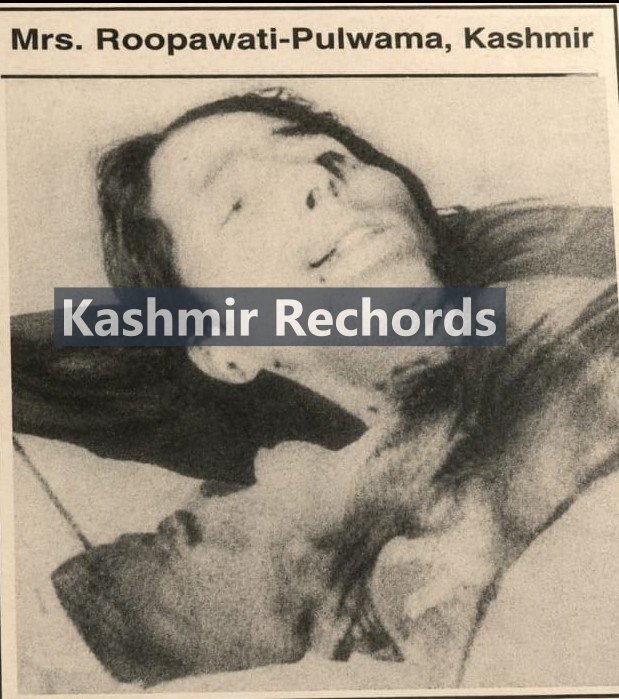
Similarly, local newspapers carried the photograph of Mrs. Roopawati of Pulwama, another Kashmiri Pandit woman reportedly killed in cold blood during the insurgency. These names seldom appear in contemporary discussions, despite once occupying newspaper columns that chronicled Kashmir’s daily descent into violence.Their stories deserve careful historical documentation before they disappear altogether.
Beyond Sarla Bhat and Girija Tickoo
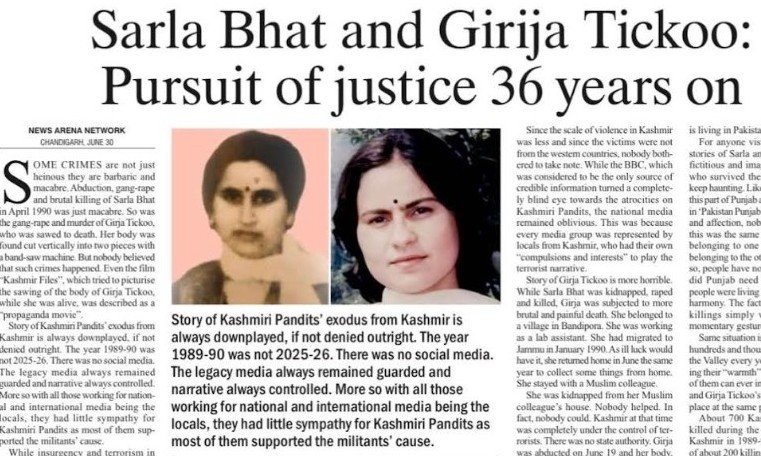
The murder of Sarla Bhat, a young nurse abducted and killed in April 1990, demonstrated that even humanitarian service offered no protection against militant violence.
Likewise, the gruesome killing of Girija Tickoo has rightly become one of the most widely remembered atrocities committed against Kashmiri Pandit women.
Both cases occupy an important place in the historical record. However, their prominence should not unintentionally overshadow the many other women whose names seldom find space in history books, judicial discourse or public memory.
Collectively, these forgotten stories reveal a grim reality: for many who remained in Kashmir during those turbulent months, daily life became an existence lived under constant fear, where simply staying in one’s ancestral home could prove fatal.
Kashmiri Muslim women were also victims of Militancy
Militant violence in Kashmir was not confined to one community alone. Over the years, many innocent Kashmiri Muslim women were also murdered by militant groups. Their alleged offences varied—from being accused of informing security forces, refusing to obey militant diktats, continuing their professional duties, participating in democratic institutions, belonging to political families, or simply becoming victims of targeted attacks.
Among the documented cases is Naseema Bano, who was reportedly killed after militants accused her of acting as a police informer.
Shameema Akhtar was murdered because she continued teaching despite militant warnings and diktats.
Asiya Jan, associated with grassroots democratic institutions following the revival of Panchayati Raj, was among several women targeted by militants.
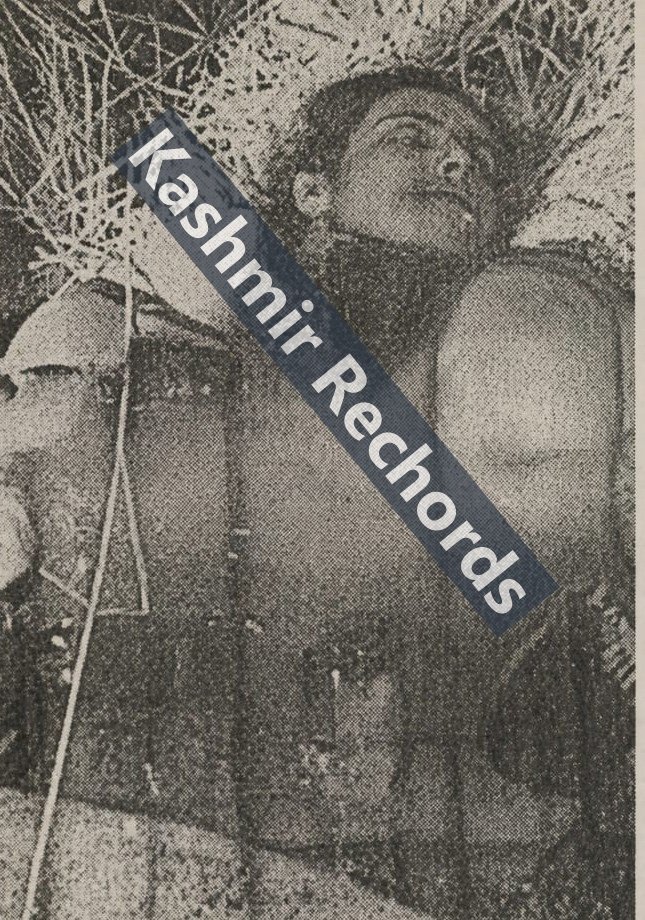
Over the years, numerous women related to Special Police Officers (SPOs), Village Defence Committee members, political workers and surrendered militants also lost their lives or sustained grievous injuries in targeted attacks.
These women, too, deserve remembrance within any comprehensive account of Kashmir’s conflict.
Recovering Forgotten Histories
During the preparation of this archival series, Kashmir Rechords made repeated efforts to contact the families of both Kashmiri Pandit and Kashmiri Muslim women who lost their lives to militant violence.
Many families, understandably, preferred silence. Others could not be traced after decades of displacement and upheaval.
Consequently, this article has been prepared primarily from contemporary newspaper archives preserved by Kashmir Rechords, supplemented by some material available in the public domain.
Several rare photographs accompanying this series have remained unpublished for decades.
Justice Begins with Memory
Public memory often remembers only those tragedies that receive sustained media attention, judicial intervention or cinematic representation.
Countless others remain confined to fading newspaper cuttings, forgotten police files, family albums and private grief.
History should not become selective. The worth of an innocent human life cannot be measured by the volume of media coverage it receives or the political attention it attracts.Every documented victim deserves to be remembered with equal dignity.
The purpose of documenting these forgotten stories is neither to create a hierarchy of suffering nor to diminish the pain of any community.Rather, it is to ensure that the historical record reflects the full human cost of militancy in Kashmir. To remember them is not just an act of looking back; it is a refusal to let violence have the final word on who they were.