
By: Rajesh Bhat*
Thirty-six years have passed since Kashmiri Pandits began observing the annual Mela Kheer Bhawani in exile. Every year, when this sacred occasion arrives, hundreds of devotees return to Tulmulla. Politicians deliver speeches about peace and brotherhood. Old friends meet. Cameras flash. The temple complex resonates with prayers, laughter and memories.
Yet, amid the crowds and ceremonies, one memory refuses to fade. It is the memory of June 1, 1990.
I remember that day not as a spectator, but as a witness! I was then a young journalist with Daily Excelsior, assisting the Kashmir Desk. The Valley was passing through one of the darkest chapters in its history. Fear had settled over Kashmir like a thick fog. Thousands of Kashmiri Pandits had already fled their homes. Entire neighbourhoods had fallen silent. Familiar faces had vanished overnight.
Haunting Silence of Mela Kheer Bhawani in 1990
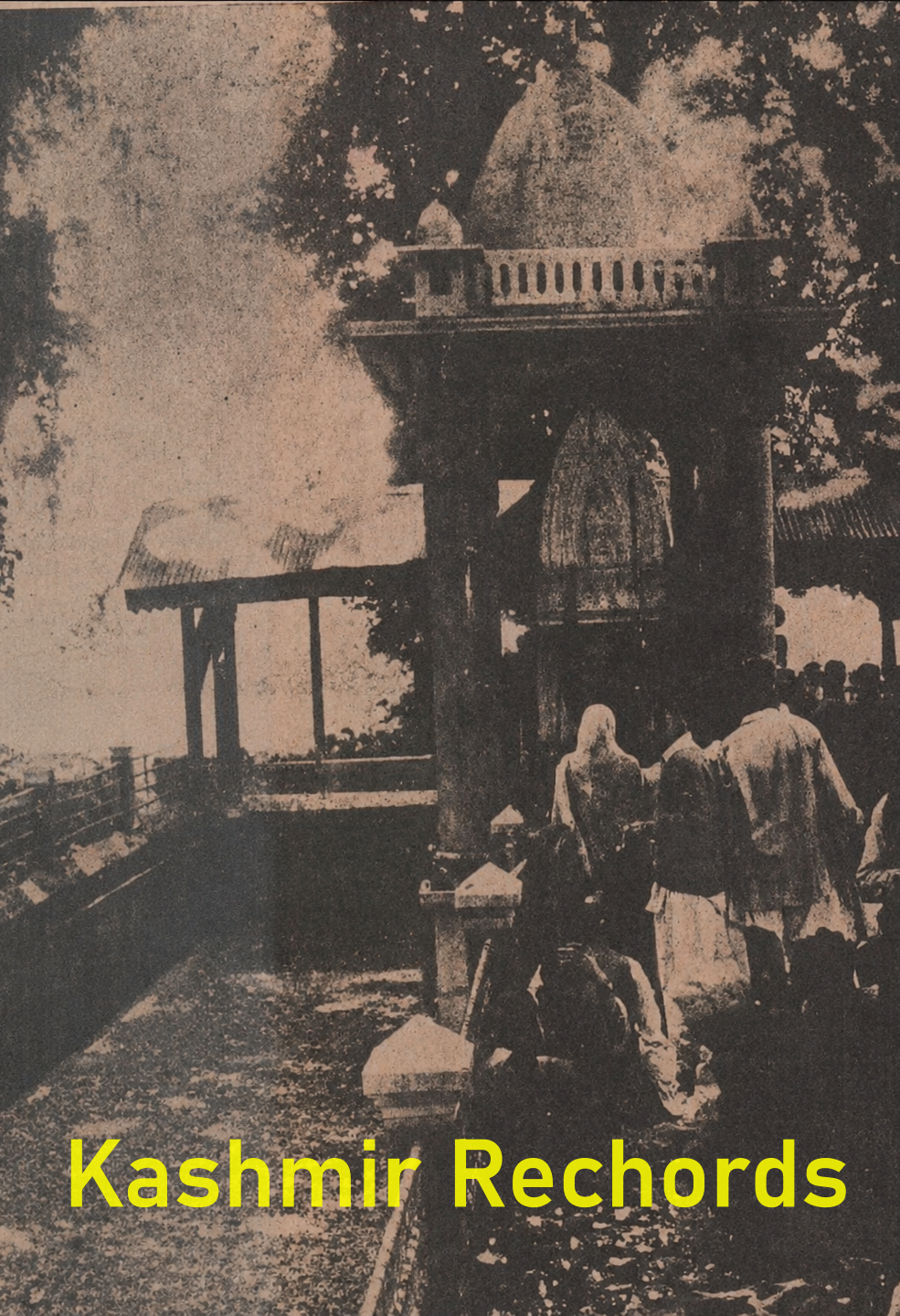
And on that day, when the annual Mela Kheer Bhawani should have transformed Tulmulla into a sea of devotion, I found myself standing before a shrine that seemed abandoned by time itself. The silence was frightening!

The majestic Chinar trees still stood where they had stood for centuries, their branches spread wide over the sacred spring. But beneath them there were no pilgrims. No women carrying offerings. No children running between the temple pathways. No groups singing bhajans through the night. No Kashmiri Leelas. No laughter. No bustle…..Only silence….A silence so deep that even the rustling of leaves sounded like a prayer.
The shrine, which had for generations welcomed thousands of devotees, looked deserted. The mighty Chinars appeared like grieving sentinels, guarding a sacred place suddenly emptied of its people. For the first time in living memory, the Yatra had disappeared.
Security personnel occupied positions around the complex. Many of them had recently arrived in Kashmir and perhaps knew little about the centuries-old traditions associated with the Shrine. Their rifles and uniforms stood in stark contrast to the spiritual atmosphere that usually defined the place.
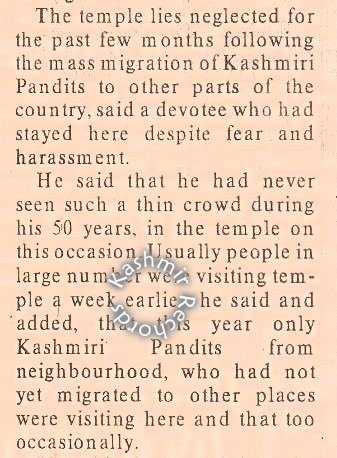
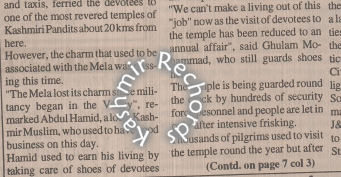
That year, the Valley was under extraordinary tension. Coincidentally, on the same day (June 1, 1990), fifteen-year-old Omar Farooq was being installed as the new Mirwaiz of Kashmir following the assassination of his father, Mirwaiz Maulvi Farooq, just days earlier. Every road, every locality, every conversation seemed overshadowed by uncertainty.
As I walked through the temple complex, absorbing the emptiness around me, my eyes fell upon a solitary figure. In one corner of the shrine stood a lone Kashmiri Pandit. He appeared almost inseparable from the temple itself!
While thousands had left under the pressure of fear and circumstances, he had chosen to remain. Associated with a government media organisation, he had refused to abandon the Shrine. Day after day, month after month, he remained there, ensuring that the sacred traditions of Mata Kheer Bhawani did not completely disappear from the Valley.
His presence moved me deeply. He stood there not merely as an individual but as a symbol of continuity. A symbol of faith refusing to surrender. A symbol of a civilisation determined not to vanish.
In those difficult days, he quietly began contacting fellow Kashmiri Pandit employees who were still scattered across Kashmir, working under constant uncertainty. Unexpectedly, help also came from some local Muslims who revered Mata Kheer Bhawani and understood the significance of the shrine.
Glimmer of Hope: Two Tulmulla Pilgrimage Buses

Through their collective efforts, contact was established with representatives of the Kashmir Motor Drivers Association. Despite the prevailing tension, arrangements were somehow made for two buses to travel to the shrine.
Hours passed. The temple remained largely silent.Then, sometime later, the distant sound of engines broke the stillness.
Two buses appeared. I still remember watching them approach the temple gates. Slowly, men and women stepped down.
There were not many of them. Their faces reflected exhaustion, uncertainty and anxiety. Yet beneath all that was something stronger—an unshakeable desire to stand before their Goddess.
Some had travelled despite fear. Some despite warnings. Some despite not knowing what awaited them. But they had come.
Not because conditions were safe. Not because circumstances were favourable. But because faith demanded their presence.
As they entered the shrine, the atmosphere changed. The temple was no longer empty. The Goddess was no longer alone.
The puja that followed was perhaps the most emotional religious ceremony I have ever witnessed. There were no grand arrangements.No festive crowds.No elaborate celebrations.Yet every mantra carried extraordinary weight.Every offering seemed precious.Every prayer sounded like a plea, a remembrance and a promise all at once.
The devotees performed every ritual with utmost devotion. Many eyes were moist.Some prayers remained unspoken.
Everyone understood that they were participating in something far greater than a religious ceremony.They were preserving a civilisational thread.
For months, the shrine had remained under security watch, sustained largely by the devotion of that lone Pandit who had vowed never to abandon it. On that June day, a handful of worshippers ensured that the centuries-old tradition of Kheer Bhawani would not be broken.
The years that followed remained difficult. Between 1991 and 1997, attendance at the shrine was sparse. Most visitors were government employees posted in Kashmir—staff from the Civil Secretariat, Accountant General’s office and various Central Government establishments. By 1997, pilgrims gradually began returning. The crowds slowly reappeared. Government transport was arranged. Private pilgrimages resumed. Politicians started visiting. Public figures arrived. Even former militant leaders occasionally appeared, expressing solidarity and regret.
Today, the shrine once again witnesses thousands of visitors. Tourist buses arrive daily. The pathways are crowded. Devotees offer prayers before returning to their homes in Kashmir and across the globe.
The crowds that gather at Tulmulla nowadays are a welcome sight. Yet they should also remember that there was a time when the shrine stood almost alone, waiting patiently for its children to return.
*Dr. Rajesh Bhat is a veteran media professional, researcher and author with a Ph.D. in Journalism and Mass Communication. He has devoted considerable effort to documenting the overlooked socio-cultural, historical and archival narratives of Jammu & Kashmir. He is a co-founder of the Kashmir Rechords Foundation.
[…] employees, before pilgrims gradually began returning under security and transport arrangements. (Kashmir Rechords) Another account of the post-exodus period notes that from 1990 to 1996 return was almost […]