
Kashmir Records Special Feature
There was a time—not too long ago—when Kashmir queued up for dreams.
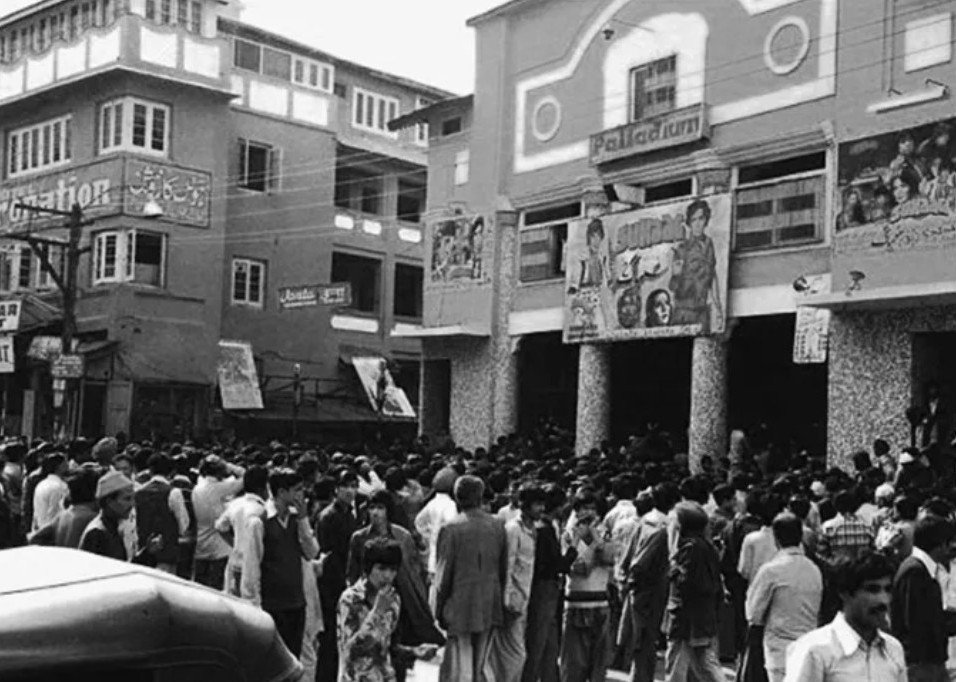
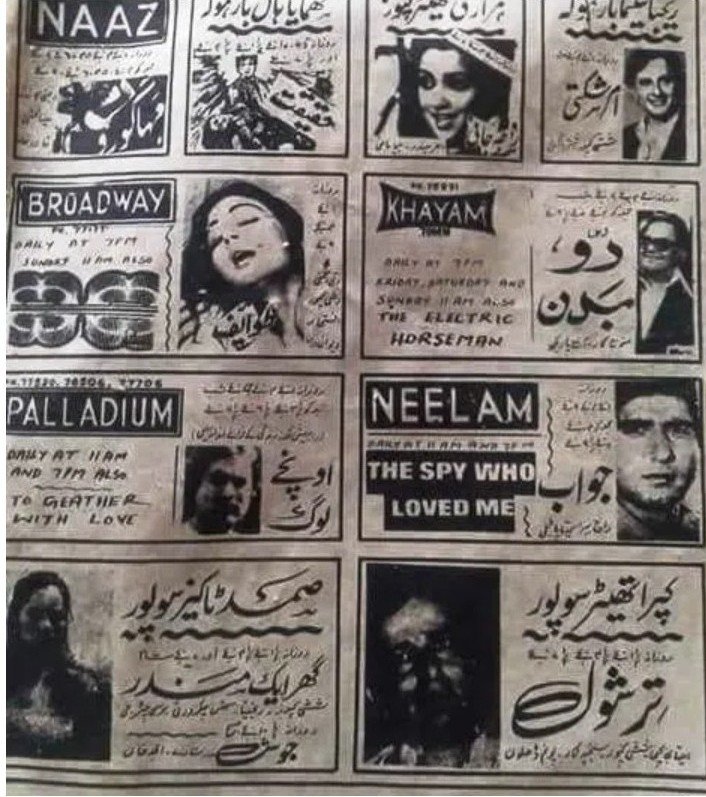
Long before the crackle of gunfire replaced laughter, cinema halls across Srinagar pulsed with life. From Lal Chowk to Down Town or to Residency Road; to towns like Anantnag to Sopore or Baramulla, over 20 theatres screened Bollywood blockbusters and Hollywood hits. Tickets were sold in black. Beauty parlours thrived. Evenings belonged to stories.
And then, in the winter of 1989, the screen went dark.
The Countdown to Silence
By mid-December 1989, something had shifted. Cinema halls—once bursting at the seams—began receiving threats. Anonymous calls. Letters. Warnings.Within weeks, fear replaced festivity.
On January 1, 1990, Kashmir woke up to an announcement that would define generations:
All cinema halls were closed. Indefinitely.
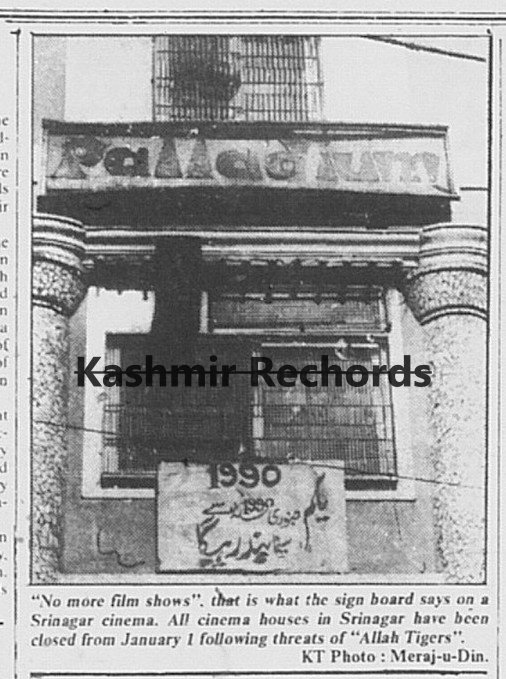
At the centre of this diktat was the militant outfit ‘‘Allah Tigers”, tasked with enforcing a new social order—one that declared cinema, music and visual culture “un-Islamic.”
Heavy locks appeared on theatre gates. Screens went blank. Kashmir’s cultural heartbeat stopped overnight.
A Society Stripped of Leisure, Livelihood
The closure wasn’t symbolic—it was devastatingly real.
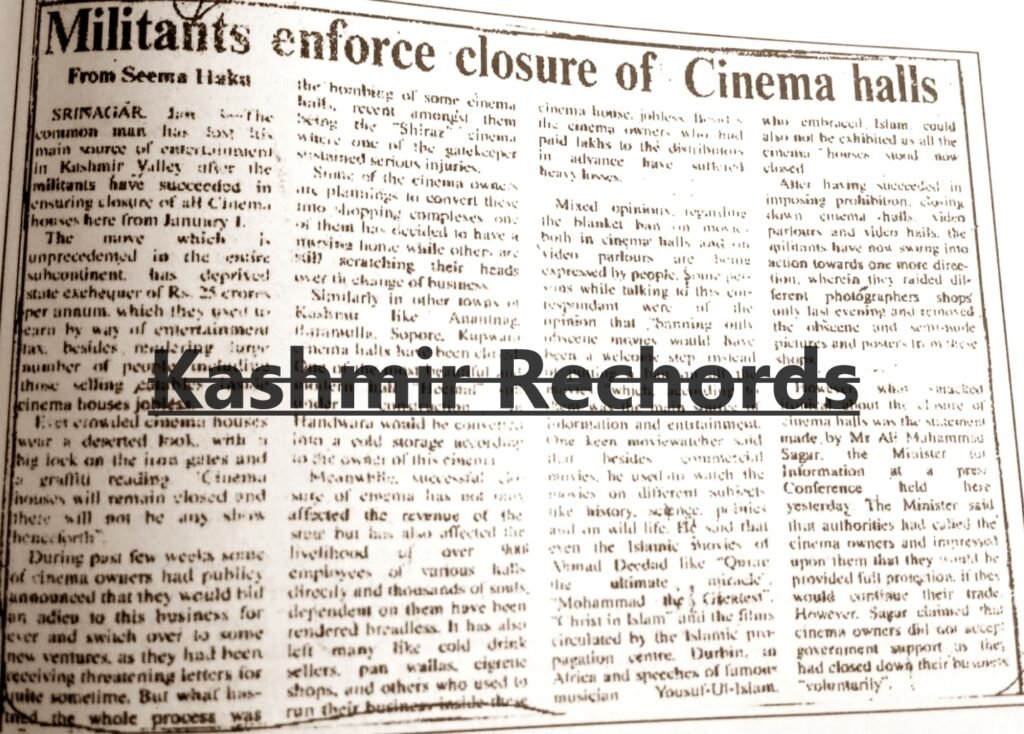
According to archived reporting from Srinagar by senior journalist Seema Hakhu (January 3, 1990), preserved by Kashmir Records :
- Over 900 cinema employees lost their jobs
- Thousands of small vendors—tea stalls, cigarette sellers, ticket agents—lost income
- The state exchequer suffered massive losses from entertainment tax
But beyond economics, something deeper was lost: the right to joy.
Cinema halls were not just buildings—they were social spaces, emotional outlets and cultural connectors. Their disappearance left a vacuum quickly filled by fear.
Palladium to Ruins: The Fall of Icons
At the heart of Srinagar stood the legendary Palladium Cinema—a symbol of Kashmir’s early embrace of modern entertainment.
Established around 1932, it was among the Valley’s first theatres. It had once screened India’s earliest talkie, Alam Ara. Its final curtain call? The 1989 blockbuster Tridev.
Some kilometres away from it, the iconic Broadway Cinema screened its last film—Yateem.It was a title that would later feel hauntingly prophetic; as the curtains fell, the valley’s vibrant cultural life was effectively orphaned for the next three decades.
Because from that moment, Kashmir’s cinema—and perhaps its society—became “orphaned.”
From Entertainment to Enforced Ideology
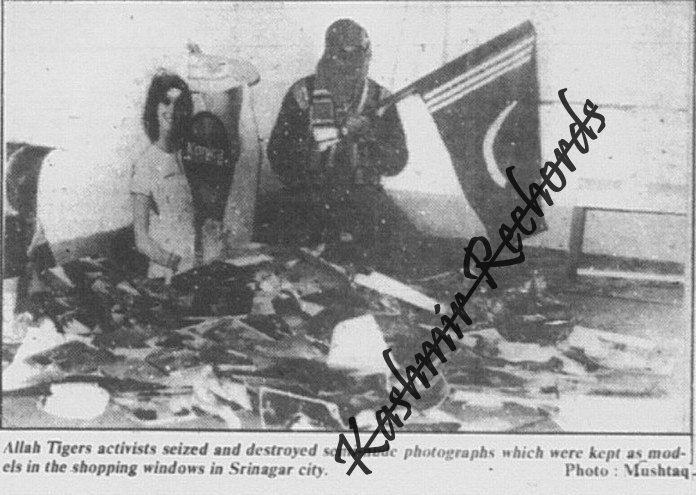
Militancy did not merely shut theatres—it attempted to redefine society.
- Cinema posters were torn down
- Modelling images were banned
- Shops displaying photographs were attacked
- Threats extended to anyone associated with visual culture
Even attempts to adapt—screening religious or educational films—failed. Audiences had already retreated into fear.
Many cinema halls were later converted into shopping complexes or were occupied by security forces or turned into interrogation centers
The Spark Before the Fire
Ironically, cinema itself had once stirred political consciousness.
In 1985, the film Lion of the Desert, depicting Libyan resistance leader Omar Mukhtar, was screened at Regal Cinema. Incidentally, Regal was unique as the only theatre in Srinagar that also housed a bar, highlighting just how much the “social order” shifted in Kashmir after the 1990 ban.
The audience drew parallels with Sheikh Abdullah. The emotional response was immediate—and explosive. Slogans were raised. Posters torn. A narrative had begun forming.
Within four years, that narrative would transform into armed insurgency.
A Pattern of Cultural Targeting
Cinema in Kashmir had faced violence even earlier.
Following the 1963 Hazratbal relic incident, mobs burned down theatres like Regal and Amresh. But 1990 was different.
This time, it wasn’t spontaneous outrage—it was systematic erasure.
The Long Silence—and a Hesitant Return
For nearly three decades, Kashmir had no public cinema culture.
An entire generation grew up without:
- Movie halls
- Shared cultural spaces
- The simple ritual of watching films together
Only after 2022, with the opening of new multiplexes, did cinema cautiously return.
But the question remains: Can a culture erased for 30 years truly be revived?
Today, debates rage about Kashmir’s past—what was reported, what was ignored and what is being rediscovered.
The closure of cinema halls is not just a footnote. It is evidence.
Evidence that: Society was reshaped through fear; Culture was targeted, not collateral damage and Silence was enforced—not chosen .
The story of Kashmir’s cinema is not about films.It is about freedom—to gather, to celebrate, to imagine.
When the lights went out in 1990, it wasn’t just cinema that died.It was a way of life.
Do you have memories of watching a film at the Palladium or Regal? Share your stories in the comments below or email us to help preserve this history. Mail to kashmirrechords@gmail.com or support@kashmir-rechords.com