

(Kashmir Rechords Exclusive)
In the winter of 1990, as the world watched the mass exodus of Kashmiri Pandits and the collapse of civil administration, a darker, more intimate engineering was taking place behind closed doors. While cinema halls were being padlocked and beauty parlors shuttered, another target was marked by the militants: the Kashmir 1990 family Planning.
This wasn’t just ideological talk—it was a campaign enforced at the barrel of a gun.
At Gunpoint: The Ban on Birth Control
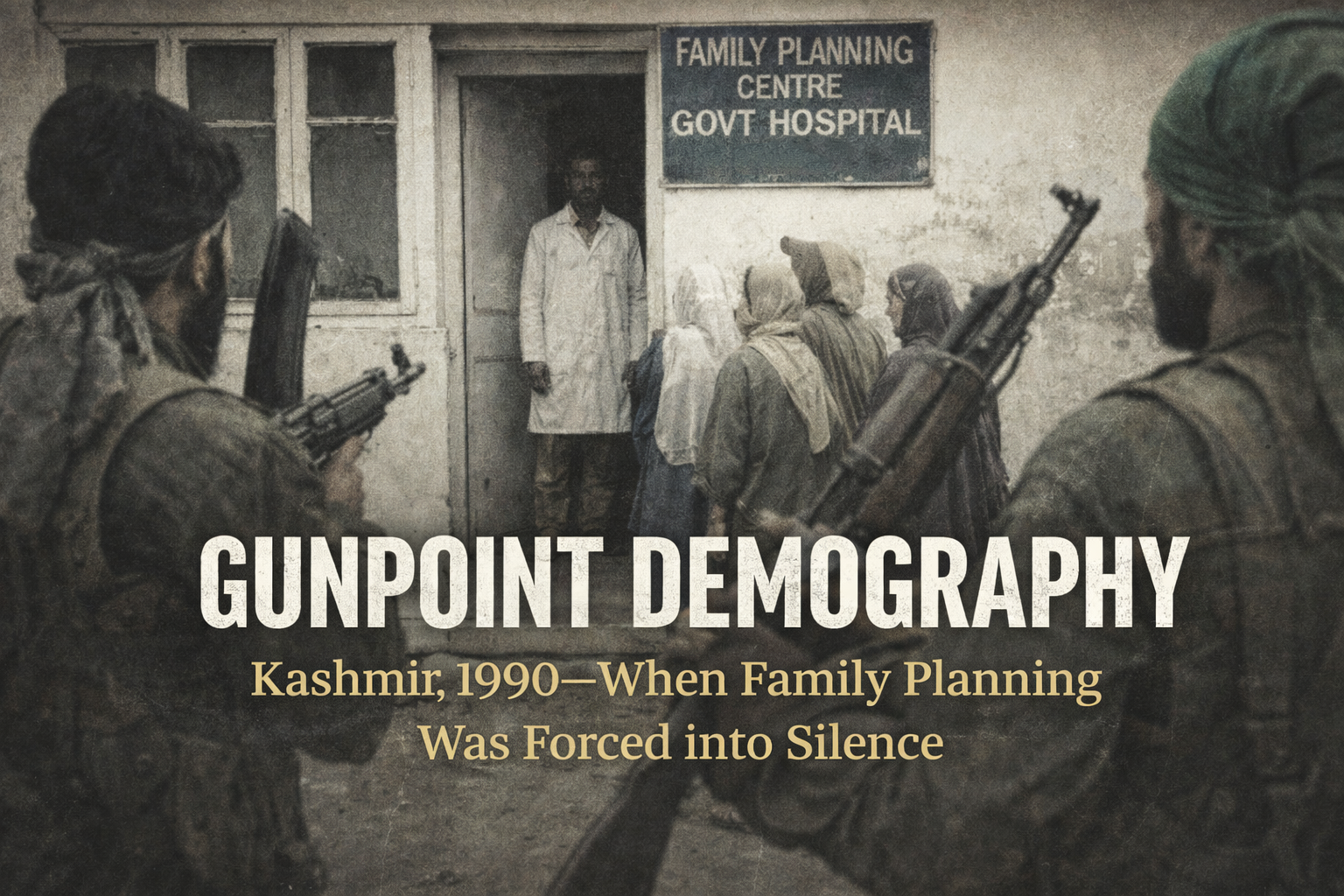
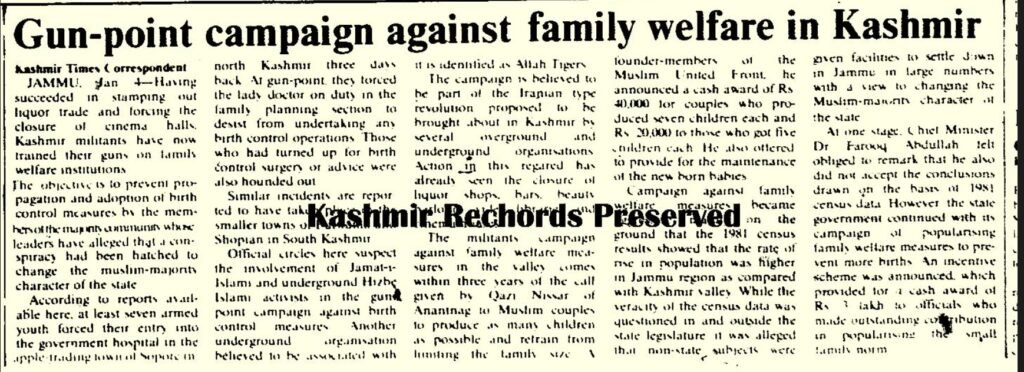
Archival records unearthed by Kashmir Rechords reveal a startling headline from a January 1990 edition of Kashmir Times: “Gun-point Campaign Against Family Welfare in Kashmir.” The report documents a chilling reality. In towns like Sopore, Shopian and Pulwama, armed militants didn’t just target political opponents; they targeted hospital wards. In one instance, a lady doctor in Sopore was threatened at gunpoint and forced to stop all birth control procedures immediately. Patients seeking reproductive medical advice were chased out of clinics.
Cash for Children: The MUF Incentive
The campaign used a “Carrot and Stick” approach. While hospitals were under siege, religious and separatist leaders were offering financial rewards for larger families:
- ₹40,000 for couples with seven children.
- ₹20,000 for those with five children.
- Guaranteed support for the upbringing of newborns.
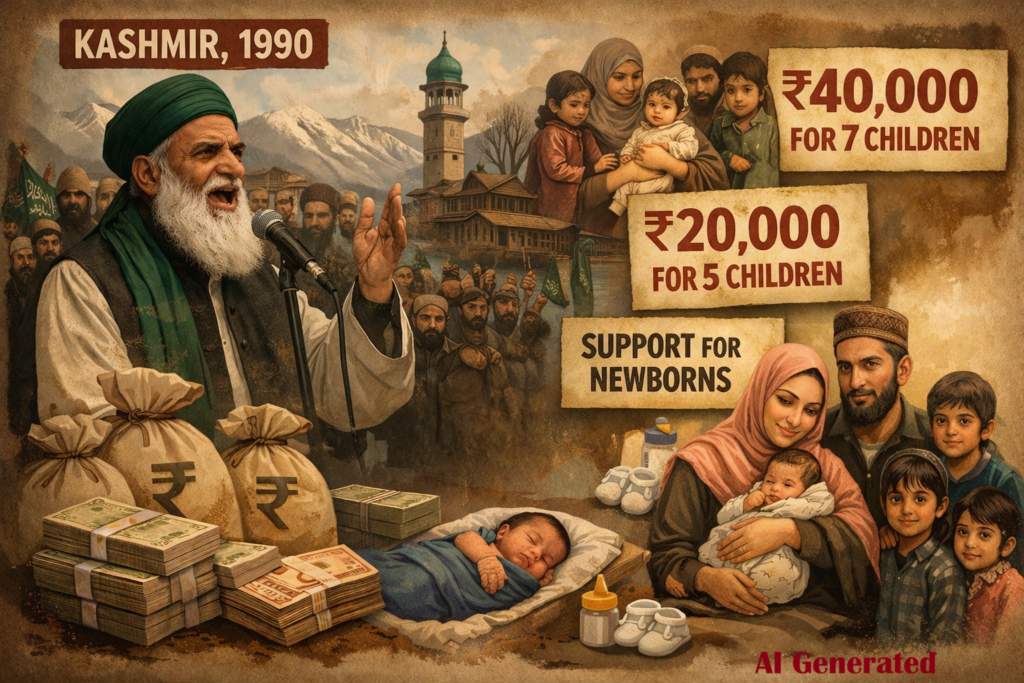
Separatist Leaders like Qazi Nissar of Anantnag and figures associated with the Muslim United Front (MUF) framed population growth as a “sacred duty” to “protect’’ the demographic character of the Valley.
A State Divided: Policy vs. Dictate
Ironically, this was happening while the J&K Government was aggressively pushing a “small family” norm, offering incentives of up to ₹2 lakh for officials who popularized family planning.
Caught in the middle were ordinary Kashmiri Muslims. For many, the choice to plan their family became a dangerous political act. Those who wished to limit their family size often had to flee to Jammu in secret just to access basic medical procedures, living in constant fear of being labelled “traitors” to the cause.
Why This History Matters Today
The 1990 campaign against family planning is a stark reminder that conflict doesn’t just happen on the streets—it happens in the most private spheres of human life. As modern debates over Kashmiri identity and demographics continue to boil, looking back at these archival truths isn’t just about history; it’s about understanding the deep-rooted anxieties that still shape the region today.history, the Valley witnessed not just an exodus of minorities, but the quiet engineering of a demographic narrative—one that has largely escaped public discourse.