

(Kashmir Rechords Exclusive)
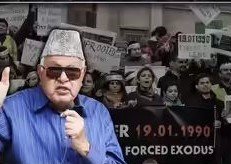
Farooq Abdullah is once again at the centre of a political storm. His recent blunt remark that Kashmiri Pandits are now settled elsewhere and would prefer to visit Kashmir as tourists rather than return permanently for resettlement has triggered sharp reactions from within the displaced community. The statement, seen by many as insensitive and dismissive, has drawn criticism for allegedly playing to the galleries and echoing a tone often associated with separatist narratives—an accusation Abdullah has faced more than once in his long public career.
Controversy, however, is hardly new territory for the National Conference patriarch. Whether as Chief Minister of the erstwhile State of Jammu and Kashmir, a Union Minister, or a political figure out of power, Farooq Abdullah has rarely been out of the headlines. From fleeing to London during turbulent times, to offering a pillion ride to Bollywood actor Shabana Azmi, from the infamous October 1983 India–West Indies One-Day match in Srinagar to being dubbed the “Disco Chief Minister,” Abdullah’s political life has been marked by unpredictability and spectacle.
Critics have long pointed to his alleged early proximity to the banned Jammu and Kashmir Liberation Front (JKLF), the continuation of “family rule,” and his controversial role during the 1987 Assembly elections, widely believed to have been rigged. Yet, Abdullah has repeatedly confounded labels—at times projecting himself as the “most nationalist” of leaders, at others singing Ram bhajans, and often shifting political tones with remarkable ease.
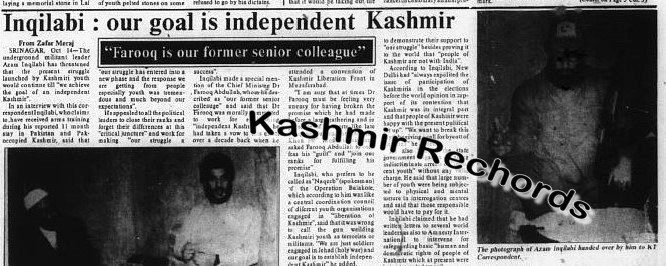
One lesser-known chapter, however, lies buried in the pre-militancy and early militancy era. In October 1989, separatist leader Azam Inqilabi, a proponent of an “Independent Kashmir,” described Farooq Abdullah as their “senior colleague” in an interview to Kashmir Times. The interview was striking not just for its words, but for its imagery—Inqilabi was photographed holding a gun.
Days later, in a move that stunned many, Farooq Abdullah himself posed with a gun, photographed by the same newspaper and the same photographer. The symbolism was impossible to ignore. What exactly the Chief Minister intended to convey—defiance, ambiguity, or a political message—remained unclear. What was clear, however, was that the act generated intense debate and unease.
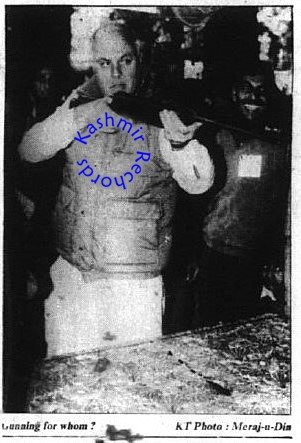
Kashmir Rechords is now reproducing both archival photographs, bringing into public view images that had remained largely unseen for over three decades—visual testimonies to a deeply complex and volatile period in Kashmir’s history.
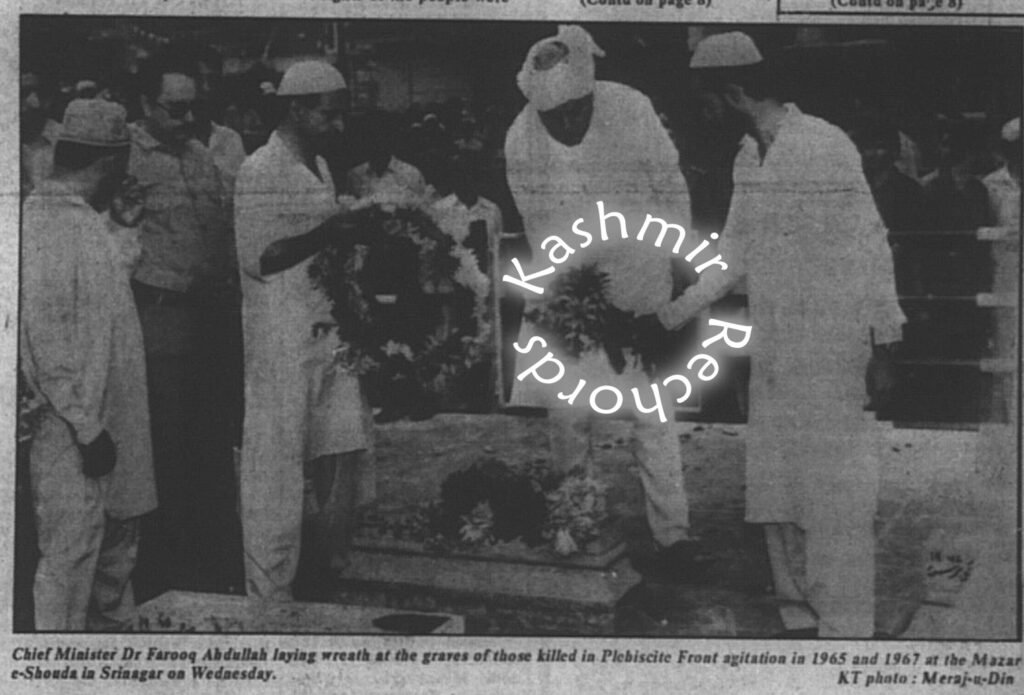
The gun episode was not an isolated incident. In July 1988, Abdullah paid tributes to those killed during the Plebiscite Front agitations of 1965 and 1967, another move that landed him in controversy. Observers then questioned whether the gesture was meant to placate those angered by the 1987 elections, or whether it reflected a deeper political calculation.
Today, as his remarks on Kashmiri Pandits reopen old wounds, these forgotten images and episodes acquire renewed relevance. Was there a consistent intent behind these gestures, or were they momentary political manoeuvres? That question, much like Farooq Abdullah himself, remains open to interpretation—left to readers, historians and citizens to ponder.