Home Blog Page 9

If Mahakumbh is to Prayagraj, `Dashaar’ is to Kashmir!

(Kashmir Rechords Exclusive)

The Mahakumbh Mela, a grand Hindu spiritual gathering held once every 144 years, began in Prayagraj, Uttar Pradesh on January 13, 2025, till February 26, 2025, attracting millions of devotees to the sacred confluence of the Ganga, Yamuna, and the mythical Saraswati rivers.

In the cultural and spiritual landscape of Kashmir, the  one day festival of Dashaar holds a similar reverence. Unlike the Mahakumbh’s regular cycle, Dashaar’s occurrence depends on a rare celestial alignment involving ten celestial bodies, giving the festival its name—“Dash” (ten) and “Haar” (alignment). The timing is unpredictable, with gaps ranging from 10 to 75 years, making Dashaar a rare and mystical event in Kashmiri tradition.
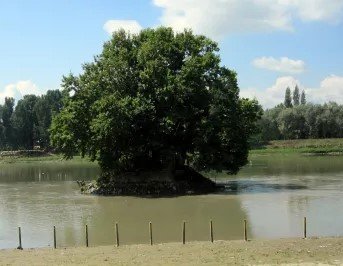
Prayag Chinar at Shadipur, Kashmir

The Mystical Dashaar  of Shadipur, Kashmir

Organised  at the confluence of the Jhelum (Vitasta) and Sindh rivers in Shadipur, present-day Ganderbal district, Dashaar is a spiritual spectacle that mirrors the grandeur of the Prayagraj Mahakumbh. The confluence, known as Prayag Chinar, is regarded as sacred, with the Sindh river symbolizing the Ganga and the Vitasta representing the Yamuna, as described in the Nilmata Purana.

Historical records from the Jammu and Kashmir Department of Archives and Archaeology indicate that Dashaar was last celebrated before Partition on June 4, 1941. This event drew over 100,000 pilgrims, far surpassing the expected 40,000 attendees. The Maharaja’s administration allocated resources for rescue boats, medical facilities, and security, showcasing the festival’s importance. The 1941  Dashaar corresponding to 22nd Jyeshta, 1998 Vikram Samvat, was declared a public holiday in the districts of Baramulla, Anantnag and Muzaffarabad. Jammu and Kashmir  Maharaja’s government had allocated Rs 200 for rescue boats and ropes, kept Rs 500 for unforeseen expenses and deployed 100 Maharaja Guards and Medical Officers from Sumbal and Ganderbal. Deputy Chief Security General was the 1941 festival incharge.

In 1911, Dashaar festival  had faced a terrible cholera outbreak, requiring treatment for 3,063 pilgrims. A 16-year-old  Kashmiri Pandit boy, whose identity was not revealed, had  lost his life when a boat had  overturned.
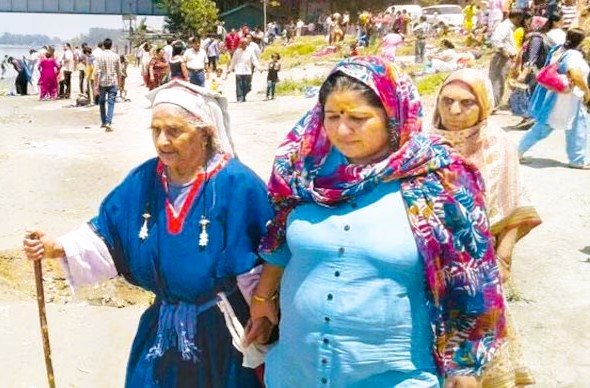
An elderly Kashmiri Pandit woman with her daughter during 2016 Kashmir Dashaar

The Revival of Dashaar

After a 75-year hiatus, Dashaar was revived on June 14, 2016, under astrological conditions aligning with its  ten unique celestial prerequisites, including  a Tuesday or Wednesday in Jyeshta (June), Moon in Virgo, the Sun in Taurus and the presence of Ananda Yog. Kashmiri Pandits, who had already gathered for the Mela Kheer Bhawani-2016, participated in Dashaar, adding to the spiritual fervor.

The 2016 Dashaar featured extensive arrangements, including transportation, sanitation and security. The iconic Chinar tree at the confluence, famously photographed by Fred Bremner in 1905, remained a focal point, surrounded by water and accessible only by boat. Worshippers paid homage at the Shiva Lingam located at the site, reaffirming the festival’s deep spiritual roots.
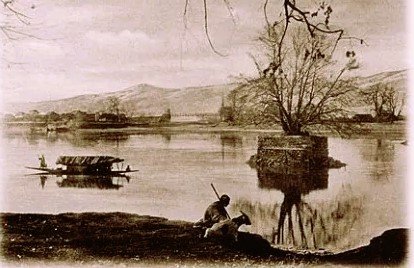
Prayag Chinar at Shadipur, Kashmir in 1905, photographed by Fred Bremner

Dashaar’s Significance in Kashmiri Heritage

Dashaar’s rarity and the uncertainty of its occurrence have enshrined it in Kashmiri folklore as Dahi Veher Dashaar”— literary once-in-a-blue-moon event. The festival is documented in sacred texts like the Dharma Sindhu and the Dashaar Nirnay, with detailed astrological calculations determining its timing. Experts suggest that future Dashaar may occur in 2026, 2028, 2052 or 2091, adhering to the minimum gap of  10, 12, 36 or 75 years  that is prerequisite for the celestial alignments.

While Mahakumbh Mela and Dashaar differ in their cycles and cultural contexts, they share the essence of spiritual purification, divine connection and the celebration of cosmic order. Both festivals stand as timeless testaments to India’s rich heritage, drawing millions to witness the sacred interplay of the earthly and the celestial.
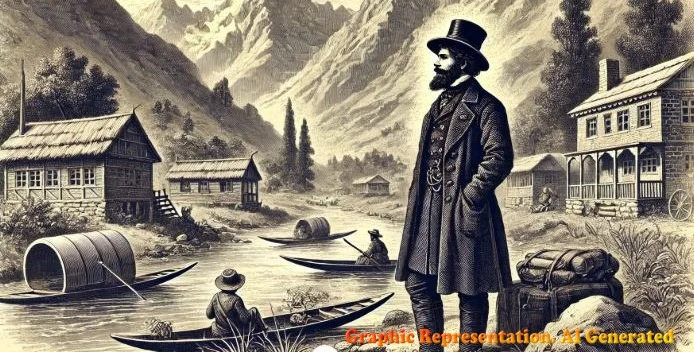
Englishman’s 1847 Journey to  Jammu & Kashmir

(Kashmir Rechords Exclusive)

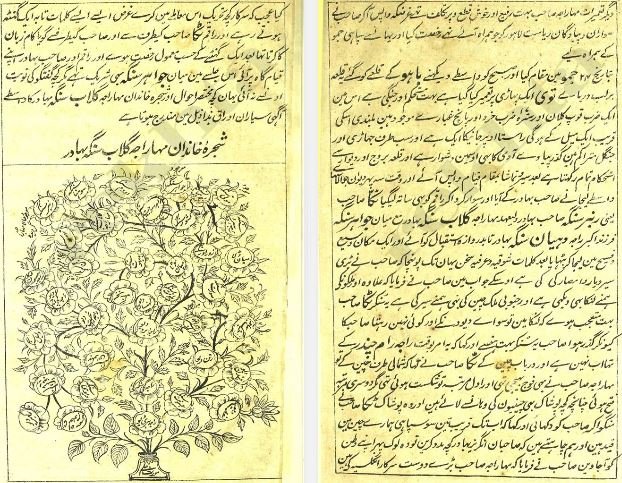
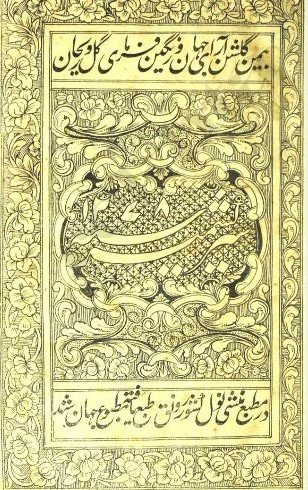
In the spring of 1847, an intriguing journey to Kashmir unfolded, vividly chronicled in a historical travelogue titled Sair-e-Kashmir (Travel to Kashmir). Penned by  a Kashmiri Pandit Kanhaya Lal Aashiq Dehalvi, a resident of Akbarabad Sialkot (now in Pakistan), this diary recounts his travels alongside an Englishman, Mr. Winter Bedim, from Lahore to Srinagar via Jammu.

Written in the elegant Nastalique Urdu script, the travelogue offers a rich, daily account of their expedition over two months—from April to June 1847. The 41-page Roznamcha (diary) is more than a record of distances covered; it is a window into the landscapes, cultures, and communities encountered on this adventurous trek.

Sair-e-Kashmir Front Page ( Pic Courtesy: Rekta)

The Journey Begins

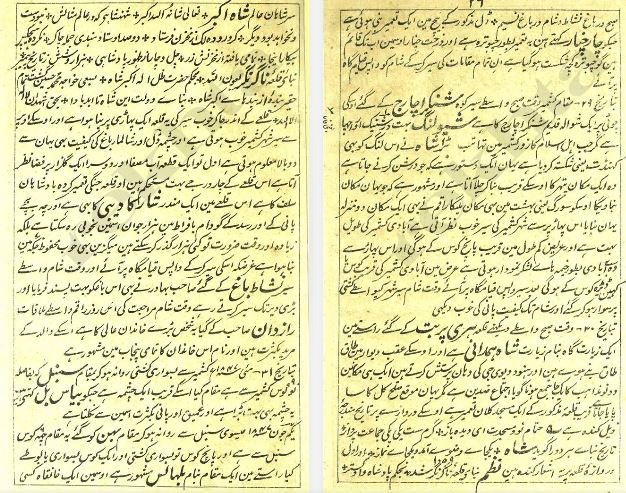
On April 5, 1847, the travellers set out from Lahore, passing through Gujranwala, Wazirabad and Jamki before reaching Bari Brahmana in Jammu on April 22, 1847. The weather greeted them with dust storms, and they found Jammu to be a city of stark contrasts. While the city’s narrow lanes and modest homes seemed unplanned, the palaces and noble dwellings exuded grandeur. The people, however, left a lasting impression with their warmth and hospitality.

Exploring the iconic Bahu Fort, Pandit Kanhaya Lal noted the fort’s formidable architecture, its ancient cannons, and its inaccessibility due to overgrown foliage. On April 25 1847, the party crossed the Chenab River at Akhnoor and began ascending through the Kohistani Ilaqa (mountainous region), choosing the Rajouri route instead of the snow-laden Banihal Pass.

Pages from Sair-e-Kashmir ( Pic Courtesy: Rekta)

Through Rajouri and Beyond

The travellers reached Rajouri by the end of April, finding it a bustling trade hub with a hospitable administration under Maharaja Gulab Singh. Moving onward, they crossed Thana Mandi and ventured through the perilous terrain of the Pir Panjal range. At Rattan Panchal, a towering peak at 9,000 feet, they marveled at the pristine natural springs, including the Ali Abad Sarai, before continuing to Heerpur and the cascading Aharbal waterfall.

Into the Heart of the Valley

By May,  1847, the party entered the verdant valley of Kashmir. They reached Kulgam on May 9, where they encountered a unique spring that spouted water a meter into the air. As they moved through Shahabad, Verinag, Kokernag, and Achabal, the travellers discovered ancient temples, royal gardens, and crystal-clear springs that captivated them.

At Achabal, they met one  Bhola Nath, a devoted caretaker of the spring and garden, who impressed them with his generosity and dedication to the site’s upkeep. The travelogue vividly describes the beauty of these places while lamenting the poor health and malnutrition prevalent among the local population.

Srinagar and Surroundings

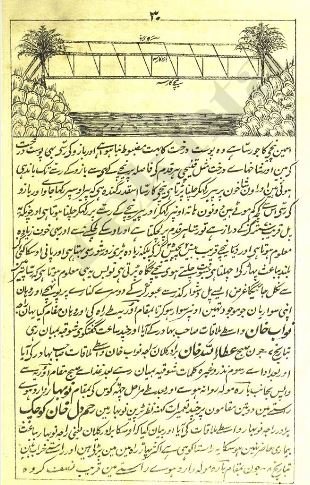
On May 28, 1847 the group arrived in Srinagar, staying at Sheikh Bagh. They toured the city’s landmarks, including the Shankaracharya Temple, Hari Parbat, and the seven resilient wooden bridges spanning the Jhelum River. The harmonious coexistence of Hindu and Muslim religious sites left a profound impression on the travelers.

Pages from Sair-e-Kashmir ( Pic Courtesy: Rekta)

Exploring the Outskirts

Their journey extended beyond Srinagar to iconic sites like Gulmarg, Baramulla, and Manasbal Lake. The narrative describes the ropeway bridge at Uri, swaying precariously over roaring river waters, and the Pandav-era ruins scattered across the region.

At Pattan, they visited the ancient temples, and at Baba Reshi’s shrine, they learned about the unique customs of its caretakers. The journey culminated with visits to Kupwara, Trehgam, and the silk-producing villages where mulberry-fed silkworms thrived.

Legacy of the Travelogue

Sair-e-Kashmir is not merely a diary; it is a lens into the landscapes, architecture, and social conditions of 19th-century Kashmir. Pandit Kanhaya Lal’s evocative descriptions and Mr. Bedim’s company  immortalize their shared journey through time, leaving a timeless record for future explorers.

This travelogue bridges the past and present, allowing readers to walk alongside these intrepid travellers and witness the enchanting beauty of Kashmir through their eyes.

Sacred Stone Idol Resurfaces from River Jhelum at Sopore!

(Kashmir Rechords Exclusive)

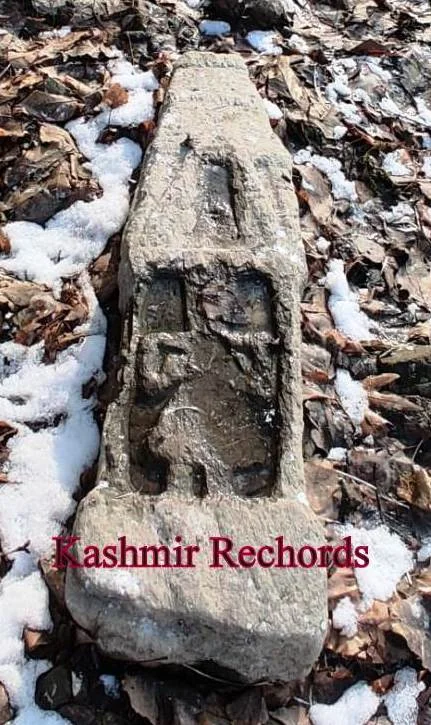
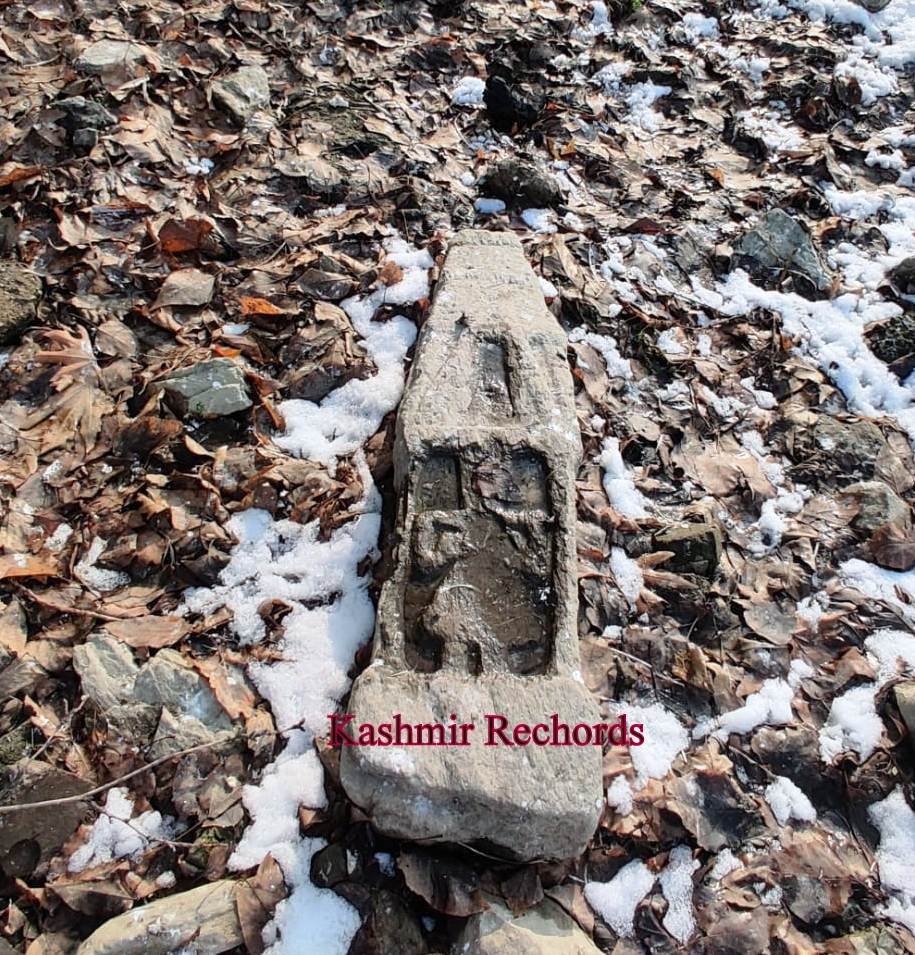
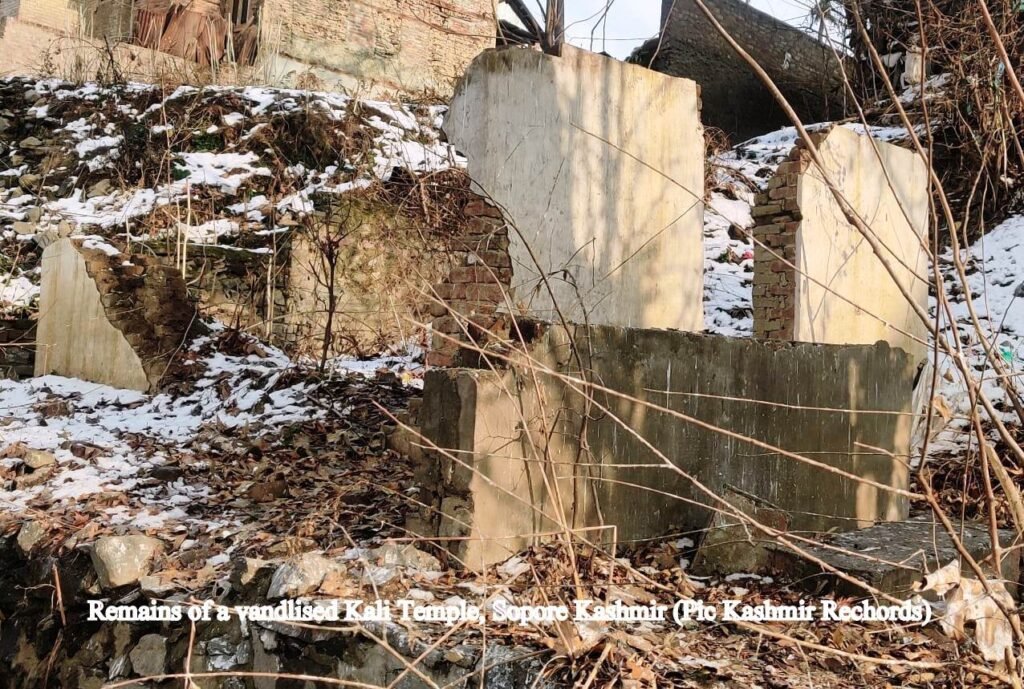
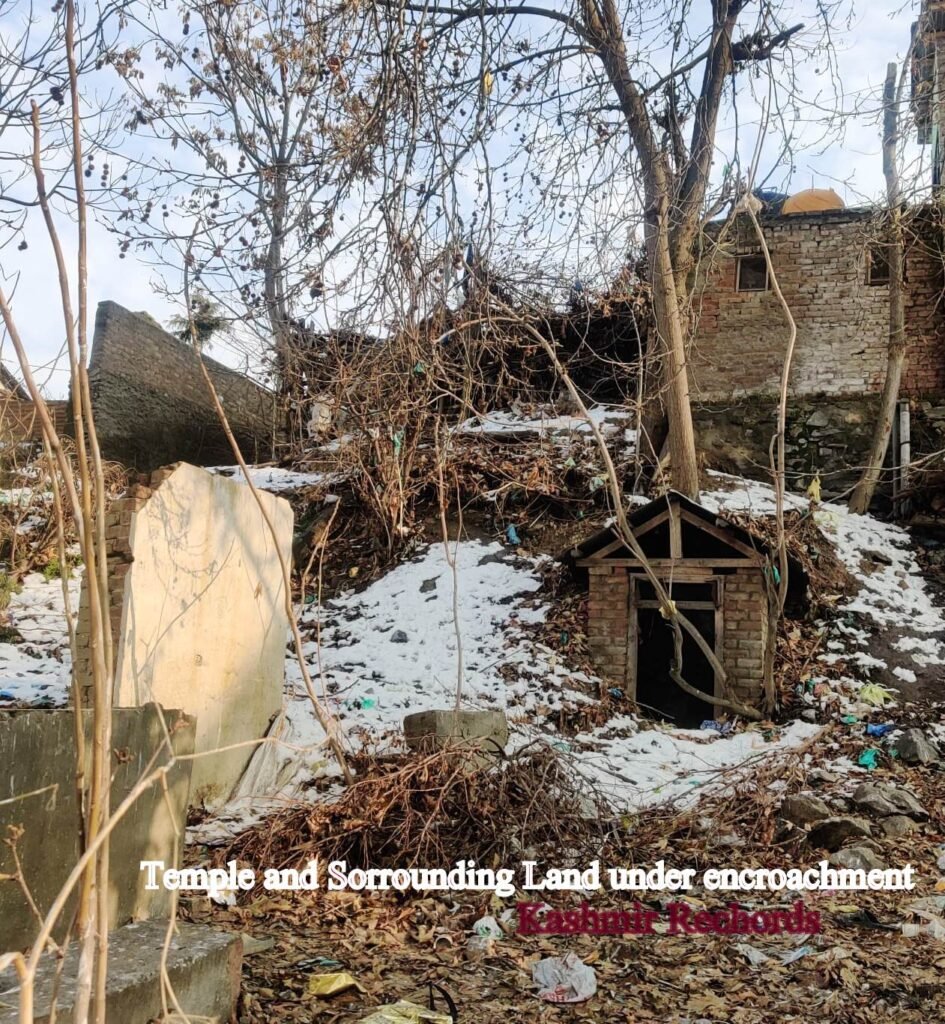
In a remarkable travesty of fate, a stone idol of a deity, which was thrown into the River Jhelum nearly three decades ago by the forces inimical to the idea of India, has resurfaced near Sopore, Kashmir! The idol was originally discovered in the early 1950s from the same river and installed at a Kali Mandir (temple) near the Khankah Mohalla in Sopore. However, during the onset of militancy in Kashmir in the 1990s, the sacrilegious act of vandalizing the  temple and throwing out the statue of the deity into the river Jhelum was performed. The situation remains the same till day and no arm of law has been able to set the situation right. Additionally, the surrounding land and area were also ravaged and encroached upon, including the property of local Kashmiri Pandit families.

The discovery of the stone idol in the early 1950s was a momentous occasion for the people of Sopore. The idol, after being traced from the river, was then carefully preserved and placed in the Kali Mandir, Sopore, a significant religious site on the bank of river Jhelum that attracted both locals and visitors.

But in the wake of the insurgency and the eruption of violence in Kashmir in the 1990s, the temple was completely vandalized. The once-vibrant place of worship was desecrated and the idol of the deity was defaced and then deliberately thrown back into the river by miscreants and anti-Hindu elements. To make matters worse, the temple land, along with properties in the vicinity of local Kashmiri Pandits who used to worship at the site, was encroached upon, thereby further complicating the situation for the already vulnerable community.

Lying unattended on the bank of river Jhelum at Khankah Mohalla, Sopore (Kashmir)

The Idol Resurfaces

As fate would have it, the stone idol has once again emerged and is currently lying unattended on the river bed. The receding water levels in the Jhelum River, a natural phenomenon that occurs during the winter months, have revealed the ancient artifact once again. It was on December 31, 2024, that a representative of Kashmir Rechords, a group dedicated to preserving Kashmir’s cultural heritage, spotted it. The resurfacing of the idol is seen as a symbol of resilience and hope, as the deity that had once been forgotten is now visible once more. However, the idol lies unattended and exposed to antisocial elements, raising concerns about its preservation and safety. Efforts were made to sound the local authorities and civil society of the town but there was no immediate positive response.

Urgent Need for Action

As of now, the idol remains unattended. Kashmir Rechords urges for immediate intervention to ensure its safety and proper care before it is once again submerged or vandalized. The fate of this sacred artifact now rests in the hands of local authorities.

Kashmir Rechords is calling upon the relevant authorities and organizations to take immediate action to ensure the protection of the idol. It urges the concerned authorities to recover the artifact from the river bank and take it into possession before the water levels submerge it again in the coming months.

In addition to the idol’s recovery, Kashmir Rechords is calling for the rebuilding of the Kali Mandir at Khankah Mohalla, Sopore ,Kashmir which had been destroyed during the 1990s violence. Furthermore, the encroached land belonging to local Kashmiri Pandits and of the Temple should be reclaimed and protected from encroachers.

The fate of the idol now rests in the hands of those who have the power to preserve it and safeguard it for future generations.

As the river Jhelum continues to flow through the region, it serves as a reminder of the enduring history of Kashmir—a history that deserves to be remembered, celebrated and protected.

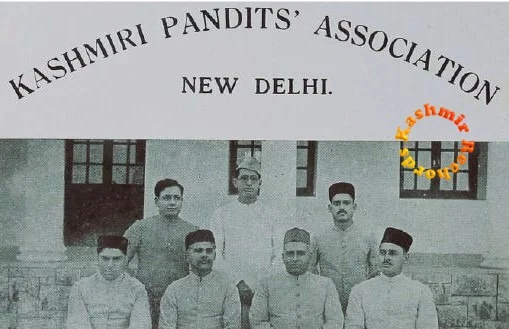
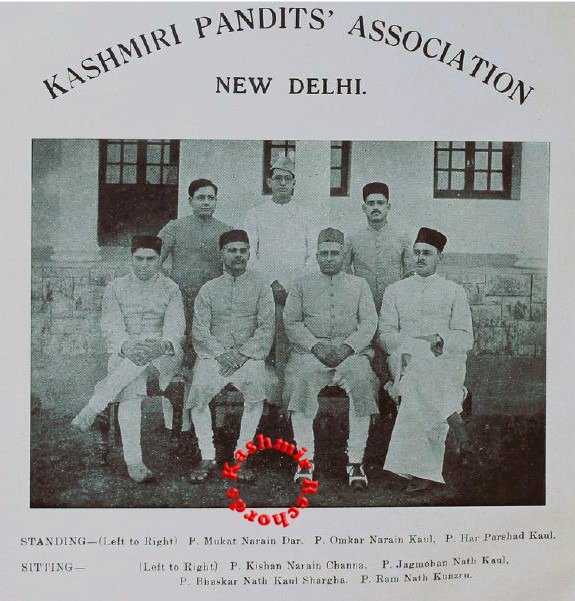
1935: Kashmiri Pandits’ Association of  New Delhi

(Kashmir Rechords Exclusive)

While post-1950 saw the establishment of organizations like the All India Kashmiri Samaj and the Kashmiri Samiti Delhi, records indicate that the Kashmiri Pandits’ Association in New Delhi was well-knit and operational as early as 1935.

Before India’s independence, Delhi hosted a significant non-Kashmiri-speaking Kashmiri Pandit community. Most members resided in areas like Bazar Sita Ram, Sadar Bazar, Chandni Chowk, Hanuman Road, Raisina Road, Doctors’ Lane, Hasting Square and Karol Bagh. These families were mostly  descendants of those who  had fled Kashmir during periods of religious persecution, with migrations dating back to the 16th century.

Leadership in 1935

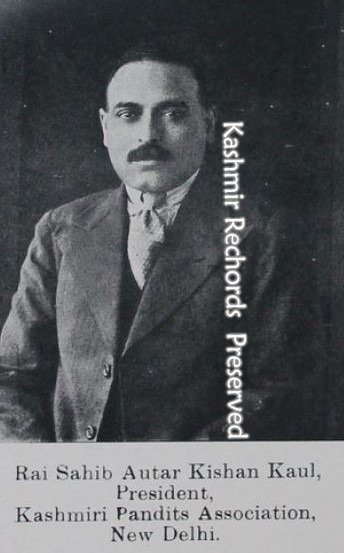
In 1935, the association was led by prominent figures of the time:

  • Rai Saheb Autar Kishan Kaul (President):
    • Profession: Superintendent in the Foreign and Political Department.
    • Residence: Lal Bagh, Delhi.
    • Background: His family’s migration history traced back to the 1830s, moving from Kashmir to Lucknow and then to Shekhupura, Punjab, (Now Pakistan), during the Indian Mutiny of 1857.
    • Family: Married to Smt. Rameshwari Kaul, with two sons and a daughter, all students in 1935.
    • Ancestral Migration: His grandfather  had moved from Kashmir to Lucknow in the 1830s and later to Shekhupura, Punjab, during the Indian Mutiny of 1857.
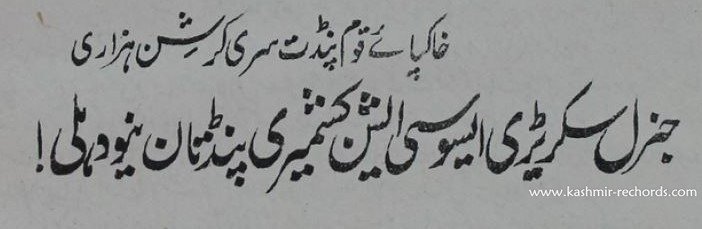
  • Pt. Sri Krishan Hazari (General Secretary):
    • Profession: Stenographer in the Railway Board.
    • Residence: Divided his time between Delhi and Shimla.
    • Family: Family: Married to Smt. Kishni Mohini of the Raina dynasty, with two sons and a daughter, all students at the time.

Notable Members

The association’s membership included distinguished individuals like:

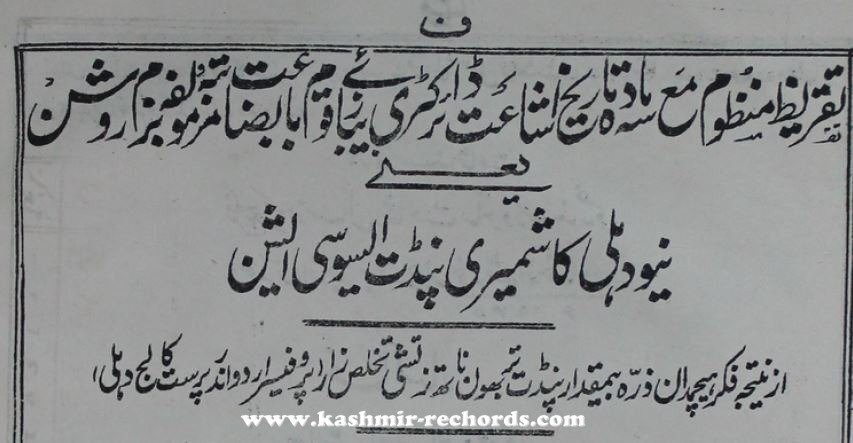
  • Pt. Tribhavan Nath Zutshi “Zaar”: A celebrated Urdu poet and professor of Urdu at Indraprastha College, Delhi, whose literary contributions enriched the cultural legacy of the community.

Areas of Settlement

By 1935, the Kashmiri Pandit community in Delhi had established itself in:

  • Old Delhi: Bazar Sita Ram, Sadar Bazar, Chandni Chowk.
  • New Delhi: Hanuman Road, Raisina Road, Doctors’ Lane, Hasting Square, and Karol Bagh.

These families were descendants of those who had left the Kashmir Valley during various periods of persecution and hardship, with migrations documented as far back as the 16th century.

Impact of Migration on Kashmiri Pandit Associations

The Kashmiri Pandits faced multiple exoduses from their homeland, leading to the establishment of community organizations to maintain cultural links and social interaction. By 1935, two prominent associations existed: one in Delhi and another in Lahore (now in Pakistan).

After the partition in 1947, Kashmiri Pandit families moved out of Lahore and resettled in Delhi, Lucknow, Allahabad, and other cities. The Lahore association later merged with the Kashmiri Pandits’ Association in Delhi, creating a unified body to serve the community.

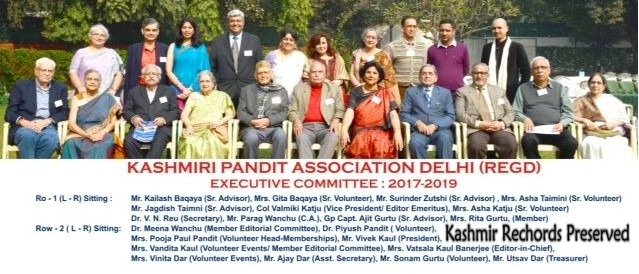
Prominent Members Before and After Independence included  Raj Krishna Sibbu, Rai Saheb Autar Kishan Kaul, S.N. Shivpuri, Ram Bhan, Surinder Zutshi, Jagdish Prakash Taimni, Kailash Nath Baqaya, and Col. (Retd.) Valmiki Katju.

The association continued its activities up to 2017. On September 10, 2017, a new leadership team was elected:

  • President: Mrs. Madhulika Bahadur.
  • Vice President: Col. (Retd.) Valmiki Katju.
  • Secretary: Dr. V.N. Reu.
  • Treasurer: Utsav Dar.

Other members included Ajay Dar, J.P. Taimni, K.N. Baqaya, Surinder Zutshi, and Group Captain Ajit Gurtu.

The Kashmiri Pandits’ Association, New Delhi, established in 1935, stands as a milestone in the history of the Kashmiri Pandit diaspora. It reflects the community’s resilience, commitment to cultural preservation and ability to adapt while remaining deeply connected to its roots. This association not only supported its members but also documented an essential chapter in the broader narrative of Kashmiri Pandit history.

Shankha Lipi: The Script of Devotion

0

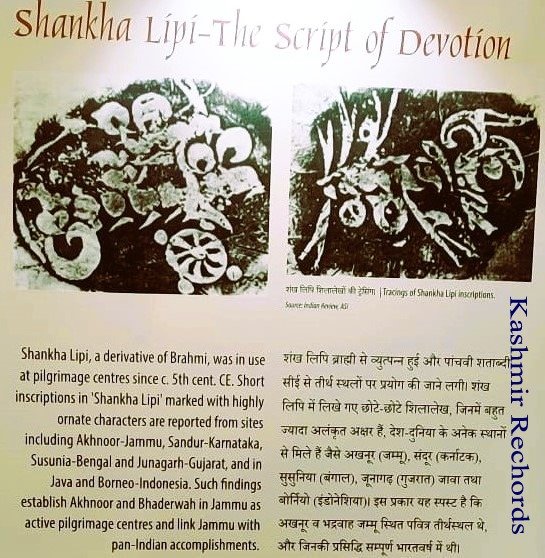
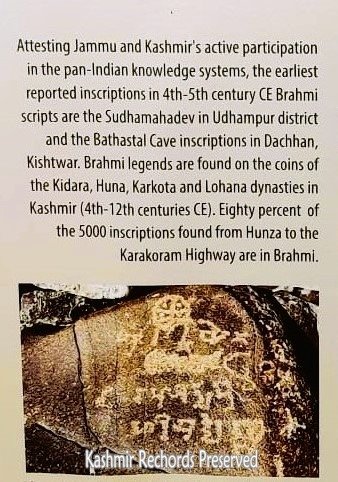
Shankha Lipi inscriptions from Akhnoor and Bhaderwah in Jammu and Kashmir reinforce the notion that these towns were active pilgrimage centers between the 4th and 7th centuries CE.

(Kashmir Rechords Desk)

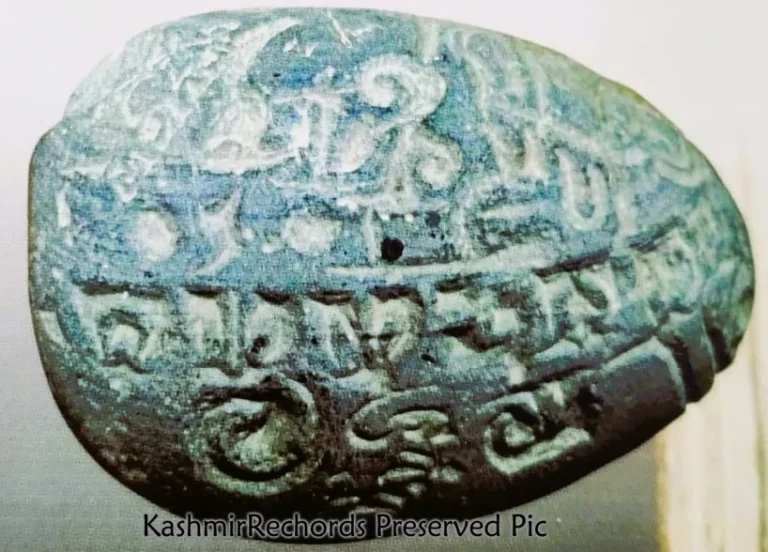
Shankha Lipi, also known as “Conch Script” or “Shell Script,” refers to ornate spiral characters believed to be derivatives of the Brahmi script. These characters resemble conch shells (Shankhas) and have been discovered in inscriptions across north-central India, dating back to the 4th to 8th centuries CE. Notably, Shankha Lipi inscriptions have been found in the Akhnoor and Bhaderwah regions of Jammu and Kashmir, indicating that these areas were significant pilgrimage centers in ancient times.

Characteristics and Distribution

The ornate, ciphered spiral characters of Shankha Lipi are thought to belong to a new script family derived from Brahmi. In addition to Akhnoor and Bhaderwah, inscriptions have been uncovered in Bihar, Maharashtra, Karnataka, Gujarat, and even in Java and Borneo, Indonesia. Prominent sites include the Mundeshwari Temple in Bihar, the Udayagiri Caves in central India, Mansar in Maharashtra, and Junagarh in Gujarat. These inscriptions were typically engraved on temple pillars, freestanding columns, and rock surfaces, often at sites with prominent cave shrines.

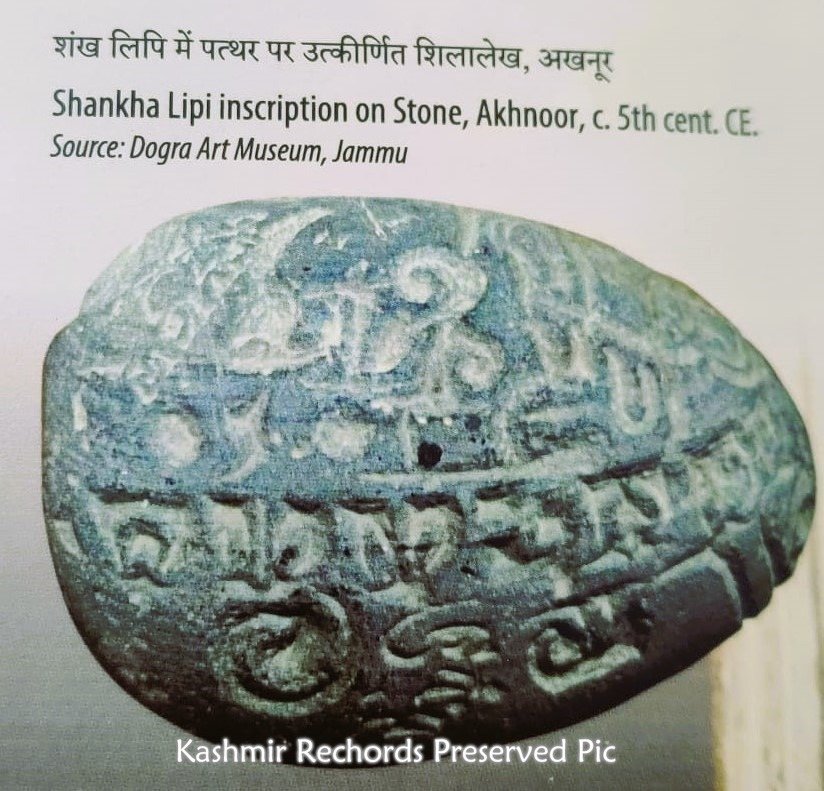
Shankha Lipi was not used for lengthy texts but primarily for denoting names, auspicious symbols, or a combination of both. The characters were usually of similar or slightly larger size than Brahmi letters. However, some inscriptions, such as those at the Udayagiri Caves, feature gigantic letters several meters high. The use of Shankha Lipi on small stones found in Akhnoor—now housed in the Dogra Art Museum, Jammu—and stone boulders near Bhaderwah further underscores its historical significance in the region.

Historical Significance in Jammu and Kashmir

Archaeological evidence from Manda, Akhnoor, unearthed in the 1960s, suggests that Jammu was exposed to early writing systems in the subcontinent. Shankha Lipi inscriptions from Akhnoor and Bhaderwah reinforce the notion that these towns were active pilgrimage centers between the 4th and 7th centuries CE. Dr. Lalit Gupta, a noted scholar and art critic, posits that these inscriptions were used by pilgrims to record their visits, further affirming the historical importance of Ambaran (Akhnoor) and Bhaderwah as sacred sites.

Research on Shankha Lipi

The first comprehensive study of Shankha Lipi was conducted by Richard Salomon, who classified it as a derivative of Brahmi that had evolved into a distinct script family. Salomon found sufficient characters in Shankha Lipi to represent the syllables of Sanskrit and tentatively assigned sounds to some characters. Later, Prof. B. N. Mukherjee proposed a system of decipherment, suggesting that Shankha Lipi was an ornamental adaptation of Brahmi. Most inscriptions date to the Gupta period and typically feature individual names, akin to ornamental signatures.

Jammu’s Brahmi Inscriptions

Jammu has also yielded significant Brahmi inscriptions. The Bathastal inscription, discovered in 1921 by R. C. Kak, dates to the 3rd to 5th centuries CE and is considered one of the oldest Brahmi inscriptions in the region. Scholars have compared it to coins of Indo-Bactrian kings and inscriptions from neighboring areas.

Another noteworthy inscription is the Bhaderwah Cave Inscription, located inside the Gupt Ganga shrine on the banks of the Neru River. Identified as the longest Brahmi inscription in the region, it is one of the oldest from the Himalayan valleys of the Chenab region. Additionally, a Brahmi inscription has been found on an iron trident at the Sudhmahadev Shiva temple.

Cultural Ties and Initiatives

The Indian Council of Historical Research (ICHR), under the Ministry of Education, is actively promoting a project titled “Jammu, Kashmir, and Ladakh Through the Ages.” This initiative highlights the age-old cultural ties of Jammu and Kashmir with the rest of India, emphasizing findings like Brahmi and Shankha Lipi inscriptions. Such efforts underscore the region’s rich historical and cultural heritage, fostering a deeper understanding of its contributions to India’s ancient past.

Aagar Naeb: A Window to Kashmir’s Civilizational Heritage

(By: Kanwal Krishan Lidhoo)*

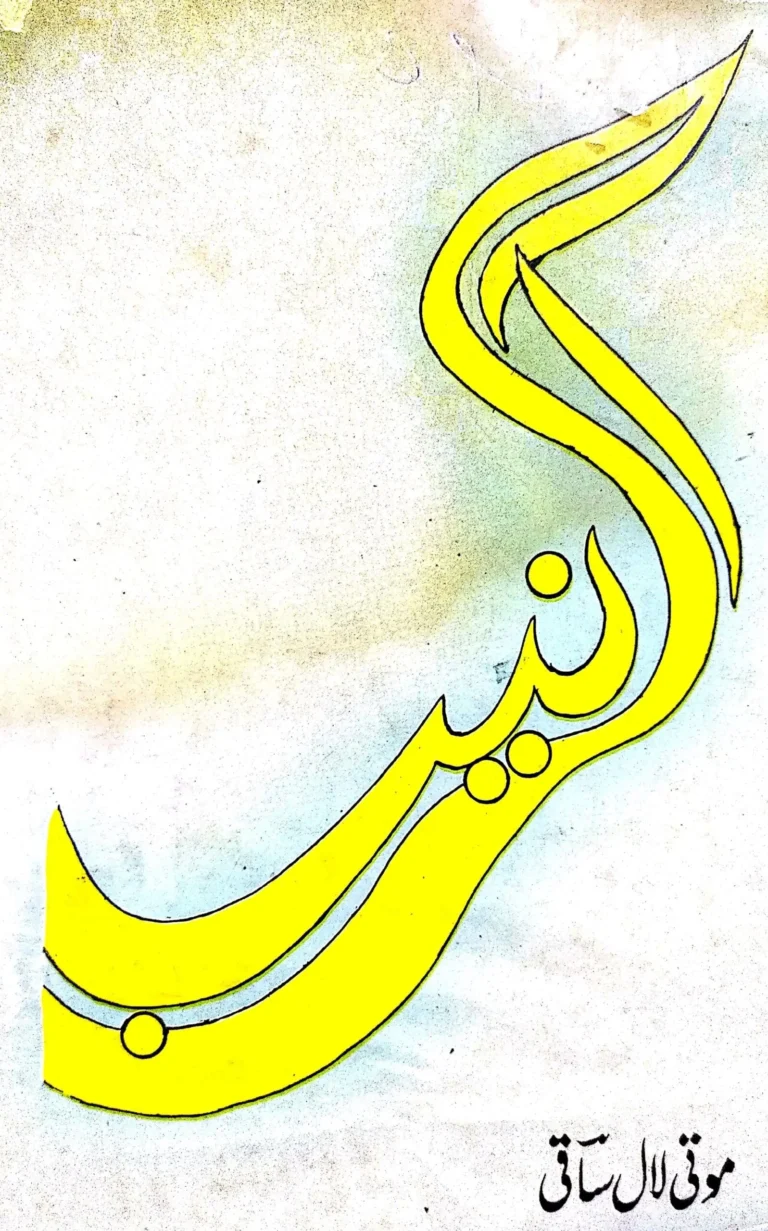
Aagar Naeb (The Source), published in 1998, is a profound scholarly work by Moti Lal Saqi, one of Kashmir’s most revered intellectuals. Driven by his deep love for Kashmir, Saqi foresaw a dual crisis that the region’s future generations might face—a loss of historical connection amidst chaos and existential upheaval. His book serves as both a reflection on these challenges and a guiding light for the preservation of Kashmir’s cultural identity.
A Generation at Crossroads

Saqi anticipated a dual assault on Kashmir’s collective consciousness. On one hand, there was the risk of a disoriented generation, forced to rebuild their lives in distant lands, losing touch with their historical roots. On the other, a generation trapped in the vortex of terror and disorder prioritized survival over understanding their heritage. This erosion of historical consciousness, he warned, could compromise the essence of Kashmir’s identity.

Despite this, Saqi maintained hope. He believed that, eventually, the turmoil would subside, allowing the pristine waters of Kashmir to once again reflect the grandeur of its civilizational heritage.

In the foreword Saqi writes:

“Many historians have attempted to explore the depths of Kashmir’s historical and cultural waters. However, many lacked the ability to connect with its soil or truly grasp its value system. This has resulted in superficial discussions, fragmented opinions, and an absence of a unifying central idea.”

He further adds:

“The Book Aagar Naeb is an effort to understand and interpret Kashmir’s history unconventionally. I have sought to present to my esteemed readers what others have recorded about Kashmir, while also contributing my own findings that, once recovered, could realign our understanding.”

The Scholarly Depth of Aagar Naeb

In Aagar Naeb, Saqi meticulously addresses the complex challenges of historiography. Drawing upon an extensive array of sources—ranging from ancient Chinese, Buddhist, and Vedic texts to the Mahabharata, Puranas, Alberuni’s works, Kalhana’s Rajatarangini, Taranatha’s accounts, and Aurel Stein’s studies—Saqi delves into the intricate tapestry of Kashmir’s past.

Through his analysis, he unearths the nuanced details that define the cultural and civilizational essence of Kashmir. His narrative does not merely recount historical events but seeks to illuminate the threads connecting the past to the present, transforming ancient texts into a rich mosaic of insights.

A Vision Beyond History

Saqi’s approach to historiography is both scholarly and visionary. He sought to bridge the opacity of ancient sources with the contemporary need to understand Kashmir’s grandeur. By rediscovering and reinterpreting these narratives, he aimed to inspire a renewed connection to the region’s shared history.

Through Aagar Naeb, Saqi emphasized the enduring value of cultural preservation. His vision transcends the immediate challenges of his era, offering a blueprint for future generations to reclaim their identity and honor their heritage.

A Call to Preserve Kashmir’s Soul

Aagar Naeb is more than a historical account; it is a call to action. Moti Lal Saqi reminds us that the pristine waters of Kashmir still hold the reflection of its civilizational soul. His work stands as a testament to the resilience of the Kashmiri people and the enduring power of cultural preservation.
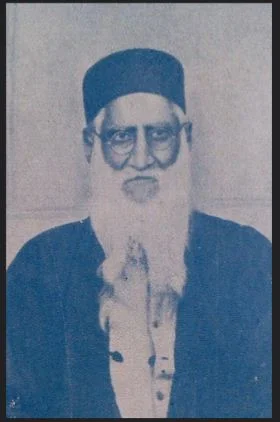
Saqi’s faith in the resilience of Kashmir’s heritage continues to inspire, providing a guiding light for those seeking meaning amidst the tumult. Aagar Naeb remains a timeless beacon for the preservation and celebration of Kashmir’s identity.

*Kanwal Krishan Lidhoo, an accredited translator of Kashmiri, Urdu and Hindi by Sahitya Akademi New Delhi and Indian Institute of Languages Mysore,  was  associated with the institution of All India Radio (AIR) where he worked as a Senior Producer at Radio Kashmir Srinagar and Jammu. He is one of the Directors of Kashmir Rechords.

A Kashmiri Pandit Who Shaped Lahore’s Administration

Pandit Amar Nath Muttoo’s life is not just a chapter in history; it is a testament to the enduring spirit of the Kashmiri Pandit community. From his role as a Deputy Collector in Lahore to his pivotal contributions to community documentation, his story reminds us of the power of dedication and the importance of preserving our collective past.

(Kashmir Rechords Exclusive)

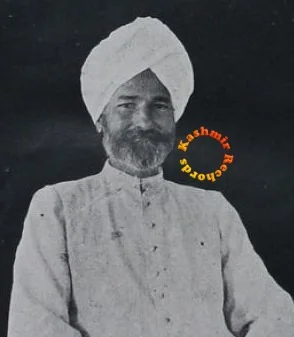
Meet Pandit Amar Nath Muttoo, a distinguished Kashmiri Pandit, who  served as an officer of the Punjab Civil Service (PCS) during the British Raj. Rising to the esteemed position of Deputy Collector in Lahore, he retired in 1932 after a noteworthy career in public administration. His responsibilities encompassed overseeing revenue collection, maintaining law and order, and supporting administrative functions in Lahore, one of Punjab’s most prominent cities.

Lahore, during his tenure, was not merely a bustling urban centre but a significant cultural and political hub. It was a period marked by the fervour of the Indian independence movement and the socio-political transformations that would ultimately shape the subcontinent’s destiny. Pandit Amar Nath Muttoo’s role as Deputy Collector placed him at the confluence of governance and history, making his contributions uniquely significant.

Pandit Amar Nath resided in Kothi Number 6, Model Town, Lahore. His home was more than a residence; it was a landmark that bore witness to the vibrant cultural and political currents of the time. From this address, he carried out his duties, navigating the complexities of British colonial governance while addressing the needs of the local population. His presence in Model Town symbolized the rising influence and adaptability of Kashmiri Pandits in diverse professional spheres.

A Visionary for the Kashmiri Pandit Community

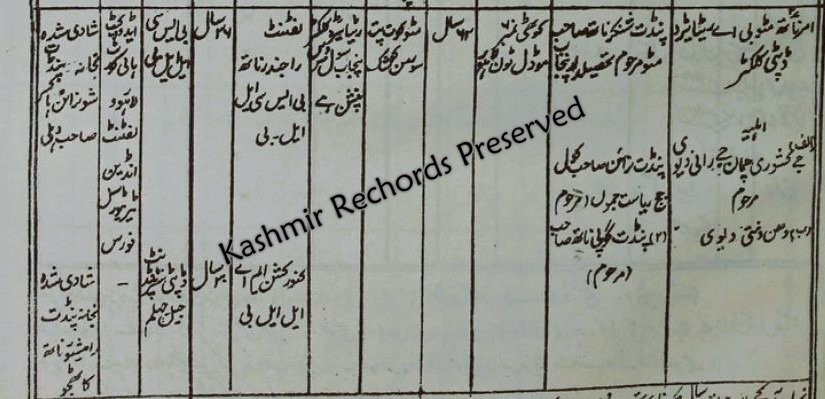
One of Pandit Amar Nath Muttoo’s most enduring contributions was his assistance to the Kashmiri Pandit Association of New Delhi. He provided invaluable statistical data on Kashmiri Pandits living across British India, including areas now part of Pakistan. His meticulous records and insights enabled the Association to compile and publish the Directory of Kashmiri Pandits in 1936. This directory remains a treasure trove of historical information, documenting the spread of the community across 118 cities and towns.

A Page from Kashmiri Pandit Directory-1936, carrying details about Pt Amar Nath Muttoo

Family and Personal Life

The Directory of Kashmiri Pandits also sheds light on Pandit Amar Nath Muttoo’s family background. Born to Pandit Shanker Nath, a Tehsildar in Punjab, Amar Nath married twice. His first wife, Jai Kishori, the daughter of Pandit Narayan Kaul, a judge in Jammu, passed away early. His second wife, Dhanvanti Devi, became his partner through much of his life.

Pandit Amar Nath had two sons who carried forward his legacy of excellence:

Pandit Rajinder Nath Muttoo: An advocate at the Lahore High Court, he also served as a lieutenant in the Indian Territorial Force (ITF), a part-time military organization established in 1920. The ITF’s legacy later evolved into the Territorial Army post-independence.

Pandit Kanwar Kishen Muttoo: He worked as the Deputy Superintendent of Jail in Jhelum Town, contributing to law enforcement and administration.

Both sons upheld the family’s tradition of resilience and professional distinction. Rajinder Nath married the daughter of Shiv Narayan Haksar of Delhi, while Kanwar Kishen wed the daughter of Pandit Rameshwar Nath Kathju. These alliances underscored the Kashmiri Pandit community’s dedication to maintaining cultural cohesion despite the challenges of dispersal and distance.

Kashmir Rechords continue to honor the legacy of individuals such as Pandit Amar Nath Muttoo by unearthing and sharing their stories. These narratives inspire future generations to reconnect with their heritage and appreciate the resilience and contributions of their ancestors.

Pandit Amar Nath Muttoo’s life is not just a chapter in history; it is a testament to the enduring spirit of the Kashmiri Pandit community. From his role as a Deputy Collector in Lahore to his pivotal contributions to community documentation, his story reminds us of the power of dedication and the importance of preserving our collective past.

For those interested to know about Kashmiri Pandits Unique Directory of 1936, may click here:

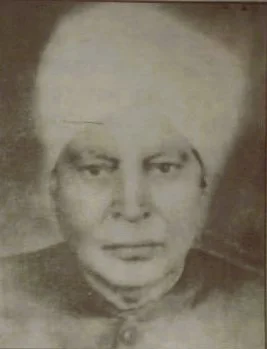
The Journey of Jia Lal Dhar Saraf: From Material Success to Profound Spiritual Contribution

(Kashmir Rechords Exclusive)

The bustling streets of Srinagar in the early 20th century were a testament to the thriving trade that connected Kashmir to the rest of the Indian subcontinent. Among the prominent figures shaping this economic tapestry was Pandit Jia Lal Dhar (Saraf), a man whose life journey would evolve from material success to profound spiritual contribution. Born into a prosperous family on May 3, 1901, Pandit Dhar seemed destined for a life of comfort and affluence. However, his story took an extraordinary turn—one that continues to inspire generations.

Orphaned at a young age after losing his father, Pandit Dhar demonstrated resilience and an unyielding spirit. Determined to honor his family’s legacy, he expanded his business ventures beyond the serene valleys of Kashmir to the bustling trade centers of Mumbai and Lahore. These were no small feat, especially in the pre-partition era when such undertakings required exceptional acumen and courage. By the time he reached his prime, Pandit Jia Lal Dhar had not only established a successful enterprise but also earned the respect of his peers, becoming the president of the Punjabi-dominated trade guild in Maharaj Ganj, Srinagar.

Yet, for Pandit Jia Lal Dhar, wealth was not an end but a means to uplift others. His philanthropic endeavors extended to individuals and organizations alike, reflecting a deep commitment to the welfare of his community.

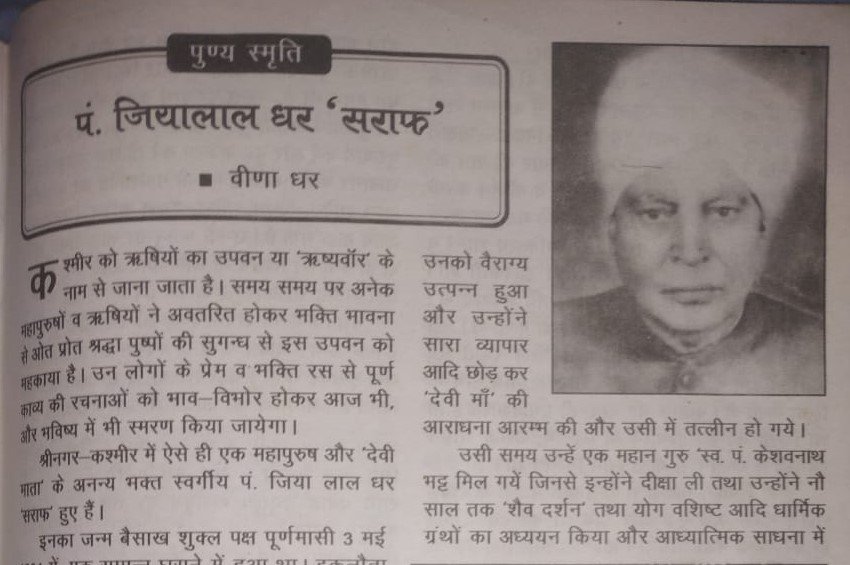
A page from Kashur Samachar, Dec 2007

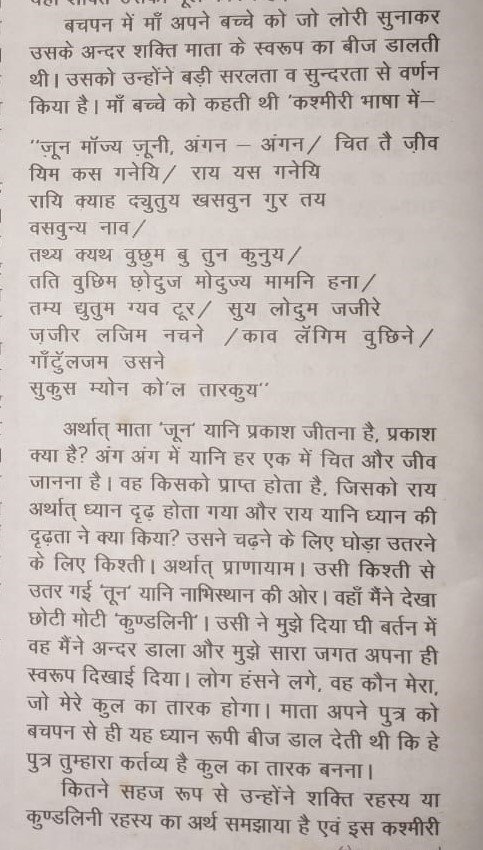
There is a mention of life and works of this great saintly figure in December 2007 issue of Kashur Samachar, wherein Smt Veena Dhar has given a detailed account of the life and works of Pt Jia Lal Dhar Saraf.

The Fateful Accident

Life, however, had a different path in store for him. During a routine business trip to Pampore to procure saffron, Pandit  Jial Lal Dhar’s vehicle swerved to avoid a stranded cow, resulting in a severe accident. Though he survived miraculously, the experience left an indelible mark on his psyche. The near-death encounter brought forth a profound realization about the fragility of life and the futility of material pursuits in the face of mortality.

This epiphany became a turning point, steering him away from worldly ambitions towards the pursuit of spiritual enlightenment. Guided by his mentor, Pandit Keshav Nath Bhat, Pandit Dhar delved deeply into Kashmir’s Shaiva philosophy, dedicating himself to the worship of Para Shakti, the Universal Mother.

A Spiritual Renaissance

Pandit Jia Lal’s  spiritual transformation was not confined to personal enlightenment. His devotion to the Divine Mother endowed him with remarkable abilities, including the power to heal. Pilgrims from across the valley sought his blessings at Pokhribal, where his presence was a source of solace and hope. Yet, his greatest contribution lay in his efforts to bridge the esoteric wisdom of Shaiva philosophy with the cultural and linguistic fabric of Kashmir.

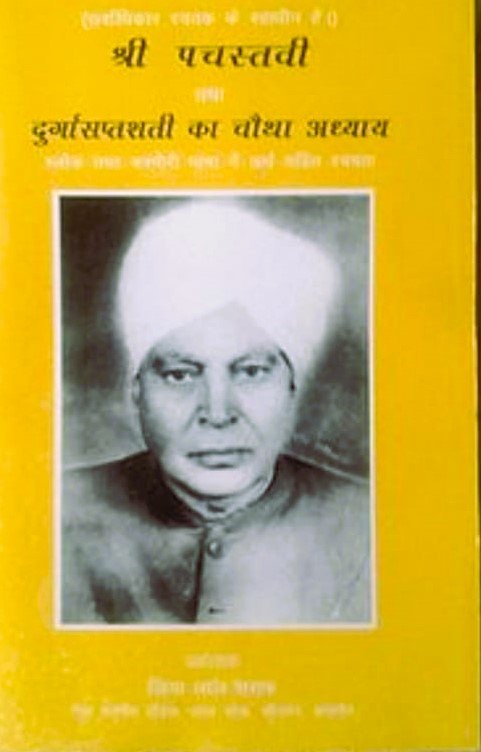
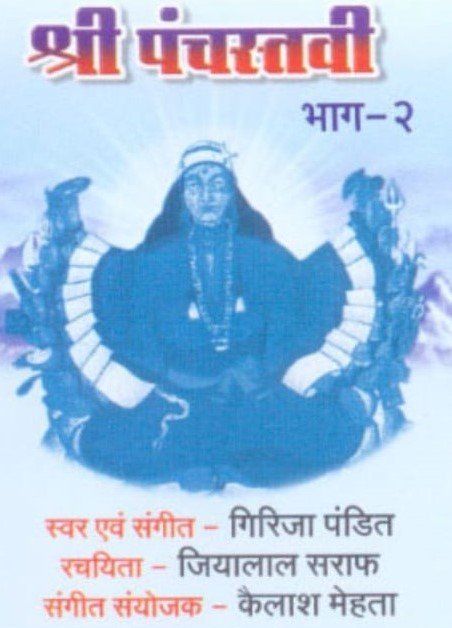
Inspired by the Bhakti poets, Pandit Jia Lal Dhar took upon himself the monumental task of translating sacred Sanskrit texts into Kashmiri. His most iconic work is the Kashmiri translation of Panchastavi, a Sanskrit compilation of devotional hymns divided into five “stavs”: Laghustav, Charchastav, Ghatstav, Ambhastav and Sakaljananistav. Pandit Dhar translated these into Kashmiri in a lyrical form, singing them in praise of Mata Sharika, the Divine Mother. The Panchastavi had long been revered for its spiritual depth and Pandit Dhar’s translation brought it into the homes and hearts of Kashmiri-speaking devotees.

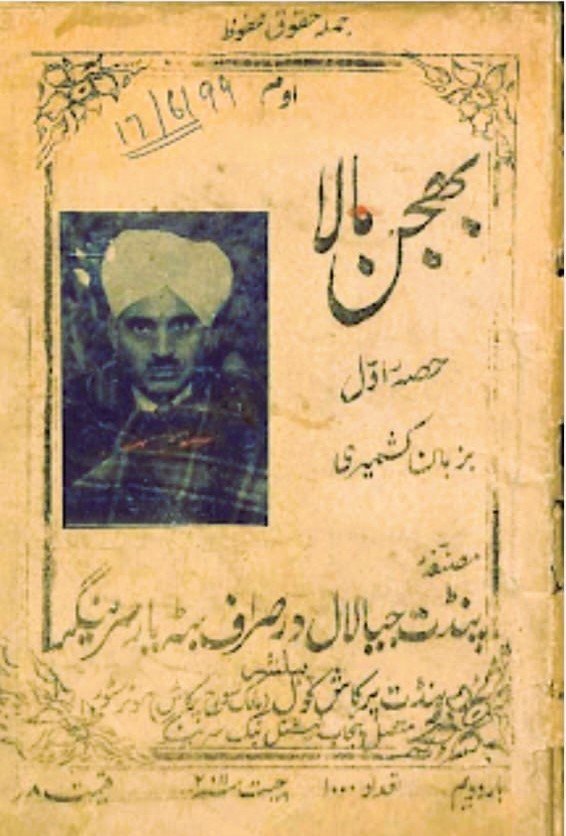
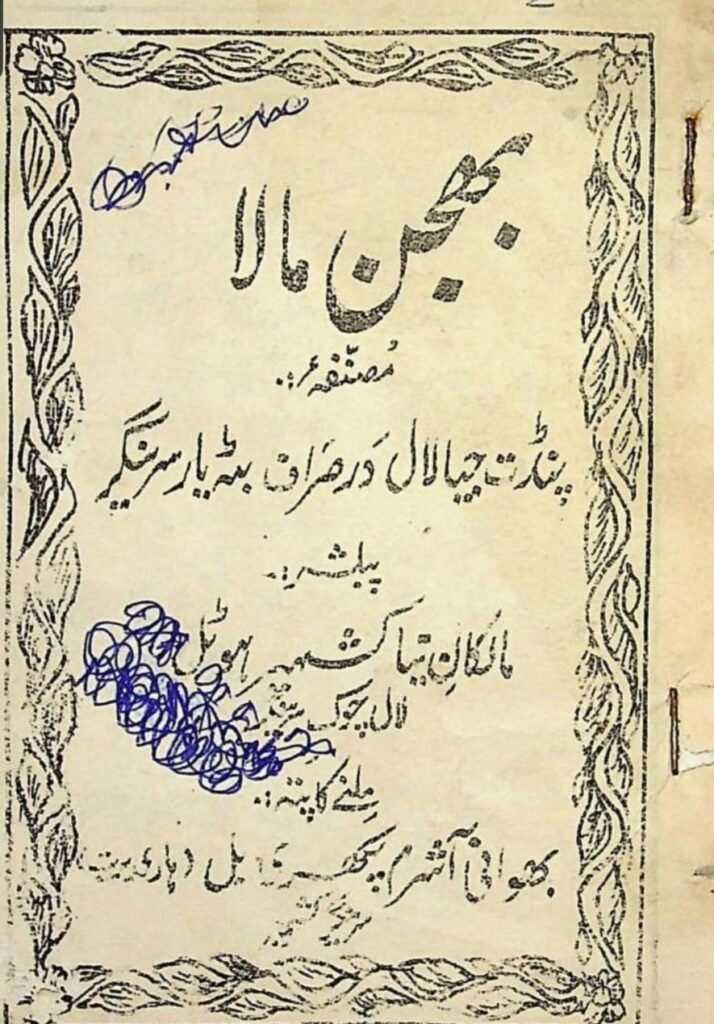
Bhajan Malas in Kashmiri

 A Devotional Contribution to Kashmiri Literature

Besides Panchastavi, Pandit Jia Lal  Dhar translated Durga Saptashati and Gauri Stuti into Kashmiri and composed numerous Bhajans that became household entities in Kashmir. He also credited with interpreting the mystical significance of a traditional lullaby sung by Kashmiri mothers to their children. The lyrics, believed to awaken Kundalini Shakti, carried a spiritual essence that Pandit Dhar brought to light:

Zoon Maej Zoon… Angan Angan Chit Tai Zeev Yim Kas Ganeye… Raayas Ganeye Raay kya dyut… Khasvun Gur Tai Vasvenie Naav…”

These interpretations exemplified his mission to make spirituality accessible and relevant to everyday life.

A Lasting Legacy

Pandit Jia Lal Dhar passed away on April 17, 1975, leaving behind a legacy that continues to resonate in Kashmir’s spiritual and cultural landscape. His life serves as a testament to the transformative power of spiritual awakening and the enduring impact of selfless service. Through his translations, teachings and healing presence, he illuminated the path for countless individuals, reminding them of their spiritual heritage and the boundless possibilities of human endeavour.

In paying tribute to this illustrious son of Kashmir, Kashmir Rechords celebrates not just a man but a movement—a bridge between the sacred and the secular, the past and the present. Pandit Dhar’s story remains a beacon of hope and inspiration, urging us to embrace our rich traditions while striving for a higher purpose.

Sahir Dehlvi: A Kashmiri Pandit Scholar of Sanskrit, Arabic

(Kashmir Rechords Exclusive)

Urdu literature has long celebrated the spellbinding brilliance of its “Sahirs”—poets whose words cast a timeless enchantment. Among them, Sahir Ludhianvi is a household name, revered for his lyrical genius and progressive ideals. However, few know of Pandit Amar Nath Madan `Sahir Dehlvi’, a poet whose life predates Ludhianvi’s and whose contributions to Urdu, Persian and Sanskrit literature laid a profound yet overlooked foundation.

Born in 1863 in Bareilly in a Kashmiri Pandit family, Pandit Amar Nath Madan adopted the pen name “Sahir” long before Sahir Ludhianvi (born in 1921) graced the literary world. Sahir Dehlvi was not only a poet but a scholar of remarkable depth, fluent in Arabic, Persian and Sanskrit. His life spanned nearly a century, ending in 1962 at the age of 99. This extraordinary longevity allowed him to witness a tumultuous era in Indian history, from the decline of the Mughal Empire to the socio-political transformations of the 20th century.

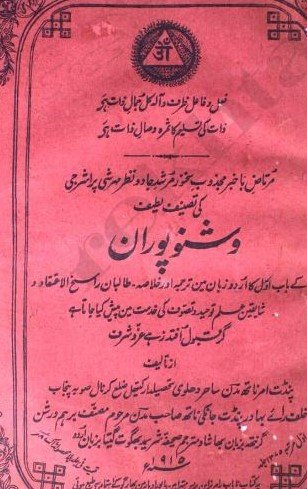
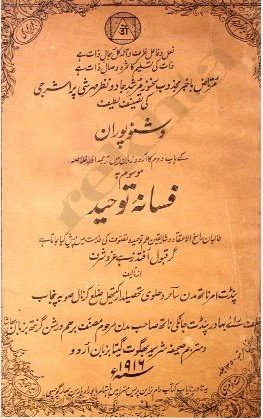
Pandit Amar Nath Madan’s life journey was steeped in both service and creativity. While serving as Tehsildar in Kaithal, District Karnal, Punjab Province, he undertook the monumental task of translating two volumes of the Vishnu Puran into Urdu in 1914 and 1915. This accomplishment was not only remarkable for its literary merit but also for its timing, as it preceded the birth of the celebrated Sahir Ludhianvi by several years. It was an extraordinary feat that bridged cultural and linguistic divides. This achievement underscores his scholarly dedication and his commitment to making Hindu scriptures accessible to Urdu readers.

Two volumes of Vishnu Purans.Pic Courtesy: Rekhta
Sahir Dehlvi’s early years were marked by intellectual rigor. Deeply influenced by Hindu spirituality and Islamic mysticism, his poetry reflected a synthesis of these traditions. His Urdu Diwan, Kufr-e-Ishq, and Persian collection, Chiragh-e-Maarfat, are masterpieces of philosophical and mystical thought. They delve into themes of divine love, human suffering, and the search for transcendence, blending Vedantic wisdom with Sufi ethos.

A Witness to Decline and Revival

Residing for much of his life at Lal Haveli in Mohalla Choodigiran, Delhi, Sahir Dehlvi lived through the decline of the Mughal Empire and the consequent deterioration of Delhi’s socio-cultural fabric. These changes deeply influenced his work, infusing his poetry with a sense of loss, reflection, and resilience.

Delhi’s cultural decline, however, did not deter Sahir Dehlvi’s creative spirit. Instead, it steered him towards a mystical outlook, where poetry became both a sanctuary and a vehicle for preserving a vanishing heritage.

Custodian of a Literary Legacy

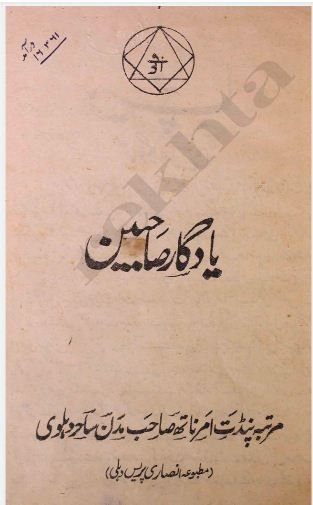
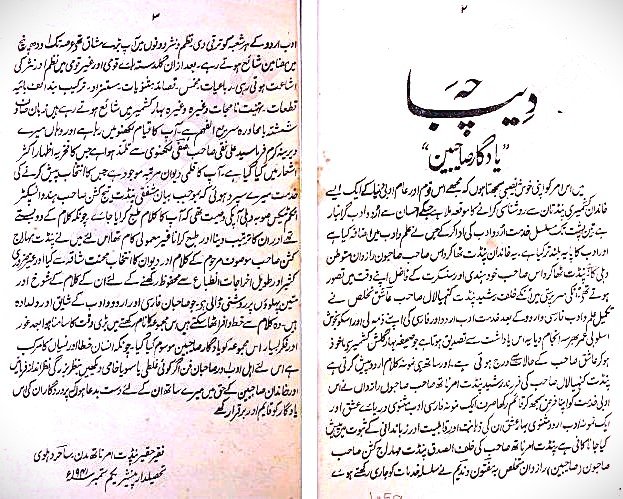
Sahir Dehlvi’s role as a preserver of literary traditions is evident in his editorial work on Yaadgar-e-Sahiban. This monumental effort was dedicated to the legacy of Pandit Maharaj Kishan Razdan, known as “Maftoon,” another luminary of Urdu poetry. Maftoon’s works, spanning genres like Masnavi, Rubaiyat, and Qataat, were entrusted to Sahir Dehlvi, who painstakingly refined and published them in 1941.

This act of devotion was emblematic of Sahir Dehlvi’s broader mission: to ensure that the richness of Urdu literature endured, even in the face of historical upheaval.

Yadgar-e-Sahibaan.Pic Courtesy: Rekhta

A Legacy in Shadows

Despite his contributions, Sahir Dehlvi’s name remains overshadowed by later poets like Sahir Ludhianvi. Yet, his life and works offer a poignant reminder of the rich heritage of Kashmiri Pandits in Urdu literature. His poetic voice, steeped in mysticism and philosophy, stands as a bridge between traditions, embodying a timeless harmony of thought and expression.

In celebrating Pandit Amar Nath Madan Sahir Dehlvi, we honor not just a poet but a visionary whose words continue to resonate, reminding us that the true “Sahir” is one whose legacy transcends the limits of time and recognition.

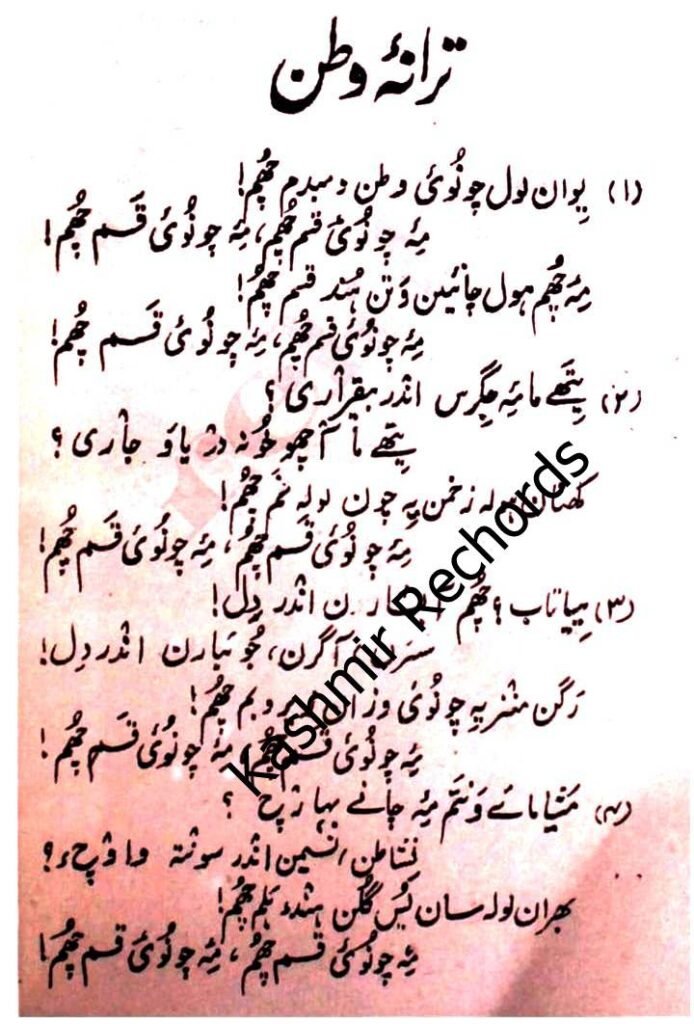
Pitambar Nath Dhar ‘Fani’: A Poet’s Eternal Love for Kashmir

Pitambar Nath Dhar ‘Fani’ was not just a poet—he was a storyteller, a teacher  and a beacon of cultural harmony whose life and works embodied a profound love for Kashmir. Though his final years were marked by separation from the land he cherished, his words continue to echo the beauty, resilience and spirit of his ancestral home.

Born in the picturesque Kashmir Valley in 1919, Fani’s early life was deeply intertwined with the region’s culture and traditions. He grew up surrounded by the mystique of mountains and rivers that later became vivid themes in his poetry. His natural flair for languages—Kashmiri, Persian, Urdu and Arabic—allowed him to weave a rich tapestry of verse that celebrated the essence of Kashmir.

The Teacher Who Inspired Generations

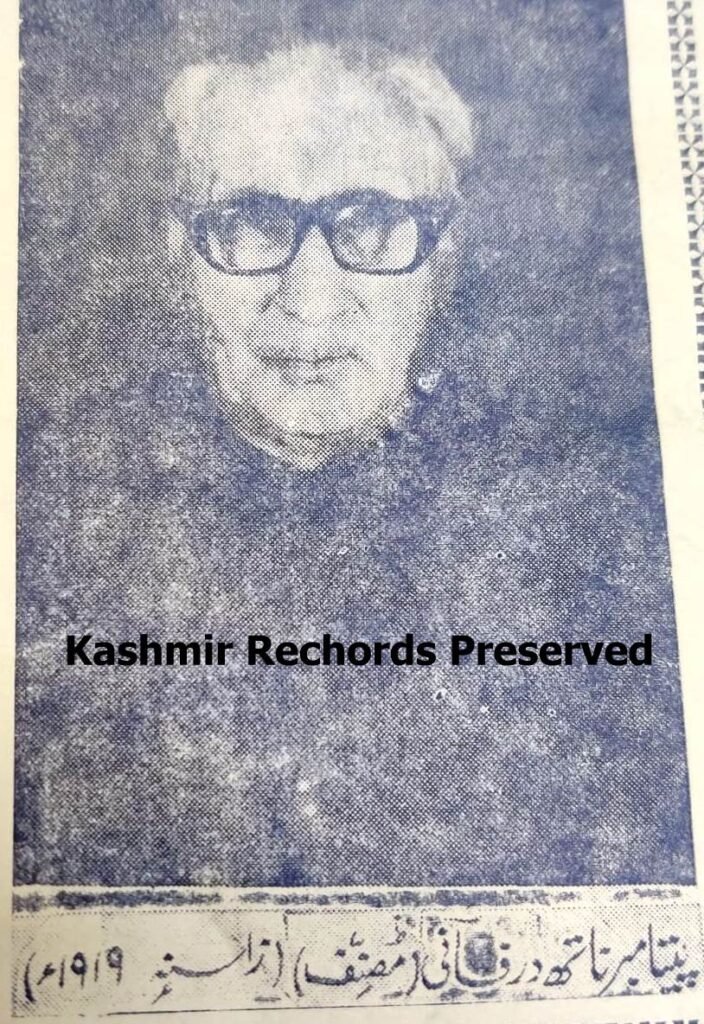
Fani’s career as an educator at Islamia High School in Srinagar was legendary. Students recall him as a towering figure with a lean frame, curly hair and glasses—a man whose presence was as commanding as his intellect. He wasn’t just a teacher; he was a guide who infused life into morning assemblies with captivating speeches on morality, discipline, and spirituality. He often led students in reciting prayers from a school “Book of Prayers,” a collection that included his own devotional poems alongside works by greats like Iqbal and Mehjoor.

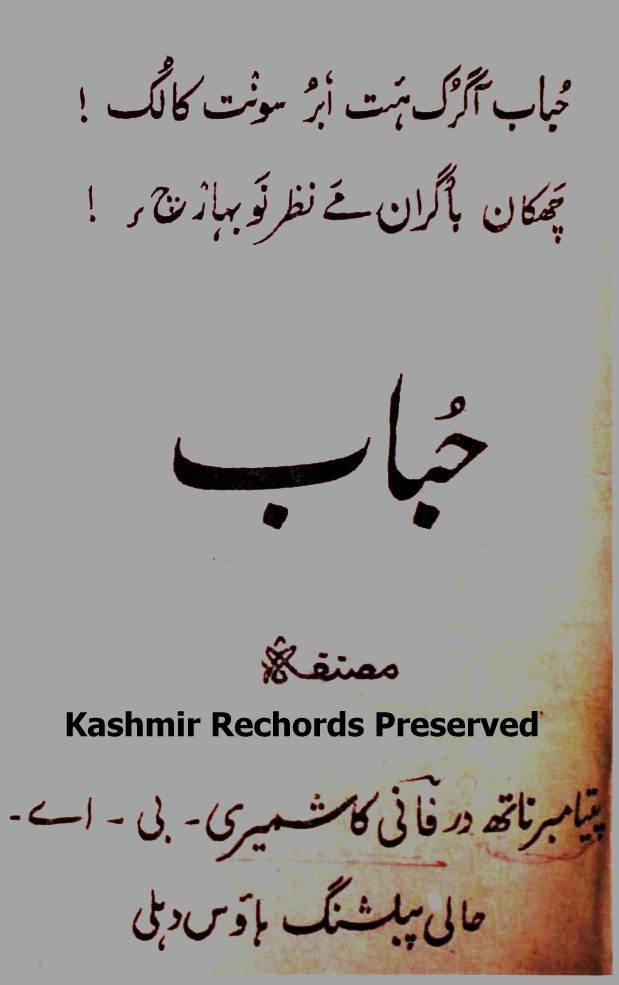
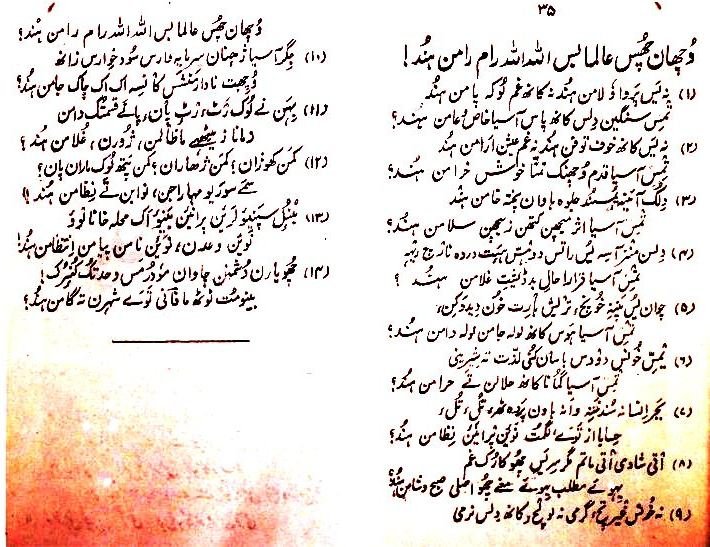
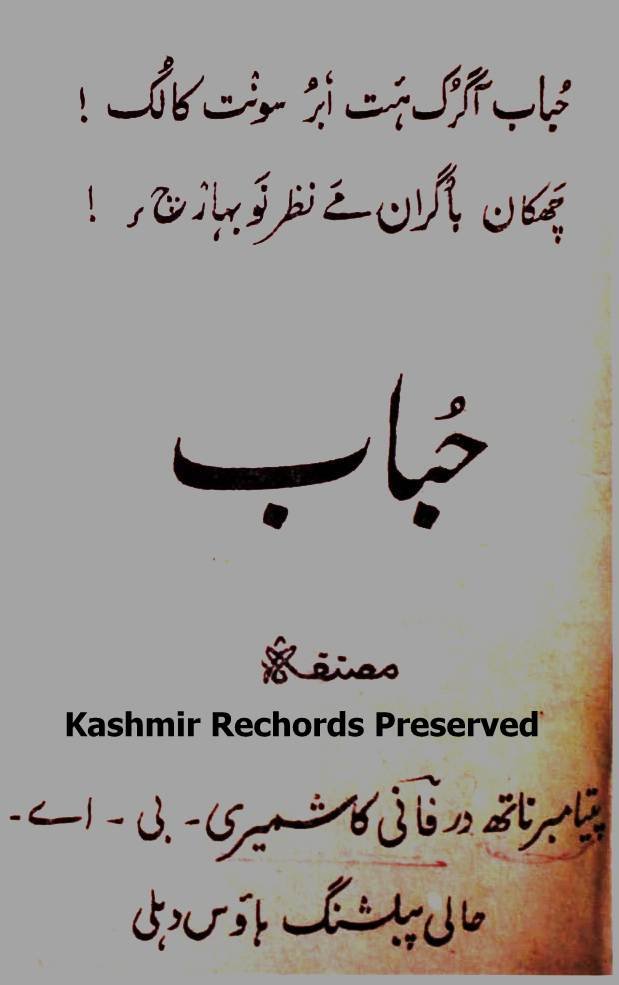
Pages from Fani’s bi-lingual Book Hubab

A Voice That Transcended Boundaries

These prayers reflected his unique poetic gift: the ability to transcend boundaries. Fani wrote devotional hymns for Hindu gods, elegies for Imam Hussain and praises for the Prophet Muhammad, seamlessly blending cultures and traditions in his verse. His bilingual work Hubab, featuring Kashmiri poems with Urdu translations, stands as a testament to his love for his homeland. In other books  like Poshe Daeil and Posh Baag, he celebrated the beauty of Kashmir, its people  and their indomitable spirit.

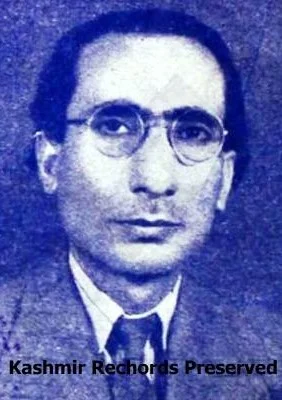
(Pitambar Nath Dhar Fani, post 1990)

The Pain of Exile: Forced from the Homeland

Yet, Fani’s story took a heartbreaking turn during the mass exodus of Kashmiri Pandits in 1989–1990. Forced to leave his home in Lal Nagar, Srinagar, he first moved to Trikutanagar, Jammu and eventually to Gurgaon, far from the valley he adored. This displacement was more than a physical journey—it was a spiritual exile for a man who had lived and breathed the essence of Kashmir.

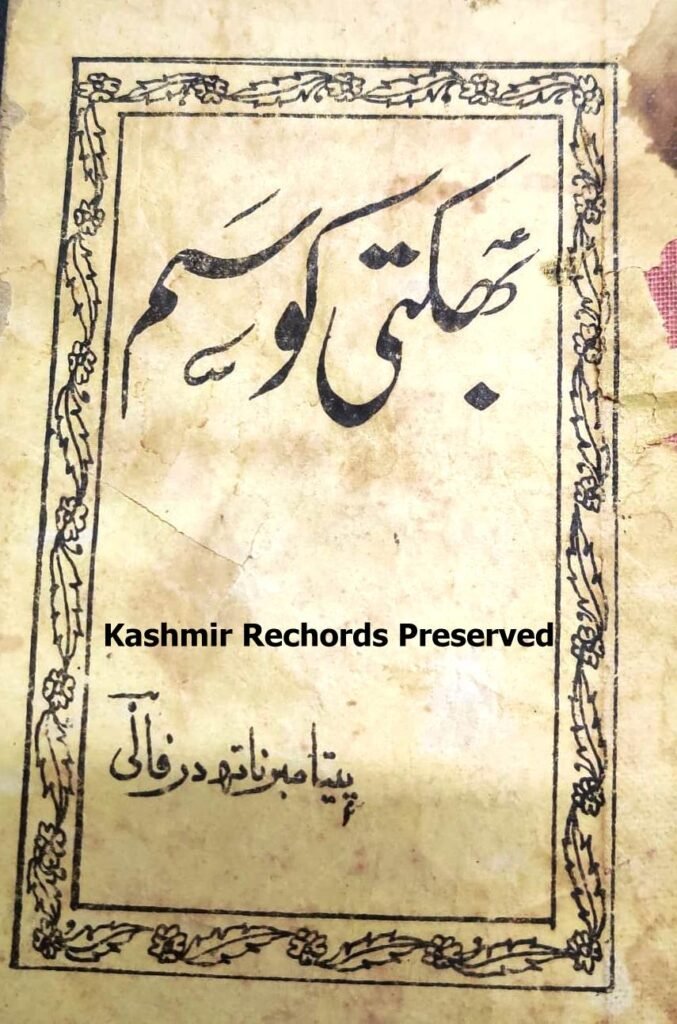
Creativity in Adversity: The Making of Bhakti Kousam

A Collection of Bhajans and Leelas.

Despite the odds, Fani continued to create. In 1990, he managed to publish Bhakti Kousam, a collection of Kashmiri devotional bhajans and Leelas. The journey to bring this work to life was fraught with challenges: finding a calligrapher in Jammu and securing a printer willing to take on the project tested his resolve. Yet, with the help of the J&K Cultural Academy and the Qaumi Printing Press, he overcame these hurdles, leaving behind what would be one of his final contributions to literature.

The Final Chapter: A Poet Separated from His Soil

As Fani spent his last days in Gurgaon, Haryana, he remained deeply connected to Kashmir through his poetry. He passed away on January 9, 2018, at the age of 99, without the solace of returning to his homeland. Even in death, he was denied the wish to be cremated in the soil of Kashmir—a poignant reminder of the pain of displacement.

Fani’s Love for Kashmiri

Pitambar Nath Dhar ‘Fani’ was a poet of unparalleled depth and a teacher whose legacy endures in the hearts of his students and admirers. His life, marked by love for his homeland and the anguish of separation, is a testament to the unbreakable bond between a poet and his land. Through his works, Fani immortalized Kashmir, ensuring that its beauty, culture, and resilience will continue to inspire generations to come.

The Story Behind Runa Laila’s Kashmiri Song!

(Kashmir Rechords Report)

Runa Laila, a celebrated singer of the subcontinent, is renowned for her extraordinary talent and versatility across genres and languages. While her contributions to Bengali, Urdu and Hindi music are widely acknowledged, her unique connection to Kashmir through a single, iconic Kashmiri song remains a fascinating chapter in her illustrious career.

Attired in Kashmiri Pheran, Rouna Laila is singing Mehmood Gami’s song.

In April 1976, as part of a cultural exchange programme, Runa Laila visited India and performed at All India Radio Mumbai and Radio Kashmir, Srinagar. Her visit to Srinagar included a public gathering organized by then Chief Minister Sheikh Mohammad Abdullah, where she donned a traditional Kashmiri pheran and sang Mahmood Gami’s timeless composition, Katyu Chuukh Nundh Bane—Walo Ma Shok Myane.”

This was her first and only Kashmiri song, brought to life under the guidance of the renowned Kashmiri composer Shri Tej Krishen Jalali.  Jalali, who was entrusted with the song’s composition by the Secretary of the J&K Cultural Academy, M.Y. Taing, had meticulously taught Runa  Laila the pronunciation and nuances of the Kashmiri lyrics during her stay at the J&K Circuit House. The song, performed live at the Tagore Hall in Srinagar before an enthralled audience, received resounding acclaim and was later recorded by Radio Kashmir for broader dissemination.

Lyrics of Mahmood Gami’s Song:

Katyu Chuukh Nundh Bane
Walo Mashouk Myane
Mei Korui Na Chanai Chanai
Walo Mashouk Myane
Sharabik Pyaleh Bharyoo
Gulaban Maale Kkaryo
Pagah Ya Kael Maryo
Walo Mashouk Myane
Bah Surat Chukh Cze Pari
Cze Shoobi Jaamai Zarri
Kamov Taweezei Kkareii
Walo Mashouk Myane

Her confident and authentic rendition of this Kashmiri classic left the audience in awe, as if she were a native of the Valley. This rare performance highlights not only her linguistic adaptability but also her ability to connect with the cultural essence of the song.

Runa Laila’s Legacy in Music

Runa Laila’s illustrious career spans decades, with a repertoire that includes iconic songs such as “Dama Dam Mast Qalandar” and Hindi hits like “Unki Nazron Se Mohabbat” and “Suno Suno Ye Duniya Walo.” Singing in 17 languages, including Bengali, Urdu, Hindi and Kashmiri, she has seamlessly bridged cultural and linguistic divides with her melodious voice.

Her foray into Kashmiri music remains a testament to her versatility and dedication, further enriching the musical tapestry of the subcontinent.

The Kashmiri Pandit ‘Sirs’

(By: B.Revti)

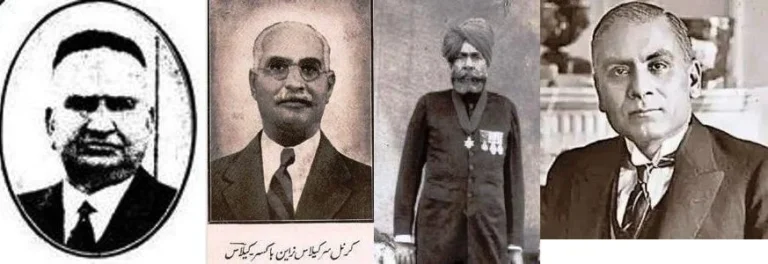
The Kashmiri Pandit community, though a small minority, has produced individuals of exceptional calibre who were recognized with the esteemed ‘Sir’ title for their significant contributions to society. This honor was conferred in recognition of their extraordinary achievements across various domains, including politics, administration, military service, arts and sciences. Here, we spotlight four eminent Kashmiri Pandits who received this distinguished title.

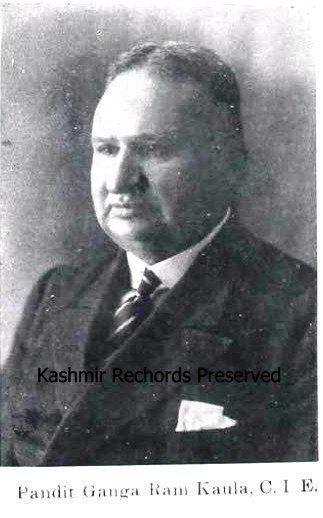
Sir Ganga Ram Kaula: A Pioneer in Public Service

Born on May 9, 1877, in Lahore, Punjab (now Pakistan), Sir Ganga Ram Kaula rose to prominence as India’s first Accountant General. Educated at Central Model School and Government College, Lahore, he began his career in 1896 as an Assistant Examiner in the Indian Audit and Accounts Department. Through relentless dedication, he ascended to key positions, including Accountant General (1921) and Director of Railway Audit (1929-1930). His expertise in finance and administration earned him widespread acclaim. He retired in 1932, leaving behind a legacy of excellence in public service.

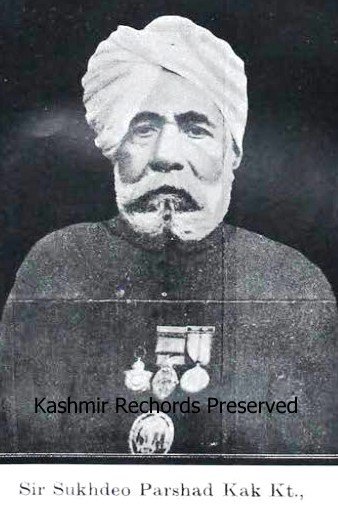
Sir Sukhdeo Prasad Kak: Architect of Jodhpur’s Development

Born in 1862 in Jodhpur, Rajasthan, Sir Sukhdeo Prasad Kak came from a family with roots in the Kulgam region of Kashmir. A graduate of Calcutta University, he began his illustrious career as an administrator in the princely State of Jodhpur. His tenure was marked by transformative reforms in land revenue, law and governance. Recognized for his contributions, he was conferred the titles of Rai Bahadur (1895), Kesari-e-Hind and Companion of the Indian Empire (CIE). His role in the 1933 Round Table Conference in London as a representative of Rajputana States further solidified his legacy. Sir Sukhdeo Prasad Kak’s descendants continued his tradition of excellence in various fields.

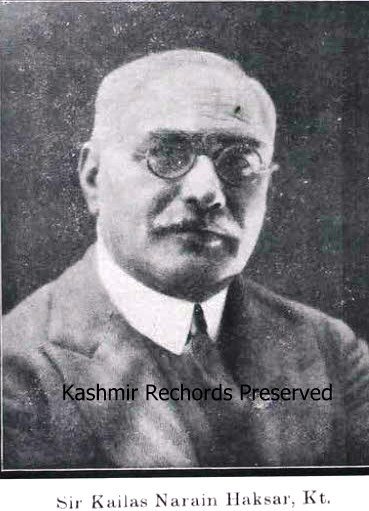
Sir Kailash Narayan Haksar: Statesman and Diplomat

Sir Kailash Narayan Haksar (1878–1953) served as the Prime Minister of Jammu and Kashmir (1942-1944) and held Ministerial roles in Gwalior. Born in Kolkata to Har Narain Haksar, Sir Kailash was appointed a Companion of the Order of the Indian Empire (CIE)  in 1911 and knighted in 1933. His tenure in statecraft was characterized by visionary leadership and diplomatic acumen. A member of an influential Kashmiri Pandit family, his legacy extended to his descendants, who continued to contribute to India’s progress.

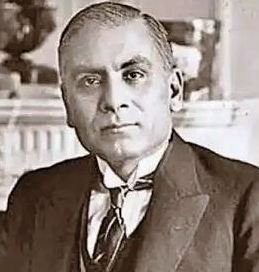
Sir Tej Bahadur Sapru: Pioneer of Dialogue in India’s Freedom Struggle

Sir Tej Bahadur Sapru (8 December 1875 – 20 January 1949) was a prominent Indian freedom fighter, lawyer, and politician. Born in Aligarh into a Kashmiri Pandit family, Sapru became a distinguished legal mind, serving at the Allahabad High Court and later as Dean at Banaras Hindu University.

As a constitutionalist, Sapru played a pivotal role in India’s independence movement, advocating for political rights through dialogue with British authorities. He contributed significantly to drafting the Indian Constitution, organized the 1927 All Party Conference, and helped prepare the Nehru Committee Report on constitutional reforms.

Sapru’s political career included roles in the Legislative Councils of the United Provinces and the Imperial Legislative Council. Knighted in 1923, he participated in the Round Table Conferences, mediating between Indian leaders and British authorities. His efforts helped forge the Gandhi-Irwin Pact and the Poona Pact, addressing critical national and communal issues.

In 1944, he led the Sapru Committee, proposing constitutional principles to unify India and protect minorities, opposing the idea of partition. Despite his efforts, partition occurred, but his contributions remained influential in shaping India’s governance. Sapru passed away in Allahabad in 1949, leaving a legacy of legal excellence and commitment to India’s unity and independence

A Legacy of Excellence

The achievements of these four distinguished individuals highlight the profound contributions of the Kashmiri Pandit community to Indian history. Their steadfast dedication to integrity, service, and intellectual excellence continues to inspire, showcasing the community’s exceptional role in shaping the nation.

This account remains open-ended, and  Kashmir Rechords  encourages its readers to share information about any other Kashmiri Pandits who may have  also been honored with the prestigious ‘Sir’ title beyond the four mentioned here. Your insights would be greatly valued in further enriching this narrative.

Broadcast Heritage:Radio Kashmir Jammu

(By: F.Sheheryar)*

On this day, December 1, 1947, Radio Kashmir Jammu was commissioned, seven months before its twin establishment in Srinagar came into existence in July 1948. Strategically, Jammu was ideally positioned to disseminate programmes  designed for the people here as well as those in Pakistan-Occupied Kashmir (PoK), united by a shared heritage, language and cultural harmony, while enduring the pain of an inhuman and unnatural partition.

Radio Jammu rose to the challenge of fulfilling its mandate with professional precision and determination, delivering powerful broadcasts to audiences trapped in the obdurate quagmire of asphyxiation caused by  a nonsensical division of hearts.

A galaxy of exceptional broadcast professionals, including Thakur Poonchi, Bodh Raj Sharma, Kishen Dutt, Maikash Kashmiri, Mahmood Ahmed, C. Parwana, Rajender Gupta, Ram Nath Shastri and Yash Sharma, developed programmes  in diverse formats. Their efforts received commendations through India’s diplomatic channels, highlighting the nation’s sagacity while dismaying those responsible for the partition’s tragic consequences.

P

Radio Kashmir Jammu travelled long miles and  carved a niche for itself and  today a fierce breeze (coming from unknown directions) finds itself somewhat deplumed like other sister establishments across the landscape.May the public service broadcasting landscape of India reinvent itself to serve the last person standing.

Inaugural Broadcast

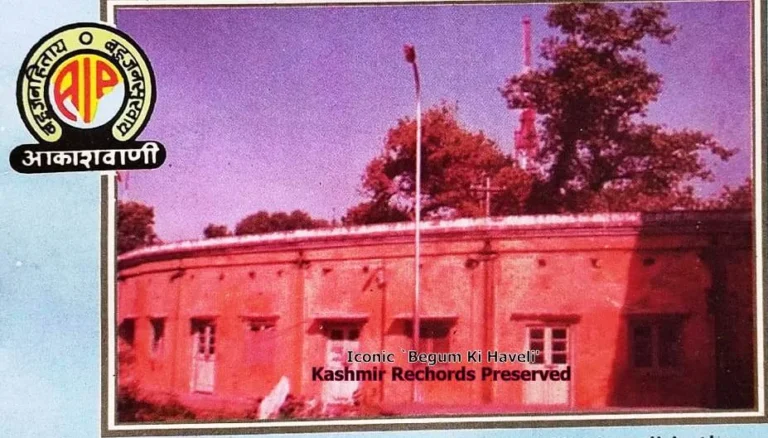
The station’s inaugural broadcast featured an address by Maharaja Hari Singh at 6:30 PM on December 1, 1947 , marking a historic moment witnessed by  then Union Home Minister Sardar Vallabhbhai Patel. Initially operating from classrooms at Ranbir High School Jammu and later shifted to iconic `Begum Ki Haveli’ at Panjtirthi, Jammu in 1952, the station provided critical updates and guidance to refugees while addressing malicious propaganda through traditional Dogri and Kashmiri songs.

Under the Director Generalship of J.N. Zutshi, who recruited the early staff, the station brought together eminent talents such as Thakur Poonchi, Bodh Raj Sharma, Rajinder Singh Bedi, Yash Sharma and Mahmood Ahmed. Pioneering programmers like Kishen Dutt, Maikash Kashmiri and C. Parwana created impactful content that resonated with audiences. It used to broadcast public speeches and talks of eminent personalities of the erstwhile State.By 1954, the station had merged with All India Radio, retaining the name “Radio Kashmir” to reflect its regional ethos until it was renamed “All India Radio Jammu” in 2019.

Nurturing Local Talent

Radio Kashmir Jammu nurtured local culture and languages, including Dogri, Gojri, Pahari and Punjabi. It supported literary giants like Padma Sachdev, Shiv Nirmohi and Ved Kumari Ghai, while its music programmes featured luminaries such as Pandit Uma Dutt Sharma, Girdhari Lal Pant and Anita Sharma. Dramas and series like Noor Din and Goga-Lachhu, written by visionaries like Mehmood Ahmed and Krishan Dutt, became household staples. Artists from neighboring States also used to visit the Station.

The station also introduced innovations like regional news bulletins in Dogri and Gojri, “Yuv-Vani” programmes for the youth and community radio sets across the region to ensure accessibility. It earned accolades, including national-level Akashvani awards, and continues to broadcast a diverse range of programmes using advanced technology. Its programmes are also broadcast over high-quality transmitters set-up at  Rajouri, Nowshehra and 10 KW FM Transmitter at Patnitop.

As we celebrate December 1 as the birthday of this iconic institution every year, let us honor its remarkable contribution to nation-building, cultural preservation and public service broadcasting. Radio Kashmir Jammu remains a beacon of resilience and unity, amplifying the voices of the people across generations.

*F. Sheheryar, a former Director General of All India Radio, has also served as the President of the Asia-Pacific Institute for Broadcast Development (AIBD) and as a Member of the Prasar Bharati Board. Notably, he has held the position of Station Director at both Radio Kashmir Jammu and Radio Kashmir Srinagar.