Home Blog Page 5

Kashmir’s forgotten Sanskrit Doyen

(By: Kanwal Krishan Lidhoo)*

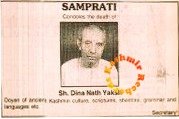
There are lives that glow quietly, far away from the glare of recognition, yet leave behind a light that guides generations. Pandit Dina Nath Yaksh’s life was one such radiant flame. A man of extraordinary scholarship and rare missionary zeal, he embodied what Indian spiritual thought calls a Karamyogi—one who devotes every breath of his existence to a higher cause without seeking reward.
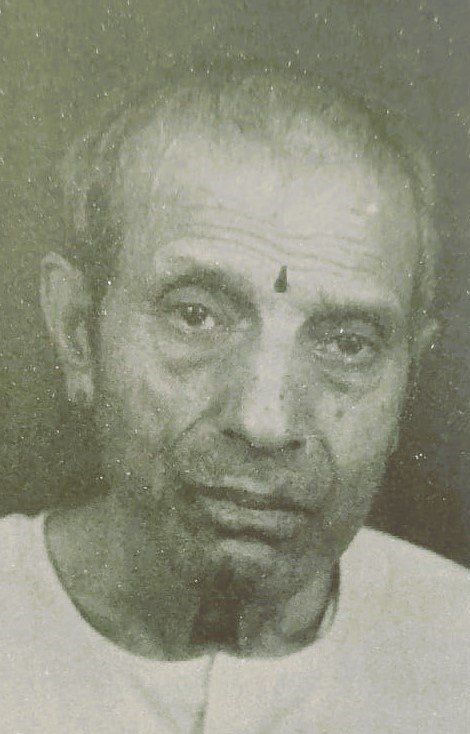
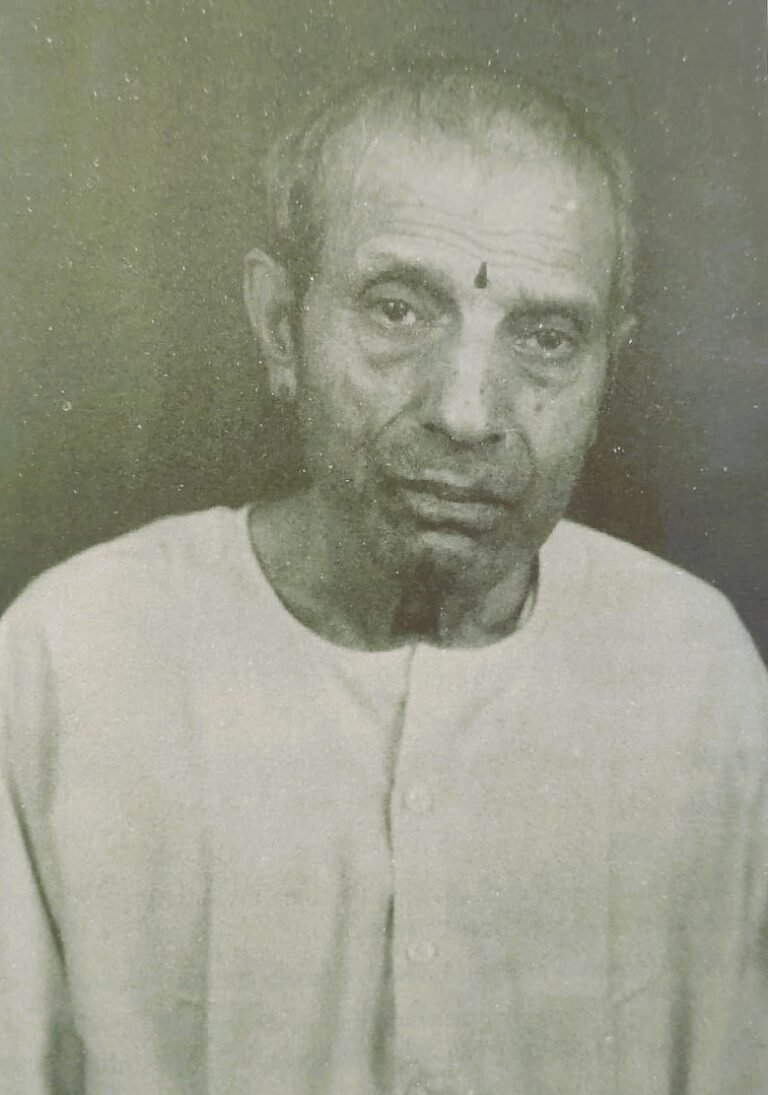
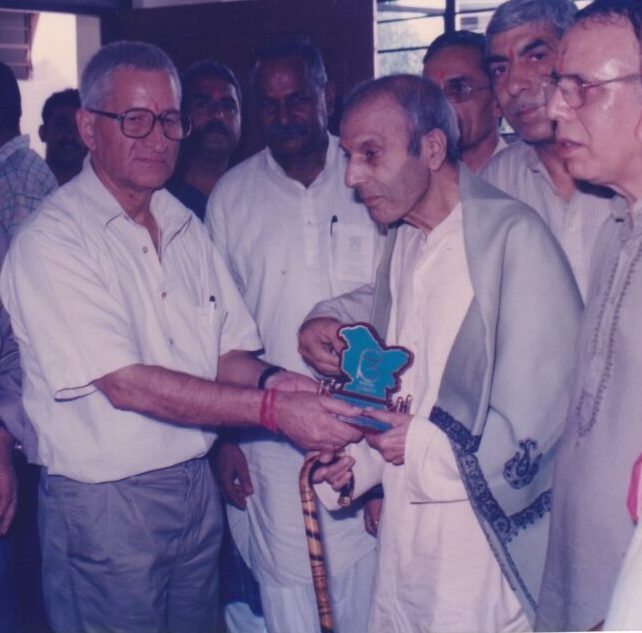
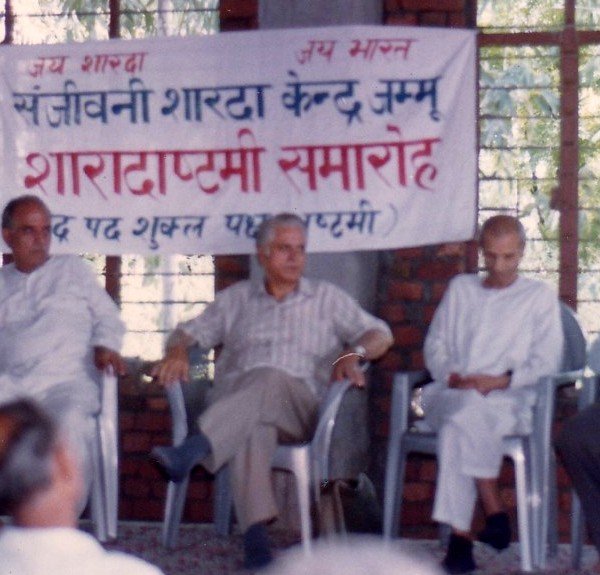
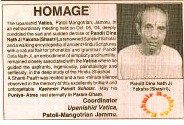
Yet, irony overshadows his legacy. Despite his monumental contribution, Pandit Yaksh remains a forgotten name in the annals of Indian scholarship. Newspapers barely acknowledged his passing. Thanks to a modest felicitation at Sanjeevani Sharda Kendra in Jammu at the fag-end of his life and a few humble homage columns after his demise, his life’s work went largely unnoticed. Only a handful of eminent scholars, such as Padma Shri Dr. Vishwamurti Shastri, truly recognised the immense debt Sanskrit studies owe to him.
A Life Sacrificed for Knowledge
Pandit Yaksh lived for manuscripts. He pursued the recovery and preservation of rare texts with a zeal that bordered on the ascetic. It is said that he used money set aside for his daughter’s wedding to purchase ancient manuscripts, and at one point even pawned her jewellery to continue his mission. For him, Sanskrit was not just a language—it was a sacred trust that had to be saved, even at personal cost.

Today, countless researchers and scholars draw upon the rare archival treasures he rescued and catalogued. Many have built careers, written books, and earned fortunes using these texts. And yet, few have paused to acknowledge the man who made all this possible.

A Personal Glimpse of a Legend

This author had the rare fortune of visiting Pandit Yaksh at his modest Subash Nagar residence in Jammu, only months before his passing in 2004. Age and illness had left him frail, but his spirit remained unbroken. His ever-present smile, his humility and his eagerness to discuss Sanskrit and Kashmiri intellectual traditions left a deep impression. Even in the twilight of his life, he spoke not of hardship, but of the enormity of the mission he had undertaken—almost as if it were never his burden, but a duty handed down by destiny.

When he left this world on 4th October 2004, an era quietly came to a close. With him ended a tradition of unyielding dedication to Sanskrit’s shastric systems—a legacy that will take nothing less than a herculean effort to revive.

From Srinagar to Scholarship

Born in Srinagar on 12th June 1921, Pandit Dina Nath Yaksh’s intellectual journey began early. He attended Pathshalas and studied Karmakanda (ritual practices) and grammar under Pandit Ramjoo Kokiloo and Pandit Raghunath Kokiloo. His training in astrology came from Kashmir’s legendary Pandit Keshav Bhatt Jyotshi, while Pandit Parshuram Shastri and Pandit Kakaram Shastri of Jammu sharpened his command of Sanskrit grammar.

  During his Shastri course at Punjab University, Lahore, he studied Nyaya (logic) and Kavya Shastra (poetics) under the guidance of Pandit Ananda Kak and Pandit Nathram Shastri. His thirst for knowledge was insatiable, and it prepared him for a life that would bridge Kashmir’s intellectual past with modern scholarship.

In 1945, he had  joined the Jammu and Kashmir Research and Publication Department in Srinagar as a copyist. By the time he retired in 1976, he had risen to the position of Head-Pandit. But retirement never slowed him down. He went on to serve as Research Associate at the University of Kashmir’s Centre for Central Asian Studies, the Archaeological Department of J&K, and later the Rashtriya Sanskrit Sansthan, which honoured him with the prestigious Sastrachudamani fellowship.

Exile and the Final Chapter

Like countless other Kashmiri Pandits, Pandit Yaksh was forced to flee his beloved Kashmir in 1990, driven out by the violence of militancy. In the chaos of exile, he had to abandon his cherished personal library—one of the richest collections of manuscripts and texts painstakingly built over decades. Losing it was like losing a part of his soul.

And yet, he carried on with quiet dignity until the very end.

If Sanskrit scholarship thrives today, if researchers still discover the depths of Kashmir’s ancient traditions, it is because one man chose to sacrifice comfort, wealth, and recognition in service of a higher calling. Pandit Dina Nath Yaksh remains, in every sense, a forgotten Rishi of modern India.

*Kanwal Krishan Lidhoo, an accredited translator of Kashmiri, Urdu and Hindi by Sahitya Akademi New Delhi and Indian Institute of Languages Mysore,  was  associated with the institution of All India Radio (AIR) where he worked as a Senior Producer at Radio Kashmir Srinagar and Jammu. He is one of the Directors of Kashmir Rechords.
  A Lanka in Kashmir!

(Kashmir Rechords Exclusive)

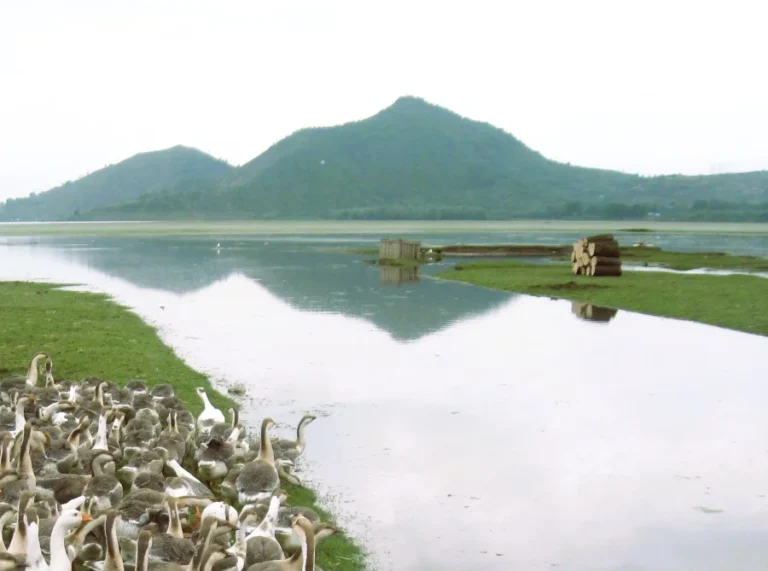
It sounds incredible but it is a fact that Lanka exists in  Kashmir! Situated on the Eastern side of the sprawling Wular Lake, the major portion of this Lanka ( island) is presently submerged in water.

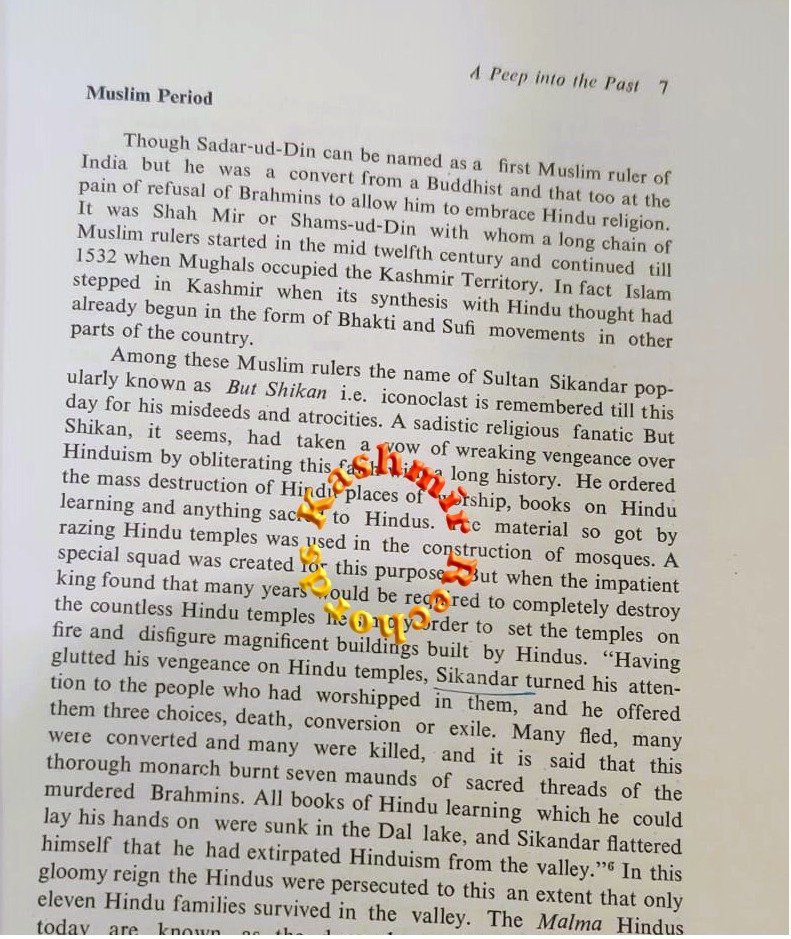
A tip of this Lanka, which is presently seen above water, is now known by the name Zain-Lank, for the reason that Sultan Zain-ul-Abidin is believed to have constructed a mosque near the ruins of a Temple which  earlier existed on the island ( then called Sona Lank)  but was dismantled by Sikander, the iconoclast.

Temple Ruins at Zain Lank, Wular Lake, Kashmir

Unfortunately,hardly any voice has been raised over this very unknown Temple lying in ruins/submerged on this Island (Lanka), in Wular Lake which is connected through Bandipora and Sopore, the two major Towns of North Kashmir.

  Zain Lanka on Temple Debris?

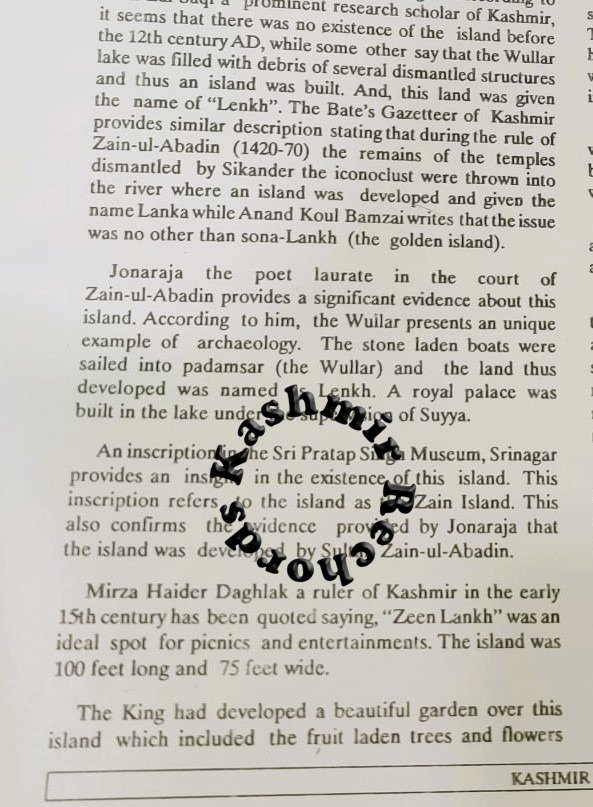
According to J&K’s renowned writer, Jyoteeshwar Pathak, the Zeen Lenkh (Zain Lanka) does not find any mention in the Kalhana’s Rajatarangini. In his write-up published in  `Kashmir Today’  Magazine ( April-May, 1994) and  while  quoting  Moti Lal Saqi’s  Book “Aager Neb’’ , mentions that there was no existence of the island before the 12th century AD,  but the same was raised in  Wular lake with debris of several dismantled temples  which used to be in the vicinity of  villages around Wular Lake.

 Charles Ellison Bate’s Gazetteer of Kashmir provides similar description stating that during the rule of Zain-ul-Abidin (1420-70) the remains of the temples dismantled by Sikander, the iconoclast were thrown into the Lake  where an island was developed and given the name Lanka.  Historian Anand Koul Bamzai writes that the Island is  no other than Sona-Lankh (the golden island), now called Zain Lank.

Jonaraja, the poet laureate in the court of Zain-ul-Abidin provides a significant evidence about this island. According to him, the surroundings around  Wular Lake during 9th Century used to present a unique example of archaeology. The stone laden boats were sailed into Mahapadmasar, (the Wular) and the land thus developed was named as Lenkh (Lanka or Island). A royal palace was built in the lake under the supervision of Engineer Suyya, the  9th century engineer who is identified with Suyyapur (Present-day Sopore), Kashmir.

However, Jyoteeshwar Pathak says that an inscription in the Sri Pratap Singh Museum, Srinagar provides an insight in the existence of this island. This inscription refers to the island as the Zain Lank ( Island).

A Page from Kashmir Today ( 1994)– A Publication of Directorate of Department of Information, J&K Government.

Mirza Haider Daghlak, a ruler of Kashmir in the early 15th century has been quoted saying, “Zeen Lankh” was an ideal spot for picnics and entertainments. The island was 100 feet long and 75 feet wide. The King had developed a beautiful garden over this island, which included the fruit laden trees and flowers of several kinds. There was a three storey building on the northern side and a beautiful mosque.
 Travellers to Kashmir’s Lanka

François Bernier (1673) in his travelogue provides a detail of the ‘Zain Lankh’. According to him, there was a small hut in the middle of the lake with a small garden adjoining it.

This quadrangle island has perhaps vanished by the time William Moorcroft (1767 – 27 August 1825) visited the site. According to him, the circumference of the island was 300 yard. The structure expected in the island was definitely related to the Indian architectures. These structures are now in a dilapidated stage. He found neither any inscription nor any idol there. The temple  pillars were, however, found in the scattered state. There was, however, a quadrangle building on the left side. There were some hutments over the island, which were inhabited by entirely poor people.
Baron Charles Hügel, who visited this site in 1835 AD, writes: “There is   a small island near the banks called Lanka. Several experiments on astrology were performed there”. According to him, the mosque built by Hassan Khan and the palaces built by Zain-ul-Abidin are particularly attractive.

Sir Richard Temple visited the place in 1859. According to him, the Lanka is quite an attractive place. The whole of area is full of mud and marsh and it has lost beauty due to submergence in water. The architecture of the temple resembles the ancient temple architecture. These are the remains of mosque built by Sultan Zain-ul-Abidin where the king used to worship in the month of Ramadan.

Present Day Lanka

The island is definitely  in a dilapidated   condition and requires an urgent attention. There are reports of having thrown the ruins of temple into water in order to pave the way for the construction of a new mosque there. However, some old temple structures and boulders still exist. The Island is an ideal place for the Department of  State Archaeology and Archaeological Survey of India  (ASI)  to help them in waking  up from the  deep slumber. J&K Government can develop it as a Tourist Spot, while Historians can further dig the debris on which the island lies.

For locals, especially for fishermen,  the Island was and is still a safe and protected place whenever anything untoward or unfortunate  happens in the Lake area. They protect themselves during storms and high speed winds. They believe that even if the water level rises in the Wular, the island remains afloat.

 Catastrophe: When over 9,000 Kashmiri Pandits died at Harmukh Ganga!

(By: K R Ishan)

Kashmiri Pandits have suffered a lot at the hands of tyrants! Even Nature has been cruel towards them!. This is evident from that fact that over 9,000 Kashmiri Pandits, including children and women, had perished on their way to Harmukh Ganga pilgrimage, over 500 years ago in 1516 AD!  Harmukh, originally “Haramukuta” is a mountain with a peak elevation of 5,142 metres (16,870 ft), in the present Ganderbal district of Jammu and Kashmir.

 There is a mention of this tragic incident in many books and records, but unfortunately, most people are unaware of this catastrophe that had befallen on Kashmiri Pandits!

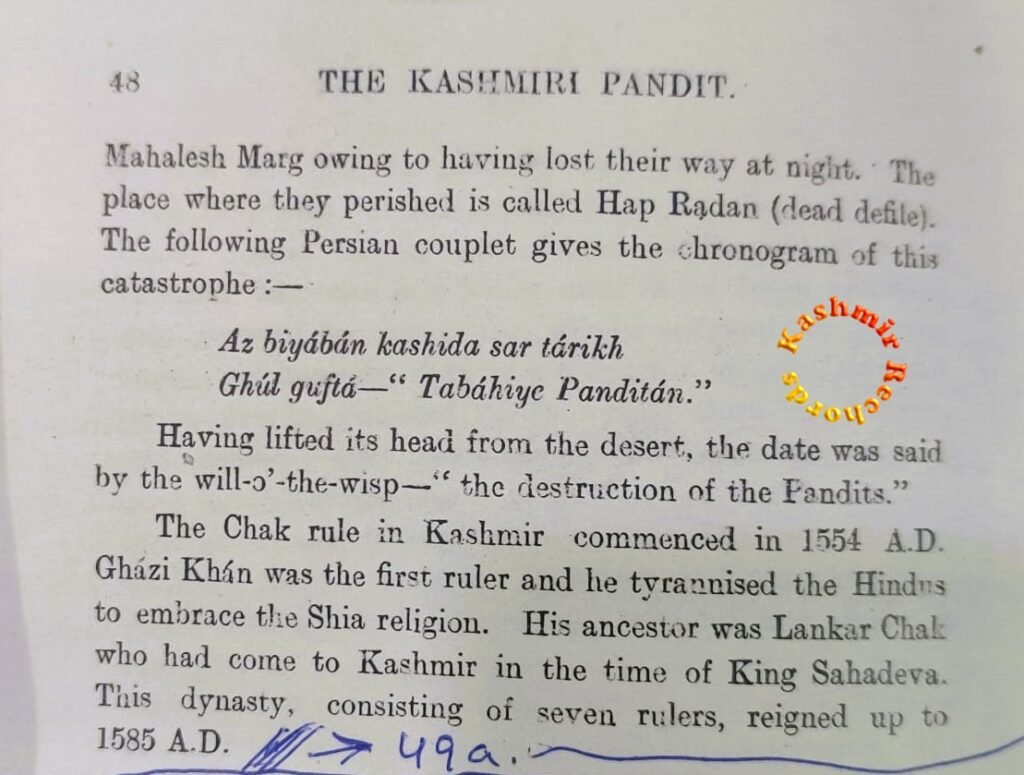
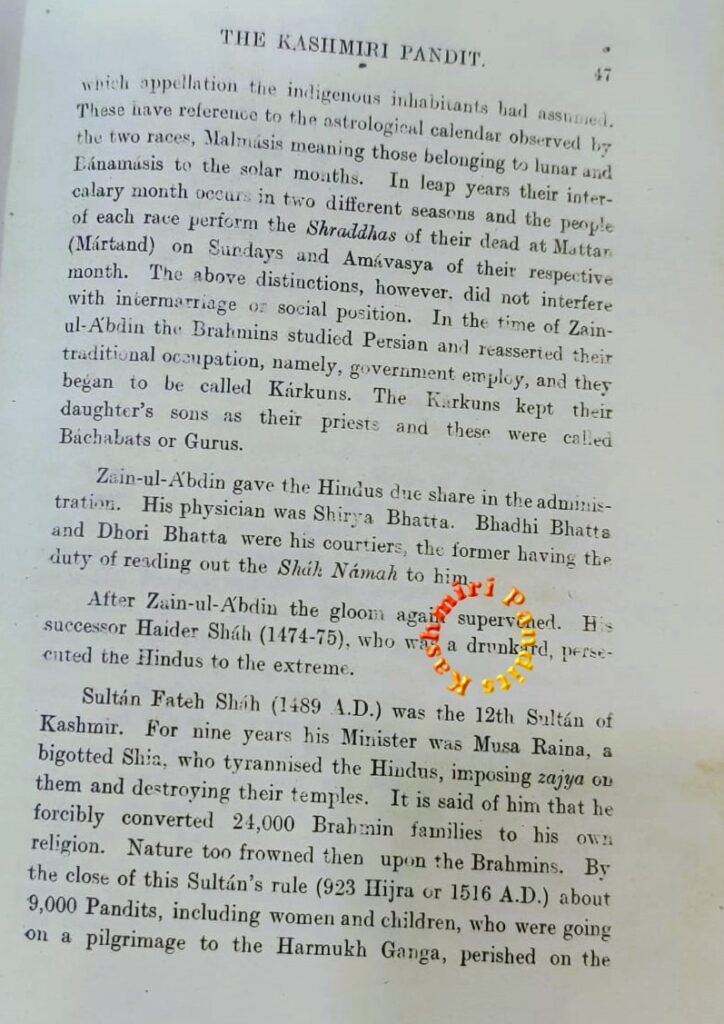
 Pandit Anand Koul in his 100 year old book “The Kashmiri Pandit’’  (1924)  makes a mention of this tragic incident. The incident had taken place during the reign of Sultan Fateh Shah (1489 A.D.), the 12th Sultan of Kashmir. For nine years, his Minister was Musa Raina, a bigoted Shia, who had tyrannised Hindus, imposing jaziya on them and destroying their temples.

  A Double Whammy for Kashmiri Pandits

It is said of Musa Raina that he had forcibly converted 24,000 Brahmin families to his own religion. In 1516 AD, about 10,000 Kashmiri Pandits had decided to undertake a   pilgrimage to Harmukh Ganga, in order to immerse the ashes of those 800 Hindus who had been massacred during Ashura.  However, Nature too resorted to a double whammy   when Pandits  on a pilgrimage to the Harmukh Ganga, perished at  Mahalesh Marg owing to having lost their way at night.  According to Anand Koul, the place where they perished is called Hap Radan (dead defile).

 Anand Koul quotes the following Persian couplet that gives the chronogram of this catastrophe:-

Az biyábán kashida sar tarikh Ghút guftá “Tabáhiye Panditán.”
-Meaning “having lifted its head from the desert, the date was said by the will-o’-the-wisp— “the destruction of the Pandits’’.

 Poet-historian Suka Pandit too says about this cataclysm.  “Ganga was oppressed with hunger, as it was after a long time that she had devoured bones; she surely devoured the men also who carried the bones.”  It was in fact after a gap of so many years that Pandits were allowed to go on a pilgrimage to Harmukh Lake, which, however, ended in the most devastating tragedy. Suka Pandit was a Kashmiri poet and historian who wrote Rajatarangini between 1517 and 1596.  A student of Prajyabhatta, the  work  of Suka Pandit is considered a supplement to Kalhana’s Rajatarangini.

   Dr  Satish Ganjoo, a noted Historian and a Senior Faculty at Central University of Himachal Pradesh, in his research paper “ A Political Study of Ancient Vedic-Saraswat Kashmiri Pandit Society’’, published in June, 2017, also   makes a mention of this natural catastrophe that had befallen Kashmiri Pandits over 500 years ago. However, while Pt Anand Koul mentions 1516 AD (923 Hijra) as the year of tragedy, Dr Ganjoo quoted the year of tragedy as 1519.

The Dreaded Tyrant Soma Chandra ( Musa Raina)

The tragedy at Harmukh Lake had occurred as the Kashmiri Pandits  who were allowed  to perform this pilgrimage after a long time, wanted to perform the religious rites of all those near and dear ones who had been killed  during the era of  Mir Shamas-ud-Din Iraqi, the  founder of Nurbakhshiyyeh Order (Shia sect) who  had visited Kashmir  Valley twice in 1477 AD  and 1496 AD for  propagating  his faith. He  was helped in his “mission’’  by Soma Chandra,   the most dreaded tyrant, who had rechristened himself  as   Malik Musa Raina after converting to  Shia Islam.

   Not only were the vulnerable Brahmans, even the Sunni Muslims also violently converted to Shia sect by murderous techniques. This dogmatic fanaticism had even crippled the Sunni ruler of Kashmir, Fateh Shah (AD 1510-1517). A khanqah was built at Zadibal, Srinagar by Iraqi, which became the nucleus of Shia concentration.

 Burning Sacred Threads of Pandits

 In his Book, “ This Beautiful India –Jammu and Kashmir” ( 1977), Dr  Sukhdev Singh Chib  mentions that  Iraqi had even issued orders that everyday about 1500 to 2000  Brahmans be brought to his doorsteps, remove their sacred threads, administer Kalima to them, circumcise them and make them eat beef. These decrees were ferociously and brutally carried out. The Hindu religious scriptures from 7th century AD onwards and about 18 magnificent temples were destroyed, property confiscated and women abused. Thousands of Brahmans had killed themselves to evade this horrific barbarism and thousands migrated to other places, resulting in their third tragic mass exodus from the Valley. Those who stayed behind were not only forced to pay jaziya, but their noses and ears were chopped off.

According to Baharistan – i -Shahi, “Dulucha, a Tartar chief from Central Asia, who had invaded Kashmir with 60,000 strong horsemen, had also inflicted terrible miseries upon the people including the Brahmans.

According to W.R. Lawrence, Brahmans of Kashmir were during those days given three choices—death, conversion or exile. “Many fled, many were converted and many were killed, and it is said that this thorough monarch (Sikandar) burnt seven maunds of sacred threads of the murdered Brahmans”. As for the statement of Lawrence, six maunds of sacred threads of converts and seven maunds of murdered Pandits were burnt. The number of people, to whom these thirteen maunds of sacred threads belonged, might have been tremendously colossal. A mammoth number of the Pandits also went into exile, causing the first disastrous mass exodus of the community. Not only Sikandar- the Butshikan, but Suha Bhatta – the convert, also was responsible for this barbarous, murderous and cruel approach towards Kashmiri Pandits.  

The brutal religious persecution of the Kashmiri Pandits has been borne testimony to by almost all the Muslim historians. Hassan, Fauq and Nizam–ud–Din have condemned these excesses in unscathing terms. It was the reign of terror and homicide. Even then, they did not forget their past and rich tradition. As the custodians of their extraordinary cultural heritage, they wrote the illuminating treatises on the stupendous Kashmir Shaivism, colossal literature, splendid art, marvellous music, grammar and medicine.

Dr. Vijay Sazawal’s Poser for Kashmiri Pandits: “Where Do We Go From Here?”

Places the community at the centre of the challenge — makes it clear who the question is directed to.

(Kashmir Rechords Exclusive)

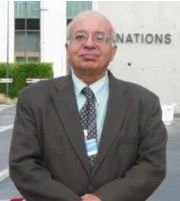
Dr. Vijay K. Sazawal, a Kashmiri-American nuclear scientist and noted commentator on Kashmir affairs, having affiliation  with (www.KashmirForum.org),has issued a thought-provoking appeal to the Kashmiri Pandit community, asking them to critically examine how they commemorate their collective tragedies.

In an email, addressed to some Jammu-based community leaders, historians and researchers and  also shared with Kashmir Rechords, Dr. Sazawal posed a fundamental question: “Where do we go from here?”

 “Year after year, we mark our exodus with speeches and declarations, but no one outside our community takes notice,” Sazawal observed. Referring to this year’s September 14 remembrance, he pointed out that while victims of terrorism in other region (Baisaran) were acknowledged by the public and the government, the plight of Kashmiri Pandits went unmentioned.

This, he suggested, raises an uncomfortable dilemma: “Are we merely comforting ourselves, or are we leaving behind a meaningful legacy?”

A Larger Historical Framework

Dr. Sazawal urged the community to expand its historical lens. Instead of limiting remembrance to the events of 1989–90, he proposed situating the Kashmiri Pandit story within a centuries-long timeline of persecution, beginning in 1339.

“Rather than focusing solely on one exodus, our theme should be that our ethnic cleansing began in the 14th century and continues till today,” he wrote. Such a reframing, he emphasized, would demand rigorous historical research, creative storytelling, and modern communication strategies to engage wider audiences.

Towards a Durable Legacy

Dr. Sazawal warned that as time passes, memories of the 1989–90 exodus will inevitably fade. Without a sustainable model of remembrance, future generations may be left wondering why their elders repeated rituals year after year without meaningful change.

His challenge is clear: move beyond ritualized commemoration and build a durable narrative that transforms memory into legacy.

📝 Editor’s Note:
In this exclusive appeal, Dr. Vijay K. Sazawal calls upon the Pandit community to move beyond ritualized remembrances. His thought-provoking message challenges us to ask: will memory alone suffice, or must we shape a legacy that endures across generations? Those who wish to respond to his e-mail may forward their valuable suggestions/inputs on kashmirrechords@gmail.com or support@kashmir-rechords.com or contact him directly on  sazawal@gmail.com, as some have reportedly already responded to him.

Following is the full text of Dr. Vijay Sazawal’s e-mail:

“Namaskar, my dear friends in Jammu.

I will try to be brief as I need your wisdom and guidance here. We are all politically mature to understand the Indian polity. Year after year, we go through the same routine of marking the last exodus from Kashmir with remembrances big and small. We follow the same routine, make the same declarations and speeches and enlighten our own community of what has happened in those fateful years marking 1989-1990 and later.

 But (14th September) event came and went by without anyone outside of our community making a single comment on it. Particularly painful was the fact that many in the public and the government remembered those Hindus who were killed by terrorists in Baisaran, but no one mentioned the tragedy of native Hindus who also died on the same land in large numbers. As a community, we repeat such remembrances a number of times a year – year after year – with similar apathy and  indifference from the public and the government.

 Many questions arise from this dichotomy – should we continue with our existing approach by considering it as “business as usual”, and highlight such key events as matters of conscience besides serving as a therapeutic relief for collective frustrations and anger within the community, or should we look at the situation and reflect on experiences to date and try to redo the approach in marking remembrances of such watershed moments three decades back?

  So the options are either do nothing (continue with the “business as usual” approach), or do something different. There is an added reason to reflect on how to define the future course of action. As 1989-1990 recedes with passing years, remembrances highlighting political personalities and even specific events decades old will slowly drown in the vastness of the past. So, we need to have a better model that can withstand the test of time once all of us push off into the next phase of our spiritual journey. One can argue however that does it matter if I am not around?  But I say we need to leave a template for the generations to follow.

  I will make a suggestion. And I am doing it mostly to evoke a response because our collective tragedy is that we are unable to develop a coherent strategy because everyone keeps quiet and does not feel the need for a free style open discussion, which my friends is the only way to develop unity and an unified approach. So I may be expecting too much but I request you to please prove me wrong.

 Way back in 1999, I had predicted that for a number of reasons KP’s will never return to the valley in large numbers. (I can forward anyone a pdf link to my article published in the “Koshur Samachar,” if interested). Today, I am making a suggestion. If the community wishes to make an impact on the public in India, pull back from remembering partisan events and counter narratives, and instead focus on the big picture, which is that our ethnic cleansing began in 1339 and continues till today. That should be the common theme in every event we honor without dwelling too much on the events of a single exodus, but of every exodus since the 14th Century. Such a campaign will need inputs from historians and graphic details collected from painstaking research, and new communication modules for delivery of key messages, involving graphics, photos, media, punchlines, and details.

  I leave my suggestion on the table. I hope it motivates all of you to contribute to this dialogue. Please, we are all getting old – let us leave a legacy so that future generations don’t wonder why the old-timers kept the same routine year after year without a minutest change in their approach.

  Thank you for your time

  Vijay’’

Kashmir’s Katyayani Temple: Where Faith Rises from the Ashes

0
(Kashmir Rechords Exclusive)

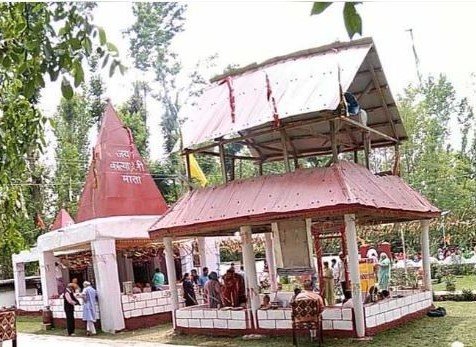
In the quiet village of Kakran in Kulgam district of Kashmir, surrounded by fields and orchards, stands the ancient Katyayani Temple. For centuries, Kashmiri Hindus have come here to bow before Mata Katyayani, the fierce form of Goddess Durga who destroyed the demon Mahishasura. Yet, the temple itself has lived a life of battles—reduced to rubble, rebuilt with devotion, abandoned in silence and revived once more.

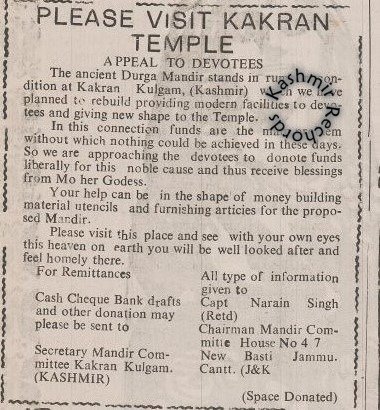
Circa: February 1977–Appeal to Devotees

A Cry for Help in the 1970s

The shrine’s troubles began long before the turmoil of the 1990s. In the early 1970s, the Katyayani Temple was vandalised, forcing the Mandir Committee Kakran, then based in Jammu, to appeal for help. In February 1977, the committee published a heartfelt appeal in newspapers, urging devotees to contribute for its reconstruction. Kashmir Rechords is reproducing this archival appeal, published in February 1977.

The appeal, published on behalf of Capt. Narain Singh (Retd), Chairman of the Mandir Committee, Nail Basti Jammu Cantt nd Secretary, admitted with honesty that funds were the biggest obstacle. Yet, the committee carried hope: to rebuild the temple, give it a new shape, and provide modern facilities for pilgrims who came to seek the goddess’s blessings.

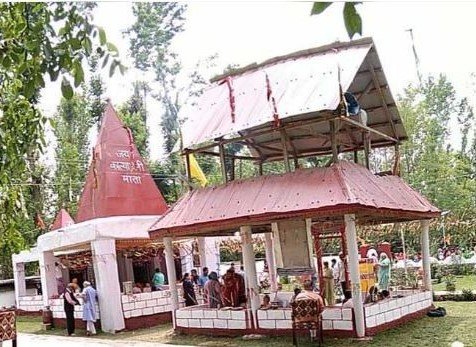
Under-construction: Kakran Temple, Post 1990

Rebuilt, Only to Fall Again

The temple rose again, rebuilt through devotion and determination. But fate had more trials in store. In 1992, after the demolition of the Babri Masjid, the Katyayani Temple of Kakran, Kulgam, Kashmir was once more vandalised reportedly by local villagers. What had been painstakingly revived now lay abandoned, its sanctity wounded yet again. For years, it stood in silence—a broken shrine, but never a forgotten one.

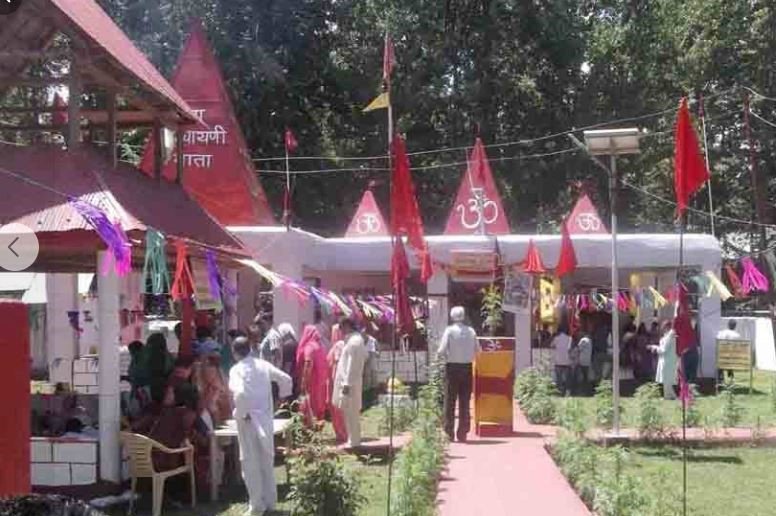
Devotees at renovated Kakran Temple, Kulgam, Kashmir.

Devotion in Exile

Even as Kashmiri Pandits were forced into exile after the 1990 migration, their faith remained unbroken. Every year on ‘Haar Ashtami’, devotees would gather at the temple to perform the annual mahayagya, reaffirming their bond with Mata Katyayani, a form of goddess Durga. For them, the goddess was more than a deity—she was the strength that kept their heritage alive.

Finally, in 2012, the Kashmiri Pandit community took it upon themselves to restore the temple once again— without any support from the government. Alongside the shrine, a Dharamshala named Lalded Bhawan was built within the complex, giving pilgrims a place to stay and gather. Since then, annual congregations have brought life back to the courtyard, filling the air with chants and devotion.

The Enduring Spirit of Katyayani

Mata Katyayani, worshipped on the sixth day of Navratri, is celebrated as the goddess of courage and victory over evil. Her temple in Kakran, Kulgam, Kashmir despite repeated destruction, stands today as a mirror of her own spirit—unyielding, fierce, and protective.

The saga of the Katyayani Temple is not just about bricks and stone. It is the story of a people who refused to let their faith die, who rebuilt their goddess’s abode every time it was torn down. It is a reminder that while temples can be broken, faith always rises from the ashes.

The Unseen Martyrs: A Kashmiri Pandit Legacy of Loss and Resilience

(Kashmir Rechords Exclusive)

Remembering September 14

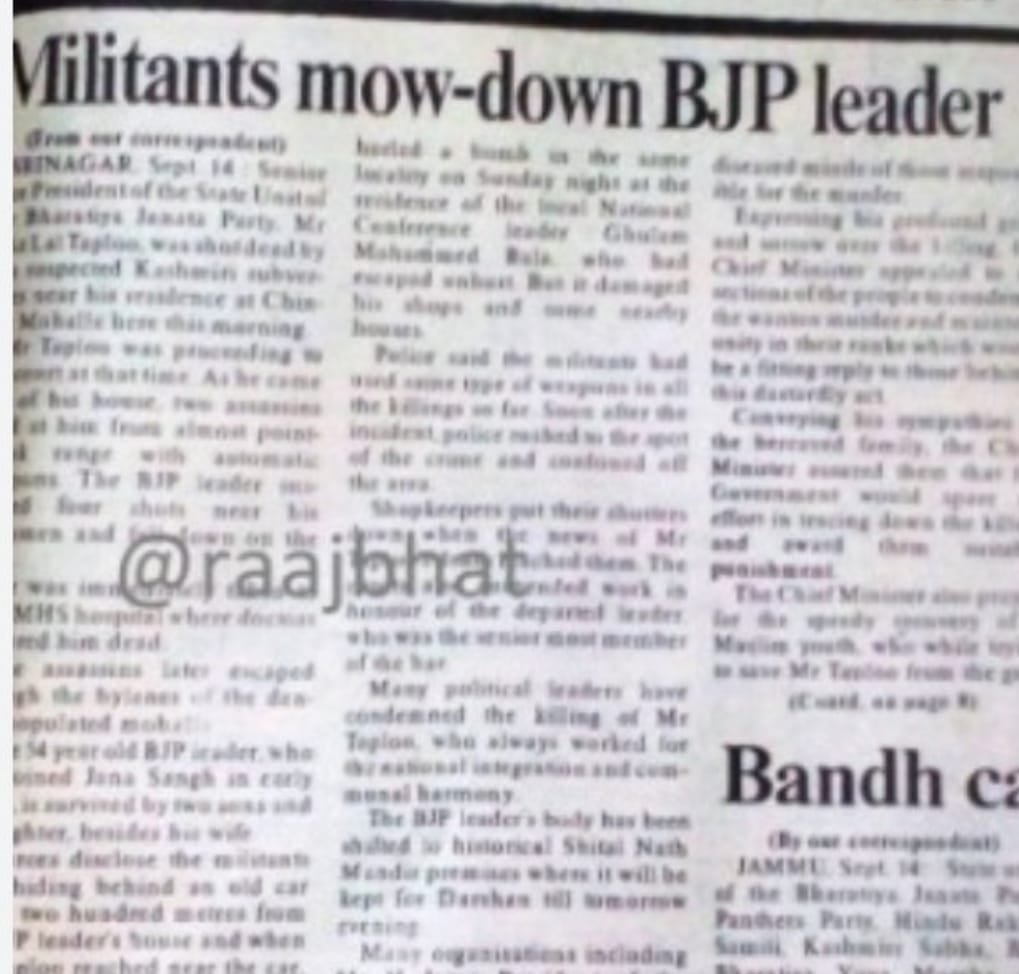
Every September 14, Kashmiri Pandits bow their heads in silence, observing Martyrdom Day—a day heavy with grief and memory. It marks the assassination of Pt. Tika Lal Taploo, a towering community leader whose life was cut short on September 14, 1989. His killing was not just the silencing of a voice; it was the ominous prelude to the mass exodus that would follow on January 19, 1990. For Pandits, Taploo’s martyrdom symbolized the violent unraveling of their very existence in the land of their ancestors. Soon after, Judge Nilkanth Ganjoo, Lassa Kaul, Sarla Bhat and countless others joined the ranks of martyrs, their lives extinguished by the same tide of terror.

But the story of Kashmiri Pandit martyrdom does not end with these names alone. It extends to thousands of ordinary men, women and children—martyrs in their own right—who lost their lives in exile, denied even the sacred dignity of their final rites in Kashmir’s soil. Whether killed by bullets in their homeland or by sunstroke, snakebite and disease in the punishing heat of refugee camps, each one carried the same burden: a forced uprooting from home, history and heritage.

A Dispersed Grief

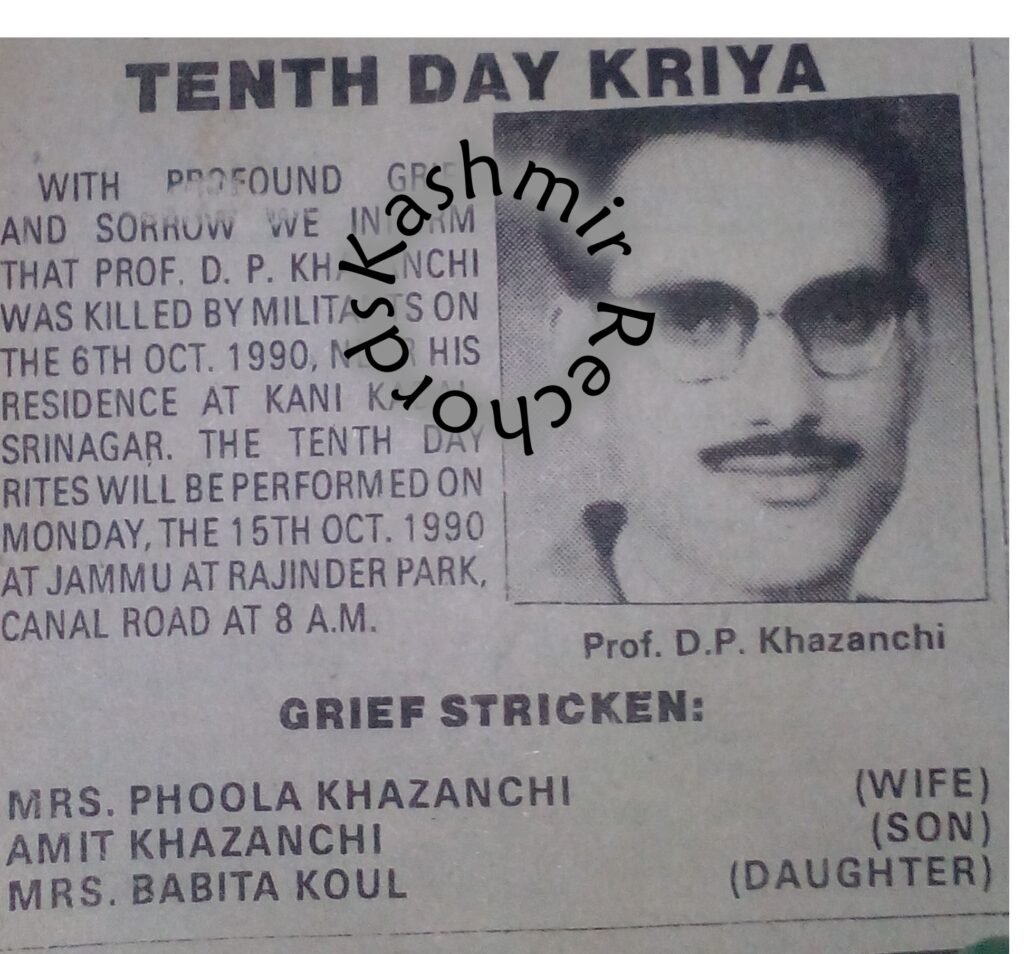
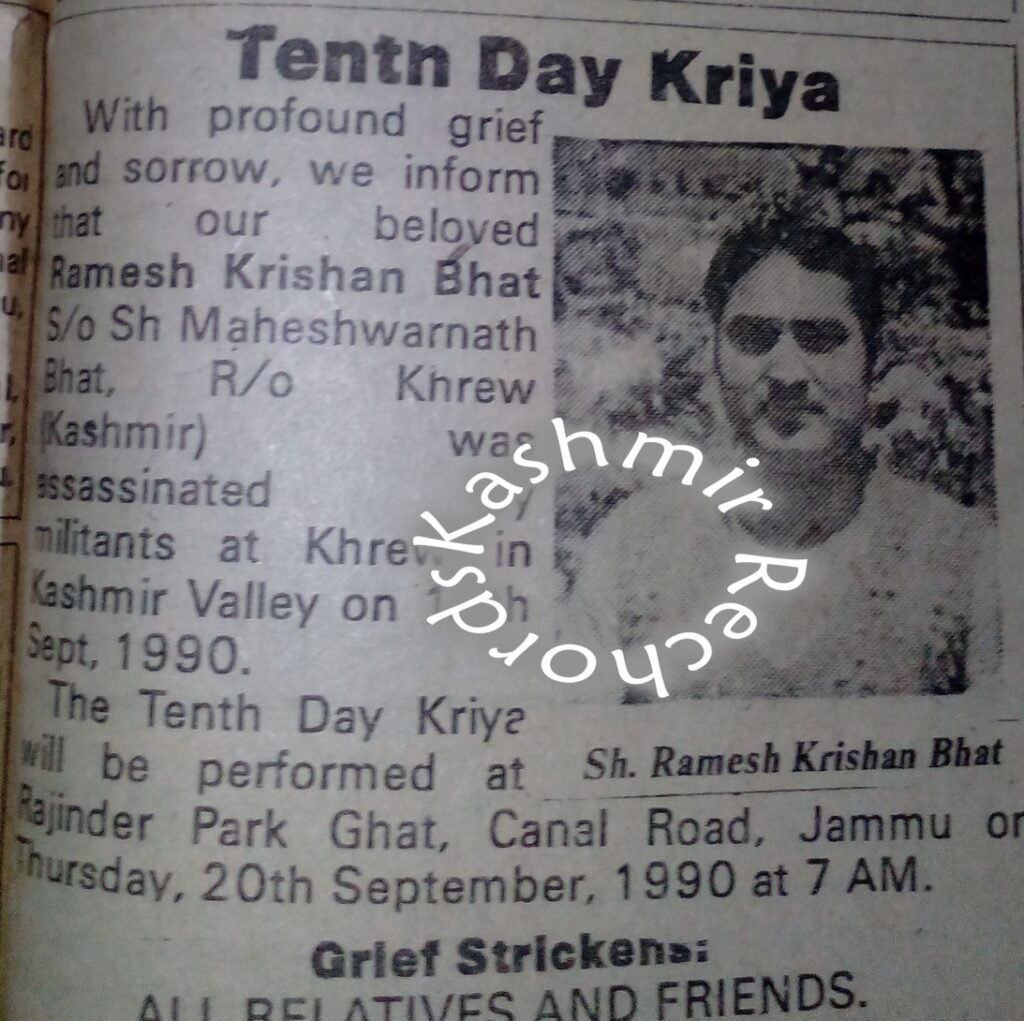
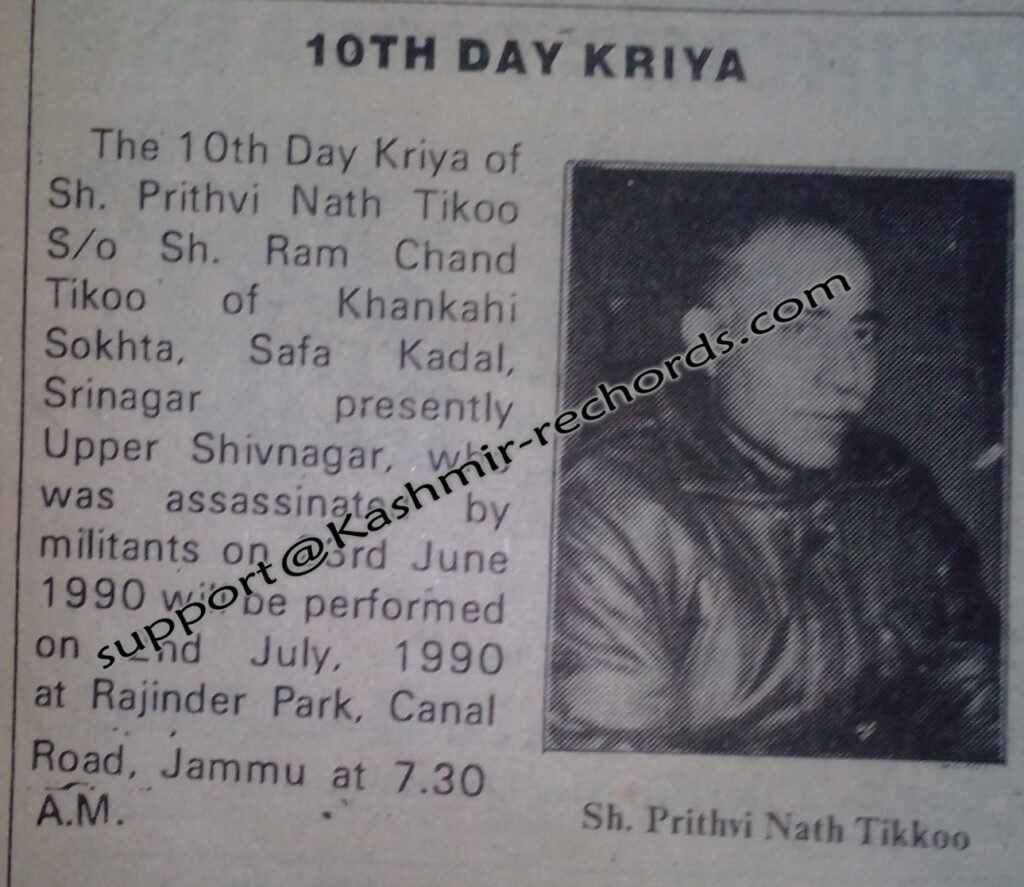
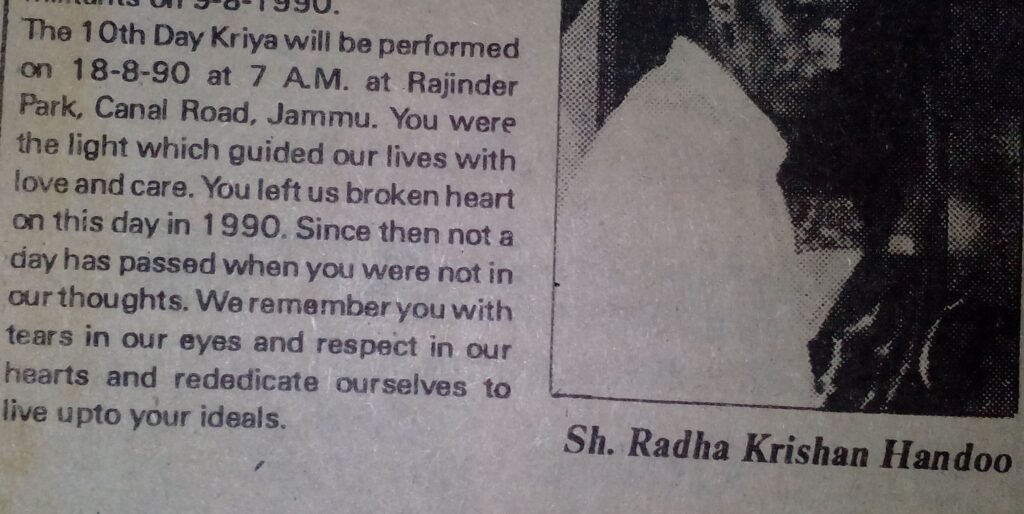
In the early days of migration, there was no central place for Pandits to gather, mourn, or carry out rituals. WhatsApp and digital networks did not exist. News of a death—whether by militant violence or the cruel hand of exile—spread through small columns in local newspapers. The community, disoriented and scattered, had nowhere to cry together, nowhere to console each other.

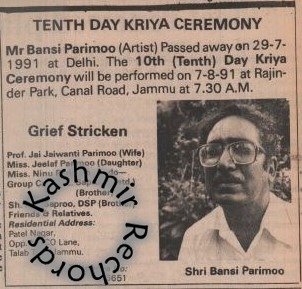
Out of this void emerged Rajinder Park on Canal Road in Jammu. What began as a makeshift refuge soon became a solemn sanctuary. Here, under the open sky, Pandits performed the last rites of their loved ones. It was at Rajinder Park that the Tenth-Day Kriya, once performed at Kashmir’s sacred river ghats, was now carried out in exile. Ashes that should have mingled with the waters of the Vitasta (Jhelum) were instead consigned to distant flames, leaving behind a haunting emptiness.

For the older generation, Rajinder Park remains etched into memory as a witness to collective sorrow. For the younger, it is a fading landmark—an unfamiliar place whose soil carries the invisible tears of their parents and grandparents. Yet, it endures as a symbol of survival: a reminder that even in displacement, traditions found a way to breathe.

A Legacy of Waiting

More than three decades later, Kashmiri Pandits continue to live with an unhealed wound. Every death in exile feels like a second exile—a departure from this world without the comfort of returning to ancestral land. The yearning to go back remains alive, yet no concrete of permanent  roadmap of return has materialized. Those who orchestrated the tragedy still walk free, cases are endlessly “reopened,” and assurances of justice echo hollow.

And so, every September 14, when candles are lit for Tika Lal Taploo and all the martyrs, the flame is more than remembrance—it is resistance. It is a vow that the story of the unseen martyrs, denied even their last embrace with Kashmir’s soil, will not fade into silence.

Because their legacy is not only one of loss—it is one of resilience. A resilience that continues to define Kashmiri Pandits, even as every prayer ends with the same hope: To return, and to rest, in the homeland that still beats in their hearts.

Kashmir Darpan: The Forgotten Magazine That Kept Kashmiri Pandits Connected Across British India

(Kashmir Rechords Exclusive)

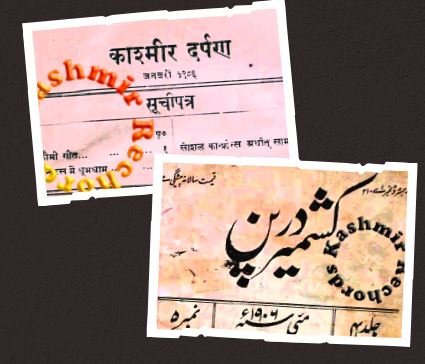
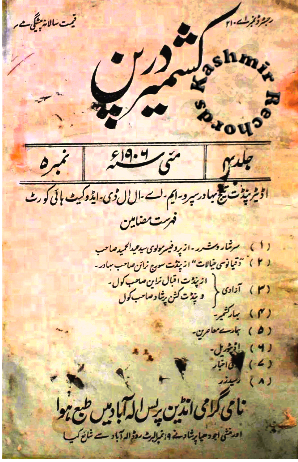
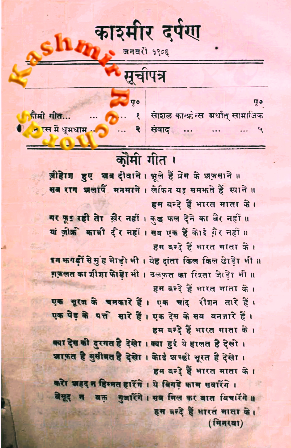
Very few know that more than a century ago, in the bustling city of Allahabad, a remarkable cultural experiment was taking shape. In 1902, from the presses of Nami Grami Indian Press at Dara Ganj, a bilingual monthly magazine called Kashmir Darpan was born. This 50-page publication, printed in both Urdu and Hindi, became a lifeline for Kashmiri Pandits scattered across British India. At a time when communication was slow and long-distance travel rare, Kashmir Darpan bridged distances and brought together a community yearning to remain connected with its roots.

Far from being a mere magazine, Kashmir Darpan became a chronicle of Kashmiri, and provided space for those interested in literature to share their prose and poetry. Each issue served as a community diary, announcing births, marriages, deaths, student achievements, job postings and transfers. To ensure inclusivity, ten pages of every edition were dedicated exclusively to Hindi-knowing members of the community. For many, it felt as if every edition was a letter from home — a packet of news from Lahore to Dhaka, from Srinagar to Jodhpur — uniting far-flung families in spirit.

Access to editions from 1903 to 1906  by Kashmir Rechords reveals just how far-reaching its impact was. The magazine connected Kashmiri Pandits living in Calcutta, Dhaka, Jodhpur, Hoshiarpur, Lucknow, Varanasi, Jalandhar, Lahore, Sialkot, Amritsar, Srinagar and Jammu. For a community that had migrated in search of education, work and opportunity, Kashmir Darpan became a cultural anchor, a reminder of shared heritage, and a tool for identity preservation.

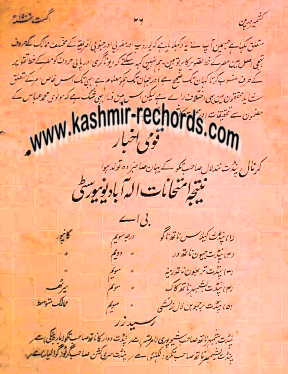
The driving force behind this publication was Pandit Tej Bahadur Sapru, one of India’s most respected lawyers and public figures, ably supported by Manohar Lal Zutshi who managed the operations. Sapru invited some of the finest minds of the time to contribute to the magazine, including scholars, poets and writers like Brij Narayan Chakbast, Kripa Shanker Koul, Dharam Narayan Raina, Iqbal Narayan Gurtu, Syed Abdul Majid, Krishan Prasad Kaul, Prasaduman Krishan Kitchloo, Kanhaya Lal Shangloo ‘Mubarak’, and Sheikh Abdul Qadir. Together, they transformed the magazine into a mirror of Kashmiri intellectual and cultural thought — living up to its name, Darpan, meaning “mirror.”

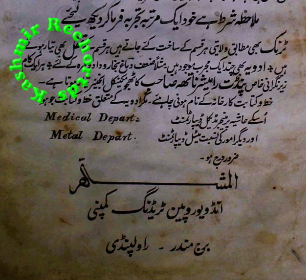
The magazine’s pages also reveal a progressive agenda. It championed the cause of women’s education among Kashmiris and reported the establishment of a girls’ school exclusively for Kashmiri students. Sapru through his editorials and write-ups  frequently encouraged the community to take up business ventures instead of relying solely on government jobs. The publication highlighted successful entrepreneurs such as Pt Dharam Narayan Raina, Razdan Brothers of Amritsar, Saheb Brothers of Dhaka, Jeevan Nath Ganjoo who owned the Swadeshi Stationery Shop, and Ghulam Hussain & Brothers of Karachi. One particularly inspiring story celebrated Pandit Rameshwar Nath Kathju, a mechanical engineer, who was encouraged to set up the Indo-European Trading Company at Brij Mandir in Rawalpindi — a venture that became renowned for medicines, metal boxes, and heavy-duty locks.

What made Kashmir Darpan truly special was the way it was sustained — not by corporate advertisements, but through annual subscriptions and voluntary contributions from members of the community spread across British India. Readers and patrons such as Nand Lal Tickoo of Karnal, Shyam Lal Chaku of Lucknow, Prithvi Nath Razdan of Jodhpur and Shambu Nath Hakhu of Ajmer kept the presses running. Its circulation was wide enough for copies to be available in leading libraries and educational institutions across the United Provinces, a testament to its popularity and reach.

The magazine also played a humanitarian role when devastating floods struck Kashmir in 1905. Sapru used its pages to make repeated appeals for relief contributions and published regular updates in each issue. The funds collected were later handed over to the Governor of Kashmir, proving how a community-driven publication could turn into a lifeline for those in distress.

Pandit Tej Bahadur Sapru is today remembered as one of the greatest lawyers and constitutional experts of India, a freedom fighter, and a member of the Viceroy’s Council. Yet his work through Kashmir Darpan reveals another side of him — that of a man deeply committed to his roots. Born in Aligarh on 8 December 1875 to Ambika Prasad Sapru and Gaura Sapru (née Hakhu), Sapru belonged to a distinguished Kashmiri Pandit family. His career was illustrious: he worked as a lawyer at Allahabad High Court, where Purushottam Das Tandon served as his junior, later became Dean at Banaras Hindu University, and served in the Legislative Council of the United Provinces, the Imperial Legislative Council, and as Law Member in the Viceroy’s Council. But his efforts through Kashmir Darpan — encouraging education, entrepreneurship and social reform — were equally significant.

Sir Tej Bahadur Sapru passed away on 20 January 1949 in Allahabad, seventeen months after India gained independence. His legacy, preserved through the surviving editions of Kashmir Darpan, some preserved by Kashmir Rechords, remains a cornerstone in the cultural history of the Kashmiri Pandit community. For today’s Kashmiri Pandits, dispersed across the globe after the 1990 exodus, this century-old magazine stands as a reminder that community-driven media has always been a powerful tool to preserve identity, nurture cultural memory and strengthen bonds that transcend geography.

Justice for Sarla Bhat and Many Others Who Never got it

The Unfinished stories of other Kashmiri Pandits who refused to leave Kashmir in 1990!
(Kashmir Rechords Exclusive)

It has taken more than three decades, but a flicker of hope has returned to a family that has lived with grief, questions and silence. The Jammu and Kashmir Police’s State Investigation Agency (SIA) recently carried out raids at eight locations in Srinagar, probing the brutal killing of 27-year-old nurse Sarla Bhat in April 1990.Officials call these “strategic searches,” and say incriminating evidence has been found — the kind that could finally unravel the terrorist conspiracy that ended Sarla’s young life. For her family, the hope is simpler: justice, however delayed.

The SIA has now taken over the decades-old FIR No. 56/1990 from Police Station Nigeen. For those who have followed the long and painful journey of the Kashmiri Pandit exodus, this case is not just about one life lost — it is about hundreds of such stories swallowed by the chaos of 1990.

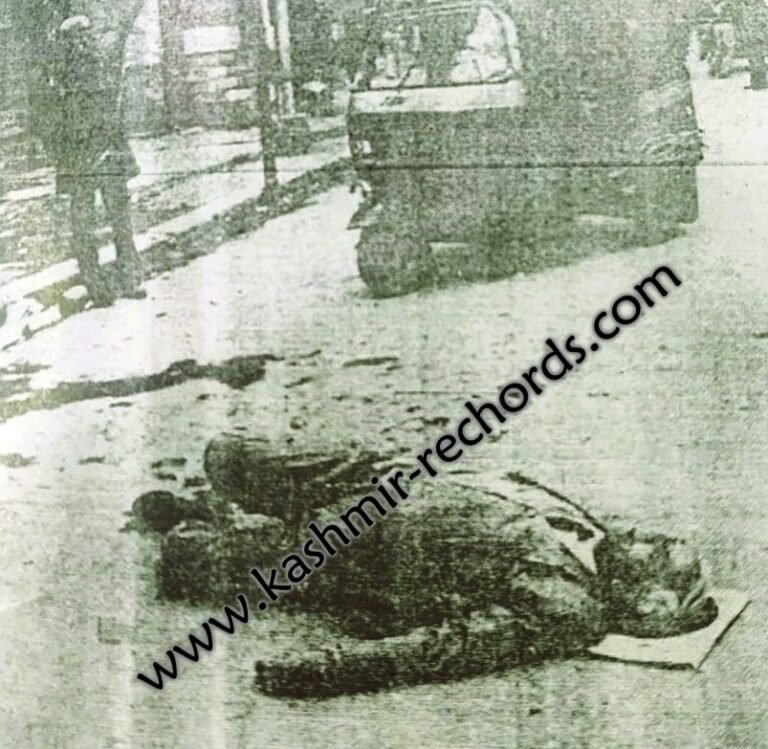
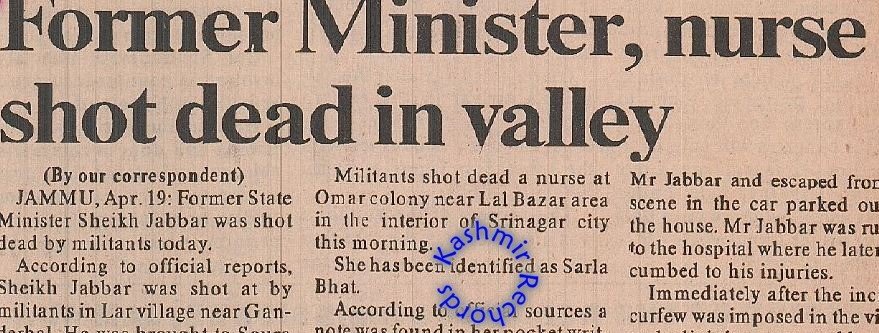
Sarla Bhat, like other Kashmiri Pandits, was no politician, no security official. She was a nurse at SKIMS Soura, Srinagar tending to patients in an already tense Kashmir. But in those early months of 1990, being a Kashmiri Pandit was enough to mark you as a “target.” On April 18, 1990, she was kidnapped from the Habba Khatoon Hostel of SKIMS. The next morning, her bullet-ridden body, according to a newspaper cutting dateline April 19, 1990, preserved by Kashmir Rechords, was found at Umar Colony, Lal Bazar. In her pocket lay a chilling note — the outlawed Jammu and Kashmir Liberation Front (JKLF) claiming responsibility.

Yet Sarla’s killing was only one in a relentless chain of murders that spring.

March to May 1990 — A Roll Call of the Lost

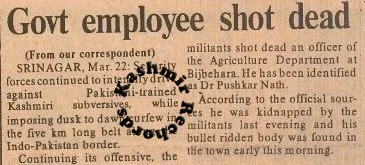
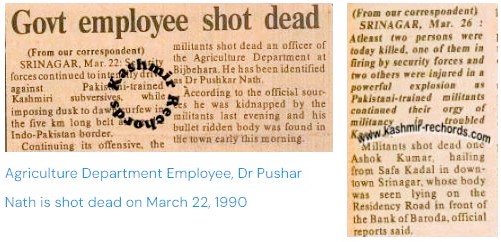
On March 22, 1990, Dr. Pushkar Nath, an officer in the J&K Agriculture Department, was gunned down in Bijbehara. The very next day, B.L. Karihaloo, who worked at a sweet shop, was shot dead in Bagat Kanipora. On March 26, 1990 Ashok Kumar of Safa Kadal met the same fate.

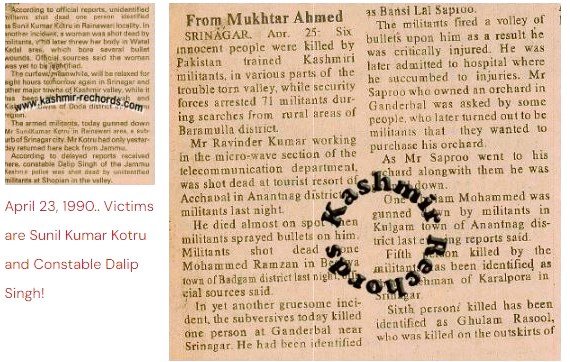
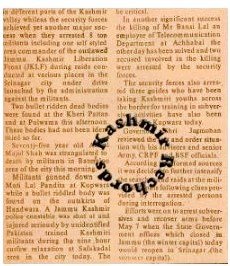
After Sarla’s death, the violence only escalated. On April 23, 1990 Sunil Kumar Kotru was killed in Rainawari, and police constable Dalip Singh’s body was recovered from Shopian. April 26, 1990 became a day of mass mourning, as six people — Ravinder Kumar, Bansi Lal Saproo, Mohd Ramzan, Ghulam Mohammad, Abdul Rehman, and Ghulam Rasool — were murdered across the Valley. By April 30, Moti Lal Pandita of Kupwara had joined the list of the dead.

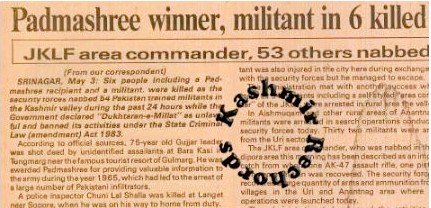
May month brought even more loss. On May 3, 1990 a Padma Shri-awarded Gujjar leader was shot dead in Bara Kasi, Tangmarg, followed by the killing of Police Inspector Chuni Lal Shalla in Langet, Sopore. On May 6, 1990 the bodies of Professor K.L. Ganjoo, his wife, and a young girl named Dolly were discovered. The violence peaked on May 11 with the assassination of former NC legislator Sheikh Manzoor.

Some of these names appeared in the press, others barely made a ripple — yet each was a life cut short, each a family left without answers.

Why It Matters Now

For over three decades, these cases remained frozen in time, the files gathering dust while the survivors learned to live with silence. The reopening of Sarla Bhat’s case could — and should — be the start of revisiting all these unsolved murders, not just for the sake of legal closure, but for the dignity of those who can no longer speak for themselves.

Justice for Sarla Bhat would mean acknowledging the reality of that dark season: that ordinary Kashmiris, Pandit and Muslim alike, were killed in cold blood, and that their stories deserve more than a footnote in the history of 1990.

The SIA’s work might yet lead to convictions. But even before the courts deliver their verdict, there is a verdict we, as a society, must reach — that no matter how much time has passed, the lives taken in those months will not be forgotten.

The Sikh Governor Who Revived Kashmir’s Fortunes

(Kashmir Rechords Exclusive)

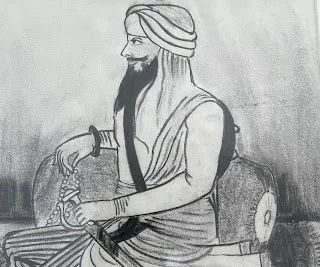
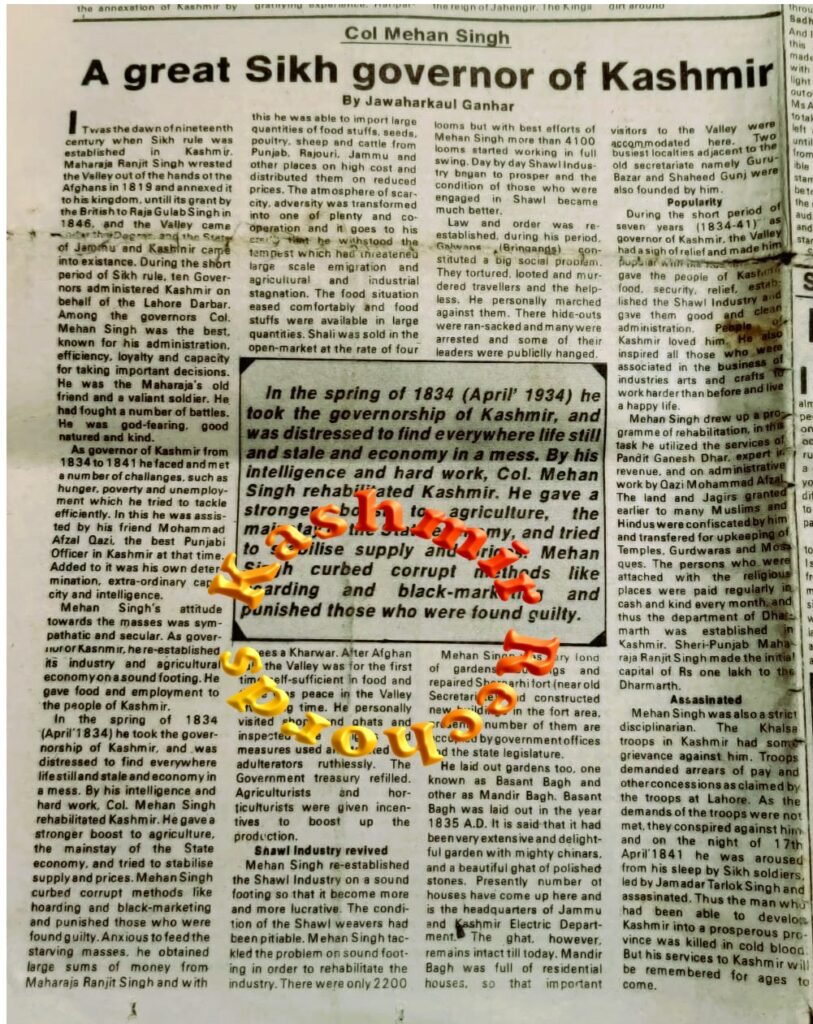
During the brief but eventful Sikh rule over Kashmir, the Valley saw ten governors appointed by the Lahore Darbar. Among them, one name still stands tall in the memory of the land — Colonel Mihan Singh (also recorded as Mehan Singh), widely regarded as the finest of them all. Serving from 1834 to 1841, his tenure was marked by integrity, efficiency and an uncommon empathy for the people.

When Col. Mihan Singh took charge in April 1834, Kashmir was in a dismal state — the economy lay in ruins, poverty and hunger were rampant, and trade had withered away. Yet, in just a few years, he steered the region towards recovery, leaving behind a legacy rare in the annals of governance.

A Team for the People

Mihan Singh was not alone in his mission. He surrounded himself with capable aides — Pandit Ganesh Dhar, a Kashmiri Pandit expert in revenue and administration, and Mohammad Afzal Qazi, a Punjabi Muslim officer. Together, they formed a formidable team that worked tirelessly to rebuild Kashmir’s industrial and agricultural base.

On the advice of Dhar and Qazi, the Governor abolished duties on essential commodities like grain, ensuring affordable food for the masses.

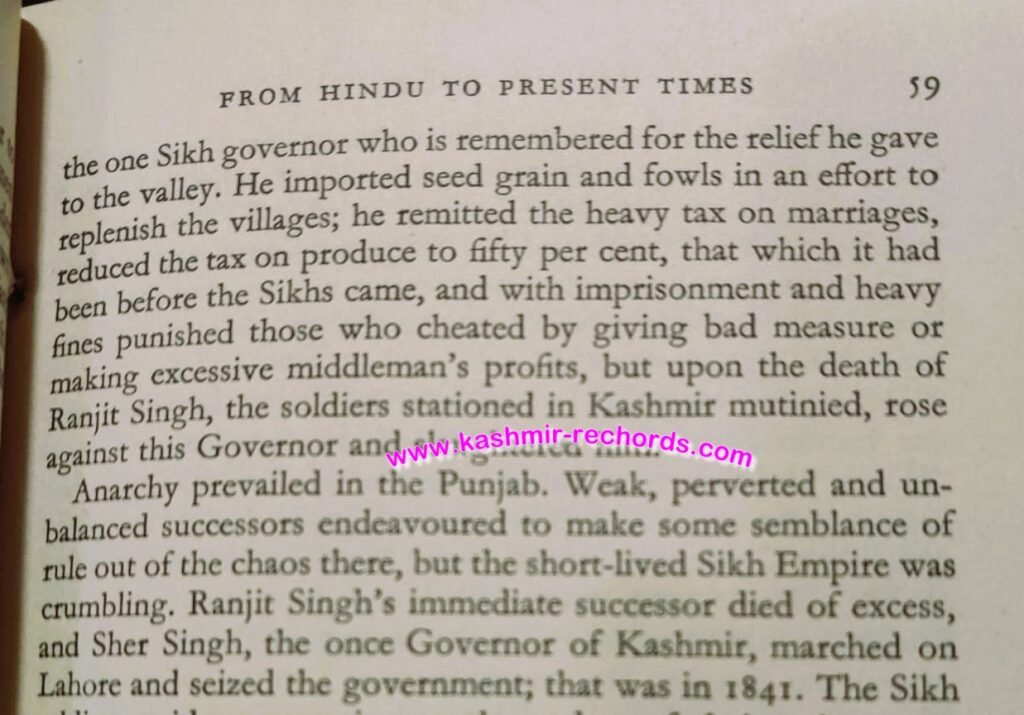
He imported grain and poultry from Punjab to combat shortages, and punished black-marketers without mercy. The Sikh Governor also reduced trade tariffs and offered loans to shawl factory owners, reviving the famed Kashmiri shawl industry. Besides opening trade routes to Ladakh, Punjab, British India, Afghanistan and Central Asia, the Governor’s administration built inns for traders and travellers, promoting commerce and cultural exchange.

Kashmir Rechords is proud to reproduce this account, originally penned by noted Kashmiri writer Jawaharkaul Ganhar and published in Kashmir Times on December 11, 1988 — a tribute to one of the rare administrators in Kashmir’s history who is remembered not for oppression, but for compassion and progress.

For the first time since Afghan rule, Kashmir had become self-sufficient in food. Peace had returned to the Valley after decades of turmoil. Mihan Singh used to personally inspect markets, enforcing proper weights and measures and cracked down on adulteration. Farmers and horticulturists received incentives, while the government treasury was replenished.

Cultural and Civic Contributions

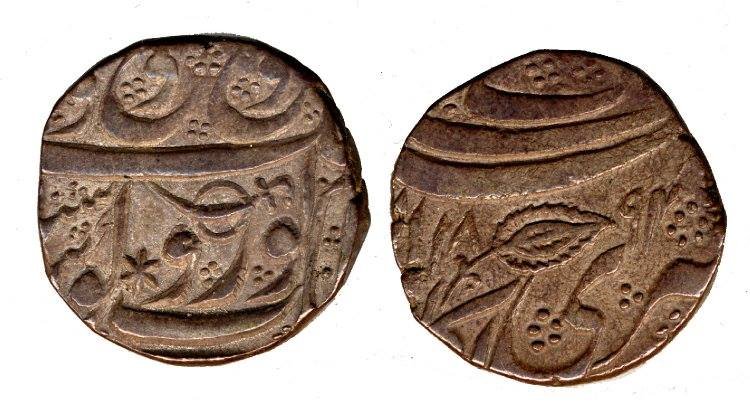
Mihan Singh’s governance extended beyond economics. He planted fine Chinar trees in a newly laid Basant Bagh (1835), established the Mandir Bagh and commissioned the compilation of the historical record ‘Tarikh-i-Kashmir’. In 1836, he even minted coins — a symbol of restored confidence in the State’s economy.

Respected by Historians

Sir Walter R. Lawrence, in his classic The Valley of Kashmir (1895), called him “the best of all the Sikh Governors” and praised his fairness, quick justice and effective reforms. Pearce Gervis, in This is Kashmir (1954), described him as “an enlightened ruler… remembered for the relief he gave to the Valley.”

A Tragic End!

Despite his achievements, Col. Mihan Singh’s life ended in betrayal. On the night of 17 April 1841, he was murdered in cold blood at his Srinagar residence in a conspiracy by mutinous soldiers. His trusted aide, Pandit Ganesh Dhar, met the same fate within a fortnight.

Today, about ten kilometers from Gujranwala stands Qila Mian Singh, a village believed to have been founded by the Colonel himself — a reminder of a man who left an imprint far beyond the Valley he once governed.

References for further reading:

https://www.britishmuseum.org/collection/term/BIOG150956

https://www.sikhnet.com/news/evaluation-sikh-rule-kashmir

https://en.wikipedia.org/wiki/Qila_Mihan_Singh

https://malicethoughts.blogspot.com/2021/07/kumedan-mihan-singh-sikh-governor-of.html?fbclid=IwAR2ymfECX25x8vdm0xF52U_4gJOIIGCr5ynCcorNLfwY8z4ee9C7K-_FuT0

British Missionary Who Preserved Kashmir’s Words,Wisdom

(Kashmir Rechords Exclusive)

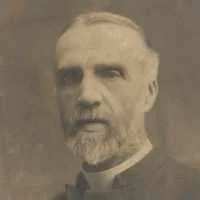
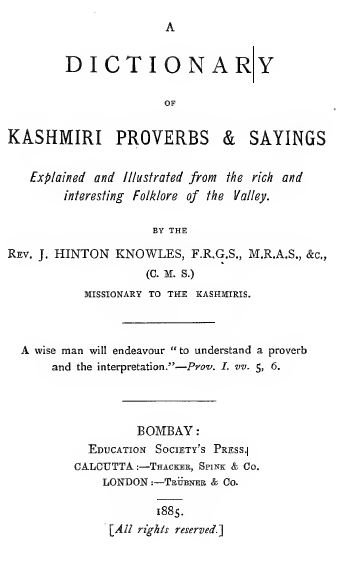
In the late 19th century, far from his home in England, a young British missionary named James Hinton Knowles arrived in the Kashmir Valley. Born in Clerkenwell, London, in 1856, Knowles came to Srinagar in 1880 under the Church Missionary Society. His mission was clear—to serve through education and health—but his heart soon became devoted to something more: the living language and folklore of the Kashmiri people.

During his eleven years in Kashmir, Knowles not only tended to the sick and guided young students at the Mission’s boys’ school—where he served as director from 1880 to 1891—but also immersed himself in the rhythms of local speech. He believed that proverbs carried “the real people’s speech,” a truth distilled over centuries, and he began collecting them with almost obsessive care.

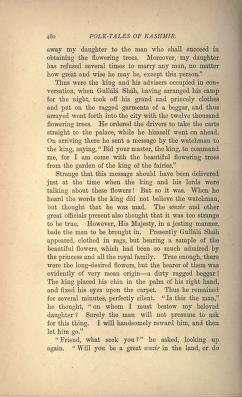
This effort culminated in 1885 with his first great work, Kashmiri Proverbs and Sayings, followed in 1893 by Folktales of Kashmir, a treasury of over 100 traditional stories. Together, these volumes became invaluable cultural archives—works that still resonate in the Valley’s oral and literary tradition today.

Knowles’ proverb collection brims with local wisdom. Familiar sayings like Aki Tsat Sum Ta Sass Gav Kouli  (A single spark can burn down a forest), Anim Soi, Wavum Soi….. (As I sow, so shall I reap), Bir Balun Kath (A sheep without wool), and Hapath Yaraz (A week’s friend) are accompanied by the Kashmiri folk stories from which they sprang. He recorded not only the words, but the very circumstances in which they were spoken—by a learned Pandit, a chatty barber, or a weary coolie.

In his own preface, Knowles described the years of “labour, study and anxiety” behind the book. The work was not without challenge: the Kashmiri language lacked a proper dictionary and grammar; it was written in the Sharada script, known to only a small section of the population; and it varied so widely between Hindu and Muslim speakers that even transcribing the sounds into Roman script proved daunting. Yet, he persevered—acknowledging the invaluable help of local Muslim and Hindu friends who guided him in arranging the collection.

Every paisa earned from the book’s sale, Knowles pledged, went to support the struggling Medical Mission Hospital in Kashmir—a gesture as telling of his character as his scholarship.

James Hinton Knowles left Kashmir in the 1890s, eventually passing away in Ely, Cambridgeshire, on 22 December 1943. But his legacy endures in the proverbs still traded in everyday Kashmiri speech and the folktales that continue to charm readers more than a century later. Through his painstaking work, he became not merely an observer of the Valley’s culture but a guardian of its spoken soul.

Ban it, and they will read it.

Banning 25 Books in J&K: Shielding Minds or Selling Narratives?

The government’s recent ban on “secessionist” literature may have done the opposite of its intent — boosting online searches, reviving forgotten authors and giving critics fresh ammunition.

By:Kanwal Krishan Lidhoo*

They say the quickest way to make someone read a book is to tell them they can’t. Jammu & Kashmir’s recent ban on 25 titles — accused of promoting secessionism and false narratives — might just prove that old truth. Within days of the announcement, online searches for these books shot up, and names most people had never heard of began trending in niche reading circles. The irony? In an age where PDFs, Kindle editions and overseas libraries are just a click away, banning a book might be the most effective way to market it.

The Jammu & Kashmir Home Department’s move — followed by raids in to seize copies — has triggered a mixed response. The official justification is that these books distort history, glorify terrorists, vilify security forces and promote alienation, thereby influencing youth towards radicalization.

A notification signed by Principal Secretary Chandraker Bharti, on the orders of Lieutenant Governor Manoj Sinha, stated:

Certain literature propagates false narrative and secessionism… This literature would deeply impact the psyche of youth by promoting a culture of grievance, victimhood and terrorist heroism.”

Yet, the timing and practicality of the ban invite questions. Many of the titles have been in circulation for decades. Take Al-Jehad Fil Islam by Syed Abu Ala Maududi — published by Markazi Maktaba Islami, Delhi-6 and available in Kashmir since the 1980s, and some other books even stocked in public libraries through government purchases. If the aim is to prevent exposure, the horse may have bolted long ago.

The ban applies under Sections 152, 196, and 197 of the Bhartiya Nyaya Sanhita 2023, citing threats to India’s sovereignty and integrity. But while J&K shops are now forbidden from selling them, ironically they remain freely available elsewhere in India and online. This creates a paradox — a book inaccessible in Jammu and Kashmir can still be ordered from Delhi or downloaded in minutes.

In fact, the “forbidden fruit” effect seems to be in full swing. People who never knew these books existed now have the titles on their radar. Obscure authors risk being elevated to the status of “free-speech martyrs’’, their works gaining an audience they might never have reached otherwise.

Panun Kashmir leader Shailendra Aima summed up the irony in a Facebook post:

Writers like Arundhati Roy and A.G. Noorani have long been exposed for their biased takes… Their influence has waned. Their arguments have been countered and discredited in the court of public opinion. So what exactly has the state gained by banning them now, except making them relevant again?”

Critics argue the State could have taken another path — commissioning respected historians and scholars to dismantle the books’ claims point-by-point. J&K has no shortage of credible voices capable of providing fact-based counter-narratives. This approach might have undercut the books’ influence without giving them a publicity boost.

The deeper irony is that anyone truly inclined towards secessionism will have no difficulty finding these works online, often hosted in overseas archives beyond India’s legal reach. The ban, instead of shielding impressionable minds, may simply have served as a promotional campaign for the very narratives it sought to silence.

So, was this a miscalculated move? In the battle of ideas, persuasion often trumps prohibition. And by choosing the latter, the state may have scored a “self-goal” — amplifying voices it hoped to erase.

At Kashmir Rechords, we believe that truth, when told fearlessly, outlives every attempt to bury it.

Combating secessionism is rarely achieved through book bans; it is better served by drawing a broader, more compelling line of comparative viewpoints. Governments and engaged elements of civil society can always counter such narratives with informed, well-reasoned perspectives. This intellectual space, however, must not be extended to terrorist groups or individuals who use online platforms to propagate violence and toxic ideologies. A well-researched book, rich with facts and context, can effortlessly strip away the superficiality and distortions found in works the state seeks to ban.

  • *Kanwal Krishan Lidhoo is a noted Broadcaster, Author and acclaimed  Translator approved by Sahitya Akademi, New Delhi. He is a Founding Director of Kashmir Rechords Foundation.

Bansi Parimu: The Forgotten Flame of Kashmiri Modernism

(Kashmir Rechords Exclusive)

Has the visionary artist, activist and cultural conscience-keeper faded from the memory of his own people?

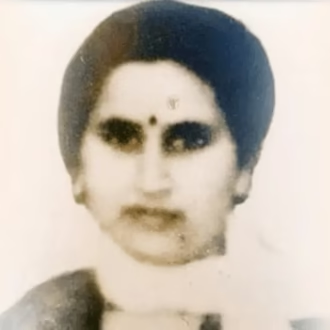
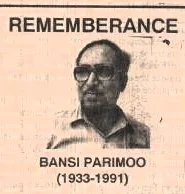
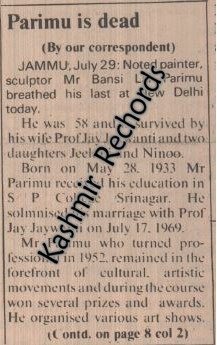
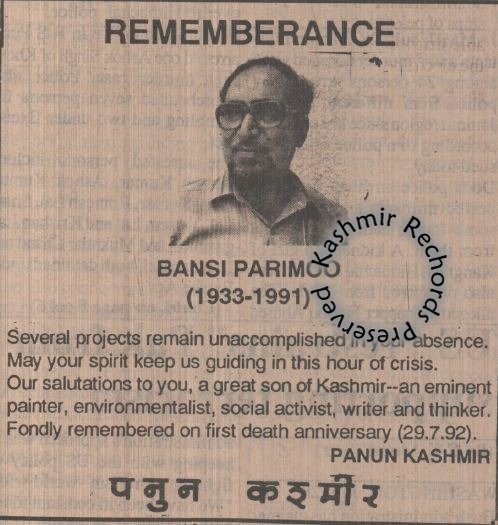
By all accounts, Bansi Parimu ( Parimoo), (1933–1991) was no ordinary painter. He was a modernist with a mission, a fierce cultural force, an environmental and social activist, and a voice that once echoed with the conscience of Kashmir. Through brush and belief, he embodied the soul of a homeland that now seems to have forgotten him.

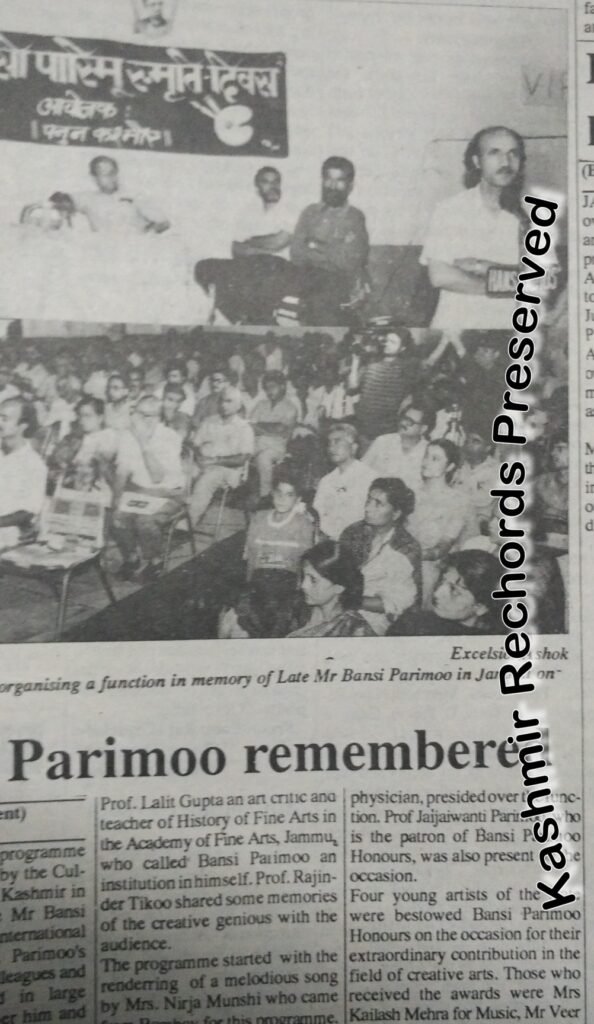
His death anniversary, July 29, passed once again this year without public homage—no tribute, no commemorative exhibition, not even a whisper of remembrance from the circles that once lauded him. Particularly silent has been Panun Kashmir, the very organization that once recognized Parimu as a mentor and inspiration. Is this the inevitable fate of a displaced artist? Or are we witnessing a deeper decay—a cultural amnesia that has crept into our collective conscience?

The Making of a Modernist

Born on June 2, 1933 near Habba Kadal, Srinagar, Bansi Parimu was shaped by the natural beauty of Kashmir. The meadows, chinars, snow-covered peaks, and glimmering lakes formed the palette of his early years. His initial works—delicate, lyrical landscapes in oil and watercolor—reflected that beauty. But Parimoo would not remain confined to romantic realism for long.

As he matured artistically, his language evolved into bold figurative and abstract compositions, echoing deeper turmoil and truth. He was entirely self-taught, guided not by academic institutions but by a lifelong pursuit of observation, questioning and refinement—rooted in the Vedic principle of Neti-Neti (“Not this, not this”), a process of stripping away illusion to uncover essence.

More Than a Painter

Parimu was more than an artist—he was an institution unto himself. He edited and wrote for the influential weekly Criterion in Srinagar. He was an environmentalist who opposed the felling of chinars and the construction of a concrete bridge over the Jhelum. He was a cultural crusader who fought to preserve Kashmir’s visual and architectural heritage.

In 1986, during a public event attended by Union Minister S. B. Chavan, Parimu posed a piercing question that now rings prophetic:
“Why talk only of wildlife conservation? Why not protect the other endangered species—the Kashmiri Pandits?”

Exile, Expression, Elegy

In 1990, when the Kashmiri Pandit community was driven from the Valley, Parimu too fled—leaving behind not just a home, but a living heritage. He relocated to Delhi, a city alien to his sensibilities. There, amidst illness and heartbreak, he continued to paint—translating pain into poignant, powerful visuals.

His last exhibition, with help from theatre maestro M. K. Raina, received critical acclaim. The works on display were elegies of exile—haunting, raw and searing. Cobwebs of Apathy, Smeared Snow, Red Knows No Creed—these were not just titles; they were laments rendered in colour and form. Blood in the snow. Women in flames. A homeland unravelled.

He passed away on July 29, 1991, at the age of 58.

A Mentor Silenced by Silence

In the immediate aftermath of displacement, Parimu was hailed as a cultural beacon. Panun Kashmir spoke of him with reverence, events were held in his name, and the Bansi Parimoo Awards were instituted to encourage young talent. He was spoken of not just as an artist, but as a visionary—someone who saw art as resistance and identity.

Yet over the years, that reverence dimmed. The awards disappeared. Events dried up. His name faded from speeches and commemorations. Silence replaced celebration. Even those who once called him a mentor have let his legacy slip into obscurity.

Legacy That Still Whispers

Despite neglect in public memory, Parimu’s work lives on—in the National Gallery of Modern Art, the Lalit Kala Akademi, and private collections across the world. His art graced Republic Day tableaux, UNESCO publications, and Indian diplomatic missions. His vision transcended borders, his brush spoke to universals.

And yet, among his own people—especially within Kashmiri Pandit circles—he remains largely unspoken. As political slogans grow louder and communal rifts deepen, the quiet brilliance of Parimu’s legacy lies buried beneath the noise.

A Call to Remember

To forget Bansi Parimu is not just to neglect a painter. It is to disown a tradition of cultural resilience, artistic excellence and intellectual honesty. He stood for a Kashmir of depth, dialogue and dignity. A Kashmir where art questioned power and beauty carried truth.

We owe him remembrance—not as nostalgia, but as responsibility.
Let his colours speak . Let his canvases challenge us.
Let us remember Bansi Parimu—not just as a master artist—but as the conscience of a people who are still searching for home.


🔗 Explore Further

  • National Gallery of Modern Art – Online Collection
  • Lalit Kala Akademi – Artist Archives
  • Interviews with M.K. Raina on Bansi Parimu’s Final Years
  • https://autarmota.blogspot.com/2013/07/a-1964-untitled-oil-on-canvas-by-noted.html
  • https://www.artkyk.com/bansiparimu

🕯️ Closing Thought

To remember Bansi Parimu is to reclaim a part of Kashmir’s soul.
A soul that painted even in pain. A soul we must not forget.

🎶 Why AIR Banned Harmonium in 1940?

🎼 A Ban Too Bizarre to Believe

(By: Kanwal Krishan Lidhoo*)

Why would a musical instrument—beloved, popular and proudly Indian-made—be suddenly declared unfit, unholy and ultimately unplayable by the nation’s own broadcaster? What crime did the humble harmonium commit to deserve a formal burial inside All India Radio’s studios in 1940? The answer lies in a curious and often overlooked chapter of India’s cultural history—equal parts musical purism, colonial hangover and bureaucratic melodrama.

📻 July 23, 1927: Harmonium’s Prime Time Debut

Exactly 98 years ago, on July 23, 1927, the first-ever radio broadcast in India crackled through the airwaves from Bombay, under the Indian Broadcasting Company.

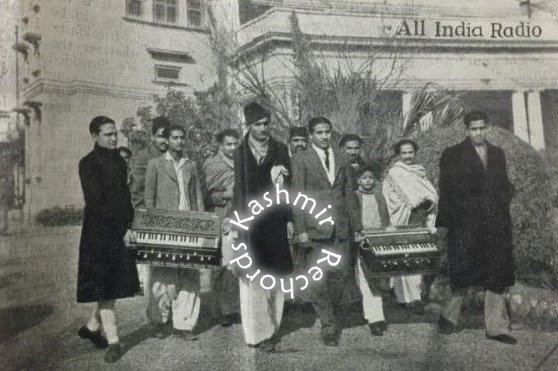
And right there in the studio, surrounded by microphones and musical hopes, was the harmonium—steady and reliable. In those early years, it was an essential part of AIR’s programming. But its reign would be short-lived.

THE LAST RITES: Two Harmoniums used at AIR Lahore Station, make their final exit in 1940!

🎹 Why the Harmonium Was Declared a Musical Outcast

Back in 1915, India wasn’t just playing the harmonium—it was making it. We were among the world’s leading producers of this versatile little reed box. From homes to temples, classical mehfils to revolutionary gatherings, the harmonium had become a national fixture.

But just 25 years later, it was banished from All India Radio (then part of the colonial Information Department). The date was March 1, 1940, and the reason? It was declared “unsuitable for Indian classical music.” A polite way of saying: “You’re not good enough to be heard anymore.”

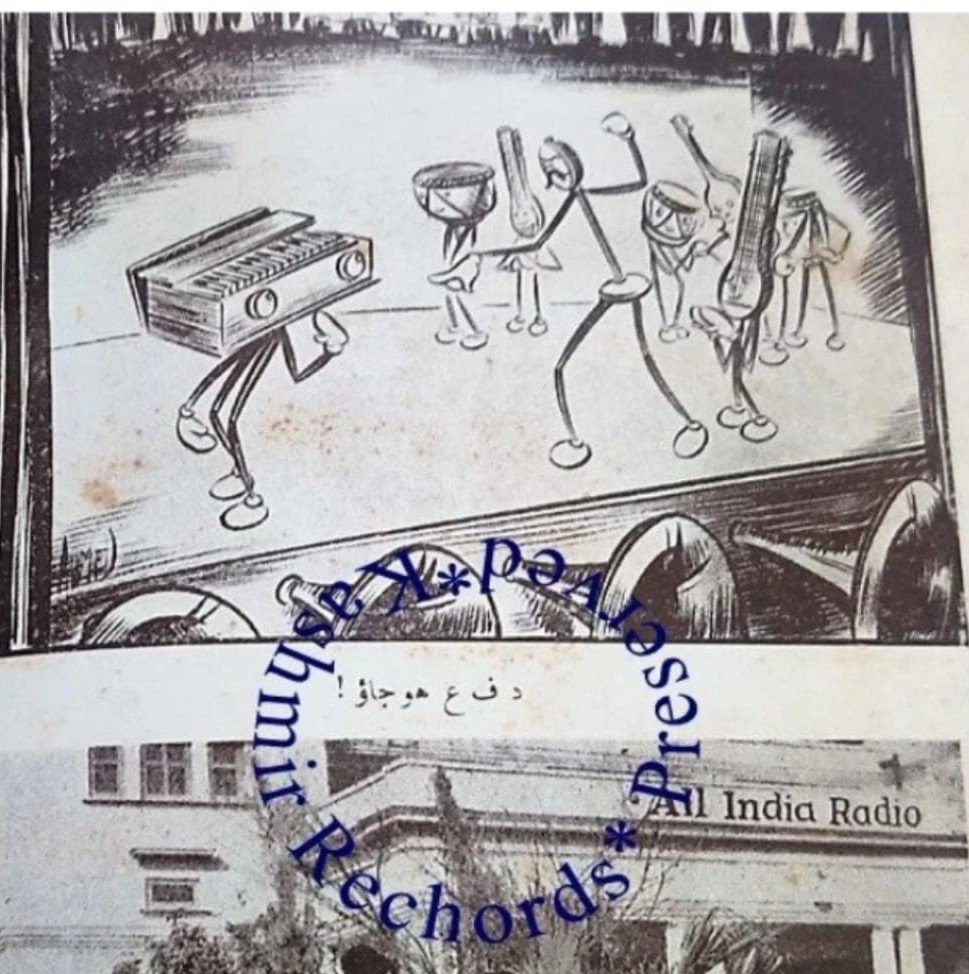
And so, with solemn sarcasm, AIR Lahore held a symbolic funeral. The harmonium, once central to every broadcast, was “laid to rest,” while cartoons appeared in newspapers showing other instruments telling it, “Harmonium Ka Jinaaza’‘ ,“Dafa ho jao!” (Go to hell!).

A Cartoon depicting ``Dafa Ho Jao”— Go to the Hell, You Harmonium from All India Radio!

🎶The British Ear Didn’t Approve

The ghost of this decision haunts Indian music history. The culprit behind the ban? A curious alliance between colonial purists and Indian traditionalists. John Foulds, a British composer and head of Western music at AIR, believed the harmonium failed to capture the microtones—those subtle emotional inflections—that Indian ragas demand.

Lionel Fielden, the first Controller of Broadcasting in India, took this critique seriously—especially after receiving similar complaints from Indian classical musicians. The harmonium, they said, couldn’t glide or bend a note the way a sitar or sarangi could. So Fielden signed the death warrant. AIR issued a directive. Harmonium: out. Permanently.

🎼Even Nehru and Coomaraswamy Didn’t Object

The harmonium’s fate wasn’t helped by India’s cultural elite. According to documents archived by www.kashmir-rechords.com, even Ananda Coomaraswamy, the revered philosopher and cultural historian, dismissed it as “non-Indian.” Jawaharlal Nehru, still a freedom fighter then, wasn’t particularly fond of it either.

To them, the harmonium represented colonial contamination—a European relic invading India’s sacred soundscape. B.V. Keskar, post-Independence Information & Broadcasting Minister and a student of the great musicologist V.N. Bhatkhande, upheld the ban with gusto. Even free India wasn’t ready to forgive the harmonium.

🔓A French Immigrant with an Indian Passport

Ironically, the harmonium had arrived in India as a savior. Invented in France in the 19th century, it proved to be the perfect replacement for bulky pipe organs and fragile harpsichords—both of which often arrived warped after sea voyages.

The harmonium was durable, portable, and most importantly, teachable. Indian artisans quickly learned to build them. Musicians adapted it to bhajans, ghazals, qawwalis, and even classical khayal performances. In a short time, it had gone from outsider to insider—until someone flipped the cultural script.

🎶 The Rise, Fall & Return of the Harmonium in Indian Broadcasting

YearEvent
1915India becomes a leading producer of harmoniums.
July 23, 1927First radio broadcast from Bombay. Harmonium plays live.
1940AIR bans the harmonium. Symbolic “funeral” held in Lahore.
1940–1970Harmonium remains blacklisted due to tonal purity concerns.
1970Ban lifted under pressure from critics and musicians.
TodayThrives across Indian music traditions, but solo AIR concerts still rare.

🎤Resurrection After Three Decades

It wasn’t until 1970—a full three decades later—that the ban began to loosen. Critics pointed out the absurdity of calling a widely-used, home-grown instrument “foreign.” They argued it was ideal for teaching the grammar of Indian music, accompanying choirs, and sustaining group performances. Why treat it like a musical untouchable?

And slowly, the harmonium returned—not as a soloist, but as a quiet, reliable companion.

📝Today: From Exile to Everywhere

The harmonium has since staged a quiet rebellion. You’ll hear it in Hindustani classical, Carnatic devotional, Ghazals, Qawwalis, Bhajans, Sikh Gurbani, church choirs, and even in modern fusion. It may still be sidelined in some AIR solo broadcasts, but its spirit thrives across India’s many soundscapes.

What was once shunned as foreign is now again integral to India’s musical soul.

The harmonium’s story is a reminder of how even music isn’t safe from politics, prejudice and posturing. But it also teaches us resilience. An instrument once exiled is now a quiet revolutionary, pushing back against purism with every note it plays.

So next time you hear the gentle wheeze of a harmonium under a raga or a prayer, remember—it’s not just sound. It’s survival.

So next time you hear the soft drone of a harmonium under a raga, a qawwal’s voice, or a soulful bhajan, remember: this little instrument survived burial, banishment and decades of snobbery. Not bad for an “outsider,” eh?

  • *Kanwal Krishan Lidhoo is a noted Broadcaster, Author and acclaimed  Translator approved by Sahitya Akademi, New Delhi. He is a Founding Director of Kashmir Rechords Foundation.