Home Blog Page 25

1943 Swami Amarnath Yatra

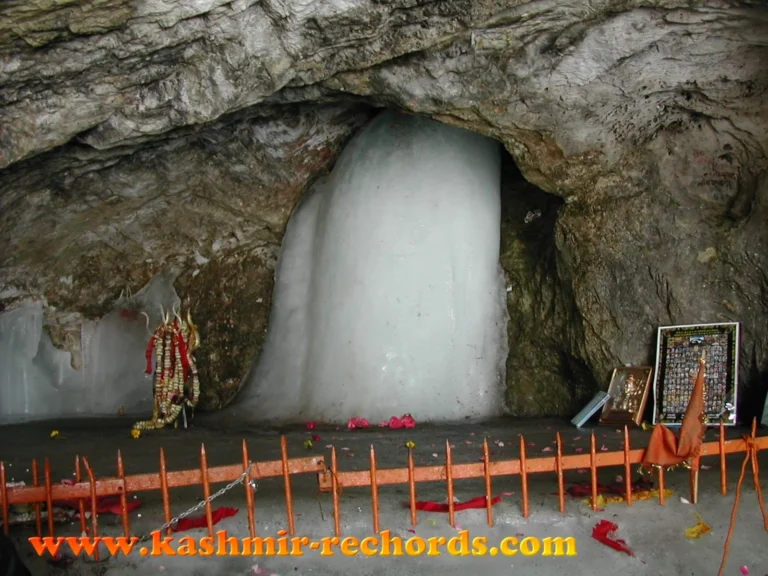
Swami Amarnath Yatra, which culminates every year on Raksha Bandhan, has remained the most revered and popular pilgrimage particularly during Dogra kings, who would accord utmost importance to the Yatra and ensure foolproof measures for its successful culmination under the Dharamarth Department, Srinagar. 

   Some of the official files relating to Amarnath Yatra of 1942-43 have been preserved by the Department of Archaeology, Archives and Museums (J&K) at Jammu. After having accessed them by Kashmir Rechords, the files reveal interesting data related to the Yatra. There used to be no prior registration of pilgrims, as is presently in vogue. Further, the pilgrimage was being undertaken only via Pahalgam-Chandanwari-Sheshnag route and not through Sonmarg- Baltal track, which is now being frequently used by pilgrims.

Darshan only on “Shravan Purnima’’

Unlike nowadays, the pilgrims would have Darshan of the holy ice lingam at the cave shrine only on “Shravan Purnima” which coincides on the day of Raksha Bandhan. However, arrangements for the smooth conduct of this annual pilgrimage were being made well in advance before the first week of July every year.

Amarnath Yatra of 1943

As per a records, the Amarnath Yatra in 1943 comprised a good number of devotees from all parts of the erstwhile State, mostly Kashmiri Pandits  and Sadhus. It started on August 2 from the historical Dashmi Akhara, Srinagar, and pilgrims had darshan on Sunday, August 15. The “Charri Mubarak” (holy mace) was back in Pahalgam on August 17.

 About 7,000 pilgrims had performed darshan of Lord Shiva that year as against 2,050 in 1942. The records further reveal that 800 ponies, 1,200 coolies and 150 palkies were put in use to help devotees undertake hassle-free darshan of the lingam. That year, Shivdev Singh, Wazir-e-Wazarat, Anantnag, was the Camp Officer

   Use of Kangris, Pulhours

Prior to the commencement of the Yatra, the officer in charge, Dharamarth Department, had on July 12, 1943, requisitioned for adequate number of jackets, Kangris, charcoal and Pulhours (shoes made of grass).

There was officially no loss of human life, although Lahore-based Urdu dailies Milap and Hamdard had reported in their issues dated August 23, 1943 that four pilgrims had died while performing Yatra. The news was, however, contradicted by State’s Publicity Officer, SL Kaul.

Shocking: killing of Hangul, Ibex was once permitted in Kashmir!

Killing of Hangul (Stag) and Ibex— the rare and endangered species was once permitted in Kashmir! Sounds strange— but that is the harsh reality. Even hunting was considered a game and there existed “Department of Hunting’’ that had set certain rules and regulations for hunters visiting Kashmir. Thanks to the enactment of Jammu and Kashmir Wildlife (Protection) Act, 1978,  that the killing a wildlife was legally stopped.

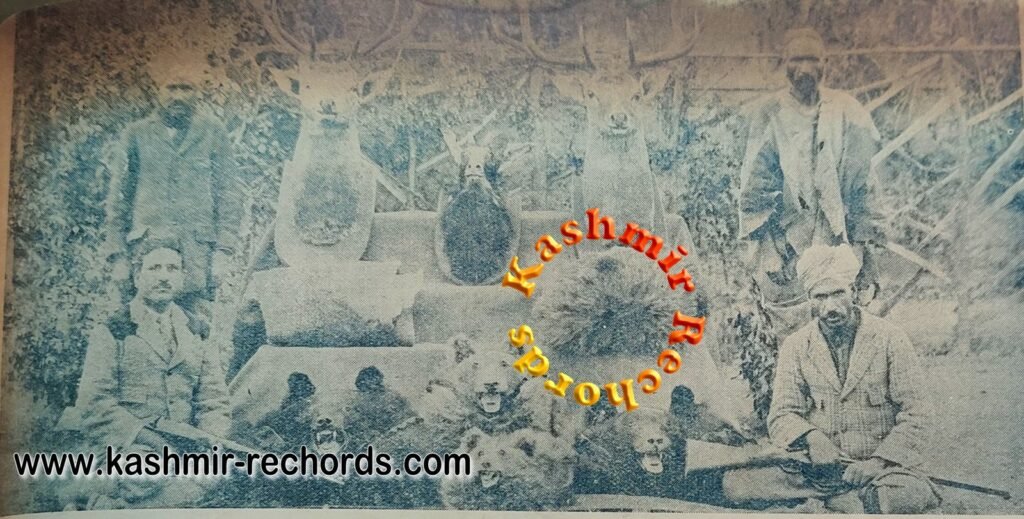
     Prior to enactment of Jammu and Kashmir Wildlife (Protection) Act, 1978, hunting was considered as a `game’ in Jammu and Kashmir and hunters from far off countries like France, Italy, England and America used to visit the erstwhile State of Jammu and Kashmir. The hunters would with pride take photographs of the killed animals and mention about their “performance’’ publically. Local hunters were helping them in their “mission’’

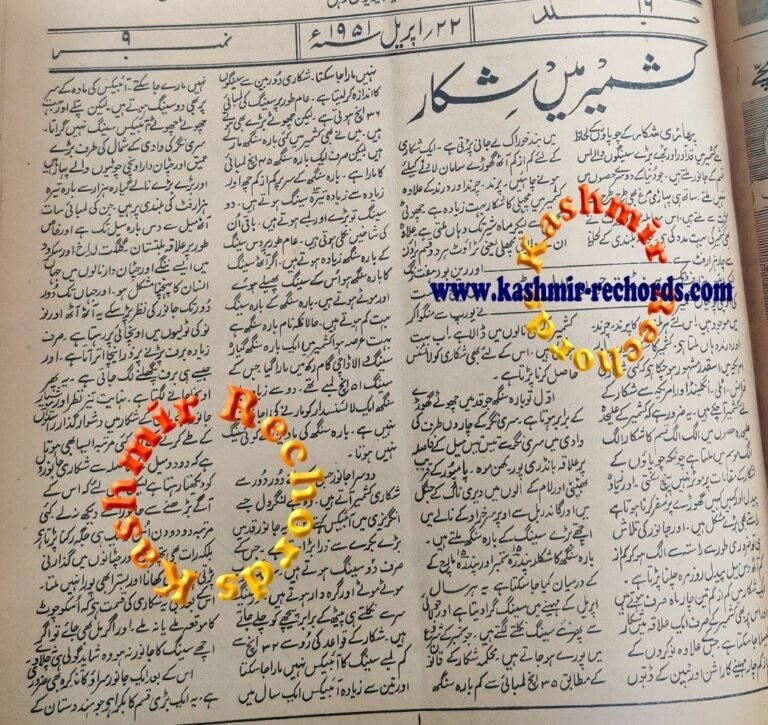
   Kashmir Rechords is in possession of one such write-up, written in April 1951 along with a photograph of dead Hanguls, Ibexes and bears on display. As per the contents of the write-up (in Urdu),  “Mehkama Shikaar’’—The Hunting Department had permitted killing of “Parinda’, `Charinda” and `Darinda’ in Kashmir, besides fishing. The licence holder hunters would move in search of their prey between September 15 to March 15 every year. They would carry adequate packed food and ammunition on their horse backs as well.


Hanguls were in abundance in and around Srinagar

 As per the records, Hanguls, (now declared endangered species) were found in abundance 30 miles in and around Srinagar.  They were being frequently spotted in Bandipura, Khanmoh, Laam, Verinaag and Ganderbal areas. A Hangul, with its horns less than 35 inches, were not allowed to be hunted. Hanguls normally shed their horns in April and by July, they are back with the new ones.

  In the write-up reproduced here, the author claims to have killed a 51 inch long horned Hangul in Dachigaam area besides another one with 45 inch long horn. Hunters were, however, not allowed to kill more than two Hanguls per year.

 Hunting  of Ibex

Like Hangul, killing an Ibex was also allowed in Kashmir. The two-horned Ibex, having length of horns less than 32 inches, was not permitted to be killed. The hunter would, however, kill three grown-up Ibexes in a year. Ibexes were found in abundance in Baltistan, Gilgat, Ladakh and Skardu—all parts of erstwhile State of Jammu and Kashmir.  


After the enactment of Jammu & Kashmir Reorganization Act, 2019 by the Parliament, the Central Act, i.e. Wildlife Protection Act repealed the Jammu & Kashmir Wildlife (Protection) Act, 1978. The Department has now the increasing responsibility from the “Game Regulation’’ to the Wildlife Conservation.

N.B: For those interested to know more about this interesting story, contact us at: kashmirrechords@gmail.com or support@kashmir-rechords.com

Who was poet Tribhavan Nath Zutshi from Kashmir?

(Kashmir Rechords Team)

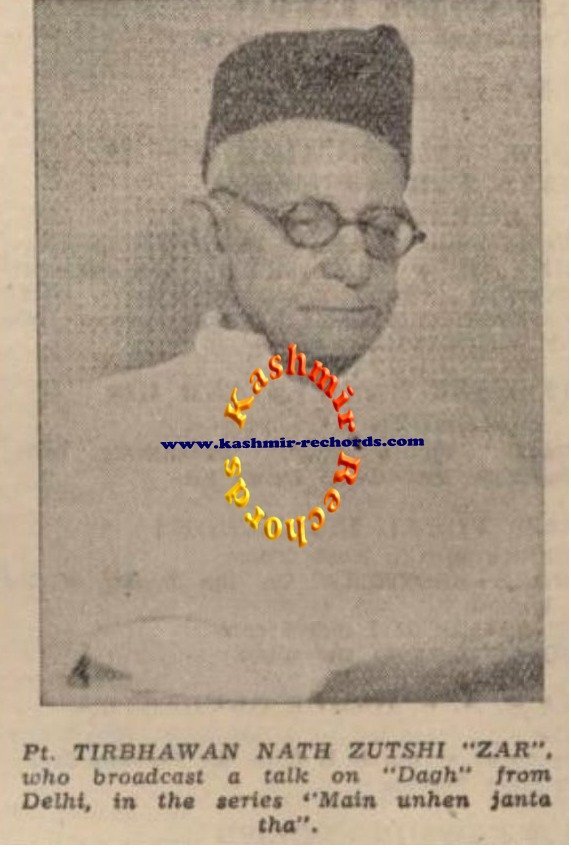
Famous Persian and Urdu poet, Tribhavan Nath Zutshi, `Zar’, had his roots in Kashmir.  Born in 1871 at Meerut, his intellectual capabilities had helped him in carving a niche for both himself and his son, Dr. Anand Mohan Zutshi “Gulzar”.

Popularly known as  Allama Pandit,  Tribhavan  Nath Zutshi “Zar”  Dehlivi  was also  known to the people  and his admirers  as  Yaadgar-e-Daag, for his quality as a  poet and Urdu and Persian scholar of par excellence.

Tribhavan Nath Zutshi “Zar” Sahab’s ancestors had come from Kashmir to Delhi during the rule of Mughal Emperor Jahangir (1605-1627).  However, somehow, they could not stay for a long time in the imperial city and again went back to their native place in Kashmir. In the Mutiny of 1857, this Zutshi family moved to Meerut from Delhi where Tribhuwan Nath was born in 1871.  His father was Prithvi Nath Zutshi and his mother was Shyam Rani. 

Bazar Sita Ram of Chandni Chowk, Delhi

The Zutshi family then again shifted back to Delhi in their ancestral haveli in Bazaar Sita Ram, Chandni Chowk from Meerut where Tribhuwan Nath had his early schooling.  Sita Ram was one of the members of Zutshi clan and it was after his name that that a bazar of Chandhi Chowk was named.

 Tribhuvan  had a great inclination towards learning Urdu and Persian language right from his childhood days.  As per family traditions, he learnt Urdu, Arabic and Persian language under the able guidance of Maulvi Rahim Baksh who used to live at Shahji Ka Chatta at that time and later on became Sir Rahim Baksh and Prime Minister of Bhawalpur State.  This Bhawalpur state acceded to Pakistan after the partition of the country in 1947.

Zutshi-Daag meeting

Between 1882 and 1883, young Tribhuwan Nath used to go to Hakim Ajmal Khan’s house to take medicines for his ailing father where the famous Urdu poet of those days, Nawab Mirza “Daag” also used to come almost daily to play “Chauser”.

These frequent meeting at the residence of Hakim Ajmal Khan brought Tribhavan Nath Zutshi very close to the famous poet “Daag” and very soon he became a most favourite “Shagird” of “Daag”.

Even as  Tribhuwan Nath started composing Urdu poetry from a very young age under the able guidance of “Daag”, he soon blossomed into a well refined Urdu poet with no match among the other contemporary Urdu poets of his times in Delhi.

Initially, he started composing his poems under the pen name or ‘takhallus‘ “Shameem” mainly based on romanticism.  But after meeting Pandit Amar Nath Madan “Sahir”, who was living in Bazaar Sita Ram around 1924 and was mainly doing the translation work of Hindu religious books in Urdu, his whole concept towards life changed.

Use of `Zar’ as a penname

He then started composing Urdu couplets under a new pen name “Zar” containing high philosophical thoughts.  Due to his profound knowledge of Arabic and Persian language, people used to call him as Hazrat Maulvi out of sheer respect.  He composed over a lakh of Urdu couplets and translated all the three “Geetas” in poetic form in chaste Urdu under the penname ` Zar’. 

Tribhuwan Nath did his Matriculation from Mahendra College, Patiala around 1887 where his uncle Rai Bahadur Manohar Nath Zutshi was posted as a judge.  He did his F.A. and B.A. subsequently from Government Azad College, Lahore and studied Arabic and Persian in St. Stephen’s College Delhi and then in Oriental College Lahore under the guidance of Mohammad Hussain.

After completing his studies, Tribhavan Nath started his service as an Accountant in Lahore around 1894.  Later,  he took up a job as a Lecturer in an Engineering College at a place Gujrat in Punjab, which has become now a part of Pakistan.  There, he had a row over some trivial matter with the Principal of the college who was an English man.  In a fit of rage, he slapped the Principal of the college.  This ugly incident became a turning point in his life, as he had to resign from his job in 1924.  Consequently, he came back to Delhi where he joined the Indraprastha College Delhi in 1931 as a teacher of Urdu and Persian language from where he retired in 1956 at the ripe age of 85 years.  From 1924 to 1931, he served as an Associate Professor in Delhi University.

 Coronation of King George V

Tribhavan Nath Zutshi had the proud privilege of attending the special Darbar in Delhi in 1911 in which the coronation ceremony of King George V took place.  He married twice. Tribhavan Nath’s first wife died at young age. His second wife was Raj Dulari who was also a poet of repute and was known as `Victoria Ji’.  Her pen name was “Bezaar.  Victoria ji had four sons and two daughters.  The sons were Jag Mohan, Ratan Mohan, Jawahar Mohan and Dr. Anand Mohan whereas Brij Rani and Anila were her daughters.  The most peculiar characteristic of this Zutshi family is that it produced five reputed Urdu poets.

 In 1937, Delhi Literary Society gave him the title `Kadre-ul-Kalam Allama-e-fun’ in recognition to his outstanding contribution in promoting Urdu, Arabic and Persian language. The Ministry of Education of the Central Government gave him scholarship until his death for his valuable work in the field of Urdu literature.

He died in Delhi in his ancestral Haveli in Bazaar Sita Ram on 7 October 1965 after a prolonged illness at the ripe age of 94 years. To commemorate his death, a special number of Nidai Itihad in Urdu edited by Warsi Aziz was brought out on 1 November 1965.

He made a distinct place for himself in the field of Urdu poetry writing and literature by sheer hard work and dedication.  The lovers of Urdu literature in the subcontinent still take his name with great respect and admiration for his valuable contributions as a poet and as a teacher of Arabic and Persian language. 

His son Jawahar Mohan Zutshi now lived in Rajaji Puram, Lucknow and another son, Dr. Anand Mohan Zutshi “Gulzar” who was  himself an internationally by renowned Urdu poet, was known as  Gulzar Dehlvi, 93,  who passed away on 12 June 2020 at his Noida home.

Bhagawan Gopi Nath Ji of Kashmir

The Saint of All Times

By: B.Revti

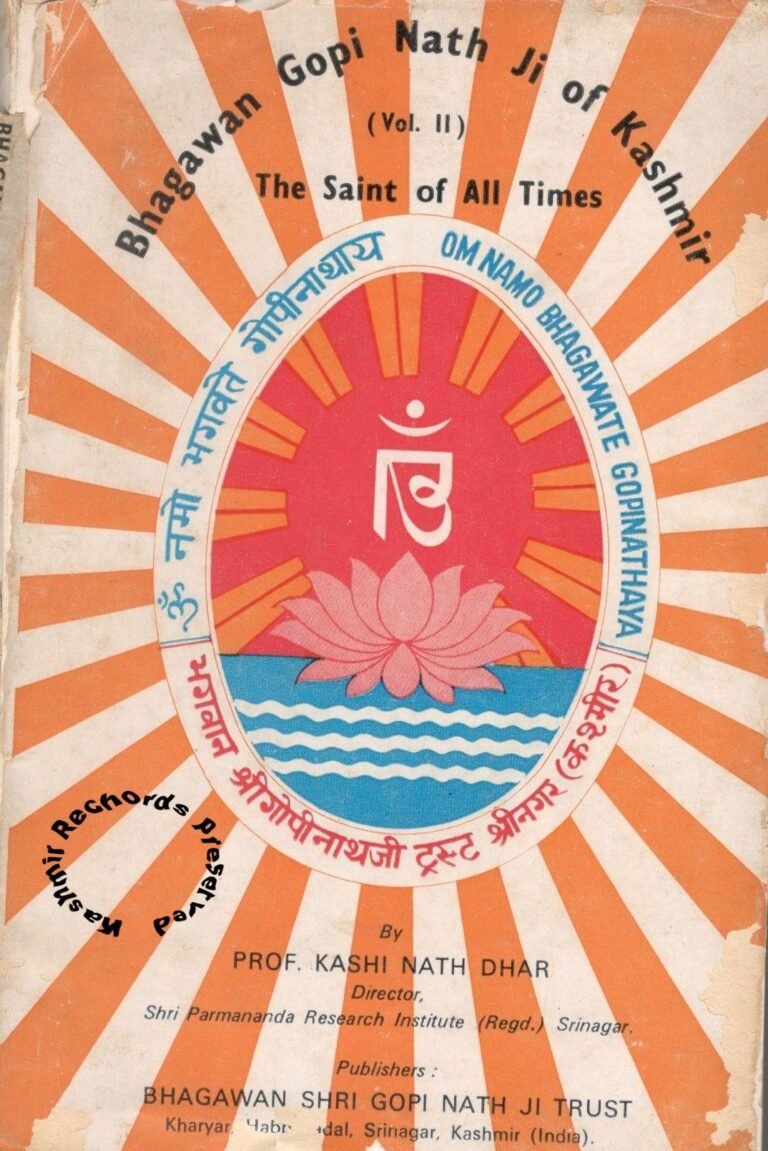
The Book “Bhagawan Gopi Nath Ji of Kashmir—The Saint of All Times’’ (Vol II) is a wonderful book worth reading.  Written by Prof Kashi Nath Dhar, the then Director Shri Parmananda Research Institute, Srinagar in April 1981, the Book is based on 175 pages with interesting anecdotes. The  author has tried to project Bhagawan Ji as he was. Prof Dhar  has  also tried to prove a mirror to Bhagwan Ji’s seraphic personality.  

Bhagawan Ji is first saint having influenced Indian masses

Though Kashmir has been the home of many exalted Saints, strangely enough none seems to have produced any impact on the Indian masses; they were hardly known outside Kashmir except Lalleshwari whose Vakhs are extant in some parts of India. It can safely be recorded that the magnetic personality of Kashmiri Saints and their message did not at all cross the mountain-barriers of their land of birth, Prof  Dhar mentions that  Bhagwan Gopi Nath Ji is  in fact the first  Saint of Kashmir who is influencing the Indian masses and in whose sacred memory centres have  being established in India. The first Centre was established in Prayagraj (Allahabad) during the Kumbh Mela in 1977, followed by another Spiritual Centre in the vast domain of Aghoreshwara in Kreem Kund Varanasi, besides smaller Centres in other places, including two in the Union Capital.

Aghoreshwar Bhagwan Ram whose mention has been made in this  book while   speaking to an audience of about 10,000 people in January 1979  said that Bhagwan Gopi Nath Ji was a Mahapursha. In his speech delivered at Bhagwan Gopi Nath Ji’s “Shivar” at the Vishwa Hindu Sammelan, he is quoted as having said that  that he had his first  acquaintance with Bhagwan Ji by reading “Bhagwan Gopi Nath Ji special number’’ in the “Chandi” Journal of all India fame, and since that time he has been so dominated by him that wherever in meditation he concentrated on his Guru or Ista Deva (titular deity) the image of Bhagwan Ji with a Kashmiri style turban on, appears before his vision.

The Book mentions about the Vishwa Hindu Sammelan, where some Kashmiris had requested Bhagwan Ram to help them out of their worldly difficulties. His reply was  that Bhagwan Gopi Nath  Ji was a potent Spiritual force working in higher Spiritual planes and that he alone could solve their problems and advised them to invoke only his (Bhagwan Ji’s) grace. Maharaj Gagan Giri Baba of Kolhapur (who has an Ashram in Khapoli as well), the most famous mystic Saint of Maharashtra- a highly evolved Soul mentions in the book that Bhagwan Ji was a Mahat — the  one in harmony with universal Consciousness.

  Bhagawan Ji’s Australian devotees

The Book mentions about Australian devotees of Bhagwan Gopi Nath Ji, who had started a Bhagwan Gopi Nath Ji Centre in Winmalee N.S.W. (Australia) to propagate “Bhagwan Consciousness”. The foreign devotees believe that it will be Superior to that mission undertaken by Kashmir Bikhshus of Mahayana Buddhism, which they carried to Central Asia and Tibet some thousand years back, and will show surprising results.

Though Bhagwan Ji’s Australian devotees have had first contacts with Bhagwan Gopi Nath Ji Ashram in 1975 only, he has been very kind to them and has kindled Tattva Gyana in them (vide Chapter V-Exchange of letters).

  Theories about religious processes followed by Bhagawan Ji.

The Book makes a mention about different theories regarding the religious creed and religious processes followed by Bhagwan Ji. Some say that he was in Shambhav Awastha (mentioned in Shaivism). Others say that he was a Vaishnava! Yet others say that he was a Shakta. Some people call him an Aghoreshwar, others an Avadhoot, a Jeewan Mukhta, or a Videha.

The Book makes it categorically clear  that none is qualified to say about the state (Avastha) Bhagwan Ji was in, unless one is himself a realized Soul. He has himself defined the state he was in, when he recited Shloka 6. Chapter XV of Bhagawad Gita in response to a query in this connection (vide page 92 of Bhagwan Ji’s Biography Vol. I). Only those in an advanced state of Consciousness may be able to divine the depths of Spirituality of Bhagwan Ji.

 The author of the Book—Prof Kashi Nath Dhar has researched well to produce the treatise full of content and meaning. The Book carries some rare photographs as well. Kashmir Rechords is reproducing some of  them here.

Those interested can know more about the contents of the Book by contacting us at kashmirrechords@gmail.com or support@kashmir-rechords.com

Constitutional Structure of Pakistan Occupied Kashmir

0

By: teawithrev

Pakistan Occupied Kashmir (PoK) has its own `constitution’, the so-called “Azad Jammu and Kashmir Interim Constitution Act of 1974’’, and a locally chosen parliamentary form of government. This sort of constitution allows for many of the structures that comprise a self-governing state, including a legislative assembly `elected’ through periodic elections, a `Prime Minister’ who commands the majority in the assembly, an indirectly elected president, an `independent’ judiciary, and local government institutions.

But these provisions are all hollow. Under Section 56 of  PoK’s `Jammu and Kashmir Interim Constitution Act’ (which was drafted by the Federal Ministries of Law and Kashmir Affairs in Islamabad), the Pakistani government can dismiss any elected government in PoK  irrespective of the support it may enjoy in Muzaffarabad  Legislative Assembly. The Interim Constitution Act provides for two executive forums—the “Azad Kashmir Government’’ in Muzaffarabad and the “Azad Kashmir Council’’ in Islamabad.

PoK remains for all intents, purposes under Pakistan’s control

The latter body, presided over by the Prime Minister of Pakistan, exercises paramount authority over the PoK Legislative Assembly, which cannot challenge decisions of the Council. The Council is under the numerical control of the federal government in Islamabad, as in addition to the Pakistani Prime Minister it comprises six other federal ministers, the minister of Kashmir Affairs as the ex-officio member, the `Prime Minister’ of PoK, and six PoK members `elected by the Legislative Assembly’. The interim Constitution Act lists fifty-two subjects—virtually everything of any importance—that are under the jurisdiction of the PoK Council, which has been described as the “supra power” by PoK  High Court. Its decisions are final and not subject to judicial review.

Thus, PoK remains for all intents and purposes under Pakistan’s strict control, exercising no real sovereignty of its own. From the outset, the institutional set up in the territory was designed to ensure Pakistan’s control of the area’s affairs. According to the United Nations Commission for India and Pakistan (UNCIP) resolutions, PoK is neither a sovereign state nor a province of Pakistan, but rather a “local authority” with responsibility over the area assigned to it under the Ceasefire Agreement. 

   Karachi Pact of 1948

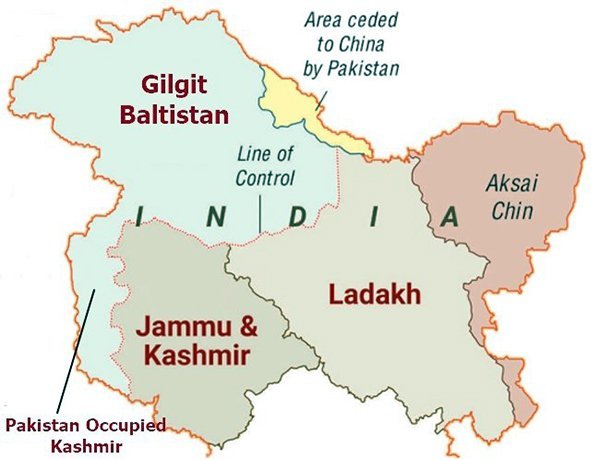
  The “local authority” or provisional government of PoK, established in October 1947 was handed over to Pakistan under the Karachi Agreement of April 28, 1949. Under this pact,  matters related to defense, foreign affairs, negotiations with the UNCIP and coordination of all affairs relating to Gilgit and Baltistan (strategically important territories that now comprise Pakistan’s “Northern Areas” but are claimed by India as part of the state of Jammu and Kashmir), were handed over to Pakistan. 

The `Constitution’ of PoK poses major impediments towards genuine democracy as it bars all those parties and individuals from participating in the political process who do not support the idea of Kashmir’s accession to Pakistan and hence precludes all those who are in favor of PoK’s independence from Pakistan .

 PoK `PMs’—replaced, dismissed, arrested

Power in PoK is exercised primarily through the Pakistani army’s General Headquarters in Rawalpindi and its corps commander based in the hill station of Murree, two hours by road from Muzaffarabad. During  the rule of Pakistan’s first military leader, Ayub Khan (1958-68), President K.H. Khurshid of PoK was forced to resign by a mid-level police official and later jailed in Palandari and Dalai Camp. During Prime Minister Zulfikar Ali Bhutto’s government (1972-77), another president of PoK Sardar Qayyum, was suddenly arrested by a mid-level official of the Federal Security Forces in Muzaffarabad and subsequently dismissed. During General Zia-ul-Haq’s government (1977-88), Brig. Hayat Khan was appointed administrator PoK, a post he held for seven years. When a civilian government was reestablished in Pakistan in 1988, Benazir Bhutto’s swearing in as Prime Minister was shortly followed by the installation of an `elected government’ of Bhutto’s Pakistan People’s Party in PoK. When Bhutto was sacked by the president in 1990, PoK `Prime Minister’ Mumtaz Rathore was “escorted” to Islamabad in a helicopter and made to sign a letter of resignation. 

Regarding PoK’s political party landscape, since the early 1990s real decision-making authority and the management of the “Kashmir struggle” has rested firmly with the Pakistani military through the ISI and ISI-backed militant organizations. The Pakistani bureaucracy is the real administrative power, the ISI and the Pakistan army exercise coercive power.  And under the constitution, the elected representatives are subservient to the Kashmir Council controlled by Pakistan. High Court and Supreme Court Judges can only be appointed by approval of the Ministry of Kashmir Affairs in Islamabad. The Minister of Kashmir Affairs can dismiss the PoK’s `PM’, as can the Chief Secretary—another Islamabad appointee. Under Article 56, the President of Pakistan can dissolve the Legislative Assembly. Surely, this is truly a unique form of `self-rule’.

Hero of Jallianwala Bagh’s love for Kashmir

By: B Revti

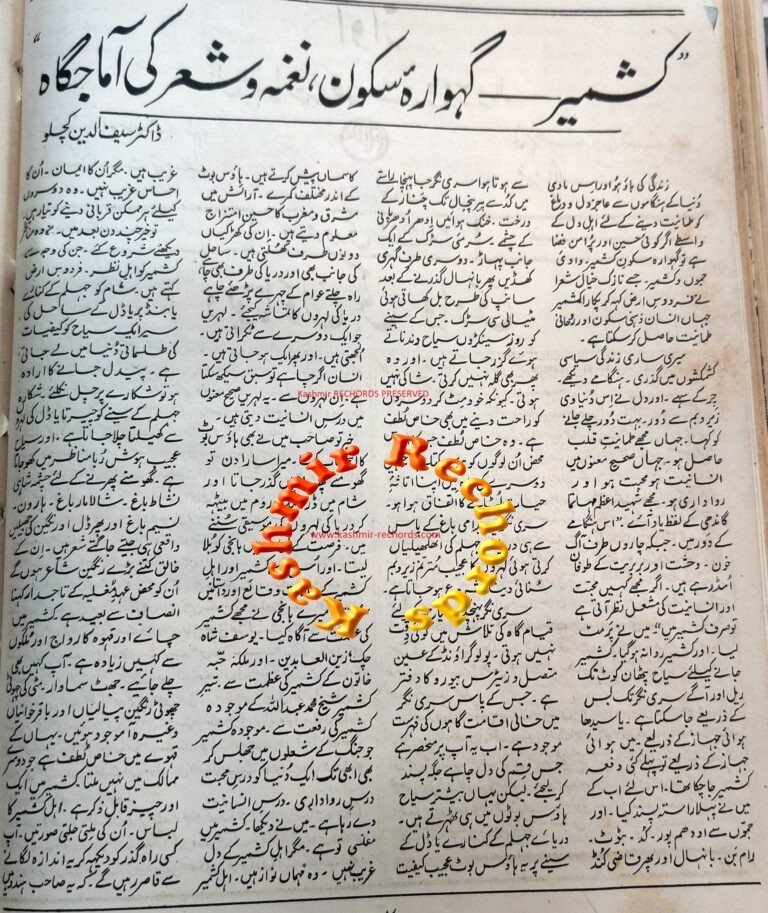
Do you  know  Dr Saifuddin Kitchlew—– one of the most influential leaders in pre-independence India who is known for leading a protest against the Jallianwala Bagh massacre? Incidentally, Kitchlew, whose ancestors were from Kashmir, had an immense love for Kashmir.

   A legendary freedom fighter who is often hailed as a hero of the Jallianwala Bagh protests against the Rowlatt Act of 1919; Dr Kitchlew’s ancestors were Kashmiri Pandits. Born on 15 January in 1888 into a Kashmiri Muslim (Converted) family, Kitchlew’s father, Azizuddin Kitchlew had moved to Amritsar for his pashmina and saffron trading business, whiles his mother, Dan Bibi, was a homemaker.

 Prakash Ram Kitchlew, a Kashmiri Pandit from Baramulla town, had in fact converted to Islam. Later, his son, Ahmed Jo had migrated from Kashmir in the mid-19th century after the Kashmir famine of 1871.

Kitchlew’s studies and career

The hero of Jallianwala Bagh had started his schooling from Islamia High School in Amritsar. He completed his bachelors  degree from Cambridge University in London and PhD from Germany in 1913.  He returned from abroad and started practicing law in Amritsar. His strong intellect and devotion for the nation made him participate in activities that could help India emerge out of colonialism. Kitchlew first became Punjab Pradesh Congress Committee (Punjab PCC) head and later the General Secretary of the AICC in 1924

Advocate of Hindu-Muslim Unity, Kitchlew was opposed to partition

In his book, “Freedom Fighter — The Story of Dr Saifuddin Kitchlew’’, Kitchlew writes about his grandfather who was always fascinated by the French Revolution. He read books on these themes, which excited in him a kind of admiration for nationalism and freedom movements.

Kitchlew, who took an active part in the non-cooperation movement and the All India Khilafat Committee, was an active advocate of Hindu-Muslim unity.  He started an Urdu daily Tanzim which became monumental in establishing the Swaraj Ashram in January 1921 at Amritsar to train young men for national work and to promote Hindu-Muslim unity. He was also  one of the founding members of Jamia Millia Islamia.

As a practicing Barrister, Kitchlew had come in contact with Gandhi Ji. A strict opponent to the Muslim League’s demand for Pakistan, Kitchlew had deadly opposed the acceptance of the Partition of India by the Congress Party. He is on record having spoken out against it at public meetings across the country and at the All India Congress Committee session that ultimately voted for the resolution. He called it a blatant “surrender of nationalism for communalism”.

 Kitchlew was a founding leader of the Naujawan Bharat Sabha , which rallied thousands of students, and young Indians to nationalist causes He was a member of the Foundation Committee of Jamia Millia Islamia, which met on 29 October 1920 and led to the foundation of Jamia Millia Islamia University.

After 1947, he was attracted towards Communism and worked for world peace through institutions like ‘Peace and Friendship’. He was the founder president of the All-India Peace Council and remained President of 4th Congress of All-India Peace Council, held at Madras in 1954, besides remaining Vice President of the World Peace Council.

He was the first Indian to be awarded the Lenin Peace Prize in 1952. He died on 9 October 1963 due to cardiac arrest.

From Kashmir to Amritsar to Delhi

Kitchlew’s ancestors had moved out of Kashmir due to Kashmir famine of 1871. His father had started Shawl business in Amritsar-Lahore belt, in order to raise his family. However, Kitchlew had to move to Delhi after his house was burnt down during the partition of India riots of 1947. This had forced him to spend the rest of his life working for closer political and diplomatic relations with the USSR.  

   During his stay in Delhi, Kitchlew longed for Kashmir—the land of his ancestors. During the period from 1948 to 1950, he is reported to have visited Kashmir several times in order to trace his roots. In one of his talks broadcast over Delhi Station of All India Radio in 1950, Kitchlew showers all praise for his birth land. This article was published by several magazines of that era. Kashmir Rechords (www.kashmir-rechords) is reproducing one such write-up written by Dr Kitchlew in Urdu.

  Kitchlew, who had received the Stalin Peace Prize in 1952, died on 9 October 1963.  He was survived by a son, Toufique Kitchlew, who lived in a Lampur village on the outskirts of Delhi, and five daughters. While four of his daughters married men from Pakistan, one daughter, Zahida Kitchlew, was married to the South Indian music director M. B. Sreenivasan who worked mainly  in Malayalam and Tamil film industries.

A colony in Ludhiana, Punjab, popularly called Kitchlu Nagar, is named after him.  In 1989, India Post released a special commemorative stamp featuring him. The Jamia Millia Islamia created a Saifuddin Kitchlew Chair at the MMAJ Academy of Third world Studies in 2009. People of Amritsar still remember him. That is evident from the fact that Kitchlew Chowk in Amritsar, at the intersection of Mall Road and Court Road, is named after him.  There used to be a small bust on a pillar at the intersection.

A Kashmiri Pandit who gave Mohd Rafi to the World of Music


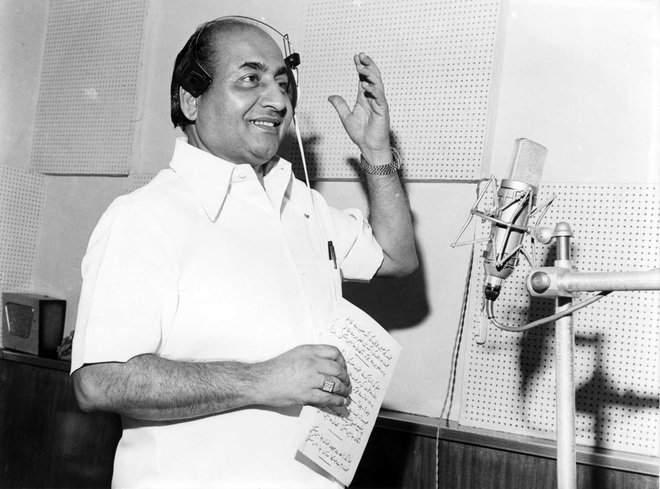
Singer Mohammed Rafi, (24 December 1924 – 31 July 1980) needs no introduction. His melodious songs speak about him and his personality! But how many of you know that Rafi, nicknamed as Pheeku, was introduced and groomed to world of music by a Kashmiri Pandit?

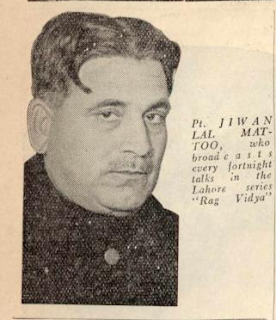
Yes,….that is indelible   part of Rafi’s life and singing that most of us do not know. It was Pandit Jeevan Lal Matoo, who had traced and groomed Rafi Saheb!

Who was Pt. Jeevan Lal Matoo?  

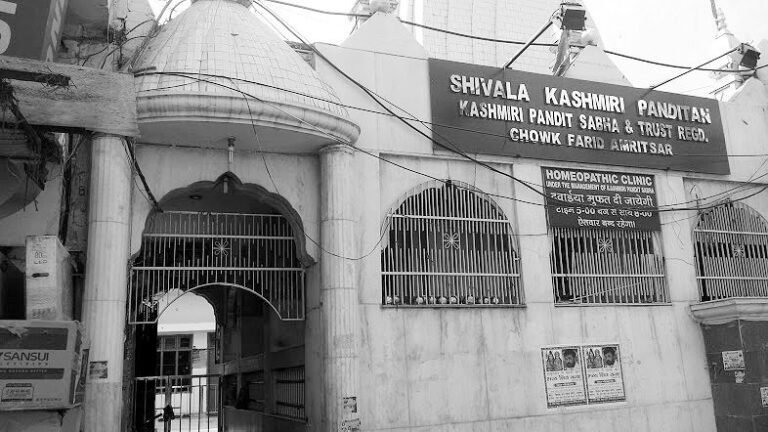
Jeevan Lal Matoo belonged to a pre- Partition family of Kashmiri Pandits settled in Amritsar. A musicologist of the sub-continent, Matoo is known for his two outstanding students— Mohd Rafi and Sitar Maestro Mehmud Mirza. Pt  Jeevan Lal’s ancestor—- Pandit Mehta Ram Matoo , a shawl trader , had actually moved to Amritsar  city from Kashmir around nineteenth century. One of the members of Matoo family (Kashmiri Lal Matoo) had even donated about one kanal of land inside walled city of Amritsar (Present location Farid Chowk) in 1908 AD for construction of a community centre and a Shiva Temple, now known as Shivala Kashmiri Panditan.

 Pt Jeevan Lal Matoo, a vocalist, had a profound knowledge of classical music and was associated with All India Radio (AIR). He had also set-up a community gathering at Shivala Kashmiri Panditan Lahore in Mohalla Sareen area of the city. This community centre for Kashmiri Pandits in Lahore was constructed by Raja Dina Nath Madan, the then Finance Minister in the court of Maharaja Ranjit Singh of Lahore.

 Alas! The partition of the country proved to be a great setback for this music genius. He had to migrate to Delhi as a refugee from Lahore, where he joined Delhi Station of AIR. In Delhi, he founded Radio’s first National Orchestra called Akashvani Vadya Vrinda, which was later taken over by Sitar Maestro, Pandit Ravi Shanker who too had joined AIR, New Delhi as Music Director in 1950. Pandit Jeevan Lal Matoo lived in the Independent India’s National Capital unnoticed. In India, he had tried to devote his time and energy to music only .However, he always missed his Lahore. Away from his Lahore, he always felt like in exile at Delhi!

Pt.   Jeevan Lal Matoo, who served at AIR, Lahore from 1937 to 1947 and headed the music section, had secretly recorded a live radio broadcast of Khayal and Thumri rendering by Ustad Abdul Waheed Khan in 1947.  Music lovers, the world over, remain indebted to this Kashmir legend for these recordings. The purpose for these secret recordings was to please Ustad Waheed Khan, who incidentally happened to be a Guru of Pandit Jeevan Lal Matoo. Matoo was himself a great exponent of Kirana Gharana and had profound knowledge of Punjabi folk and Indian classical music.

Pt Jeevan Lal Matoo was married to Roopwanti Bakaya, daughter of Niranjan Nath Bakaya. Roopwanti died in New Delhi in 1973. Apart from Jawahar Matoo, Pt Jeevan Lal Matoo had another son –Moti Lal Matoo (1927 -2009) who had settled in Canada. Pt Jeevan Lal Matoo was closely related to the family of Justice Ram Narain Dar of Lahore. Kishen Narain Dar, son of Justice Ram Narain Dar served as superintendent of Police J&K, during the rule of Maharaja Hari Singh.

Pt Jeevan Lal’s contribution for All India Radio, Lahore

For AIR, Lahore, Jeevan Lal Matoo brought some noted Punjabi singers— Noor Jahan, Zeenat Begum, Ali Baksh Zahoor, S Mohinder, Assa Singh Mastaana, Vidya Nath Seth, Surinder Kaur, Prakash Kaur and Shiv Dayal Batish as contractual artists. Malika Pukhraj was already well known to him, as she was an approved singer of AIR, Lahore. Film music composers— Amar Nath, Gobind Ram and Dhani Ram were influenced by the music of Pandit Jeewan Lal Matoo. Noted Sitar player Mahmud Mirza was a direct disciple of Pandit Ji. Mohammad Rafi and Mehmud Mirza never forgot Jeevan Lal Matoo. Both would pay glowing tributes to their Guru both in private and public lives.  Kartar Singh Duggal, well-known Punjabi writer, who also worked at AIR, Peshawar before Partition, would often say that everyone who rose to become someone in the music world during the early forties in undivided Punjab found himself indebted to Pandit Jeewan Lal Matoo of AIR, Lahore.

Discovering Mohammad Rafi

It was both destined and a chance for both Pt Jeevan Lal Matoo and Mohammad Rafi to meet each other! In 1943, Pt Jeewan Lal Matoo is reported to have gone out of his residence for a haircut at a barber’s shop in Lahore where a new helper (nickname Pheeku—Mohammad Rafi) to the main barber was singing Waris Shah’s `Heer’ in his style.  Jeewan Lal Matoo was attracted to the voice quality of the boy whom he invited to AIR, Lahore for audition. The young Rafi cleared the audition in one go. So much was Pandit Jeevan Lal Matoo impressed by the tonal quality of Rafi that he imparted some basic knowledge of classical music to the prospective singer at his residence.

The boy picked up very fast and was soon in the panel of approved artists of AIR, Lahore. Later, Matoo sent Rafi to Ustad Abdul Waheed Khan for regular training. This new singing sensation introduced by Pandit Jeevan Lal Matoo was soon noticed by Lahore’s film Music Director, Shyam Sunder for his new film ‘Gul Baloch’. After Jeevan Lal Matoo’s help and training, this casual helper Pheeku at the Lahore saloon, who later moved to Mumbai, rose to unprecedented heights in the Indian film Industry to be known as Mohammad Rafi, the great singer!

Kashmir, Bollywood posters & Chal Chal Re Naujawan

By: teawithrev

Kashmir and Bollywood film posters have a unique connection!  Ever since the entry of Cinema into Kashmir, spotting of posters, pasted on walls, Tongas, Lorries, buildings etc.  have been a routine affair for all those film goers born before the  division of the Sub-continent. The trend  continued even up to late eighties, but these posters disappeared and were dwarfed before the so-called poster-boys  of  a section of Kashmir’s `Naujawan’  (youth)  who got misguided so much so that  `Caravan’ of Bollywood pictures in Kashmir came to a grinding halt with the closure of cinema halls  in 1989 !  

 But in 2023 only, Kashmir’s  “Naujawan” has again begun to spot the same posters that used to dot every bazar of the valley and traced in many  leading newspapers published before  and after Independence of India.   Once upon a time, such huge banners and posters were put up on the streets of Kashmir and newspapers were full of advertisements highlighting films.  Kashmir Rechords, from its archives, is reproducing two of such posters of 1944 Hindi film—Chal Chal Re Naujawan

Origin of Hindi Film Posters

From July 7, 1896, the first day of screening films in India, film posters were used for the publicity of Lumiere’s films in Bombay. Till date, film posters have been the reflection of changing time, technology, techniques and array of ideas and designs of different decades. Starting from Raja Harishchandra, the first Indian film, to till today, the posters of Bollywood films have come a long way from broad visible brush strokes with a striking array of colours. And Kashmir is witness to all such developments in poster making! Even in the age of digital film promotion, these skilfully designed Bollywood film posters have not lost importance. The vintage film posters themselves reveal the entire story and picture line of the reel and the real life of the people.

Chal Chal Re Naujawan Film posters & storyline

Chal Chal Re Naujawan (1944) is an emotional-Romantic Musical Black and White Hindi Thriller. Written by Saadat Hassan Manto, the drama has been  crafted with excellence by Gyan Mukherjee. The Story revolves around the life of two friends Jaipal (played by Jagdish Sethi) and Prasad (played by Rafiq)- a kind man living with his family and their friendship gets torn of misunderstanding for Jaipal’s wife- Savitri (played by Motibai)- who is  framed in relationship with Prasad and Jaipal disowns her. However, years later, Jaipal’s daughter- Sumitra (played by Naseem Banu) falls in love with Arjun (played by Ashok Kumar),  Prasad’s son. And thus the fate plays its role !

Directed by Gyan Mukherjee and written by Sadat Hasan Manto, with Hardip as a Cinematographer, the shooting of this low-budget film was mainly completed in Filmistan Studio.  Based on 12 songs, the music was composed by Ghulam Haider with Lyrics by Pradeep.

Ashok KumarNaseem BanuJagdish SethiV.H. DesaiMotibaiRafiq Ghaznavi and Navin Yagnik have played leading roles in this pre-Independence era picture.

This Bombay (Now Mumbai) -based studio was established in 1943-44 leasing the former premises of the Sharda studio. Launched by major breakaway group from Bombay Talkies led by their production controller Rai Bahadur Chunilal and producer Shashadhar Mukherjee, their first film was Gyan Mukherjee’s Chal Chal Re Naujawan. Following the hits Shaheed (1948), Shabnam (1949) and Samadhi (1950), Filmistan’s style arguably had the largest impact of any studio on later independent commercial filmmaking in Hindi. Other notable Filmistan cineastes are P.L. Santoshi, Nandlal Jaswantlal, Kishore Sahu and Ramesh Saigal.

Inclusion of “Chal Chal Re Naujawan” Song in School Books

The title song “Chal Chal Re Naujawan” Song   became very popular for being so inspirational and marching song. So much so that when the film was released in Delhi, the audience wanted the song to be shown again and were adamant on their request. Considering the popularity of the song, it was also included in the Hindi and Urdu schoolbooks of those times. Thus, it became the first ever-Hindi film song included in the schoolbooks.

The child star Suresh who actually sung this song was one rare case when a male child star became a successful hero in his adulthood. In 1950, he reportedly went to Pakistan and did two films there. He returned to India as he felt that he had no future there.

IB Director’s Book on Kashmir Conspiracy.

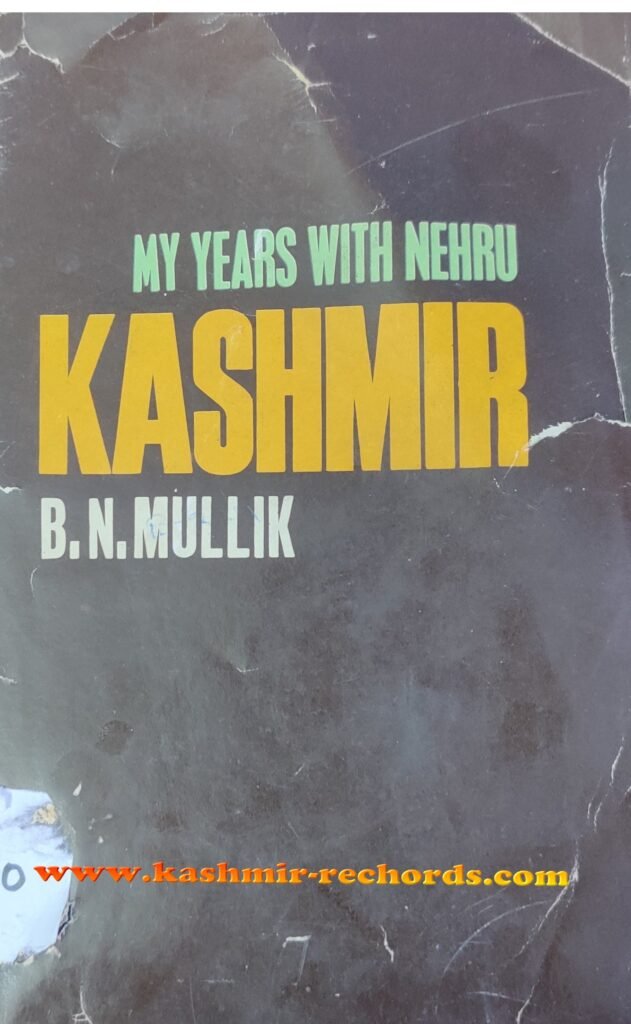
The Book—`My Years with Nehru- KASHMIR’ by B N Mullik makes an interesting reading! Mullik was an Indian Civil Servant, spymaster and the second Director of the Intelligence Bureau of India (IB). He served as the Director of IB from July 15, 1950, to October 9, 1964. He was known to be a hardworking official, with close contacts with the then Union government.  In his book, Mullik deals with Kashmir problem and Kashmir Conspiracy. Closely reasoned, carefully documented and largely relying for its account based on author’s  own  official sources and personal observation, this authentic yet highly controversial  book provides  a devastating  commentary  on the role of Pakistan and her henchmen in Kashmir. Mullik recounts the course of events in Kashmir since its accession to India.

Arrest of Sheikh Abdullah

Starting with the period when Sheikh Abdullah was in power, Mullik presents hitherto unknown background to the situation in Jammu and Kashmir until the time the valley was again invaded in 1965. The Book describes the dramatic events  that culminated  in the arrest of Sheikh Abdullah and the ushering in of Bakshi Ghulam Mohammad as the Prime Minister of  Jammu and Kashmir.  Behind the trail of events was a well-planned conspiracy by Pakistani elements and the book provides an authoritative account of the activities of all such elements (including Kashmiri politicians). Supported by the original documents recovered by the Intelligence Bureau, in the Kashmir Conspiracy Case, the Book makes a mention of some politicians (with Code Names).  Non-prosecution of Begum Abdullah in the Kashmir Conspiracy case owing to her being a “ Madre-e-Meharban’’ remained a missing link in the production of complete evidence in the court

Disappearance and Recovery of Holy Relic

The Book gives a detailed account of the explosive situation then prevalent in Jammu and Kashmir, when Holy Relic was untraceable. The situation was apparently masterminded by Pakistan and the author, who himself planned the operation for the recovery of the Holy Relic, narrates dramatic events from Relic’s loss to its ultimate restoration and identification.

  The Book also describes the impact that Kamraj Plan left on the politics of Kashmir, because of which, Bakshi’s resignation was accepted and his successor Shamasuddin was not able to face the upsurge caused by the loss of Holy Relic. This paved the way for G M Sadiq to take over the reins of government.

Pakistan and her agents in Kashmir

 The author, who was intimately, connected with the defence and security problems in our country since Independence was the Director of Intelligence Bureau, Government of India during 1950-65. Hence, this Book is considered to be  the most authentic, for the reason that the author has included certain letters and correspondence between Pakistani handlers and their agents in Kashmir.

Kashmir Rechords  (www.kashmir-rechords.com) is in possession of the premier edition of this Book and will share with analysis its contents in detail with its esteemed readers/scholars on demand.

Search for Judge Neelkath Ganjoo’s murderers

0

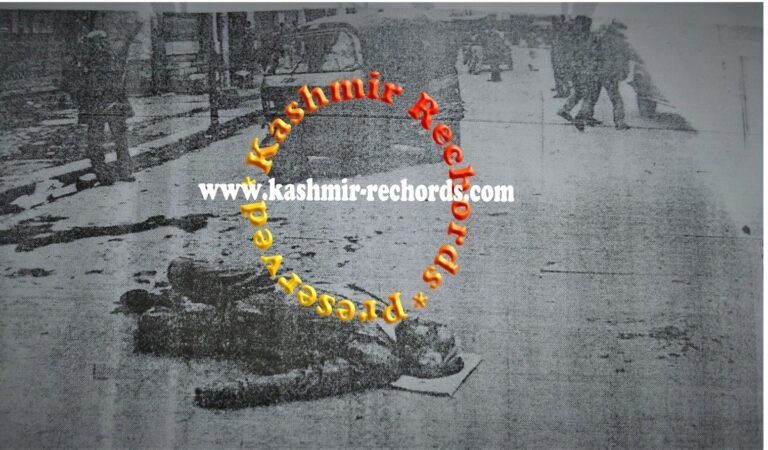
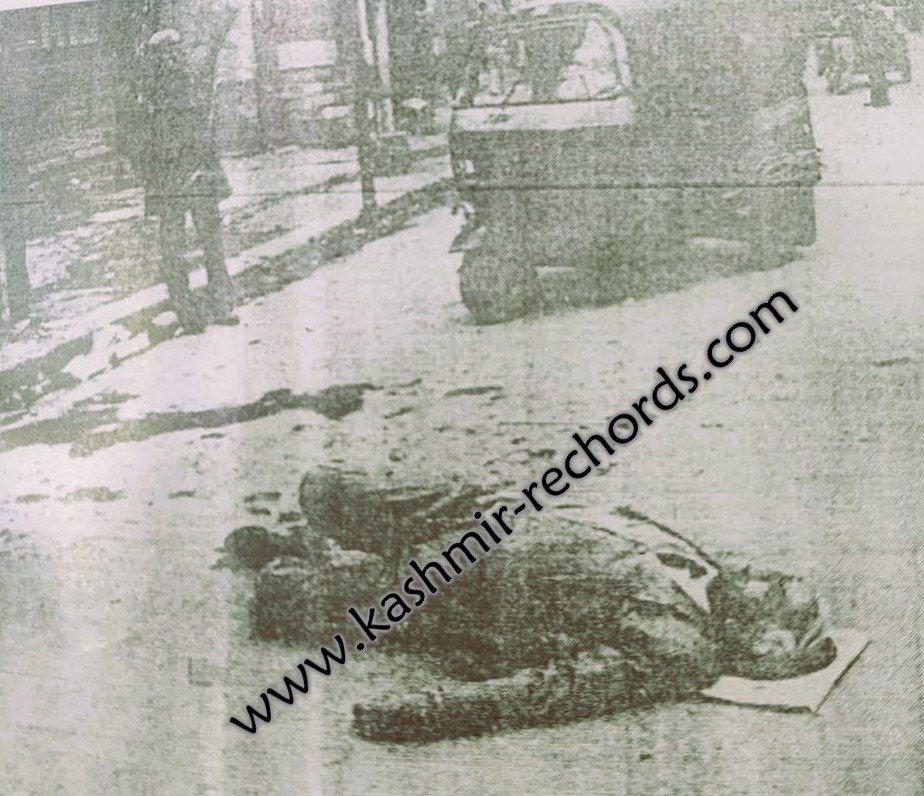
Years after his brutal killing at the hands of the terrorists in a broad day light in Srinagar Kashmir, Jammu and Kashmir Police’s State Investigation Agency (SIA) is now searching for his murderers. The Agency   has sought public assistance to investigate murder case of famed judge Neelkanth Ganjoo, whose body had remained unattended for hours together after his assassination on November 4, 1989.
The SIA on August 7, 2023  through a communiqué, appealed all persons familiar with facts or circumstances of Neelkanth Ganjoo murder case to come forward and share any account of events which has direct or indirect bearing on the investigation of the instant case in order to unearth the “larger criminal conspiracy into the matter’’.
 The communique said that the identity of all such persons shall be kept completely hidden and protected besides all useful and relevant information shall be suitably rewarded. Public has been asked to contact on 8899004976 or on email: sspsia-kmr@jkpolice.gov.in for having any information regarding this murder case

Judge Ganjoo had survived many death attempts

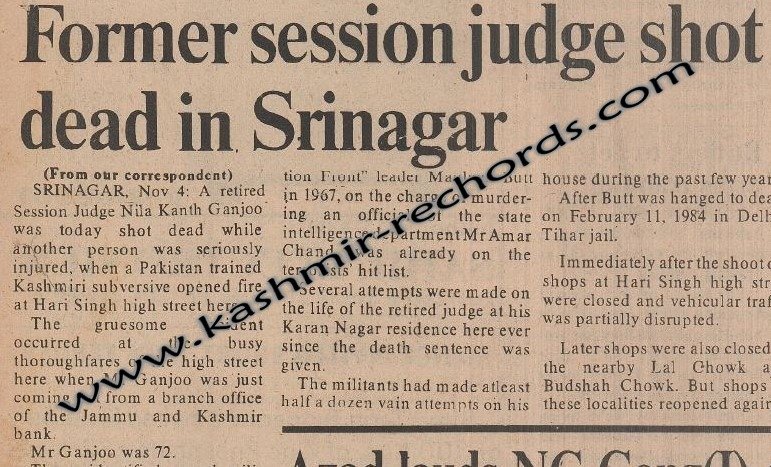
The gruesome incident had happened at Hari Singh High Street Srinagar, when the retired Judge (72) was coming out of a bank branch—- according to the news reports carried by newspapers that year. Kashmir Rechords is in possession of one such news item and has reproduced a news item from its archives. Earlier several attempts had been made on the life of Mr Ganjoo at his Karan Nagar, Srinagar residence ever since he had pronounced death sentence upon Jammu and Kashmir Liberation Front leader, Maqbool Butt. Newspaper reports (in possession with www.kashmir-rechords.com) say that terrorists had earlier made at least six such vain attempts to liquidate him. Despite on the hit list, he was denied any security, so much so that threat perception on his life was not taken seriously.

As the terrorists succeeded in their nefarious designs on the fateful day of November 4, 1989, the vehicular traffic had  remained disrupted for a moment and later the same was resumed and shops reopened in Hari Singh High Street  with no-body daring to even cover the body of the deceased for hours together!

Circumstances behind murder of Judge Neelkanth Ganjoo

Between 1966 to 1968, Judge Ganjoo had presided over the trial of Jammu Kashmir Liberation Front (JKLF) co-founder Maqbool Butt as a session’s court judge. In August 1968, he had sentenced Maqbool Butt to death for the murder of a police constable Amar Chand in 1966.Neelkanth Ganjoo, a Kashmiri Pandit, lost his life for the reason that he had delivered the judgment, which was a pre-requisite for any bold Judge like him.

1965 War:When Pakistani troops had ‘entered’ Jammu City, ‘bombarded’ South Delhi!

          It was an early and breezy morning of September 7, 1965 when Pakistani troops had ‘entered’ Jammu city!      

         Sounds unbelievable, especially to those who are witness to the Indo-Pak war of 1965 and also to all patriots conscious of the heroic deeds, might and capabilities of brave Indian Jawans that such a thing must never happen even in future.  

         But that is what the Pakistani media had claimed and disseminated amongst its anxious citizens and also to their troops in a vain bid to lift their sagging morale.   Not only that…. the enemy media   had those days even spread rumors of having “bombarded’’ South Delhi and having captured some villages of Kashmir and Punjab, bordering Pakistan. Through these misdeeds, they could only make a laughing stock of themselves.

Pakistani Media Propaganda on Delhi, Punjab

Front Page headline of “Pakistan Times”

The monitoring of Radio Pakistan during 1965 war had interesting things to reveal! Its morning news on September 6, 1965 was based on the opening lines like: “ our fighters today shot down two enemy super-connies near Agra…..”   Another false news was broadcast next day which began like this: “ our forces have entered Jammu and are about to move in Gumat area’’…   The evening bulletin on the same day had claimed that ‘‘ Pakistani troops were about to capture some prominent cities of Punjab…..’’.

       Although such stuff from across the border  was aimed at creating chaos and confusion  among  the masses, All India Radio was, however, there to counter Radio Pakistan, which had earned the name of “Radio Jhootistan’’ for its notoriety.

        Former Union Deputy Minister of Information and Broadcasting in Lal Bahadur Shastri’s Cabinet, C R Pattabhiraman in his transcribed radio talk, broadcast over All India Radio, Delhi in October 1965 recalls how Radio Pakistan had shamelessly claimed that her “ planes had reduced South Delhi to ashes and damaged Jamana Bridge’’. The former Minister also makes a mention of Radio Pakistan’s rabid propaganda when it had spread rumours that “ cars in Delhi were stranded for want of petrol’’.

Pakistan’s Operation Gibraltar fiasco

     Pakistan’s Operation Gibraltar fiasco

  Radio Pakistan’s anti-India stance was a part of “Operation Gibraltar”. (1965 war was code-named by the enemy). Under this plan, some Pakistani soldiers, who had initially been infiltrated into Jammu and Kashmir for kicking up violence and subversion, were guided by Radio Pakistan’s coded messages. Four infiltrators who were captured by the Indian security forces in the upper reaches of Jammu and Kashmir had later described the whole plan of “Operation Gibraltar’’ in a broadcast on All India Radio on August 8, 1965. This has a mention in a foreword written for Air Marshal Asghar Khan’s book “The First Round, Indo-Pakistan War 1965’’ by Altaf Gauhar, the then Pakistan’s Secretary of Information and Broadcasting.

Pakistan Times—-Bundle of Lies


Pak’s blatant lies on Kashmir, Jammu

It was not only Radio Pakistan involved in anti-India propaganda but a section of Pakistani print media was equally the culprit in fanning the disinformation campaign. `The Pakistan Times’ in one of its issues of September 1965 had headlined a news item: “ Jammu city was cut off from rest of State. Mujahideen on town’s outskirts’’. The same paper had also published a main lead under the heading “Pitches battles in Srinagar. Indian battalion near Baramulla wiped out’’. There was not an iota of truth in these blatant lies.

                        The story of Indo-Pak war of 1965 is now 58 years old but the Nation continues to suffer till date at the hands of Pakistan’s proxy war. And their media propaganda is a part of this proxy war, which is showing signs of escalation every moment.

People of PoK are culturally closer to Dogras, Punjabis

0

Pakistan Occupied Kashmir (PoK), which is a part of the Union Territory of Jammu and Kashmir, is 13,297 square kilometers in area and is divided into Muzaffarabad and Mirpur divisions. Political map of India also mentions Muzaffarabad and Mirpur as two districts of J&K. However, `authorities’ illegally controlling PoK since 1947, have further subdivided the region into eight administrative districts. These include Muzaffarabad, Neelum, Bagh, Poonch, and Sudhnutti districts of Muzaffarabad division and Mirpur, Kotli, and Bhimber districts of Mirpur district.

Muzaffarabad city is the `territory’s capital’. The population density is 246 persons per square kilometer, while as the literacy rate 60 percent which is higher than in Pakistan.

 People of PoK are almost entirely Muslim. However, Islam or its sects are not the principal arbiters of identity in the region. The people comprise not only diverse tribal clans (biradari) but are culturally and linguistically markedly different from the Kashmiris of the central valley of Jammu and Kashmir. Cultural practice in PoK has more in common with Dogras and Punjabis than with the Kashmir valley.

Gujjaras, Mirpuri Jats, Rajputs of PoK

The illegally occupied territory is far from ethnically homogenous. The biradari is the overriding determinant of identity and power relationships within the socio-political landscape.  While the Gujjars, numbering close to eight hundred thousand, are possibly the largest such group, historically the two most influential biradaris have been the Sudhans from the southeast (concentrated in Bagh district and Rawalakot subdivision of Poonch district) and the Rajputs who are spread out across the territory. Sudhans and Rajputs number, respectively, a little over and a little under half a million.  Almost all of PoK’a politicians and leaders come from one of these two groups.

 PoK is also home to approximately three hundred thousand Mirpuri Jats hailing from the southern part of the territory. Though the Mirpuris are the closest geographical and cultural relatives of the Potohari Punjabis, in recent decades they have chosen to define themselves increasingly as Kashmiris. Mirpuris have migrated to the United Kingdom (U.K.) in large numbers and constitute the overwhelming “Kashmiri presence” in that country. There are also a number of other small tribes and sub-tribes.

     PoK has its own `Supreme Court’

Pakistan occupied Kashmir  has a `parliamentary form of government’. The `president’ of PoK is the `constitutional’ head of the state, while the `Prime Minister’, supported by a `council of Minister’s, is the `chief executive’. PoK  has its own self-styled  `Supreme Court, High Court, and Legislative Assembly’ comprising forty-nine members, of whom forty-one are directly elected and eight are indirectly elected—the latter comprise a member each from the technocrats, scholars, and overseas Kashmiris, and five women. Under the current constitutional dispensation, twelve of the forty-eight seats in the Legislative Assembly are reserved for `Kashmiri refugees’ settled across Pakistan. Union Territory of J&K, has on the other hand, kept 24 Assembly seats reserved for people of PoK. The areas  also has a multi-tiered system of local governance. All key administrative offices are, however,  manned by Pakistani officials.

Economic exploitation of PoK

Like other parts of J&K, PoK is also rich with scenic beauty and natural resources.  It has many rivers, lakes and streams flowing through it. But this water has been a continuing source of political tension between Kashmiris and Pakistan. The Mangla Dam project, which affects the waters of the Jhelum and Poonch rivers before they flow into Punjab in Pakistan, is a matter of concern as residents of PoK feel that Pakistan has been economically exploiting them.

Was harmonium once`untouchable’ in All India Radio !

(Kashmir Rechords Exclusive)

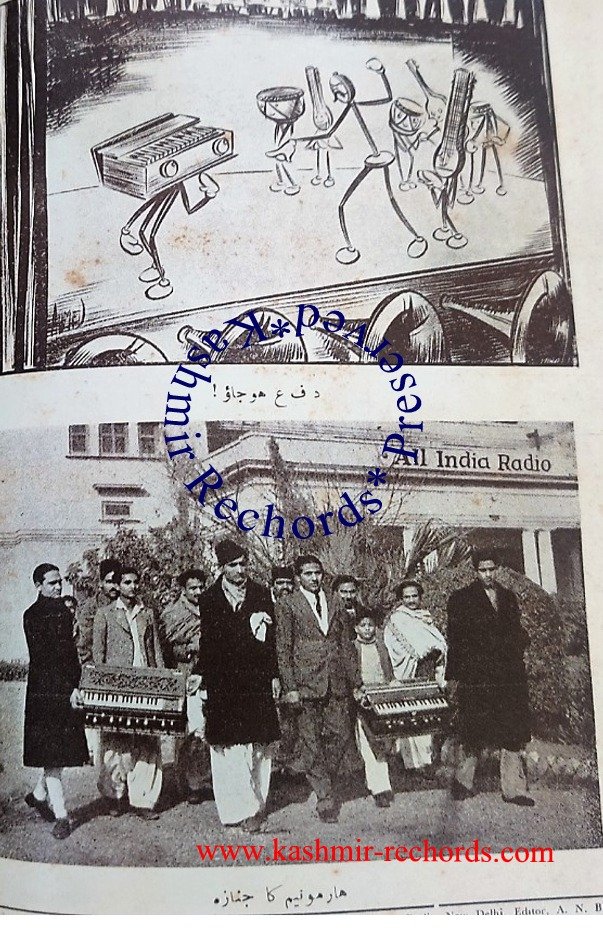
Once upon a time, precisely in 1915, India was a leading producer of the harmonium! Yet, a quarter-century later, it became `untouchable’, so much so that All India Radio ( later  called Akashvani)  had to ban it in 1940 and the instrument,  with a formal burial, was removed from all of its studious located in undivided India

John Foulds, who headed the Western music wing of All India Radio during its earlier days, believed the harmonium was mute on microtones that were so essential to Indian classical. Lionel Fielden, India’s first broadcasting chief on the request of so many Indian musicians, had to  ban the harmonium   in 1940  as he  too had felt that it (harmonium)  was not suitable to the tonal inflections of Indian classical music

AIR banished harmonium on March 1, 1940

Soon after Fielden ordered to ban harmonium, this keyboard instrument was banished and literary thrown away from the studios. Its last rites were symbolically performed at All India Radio Lahore by laying it to rest. Some newspapers of that era,  also came out with cartoons and sketches, with other musical instruments telling harmonium “Dafa Ho jao”-(Go to the Hell)

   Records available with www.kashmir-rechords.com  reveal that historian Ananda Coomaraswami and even Jawaharlal Nehru as a freedom fighter too had found the harmonium `un-Indian’. Thus, the ban on the instrument sustained even after India’s  Independence owing to the attitude of Information and Broadcasting Minister BV Keskar, a student of scholarly vocalist VN Bhatkhande.  During the Indian independence Movement, both British and Indian scholars condemned the harmonium for embodying an unwelcome foreign musical sensibility

Popularity of Harmonium

Harmonium, developed by French inverter was once very popular musical instrument in the mid-19th century. Considered  a cheaper and more durable alternative to organs and harpsichords, as the latter two often finished the long voyage east warped and unplayable,  Indian craftsmen  had quickly learned to manufacture harmoniums, and soon their compatriots incorporated the instrument into performances of Indian classical music. In comparison to traditional instruments, the harmonium was easy to tune and a cinch to learn to play. However, as the harmonium became a target of `anti-colonialists’, All-India Radio, the influential state-run broadcaster had to ban it from its programs.

Lifting of ban on Harmonium

The ban was loosened in 1970, after critics  argued that the harmonium “should not be treated as an ‘untouchable.’

  As elites have struggled to cleanse modern Indian music of what they argue is a “foreign” intruder, the masses have used the harmonium as a gateway to an understanding of their musical heritage. Critics opined that harmonium was considered  well suited to teaching the fundamentals of Indian musical grammar and to accompanying choral groups—thus needed recognition and not the ban.

 Today, the harmonium in India thrives in a range of systems: Hindustani, Carnatic, Qawwali, Ghazal, Bhajans, Church choir and Sikh Gurbani besides several traditional and folk music. Even so, solo harmonium concerts continue to be rare on AIR.