(Kashmir Rechords Exclusive)
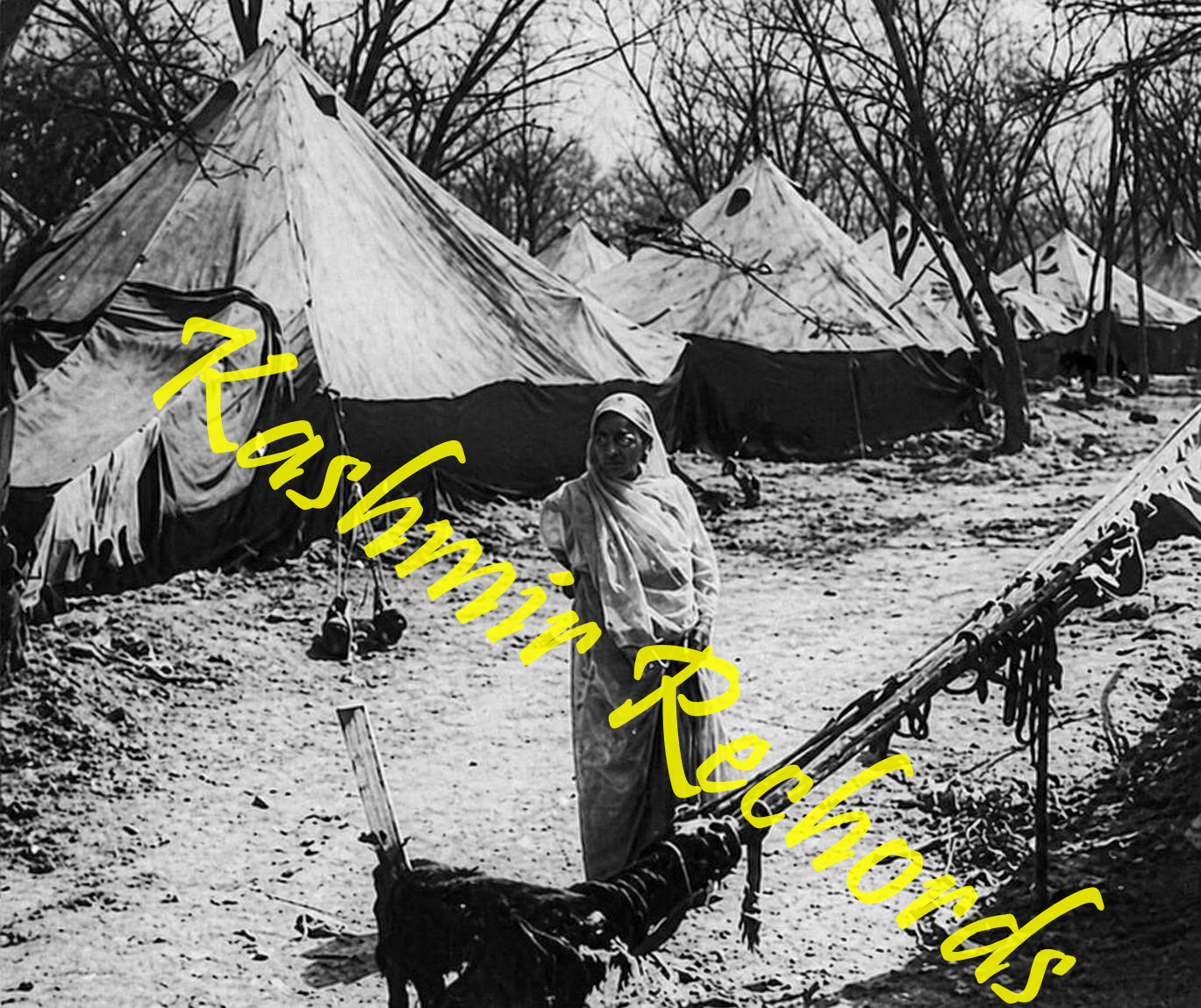
The early 1990s marked one of the most painful chapters in the history of Kashmir. As violence escalated across the Valley, the mass migration of Kashmiri Pandits in 1990 left an entire community uprooted, disoriented and largely unsupported by the administration of the time. Amid fear, uncertainty, and displacement, a remarkable yet often overlooked episode unfolded—an appeal to the global conscience.
In the immediate aftermath of their exodus, Kashmiri Pandits found themselves scattered across Jammu and other parts of India, grappling with loss of home, livelihood and identity. With little institutional backing and no cohesive leadership, members of the community began organizing themselves under emerging platforms.
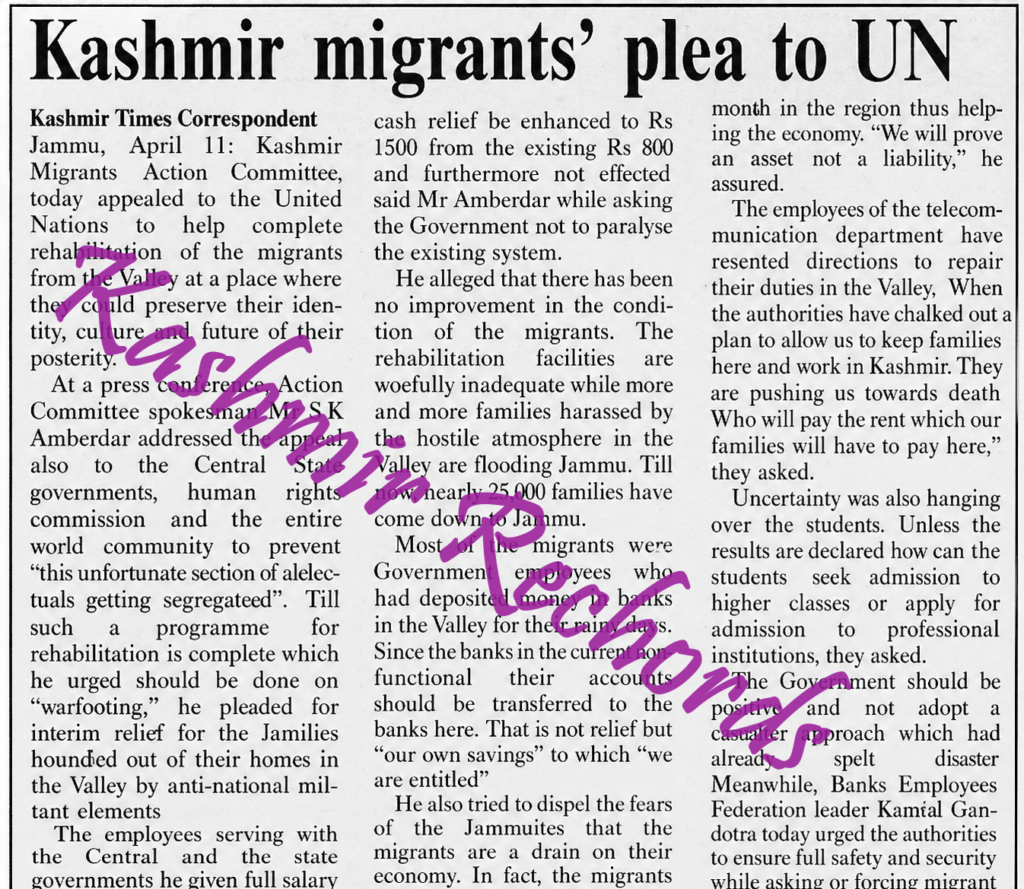
One such collective, the Kashmir Migrants Action Committee, became an early voice of resistance and representation. In April 1990, this group made a bold and unprecedented move—they appealed to the United Nations and Amnesty International, seeking intervention for their rehabilitation and protection.
April 11, 1990: A Forgotten Appeal
At a press conference held on April 11, 1990, the committee formally urged global bodies to ensure the safe and dignified rehabilitation of displaced Kashmiri Pandits. Their demand was clear: resettle the community in a secure environment within Kashmir where their cultural identity and future generations could be preserved.
Speaking on behalf of the committee, Surinder Ambardar—who would later rise to become a Member of the Legislative Council (MLC)—called upon the Central and State governments, human rights organizations and the international community to act swiftly.
He warned against the “segregation of an unfortunate section of intellectuals” and emphasized that rehabilitation must be carried out on a “war footing.” Until such measures were implemented, he demanded immediate interim relief for families forced out of their homes by militant violence.
Economic Misconceptions and Ground Realities
At a time when sections of Jammu’s population believed that the influx of migrants was straining local resources, Ambardar sought to counter the narrative. He pointed out that displaced Pandits were contributing approximately ₹6 crore per month to the regional economy—an assertion aimed at reshaping public perception and reducing hostility.
Rising Tensions and Renewed Warnings
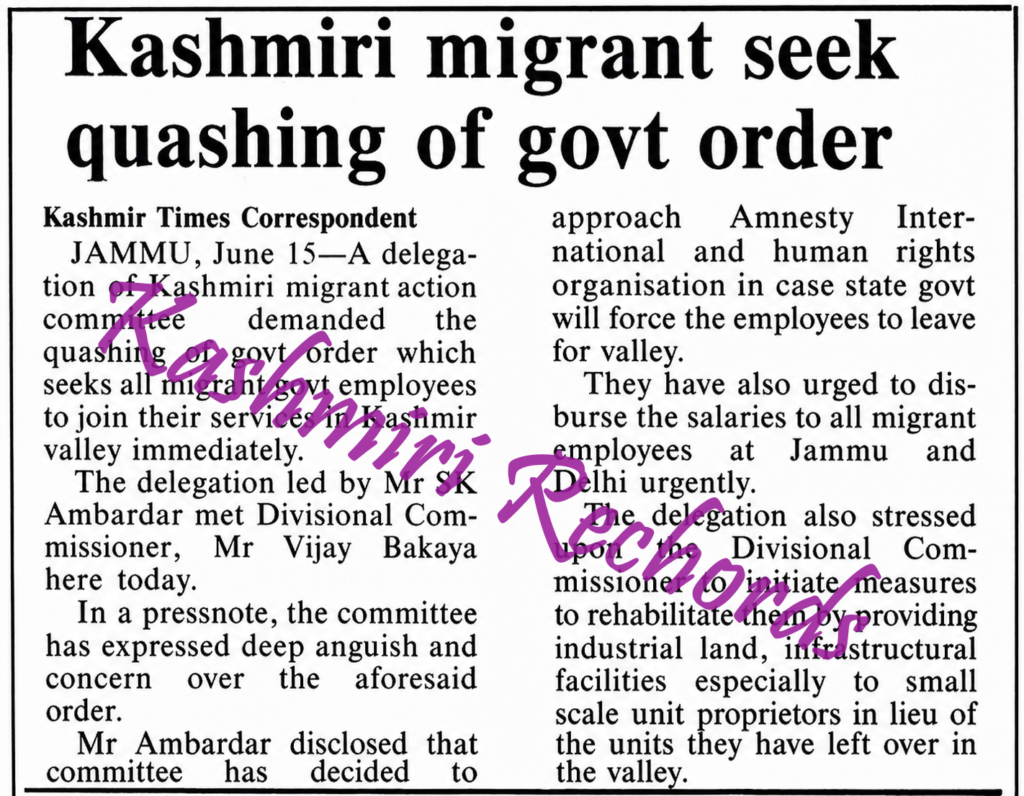
By June 1990, tensions escalated further when the government ordered migrant employees to return to their posts in the Valley. The directive triggered widespread anxiety among displaced workers who feared for their safety.
Leading a delegation once again, Ambardar met then Divisional Commissioner Vijay Bakaya and warned that if the order was enforced, the community would approach international human rights bodies, including Amnesty International.
The Silence That Followed
Despite these early efforts—memorandums, press conferences and appeals to global institutions—the issue of international intervention was soon subdued. The reasons remain unclear. Over time, many who had initially championed these demands transitioned into mainstream politics, with some attaining influential legislative positions.
Others who continued advocating for a separate homeland within Kashmir either diluted their stance or became entangled in political compromises, leaving the community’s aspirations fragmented.
Three Decades Later: A Lingering Question
More than 36 years have passed since that fateful summer of 1990. While a few individuals managed to leverage the circumstances for personal or political gain, the broader condition of Kashmiri Pandits remains a subject of concern.
The early appeals to the United Nations and Amnesty International now lie buried in archival press clippings—preserved memories of a time when a displaced community, stripped of everything, turned to the world for justice and recognition.
This forgotten episode raises uncomfortable yet important questions: Why did the demand for international intervention fade so quickly? What changed between the cries of 1990 and the political realities that followed? And most crucially—has justice truly been served?
As history continues to be revisited and rewritten, the voices from those early days of exile deserve to be heard again—not just as a record of suffering, but as a reminder of resilience and the search for dignity.
An Appeal: Keep These Stories Alive…
Every story we share at Kashmir Rechords is not just history—it is memory, pain, resilience, and a voice that refuses to fade away. You won’t find such real and credible stories anywhere.
Behind every archived clipping and forgotten narrative lies a community’s struggle to be remembered. But preserving these stories is not easy—and we cannot do it alone.
Your support, however small, is not just a donation—it is a gesture of remembrance, a stand for truth, and a lifeline for our continued work.
Help us keep these voices alive. Help us survive.
If these stories have touched you, we humbly request you to KINDLY contribute and support Kashmir Rechords.
Please consider donating to our bank account. Every contribution matters.
Donate to Kashmir Rechords Foundation:
Bank Details:
KASHMIR RECHORDS FOUNDATION (Regd)
Acct No: 0274010100003893
Jammu and Kashmir Bank.
IFSC: JAKA0CHAWRI
You may also use our QR Code: