
By: Dr. Rajesh Bhat | Kashmir Rechords
More than three decades later, the story of 1990 in Kashmir is no longer just history—it is a contested narrative.
Between denial on one side and dramatized portrayals on the other, the documented truth risks being overshadowed. Increasingly, public perception is shaped not by records, but by selective retellings, including cinematic interpretations that simplify a deeply complex tragedy.
This work departs from both extremes. It relies on archival documentation and first-hand reporting, restoring focus on what was recorded when events actually unfolded.
1990: Widespread Violence, Unequal Impact
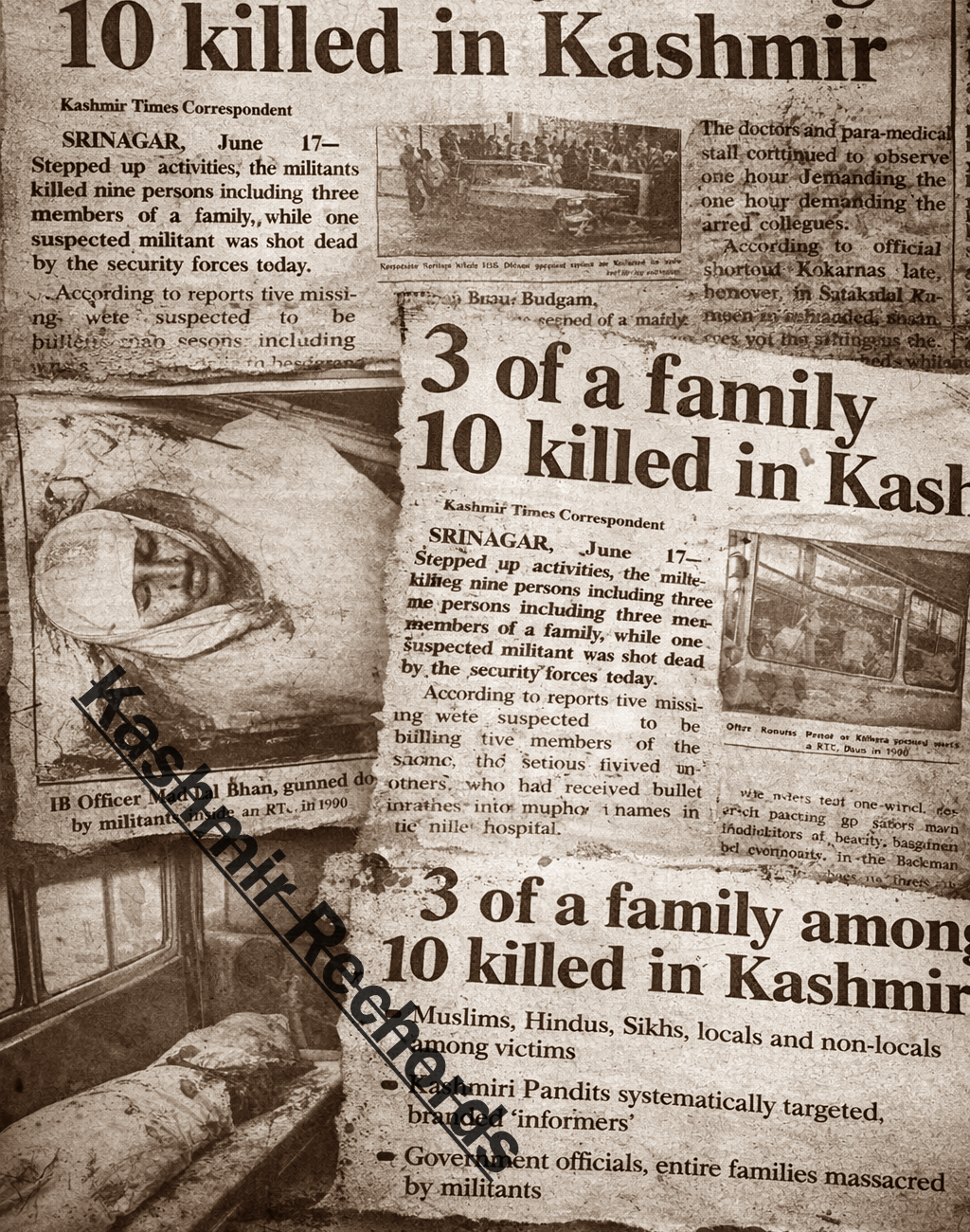
The violence of 1990 spared no community.
Muslims, Hindus, Sikhs, locals and outsiders—all suffered in an atmosphere where fear dictated life.
However, archival patterns consistently point to one hard truth:
Kashmiri Pandits were disproportionately and systematically targeted.
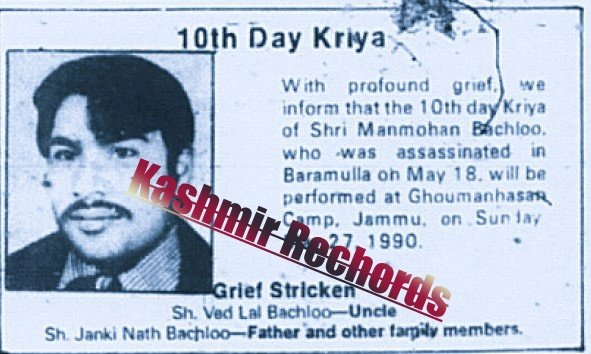
Frequently labelled as “informers” or “Indian agents,” many were attacked irrespective of their actual roles.
Recognizing this does not negate other suffering—it grounds the narrative in evidence.
Archival Method: Why This Account Matters
This reconstruction is based on:
- contemporaneous newspaper reports
- cross-verification across ideological lines
- documented incidents rather than retrospective claims
📌 Read Part 1 of this series:
https://kashmir-rechords.com/the-untold-tragedy-underreported-killings-in-kashmir/
📌 Related Story on killings of intelligence officers:
https://kashmir-rechords.com/kashmir-1990-when-terrorists-hunted-ib-officers/
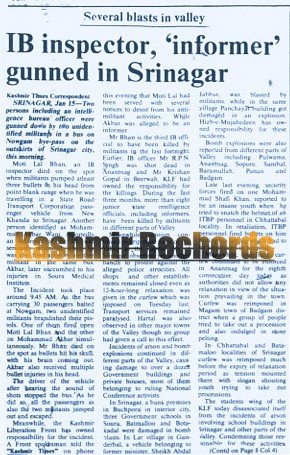
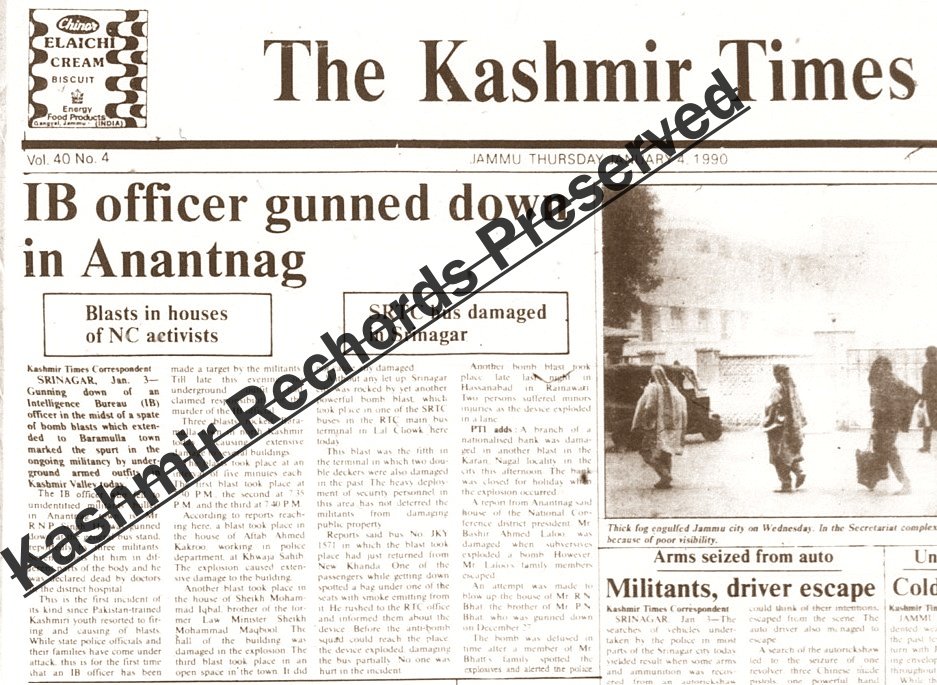
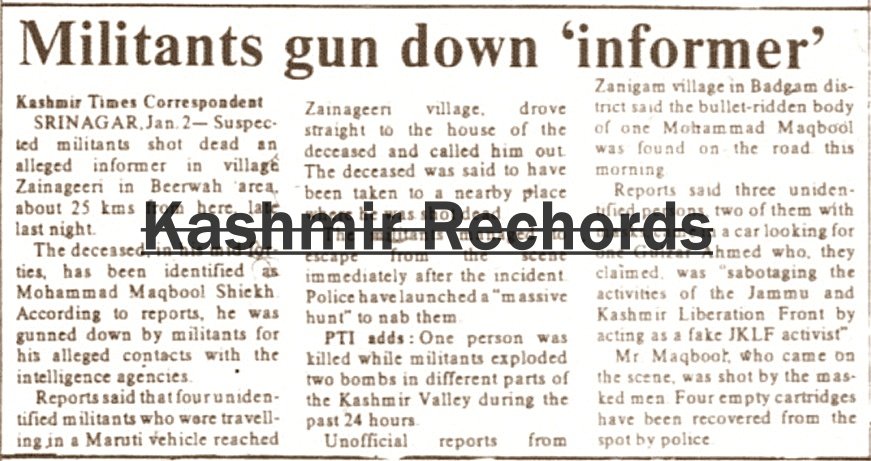
Unlike modern reinterpretations, these sources record events as they occurred—without hindsight bias.
Untold Stories: Victims Beyond Headlines
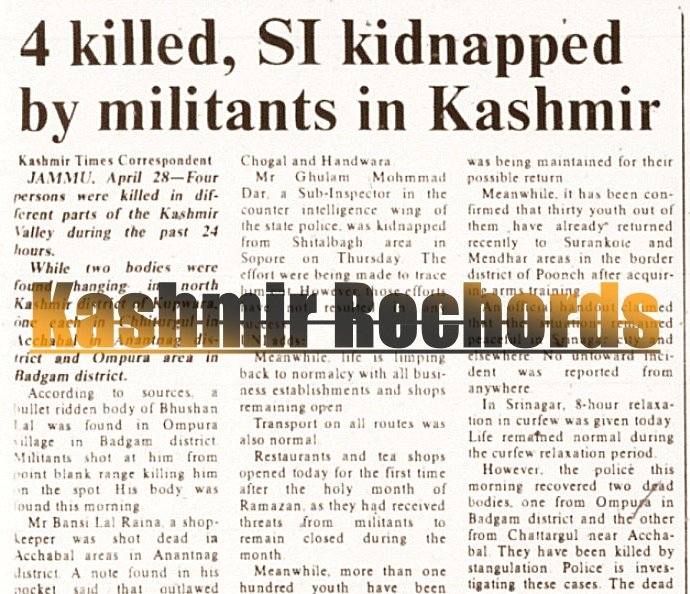
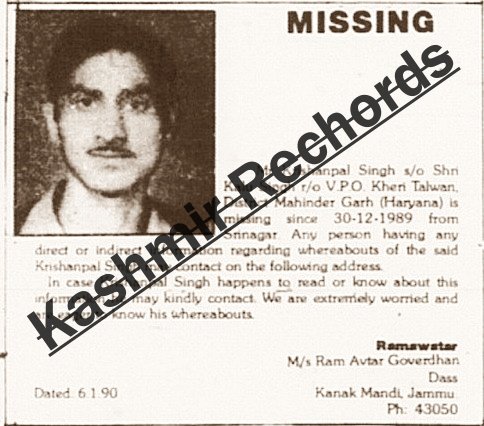
The archival record reveals a pattern of ordinary individuals caught in extraordinary violence:
- A visiting civilian abducted and never traced
- Shopkeepers and labourers killed under suspicion
- Telecom employees targeted while maintaining services
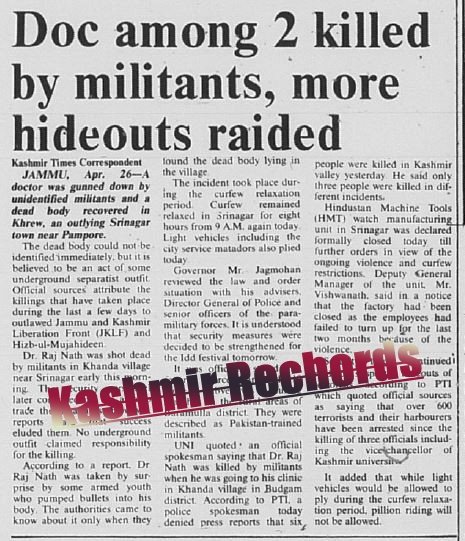
- Doctors and bank officials murdered in the line of duty
These were not symbolic figures.
They were lives interrupted, not narratives constructed.
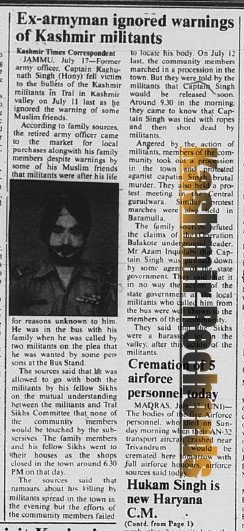
Pattern of Targeting: More Than Random Violence
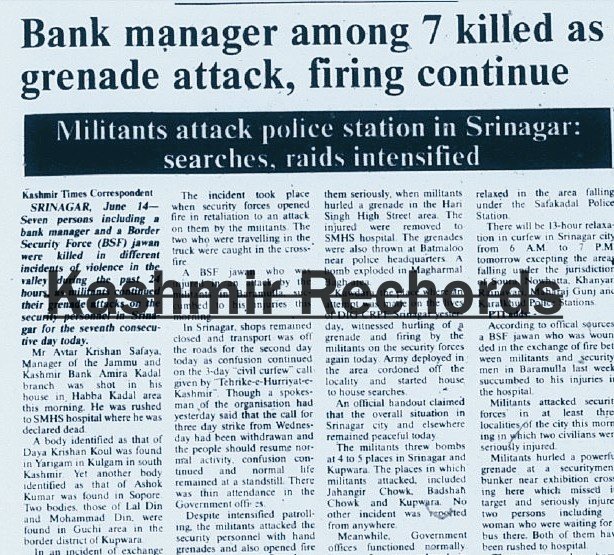
A closer reading of records indicates identifiable targeting:
- Government and institutional employees
- Professionals maintaining civic systems
- Individuals accused of intelligence links
- Members of the Kashmiri Pandit community
This suggests a dual objective:
✔ Disrupt governance
✔ Instill fear within specific identities
Reporting From the Ground
This account carries an additional layer of credibility.
The author, as part of Daily Excelsior, reported extensively on these events between 1990 and 1994.
This is not retrospective reconstruction—it is journalism rooted in lived documentation.
Denial vs Dramatization: Two Sides of Distortion
The tragedy of Kashmir 1990 today suffers from two opposing—but equally damaging—forces:
Denial
Downplaying or dismissing targeted killings as exaggeration.
Dramatization
Over-simplified portrayals—often amplified through films—that risk undermining authenticity by prioritizing narrative impact over factual precision.
Both ultimately distort reality.
Why Archival Records Still Matter?
Archival journalism offers something rare in today’s polarized discourse:
- consistency
- verifiability
- neutrality of record
They neither amplify nor erase—they document.
And what they document cannot be ignored.
In an era of ‘post-truth,’ the ink on over a thirty-year-old newspaper pages remains a stubborn reminder of reality.
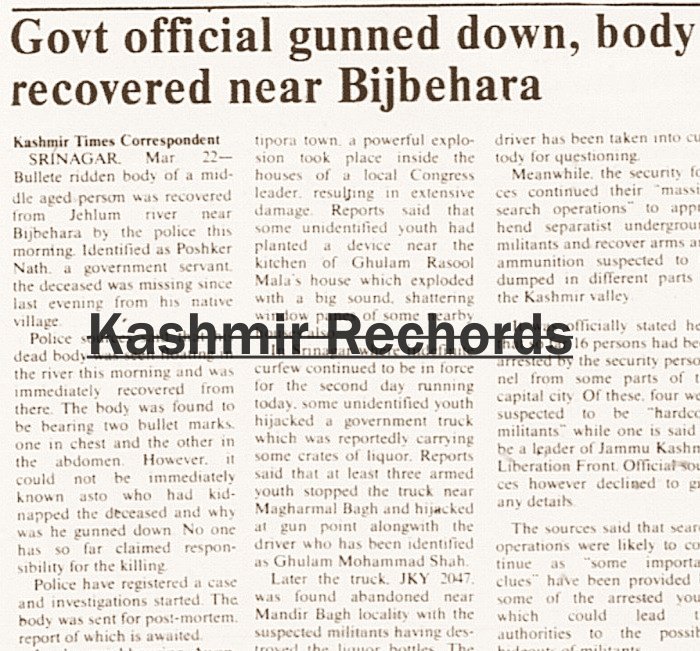
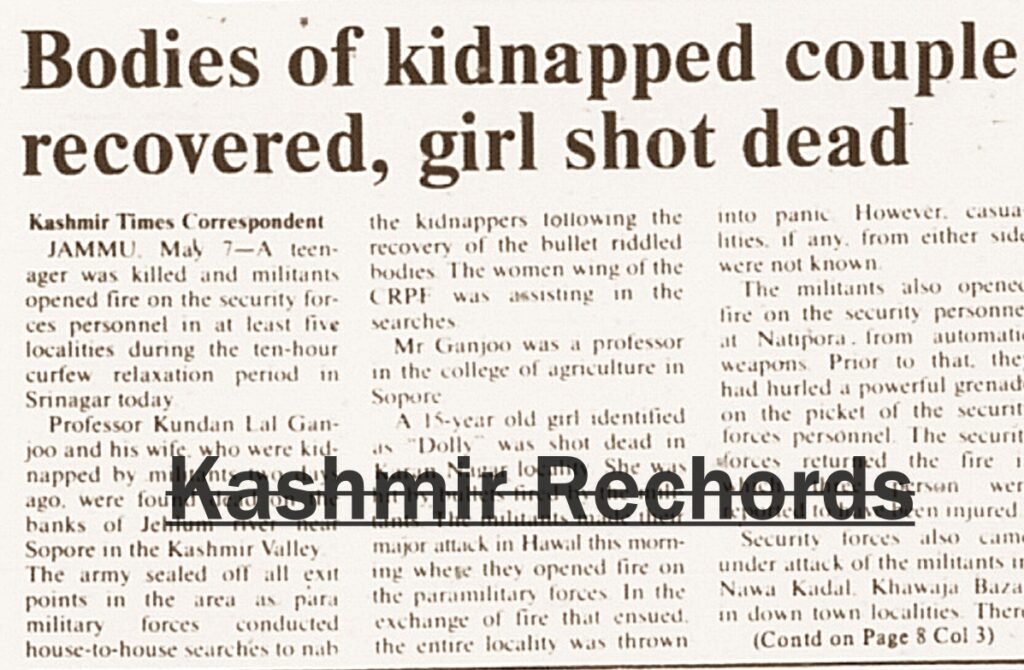
The Forgotten Victims
While some cases remain widely remembered, many do not:
- lesser-known families
- unnamed civilians
- children whose deaths never entered mainstream discourse
This selective memory creates an incomplete history—and incomplete history is unreliable history.
From Narrative to Truth
Revisiting 1990 is not about political positioning.
It is about restoring historical integrity.
A balanced understanding must acknowledge:
- shared suffering across communities
- targeted vulnerability of Kashmiri Pandits
- the silence surrounding countless forgotten victims
Only then can remembrance move beyond argument—towards acknowledgment and truth.
(To Be Concluded)…..