

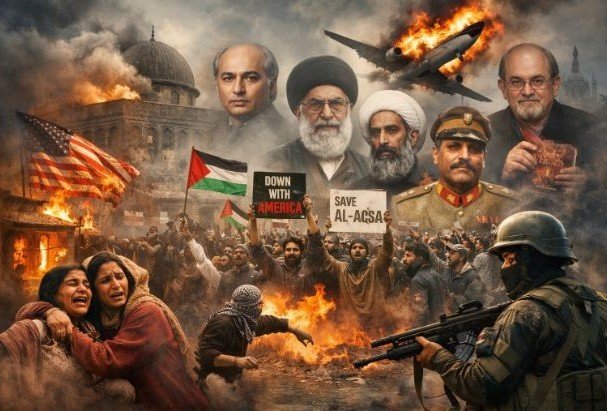
From Al-Aqsa to Gaza and Iran, how global Muslim causes have repeatedly spilled onto the streets of the Valley
(Kashmir Rechords Exclusive)
When tensions flare in the Middle East, Kashmir often feels the tremors!
The latest disruptions in the Valley following the escalating confrontation involving Iran, Israel and the United States—and the killing of Iran’s supreme leader Ayatollah Ali Khamenei—may appear sudden to many observers. Yet for those familiar with Kashmir’s history, such reactions are neither unusual nor unprecedented.
For decades, events unfolding thousands of miles away—in Palestine, Iran, Iraq, Saudi Arabia, Pakistan and even Europe—have periodically triggered protests in Kashmir. These demonstrations are often articulated in the language of “Islamic solidarity and global Muslim identity”, but their consequences have frequently been intensely local.
Ironically, the fallout has often been borne by local minorities, particularly Kashmiri Pandits, who historically faced intimidation, attacks on homes and damage to temples despite having no connection whatsoever with the events that triggered the protests.
A Pattern Rooted in the Valley’s Political Memory
Kashmir’s streets have long responded to events far beyond the Valley’s mountains.
From the 1931 agitation to protests over conflicts in the Middle East, controversies in Europe and wars involving Muslim Nations, the Valley has repeatedly witnessed demonstrations triggered by developments abroad.
At times, the protests took violent turns, with minority neighbourhoods and religious places becoming targets, while security forces struggled to restore order.
The psychology of these protests has often revealed striking contradictions.
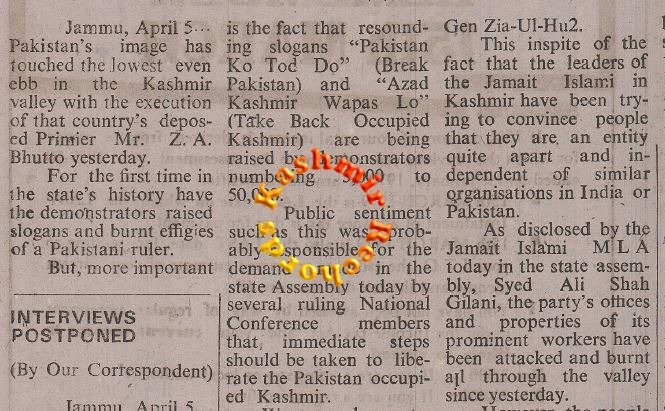
In April 1979, when Pakistan’s former Prime Minister Zulfikar Ali Bhutto was executed, demonstrations erupted in Kashmir condemning Pakistan’s military ruler General Zia-ul-Haq, with protesters shouting the slogan “Zia Koon”—the one-eyed Zia……“ Pakistan Murdabad.
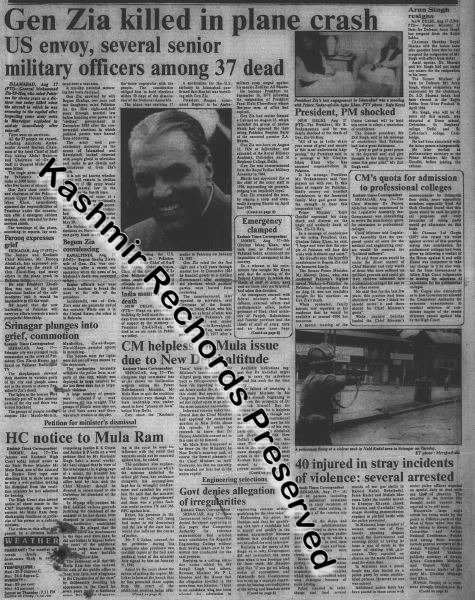
Yet when Zia himself died in a mysterious plane crash in 1988, sections of the Valley mourned his death and blamed the United States for the incident.
Similarly, when Iran maintained friendly relations with the United States during the Shah’s era, Iranian affairs rarely triggered protests in Kashmir. But after the 1979 Iranian Revolution, tensions involving Iran often sparked anti-American demonstrations in the Valley.
1969: The Al-Aqsa Agitation
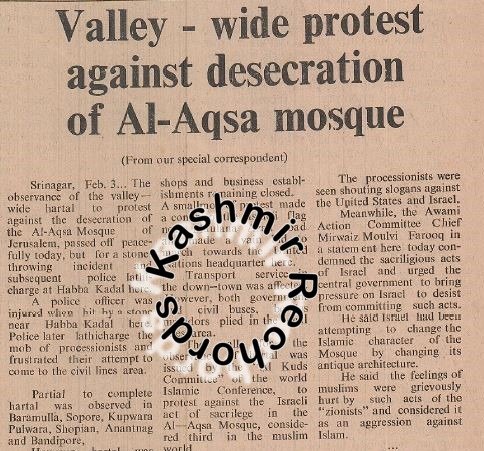
One of the earliest examples of Kashmir reacting to international developments occurred in August 1969, when a fire broke out at the Al-Aqsa Mosque in Jerusalem.
Although the incident took place thousands of kilometres away, protests erupted in parts of Kashmir. Demonstrations were organised condemning the alleged desecration of the mosque, reflecting the Valley’s growing emotional engagement with global Islamic issues.
The episode established a pattern that would repeat itself many times over in the decades to come.
1986: The Anantnag Riots
Perhaps the most devastating fallout of such mobilization occurred in February 1986, following communal tensions triggered by developments again linked to Al-Aqsa Mosque, national politics and religious controversies.
Large-scale violence broke out in Anantnag and several other towns, where numerous Hindu temples, homes and businesses belonging to Kashmiri Pandits were attacked or destroyed during the coming days.
The riots marked a turning point in the Valley’s communal relations and foreshadowed the turbulent years that would follow.
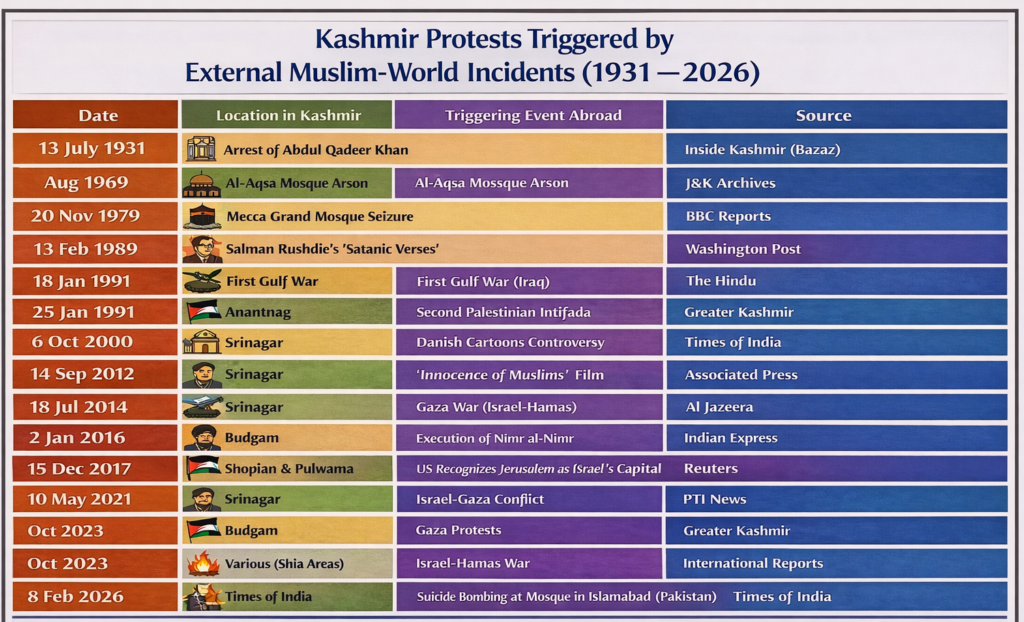
Major Kashmir Protests Triggered by Global Events
Over the decades, several incidents have demonstrated how global developments can spark unrest in Kashmir. Kashmir Rechords has tried to club them
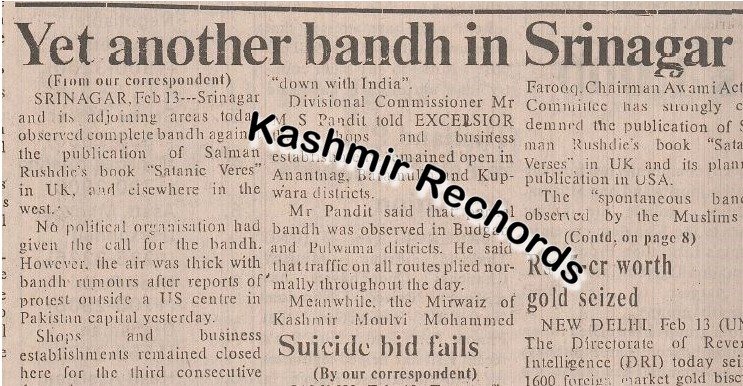
1989 – Salman Rushdie Controversy
The publication of The Satanic Verses led to massive protests on February 13, 1989 in Srinagar. Clashes with police left one person dead and over 100 injured, while minority religious sites were damaged.
1991 – The First Gulf War
When the United States launched military operations against Iraq after its invasion of Kuwait, demonstrations erupted across the Valley on January 18, January 25 and February1, 1991. Protesters burned American flags and raised slogans supporting Iraq.
2000–2001 – Second Palestinian Intifada
Israeli-Palestinian clashes triggered “solidarity” protests in Kashmir on October 6, 2000, October 13, 2000 and April 15, 2001.
2006 – Danish Cartoons Controversy
The publication of cartoons depicting Prophet Muhammad in European newspapers triggered widespread demonstrations on February 10 and February 17, 2006, followed by a Valley-wide strike on March 3, 2006.
2012 – “Innocence of Muslims” Film
An film produced in the United States sparked protests across Kashmir on September 14 and 15, 2012.
2014 – Gaza War
During the Israel-Hamas conflict, thousands marched in Kashmir on July 18, July 25 and August 1, 2014, waving Palestinian flags.
2016 – Execution of Nimr al-Nimr
Saudi Arabia’s execution of Shia cleric Sheikh Nimr al-Nimr triggered demonstrations between January 2 and 4 ,2016, particularly among Shia groups.
2021 – Israel-Gaza Conflict
Fresh fighting in Gaza led to protests in Srinagar, Shopian and Pulwama on May 10 and 14, 2021.
Understanding the Mobilization
Researchers studying Kashmir’s political sociology identify several recurring factors behind these demonstrations:
• Friday prayers often serve as mobilization points.
• Protests are frequently triggered by issues affecting the global Muslim community (Ummah).
• Palestine-related developments generate the strongest emotional response.
• Religious or separatist networks often play a role in mobilizing crowds.
The Local Cost of Global Passions
While protest remains a democratic right, Kashmir’s experience illustrates a troubling pattern: demonstrations triggered by distant events often turn inward, targeting local communities.
Minorities—have historically borne the brunt of such unrest. Security forces too have frequently faced violent confrontations while attempting to restore order.
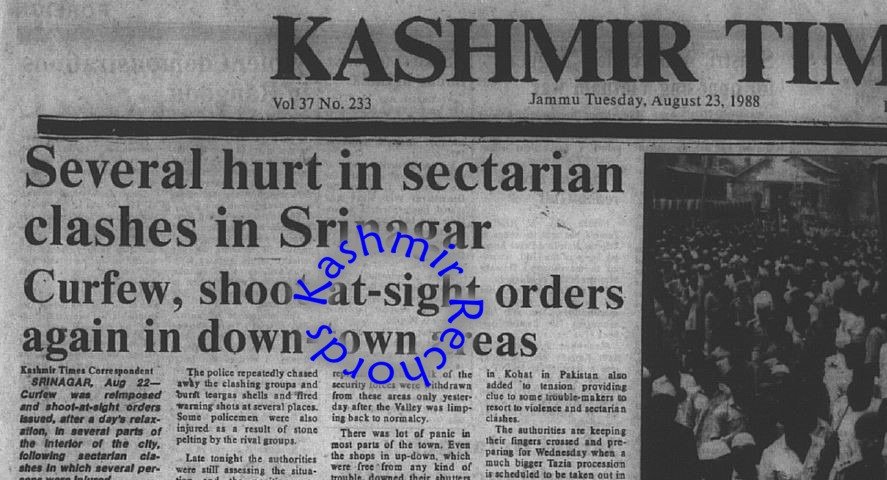
Even ordinary Kashmiri Muslims have suffered when shutdowns and clashes disrupted daily life.
An Echo Chamber of the Muslim World
From the 1931 agitation to protests over Al-Aqsa, Middle East wars, European cartoons and American films, Kashmir has repeatedly acted as an echo chamber for global Muslim politics.
The paradox remains stark: while the causes of these protests lie far beyond the Valley, their consequences are felt within Kashmir’s own fragile social fabric.
And as the latest tensions demonstrate, the Valley’s long history of reacting to distant conflicts continues to shape its present.
While it can be duly acknowledged that Muslims of Kashmir, especially the Shia community has a right to organise protests and express solidarity with the unfortunate killing of Ayatollah Ali Khamenei, the incidents of violent intimidation cannot be accepted as the global events anywhere have layered complexion and contours.