
(Kashmir Rechords’ Archival Report)
The story of the Kashmiri Pandit exodus is usually told through the night of departure—the fear, the abandoned homes and the uncertain journey out of the Valley. But what happened after the migrants reached Jammu in 1990 is another story of suffering, struggle and survival that is slowly disappearing from collective memory.
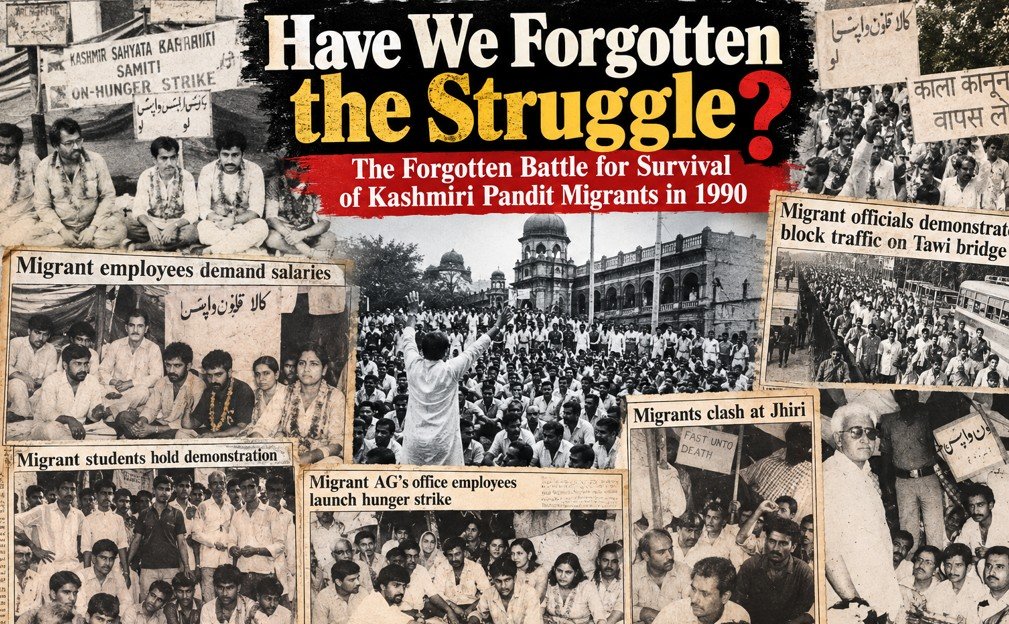
The newspaper clippings preserved by Kashmir Rechords offer a stark glimpse of those first months of exile in 1990. They show that survival was not merely about finding shelter. Migrants had to struggle for salaries, jobs, leave payments, educational opportunities, admissions, postings, local backlash, banking facilities and even recognition of their basic rights.
And the struggle cut across the entire community.
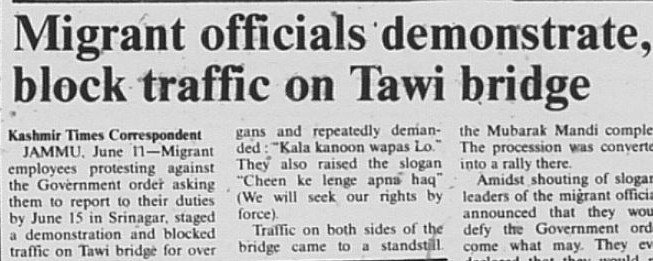
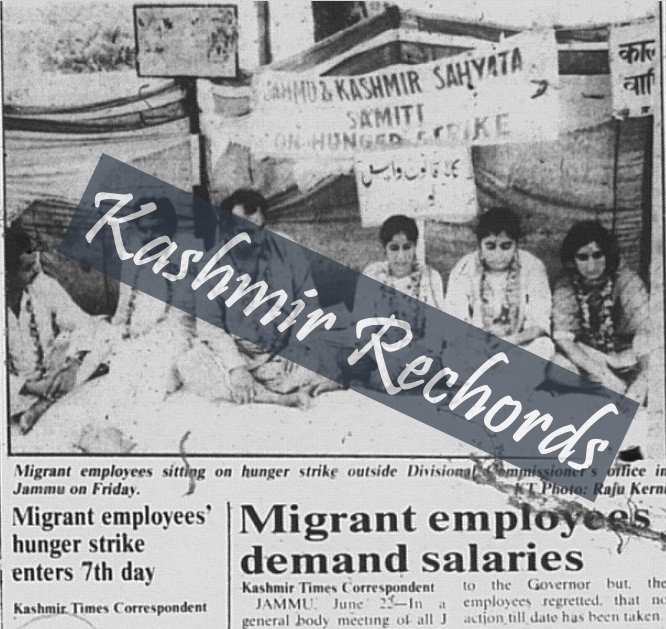
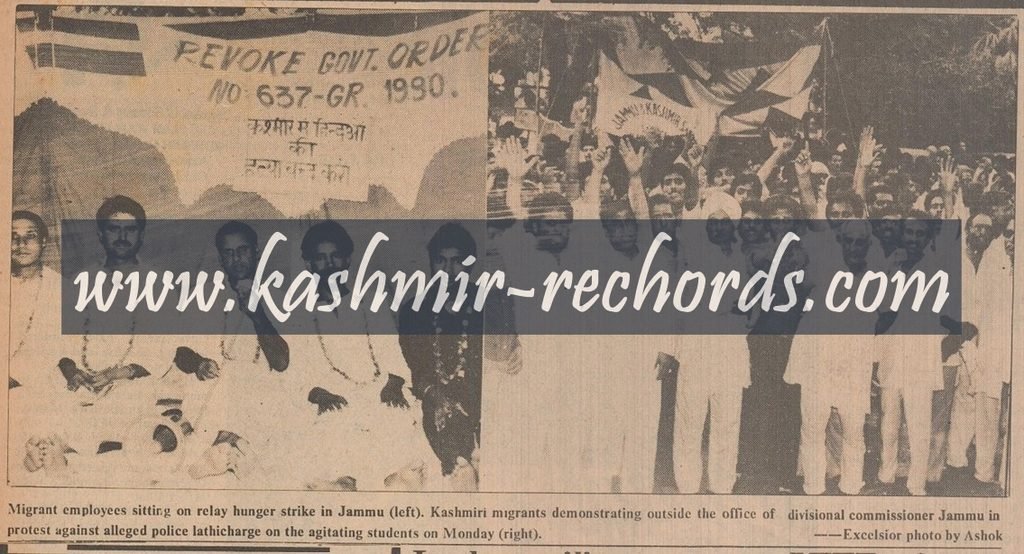
Government employees sat on relay hunger strikes outside the offices of the Divisional Commissioner. Professors, medical and paramedical employees, police personnel and other government workers joined agitations. Students took to the streets demanding admission and continuation of their studies. There demonstrations, dharnas and hunger strikes lasting seven, ten and even for months together.
One clipping records migrant employees protesting an order directing them to report back to their duties in Srinagar.
Another records employees demanding regular payment of salaries. Yet another reports migrant depositors whose money had become inaccessible. Students protested over seats and examination results. The exclusive photographs also available with Kashmir Rechords, record migrants being lathicharged by police during demonstrations.
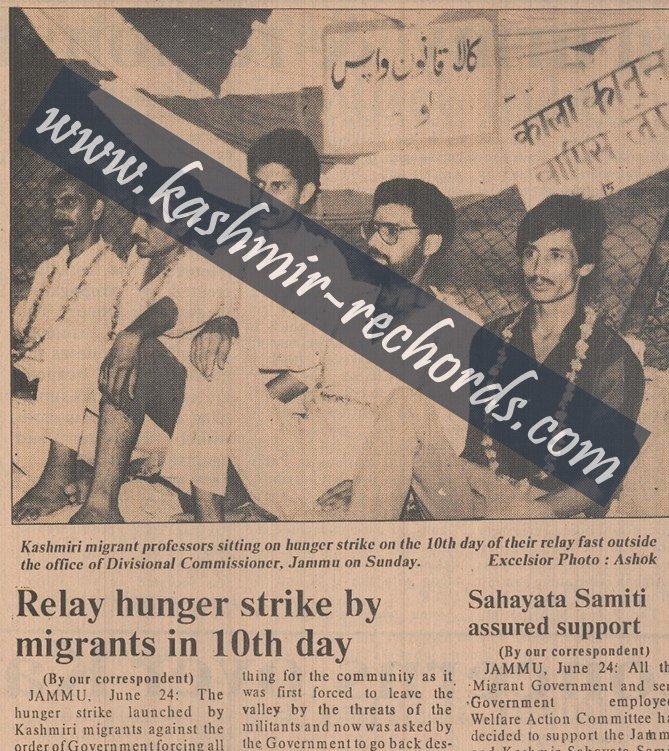
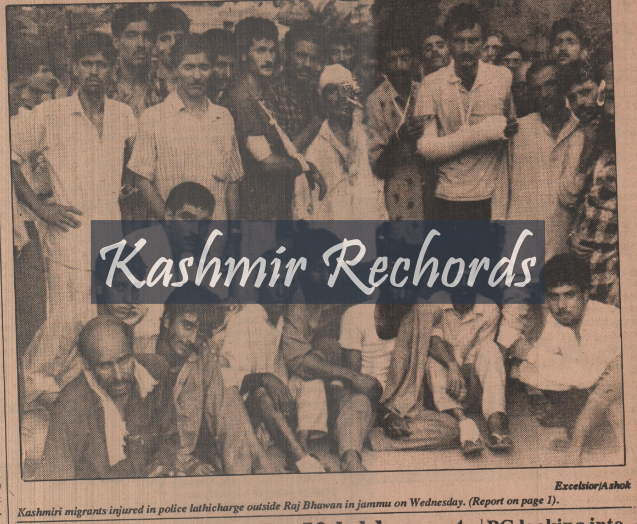
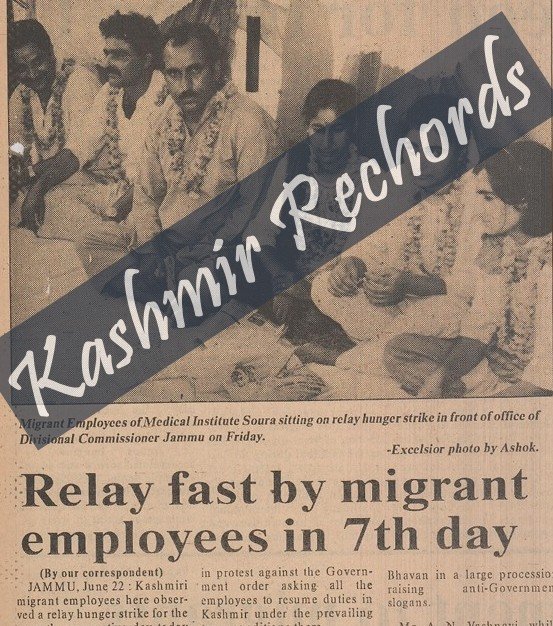
One particularly poignant photograph shows migrant employees sitting on a relay hunger strike outside the Divisional Commissioner’s office. Another captures injured migrants following a police lathi-charge.
These were not abstract statistics. These were teachers, doctors, clerks, policemen, students, professionals, traders and ordinary families who had already lost their homes and security—and were now struggling to preserve their livelihoods in exile.
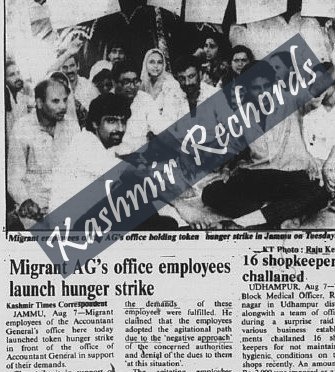
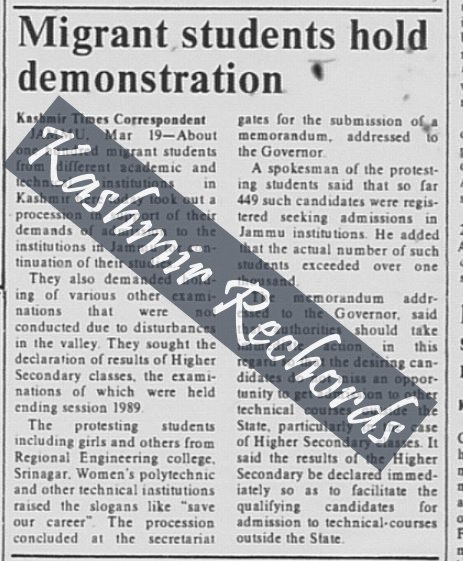
The newspapers of 1990, therefore, preserve something more than news reports. They preserve the atmosphere of those early days of displacement.
For a community that had arrived in Jammu with little preparation for permanent exile, even a delayed salary could become a question of survival.
For a student, the absence of an examination result or admission could threaten an entire academic year. For an employee, an order to return to the Valley could become a deeply troubling proposition in an atmosphere of continuing violence.
But have we forgotten their struggle?
Thirty-six years later, a generation that was raised in exile has moved forward. Many have excelled in education, professions, business, administration and public life.
But somewhere along the way, has the memory of those early years of struggle been lost? Have we forgotten the price paid by those who raised this generation in exile?
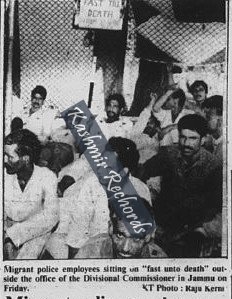
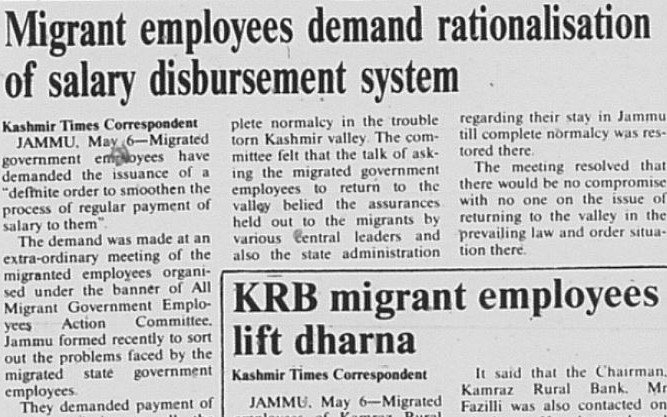
How many younger Kashmiri Pandits know that their parents, relatives and elders sometimes had to sit hungry for days, march on the streets, block roads, face police action and fight simply to receive their salaries and secure the future of their children?
These photographs speak without exaggeration. They show a community that had lost its home and then had to struggle, day after day, to make a life in an unfamiliar place.
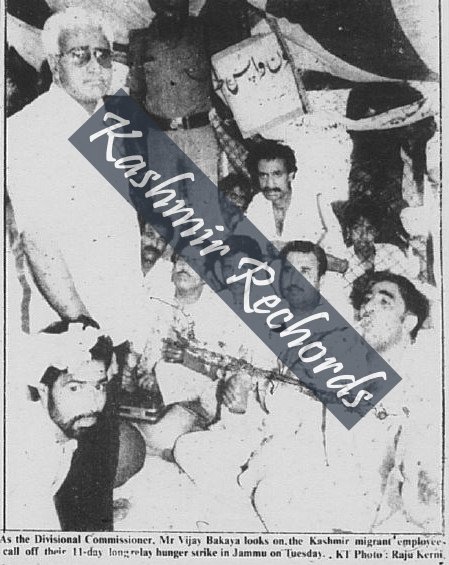
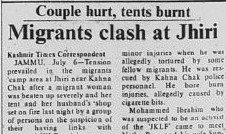
Look carefully at these faces. Do you recognise your father, mother, uncle, teacher, neighbour or relative? Were you, or someone from your family, part of these agitations?
Look closely at these photographs.Perhaps these photographs will make someone remember a story that has never been told.
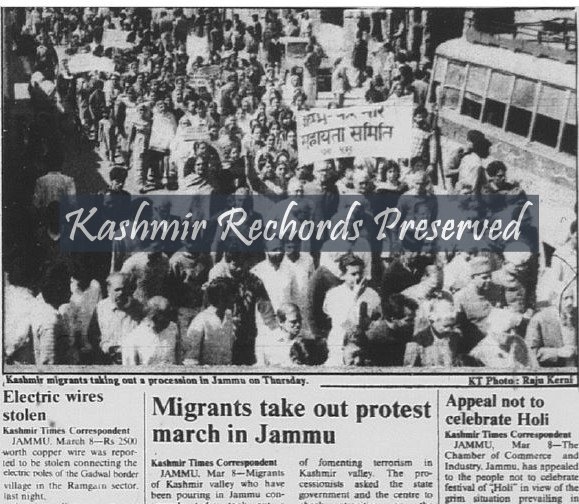
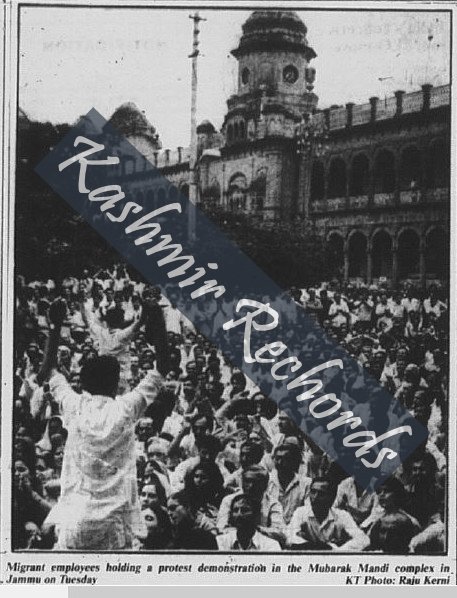
Kashmir Rechords invites members of the community to share their memories, photographs, newspaper clippings and personal accounts of those difficult months of 1990.
Because exile is not only the story of why people left Kashmir. It is also the story of how they survived after leaving it.
— Kashmir Rechords | Preserving the memories that history must not forget