
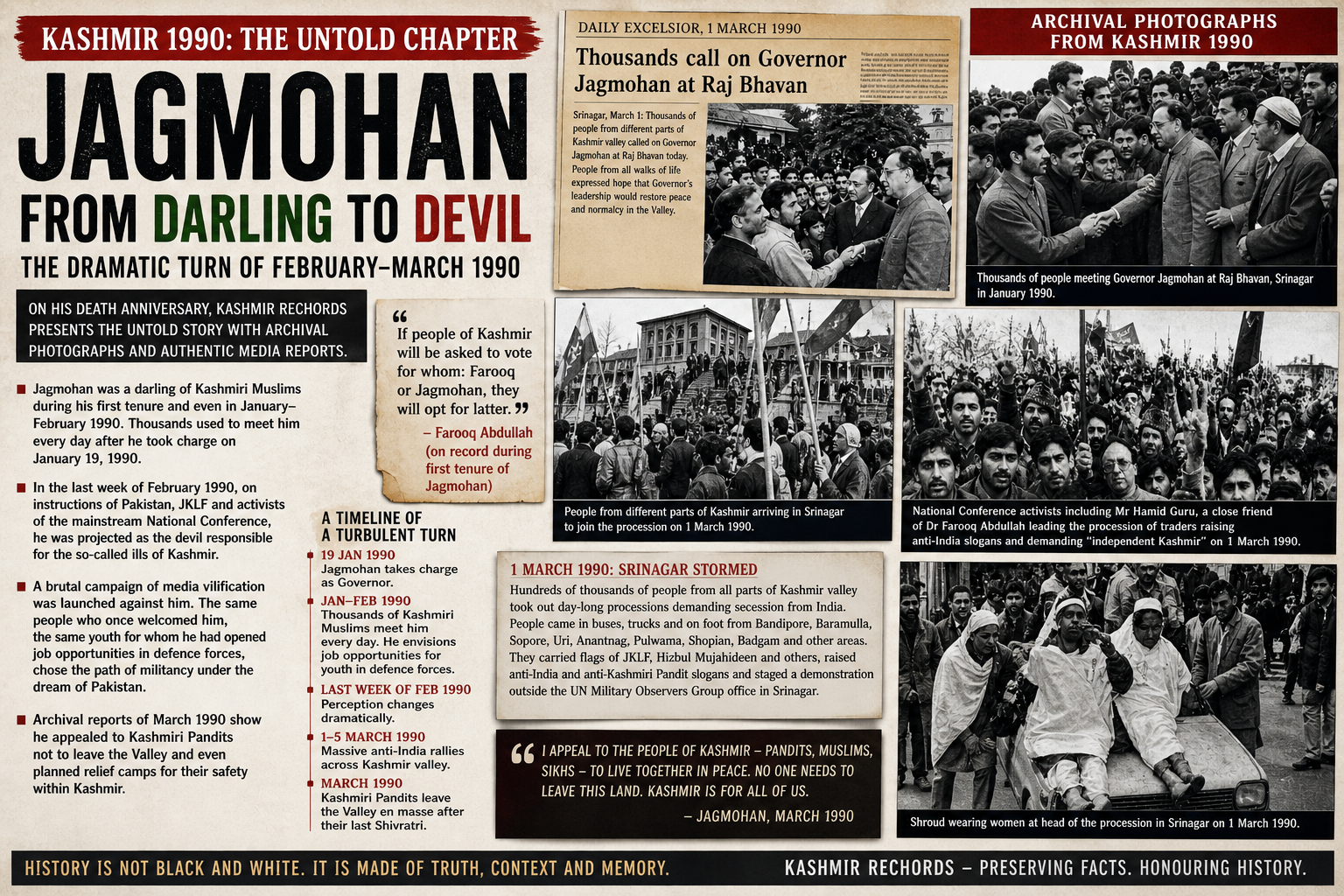
Kashmir Rechords | Special Archival Feature
On his death anniversary, Jagmohan remains one of the most contested—and perhaps most misunderstood—figures in Kashmir’s modern history.
What if the story told for decades is only half the truth?
A Governor Once Welcomed by Thousands
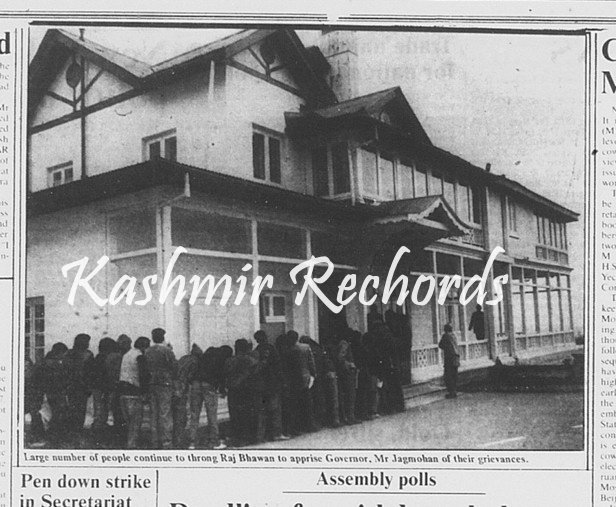
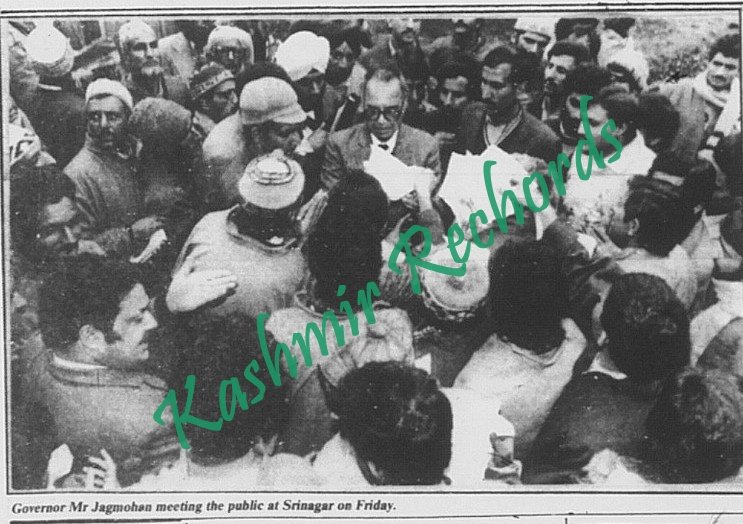
In January 1990, as Jagmohan assumed charge on January 19, an unusual spectacle unfolded across the Valley. Contrary to later narratives, thousands of Kashmiri Muslims thronged to meet him, day after day.
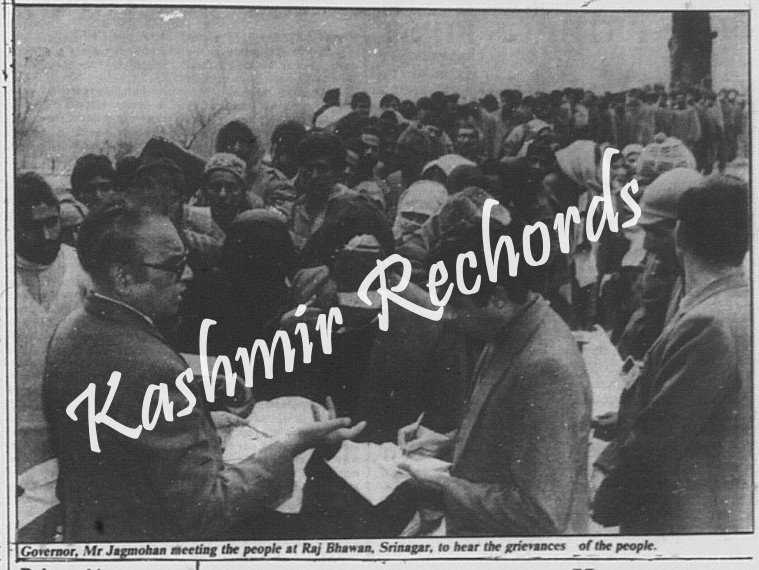
Archival records and rare photographs accessed by Kashmir Rechords reveal a striking reality:
Jagmohan was not initially seen as an adversary—but as a firm, accessible administrator capable of restoring order amid chaos.
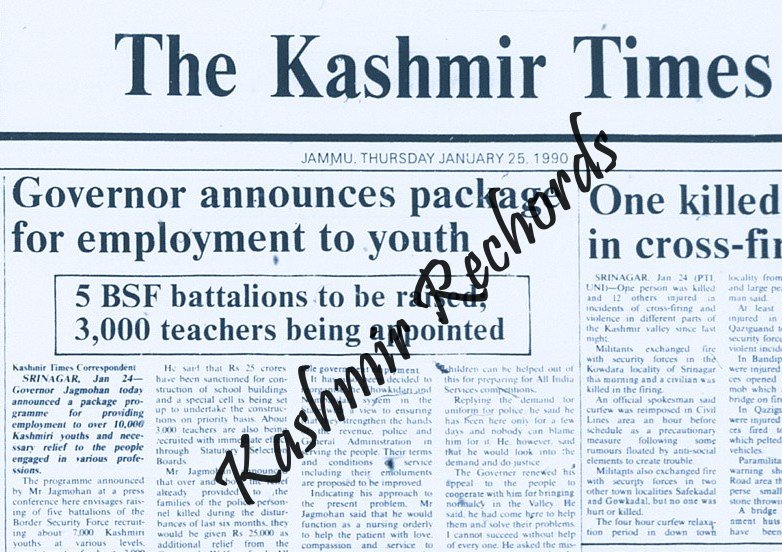
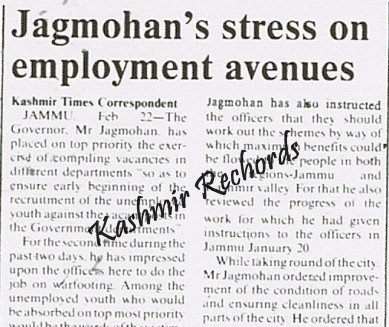
During these early weeks, he even explored employment avenues for Kashmiri youth in defence services, signalling a strategy of integration rather than confrontation.
The Sudden Shift: February 1990
Then, almost abruptly, something changed.
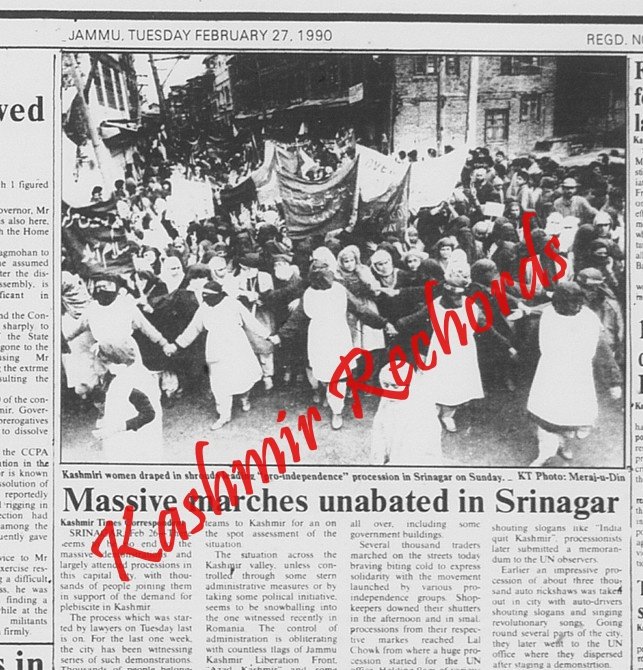
By the last week of February 1990, the perception of Jagmohan among large sections of Kashmiri Muslims underwent a dramatic reversal. The same man who drew crowds now began to be portrayed as the embodiment of repression.
This transformation did not occur in isolation.
Archival accounts point to a period of intense political mobilisation, marked by:
- Massive anti-India demonstrations
- Organised rallies across towns and villages
- Escalating militant influence
- A charged atmosphere shaped by cross-border rhetoric
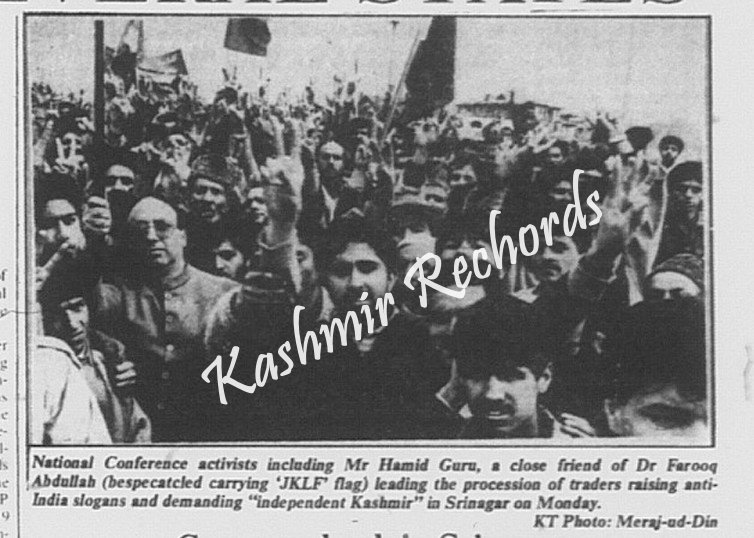
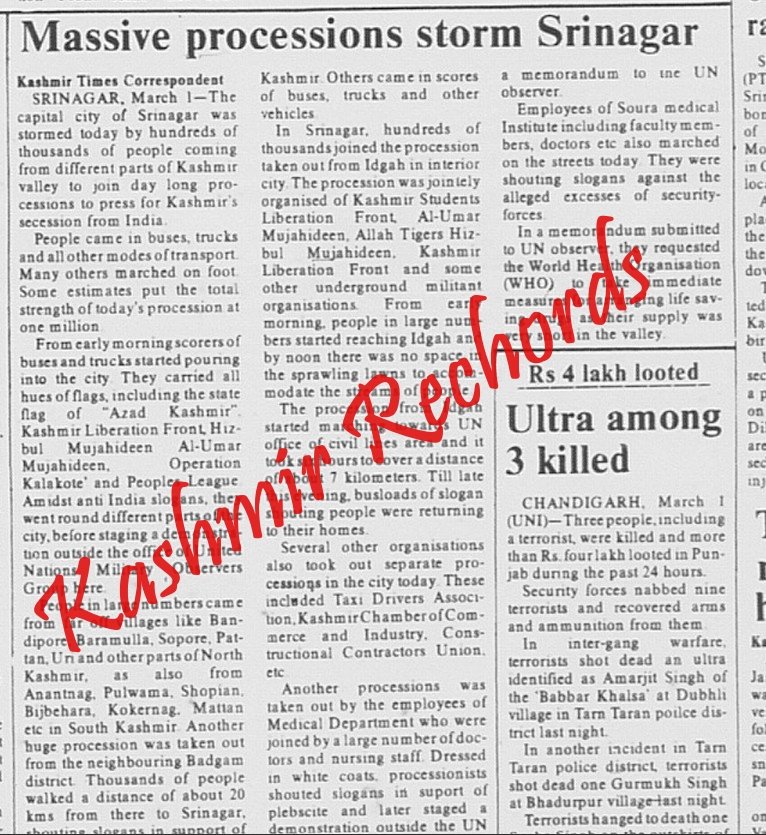
One such moment came on March 1, 1990, when hundreds of thousands marched through Srinagar, raising slogans for secession and gathering outside the United Nations observers’ office after hours-long processions.
The Valley, by then, was no longer in transition—it was in upheaval.
The Vilification Phase
It was during this volatile period that a sustained narrative began to take shape.
Sections of local media and political actors increasingly framed Jagmohan as responsible for the unfolding crisis—including, eventually, the mass migration of Kashmiri Pandits.
Yet, archival reports from the same time tell a more complicated story:
- Jagmohan appealed to Pandits not to leave the Valley
- He urged those who had left to return
- Plans were discussed for relief and security arrangements within Kashmir itself
These actions raise a critical question:
Was the man accused of engineering the exodus actually trying to prevent it?
A Tale of Two Legacies
For Kashmiri Pandits, Jagmohan became—and remains—a figure of protection, a Governor who acted when the system appeared paralysed.
For many Kashmiri Muslims, however, he came to symbolise state excess and coercion—a perception that endured long after 1990.
Between these two sharply divided memories lies a contested historical space, where facts, emotions, politics and narratives intersect.
The Four-Month Governor and a 36-Year Debate
Jagmohan’s second tenure lasted just over four months—from January 19 to May 26, 1990.
Yet, more than three decades later, debates around his role continue to dominate discussions, often amplified through partial recollections, political positions, and social media echo chambers. The question persists:
How does a man go from being publicly welcomed to permanently vilified within weeks?
Revisiting 1990 Through Evidence
Kashmir Rechords, through its access to rare archival newspapers, photographs and contemporaneous reports, attempts to revisit that turning point—not through hearsay, but through documented evidence long absent from public discourse.
This is not merely a story about Jagmohan.
It is a story about how narratives are constructed, reshaped and sustained over generations.
History, especially in Kashmir, is rarely linear.
It is layered, contested and often uncomfortable.
On his death anniversary, Jagmohan stands not just as a figure of the past—but as a reminder that truth, in times of conflict, is often the first casualty—and the last to be recovered.