
Kashmir Rechords Exclusive
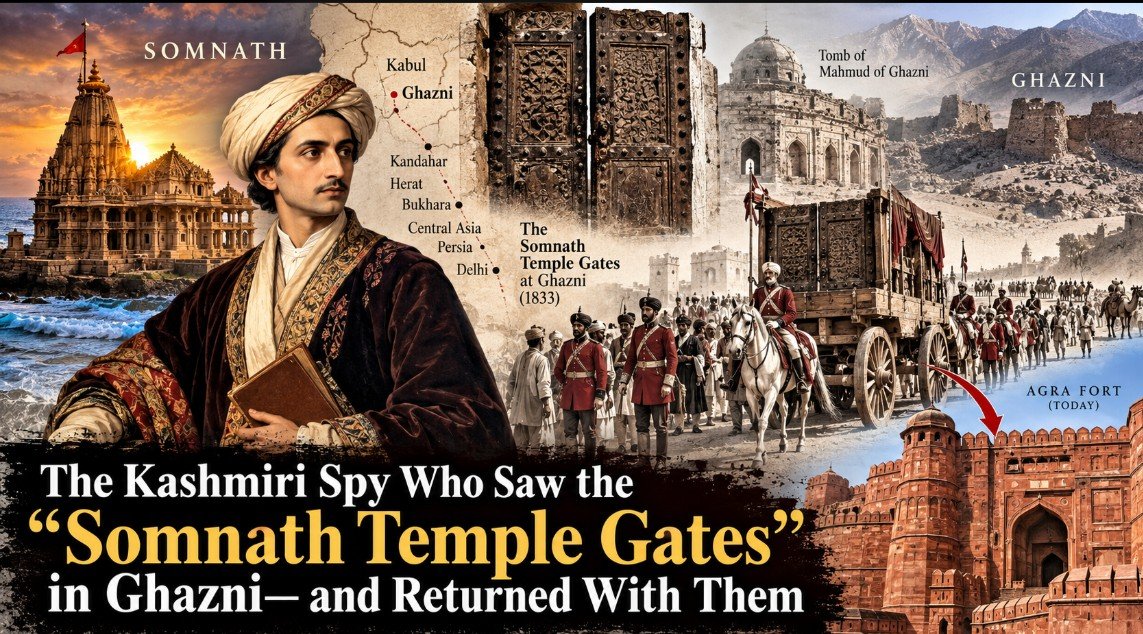
In October 1833, a young Kashmiri traveller entered Ghazni.
Barely in his twenties, he was already venturing into one of the most turbulent regions of nineteenth-century Asia—observing rulers, armies, political intrigues and the shifting alliances of the Afghan and Central Asian world. A gifted Persian scholar and an exceptionally adaptable traveller, he could move between cultures with a confidence unusual for an Indian of his time.
At Ghazni, he encountered an object that would acquire an extraordinary place in India’s historical memory.
A wooden gate traditionally believed to have belonged to the temple of Somnath was said to have been brought to Ghazni centuries earlier by Sultan Mahmud of Ghazni and incorporated into the tomb complex associated with him.
The young traveller carefully observed what he saw. His name was Mohan Lal Kashmiri.
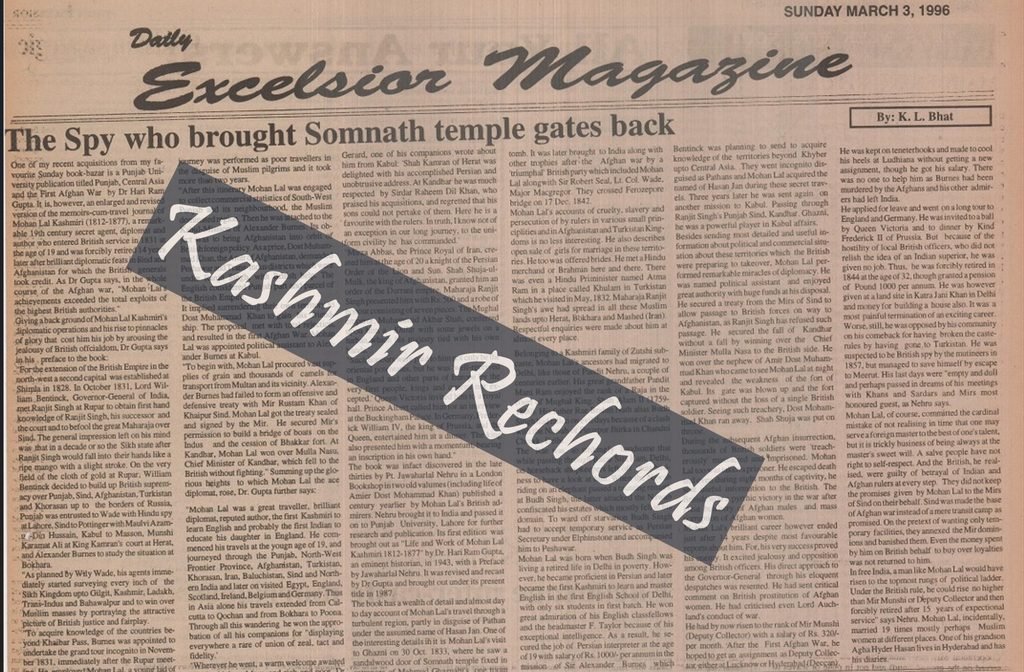
Nearly a decade later, the story of those gates would take a dramatic turn.
After the disastrous First Anglo-Afghan War, British forces returned to Ghazni. The gates were removed from Mahmud’s tomb and brought towards India amid an elaborate display of imperial triumph. The British proclaimed that they were returning to India the very gates that Mahmud had carried away from Somnath centuries earlier.
And Mohan Lal Kashmiri who had seen them at Ghazni before they became an imperial trophy, was himself closely associated with the Afghan campaign.
But who was this extraordinary Kashmiri Pandit? How did he reach Ghazni? What exactly did he see there? How did the so-called Somnath gates make their journey from Afghanistan to India—and where are they today?
This is the forgotten story behind the gates.You may read this dtory aldso: