
(Kashmir Rechords Exclusive)
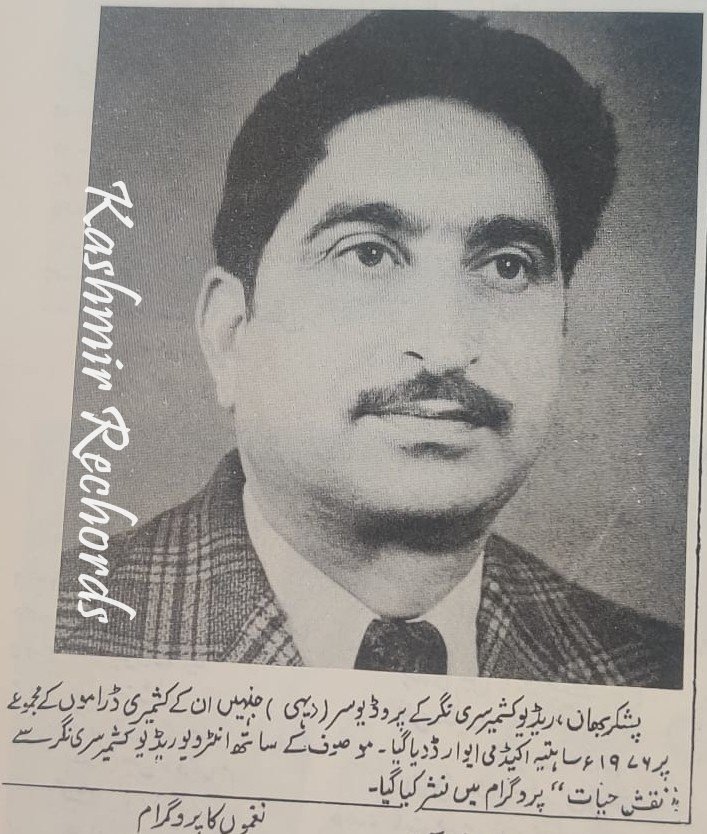
As Kashmir prepares to celebrate the centenary birth anniversary of Pushkar Bhan in 2026, memories of the legendary broadcaster, playwright, humorist and actor once again echo across the Valley. For generations of Kashmiris, his voice was not merely entertainment — it was an emotion, a social mirror and a living expression of Kashmiri culture itself.
Pushkar Bhan was among the towering cultural figures of modern Kashmir. His satire, wit and unforgettable characters became inseparable from Kashmiri collective memory. Yet amid the tributes, nostalgia and celebratory speeches lies a painful and inconvenient truth — the institution to which he devoted his life has almost nothing preserved from the golden era he created.
The tragedy is not that Kashmir forgot Pushkar Bhan.
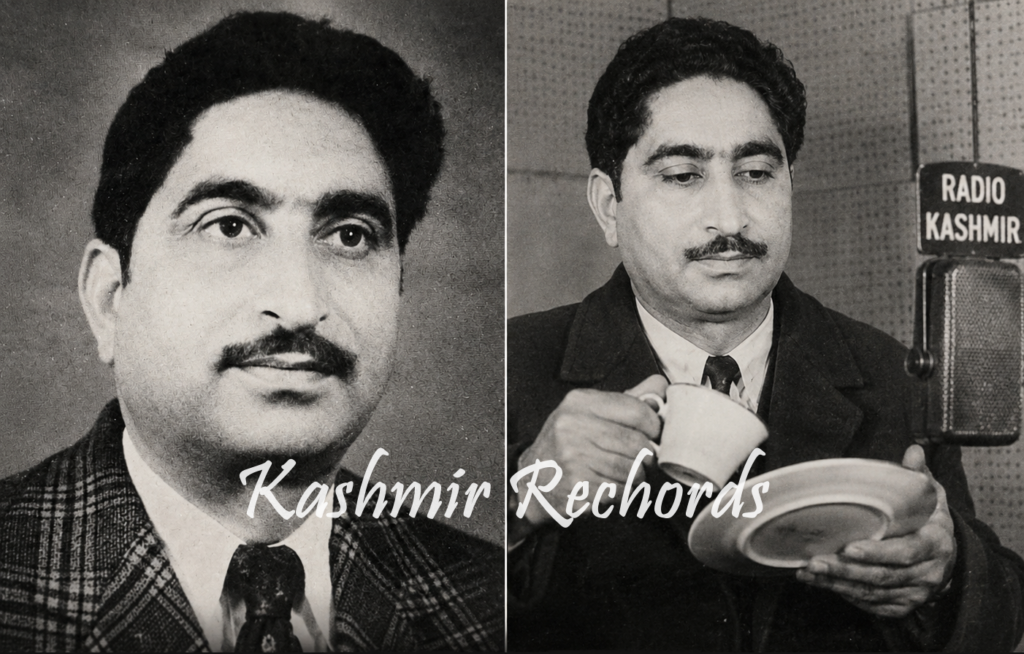
“Voices like Pushkar Bhan’s are not manufactured. Once lost, they rarely return.”
The tragedy is that his recordings were allowed to disappear.
Whether it was the legendary Zoon Dab or the immortal Machama, Radio Kashmir Srinagar — now rechristened as All India Radio Srinagar — today possesses little to showcase as an archival treasure from the period when Pushkar Bhan was at the peak of his creative brilliance. Not even the signature tune of Zoon Dab, the serial that once united Kashmiri households for nearly two decades, is available in any accessible institutional archive.
Some scattered recordings may survive in private hands, but most are in shabby condition, damaged by time and neglect, desperately needing restoration and digitisation.
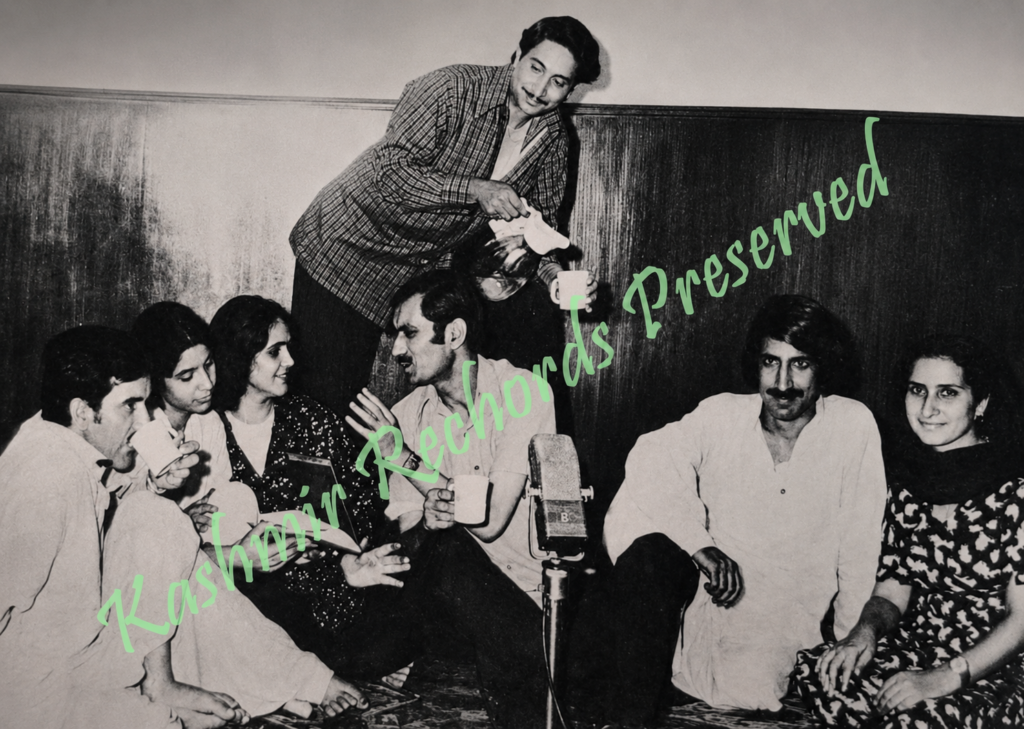
During its efforts to trace remnants of this lost era, Kashmir Rechords managed to access some rare sound bytes and photographs through private individuals. These photographs reveal another fascinating dimension of Pushkar Bhan’s genius. He was not confined merely to drama and satire. He actively participated in children’s programming and possessed an extraordinary creative ability to produce sound effects manually — long before artificial intelligence and digital editing entered broadcasting. What technology now creates through software, Pushkar Bhan produced naturally through analogue ingenuity, imagination and sheer artistic instinct.
![Pushkar Bhan engaging with children during a Radio Kashmir programme in Srinagar.]](https://kashmir-rechords.com/wp-content/uploads/2026/05/pushkar-bhan-child-enhanced-1024x906.png)
Born in Srinagar on 15 February 1926, Pushkar Bhan grew up during a period of immense political and social transformation in Kashmir. From an early age, he displayed a remarkable inclination toward theatre and storytelling. After completing his graduation in 1947, he became associated with progressive cultural movements under the influence of noted poet and cultural icon Dina Nath Nadim. That association shaped his understanding of socially conscious theatre and people-centric storytelling.
In 1952, Pushkar Bhan joined Radio Kashmir Srinagar on a modest daily wage. What followed became one of the most remarkable journeys in Kashmiri broadcasting history. Through sheer talent, dedication and innovation, he rose to the position of Producer Emeritus — a recognition reserved for extraordinary contribution to Kashmiri radio drama.
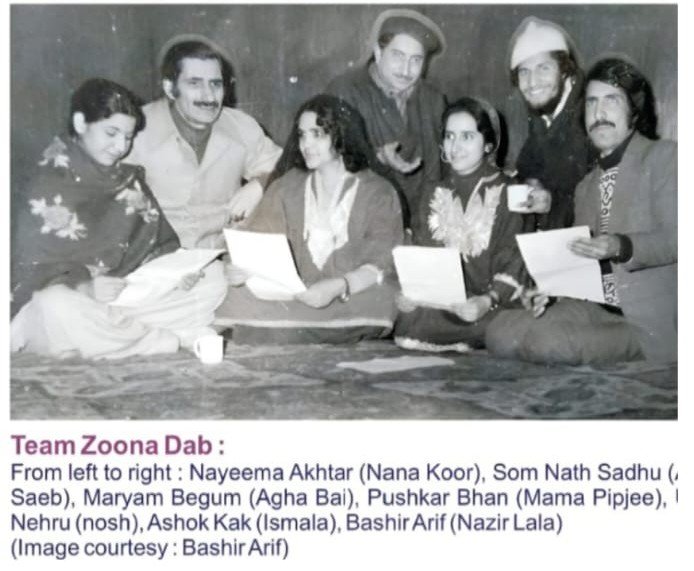
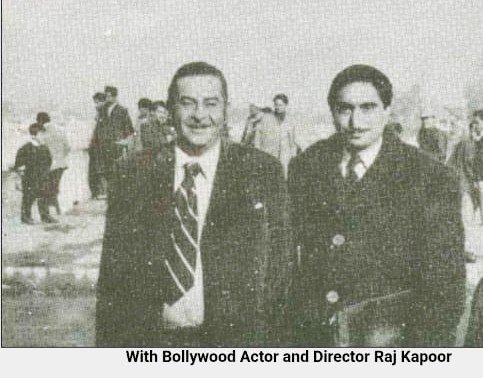
His serial Zoon Dab created broadcasting history in Kashmir. Running continuously for nearly two decades, it became part of everyday life in Kashmiri homes. Equally iconic was Machama, perhaps the most celebrated satirical character in Kashmiri literature and radio drama. Through humour layered with social criticism, Pushkar Bhan exposed hypocrisy, bureaucracy, greed and the changing moral fabric of society.
His contribution earned him the Padma Shri in 1974, followed by the Sahitya Akademi Award in 1976.
Yet awards alone cannot define Pushkar Bhan’s stature.
He belonged to a generation when Kashmiri broadcasting carried intellectual depth, linguistic elegance and social purpose. Had his works been properly preserved, they would today stand as priceless documentation of authentic Kashmiri speech, humour, idiom and cultural texture during a period when oral traditions were rapidly changing.
Instead, what survives is mostly nostalgia.
Occasionally, one comes across artificial recreations, imitation videos, or digitally assembled tributes attempting to revive his memory. But such efforts only underline a larger institutional failure. The organisations entrusted with preserving this cultural legacy failed to do so.
Particularly after the onset of militancy in 1990, many within the system quietly allowed invaluable archival material to decay. What survived the earlier neglect reportedly perished during the devastating 2014 floods that submerged the Radio Kashmir Srinagar complex. Ironically, while priceless cultural recordings were allegedly destroyed, official service books and administrative records of employees somehow survived intact.
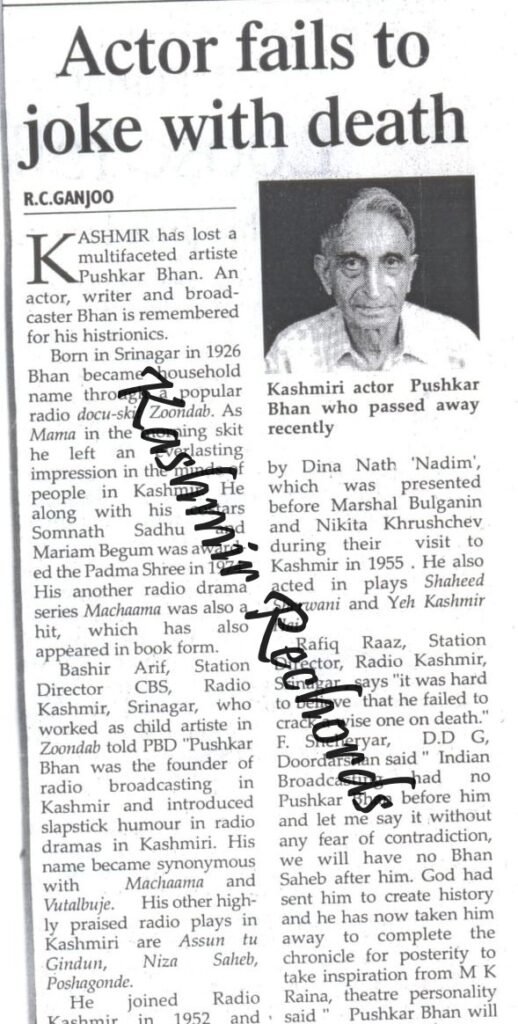
The loss remains immeasurable
Pushkar Bhan’s own life, too, suffered personal tragedy. A fatal accident dealt a severe blow to his artistic energies. Though he survived, those close to him often felt he never regained the same enthusiasm and creative intensity afterward. Following prolonged illness, he finally passed away in New Delhi on 5 October 2008.
His legacy, however, continues to inspire writers, broadcasters and theatre lovers.
Noted broadcaster Pran Kishore devoted some pages to Pushkar Bhan in his writings. Equally significant is the detailed reference to Zoon Dab in the book Radio Kashmir in Times of Peace and War, which documents how later attempts to recreate the magic of Zoon Dab after the 1990 migration failed completely. The institution discovered that talent of Pushkar Bhan’s stature could not simply be reproduced.
And perhaps that is the final truth about Pushkar Bhan.
Voices like his are not manufactured.They belong to a civilisation, a language and a moment in history.
Once lost, they rarely return.