
(Kashmir Rechords Exclusive)
Long before luxury malls, branded jewellery chains and digital payment counters transformed India’s retail culture, the bazaars of Delhi carried a charm rooted in craftsmanship, tradition and aspiration. A surviving 1936 Urdu advertisement from Delhi’s Darya Ganj market offers a fascinating glimpse into that world — a time when jewellery was marketed not as an investment commodity, but as an essential ornament of celebration, beauty and social prestige.
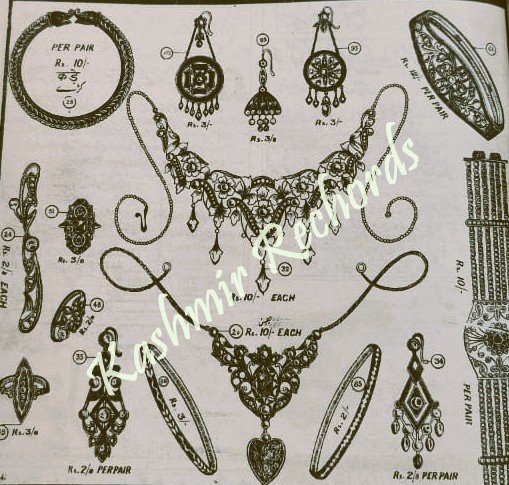
The advertisement, issued under headline Shadi Ke Liye Behtareen Zevraat Golden Gold by Good Luck Trader Agency Darya Ganj Road near Delhi’s historic Kala Mahal Bazar ( A.K) area, reflects the thriving urban commercial culture of pre-Independence India. Printed in elegant Urdu typography, the notice promises “the finest ornaments for weddings” and displays a variety of jewellery pieces ranging from necklaces and bangles to earrings and decorative bridal ornaments. Prices mentioned in the advertisement — Rs. 2, Rs. 3, Rs. 10 and Rs. 12 per pair — today appear astonishingly modest, yet in 1936 they represented carefully budgeted purchases for middle-class and aspirational families.
The advertisement is significant for another reason: it reveals how Delhi’s jewellery trade functioned nearly ninety years ago. Shops competed through craftsmanship, design and affordability. The emphasis was on “ready-made ornaments,” suggesting the emergence of modern retail culture where customers could walk into a shop and choose from displayed collections rather than relying solely on custom orders from traditional goldsmiths.
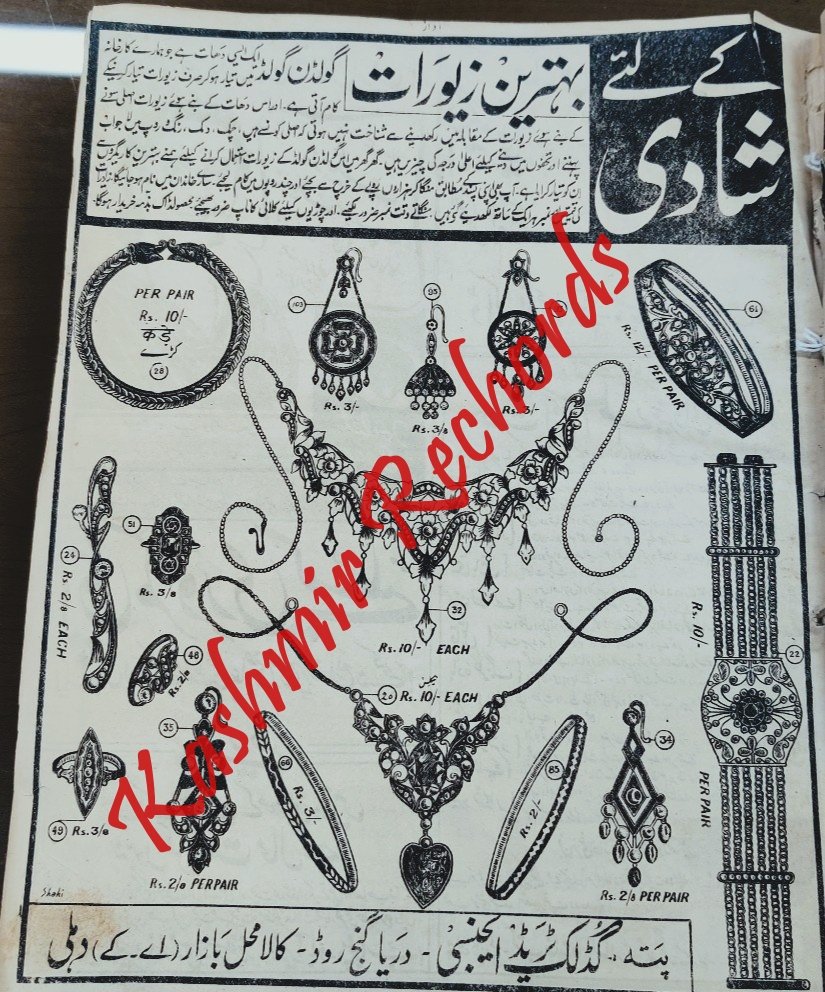
Interestingly, many of the ornaments illustrated in the advertisement appear ornate yet lightweight, indicating that imitation, plated or low-gold-content jewellery already had a flourishing market. This is particularly relevant in contemporary India, where Prime Minister Narendra Modi has repeatedly urged citizens to reduce excessive dependence on physical gold purchases. His appeals have often focused on discouraging the hoarding of imported gold, which places pressure on foreign exchange reserves and contributes little to productive economic growth.
Seen through that lens, the 1936 advertisement becomes historically revealing. Even in pre-Independence Delhi, jewellers were not exclusively selling heavy gold assets. They marketed affordability, decorative appeal and fashion-conscious design. Jewellery was closely linked to weddings, cultural identity and aesthetics rather than solely to wealth accumulation.
The Darya Ganj of 1936 was itself an evolving commercial district. Located near the walled city , it had become a bustling centre for traders, printers, publishers and artisans. Urdu newspapers and magazines frequently carried such advertisements aimed at Delhi’s growing educated middle class. The language of the advertisement reflects refinement and persuasion, inviting customers to personally inspect the craftsmanship and “modern styles” available at the establishment.
The visual layout of the advertisement also deserves attention. Every ornament is carefully numbered and priced, almost resembling an early illustrated catalogue. This indicates how rapidly urban retailing techniques were modernising even under colonial rule. In an era without television, radio commercials or social media campaigns, such newspaper advertisements served as powerful tools of aspiration.
Today, when discussions around gold often revolve around investment, inflation hedging and imports, this fragile 1936 advertisement reminds us of an older India — an India where jewellery shops in Delhi’s crowded lanes catered to emotions more than economics; where wedding ornaments symbolised joy, status and artistry; and where Urdu advertising blended poetry, persuasion and commerce into a uniquely subcontinental marketplace culture.
Contrast between 1936 and present-day India
In the Delhi of that era, families visited bazaars personally, examined jewellery under lantern-lit or early electric shops, negotiated prices and relied upon the reputation of neighbourhood craftsmen. Urdu advertisements in newspapers played the role that online marketing algorithms and influencer campaigns play today. The market was intimate, localised and deeply human.
In Digital India, the marketplace has become virtual. Consumers compare gold rates in real time on mobile apps, invest through UPI-linked platforms and purchase certified digital gold without entering a physical market. Wedding jewellery itself is increasingly influenced by online catalogues, AI-generated designs and social media trends.
Yet despite these technological revolutions, one emotional thread remains unchanged across generations: gold still carries symbolic value in Indian society. Whether bought from a small Darya Ganj shop in 1936 or now through a smartphone wallet, gold continues to signify aspiration, security, celebration and social continuity.
The old Urdu advertisement from Darya Ganj therefore represents far more than a commercial notice. It captures a transitional chapter in India’s economic and cultural history — an era when traditional craftsmanship met emerging urban consumerism. Viewed today, it becomes a bridge between two Indias: the bazaar economy of handwritten ledgers and the digital economy of QR codes and online investments.
Readers, historians, jewellery experts and collectors are invited to identify and name the various ornaments illustrated in the 1936 advertisement. Their inputs and observations may be shared with Kashmir Rechords at: support@kashmir-rechords.com or kashmirrechords@gmail.com