
(Kashmir Rechords Exclusive)
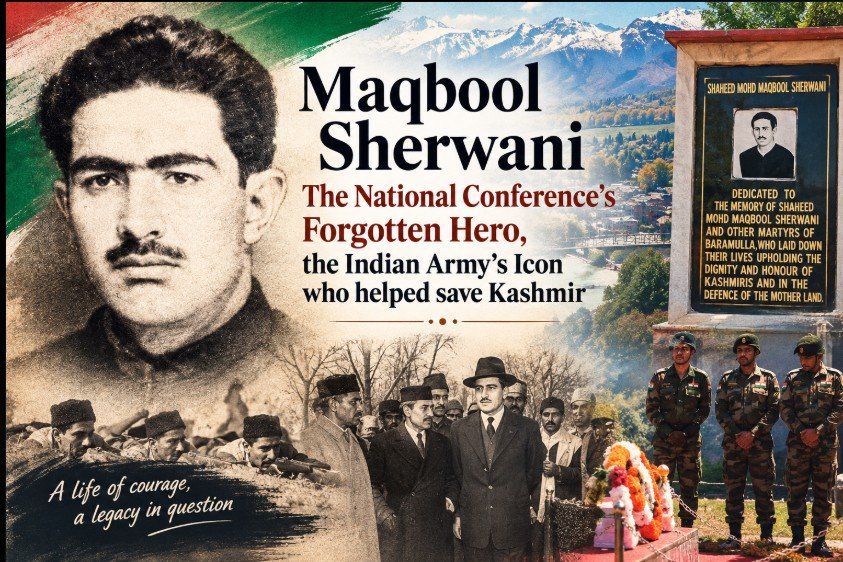
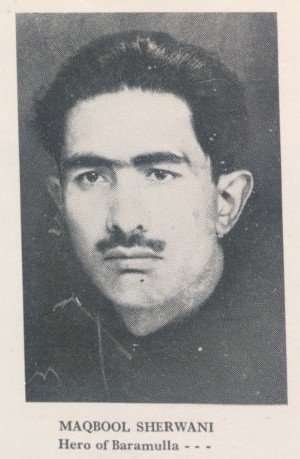
Some stories in Kashmir’s modern history refuse to disappear, even when political circumstances make their remembrance uncomfortable. Maqbool Sherwani, a National Conference activist from Baramulla who was executed by tribal raiders on November 7, 1947, is one such figure.
The young man who misguided raiders
According to historical accounts, Maqbool Sherwani deliberately misdirected the advancing raiders, sending groups along wrong routes and creating confusion in their march towards Srinagar. His actions reportedly bought valuable time before Indian troops landed at Srinagar airport on October 27, 1947 following the Maharaja’s signing of the Instrument of Accession. Had the raiders reached Srinagar before the Indian Army’s arrival, the course of Kashmir’s history might well have been different.
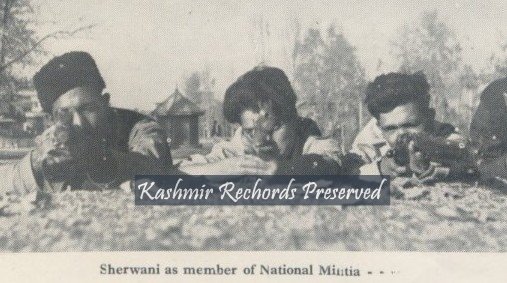
Eventually, his deception was discovered. He was captured, reportedly with the assistance of local elements hostile to him, brought back to Baramulla and brutally executed. Accounts describe him being tied to an electric pole, tortured and shot.
NC loyalist but unpopular among sections of local Muslims
Sherwani was a committed National Conference worker and an ardent follower of Sheikh Mohammad Abdullah. His political convictions placed him in opposition to the Muslim Conference and its pro-Pakistan orientation.
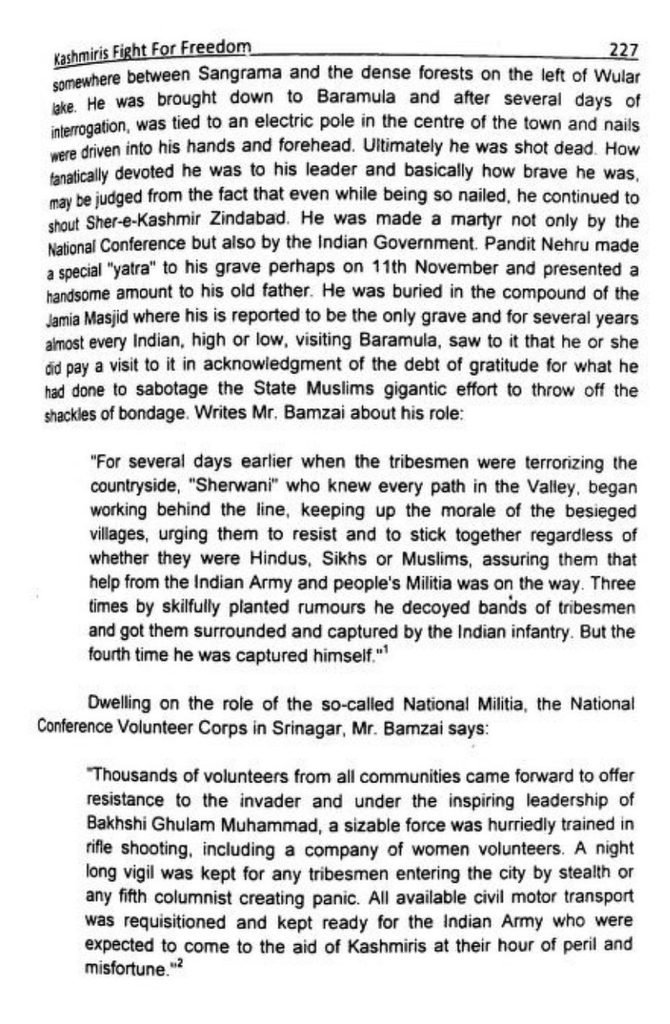
A particularly revealing account appears in Volume II of Kashmir’s Fight for Freedom by Baramulla-born Justice Mohammad Yusuf Saraf, former Chief Justice of Pakistan-occupied Kashmir ( PoK) On page 227 and the preceding page, Saraf offers an account that differs in several respects from the more familiar popular narrative.
According to Saraf, Muhammad Maqbool Sherwani was the second-in-command of the National Conference in Baramulla. Around 40 years old and semi-literate, he was a devoted follower of Sheikh Abdullah and had reportedly been imprisoned several times for his political activities.
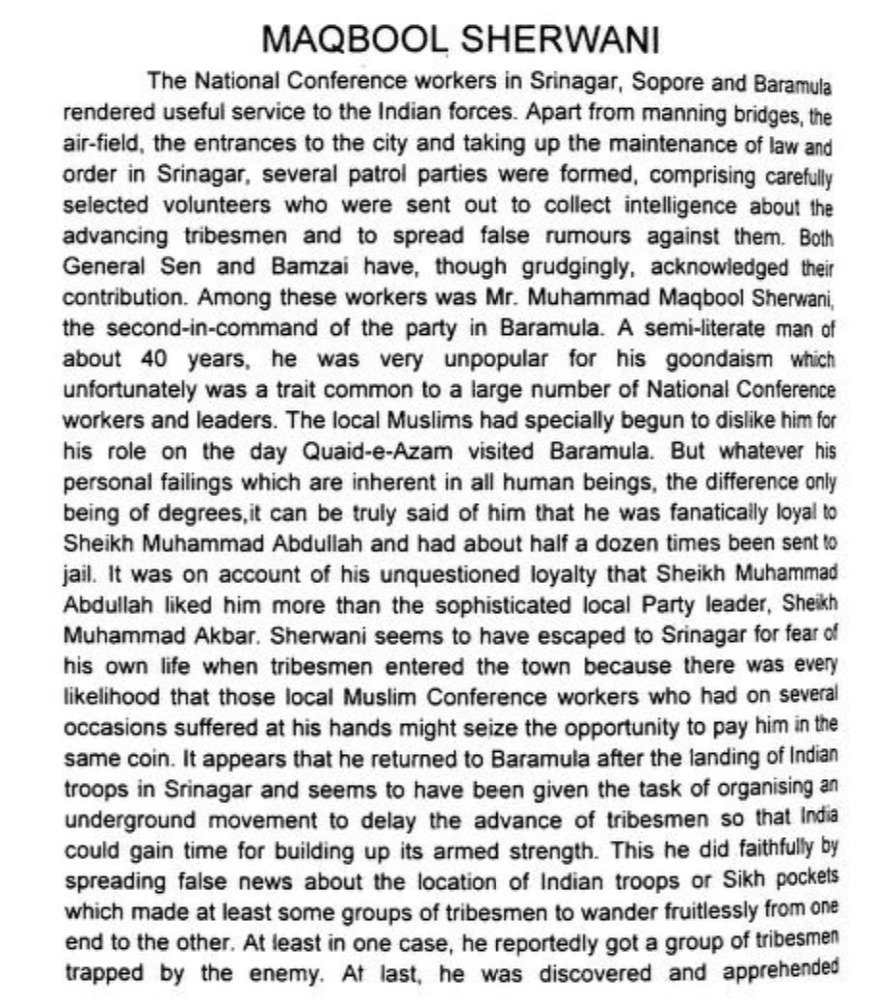
Justice Saraf does not conceal Sherwani’s unpopularity among sections of local Muslims, attributing it partly to his conduct during Muhammad Ali Jinnah’s visit to Baramulla and his strained relations with Muslim Conference workers. This political hostility may also have contributed to his eventual capture, although the precise circumstances require independent corroboration.
Describing Sherwani’s methods, Saraf portrays him as a man who understood psychological warfare. By spreading misleading information about the location of Indian troops and Sikh military contingents, he reportedly sent groups of raiders in the wrong directions. Saraf recounts three occasions on which Sherwani allegedly lured raiders into traps, resulting in their capture by Indian infantry.
He also reproduces historian P.N. Bamzai’s account of Sherwani moving behind enemy lines, visiting terrorised villages and urging Hindus, Sikhs and Muslims to remain united. He assured residents that assistance from the Indian Army and the People’s Militia was on its way.
Maqbool Sherwani’s love for Kashmir transcended religious and political divisions. He defended its people when the Valley faced invasion, and the Indian Army embraced his memory, preserving his name as a symbol of courage, sacrifice and communal harmony
Torture, Execution: Final Hours of a Defiant Kashmiri
Eventually, Sherwani was captured somewhere between Sangrama and the forests adjoining Wular Lake. Brought to Baramulla, he was interrogated and tortured. According to Justice Saraf, he was tied to an electric pole, nails were driven into his hands and forehead, and he was ultimately shot dead. Even during his torture, he reportedly continued raising slogans in support of Sheikh Mohammad Abdullah.
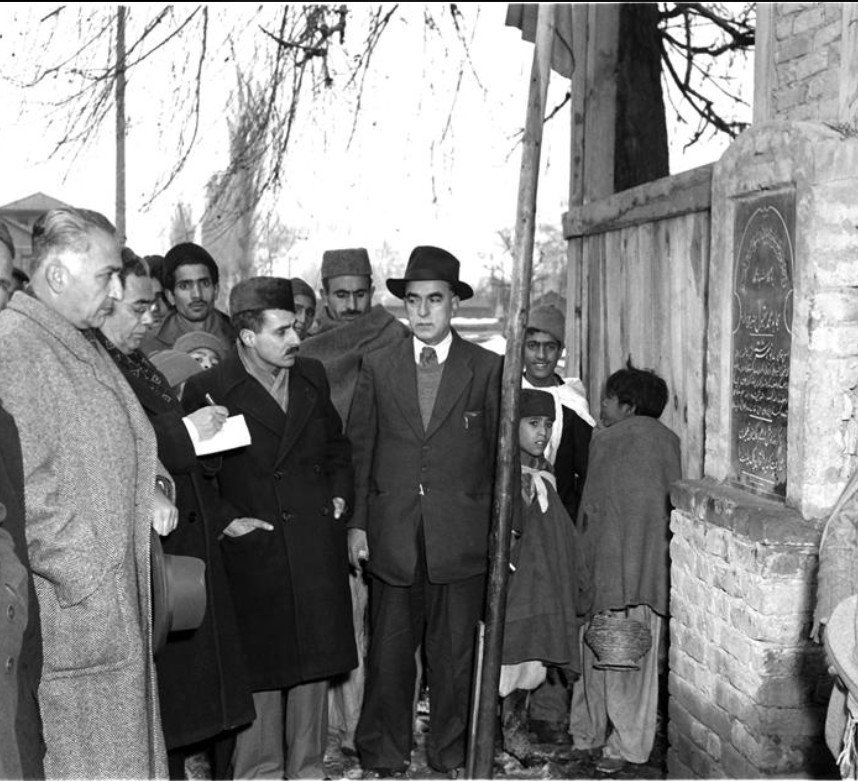
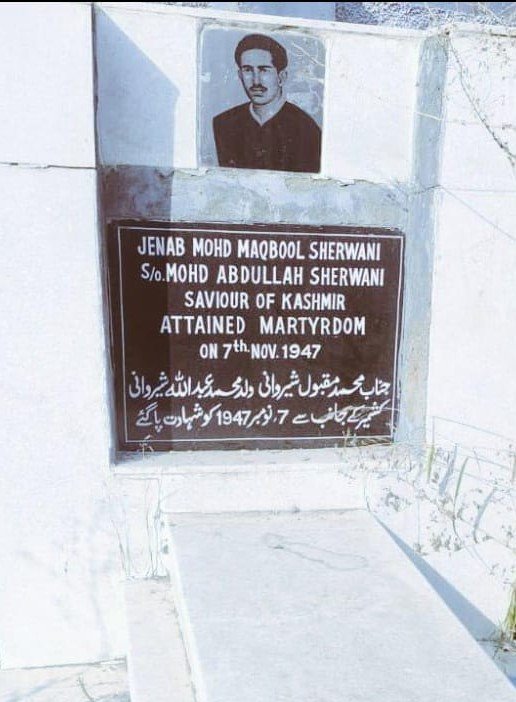
Saraf further records that both the National Conference and the Indian Government recognised Sherwani as a martyr. Jawaharlal Nehru reportedly visited his grave on November 11, 1947, and extended financial assistance to his aged father. Sherwani was buried in the compound of Baramulla’s Jamia Masjid.
From official recognition to fading memory
In the years immediately following accession, Sherwani was remembered as a hero by sections of Kashmir’s population and by the National Conference. His story reportedly featured in school textbooks.
Sheikh Abdullah initially named Srinagar’s iconic Residency Road after Maqbool Sherwani and subsequently commissioned the Jammu and Kashmir Department of Information to produce a documentary highlighting his role in the 1947 invasion. According to historian Mohammad Yousuf Taing, associated with the preparation of Sheikh Abdullah’s autobiography, the documentary was screened in Srinagar theatres and villages across the Valley.
A ward at Sher-i-Kashmir Institute of Medical Sciences, Soura, and a municipal hall in Baramulla also carried his name.
Textbook Controversy: What Changed After 1975?
However, Dr Ramesh Tamiri, writing in the December 2020 issue of Naad, the monthly publication of the All India Kashmiri Samaj, makes an intriguing observation. He states that textbooks during Ghulam Mohammad Sadiq’s chief ministership carried chapters on three personalities associated with the 1947 invasion: Maqbool Sherwani of Baramulla, Master Abdul Aziz of Muzaffarabad and Pushkar Nath Zadu of Srinagar.
Tamiri further suggests that these chapters disappeared after Sheikh Abdullah returned to power in 1975. This claim warrants verification through comparisons of the relevant textbook editions.
Martyr’s Family, allegation of official neglect
There is also a reported family grievance. In a 2012 article, Unsung Saviour of Kashmir: Maqbool Sherwani, R.C. Ganjoo quoted Sherwani’s cousin, Ghulam Mohammad Sherwani, alleging that Maqbool’s father had approached Sheikh Abdullah seeking livelihood assistance for his surviving son but received no meaningful help. The allegation raises questions about the treatment of Sherwani’s family, although it needs corroboration through documentary records.
From martyr to alleged traitor
The most dramatic reversal in Sherwani’s public memory came with the rise of separatist politics in the Valley during the late 1980s.
For sections of the pro-Pakistan political constituency, Sherwani represented someone who had opposed the tribal forces entering Kashmir in 1947. His association with Sheikh Abdullah and the National Conference further complicated his position.
Ipsita Chakravarty’s investigative report in Scroll, published on October 27, 2017, records that Sherwani’s original memorial in Baramulla was burnt down by an angry crowd in 1988, according to local residents. Anti-Sherwani slogans were also reportedly raised during pro-freedom demonstrations.
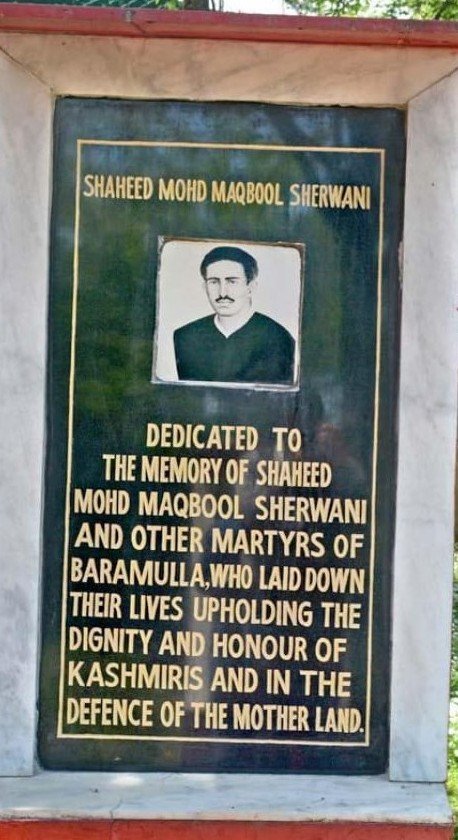
Ahmed Ali Fayyaz, writing in South Asia Monitor in November 2020, refers to the hall being gutted in a mysterious fire around 1989. It was subsequently reconstructed, with a commemorative plaque installed by Governor Lieutenant General S.K. Sinha (Retd.). The reconstructed hall was again gutted in January 2022, when LPG leakage was reported as the prima facie suspected cause.
The earlier destruction of the memorial reflected the hostility surrounding Sherwani’s political legacy. The 2022 fire, however, should not be linked to that hostility in the absence of evidence.
Who Kept Maqbool Sherwani’s memory alive?
There is an institutional paradox in Maqbool Sherwani’s story. The National Conference provided the political platform to which he was committed, and Sheikh Abdullah’s government did initiate commemorative measures. Yet, over the decades, the Indian Army emerged as one of the most consistent institutional custodians of his memory.
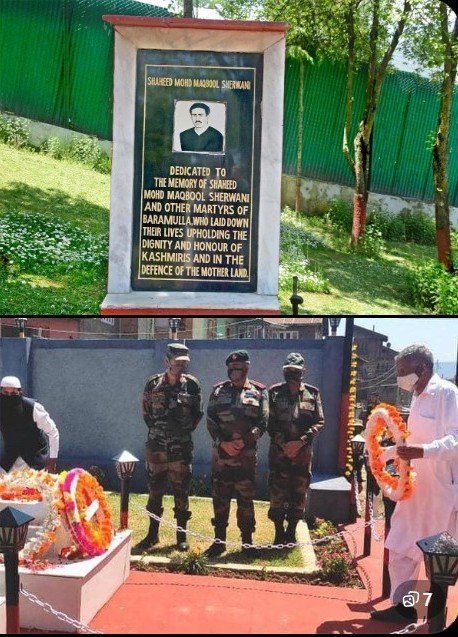
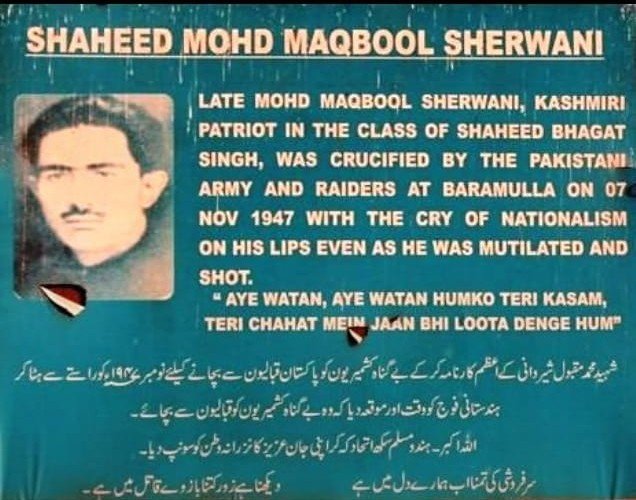
The Army has continued to commemorate him, while its Second Battalion of the Jammu and Kashmir Light Infantry is popularly known as the Sherwani Paltan. The 1971 Census of India also recorded his sacrifice and his association with Hindu-Muslim-Sikh unity.
It would therefore be inaccurate to claim that the National Conference never recognised him. The more pertinent question is whether that recognition was sustained and whether the party did enough to preserve his legacy when it came under political attack.
Unfinished business of remembering Sherwani
Maqbool Sherwani was a Kashmiri Muslim who opposed the tribal invasion, a National Conference loyalist who believed in Sheikh Abdullah’s political programme, and a young man whose life ended violently in Baramulla. His story deserves to be examined beyond the competing political narratives that have subsequently claimed or rejected him.
He was remembered as a martyr by one side, branded a traitor by another, and, at different times, celebrated and neglected by the political establishment to which he belonged.
Maqbool Sherwani did not live to witness the future of the Kashmir he sought to defend. The least that history owes him is an honest account of his sacrifice, the political circumstances surrounding his death and the complicated legacy he left behind.