
(Kashmir Rechords Exclusive)
Nature has endowed Kashmir with a beauty so profound that it has drawn travellers, artists and chroniclers from distant lands. Many came, admired and left. A few stayed long enough to understand its people. Rarer still were those who quietly documented its life with empathy, sensitivity and artistic honesty. Laxman alias Sudhakar Ganesh Khasgiwale, a painter-cum-photographer from Poona, belonged to that rarest category.
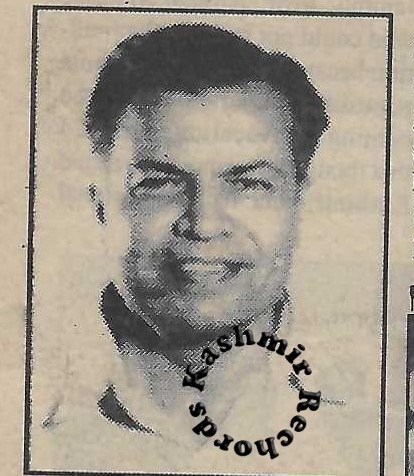
In the summer of 1954, when Kashmir still breathed an unhurried rhythm of life, Khasgiwale arrived in the Valley—not as a tourist, but as a student of nature and humanity.
Trained in painting under Late Shri M.R. Achrekar, one of India’s most celebrated artists, Khasgiwale had already earned recognition and a scholarship from the Art Society of India. Instead of choosing comfort or convention, he chose Kashmir. The scholarship enabled him to live in the Valley for nearly six months, a period that would define his artistic legacy.
At that time, colour photography had not yet reached India. Undeterred, Khasgiwale carried with him an ageing Zeiss Ikon–Ikonta (1936 model) camera and relied on black-and-white film. What he lacked in colour, he compensated with depth, composition and feeling.
Capturing Kashmir Beyond Landscapes
Khasgiwale photographed Kashmir not merely as a scenic paradise but as a living civilisation. His lens moved seamlessly from mountains and rivers to lanes, homes, and faces.
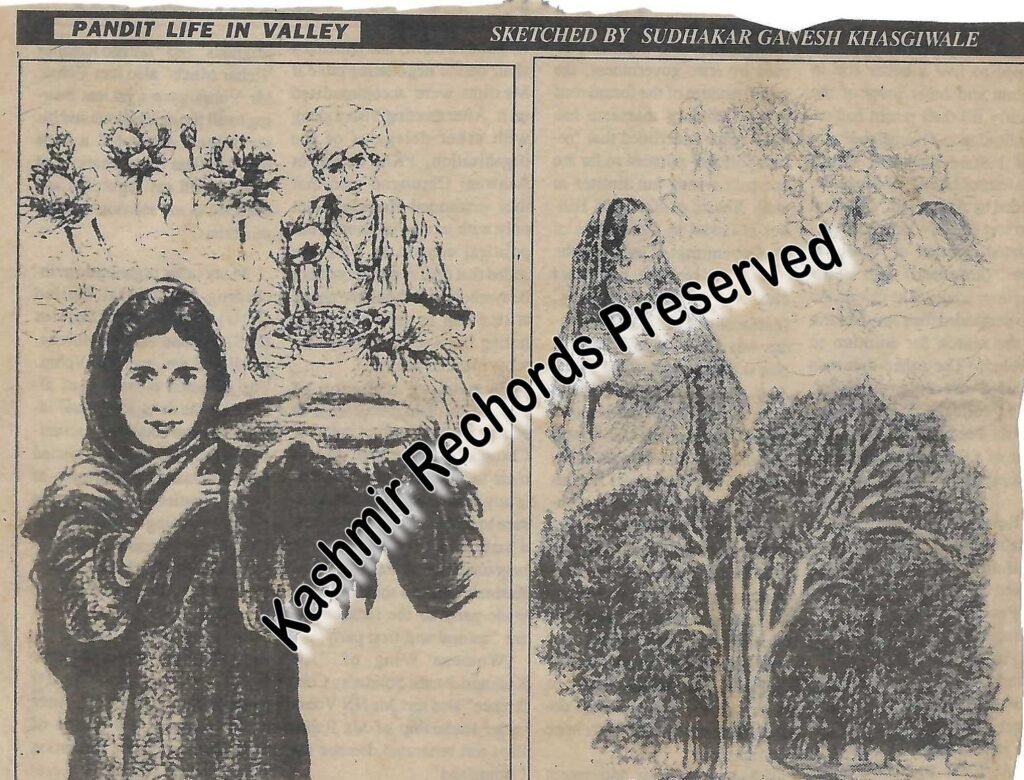
His collection included:
- Intimate views of old Srinagar, its architecture and winding streets
- Rare visual documentation of the Kashmiri Pandit community—their social life, religious practices, and sacred shrines
- Everyday scenes of Hanjis, the boat-people of the Jhelum, engaged in work and family life
- Markets, riverbanks, houseboats, and moments of quiet dignity
These images today stand as invaluable visual records of a Kashmir that has since changed irrevocably—especially the social and cultural world of Kashmiri Pandits, much of which has been lost or displaced.
An Outsider Who Became an Insider
During his stay, Khasgiwale did not merely observe Kashmir; he lived it. He studied the Valley’s arts and crafts, absorbed its aesthetic traditions and forged bonds with its people. Gradually, he became one with the landscape—its flora, fauna and human presence.
His humanistic temperament compelled him to sketch individuals he encountered: boatmen, elders, artisans, children. These pen-and-pencil portraits were not caricatures but character studies—drawn with respect and affection. Many of these sketches later appeared in his Marathi book “Chinarchi Pane”, reflecting his deep emotional connection with Kashmir and its people.
Khasgiwale’s artistic merit was widely acknowledged outside Kashmir. He won first prize and a trophy from Achrekar’s Academy of Art and received numerous awards in exhibitions across India. His one-man exhibitions in Pune, Mumbai, Delhi, Srinagar and Ahmednagar were met with critical acclaim and public admiration.
He later trained in photography and commercial art during his apprenticeship at RK Films, founded by Raj Kapoor, before establishing his own venture, “Khasgiwale Chitrayan”, in Pune. His work in printing, book decoration, advertising, writing and radio further cemented his stature as a multifaceted artist.
Yet, the Kashmir he lovingly documented remained largely unaware of the scale of his contribution.
A Return Through Memory: Kashmir Remembered
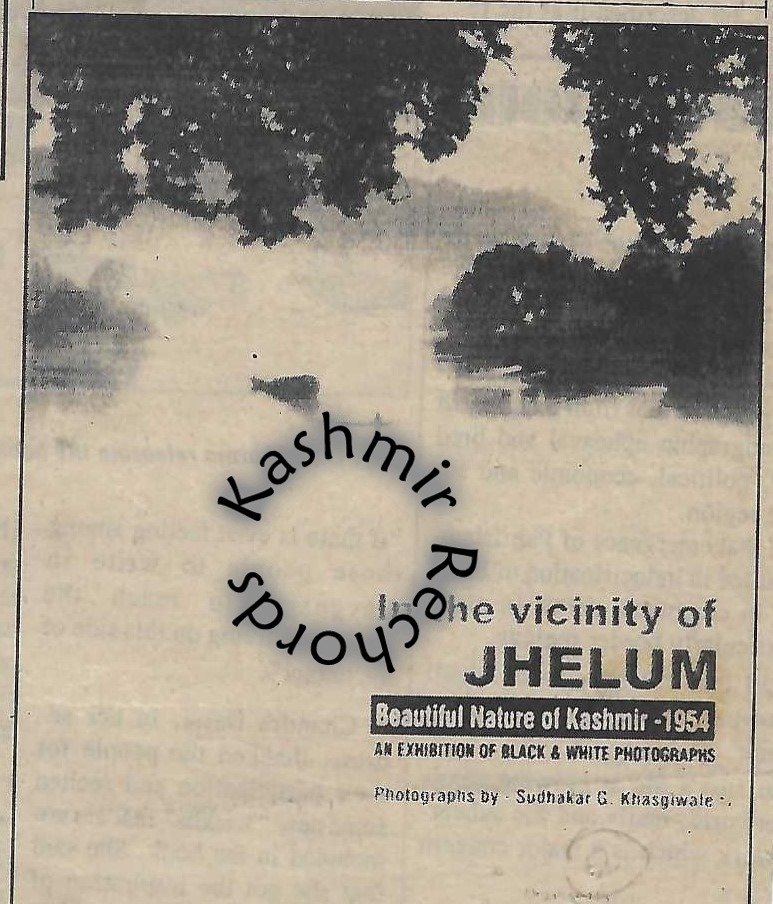
Nearly half a century later, in May 2002, Khasgiwale returned to Kashmir—not physically, but through his work. He organised a photography exhibition titled “In the Vicinity of Jhelum”, accompanied by the release of Chinarchi Pane.
For the exiled Kashmiri Pandit community in Pune, the exhibition was deeply moving. It was not merely an art event—it was a visual homecoming. The exhibition was inaugurated by Lt. Gen. Moti Dar (Retd.), while the book was released by noted playwright Shri Pran Kishore, giving the occasion a distinctly Kashmiri resonance.
An Unsung Chronicler of a Vanished World
Laxman alias Sudhakar Ganesh Khasgiwale’s photographs from 1954 today serve as more than artistic expressions. They are:
- A historical archive of pre-modern Kashmir
- A sensitive visual testimony of Kashmiri Pandit life and culture
- A reminder of communal harmony and shared existence along the Jhelum
Despite his yeoman’s contribution, his name remains absent from mainstream narratives of Kashmir’s visual history. Perhaps it is time to reclaim this quiet chronicler who once captured the Valley and its people not as subjects, but as family.